37 résultats
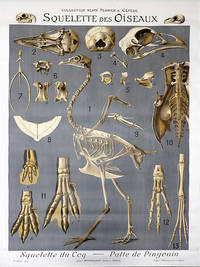
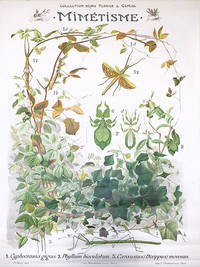
18192515<p>In 1911 <strong>Jean Montaudon </strong>1886-1926 Dr Auzoux's great-nephew took over the management of the famous factory of "papier-mâché clastic anatomy models" and wanted to diversify the catalog. He launched into producing illustrated educational posters but had to cope with fierce competition from the houses Deyrolle Hachette and Cie Masson and even Armand Colin. All of them were more established in this key sector of educational publishing. This forced him to adopt a daring and original commercial strategy : the publication of <strong>"luxury" wall posters of high scientific accuracy and artistic quality</strong> mainly intended for students of universities and Ecoles Normales training schools for future teachers. Therefore he entrusted the printing to one of the most important <strong>Art Nouveau producers of posters</strong> and advertising objects whose name remains notoriously associated with Mucha Sarah Bernhardt and Lefèvre-Utile : <strong>Ferdinand Champenois</strong>. As for <strong>typography</strong> the Auriol font flagship of Art Nouveau too were chosen to adorn the titles and subtitles. The graphic execution of the plates was the work of talented designers who knew how to combine finesse and precision of line with a remarkable sense of color and great attention to detail. Finally for the creation of the drawings he hired two major specialists : <strong>the zoologists Rémy Perrier 1861-1936 and Casimir Cépède 1882-1954.</strong> The choice of these representatives of French academic excellence proved to be judicious and gave the Auzoux Establishments the new impetus Montaudon wanted for the company. He had probably been convinced by their common attachment to the transmission of knowledge since both graduated from the Ecole Normale. They lead careers as respected teachers within the Faculty of Sciences of Paris and other institutions. The extent of the intellectual networks to which they belonged undoubtedly played a significant role. While Cépède frequented the artistic circles of Bourdelle and Gémier and later worked with Doctor Toulouse on the documentary programs for the Science Department of the Pathé film company Perrier maintained through his brother Edmond director of the Natural History Museum and president of the Academy of Sciences close links with the scientific elite of his time. In addition to their respective areas of expertise malacology and bacteriology-parasitology they had very valuable skills and experience. Among other things Rémy Perrier published several reference works and participated in the development of school illustrations. Also Casimir Cépède developed vaccines and created removable insect models in order to train healthcare teams to antimalaria protocols. Given such skills and experience Montaudon granted them very advantageous contracts 20% copyright and complete freedom on the choice of subjects. Thus by the end of the Wolrd War I the two scientists had planned a "collection" of around 150 plates which was supposed to enable them to "give a complete course in zoology". Series on anatomy human physiology and botany were also considered as indicated in the catalogs. Undeniably the outcome is a real success both in substance and in form - precise rigorous aesthetic - achieving the aim of standing out from other publishers. The first volume of an <em>Atlas de Zoologie et d'Anatomie</em> containing the description of 17 posters also appeared at the beginning of the 1920s. However when the financial results of the company were calculated in 1922 they turned out to be disastrous. The accounting reports underlined the major reason for these economic difficulties were the posters : their distribution remained limited and obviously far too weak to make all the investments profitable. In the end only around thirty of those plates have seen the light of day for the zoology section less than ten for the plant biology section and the second volume of the Atlas was never published. The project ended in 1923 even before Jean Montaudon's death. Four years later his widow decided to sell the establishment to Henri Barral who had also acquired the "Maisons Tramond and Vasseur" specialized in wax anatomy models and the creation of skeletons from dissection remains. It was not before the 1940s that a new series appeared - including the famous schematic posters in color with a black background which were essential attributes of post-war classrooms.</p><p><strong>Relatively scarce and underrated the educational posters from the "Rémy Perrier and Casimir Cépède collection" have been poorly preserved in heritage institutions or are incomplete. </strong>Nowadays they are therefore highly sought after by collectors lovers of natural sciences or cabinets of curiosities. Their very good condition with very little defaults further adds to their quite exceptional character.</p><p><strong>For security reasons this item will be shipped rolled and in a tube. </strong></p> Jean Montaudon (Ferdinand Champenois printer)
187323580Marseille: Typ. & Lith. Cayer & Cie 1873. Fine. Typ. & Lith. Cayer & Cie Marseille 1873 11.50 x 18.50 cm broché First edition. Spine cracked two small corner lacks to boards handsome interior condition. Typ. & Lith. Cayer & Cie hardcover
183845041Deux-Ponts : G. Ritter 1838. 165x110mm. reliure demi-basane. PiÂce de titre au dos partiellement dÂŽchirÂŽe. Plats papier marbrÂŽ. Noms de possesseur.Traces dÕhumiditÂŽ marginales. LÕensemble reste parfaitement correct. 205 G. Ritter unknown
183824358Paris: Furne 1838. Gebunden. Furne unknown
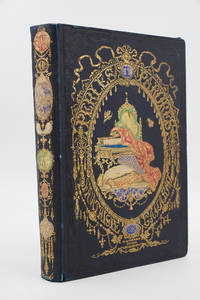
185047343Paris / Leipzig.: G. de Gonet Editeur . &c; Chez Charles Twietmeyer. 1850. Original publisher's midnight blue percaline with elaborate polychromatic decoration front boards with elaborate gilt decorative oval titles to surround central vignettes matching gilt vignettes to rear covers smooth spines with elaborate decorative tooling and titles in gilt all with additional colour heightening cream glazed endpapers vol. 1 and yellow vol. 2 a.e.g. 2 vols. Large 8vo. 270 x 184 mm. Half-titles with printer's credit verso engraved pictorial titles with additional colour by hand printed titles to each vol. and text illustrated with 31 engraved plates by Gavarni each with additional colour by hand and with the margins cut 'à la dentelle' and backed with pink paper final leaf of each vol. with 'Table des Matières'. The most desirable issue of 'Perles et Parures' with the hand-coloured plates on vélin 'découpés en dentelles' and in the original polychromatic percaline bindings.Published under the collective title 'Perles et Parures' these first editions of 'Les Joyaux Fantaisie' with 'Minéralogie des Dames' and 'Les Parures Fantaisie' with 'Histoire de la Mode' are here in the most desirable form with Gavarni's plates printed on vélin delicately hand- coloured and with the leaves stencil-cut to a lace pattern to form delicate frames and backed with pink paper. The two volumes contain jewel- and fashion-inspired texts with matching illustration as stated by Ray: 'They are studies of beautiful women fashionably attired . which were drawn in London'.' . more appealing than the normal edition is this special edition in which the steel engravings are printed and delicately colored on paper with borders cut to various lace patterns. So presented Gavarni's designs become fashion plates of the first order.' Ray.'La réunion des deux ouvrages avec les gravures à marges de dentelles est assez rare à recontrer.' Carteret.Ray 209A / 210; Carteret III 460 / 461. G. de Gonet, Editeur ... &c; Chez Charles Twietmeyer. hardcover
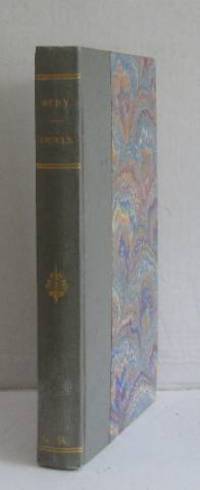
185091065Paris: G. de Gonet 1850. Fine. G. de Gonet Paris 1850 S.d 18.80 x 27.80 cm ENGLISH DESCRIPTION ON DEMAND Edition originale exemplaire du tirage de luxe illustré d'un frontispice et de 16 planches rehaussées finement à l'aquarelle de Gavarni gravées sur acier par Geoffroy dans d'élégants encadrements découpés en dentelles et montés sur papier rose. Impression sur beau velin. Reliure en plein cartonnage historié de l'éditeur gardes et contreplats de papier jaune d'origine un peu salis en marge coins inférieurs émoussés coiffes frottées avec d'infimes manques à la percaline. Rousseurs. Bel exemplaire. Les textes de Méry sont des nouvelles autour d'une pierre précieuse ou d'un bijou. Les gravures illustrent divers parements féminins dans le premier volume autour des joyaux perle reliquaire pendentif rosaire saphir bracelet. dans le second volume le châle le manchon la mantille le turban le bouquet la couronne. G. de Gonet unknown
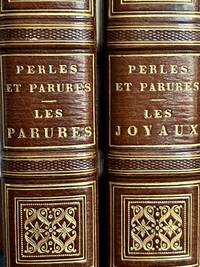
185077587Paris: G. de Gonet 1850. Fine. G. de Gonet Paris 1850 S.d 19 x 28.50 cm relié First edition illustrated with a repeated frontispiece and 30 steel-engraved plates by Gavarni engraved by Geoffroy on China paper laid down. Printed on fine white wove paper. Blue or neutral tissue guards. Illustrated orange-tinted covers preserved spine and back covers with advertisements also preserved. Half lavender morocco binding with corners and long grain signed Mercier 1920 at the top of the first endpaper in Romantic style. Spine with false raised bands richly decorated with two complex mirrored tools in each compartment blind fillets and rolls on the bands. Separation fillets on the boards. Uncut copy full-margined. Perfect paper freshness. Light rubbing traces impact at foot of the Parures volume with a dent of 0.8cm. Very handsome copy rare in this condition. Blue leather bookplate P. Villeboeuf with his gilt monogram also at top of pastedowns. Méry's texts are short stories centered around a precious stone or jewel. G. de Gonet hardcover
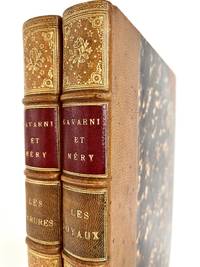
185079613Paris: G. de Gonet 1850. Fine. G. de Gonet Paris 1850 S.d 18.80 x 27.80 cm 2 volumes reliés First edition illustrated with a repeated frontispiece and 30 plates by Gavarni engraved on steel by Geoffroy. Printed on fine vellum. Copy from the deluxe issue with plates finely heightened in watercolor; These engravings are presented in very beautiful frames with lace-cut margins. Illustrated orange-tinted covers preserved spine and back covers with advertisements also preserved. Half lemon yellow morocco binding with corners late 19th century. Spine with false raised bands richly decorated with roses in compartments ornamented with stars and other decorations. Red morocco title labels second title labels in soft green shagreen. Some rubbing. Small brown spots on the leather of the upper cover. Uncut copy shorter titles in margins. Some occasional foxing. Handsome copy. Méry's texts are short stories centered around a precious stone or jewel. The engravings illustrate various feminine adornments in the first volume around jewels pearl reliquary pendant rosary sapphire bracelet. in the second volume shawl muff mantilla turban bouquet crown. G. de Gonet hardcover
18192499<p>In 1911 <strong>Jean Montaudon </strong>1886-1926 Dr Auzoux's great-nephew took over the management of the famous factory of "papier-mâché clastic anatomy models" and wanted to diversify the catalog. He launched into producing illustrated educational posters but had to cope with fierce competition from the houses Deyrolle Hachette and Cie Masson and even Armand Colin. All of them were more established in this key sector of educational publishing. This forced him to adopt a daring and original commercial strategy : the publication of <strong>"luxury" wall posters of high scientific accuracy and artistic quality</strong> mainly intended for students of universities and Ecoles Normales training schools for future teachers. Therefore he entrusted the printing to one of the most important <strong>Art Nouveau producers of posters</strong> and advertising objects whose name remains notoriously associated with Mucha Sarah Bernhardt and Lefèvre-Utile : <strong>Ferdinand Champenois</strong>. As for <strong>typography</strong> the Auriol font flagship of Art Nouveau too were chosen to adorn the titles and subtitles. The graphic execution of the plates was the work of talented designers who knew how to combine finesse and precision of line with a remarkable sense of color and great attention to detail. Finally for the creation of the drawings he hired two major specialists : <strong>the zoologists Rémy Perrier 1861-1936 and Casimir Cépède 1882-1954.</strong> The choice of these representatives of French academic excellence proved to be judicious and gave the Auzoux Establishments the new impetus Montaudon wanted for the company. He had probably been convinced by their common attachment to the transmission of knowledge since both graduated from the Ecole Normale. They lead careers as respected teachers within the Faculty of Sciences of Paris and other institutions. The extent of the intellectual networks to which they belonged undoubtedly played a significant role. While Cépède frequented the artistic circles of Bourdelle and Gémier and later worked with Doctor Toulouse on the documentary programs for the Science Department of the Pathé film company Perrier maintained through his brother Edmond director of the Natural History Museum and president of the Academy of Sciences close links with the scientific elite of his time. In addition to their respective areas of expertise malacology and bacteriology-parasitology they had very valuable skills and experience. Among other things Rémy Perrier published several reference works and participated in the development of school illustrations. Also Casimir Cépède developed vaccines and created removable insect models in order to train healthcare teams to antimalaria protocols. Given such skills and experience Montaudon granted them very advantageous contracts 20% copyright and complete freedom on the choice of subjects. Thus by the end of the Wolrd War I the two scientists had planned a "collection" of around 150 plates which was supposed to enable them to "give a complete course in zoology". Series on anatomy human physiology and botany were also considered as indicated in the catalogs. Undeniably the outcome is a real success both in substance and in form - precise rigorous aesthetic - achieving the aim of standing out from other publishers. The first volume of an <em>Atlas de Zoologie et d'Anatomie</em> containing the description of 17 posters also appeared at the beginning of the 1920s. However when the financial results of the company were calculated in 1922 they turned out to be disastrous. The accounting reports underlined the major reason for these economic difficulties were the posters : their distribution remained limited and obviously far too weak to make all the investments profitable. In the end only around thirty of those plates have seen the light of day for the zoology section less than ten for the plant biology section and the second volume of the Atlas was never published. The project ended in 1923 even before Jean Montaudon's death. Four years later his widow decided to sell the establishment to Henri Barral who had also acquired the "Maisons Tramond and Vasseur" specialized in wax anatomy models and the creation of skeletons from dissection remains. It was not before the 1940s that a new series appeared - including the famous schematic posters in color with a black background which were essential attributes of post-war classrooms.</p><p><strong>Relatively scarce and underrated the educational posters from the "Rémy Perrier and Casimir Cépède collection" have been poorly preserved in heritage institutions or are incomplete. </strong>Nowadays they are therefore highly sought after by collectors lovers of natural sciences or cabinets of curiosities. Their very good condition with very little defaults further adds to their quite exceptional character.</p><p><strong>For security reasons this item will be shipped rolled and in a tube. </strong></p> Jean Montaudon (Ferdinand Champenois printer)
18751H-0JLD-N8OEJan 01 1875. Nombreux livres dans mon stock Envoi rapide et soigné unknown
18481107280Madrid.: Imprenta de la Biblioteca del Siglo. 1848. Hardcover. Cubierta deslucida. Good. 17 cm. 176 p. Encuadernación en tapa dura artesanal con lomo estampado. Cubierta deslucida. Literatura.82 82 Imprenta de la Biblioteca del Siglo. hardcover
1871221312Michel lévy frères 1871. Très Bon Etat texte frais. in12. 1871. Relié. 270 pages. Michel lévy frères unknown