Zampini Salazar, Carlo FBiblio.com
142 résultats
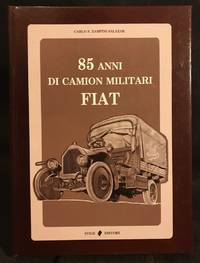
19877435Torino: STIGE 1987. Ben conservato. Cartonato editoriale illustrato cm20x27 pp 96; illustrazioni e fotografie in nero. STIGE unknown
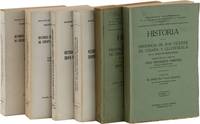
193089155Guatemala: Tipografia Nacional 1930-1973. Six Issues two without edition statements and four First Editions of the Original Manuscript all softcovers. Two Quartos 27cm; green paper wrappers; edges untrimmed. Four Quartos 27cm; white paper wrappers; illus. Some pages of text unopened. Text in Spanish. Vol. 28 Books 12 has white-out on front wrapper presumably printed Books I II III. All six issues are lightly tanned with shelf-wear -soil and foxing; overall Good. <br /> <br /> Collection on social history of the Province of San Vicente de Chiapa and Guatemala composed by Reverend Father Preacher Ximenez of the same province with contributions by Agustin Mencos F. Carmelo Sáenz de Santa María and Francis Gall. 89155. Tipografia Nacional unknown
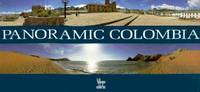
2000Q-9589393381Villegas Editores 2000-11-01. Hardcover. New. In shrink wrap. Looks like an interesting title! Villegas Editores hardcover
1991BOOKS329014Columbia: Villegas Editores. Used-Very Good/Used-Very Good. 1991. First Edition. Hardcover w/DJ. 4to. 167 pp. shelfwear . Villegas Editores hardcover
1991G9589138675I3N00Villegas Editores Colombia 1991. Hardcover. Good. Disclaimer:A copy that has been read but remains in clean condition. All pages are intact and the cover is intact. The spine may show signs of wear. Pages can include limited notes and highlighting and the copy can include previous owner inscriptions. At ThriftBooks our motto is: Read More Spend Less.Dust jacket quality is not guaranteed. Villegas Editores, Colombia hardcover
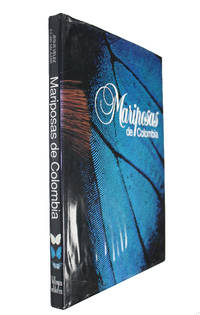
1991S63637Bogota: Villegas editores 1991. 168 col photos col illus. . HB. 4to orig. illus. boards. Vg in d/w in removable protective sleeve. Text Spanish. Fine colour photographs of living butterflies and some early stages and set specimens for each family. 9789589138670 Villegas editores hardcover
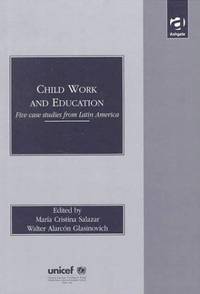
1999AME_9781840149265AshgateP 1999. 1st. Hardcover. New/New. AshgateP hardcover
1950016943Secker & Warburg. Stated First Published. Clipped DJ in archival cover edge wear corner chips. . Fine. Hardcover. 1st Edition. 1950. Secker & Warburg hardcover
1950342821London : Secker & Warburg 1950. Hardback edition. Hardcover. Near fine cloth copy in a good if somewhat edge-torn with some loss and dust-dulled dust-wrapper now mylar-sleeved. Remains well-preserved; tight bright clean and strong. Physical description; xix 235 p. : illus. ; 19 cm. Subjects; Russia History. Persecution Soviet Union. Secret Services Soviet. Trotsky Leon 1879-1940; history. Trotsky Leon 1879-1940 Assassination. London : Secker & Warburg hardcover
1993029012Rockville MD: Government Institutes Inc. 1993. Third Edition . Paper Back. Near Fine/No Jacket. 4to - over 9¾" - 12" tall. 417pp.incl.indexadverts; SC beige w/red; slight rub w/cleantight pgs. " .a general guide to a complex series of statutes and regulations that make up New Mexico's environmental laws. <br/> <br/> Government Institutes, Inc. unknown
1982Q-0831736410Gallery Books 1982-01-01. Hardcover. New. New. In shrink wrap. Looks like an interesting title! Gallery Books hardcover
1982DLAeSALA60New York: St. Martin's Press 1982. 1982. 4to. pp. 160. extensive b/w & colour illus. biblio. index. cloth. dw. lightly rubbed. First Edition. F. Hardcover. [New York]: St. Martin's Press, [1982]. Hardcover
1950013585London: Secker & Warburg 1950. Pencil signature erased from front flyleaf Dust jacket with pieces chipped from spine ends. First Edition. Original Cloth. Very Good/Good. Secker & Warburg Hardcover
1995SONG0520201256University of California Press 1995-08-29. hardcover. Used: Good. 6.50x1.25x9.50. Buy with confidence. Excellent Customer Service & Return policy. University of California Press hardcover
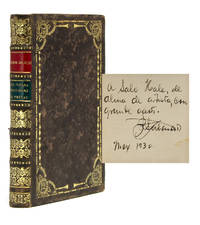
1930313152Mexico: Editorial "Avante 1930. First edition. 233 5pp. 12mo. Spanish calf. gilt spine. First edition. 233 5pp. 12mo. Inscribed "A Salo Hale de Alma de artista con grande ---R. Salazar Mex. 1930" Salomón Hale was a Polish Jewish art collector based in Mexico City.<br /> <br /> Protest poems from left wing Mexican poets including Fernando Celada German List Arzubide Carlos Gutierrez Cruz Rafael Diaz de Leon Salazar Agustín Haro y Tamariz etc. Editorial "Avante unknown
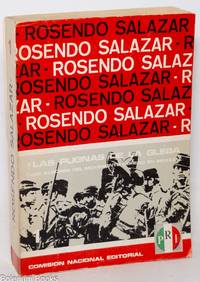
1972343476Mexico City: Comistion Nacional Editorial 1972. Paperback. 444p. wraps frontis. portrait of Salazar wraps lightly worn previous owner's label on half-title else very good condition. Text in Spanish. Volume 1 only. Comistion Nacional Editorial paperback
192655114México: Editorial Avante 1926. 4in. tears pp. 213-218 with pages intact; slight stain at bottom margin corners of last 6 pages. b/w plates 2 fldg. ports. pict. wrps. Interesting association INSCRIBED copy from Salazar to R.E. Montes i Bradley in a paragraph of appreciation and friendship while working as journalists for "el Nacional" and the "gran movimiento revolutionario". Dated 1960. Scarce work by Salazar who at the time was a member of the "Liga de Escritores de América" with illustrations from murals by Rivera Orozco and Dr. Atl. Cover illustration by Rivera is a classic. Editorial Avante unknown
19266192México: Editorial Avante 1926. b/w plates 2 fldg. ports. color pict. wrps. Early compilation of murals and social message art. Scarce work by Salazar who at the time was a member of the "Liga de Escritores de América" with illustrations from murals by Rivera Orozco and Dr. Atl. Cover illustration by Rivera is a classic. RARE. Editorial Avante unknown
196780202Santiago Chile: Empresa Nacional de Electricidad S. A. ENDESA 1967. Presumed First Edition First printing. Wraps. Good. IN SPANISH. 11 4 figures Anexo I 3 pages Anexo II 3 pages and Figure 5 Additional section 5 pages 1 page. Cover has wear soiling and some discoloration. Pencil note on front cover. Rare surviving copy. Renato Edmundo Salazar Justiniano April 11 1913 -December 9 2007 was a Chilean engineer academic and consultant a pioneer in the planning of electrical systems in his country. He was educated at the José Miguel Carrera General National Institute in the capital and at the University of Chile an entity where he graduated in 1940 as a civil engineer a profession that had also been reached by his father and brother.1 He later traveled to the United States where in 1941 he would pass a postgraduate degree in electrical engineering from Stanford University. He started professionally at the General Directorate of Electrical Services in his country. He then went to Endesa where while still very young he assumed responsibility for organizing the company's office in New York. Back in Chile he held the position of Assistant Manager of Engineering. From the works management he was promoted in 1961 to the general management of the company. In 1969 invited by the World Bank WB he advised the National Administration of Power Plants and Electric Transmissions UTE of Uruguay. In 1972 he retired from the company after which he worked as a consultant. He returned to Chile in 1980. Between 1990 and 1993 he served as president of the Colbún Machicura Electric Company on behalf of the first democratic government after the dictatorship of General Augusto Pinochet. The National Council of the College of Engineers of Chile elected Mr. Rodolfo von Bennewitz as the next engineer to be distinguished with the "2014 Infrastructure Award" which will be recognized for its outstanding work and contribution to the development of infrastructure in the country in addition to its outstanding participation in the business and union area. Rodolfo von Bennewitz is a Civil Engineer with a mention in Hydraulics he has an experience of more than 53 years in the fields of electrical planning to serve the country's demands taking advantage of both its hydraulic resources for the purpose of producing electrical energy and of the design and evaluation of hydroelectric projects. From a 2016 assessment: Today only three countries south of the equator have operating nuclear reactors including Brazil and Argentina. While their reactors provide these two countries with just three and six percent of their total electricity respectively nuclear power at one point provided Argentina with nearly one fifth of its electricity. Still there are important differences between a would-be nuclear power program in Chile and the modest but effective ongoing programs in Brazil and Argentina. For one though neither country ever manufactured nuclear weapons both Brazil and Argentina had weapons programs with their respective militaries evidently interested in nuclear weapons from the start of their nuclear programs. With a plainly different geopolitical landscape today than there was in the 1970s it is difficult that such motivations could drive a modern nuclear power program. Secondly and more importantly Chile faces inherent geographic-based difficulties that do not as much affect Argentina let alone Brazil. Chile has thousands of miles of coastline along the circum-Pacific belt also known as the "Ring of Fire" With nearly continuous seismic activity underneath Chile has over and over again experienced significant natural disasters including the largest earthquake ever recorded. Naturally this has engendered skepticism regarding a nuclear power plant. Obstacles notwithstanding Chile's previous two heads of states have made tangible progress toward the development of a nuclear power program. During President Bachelet's first term a nuclear commission she established found that there was no reason to discard nuclear energy as a source of electricity for Chile in the future. Of course soon thereafter Chile was struck with an 8.8 magnitude earthquake in 2010. Only a year later the world witnessed the worst nuclear disaster since Chernobyl at Japan's Fukushima nuclear power plant. While these disaster heightened environmental concerns and certainly aggravated the aforementioned public fears over Chile's natural disaster vulnerabilities they did not wholly stop Chile's progress towards nuclear energy. During the tenure of President Bachelet's successor Sebastian Piñera Chile inked a nuclear energy cooperation agreement with the United States. Further in 2012 the "Colegio de Ingenieros de Chile" - Chile's College of Engineers - outlined a plan for nuclear power in Chile through 2030 that would begin generating energy by 2020. While this is still far from a reality Chile certainly remains on a path if somewhat inconsistent towards nuclear energy. Today Chile remains likely a decade away from an active nuclear power generating reactor. Empresa Nacional de Electricidad S. A. (ENDESA) paperback
200000216266PDVSA 2000. Hardcover. Good. PDVSA hardcover
2000mon0004003470Independently published 3/22/2025 12:00:01 A. hardcover. Good. 0.5800 11.0000 8.2500. Independently published hardcover
199263125Aena 1992. hardcover. MuyBueno. Aena. 1992. Cartoné. 159 pp. 33x24. Con Estuche. Ilustrado. Aena hardcover
2000Q-0553110241Bantam 2000-02-29. Hardcover. New. New. In shrink wrap. Looks like an interesting title! Bantam hardcover
1970140927Lima: Ediciones San Julián 1970. Hardcover. NF interior but VG- covers general rubbing and a few bumps along bottom rims. Cream boards with brown lettering; 193 pp. with bw images throughout. Text in Spanish. Peru and its art and this volume specifically covers Lima - its cathedral and numerous churches private homes the palace university Museo Osma and more. With essay material and explanations by Salazar. Ediciones San Julián hardcover
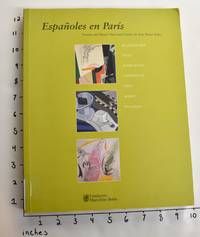
1999163032Santander: Fundacion Marcelino Botin 1999. Paperback. Contents VG clean bright and tight; covers have some light shelf wear; copy is art museum ex-lib. with a few marks but none to text. Color-illustrated chartreuse wraps with black lettering on spine. French flaps. 285 pp. with color and bw images throughout. Text in Spanish. Catalogue from the exhibition held July to September 1999. "This exhibition presents an overview of seven Spanish artists working in Paris in the early twentieth century and whose work contributes to the renewal and creation of new languages in Contemporary Art. Of the selected artists the first to move to Paris in 1899 is Julio González who was followed by Pablo Picasso in 1900 Pablo Gargallo in 1903 Juan Gris in 1906 and MarÃa Blanchard in 1909. After the First World War another wave of Spanish artists chose France as their home including Joan Miró in 1920 and Salvador Dalà in 1926. All works in this exhibition at the Marcelino BotÃn Foundation belong to the Museo Nacional Centro de Arte Reina SofÃa funds. The selection is made from those pieces in the collection that are not currently exhibited in the museum but which are representative of such a prolific period in Spanish Art. By Julio González there are three paintings from his early works in this discipline: Mujer peinando a una joven 1914-1918 La recolección de manzanas 1920-1925 and Dos mujeres 1920-1928. In 1910 he produces the first of his embossed metal masks; this moment belongs to Máscara inquietante 1913-1914. A few years later he produces pieces in cut and wrought iron such as Masque aceré 1929-1930. His work evolves into abstraction without abandoning figurative references like in Petite maternité assise 1933-1934 and El pie 1934-1936. For Gonzalez drawings are an essential part of his creative process. Exhibited are: Mujer con niña en malva 1906 Personaje de pie amarillo y blanco 1937 Personaje con velo largo nº I 1941 and El grito 1939 which lay the foundations for the Montserrat which González presents in the Spanish Pavilion at the Universal Exhibition in Paris in 1937 to which the Reina SofÃa Museum dedicates an exhibition in 1987. The contribution of Pablo Picasso is overwhelming. On this occasion eleven preparatory studies to the Guernica 1937 are exhibited a work that exemplifies the Reina SofÃa Museum Collection. Following the bombing of Guernica Picasso works on this monumental piece specifically for the aforementioned Spanish Pavilion. The horse is one of the first figures he drafts along with Cabeza llorando an image of the suffering of a mother. These exhibited drawings and canvasses refer to these reasons in addition to Estudio de composición VI 1937. Pablo Gargallo received by Picasso on his arrival in Paris is along with Julio González the most important Spanish sculptor from the early twentieth century. By him the pieces Torse de gitan 1923 La dormeuse 1924 Porteuses d’eau 1925 and Tête de prophète 1926 are exhibited accompanied by three drawings which are the basis for his sculptures ArlequÃn a la guitarra 1927 and Bailarina. Teresina Boronat 1927 in two different versions. By Juan Gris creator of Synthetic Cubism the paintings El violón 1916 y Guitarra con incrustaciones 1925 were chosen as well as drawings Naturaleza muerta a la guitarra 1925 and Hombre a la guitarra 1925-1926. These last two are the original drawings and drafts for lithographs that Gris produces for Gertrude Stein’s Book: A Book Concluding with As a Wife Has a Cow: A Love Story 1926. The Museo Reina SofÃa has a large collection of works by MarÃa Blanchard partly acquired in 1932 from her sister Carmen. They include: Mujer con abanico 1915-1916 and Composición Cubista 1916 from her cubist period and Niña peinándose 1926-1927 La bordadora 1926 and Niños 1930-31 from her return to figuration. The second group is made up of those artists who return to Paris in the Twenties like Joan Miró and Salvador DalÃ. The paintings by Miro include: Personnage oiseaux 1974 Paisaje 1974 Femme oiseau I 1977 Paysage 1976 and Personnages oiseaux constellations 1976 accompanied by sculptures such as Femme soleil 1966 Torse de femme 1967 Tête dans la nuit 1968 Tête de taureau 1970 Jeune fille rêvant de l’evasion 1971 and Femme et oiseau 1971. Dalà presents an untitled canvas from 1928 a study to Premonición de la Guerra Civil 1935 the unfinished painting of his muse and companion Busto de Gala 1939 the canvas: A propósito del “Discurso sobre la forma cúbica†de Juan de Herrera 1960 inspired by the renowned architect a painting that reveals his interest in science Ãrabes. Ãcido desoxirribonucleico 1963 and the first version of El Camino del Enigma 1981 one of his final compositions." - from the museo reina sofia web site. Fundacion Marcelino Botin paperback