32 résultats
18341215671834. First Edition. DORR Thomas Wilson. An Address to the People of Rhode-Island From the Convention Assembled at Providence on the 22nd Day of February and Again on the 12th Day of March 1834 to Promote the Establishment of a State Constitution. Providence: Cranston & Hammond 1834. Octavo period-style half diced calf gilt marbled boards pp. i-v 6-60. $2400.First edition of Dorr's foundational Address prompting his role as instigator and leader of the Dorr Rebellion placing him ""in the front rank of the political reformers of Jacksonian America.Born into privilege Rhode Island's Thomas Dorr became ""a political insurrectionary who hastened the demise of the royal charter of 1663 and the adoption of a written constitution"" Wiecek Peculiar Conservatism 242. Following the American Revolution by the 1820s Rhode Island remained the only state that clung to its colonial charter which ""restricted suffrage to white men who possessed real estate valued at a minimum of $134"" Chaput Proslavery and Antislavey Politics 662-63. It had ""evolved from the most to the least democratic state"" Lemons Rhode Island's Ten Turning Points 62. ""Dorr's political goals'free suffrage' with no discrimination against the foreign-born 'one-man one-vote' an independent judiciary a more powerful and dynamic executive the secret ballotthough not permanently achieved in Rhode Island during his lifetime placed him in the front rank of the political reformers of Jacksonian America"" ANB.In 1834 Dorr ""asked the General Assembly to call a convention to revise the state constitution in favor of taxpayer-militia suffrage and to adopt 'equal representation'"" Wiecek 242. In this major Address delivered at that convention and ""composed primarily by Dorr"" Conley Democracy in Decline 255 he states: ""No form of a Constitution can be worth much if in this State the Legislative power is in the hands of less than one third part of the qualified voters. A few political managers rule the whole State as they please against the will of two thirds of the freeman and three fourths of the people"" emphasis in original."" To Dorr the state's ""strange adherence to the charter"" left Rhode Island with an ""inequality of representation too unjust to be much longer tolerated."" In 1841 after Dorr was elected ""the People's governor"" under the state's ""People's Constitution"" he became the leader of the 1842 Dorr rebellion which historian Sean Wilentz calls ""'a striking and exceptional case in the history of American democratization before the Civil War' calling it no less than 'a deadly serious test of democracy's meaning and democracy's future.'"" The Dorr Rebellion increasingly viewed as the ""most significant political and constitutional event between the Age of Jackson and the election of Lincoln Dorr's constitutional understanding had roots not only in the Revolution and the post-Revolutionary era; it remained a vibrant part of American constitutionalism"" Chaput Rhode Island Question 55-56. Sabin 70537. American Imprints 26527. Text generally fresh with light scattered foxing. hardcover
180442887London W. Bulmer and Co. 1804. 4to. No wrappers as extracted from "Philosophical Transactions" 1804 - Part II. Pp. 313-345. Clean and fine. <br/><br/><em>First appearance of an importent paper in which Hatchett communicates his discovery that iron must be combined with a large portion of either carbon phosphorus or sulphur in order to acquire the property of receiving permanent magnetic virtue there being however a limit beyond which an excess of either of the above-named substances renders the compound wholly incapable of exhibiting the magnetic energy.Together with another paper by Patrick Russell: "Remarks on the voluntary Expansion of the Skin of the Neck in the Cobra de Capello or booded Snake of the East Indiea. With a Description of the Structure ofthe Parts which perform that Office. By Everard Home." Pp. 346-352 a. 2 large engraved plates showing the snake. </em> unknown
1814FANarFRA8<p>Paris: M.Ponce & P.Didot L'Aîné 1814. 1814. 4to. large-paper copy. pp. 48. 9 plates engraved by Helman & N.Ponce after C.Monnet incl. 3 before letters. A fine copy bound in modern half morocco by Rivière & Son t.e.g. others uncut original wrs. bound in at end 2 leaves with small marginal stains. armorial bookplate of Sir David Lionel Goldsmid-Stern-Salomons Baronet. FINELY PRINTED AND ILLUSTRATED EDITION OF THE 'RESTORATION' CHARTER OF 1814 PROMULGATED UNDER LOUIS XVIII. INSERTED IN THIS COPY ARE THREE ADDITIONAL PLATES WITH FIGURES BEFORE LETTERS. COHEN-DE RICCI 228.</p> Paris: M.Ponce & P.Didot L'Aîné, 1814.
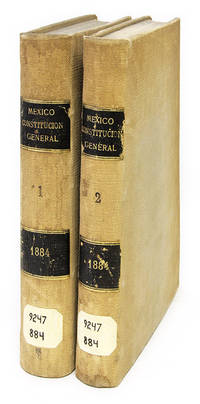
1884622541884. The Mexican Constitution in 1884 Mexico. Constitution. Coleccion que Comprende la Constitucion General de la Republica con sus Adiciones Reformas y Leyes Organicas Expedidas Hasta el 30 de Junio de 1884 y las Constituciones Especiales de Cada uno de los Estados de la Federacion. Mexico City: Imprenta del Gobierno en Palacio 1884. ii 451 2; ii 440 1 pp. Octavo 8-1/2" x 5-3/4". Later cloth red and black lettering pieces to spine endpapers renewed. Some soiling light fading to spine light wear to edges of lettering pieces. Moderate toning to text light foxing in a few places. Ex-library. Location label to spine stamps to title page annotations to verso. A solid copy of a scarce title. $450. Only edition. Mexico's 1857 constitution remained in force until 1917. It received numerous amendments and additions until its repeal which is why annotated editions from different periods are helpful. Coleccion also includes state constitutions. OCLC locates 7 copies in North American law libraries Columbia Harvard Library of Congress LA County St. Louis University University of Michigan University of Minnesota. See Clagett and Valderrama A Revised Guide to the Law & Legal Literature of Mexico 10. unknown
187541190Puebla Imprenta del Hospicio 1875. Paperback. Good. 176p. wrps lacks wrps. Puebla, Imprenta del Hospicio paperback
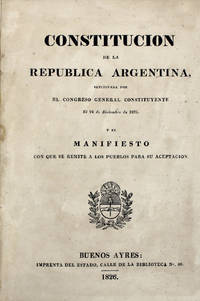
18266783Buenos Aires: Imprenta del Estado 1826. First Edition — Primera edición. Softcover — Tapa blanda. 190x135mm. 7½x5¼". Buenos Aires Imprenta del Estado 24 de Diciembre de 1826. En 4º 190 x 135mm. 2 55 pp. Guardas de papel. Primera edición. Comienza con un Manifiesto del Congreso General Constituyente a los pueblos de la República Argentina. La Constitución de la República Argentina de 1826 estableció una forma de gobierno "representativa republicana consolidada en unidad de régimen adoptando oficialmente la religión Católica Apostólica Romana". Para la sanción de aquella constitución fueron consultadas las Provincias acerca de la forma de Estado: Salta y La Rioja se pronunciaron por el régimen unitario al igual que Tucumán pero curiosamente aclaró que querÃa conservar sus instituciones. Mendoza San Juan Santiago del Estero Tarija Entre RÃos Santa Fe y Córdoba se manifestaron por el sistema federal. San Luis Catamarca Corrientes y la Banda Oriental por lo que resolviese el Congreso en tanto que Buenos Aires y Misiones no opinaron. Primeras hojas ligeramente amarronadas. Imprenta del Estado paperback
182212181Lisboa: Impresa Nacional 1822. Lisboa Imprensa Nacional 1822. En 8º mayor. 100 pp. Encuadernación en cartoné tejuelo de piel en el plano superior con letrerÃa dorada. Primera edición de la primera Constitución Portuguesa votada en Cortes extraordinarias y constituyentes el 23 de Septiembre de 1822 y aceptada por el rey D. João VI en octubre del mismo año. Considerada como un triunfo de los liberales contenÃa 240 artÃculos en su mayorÃa inspirados cuando no directamente copiados de la constitución española de 1812: cesión de soberanÃa al pueblo e independencia de los poderes legislativo ejecutivo y judicial. Esta es la Constitución que los Andradas y otros diputados brasileños se negaron a firmar. Bien acogida en un principio por los brasileños supuso al final el detonante de la independencia de Brasil. Varios dÃas antes de la publicación del "Suplemento" en Lisboa las Cortes declararon el gobierno brasileño subordinado a la constitución lo que fue rechazado por los representantes brasileños quienes comandados por Andradas declararon la independencia de Brasil en 1822. Inscripción en tinta en la portada ligeras manchas ocasionales papel ligeramente tostado. Impresa Nacional unknown
1827374087Philadelphia: R. Desilver 1827. Typeset frontispiece within typographic border approx. 15x18-1/2 inches detached from the accompanying almanac. 67 1pp. 8vo. Disbound. Old folds tear to gutter. Typeset frontispiece within typographic border approx. 15x18-1/2 inches detached from the accompanying almanac. 67 1pp. 8vo. Shaw & Shoemaker 27484; Drake 11567 R. Desilver unknown
1820SP561Gales and Seaton 1820. Second Edition. Hardcover. Good. Washington 1820. 12mo iv 409 pp. Contemporary paper covered boards. Expanded to include 23 states including Alabama and North Carolina. The first edition published a year earlier included just 21 states. A good copy with fraying and chipping to paper at spine foxing to contents and contemporary ownership marks to endpapers. Contents complete. Please contact us for additional pictures or information. Seven copies in OCLC. Cohen Bibliography of Early American Law 3014. Gales and Seaton hardcover
18256784Paris: Dondey-Dupre Pere et Fils 1825. Hardcover — Tapa dura. 133x80mm. 5¼x3¼". Paris Dondey-Dupre Pere et Fils 1825. En 12º 133 x 80mm. 110 pp. 1 h. Encuadernación de la época en piel. Primera edición francesa. La Constitución Federal de los Estados Unidos Mexicanos de 1824 entró en vigor el 4 de octubre de ese año después del Imperio Mexicano de AgustÃn de Iturbide. En la nueva Constitución la República tomaba el nombre de Estados Unidos Mexicanos y era definida como una República Federal Representativa. Esta traducción francesa es rara en comercio. Dondey-Dupre Pere et Fils hardcover
18501229871850. First Edition. CONSTITUTION SPOONER Lysander. A Defence for Fugitive Slaves Against the Acts of Congress of February 12 1793 and September 18 1850. Boston: Bela Marsh 1850. Octavo original wrappers; pp. 1-2 3-4. i-iv 5 6-72. $3200.First edition of the rogue abolitionist's provocative call for ""vigorous"" public resistance to a pattern in the 1793 and 1850 Acts and court decisions such as Prigg v. Pennsylvania that demonstrated the government's refusal ""to champion liberty or justice"" especially elusive in original wrappers.The 1850 Fugitive Slave Act ""exposed the futility of antislavery constitutionalism grounded in a commitment to the 'proper rules of interpretation'"" Knowles Seeing the Light 544. It ""evinced a clear congressional policy favoring harsh and summary enforcement of the rendition policy over any solicitude for procedural or substantive rights of alleged fugitives"" Cover Justice Accused 121. Spooner crafted his answer to this in a ""devastating critique"" of both the 1793 and 1850 laws Smith Lysander Spooner. Defence one of his most elusive and provocative works offers ""significant evidence of the ways in which the passage of the 1850 Fugitive Slave Act shook his faith in the ability of the nation's courts to interpret the constitution in a manner consistent with the dictates of natural justice"" Knowles 546. Closely analyzing ""reasons why the 1793 and 1850 laws were unconstitutional he made it very clear why the passage of the 1850 law pushed him away from the 'quiet argument' of the courtroom to 'more vigorous'"" public action. In Defence while he continued to argue the importance of ""procedural objections to the laws Spooner spent far greater time 1 explaining why the courts would not actually strike down either of the laws and 2 outlining 'The Right of Resistance': ways in which 'The People' could respond to what he now recognized as the 'ugly reality' of proslavery constitutionalism."" He notably pointed to ""the 1842 decision in Prigg v. Pennsylvania in which the Supreme Court held that under the Constitution's Supremacy Clause the 1793 Fugitive Slave Act trumped Pennsylvania's personal liberty law which had made it far more difficult for slaveholders to recover individuals they alleged were fugitive slaves In the face of this judicial reality and to ensure the 'maintenance' of the Constitution Spooner encouraged popular resistance"" arguing the Second Amendment ""gave 'The People' an absolute and unqualified' Constitutional 'right' to do so."" By 1860 he would utterly lose ""faith in the ability or willingness of the government especially the courts to champion either liberty or justice"" Knowles 545 552. First edition: as issued with printing of 1793 Act of Congress and 1850 Fugitive Slave Act preceding title page; front and rear wrapper interior with publisher's advertisements. Sabin 89607. Work 335. Text very fresh a few minor stains to front wrapper expert repairs to wraps on the spine. Near-fine. paperback
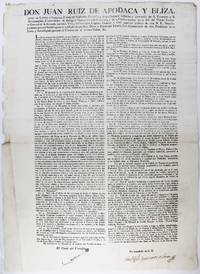
18203330Mexico City: July 11 1820. About very good. Large double-sheet broadside approximately 23.5 x 17 inches. Two sheets joined at central horizontal fold. Five chips at left edge not affecting text and some additional minor edge wear; otherwise light toning and dust soiling. Two contemporary manuscript signatures at foot; contemporary duty stamps on blank verso. Fascinating and otherwise unrecorded broadside that dictates the organization and process for the 1820 election of Mexican deputies to the Spanish Cortes during the second and last period of constitutional monarchy in Mexico. Colonial Mexico first achieved some representation in the Spanish government under the liberal Constitution of 1812 which lasted for two years before being revoked by Ferdinand VII upon his return to power in 1814. The reinstatement of the liberal constitution and the Cortes of Cadiz in 1820 however was not enough to prevent Mexico from obtaining full independence one year later. This broadside promulgated in Mexico on July 11 1820 by the colonial Viceroy Juan Ruiz de Apodaca y Eliza announces the renewed representation via regional elections to select Provincial Deputies for the Cortes and contains eight articles delineating the process by which these elections are to be held. In brief these articles order representation be apportioned according to the population as approximated from the 1792 census; divides Mexico into provinces for the purposes of the election; and places parameters on representation for each province. In all a very interesting window onto the formation of the brief final period of Spanish colonial rule in Mexico. July 11 unknown
1898030910Melbourne: Robt. S. Brain Government Printer 1898 12mo. original stapled printed sheets a little rubbed & marked longtiudinal crease where folded; pp. 32 last blank. This copy had been folded and mailed with the recipient's address Mr G. J. Langridge Auctioneer Queen Street Melbourne 'Treasurer of Victoria Frank Stamp' and postal cancel to rear cover. A very good copy. An interesting piece of Australian historical ephemera a copy of the first draft bill to constitute the Commonwealth of Australia put to the vote in Victoria in 1898. After an inconclusive return in NSW an amended bill was reintroduced and carried by all of the eastern colonies in 1899. Western Australia voted in 1900. The document lays out the terms for the formation of the Australian Parliament Judiciary Executive Government the Crown the States and other matters relating to the Federation of Australia in 1904. First Edition. Soft Cover. VG. Robt. S. Brain, Government Printer paperback
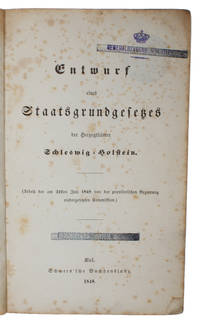
184859828Kiel Schmers'sche Buchhandlung 1848. 8vo. In the original blank blue wrappers. Provisional repair with tape to spine. Front-wrapper missing upper inner corner. Two stamps to half-title title-page and verso of title-page. Upper outer corner of half-title missing far from affecting text. Occassional brownspotting throughout. 34 pp. with a blank leaf inserted between every printed leaf giving a total of 33 ff. including the blanks. <br/><br/><em>The rare first printing of the drafting of the constitution by the provisional government for the Duchies of Schleswig-Holstein. In 1848 the Schleswig-Holsteiners decided to establish a provisional government and oust the Danish king. The subsequent war 1848-1851 achieved a status quo until a permanent solution between Denmark and Germany was reached in 1920. The 1848-1852 events in Schleswig-Holstein were a Danish-German confrontation. The underlying issues were complex: The kingdom of Denmark and the duchies of Schleswig and Holstein were component parts of the Danish Monarchy and were united in the person of the king/duke. Schleswig was a Danish fief Holstein a member of the German Confederation. A 1665 law introduced succession through the female line in Denmark with the survival of Salic law in the duchies held in abeyance. Schleswig had a strong Danish element in the north Holstein was German. "With the extinction of the male royal line in the offing Christian VIII declared in 1846 that the 1665 law applied to Schleswig and with some reservation to Holstein. Protests in the duchies had not been resolved when in the wake of the February revolution the liberals in Copenhagen took over and moved toward the annexation of Schleswig. In defiance the estates of Schleswig and Holstein set up a provisional government on March 24. Being composed of liberals and conservatives it obtained popular and official support in Germany and with Prussian military support gained control of most of the duchies by midsummer. But then Britain and Prussia intervened pressuring Prussia to make a truce with Denmark at Malmö August 26 1848 a truce which caused a parliamentary crisis in Frankfurt. In a short time Schleswig-Holstein had become the national issue and by acceding to the Malmö truce the Frankfurt Assembly severely damaged its political credit.Fighting resumed in 1849 and was ended by a July truce. After losing German military support the duchies were defeated in the 1850 campaign. The government abdicated on February 1 1851 and the Danish authorities took over a year later. In the final settlement the powers restored the Danish monarchy with the succession in the duchies to follow that of the kingdom Second London Protocol of May 8 1852. In separate notes the Danish government agreed to preserve the status of Schleswig and to abstain from steps leading to its incorporation. While the agreements restored the balance of power the relations between Danes and Germans suffered eroding popular sentiment for the Danish monarchy. Also Schleswig became a matter of outside concern permitting Prussian intervention in the case of Danish non-compliance." Ohio Univerty; Lawrence D. Steefel Sleswig-Holstein Question. </em> unknown
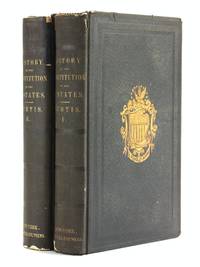
1858505860Harper and Brothers 1858. Hardcover. VERY GOOD. Vol. 1 1860 xxxvi 518; Vol. 2 1858 xvi 653 pp. 8vo original black cloth with gilt spine lettering and ornament to front covers a variation on the Great Seal of the United States. Tips show a bit of rubbing with some trivial loss typical light offsetting both volumes very clean and sharp internally with sound square bindings. From the personal library of lawyer F. K. Arnold with his Portland Oregon bookplate to FPEP and pencil signature d. 1876 to FFEP of volume 1. Harper and Brothers hardcover
188435270Chicago: Jansen McClug & Co 1884. First Edition. Wraps. Very good. Stitched wraps. Two copies. 8 pages. Original covers present and in very good condition. The Thirteenth Amenment passed the Congress in April 1864 officially ending Slavery. Jansen, McClug & Co unknown
18651260191865. First Edition. CONSTITUTION. Journal of the House of Delegates of the State of Virginia. for the Session of 18645. Alexandria: D. Turner 1865. Octavo original front printed wrapper respined renewed rear wrapper original string stitching; pp. 1-3 4-83 1. Housed in a custom chemise and clamshell box. $4500.First edition one of 500 copies of the momentous Journal featuring its February 9 1865 entry on the Alexandria Virginia government's passage of the 13th Amendment mere days after the U.S. Congress the first of the four Unionist southern states to pass the Amendment also featuring the governor's Message noting: ""though we have in inherited from our fathers of the revolution the blessings of a great nation yet they also left to us an inheritance of African slavery which has proved a bitter dreg in our cup of freedom"" a vital record of forces for constitutional change near the end of the Civil War.Soon after the 1860 election amidst southern secession ""the great questions of union or disunion war or peace hung in the balance. Probably the crucial weight on the scale was Virginia as long as the federal government did not seek to coerce the states Virginia secessionists were unable to achieve a majority. When Lincoln responded with force to the attack on Fort Sumter however the vote in Virginia went in favor of secession."" Subsequently a Virginia convention ""met in Wheeling on May 13 1861 it elected as Governor Francis Pierpont a western Virginian and ardent Unionist and arranged for the creation of a legislature to replace the body sitting in Richmond in July 1861 the new legislature met at the 'Restored Virginia' capital of Wheeling in a special session called by Pierpont."" Against its ""claim to represent a majority of Virginians"" a new state of West Virginia was created in 1863 and Pierpont's government moved to Alexandria to govern areas of Virginia under Union occupation Harrison Lawfulness of the Reconstruction Amendments 380-83.Scholars observe that the 13th Amendment its fellow amendments and Reconstruction as ""both a political process made possible by military successes and constitutional thought grew from wartime as well as post-Appomattox developments"" Hyman and Wiecek Equal Justice 247. This rare first edition of Journal of the House of Delegates substantiates that in documenting passage of the 13th Amendment by Pierpont's Virginia government mere days after the U.S. Congress passed the Amendment on January 31 1865. With that Virginia became the first of the four Unionist southern states that ratified the 13th Amendment. Of those Louisiana followed on February 17 with Arkansas and Tennessee that April. The 13th Amendment is the focus of the Journal's entry for February 9 1865 which states: ""Mr. Brownley called up Senate bill No. 12 entitled 'An Act to ratify the joint resolution of Congress passed January 31 1865 proposing an amendment to the Constitution of the United States.' The bill was read the first and second time and the rules were suspended and the bill read the third time and the bill passed."" Also notable herein is the complete printing of Governor Pierpont's opening Message where he notes: ""though we inherited from our fathers of the revolution the blessings of a great nation yet they also left to us an inheritance of African slavery which has proved a bitter dreg in our cup of freedom."" He speaks at length of the rights due people of color and the abolition of laws such as those that prohibit ""negro testimony"" or proscribe a ""different punishment for persons of African dissent"" from that of ""white persons.""""The legislature met for its second session on December 5 1864 The governor's message was a long and important document and indicated the changes of opinion that the war was bringing about. Pierpont gave his views upon the all-important negro question. He congratulated the constitutional convention which had met in the spring on the abolition of slavery in Virginia and advocated sweeping changes in the laws concerning negroes. The act prescribing different punishments for blacks should he said be altered in accordance with the amended constitution as well as the law for apprenticing them. The law prohibiting the education of negroes should be abolished His language was on the whole very moderate. He advised the legalizing of the marital relations of negroes and most important the establishment of public schools Notwithstanding the governor's advice no acts of great importance passed the legislature On February 9 1865 the assembly ratified the 13th Amendment to the Constitution of the United States. It adjourned on March 7"" Eckenrode Political History of Virginia During the Reconstruction. Faint ""U.N.C. Duplicate"" stamp to front wrapper.Text fine; just a bit of faint soiling and a tide line to fragile front wrapper. An excellent copy of this elusive item. unknown
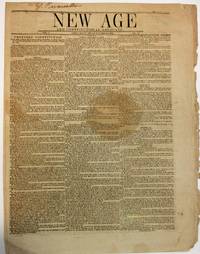
184137248Providence 1841. Elephant folio sheet folded to 16-1/4" x 21." 4 pp. A persistent but light circular spot in the center of each page. Untrimmed a bit of crimping. Good.<br /> <br /> The "Proposed Constitution" adopted at "the Convention of the People" on 18 November 1841 is printed. It would grant the suffrage to "Every white male" adult. Articles favoring is adoption are printed along with Rhode Island's 1790 Declaration of Rights.<br /> The New Age a rare newspaper was an organ of the Rhode Island Suffrage Association allied with Thomas Dorr urging universal white male suffrage. unknown
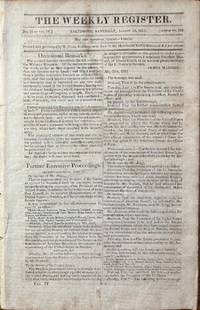
181336801Baltimore: H. Niles 1813. First Edition. Wraps. Good. Wraps. Disbound single issue. Pages 411-424 8 pages "appendix to Volume 4." Wraps are lightly toned and starting to loosen. Pages 411 412 trimmed closely with minor loss of print bottom edge. Issue is in good condition.<br /> <br /> Contents cover politics and recent events including President James Madison correspondence; coverage of the war of 1812; Naval actions; British blockade; New York elections the Constitution of Ohio located in the appendix; and more. H. Niles unknown
1881664891881. Concord NH 1881. Unrecorded. Concord NH 1881. Unrecorded. Are New Hampshire's U.S. Senators Serving Shorter Terms Than Their Fellow Senators Broadside. New Hampshire. U.S. Constitution. Opinion of the Supreme Court. To the Senate of New Hampshire Running Title. Concord NH June 10 1881. 18" x 9-1/2" broadside. Text in parallel columns. Light browning vertical and horizontal fold lines some with clean tears at edges. $350. This broadside records an opinion submitted to the U.S. Supreme Court. It states that New Hampshire's election schedule for state offices results in terms for New Hampshire's U.S. Senators that are three months shorter than those of other senators. It questions how to adjust the election cycle to guarantee 6-year terms to New Hampshire's senators which were then elected by the state senate. Signed in type by C. Doe Wm. L. Foster C.W. Stanley W.H.H. Allen Isaac W. Smith Leis W. Clark I.N. Blodgett. This appears to be an unrecorded broadside. OCLC locates 1 copy Library of Congress. unknown
180435986Philadelphia: Printed by William Duane 1804. First Edition. Wraps. Good. Wraps. 158 pages. Disbound stitched wraps. Title page 1. Blank rear wrap. Remnants of a leather spine. Light toning and scattered brown spots to the contents. Some lower corner page corner creases. Good condition. <br /> <br /> Contents concern a resolution amending the United States Constitution regarding electors from the States. The language is is printed on pages 34 and 5. The debate on the amendment is recorded in this report. On pages 157 and 158 are the "yeas" and "nays" from the individual Senators and Representatives. The proposed amendment become the Twelfth Amendment to the United States Constitution. The 12th amendment changed how the President and Vice President were elected in the United States. This amendment was in place when Thomas Jefferson was elected President and George Clinton was elected as Vice President. <br /> <br /> Printed on page 1 "Resolved by the Senate and House of Representatives on the United States of America in Congress assembled Two thirds of the Houses concurring That the following amendment to the constitution of the United States which when ratified by three fourths of the said legislatures shall be valid to all intents and purposes as part of said constitution to Wit: That the third paragraph of the first person section of the second article of the constitution of the United States in the words following to wit: "The electors shall meet in their respective states and vote by ballot for two persons of whom one at least shall be an inhabitant of the same state with themselves: And they shall make a list of all the persons voted for and of the number of votes for each which list they shall sign and certify and transmit sealed to the seat of Government of the United States directed to the President of the Senate."<br /> <br /> Sabin 20992. Printed by William Duane unknown
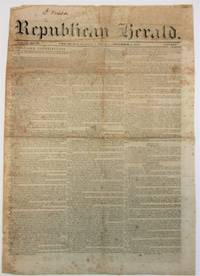
184137252Providence 1841. Elephant folio sheet folded to 15-1/4" x 21-1/2." 4 pp. Old folds light foxing. Good.<br /> <br /> The "Proposed Constitution" adopted at "the Convention of the People" on 18 November 1841 is printed. It would grant the suffrage to "Every white male" adult. Articles favoring its adoption are printed along with Rhode Island's 1790 Declaration of Rights. Articles on national and local political affairs plus numerous advertisements are also printed. <br /> In 1843 Thomas Dorr was arrested at the offices of the Republican Herald for high treason. unknown
18471239761847. First Edition. CONSTITUTION PHILLIPS Wendell. Review of Lysander Spooner's Essay on the Unconstitutionality of Slavery. Reprinted from the ""Anti-Slavery Standard"" With Additions. Boston: Andrews & Prentiss 1847. Octavo modern half calf gilt marbled boards; pp. 1-3 4-95 1. $1600.First edition in book form of Phillips' bold and influential antebellum work on the U.S. Constitution and the question of slavery revised and ""with additions"" to its serialization in the Anti-Slavery Standard.Controversy over slavery ""was the most important single influence on American constitutional development before the Civil War"" Wiecek Sources 15. Leaders in that controversy were William Lloyd Garrison Wendell Phillips and Lysander Spooner. As an anti-constitutionalist Phillips deemed ""Prophet of Liberty Champion of the Slave"" made his ""first public pronouncement that the Constitution should be abandoned"" when in 1842 he asserted the ""'spirit of liberty' is 'chained down in the iron links of the United States Constitution'"" and subsequently argued the Constitution was a ""'compromise' between freedom and slavery"" Knowles Securing the 'Blessings'"" 41. Phillips' 1844 work Constitution: A Pro-Slavery Compact prompted Spooner to author Unconstitutionality of Slavery First Part: 1845 Second Part: 1847 arguing it was instead slavery that was unconstitutional not the founding document. Phillips quickly countered with this Review.""Phillips insisted the only path to justice 'is over the Constitution trampling it under foot'. and raised pertinent questions about the processes of constitutionalism. Must a just person reject an imperfect constitution or even one that sanctioned and protected an evil like slavery to work effectively for constitutional reform and to abolish injustice Or was it possible to regard the constitution as an imperfect but amendable instrument the only thing available in the here and now of a heterogeneous secular society that can serve as a means of changing a society's goals and structuring"" Wiecek 246. To Phillips Spooner's approach essentially ""leaves every one to do 'what is right in his own eyes.'"" Spooner and Phillips also disagreed on remedies to immoral laws. ""Spooner did not consider an immoral contract binding"" and argued for example that judges rely instead on natural law for their decisions. Phillips felt that in such circumstances a judge should resign. In this Review Phillips also offers ""a new area in which antislavery and anarchy"" could be connected when he describes Spooner's ""antislavery constitutionalism as 'the first step toward anarchy'"" Perry Radical Abolitionism 165-66. First edition first printing. Serialized earlier the same year in the Anti-Slavery Standard the official weekly newspaper of the American Anti-Slavery Society which was co-founded by William Lloyd Garrison and Arthur Tappen. Sabin 62524. Dumond 93. Not in Blockson. Text fresh and about-fine. hardcover
183742610London Richard and John E. Taylor 1837. 4to. No wrappers as extracted from "Philosophical Transactions" 1837 - Part II. Pp. 347-363. Clean and fine. <br/><br/><em>First printing of Dalton's last paper submitted to the "Transactions". This paper one of his last deals with the constitution of the atmosphere just as his first love was meteorology."In an essay of mine on the constitution of the atmosphere which was printed in the Transactions for 1826 I signified my intention of following it with a sequel of experiments to ascertain if possible which of the two views therein developed was most counntenanced by facts. I now proceed to give an account of such investigations relating to this subject as havee engaged my attention during a long period of years."John Dalton. - Smith: John Dalton. A Bibliography. No. 78. </em> unknown
1898337605Authority Of The General Assembly 1898. Hardcover. Good-. . 6x9. GOOD-. Red Half Leather - spine and corners bound in leather with white boards. Frontispiece with wax paper protector. Approx. 6'' x 9''. Heavy wear and chips to edges and corners. Some slight discoloration and moderate soiling to leather and boards. Few chips and white stains to front cover. Possible liquid stains to edges of inside covers and end papers. Light pencil writing to top of 1st blank page. Clean inner pages with bright text.<p> Once Read Books cover scan available - just ask OnceReadBooks com<p> Orders shipped via USPS. Authority Of The General Assembly hardcover