256 résultats
176535551London: Mark Baskett 1765. Folio. 12 x 7 7/8 inches. 2 279-310pp. 5 George III cap. XII. Disbound. Housed in a blue full morocco box.<br/> <br/>Very rare first official printing of the Stamp Act: an exceptionally important document in American history.<br/> <br/>The passage of the Stamp Act was one of the signal events in the history of the United States. After its successful effort in the French and Indian War the British government was saddled with a massive debt. Added to this was the cost of administering its new lands in Canada and the necessity of protecting colonists on the American frontier from Indian attacks. In order to raise funds for border defenses the British Parliament decided to levy a tax directly on the colonists rather than relying on colonial legislatures to raise the funds themselves. Over the protests of colonial agents in London including Benjamin Franklin from Pennsylvania and Jared Ingersoll of Connecticut a tax was levied on all legal and commercial papers pamphlets newspapers almanacs cards and dice. Nine pages in the present act are taken up with descriptions of what type of printed materials would be subject to the tax. A Stamp Office was created in Britain and Stamp Inspectors were to be assigned to each colonial district. Colonists wishing to purchase or use any of the materials covered in the Act would be required to buy a stamp. The outrage in the colonies at this form of taxation was immediate and overwhelming and the Stamp Act was repealed in 1766. The bitterness engendered by the Act lingered on and coupled with subsequent British laws including the Intolerable Acts and the Townshend Acts became some of the many grievances enunciated in the Declaration of Independence. "This is the original folio edition of the famous or infamous Stamp Act by which the American colonies were taxed in and on their business papers" Church. "The importance of this act to our history needs no comment" Streeter. Sabin and Howes note an octavo edition of sixty-six pages also printed by Baskett in London in 1765. This momentous law was reprinted several times in the American colonies in 1765 in editions in Boston New York Philadelphia Annapolis New London and Woodbridge New Jersey.<br/> <br/>Sweet & Maxwell II:176; Church 1054; Stevens 6; Howes A285; Sabin 1606. Mark Baskett unknown books
17131394685London: Printed by John Baskett 1713-1717. First Editions. Hardcover. Folio 61-174 2179-191 6 203-206 2 211-218 2 223-270 2 275-357 3 361-362 2 367-382 2 387-422 4. In Good minus condition. Bound in full contemporary calf with banded spine and tooling to boards. Boards show moderate wear to edges moderate plus wear and bumping to corners and several gouges to the front board. Cracking to leather along joint of front board. A clear lacquer appears to have been applied to the boards. Text block has light age toning to edges. Ex-Library institutional plate appears on front paste down. Ex libris of former owner appears on front pastedown. Several ink "doodles" in an 18th-century hand appear on the front paste down and front free end page. Square-inch tear to fore-edge of front free end page. Pages tightly trimmed by binder impacting some of the printed marginal annotations. BB Consignment. Shelved in Room A Oversized. Appears to contain two collections of public statutes passed in 1713 and 1714 but printed between 1713 and 1717 each with a closing contents page. The first collection contains Acts II - XVIII of 18 acts and the second contains Acts II - XXIII of 23 acts. The acts cover a range of topics including duties tariffs and taxes; the paying and management of military personnel and militias; and the management of churches. The most significant of the acts however is Act 15 of the second set of acts entitled "An Act for Providing a Publick Reward for such Person or Persons as shall Discover the Longitude at Sea". This formally established the Commissioners of the Longitude and the reward of £20000 for "the first Author or Authors Discoverer or Discoverers of any such method ." that to the satisfaction of the committee accurately determined a ship's longitude at sea accurate to within 20 geographical miles. This reward would not be claimed until 1765 when clockmaker John Harrison developed his "time-keeper" or marine chronometer. 1394685. Special Collections. Printed by John Baskett hardcover
1730102277Bound volume of 89 acts folio 11 3/4" x 7" period full calf 446 pp. Various paginations actual page count is done by hand and a manuscript index at the front lists the acts and indicates the page it is on. Binding is worn backstrip is gone hinges are cracked covers almost detached and some signatures are loose some early ink notations and page numbering are on top of pages it appears there are some remnants of wax seals on the margin of the last page some soiling at endpapers normal aging and browning but internally pretty clean; despite the mentioned flaws the contents are in very good shape but the binding needs work. While this collection of Acts passed under George II and George III is not sequential a previous owner has provided a useful index as to the contents and location of various acts. The laws cover a very broad area of issues from the more mundane such as dog stealing punishments for disorderly houses and preventing abuses in making bricks and tiles to more important issues including the raising and training of the militia regulating the price of corn preservation of public highways and the punishment for selling ale and apiarist without a license. Other important acts include regulating places of entertainment regulating the trials of controverted elections establishing trade agreements in the East Indies changing some of the rules passed by Queen Elizabeth on providing relief to the poor and wildlife preservation. A fascinating glimpse at another time and issues of the day. Charles Eyre and William Strahan, Mark Baskett & Others,
1730102277Bound volume of 89 acts folio 11 3/4" x 7" period full calf 446 pp. Various paginations actual page count is done by hand and a manuscript index at the front lists the acts and indicates the page it is on. Binding is worn backstrip is gone hinges are cracked covers almost detached and some signatures are loose some early ink notations and page numbering are on top of pages it appears there are some remnants of wax seals on the margin of the last page some soiling at endpapers normal aging and browning but internally pretty clean; despite the mentioned flaws the contents are in very good shape but the binding needs work. While this collection of Acts passed under George II and George III is not sequential a previous owner has provided a useful index as to the contents and location of various acts. The laws cover a very broad area of issues from the more mundane such as dog stealing punishments for disorderly houses and preventing abuses in making bricks and tiles to more important issues including the raising and training of the militia regulating the price of corn preservation of public highways and the punishment for selling ale and apiarist without a license. Other important acts include regulating places of entertainment regulating the trials of controverted elections establishing trade agreements in the East Indies changing some of the rules passed by Queen Elizabeth on providing relief to the poor and wildlife preservation. A fascinating glimpse at another time and issues of the day. Charles Eyre and William Strahan, Mark Baskett & Others, books
17671098111767. First Edition. CUSTOMS COMMISSIONERS ACT. Act to enable His Majesty to put the Customs and other Duties in the British Dominions in America and the Execution of the Laws relating to Trade there under the Management of Commissioners. London: Mark Baskett 1767. Folio 20th-century marbled stiff paper boards. $3200.Rare first printing of the 1767 Customs Commissioners Act one of the controversial Townshend Acts that united patriot opposition to British rule and provoked the Boston Massacre.Following the Stamp Act which had united colonial opinion against British authority ""as no issue before a new period of agitation began in 1767 with the passage of the Townshend Acts"" Morison Sources xv. Engineered by Charles Townshend Chancellor of the Exchequer these were intended to raise revenue from the American colonies by imposing duties on goods Americans were already forced to import only from England punish New York's opposition to the Quartering Act and establish a board of customs commissioners in America. This is the first printing of that Customs Commissioners Act. ""To guarantee that colonial duties raised as much money as he had promised to Parliament Townshend was tightening control over America's slack customs procedures"" by appointing commissioners in England and sending them to Boston ""with broad powers. Since colonial jurors rarely convicted a local merchant of smuggling Townshend's acts set up new admiralty courts that could try smugglers without a jury. And the acts made it easier for customs officials to obtain writs of assistance"" Langguth 93. In addition ""the moneys thus raised in the colonies were to be used to render the royal governors and judges independent of colonial assemblies"" Morison xv. To Samuel Adams ""these new commissioners of customs were 'the greatest political curses that could be sent amongst us From the time the acts took effect November 20 1767 many Bostonians had been boycotting luxury goods from Britain by signing a 'nonimportation agreement Stricter enforcement at the customs offices was drawing off hard currency from America and bad times were spreading across the colonies"" Langguth 94 102-103. With increased colonial opposition to the Customs Commissioners Act and other Townshend laws ""the customs administration to enforce them became especially in ports like Boston increasingly militarized"" provoking merchants such as John Hancock into ""calling one of his sloops Liberty and flaunting his intention of 'running Madeira ashore"" Schama History of Britain II:463. The day after the Liberty was seized by customs officials Sam Adams was overheard challenging the crowd ""If you are men behave like men. Let us take up arms immediately and be free and seize all the king's officers"" Langguth 98. With the Board of Commissioners of the Customs headquartered in Boston the city became the ""rowdiest of all the centers of protest"" and those who broke the boycott were often tarred and feathered. As tempers grew shorter and customs officers were accused of bribery and extortion matters often ""got completely out of control. On 23 February 1770 an eleven-year-old boy Christopher Seider joined by a noisy protest of schoolboys and apprentices outside the shop of an importer was shot dead by a customs officer"" and his funeral turned into a mass protest led by Sam Adams. Only one month later on March 5th amidst these already heightened tensions ""a wigmaker's apprentice ragged a soldier all the way to the Custom House for an allegedly unpaid bill. When a guard struck the pursuing youth a tocsin normally used as a fire alarm was sounded and mobilized a large and angry crowd"" Schama History of Britain II 463. In the melee that followed the redcoats opened fire killing fiveamong them Crispus Attucksand the day would be memorialized in history as the Boston Massacre. Printed in gothic type indicative of the first edition. This first printing excised from the Sessional Volumes of Parliament pages 563-66 precedes all American printings. Minor rubbing spine. Very nearly fine condition. hardcover
1760339119London: John Baskett; Thomas Baskett; and others 1760. Together approx. 35 Acts each with separate title with Royal arms. Small folio. Disbound. Some with foxing some trimmed a few leaves detached. Overall very good. A couple in duplicate. Together approx. 35 Acts each with separate title with Royal arms. Small folio. Includes the following:<br /> <br /> An Act for the Continuing the Liberty of Exporting Irish Linen Cloth to the British Plantations in Amerca Duty-free 1717<br /> An Act for Importing Salt from Europe into the Province of Pensilvania in America 1727<br /> An Act for the better Preservation of His Majesty's Woods in America 1729<br /> An Act for Importing Salt from Europe into the Colony of New York in America 1730<br /> An Act for importing from his Majesty's Plantations in America directly into Ireland Goods not enumerated in any Act of Parliament 1731<br /> An Act to explain and Act . intituled An Act for importing from his Majesty's Plantations in America 1732<br /> An Act for the more easy Recovery of Debts in His Majesty's Plantations and Colonies in America 1732<br /> An Act for granting a Liberty to carry Sugars of the Growth Produce or Manufacture of any of His Majesty's Sugar Colonies in America 1739<br /> An Act for the more effectual securing and encouraging the Trade of His Majesty's British Subjects to America 1739<br /> An Act for the more easy and effectual Conviction of Offenders found at large within the Kingdom of Great Britain after they have been ordered for Transportartion to America 1742<br /> An Act for further regulating the Plantation Trade 1742<br /> An Act to revive several Acts . relating to Rice to Frauds in Customs to the clandestine running of Goods and to Copper Ore of the British Plantations 1742<br /> An Act for continuing several LAws relating to the Allowance upon the Exportation of British made Gunpowder; to the Importation of Naval Stores from the British Colonies in America 1743<br /> An Act to continue Two Acts of Parliament . for encouraging the Growth of Coffee . for the better securing and encouraging the Trade of His Majesty's Sugar Colonies in America 1746<br /> An Act for the better encouragement of the Trade of His Majesty's Sugar Colonies in America 1746<br /> An Act to extend the Provisions of an Act . for Naturalizing Foreign Protestants . in America 1747 two copies<br /> An Act for encouraging the making of Indico in the British Plantations in America 1748<br /> An Act for encouraging the People known by the name of Unitas Fratrum or United Brethren to settle in . America 1749 three copies<br /> An Act to encourage the Importation of Pig and Bar Iron from His Majesty's Colonies in America 1750<br /> An Act for encouraging the Growth and Culture of Raw Silk in . America. 1750<br /> An Act for encouraging the making of Pott Ashes and Pearl Ashes in . America 1750<br /> An Act for continuing several Laws . upon the importation of Masts 1751<br /> An Act for avoiding and putting and end to certain doubts and questions . concerning Real Estates . in America. 1752<br /> An Act for reducing the number of Directors of the Corportatioin of the Governor and Company of Merchants of Great Britain trading to the South Seas and other parts of America 1753<br /> An Act for continuing several Laws . and for the encourging the trade of the Sugar Colonies in America 1753<br /> An Act for continuing an Act . for encouraging the making of Indico in the British Plantations in America 1755<br /> An Act for extending the Act . as shall serve on Board His Majesty's Ships or Vessels employed upon the Lakes Great Waters or Rivers in North America 1756<br /> An Act to enable His Majesty to grant Commissions to a certain number of Foreign Protestants . in America 1756<br /> An Act to extend the Liberty . of importing Bar Iron from His Majesty's Colonies in America 1757<br /> An Act to prohibit for a limited time the exportation of corn grain meal malt flour bread biscuit starch beef pork bacon . from His Majesty's Colonies and Plantations in America 1757<br /> An Act to continue . a Liberty to carry sugars of the growth produce or manufacture of any of His Majesty's Sugar Colonies in America 1758<br /> An Act for continuing certain laws . and to the Encouragement of the Trade of the Sugar Colonies in America 1758<br /> An Act to continue several laws . to the encouraging the growth of Coffee in His Majesty's Plantations in America 1759<br /> An Act to continue several laws . to the granting Liberty to carry Rice from his Majesty's Province of Carolina in America 1760. John Baskett; Thomas Baskett; [and others] unknown
176635634London: Mark Baskett 1766. Folio. 2 823-826pp. 6 George II cap. LI. Disbound<br/> <br/>Wiping the slate on the Stamp Act.<br/> <br/>An official British Act passed after the repeal of the Stamp Act in which those persons who had incurred penalties from non-compliance with the Stamp Act are cleared of charges against them. Because of the attacks on Stamp Act collectors many persons had been unable to obtain the official stamped paper for various legal transactions. The Stamp Act which caused such public outcry in the colonies was repealed the year after it was passed. This nullified any remaining Stamp Act issues. Only three copies in ESTC at the Lincoln's Inn Library the Newberry and the University of North Carolina.<br/> <br/>ESTC N56936. Mark Baskett unknown books
1767002781Amsterdam, et se trouve à Paris Prault le Jeune, 1767
1777599<p>Anno Regni GEORGII III REGIS Magnae Britaniiae Franciae & Hiberniae DECIMO SEPTIMO. At the Parliament Begun and holden at Westminster the Twenty-ninth Day of November Anno Domini 1774 in the Fifteenth Year of our Sovereign Lord GEORGE the Third by the Grace of God of Great Britain France and Ireland King Defender of the Faith. </p><br /><p>FIRST EDITION 4 1039-1042 woodcut coat of arms on title woodcut floriated initial text in black letter unbound folio 320 x 200mm London Charles Eyre and William Strahan 1777</p><br /><p>This important act emphasised the Government's dedication to improving general science and navigation by offering rewards to those who could find an accurate method for determining longitude at sea. </p><br /><p>The first Longitude Act of 1714 was Parliament's response to the loss of 2000 lives in 1707 when four British navy ships ran aground after miscalculating the longitude. The Act offered prize money of £10000 reduced from £20000 for a reliable and accurate method of determining longitude at sea. Research and related experimentation were also encouraged and award money was made available for lesser discoveries and specific improvements. The competitions attracted the skill and imagination of the greatest scientific minds and mariners of the time.</p><p>The most prominent and successful competitor was John Harrison 1693-1776 who received disbursements of £22000 over a period of 35 years for his brilliant discoveries and invention of the marine chronometer. This was however not without a struggle for recognition. The marine chronometer was quicker but the preferred avenue of institutionalisation was the Lunar Distance Method. The Lunar Distance method was a method to determine longitude using certain astrological measurements and specific corrections marked in yearly almanacks. The Act of 1765 put caveats and conditions on the original act of 1714 and included stipulations that applied specifically to Harrison. It even named him in the opening language and described the current status of his contrariety with the board. Only with the relentless championing from his son and the personal intervention of King George III Harrison was awarded the monetary prize he was due. The Longitude Act 1777 reiterated specific goals of the program as revised by the 1774 Longitude Act and approved an additional £5000 for continued research work and experimentation and for awards to recognize lesser contributory discoveries as approved by the Commissioners of the Board of Longitude.</p><p>The Longitude at Sea program was successful in multiple ways and facilitated important advances in mathematics astronomy horology navigation and Arctic exploration. Over the life of the program a total of £53000 in prize money was awarded to more than sixty participants.</p><br /> Charles Eyre and William Strahan
1745583<p>Anno Regni GEORGII II REGIS Magnae Britaniiae Franciae & Hiberniae DECIMO OCTAVO. At the Parliament Begun and holden at Westminster the First Day of December Anno Domini 1741 in the Fifteenth Year of our Sovereign Lord GEORGE the Second by the Grace of God of Great Britain France and Ireland King Defender of the Faith. </p><br /><p>FIRST EDITION 2 483-486 woodcut coat of arms on title woodcut floriated initial text in black letter folio 320 x 200mm London Thomas Baskett 1745</p><p>The third Act to be published on the Northwest Passage the act of 1745 offered the enormous sum of £20000 for the discovery of a north-west passage providing that they were a British subject. </p><p>The preamble to the Act stated the expected economic benefits of the discovery of the passage and that it would be "a great encouragement to adventurers" to offer a prize. The allocated sum was £20000 to be paid to the owners of the first ships to successfully make such a passage.</p><p>The Board of Longitude existed from 1714 until 1828 after the original Act of Parliament was passed in 1714. First added to in 1741 the act was subsequently amended or repealed and replaced on numerous occasions until the Board was dissolved by Act of Parliament in 1828. </p><p>This Act established a group of commissioners to determine the validity of any claims and restricted the scope of the Act to only apply to British subjects. It further required all British subjects to provide help and assistance to the explorers when necessary. In setting a hefty monetary reward and promoting the potential benefits to society this act of Parliament likely intensified the Northwest Passage fervour and motivated explorers to venture deep into the Arctic.</p><p>When the Act was extended in 1775 and the reward reiterated Cook took up the mantle leading to his third voyage. </p> Thomas Baskett
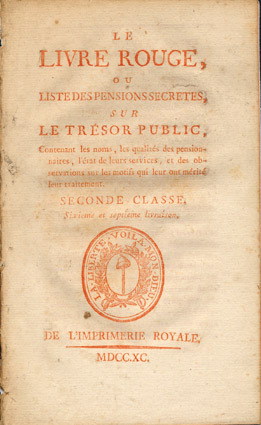
17902889Imprimerie Royale, 1790 ; in-8, broché, imprimé en rouge.
176248611S.l.: s.n. 1762 y Roma: L'Imprimerie de la Chambre Apostolique 1773 la Bula de Clemente XIV.- Las cinco partes con paginación independiente 199 p.; 16 p.; 148 p.; 19 p.; 26 p.; 8º menor 17 x 10 cm; Clara impresión sobre papel verjurado; Texto en francés; Enc. de la época en Holandesa Pergamino cortes pintados en color granate.- MUY RARO. La encuadernación algo rozada en los ángulos externos. En la portada una firma manuscrita de la época que no toca texto. Dicho esto la obra se encuentra muy buen estado. Libro de alta significación documental e histórica que constituye un testimonio material clave sobre la persecución judicial parlamentaria y finalmente eclesiástica contra los jesuitas. La bula del Papa Clemente XIV es Primera Edición. HISTORIA Y POLÃTICA DE LOS SIGLOS XVI-XXI E HISTORIAS GENERALES EXTRANJERAS Livre en français Sin Editorial hardcover
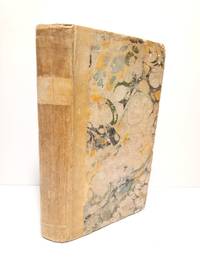
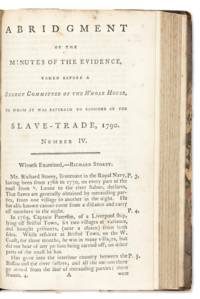
1789187101789. Committee of the Whole House of the British Parliament investigation into the Atlantic slave trade recorded in Abridgment of the Minutes of the Evidence Taken Before a Committee of the Whole House to Whom It Was Referred to Consider of the Slave Trade published 1789 to 1791 presenting one of the earliest parliamentary documentary compilations addressing the operation and human consequences of the transatlantic slave trade. The volumes preserve testimony gathered during parliamentary inquiries that examined the practices of British slave traders and the treatment of enslaved Africans transported across the Atlantic. These proceedings formed part of the political campaign in Britain that eventually culminated in the abolition of the British slave trade in 1807. The collected evidence includes statements from ship surgeons naval officers merchants and other witnesses whose accounts describe the conditions experienced by enslaved Africans during capture transport and plantation labor.<br /> <br /> Abridgment of the Minutes of the Evidence Taken Before a Committee of the Whole House To Whom It Was Referred to Consider of the Slave Trade. London: 1789-1791. First edition first printing. Four volumes bound in two books. The compilation reproduces testimony presented before Parliament concerning the organization and operation of the slave trade and includes firsthand statements describing the physical suffering and resistance of enslaved Africans during transport. Surgeon Alexander Falcon-Bridge who had firsthand experience aboard slave ships described acts of despair among captives: he "Has known several enslaved persons to refuse sustenance with a design to starve themselves. refusing to take medicines when sick because they wished to die. Many other slaves expressed the same." Another witness Royal Navy surgeon Thomas Trotter recorded the emotional trauma experienced by captives during embarkation noting that "Slaves on being brought on board showed signs of extreme distress and despair from a feeling of their situation and regret at being torn from friends and connections." The volumes therefore preserve testimony that exposed the violence and human suffering embedded within the Atlantic slave trading system.<br /> <br /> During the eighteenth century European and American traders transported millions of Africans across the Atlantic through a commercial system that relied on maritime networks linking West Africa the Caribbean and the Americas. Parliamentary investigations of the slave trade in the late eighteenth century were fueled in part by abolitionist activism and public campaigns demanding government inquiry into the practice. Publications of witness testimony such as this abridged parliamentary record circulated evidence used by reformers advocating the end of the trade. Four volumes bound in two books with folding table in the fourth volume. Octavo format. Contemporary marbled quarter calf bindings with modern bookplates on the front past down. Wear present with most spine titles lacking and foxing primarily affecting the title pages; text remains clear. Overall condition very good. unknown
1764100735Pamphlet format small folio disbound. Five acts lacking separate titles but complete appears to be two extra tittle pages a few tears and corner folds one act with margin tear not affecting text minor some soiling; otherwise very good. This is an interesting collection of Parliamentary Acts relating to America during the reign of George III. While most of the acts are from the colonial period there is also some Revolutionary War material. There are several acts concerning the importation of rice from South Carolina and Georgia and others that relate to importation of wheat beaver skins and tea into the colonies. Others address the quartering of troops in the colonies as well as better pay for soldiers and dealing with mutiny and desertion. Additionally several acts refer to a continuation of the right of the king to secure and detain people charged with or suspected of "high treason" and for the exchange of American prisoners brought to Great Britain. Mark Baskett; Charles Eyre and William Strahan
1764100735Pamphlet format small folio disbound. Five acts lacking separate titles but complete appears to be two extra tittle pages a few tears and corner folds one act with margin tear not affecting text minor some soiling; otherwise very good. This is an interesting collection of Parliamentary Acts relating to America during the reign of George III. While most of the acts are from the colonial period there is also some Revolutionary War material. There are several acts concerning the importation of rice from South Carolina and Georgia and others that relate to importation of wheat beaver skins and tea into the colonies. Others address the quartering of troops in the colonies as well as better pay for soldiers and dealing with mutiny and desertion. Additionally several acts refer to a continuation of the right of the king to secure and detain people charged with or suspected of "high treason" and for the exchange of American prisoners brought to Great Britain. Mark Baskett; Charles Eyre and William Strahan books
17741353592London: J. Almon 1774. First Edition. Hardcover. Octavo 2 63 pages 4. In Very Good minus condition. Pamphlet later bound in light blue boards. Boards show light plus age-toning to edges and spine with black lettering on spine. <br /> Text block shows moderate age-toning to edges light plus age-toning throughout interiorly and a 1-in. closed tear to title page along fore-edge. Four pages of publisher's ads appear at back. Lacking half-title page. RW Consignment. Shelved in Case 1. Authorship of this tract has been variously attributed to Arthur Lee William Pitt the Elder and Benjamin Franklin. While Benjamin Franklin submitted the text to J. Almon for publication it is generally accepted that Lee was the author. Arthur Lee was a pro-American Member of Parliament and writes here in defense of colonial rights and liberties. References: Sabin 39697; Adams 74-44a. 1353592. Shelved Dupont Bookstore. J. Almon hardcover
17678138London: George Eyre and Andrew Strahan 1767. Collection of Acts of Parliament printed between 1767 and 1812 legislating on Britain's relationship with its American colonies and subsequently the newly fledged United States. These Acts are disbound and altogether the 25 Acts run to 114 pages. Subjects under British law include the vexed problem of taxation on imports from North America RiceSago and Vermicelli rice etc mutinous troops in the American colonies and laws regarding the transport of 'Rice from South and North Carolina and Georgia directly to any Part of America to the Southward of the said Provinces' 1769 Tea exports to Ireland are dealt with in an act of 1777 and two years later there is an Act designed to raise funds for the loyalist side in the Revolutionary War. The early 19th century group of Acts continues to dealwith the regulation of imports to Britain from the United States and cross-border trade into Canada. $1500 London: Printed by George Eyre and Andrew Strahan Printers to the King's most Excellent Majesty 1767 Anno Septimo Cap XXX - An Act for allowing the free Importation of Rice Sago Powder and Vermicelli from North America 4pp; 1767 Anno Septimo Cap LV - An Act for punishing Mutiny and Desertion and for the better Payment of the Army and their Quarters 4pp; 1767 Anno Octavo Cap III - for the free Importation of Indian Corn or Maize from any of His Majesty's Colonies in America 4pp; 1768 Anno Octavo Cap IX - An Act for the Importation of Salted Beef etc. from the British Dominions in America 4pp; 1768 Anno Nono Cap IV - An Act to allow for a further Time the free Importation of Rice into this Kingdom from His Majesties Colonies in North America 4pp; 1768 Anno Nono Cap IX - to continue an Act for Importation of Salted Beef Pork Bacon and Butter from Ireland and from the British Dominions in America 4pp; 1769 Anno Nono Cap XVIII - An Act for amending An Act for punishing Mutiny and Desertion 4pp; 1769 Anno Nono Cap XXVII - for granting a Liberty to carry Rice from South and North Carolina and Georgia directly to any Part of America to the Southward of the said Provinces 4pp; 1777 Anno Decimo Septimo Cap XXVII - Drawback of the Duties of Customs on the Exportation of Tea to Ireland 6pp; 1777 Anno Decimo Septimo Cap XXXIV - for the better Supply of Mariners and Seamen to serve in His Majesty's Ships of War 4pp; 1777 Anno Decimo Septimo Cap XLIV - An Act encouraging the making of Indico in the British Plantations in America registering the Prices at which Corn is sold in the several counties of Great Britain encouraging the manufacture of Leather allowing Timber and Wood to be exported from the Island of Dominica allowing a Bounty on the Exportation of British-made Cordage 6pp; 1778 Anno Decimo Octavo Cap LV - to permit the Exportation of Goods directly from Ireland into any British Plantation in America or any British Settlement on the Coast of Africa; Fisheries and Navigation of Ireland 8pp; 1778 Anno Decimo Octavo Cap LVIII - to the preventing the Clandestine Conveyance of Sugar and Paneles from the British Colonies and Plantations in America 6pp; 1779 Anno Decimo Nono Cap XLI - granting a Drawback of Duties upon all foreign Wines exported from Great Britain to any British Colony in America or the East Indies 4pp; 1779 Anno Decimo Nono Cap LXXI - An Act for granting to His Majesty a certain Sum of Money out of the Sinking Fund and for further appropriating the Supplies granted in this Session of Parliament 23pp; 1801 Anno Quadragesimo Primo Cap LXXVII - the Importation of certain Fish from Newfoundland and the Coast of Labrador 3pp; 1801 Anno Quadragesimo Primo Cap XCVII - An Act to continue several Laws relating to encouraging the Fisheries carried on at Newfoundland at the Greenland Seas and Davis Streights to the making of the Port of Saint John's in the Island of Antigua a free Port and to permitting the Importation of Goods from Countries in America belonging to any Foreign European Sovereign or State 4pp; 1806 Anno Quadragesimo Sexto Cap XVII - to permit the Exportation to the United Kingdom of Wool from the British Plantations in America 2pp; 1807 Anno Quadragesimo Septimo Cap XXXVIII - the Importation of certain enumerated Articles eg Scantling Planks Squared Timber Horses Neat Cattle Gypsum Grind Stones etc into the British Colonies on the Continent of North America 2pp; 1808 Anno Quadragesimo Octavo Cap XXI - to empower Commissioners appointed for distributing the Money paid by the United States of America 2pp; 1809 Anno Quadragesimo Nono Cap XLVII - to permit certain Articles the Growth Production or Manufacture of Europe to be laden and shipped on board Ships arriving with British North American Produce 3pp; 1810 Anno Quinquagesimo Cap XII - for permitting the Importation of Masts Yards Bowsprits and Timber for Naval Purposes 2pp; 1810 Anno Quinquagesimo Cap XIII - for permitting the Exportation of Salt from the Port of Nassau the Port of Exuma and the Port of Crooked Island in the Bahama Islands Sugar and Coffee 2pp; 1811 Anno Quinquagesimo Primo Cap XCVII - to regulate the Trade between Places in Europe South of Cape Finisterre and certain Ports in the British Colonies in North America 3pp; 1812 Anno Quadragesimo Secundo Cap LV - to Prevent Foreign Goods of Certain Descriptions being brought from the United States of America into Canada; and to allow a greater Quantity of Worsted Yarn to be exported from Great Britain to Canada 2pp. Please contact Christian White Rare Books Ltd for more information or images of this item 1767 George Eyre and Andrew Strahan hardcover
170122505London: Charles Bill 1701. First edition. leather_bound. Contemporary full cambridge style brown calf in paneled design. Very good. 480 pages. 4 pages of A Table of the Statutes Publick and Private. 12 3/4 x 8 inches. Considered to the first Parliamentary Act relating only to the Jews was as a result of an 18 year old girl being disowned by her Jewish family when she converted to Christianity enacted for Mary de Mendez Berta's benefit. Bound in a larger volume of British Acts from the years 1701-1704 that also numerous other acts: Mutiny one related to Quakers security of the succession of the Crown Protestant Line counterfeiting preserving public credit repairing bridges and highways raising the Militia debt relief of poor prisoners et al. This act relating to Jews only until then Jews were mentioned only in clauses of Acts or in context of law suits and trials. The Act which in fact was designed to facilitate and even encourage conversion passed with almost no objection. Leather chipped in spots raised bands wear at corners hinges cracked but binding intact some light soling. mostly clean and bright throughout with one quire bearing moderate toning with text printed in black letter. Charles Bill unknown books
177741764London: Printed for J. Almon 1777. First edition. Contemporary calf five raised bands red morocco spine label gilt armorial gilt device at foot marbled end-papers. A very good copy wear and sunning to the boards spine rubbed headband lacking some minor browning to leaves small loss of paper at lower fore edge of title page. 4 5-348 11 pp. 8vo. An important document concerning the American Revolution beginning with King George III's admission that things were not going as planned in the American Colonies followed by a series of attacks on the administration by members of Parliament who felt the measures taken were poorly conceived and which Lord North attempted to rebut. Some highlights include: an account of the meeting between George Washington and General Howe's adjutant Lt. Col. Patterson read into the record following a complaint that though published in the Colonies the administration did not see fit to make them available in England; the costs of the War are listed in great detail; a bill to empower the King to secure and detain persons charged with or suspected of treason in America or the high seas including the suspension of Habeas Corpus is introduced and attacked as unlawful. Though mostly about North America there is a long section on the capture of the sloop Morning Star off the Mosquito Coast in Central America and a history of Britain's position there. This was the sixth volume of the first monthly record of Parliament published between 1774 and 1780 by John Almon 1727-1805 an English journalist printer bookseller who played a major role in establishing the right to report on Parliament. Provenance: Armorial device and bookplate of John Smyth 1748-1811 member of Parliament Lord of the Admiralty and Treasury Master of the Mint and a Commissioner of the Board of Trade. Printed for J. Almon hardcover books
178925404Paris 1789 un document de 44 pages, manuscrites à l'encre brune, sur parchemin velin, format : 26 x 20 cm, velin avec 1 timbre fiscal fixe en noir : "Généralité de Paris - greffier 23 sols 4 deniers", signature manuscrite : BURUET, CONSEILLER DU ROI, A LA CHAMBRE DES REQUÈTES DU PARLEMENT DE PARIS, FAIT A PARIS, LE 2 MARS 1789
1749elala1108London: 1749. 1749. folio. pp. 27. woodcut title vignette. disbound. Relating to the request for exemption from oaths and military service of the Moravian settlers in the British North American colonies Pennsylvania Georgia &c. The petitioners were Abraham Baron of Gersdorff Lewis Baron Schrauttenbach free Lord of Lindheim David Nitschman Syndic Charles Schachmann Baron of Hermsdorff and Henry Cossart. An act granting the exemption was passed the same year. European Americana 749/129 bound with An Act . Bell G749. Sabin 69731. [London]: 1749. unknown
17502821Reliure d'époque légèrement défraîchie. Plein veau raciné, dos à nerfs orné de caissons dorés, p.d.t., tranches rouges. Très bon Paris s.n. 1750 1 volume in-folio.
179834069London: Printed by George Eyre and Andrew Strahan Printer's to the King's most Excellent Majesty 1798. Folio. Disbound pages 805-820 as issued. Very Good.<br/><br/> This detailed law an important step in England's final abolition of the African slave trade regulates the maximum number of slaves that such ships may carry; requires the keeping of meticulous records the provision of written Declarations to Customs Officers mortality records; imposes bonds and penalties; requires surgeons' inspections; regulates living quarters for the slaves.<br/>ESTC N60199 2- Cornell Lincoln's Inn. OCLC 352927642 1- NYPL 64758335 2- Cornell Northwestern as of December 2018. Printed by George Eyre and Andrew Strahan, Printer's to the King's most Excellent Majesty unknown books
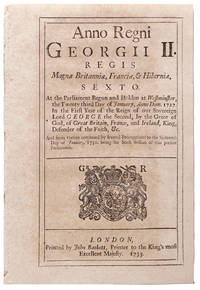
1733319970London: Thomas Baskett 1733. pp. 2 443-455 1 blank. Woodcut seal on the title. Folio. Disbound. Foxing trimmed. pp. 2 443-455 1 blank. Woodcut seal on the title. Folio. This Parliamentary Act authorized a grant of £10000 "for establishing the colony of Georgia in America to be applied toward defraying the charges of carrying over and settling foreign and other Protestants in the said colony" p. 448. The act further authorizes the application of £500000 from the sinking fund to pay off one million South Sea annuities. Not in Sabin Howes Rich Church Streeter or De Renne. Thomas Baskett unknown
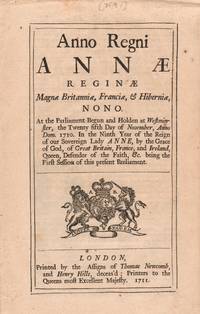
171112255This Act of Parliament made it illegal to harvest trees that were "fit for masts not being the property of any private person" in many of the North American colonies. The fine for felling such a mast-worthy tree was one hundred pounds sterling for each offense. In addition the Act instructed the Surveyor General of Her Majesties Woods "to mark with the broad arrow all such trees as now are or hereafter shall be fit and proper to be taken for the use of her Majesties Royal Navy and to keep a register of the same." An early act asserting Mother England's authority over natural resources in the colonies. ICN 7519.1. Printed by the Assigns of Thomas Newcomb, and Henry Hills, deceased...