1 résultat
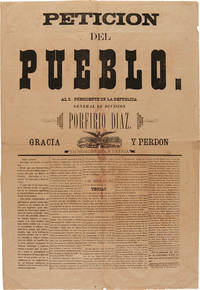
1890WRCAM55735N.p. but Puebla: Tip. Rinconada de Manzanares 1890. Broadside 23 1/2 x 15 3/4 inches printed in five columns with masthead showing a version of Mexico's coat of arms with eagle holding rattlesnake perched on crossed pikes above a cannon. Uniformly toned. Old folds and wrinkles short splits and minor loss at crossfolds mild staining. Overall good plus. An apparently-unrecorded broadside from Mexico printed during the reign of President Porfirio DÃÂaz who served a total of thirty- one years as the chief executive and effectively the dictator of Mexico. As with other dictatorial regimes DÃÂaz had a contentious and sometimes violent relationship with the press. He is known to have very occasionally condoned if not initiated the murder and imprisonment of journalists though he also often courted journalists to give them the impression that he was on their side expecting support in return. As a result Diaz often favored imprisonment over the outright assassination of journalists. During his dictatorship DÃÂaz sent numerous dissident politicians and journalists to the prisons of Belén or San Juan de Ulúa though being sent to the former was widely considered tantamount to a death sentence anyway. Journalists and political enemies were just two groups subject to DÃÂaz's theory of rule - that cruel means though unfortunate were justified by the end result of national progress. <br> <br> The present broadside calls for clemency from DÃÂaz in his dealings with imprisoned journalists and politicians. The author of the broadside mentions past injustices related to journalists and political prisoners. In the first column the text mentions Ignacio Ramirez and his pen name "el Nigromante;" Ramirez was a liberal writer and thinker who often defended the rights of indigenous peoples in Mexico. Here the author accuses the conservative party of trying to intimidate Ramirez and many others like him by putting "the hand of an enraged hitman on the neck of the liberal journalist." a rough translation. The text also references the Third Battle of Puebla fought on April 2 1867 and won by Porfirio DÃÂaz. At the conclusion of that battle instead of executing the imperialist Mexican prisoners DÃÂaz released them after they signed a promise not to take up further arms against the Mexican republic. The text appeals to DÃÂaz's demonstrated sense of mercy and reads in part and in English translation: <br> <br> "We the members of the working class know well and have witnessed your energetic courage in the battlefields as an intrepid and worthy son of Mars but now also this time we do not demand but we beg to have the happiness and satisfaction to see and admire him as a hero of clemency for imprisoned journalists.and more so for his afflicted families who at this moment endure the crying and perhaps even the misery and fatal consequences of that prison in which the heads of those anguished families reside." The text also calls for clemency or pardons for a long list of political prisoners. The names of the prisoners held at Belén occupy the last column-and-a-half of the broadside. At the conclusion of the text there is a notice that indicates the petitioners have 4000 signatures in their favor for the demands made here. <br> <br> OCLC is silent on this broadside. It is at least an exceedingly rare if not a unique surviving example of the political tensions between President DÃÂaz and his political opponents and journalists in Mexico at the end of the 19th century and a powerful and important entry in the ever-present struggle for the freedom of the press. Tip. Rinconada de Manzanares unknown books