(19th Century Scottish Tracts)Biblio.com

274 résultats
1846H9640Edinburgh: R. Marshall Printer W. Innes Bookseller 1846. Very Good. 8.25 inches tall single sheets folded once to make 4 pp. -- 2 narratives with religious themes. Both unrecorded in OCLC COPAC etc. Part of the Tract Movement in Scotland and England designed to appeal to the purses of the wealthy to beseech charitable contributions on behalf of the poor and indigent. R. Marshall Printer, W. Innes, Bookseller unknown
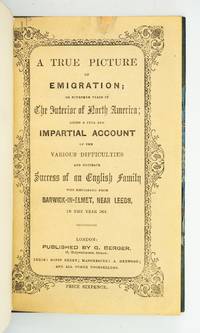
1848ST20861London: G. Berger 1848. FIRST EDITION. 180 x 110 mm. 7 x 4 1/4". 2-62 pp. 6 blank leaves. <br/> The original printed paper wrappers bound in early 20th century green crushed half calf over marbled paper boards monogrammed "F. O. L." in gilt on leather corner at lower right of upper board raised bands spine compartments gilt with floral sprig gilt lettering marbled endpapers. Engraved bookplate of Frank O. Lowden on front pastedown. Howes B-992; Sabin 97133. Spine evenly sunned to a medium brown small early repair to upper edge of paper wrapper but a fine copy the binding with virtually no wear and the contents extremely clean and fresh with only trivial defects.<br/> <br/> This is an excellent copy from the library of an important Illinois politician of the scarce memoir of a female Illinois homesteader. Our author Rebecca Burlend 1793-1872 and her husband John a farmer and schoolteacher made the choice in August of 1831 to leave their Yorkshire home and travel with five of their children to Illinois. They arrived in New Orleans two months later and began an arduous journey up the Mississippi to their land claim in Pike County across the river from Hannibal Missouri. The author's description of the trip and their subsequent difficult first few years in the United States provides an unvarnished picture of frontier life. Burlend candidly recounts hardships caused by such things as weather fire and squatters and critically discusses the people she met many of whom she disliked--writing that "ignorance was the predominant feature of Western character." While she apparently felt the adversity had been largely worthwhile she intended the present narrative as a realistic guide for other prospective British emigrants. The book concludes with the practical sentiment that "if the account I have given of our proceedings adverse and successful does not allure the reader's fancy with ideas of visionary prosperity as the invariable result of crossing the seas it may perchance tend to make him a little better satisfied with his present condition though it should only be a snug little cottage in the land where his childhood was reared." Her memoir was published anonymously in London in 1848 after she had composed it on a return visit to England with the help of her son. She was not formally identified as the author of the piece until 1936. The present copy is distinguished by its connection to another figure in Illinois history: Frank Orren Lowden the "F. O. L." on the front cover 1861-1943 represented Illinois' 13th district in the U.S. House of Representatives and later served as governor of Illinois from 1917-21. G. Berger unknown
1860535891860. Softcover. Good- to good condition. 1. Discrimination in Switzerland. Washington D.C. House of Representatives. 1860. Octavo. 101pp. Original tan wraps with black lettering on cover. Collection of correspondence between US officials and Theodore S. Fay among others at the time secretary of the US legation in Bern Switzerland. In 1859 Fay had delivered a report to the Swiss Federal Council Memorandum concerning the admission of North American Israelites to settle in Switzerland that was important in the struggle for emancipation of Jews in Switzerland. It had provided an overview of discriminatory Swiss laws against Jews in Switzerland while going to great depth to refute arguments that supported these laws. As a result small steps were taken in the Swiss cantons contributing to the eventual emancipation of Jews in Switzerland in 1866. Missing wraps but for most of spine. Very lightly age-toned.<br /> <br /> 2. Address "To the President of the United States." Single light blue printed leaf. Not dated. Memorial of Subscribers of the commonwealth of Pennsylvania protesting against the Swiss laws discriminating against Jews in Switzerland. An attempt to influence the President to take steps to abolish the discrimination against Jews in Switzerland. Light wear along edges of leaf small chips and folded several times. Undated.<br /> <br /> 3. This Memorial. 1857. Printed Octavo circular 4pp. Protest addressed to the President of the United States against the Swiss for their restrictive laws against American Jews. Vigorous protest to President James Buchanan against blatant anti-Semitism in Switzerland. "It so happens that certain Cantons of the Swiss Confederation among which Basle and others have laws prohibiting Israelites from sojourning temporarily domiciliating or establishing themselves permanently. The treat. has clearly failed. for we are met by a dark age prescriptive law declaring us unworthy of participating in the rights of our fellow citizens on account of our professing the Israelitisch religion." This demand illustrates the disparity between the United States Constitution which protects freedom of religion and yet is not doing enough to protect these same freedoms for its citizens when they travel abroad. Signed by various Jewish petitioners including Isaac M. Wise of Ohio. Scarce: Singerman 1515 cites two other known copies of this pamphlet. With some wear along edges small chips and folded three times. Lightly age-toned. unknown
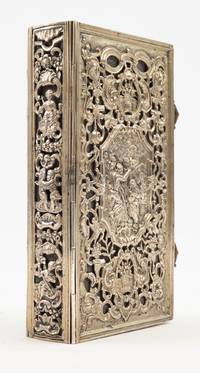
1885ST20549cOxford: Printed at the University Press for Peacock Mansfield and Britton London ca. 1885. 146 x 80 mm. 5 3/4 x 3 1/8". 536 pp. <br/> IN A LOVELY 18TH CENTURY SILVER BINDING over contemporary brown morocco DONE IN THE FRENCH RÉGENCE STYLE combining piercing with repoussé ornamentation the covers with central cartouche depicting a scene from the life of Christ in repoussé that on the front cover showing the Baptism of Christ with two hallmarks at the upper left an "A" and a rooster that on the lower cover showing the Ascension this surrounded by a pierced frame of rocaille drawer handles vases of flowers swans a leafy fronds spine pierced with rocaille and flowers separating three allegorical putti ornaments representing Faith Hope and Charity two openwork rocaille clasps. Endpapers rather worn at fore edge isolated very faint foxing otherwise A FINE COPY the text clean and fresh and THE SILVER BINDING SPARKLING AND UNMARRED.<br/> <br/> This glittering binding is a lovely example of 18th century silverwork in nearly flawless condition. While we have been unable to identify the maker the binding is probably French. A silver binding on a 1686 copy of a Rotterdam "Speculum Poenitentiae" catalogued by Antiquariat Roo is identical to ours in size and design except for the content in the large central frames and is identified by them as French. They find a master's mark of "T. G" beneath the front scene not present on our binding. In any case the delicate symmetrical ornamentation featured on our binding is typical of French Régence decorative arts with scrolls studded with naturalistic embellishments that reward close inspection. Many charming details are hidden within the sea of volutes such as the swans stealing treats from overflowing baskets of fruit. The central scenes from the life of Christ come to life through meticulous execution as our silversmith has taken great care with the details: water trickles from John the Baptist's outstretched arm and voluminous curls of cloud frame Christ's Ascension. The later Book of Common Prayer the binding now contains is a testament to the binding's enduring appeal as a precious devotional object. Printed at the University Press for Peacock, Mansfield, and Britton, London unknown
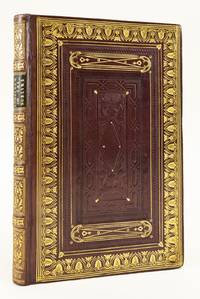
1819ST15731bLondon: Printed for F. C. and J. Rivington and others 1819. 216 x 136 mm. 8 1/2 x 5 3/8". viii 9-223 1 pp.Translated from the Greek by William Smith. <br/> Attractive contemporary oxblood calf decorated in gilt and blind covers with a wide gilt palmette frame enclosing an intricately blind-stamped panel with additional gilt decoration raised bands spine heavily gilt in compartments black morocco label gilt turn-ins marbled endpapers and edges. Front free endpaper inscribed in ink: "Miss Filliter obtained this Book as a Prize by her uniform attention to the Study of Latin during the Half-year. / June 1828." Lower corners lightly bumped a little rubbing at extremities flyleaves faintly browned occasional trivial internal imperfections but still quite a fine copy the contents extremely clean and unusually bright and in a well-preserved binding with a great deal of aesthetic appeal.<br/> <br/> In a handsomely decorated binding this is an excellent translation of one of the most important treatises of literary criticism to come out of the ancient world. First published in 1737 our translation established the reputation of William Smith 1711-87 as a "talented classical scholar." DNB A later William Smith the lexicographer said of "On the Sublime" "there is scarcely any work in the range of ancient literature which independent of its excellence of style contains so many exquisite remarks upon oratory poetry and good taste in general." Although generally attributed to the third century Greek philosopher and critic Longinus the work probably preceded him. After unsuccessful attempts to determine if Dionysius of Halicarnassus Cassius Longinus Plutarch or another was the author scholars arrived at the solution of calling the creator "Pseudo-Longinus." Our pretty though unsigned binding combines gilt and blind decoration in a particularly pleasant way. Volumes of classics in ornamental bindings were popular school prizes in the 19th century but ours is distinguished by being presented to a young lady who excelled in Latin at a time when most women received little formal education and 40 percent of the women in England were illiterate. The condition here suggests Miss Filliter and her successors treasured and cared for the present volume. Printed for F. C. and J. Rivington (and others) unknown
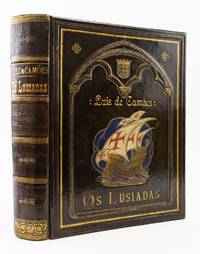
1880ST17890eLeipzig: Typographia Giesecke & Devrient for Emilio Biel Portugal 1880. 400 x 305 mm. 15 3/4 x 12". 2 p.l. LVI 375 1 XCII pp. <br/> IMPOSING CONTEMPORARY BLACK CALF upper cover with sunken central panel framed by gilt and blind rules raised gothic window frame with gilt tooling large ship embossed and painted at center gilt lettering above and below lower cover gilt-stamped "Companhia Portugueza Editora / Porto" raised bands spine panels with blind-stamped floral frames gilt lettering patterned endpapers apparently later hinges all edges gilt and elaborately gauffered. In a later green felt-lined cloth slipcase. Illustrated half title engraved portrait frontispiece dedication and portrait of the dedicatee engraved decorative half frames at beginning of each Canto and tailpiece at the end 10 section titles printed in colors and 19 plates all with original tissue guards. Front pastedown with modern color-printed bookplate dated 1980. ◆Spine slightly sunned leather with a few minor scrapes scratches and other small signs of wear plates variously foxed because of paper used usually mildly or moderately though occasionally more noticeably; nevertheless a striking volume with its main attractions the front cover and shimmering gauffered edges retaining all of their appeal.<br/> <br/> This is an impressive commemorative edition of the masterpiece of the Portuguese language's greatest poet in a binding that celebrates that country's history of exploration. First published in 1572 the epic poem "Os Lusíadas" relates the adventures of Portuguese explorer Vasco da Gama ca. 1460s - 1524 the first European to reach India by sea. Sailing via the Cape of Good Hope in 1497 he established the first ocean route from Europe to India landing in Calicut in 1498. His navigation skills provided Portugal with more than bragging rights for accomplishing a feat attempted for decades at the cost of hundreds of sailors' lives: the Portuguese now had unprecedented access to the spices of the East and came to dominate that market. A master of verse whose skills have been compared to those of Shakespeare Milton and Dante Luís de Camões ca. 1524/25 - 1580 also had firsthand experience of the voyage: he travelled to India on the carrack São Bento in 1553. He composed parts of this work while dwelling in a cave in Macau and managed to save the manuscript when he was shipwrecked in the Mekong delta. After 17 years in the East Camões returned to Portugal and completed "Os Lusíadas." When it was published two years later he was rewarded with a royal pension. The binding here depicts a Portuguese caravel--the small very maneuverable ship Portugal's explorers used in the Age of Discovery--at full sail on choppy seas in a sunken space framed within a Moorish-style arch bearing the Portuguese Coat of Arms. Dedicated to Dom Pedro II Emperor of Brazil this luxurious production was issued to commemorate the 300th anniversary of Camões' death. Typographia Giesecke & Devrient [for] Emilio Biel, Portugal unknown
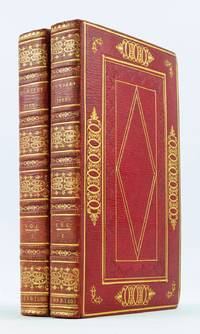
1808ST15731cLondon: J. Johnson 1808. New Edition. 220 x 135 mm. 8 5/8 x 5 3/8". Two volumes. <br/> VERY PRETTY CONTEMPORARY SCARLET STRAIGHT-GRAIN MOROCCO covers with gilt-ruled frame decorated with multiple overlapping gilt door handle tools and floral cornerpieces central panel with gilt-ruled lozenge enclosed by gilt rules and blind floral rolls raised bands compartments gilt wide turn-ins ruled in gilt and with repeating flower motif in blind and small gilt circles in the centers green inlaid cornerpieces with gilt tooling blue watered silk endpapers all edges gilt. With eight plates after Henry Fuseli including frontispiece to each volume. Verso of front free endpaper with armorial bookplate of Lewis Way. ◆Spines a little sunned corners a bit worn and tending to turn inward light scuffing to extremities plates lightly foxed but the text extremely clean and the pleasing bindings with minor issues only.<br/> <br/> This is an attractively illustrated and handsomely bound edition of the finely crafted poetry of William Cowper 1731-1800 the most notable English poet before the Romantics in terms of a tendency to be confessional in one's verse. Given the fact that he was institutionalized and that he several times attempted suicide these self-revelatory poems can easily be seen as a kind of therapeutic experience and it is testimony to the complexity of his personality that so much of Cowper's verse is light conversational and epigrammatic. His poems range widely from religious reflections to translations of Homer to poetry inspired by a lady's suggestion that he could write on any topic including a sofa see vol. II p. 1. The plates here were designed by Henry Fuseli 1741-1825 a Swiss-born painter who lived mainly in England. He was best known for his paintings exploring the supernatural as well as his influence on the young William Blake. DNB calls him "A superb and intensely dramatic draughtsman . . . notorious for his sensational demonic irrational and bizarre subjects" leading "the surrealists to claim him as a forerunner." Though unsigned the bindings here are extremely attractive with tasteful gilding and luxurious touches such as wide decorative turn-ins and watered silk endleaves. This copy was previously owned by Lewis Way an Evangelical reverend who made it his mission to promote Christianity among the Jews. It was his particular belief that returning Jews to the Holy Land would fulfill a biblical prophecy and to this end he secured several audiences with Tsar Alexander I in the attempt to persuade him to the cause. His home at Stansted Park reportedly contained a library that included rare Judaica and Hebraica. J. Johnson unknown
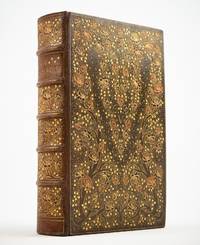
1885ST20626-1London: Printed at the Chiswick Press for Elliot Stock 1885. FIRST EDITION. 181 x 111 mm. 7 1/8 x 4 3/8". xxvi ii 274 i.e. 276 including text leaf marked as pp. 223-224 2 pp. <br/> ANIMATED CONTEMPORARY OLIVE BROWN MOROCCO ELABORATELY GILT AND INLAID covers with two climbing roses with 70 gilt and inlaid blossoms of wine red or salmon pink morocco and dozens of tiny heart-shaped leaves rising from the lower corners and winding up the sides before curving toward the center of the board in a heart shape the branches on a pointillé ground accented with tiny droplets upper cover with monogram of Eleanor Vere Boyle raised bands spine panels with rose branch featuring three inlaid blooms on a pointillé ground gilt lettering wide turn-ins with gilt rose sprays at corners yellow watered silk endleaves top edge gilt. With original front wrapper bound in at rear. Front joint replaced with great skill. With floral vignettes on title and half title decorative headpieces and initials and 11 full-page wood engravings by Boyle EXTRA-ILLUSTRATED with 28 engravings by Eisen Mariller Gravelot and many others. Spine lightly sunned to a hazel brown some extra-illustrations a little foxed occasional light to moderate offsetting from plates but the contents in excellent condition clean and bright throughout and the binding with only the most negligible signs of wear.<br/> <br/> The subject here is roses--on the extremely charming and exuberant binding in the text and in the illustrations. They were the favorite flower of author and illustrator Eleanor Vere Boyle 1825-1916 who planted them on a large scale in her garden at Huntercombe Manor. The popular illustrator of 14 children's books Boyle used most of her income to support charitable works in the parish where her husband was vicar. In her 50s she turned from illustrating to writing focusing primarily on nature and gardens as her subjects. Here she has collected English poems as well as translations in English of excerpts from poems in Greek Latin Persian Italian and French all of them celebrating the rose. Her illustrations show either close-ups of a flower or an adorable cupid accompanied by the flower of Venus. The press work in the present volume is first rate as one expects from the Chiswick Press and the binding is a riot of floral glimmering. Although the binding is unsigned the animated unconventional design is reminiscent of the work of the Guild of Women Binders while the execution is of exceptional quality equal to the productions by leading London workshops like Riviere and Zaehnsdorf. [Printed at the Chiswick Press for] Elliot Stock unknown
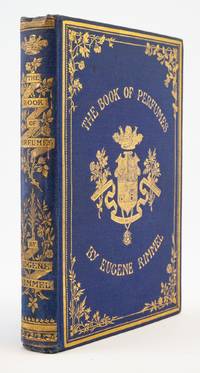
1865ST20314London: Chapman and Hall 1865. FIRST EDITION. 206 x 142 mm. 8 1/8 x 5 5/8". xx 266 pp. <br/> Very pretty publisher's royal blue cloth stamped in gilt upper cover with thick-rule frame central panel with floral spray cornerpieces central coat of arms designed by the author smooth spine with gilt title banners and sprays of flowers all edges gilt. With one chromolithograph 11 full-page engravings and 250 illustrations in the text.<br /> Front free endpaper with ink ownership signature dated 1865. Negligible wear to corners spine ends pushed in as almost always but still quite a fine copy--clean bright and fresh inside and out.<br/> <br/> In an attractive and extremely well-preserved publisher's binding this is an excellent copy of an extensive treatment of perfumes including their history uses around the world materials and modern production techniques. With the aid of copious illustrations the author describes the use of scents in Egyptian mummification Jewish rites Greek and Roman cosmetics Turkish baths Hindu worship and rituals of "uncivilized nations" and describes other cosmetics hairstyles and beauty practices across many cultures and time periods. He ends the volume with chapters on perfume manufacturing and the principal materials used in perfumery noting that most materials grow best in warmer climates--particularly the south of France. He also describes adopting novel scents found in Australia such as eucalyptus which had hitherto only been used in paint. Eugène Rimmel ca. 1820-87 was born to a French parfumier family and at a very young age established his own premises in London in 1834. According to DNB "In his laboratory Rimmel developed some of the earliest commercially manufactured beauty products" including "the first factory-made non-toxic mascara." A talented businessman and promoter he built a sizeable fortune by exporting his cosmetics and perfumes around the world. Rimmel cosmetics is still in operation today. Copies of this first edition are around but they seem all to be in unpleasant condition. Chapman and Hall unknown
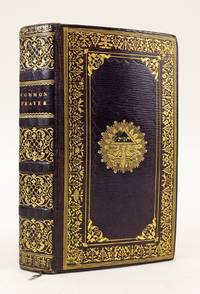
1820ST15600London: Printed by George Eyre and Andrew Strahan 1820. 142 x 80 mm. 5 5/8 x 3 1/8". 510 pp.; 80 2 pp. <br/> VERY FINE CONTEMPORARY STRAIGHT-GRAIN PURPLE MOROCCO ELABORATELY GILT covers with frame of gilt rules and anthemion-and-flower roll central panel with arabesque corners central sunburst medallion containing the Tetragrammaton within a triangle from which the dove of the Holy Spirit descends raised bands spine panels gilt in a floral and arabesque design gilt titling turn-ins with zig-zag gilt roll orange endpapers all edges gilt. Front pastedown with large morocco bookplate of Louisa Smyth dated 25th Dec. 1821 and signed with the initials E. P. Front flyleaf inscribed: "Harriet E. Thorpe / From her affectionate / Brother-- / As a remembrance of / her dear Aunt L. Dickens. / Nov. 1841." Griffiths p. 246. ◆A breath of rubbing to corners but A BEAUTIFUL COPY with no signs of use--clean fresh and bright internally and in a sparkling ORNATE binding.<br/> <br/> Bound in somber purple but with religious imagery in bright gilt this pretty little prayer book is very typical of an era in which such luxurious volumes were popular gifts among the moneyed classes as was the case here. Miss Louisa Smyth must have treasured this Christmas gift from "E. P." as its condition clearly indicates it was seldom if ever used for daily devotions. It likely served as a perfect accessory for Louisa's Sunday finery and perhaps she carried it at her 1831 wedding to Lt. Col. Thomas Mark Dickens of the Royal Engineers. After Louisa's 1841 death the book passed to Harriet E. Thorpe wife of Louisa's nephew Rev. William Smyth Thorpe. Both families are well documented in the county of Norfolk where their eminent lineage goes back generations. Whoever inherited our prayer book from Harriet continued to care for it assiduously as it appears little changed from the days when Louisa first held it in her hands. Printed by George Eyre and Andrew Strahan unknown
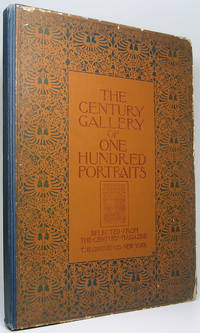
189749506New York: The Century Co 1897. Folio. Blue cloth and decorative paper over boards portfolio housing full set of 10" X 13½" glossy prints. Near fine/very good. Images are largely superb and without edgewear while the four-flap portfolio shows mild edgewear. Incredibly uncommon complete set of this large grouping of reproductions of steel-engraved portraits of a wide array of mostly 19th century world notables -- mainly head-and-shoulders some half-length most with facsimile signature underneath many based on photographs and many engraved by noted English-American artist Timothy Cole. Subjects include random assortment Thomas Bailey Aldrich Bismarck Eleanore Duse U.S. Grant Nathaniel Hawthorne Thomas Jefferson Leo XIII Mozart Florence Nightingale Louis Pasteur P.H. Sheridan Leo Tolstoy John Greenleaf Whittier. see "Alphabetical Index of Plates" image for complete list. A complete set of these is exceptionally scarce -- especially in such bright exceptional condition and with the rarely-present portfolio in nice condition -- and would be nearly impossible to assemble. The Century Co unknown
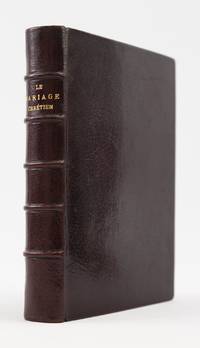
1882ST19567-178Paris: Jules Gervais 1882. Sixth Edition. 160 x 115 mm. 6 1/4 x 4 1/2". 400 pp. <br/> Pleasing deep brown morocco by Fonteney stamp-signed on the verso of the front flyleaf raised bands spine lettered in gilt wide turn-ins gilt tooled patterned endleaves all edges gilt. Engraved frontispiece depicting St. Elizabeth by Friedrich Ludy after Friedrich Overbeck; each page with a decorative figural border. Minor foxing to preliminary leaves very slightly foxed elsewhere otherwise a fine copy the text quite clean bright and fresh and the binding unworn and exceptionally lustrous.<br/> <br/> Decoratively printed and attractively bound this volume on Christian marriage and family life is a delightful example of late 19th century French book production. Its author Félix-Antoine-Philibert Dupanloup 1802-78 was the bishop of Orléans and a proponent of liberal Catholicism in France throughout the 19th century. Alongside teaching and pastoral duties he authored several works on religious matters throughout his career. Initially published in 1869 the present work on "Christian Marriage" went on to become a very popular work remaining in print into the second decade of the 20th century. One wonders if its popularity was as much due to the beauty of the work as its contents: each page is graced with detailed engraved borders laden with scrolling foliage and rich Christian imagery executed with delicacy and panache. This copy is pleasing in its highly polished morocco exterior its lacy inner dentelles and its attractive patterned endleaves. Jules Gervais unknown
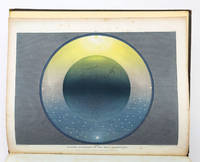
1846ST19286London: Printed by Catchpool & Trent for Simpkin Marshall & Co 1846. FIRST EDITION. 320 x 255 mm. 12 1/2 x 10". xiii 3 96 pp. <br/> Publisher's original blind-decorated dun-colored cloth gilt titling to upper cover smooth spine newer endpapers. WITH 11 COLOR ENGRAVINGS after Frost by W. P. Chubb & Son printed in oil colors by George Baxter all with original tissue guards. Front free endpaper with small ink signature of John Hill. See: Francis Reid "Isaac Frost's 'Two Systems of Astronomy' 1846: Plebeian Resistance and Scriptural Astronomy" in "The British Journal for the History of Science" Vol. 38 No. 2 Jun. 2005 pp. 161-177. Cloth rather spotted corners bumped but the binding solid with no wear to joints or hinges. A few spots of foxing to title page half of the tissue guards with overall very faint foxing/browning the illustrations with minor foxing at edges and in margins but the images themselves clean and bright and all in all a really excellent copy the text wide-margined and quite clean and fresh and the plates with rich coloring.<br/> <br/> Illustrated with beautiful color plates this anti-Newtonian work promotes a view of the universe based on the backward-looking beliefs professed by a Protestant sect known as the Muggletonians. Named after co-founder Lodowicke Muggleton the Muggletonians emerged in London in 1651 based on the claims of two tailors who professed to be the "Last Witnesses" described in the Book of Revelation. Rejecting the new directions in philosophical reason Muggletonians believed in a purely scriptural interpretation of the universe. According to E. P. Thompson's 1994 "Witness Against the Beast" the Muggletonians had curious notions quite contrary to other Protestant denominations: they believed that the soul is mortal that Jesus and God are one and the same that Heaven was left without divine supervision from Jesus' death until the day of judgment that Heaven resides six miles above the Earth that God stands between five and six feet tall and other unconventional things. Although the sect initially avoided both worship and evangelizing during the 19th century some followers became more outspoken about their beliefs and even published books appealing to the general public. Our author Isaac Frost 1793-1858 was a prominent Muggletonian and successful owner of a brass foundry who along with his brother Joseph invested large sums to promote their belief system--the present work being an especially notable example. Divided into two main sections the text first describes the Newtonian system of heliocentric astronomy and then turns to Frost's scriptural interpretation and geocentric views. As Reid tells us "According to Frost Scripture clearly states that the Sun the Moon and the Stars are embedded in a firmament made of congealed water and revolve around the Earth that Heaven has a physical reality above and beyond the stars and that the planets and the Moon do not reflect the Sun's rays but are themselves independent sources of light. Our book was apparently written as a reaction against the lecturers who expressed Newtonian astronomy--which was often for them and their audiences simply shorthand for heliocentrism." The 11 plates that illustrate these extraordinary ideas are the work of George Baxter a pioneering printer who revolutionized color printing techniques by combining metal engravings with woodblock printing using oil-based inks to produce high-quality affordable prints. The plates here are appropriately ethereal and otherworldly utilizing a beautiful palette with subtle gradations and esoteric figures to create memorable pseudo-scientific imagery. Although this work appears at auction with some regularity it is almost always incomplete no doubt because the attractiveness of its plates encourages harvesting. Useful price comparisons include a complete copy said to be in fine condition selling for £7500 in 2016 and six loose prints from the book fetching £6875 in 2015. [Printed by Catchpool & Trent for] Simpkin, Marshall, & Co unknown
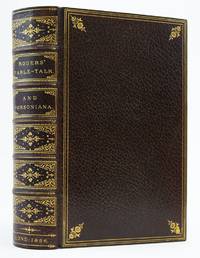
1856ST17640sLondon: Edward Moxon 1856. Apparently the FIRST EDITION. 200 x 130 mm. 7 7/8 x 5 1/8". viii 355 pp. bound with the half title and with an inserted plate as frontispiece.Edited by Alexander Dyce. <br/> VERY PLEASING SLIGHTLY LATER DARK BROWN CRUSHED MOROCCO ATTRACTIVELY GILT covers with French fillet border and elegant botanical cornerpieces raised bands heavily gilt spine in compartments featuring elaborate scrolling cornerpieces an intricate fleuron centerpiece and tiny circlets turn-ins with plain and stippled rules and filigree gilt decoration at corners and midpoints of two sides textured silk brown and cream millefleur-patterned endpapers all edges gilt. EXTRA-ILLUSTRATED WITH 55 PORTRAIT PLATES five in color all with tissue guards. Verso of the front free endpaper with the engraved bookplate of Robert B. Lawrence. A hint of browning to some of the inserted plates but A FINE AND HANDSOMELY BOUND COPY the text especially fresh clean and smooth and the binding bright and virtually unworn.<br/> <br/> This is a tastefully bound collection of anecdotes and witty banter recorded by poet Samuel Rogers whose private means made his gracious home in Westminster a gathering place for the poets and artists of the age. Scion of a wealthy banking family Rogers 1763-1855 achieved fame with the publication of "The Pleasures of Memory" in 1792. His friend Alexander Dyce who compiled the present work tells us in the preface that Rogers "was in the habit of writing down in all their minutiae the anecdotes &c. with which his conversation abounded." These records provide us with an intriguing glimpse of literary society in London in the first half of the 19th century. Our second work "Porsoniana" contains anecdotes about the "very eminent Greek scholar" Richard Porson 1759-1808 related to Dyce by that individual's close friend William Morby. This edition is one of at least three printings that were issued by Moxon in the initial publication year and it would seem to be the first appearance of the text. In any case our volume has the added feature of 55 inserted engravings of the persons discussed in the book. Although the binding is apparently unsigned the owner's bookplate on the front flyleaf is placed near enough to the top edge that it may be obscuring a stamped binder's signature. The work displayed here is certainly of high enough caliber to have been produced by Riviere or Zaehnsdorf. Edward Moxon unknown
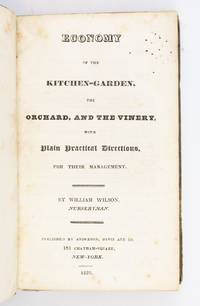
1828ST19567-013New-York: Anderson Davis and Co 1828. FIRST EDITION. 182 x 112 mm. 7 1/8 x 4 1/2". xii 13-206 pp. <br/> Publisher's gray boards backed with black roan flat spine divided into panels by double gilt rules gilt lettering. With an engraved plate depicting the recommended pruning and training of a grape vine. Front flyleaf with pencilled signature of Addie Gratacap and blue crayon signature of John Fields. Occasional neatly pencilled underlinings or marginalia in a 19th century hand. ◆Joints rubbed and cracked rear board with the tiniest bit of give spine with general wear including small losses at top and bottom boards somewhat soiled text with persistent foxing as usual in American imprints of this period; with obvious defects but what one would expect for an American book on this subject at this date.<br/> <br/> This practical guide to gardening in the United States was written in part as a rebuff to English agricultural writer William Cobbett who had cast aspersions on the type and quality of vegetables that could be grown in American kitchen gardens. After defending the honor of such American crops as lima beans Indian corn and winter squash Wilson offers advice arranged by planting season for growing asparagus peas root vegetables tender and hardy greens and varieties of squash. He doesn't quite see a central place for tomatoes in the vegetable garden finding it "the most forbidding-looking plant" and does admit that eggplant cultivation is impossible without a hothouse. Vegetables are followed by herbs for culinary and medicinal use and then by orchard fruits with apples for eating and cider leading the way. Wilson finishes with detailed instructions for grape cultivation illustrated by a plate depicting proper pruning and trellising practices. In addition to underlining key information on planting times and spacing distances in rows of vegetables a previous owner perhaps Addie Gratacap judging by her use of pencil found it amusing to count Wilson's digs at Cobbett which total 32. This work is rare in institutions and in the marketplace and is always found in unpleasant condition. RBH records just three copies at auction. Anderson, Davis and Co unknown
1839ST20302-03London: Published for the Proprietor by Charles Tilt 1839-40. FIRST EDITION. 198 x 122 mm. 7 1/2 x 4 7/8". Two volumes. <br/> Extremely pleasing contemporary crimson pebble-grain morocco covers with a double gilt rule surrounding a large scrolling central frame raised bands spine gilt in compartments with elaborate small tools radiating from floral centerpieces turn-ins gilt patterned endpapers all edges gilt. WITH A TOTAL OF 36 ENGRAVED PLATES 18 in each volume by William and Edward Finden and others as called for after sketches by Bacon and Captain Meadows Taylor. Joints just a bit rubbed at head and tail two small scratches to one cover corners with just a whisper of wear occasional faint offsetting from plates the faintest foxing or stains to a very few plates a bit of thumbing otherwise beautiful copies with only the most trivial of imperfections.<br/> <br/> These are handsomely bound and extraordinarily well-preserved copies of the final two volumes of a series inspired by the author's time on the Indian subcontinent. The son of a noted sculptor Thomas Bacon 1813-92 was a talented artist whose service in the Bengal Horse Artillery furnished him with endless fascinating and "exotic" subjects for his sketches and drawings. In 1837 he published "First Impressions and studies from nature in Hindostan" which found an appreciative audience at a time when illustrated travelogues were much in vogue. He produced illustrations for Wilson's "Oriental Portfolio" and for the present "Oriental Annual" which had brought stories and views of the Far East to the British public beginning in 1834. In the 1839 edition Bacon and his very able engravers the Finden brothers present dramatic scenes of the seas around Tenerife and of the peaks of the Himalayas along with wonderfully detailed depictions of "monumental architecture" including temples tombs and military installations. For the 1840 volume Bacon collaborated with his friend Captain Philip Meadows Taylor 1808-76 a longtime British administrator with extensive knowledge of the region. There is more focus on cities in this volume and the authors recount both legends and historical facts to set the scene. The plates include a portrait of the emperor of Delhi but focus on city views and fine architecture. Produced when William 1787-1852 and Edward 1791-1857 Finden were in an extended period at the top of their craft the plates here are characterized by the great delicacy of detail sophisticated gradation of light and rich texture of surface for which they were known. While volumes from this periodical series appear on the market regularly they are rarely so finely bound and in such remarkable condition as the present pair. Published for the Proprietor, by Charles Tilt unknown
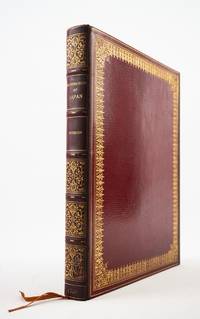
1822ST20877London: Printed for R. Ackermann 1822. First English Edition. 300 x 235 mm. 11 3/4 x 9 1/2". xvi 325 1 pp.Translated by Frederic Shoberl. <br/> Imposing contemporary crimson straight-grain morocco gilt covers with filigree frame with densely massed scrolling fleurons raised bands spine gilt in compartments with radiating viny scrolls surrounded by leaves and annular dots marbled endleaves all edges gilt. WITH 13 HAND-COLORED PLATES in etching and aquatint many after Japanese artworks one folding. Bookplate removed from front flyleaf. Bookseller's ticket of J. L. Thompson & Co Kobe Japan on front pastedown. Abbey Travel 557; Tooley 489; Martin Hardie "English Coloured Books" pp. 113-14. See also E. F. Strange "Japanese Illustration" pp. xxiii-xxiv. Spine and fore-edge of upper board slightly darkened a few minute flakes to lowest spine compartment but the binding extremely well preserved with very lustrous boards. Final 10 leaves slightly creased one repaired marginal tear but still A FINE COPY INTERNALLY exceptionally bright smooth and entirely fresh and clean.<br/> <br/> This generously proportioned production illustrated with 13 vibrant colored plates is a rare European account of Japan during the period in which the country was "closed" to the west offered here in its first English edition. Originally published in French in 1820 "Illustrations of Japan" is comprised of a history and description of the Tokugawa shogunate which Titsingh had translated from the Japanese plus Titsingh's own observations on the language customs and ceremonies of the Japanese people. The present English edition is accompanied by plates in etching and aquatint enhanced with hand coloring. Our author Dutch diplomat Isaac Titsingh 1745-1812 spent 14 years in Nagasaki for the Dutch East India company and between 1779-84 he served as trade director-cum-ambassador travelling to Edo now Tokyo for audiences with the shogun and other high officials in the shogunate. Unlike most of his Western contemporaries Titsingh was open-minded and curious about the people he encountered engaging with their art and culture; in fact art historian and Victoria & Albert Museum keeper Edward F. Strange tells us that Titsingh is the earliest known European collector of Japanese prints of which a number appear in the present volume. Our publisher Rudolph Ackermann 1764-1834 made his living issuing sumptuously illustrated books such as the present volume and was an early adopter of color aquatint and lithography technologies; Hardie writes that he was "the great presiding genius before whose magic wand so many pictorial books sprang into existence." In very attractive period morocco this is a particularly appealing copy of the work free of the foxing and offsetting that often plague copies of this and other large-format color illustrated books. Printed for R. Ackermann unknown
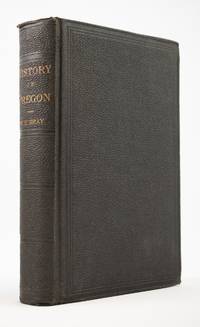
1870ST20532Portland Oregon: Harris & Holman 1870. FIRST EDITION in Book Form. 235 x 150 mm. 9 1/4 x 6". 624 pp. <br/> Publisher's black cloth flat spine with gilt lettering. With a frontispiece etching depicting Astoria in 1811. Errata slip tipped onto final page. A 1980 newspaper article from The Springfield News about William H. Gray's descendants. Graff 1630; Howes G-342; Sabin 28416. Head of spine with minute fraying slight soiling to back cover isolated minor foxing chosen paper stock not as bright as it could be but still a really excellent copy the text clean and fresh and the binding with few signs of use.<br/> <br/> Originally published as a series of articles in the "Astoria Marine Gazette" between 1865-66 the contents of this volume include chapters on religious proselytizing encounters often of a violent nature with indigenous peoples mountain men the formation of an early government and commercial interests in the area. Originally a carpenter from Utica William Henry Gray 1810-89 joined the party of fellow missionaries Marcus Whitman 1802-1847 and Henry Spalding 1803-1874 and their respective wives Narcissa 1808-1847 and Eliza 1807-1851 on a seven-month 3000-mile journey overland from their homes in upstate New York to Fort Vancouver. Narcissa and Eliza were the first white women to cross the Rocky Mountains. Gray gives a long absorbing account of that trip in the text here. He was later involved with efforts to create a provisional government among settlers of the area. As an historian Gray was widely censured even as he was acknowledged as an important source: Howes says the present work is "undependable and biased but as the product of a pioneer of 1838 it cannot be ignored." This book is easy enough to find but it is normally encountered in rough shape. Harris & Holman unknown
188115969Philadelphia: Lippincott 1881. First edition. Hardcover. Fair. Green cloth boards gold stamped lettering on front and spine. Frontis and other portraits of officers have tissue guards and some tanning. Previous owner sticker on front pastedown. Front endpapers starting to crack but binding is tight. Green cloth is rubbed on spine and folds and frayed at top and bottom of spine. <br/><br/> Lippincott hardcover
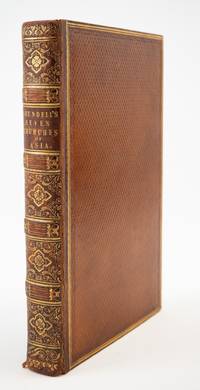
1828ST20535-01London: John Rodwell 1828. FIRST EDITON. 217 x 138 mm. 8 1/2 x 5 1/4". iv 339 1 pp. <br/> Contemporary diced russia raised bands spine attractively gilt in an arabesque style gilt-rolled turn-ins pink moiré endpapers all edges gilt. With a folding map of the travel routes and 23 pages reproducing inscriptions three of these folding. Front flyleaf inscribed in ink: "Juliana Calvert / from A. C. / 1838." Blackmer 48; Weber I 159. Joints and extremities a little rubbed tiny crack just beginning at top of front joint two tiny chips to foot of spine very minor offsetting and foxing to map a couple of patches of marginal foxing but INTERNALLY AN ESPECIALLY FINE COPY--unusually clean fresh and surprisingly bright--in a good-looking well-preserved binding.<br/> <br/> In especially desirable condition this is quite a scarce travel account by the English antiquary explorer and clergyman Francis Vyvyan Jago Arundell 1780-1846 who visited the so-called Seven Churches of Asia also called the Seven Churches of the Apocalypse and the Seven Churches of Revelation locations in present-day Turkey of central importance to St. John and the Book of Revelation. In that book John who was a threat to Roman officials as leader of the new Christian religion in Asia had been banished to Patmos where he was visited by an apocalyptic vision directing him to write to the churches at Ephesus Smyrna Pergamum Thyatira Sardis Philadelphia and Laodicea commending their successes pointing out their failures and prevailing upon them to repent. These seven Turkish churches reflect a surprisingly significant role in the region's early Christian history with some scholars maintaining that as many as 18 of the 27 New Testament books were written there--and Arundell's narrative would have helped to raise the popular understanding of this importance. Following his marriage to the daughter of the British consul-general at the Levant Company in Constantinople Arundell became chaplain to the company's trading center in Smyrna now Izmir in 1822. From there he embarked on a series of tours through Asia Minor including places that according to DNB "until then had for the most part not been described by any European traveller." The present work is the product of the author's first tour which included two separate excursions between March and September of 1826. Despite being a clergyman Arundell's interest in these sites was primarily archaeological and historical and this work includes his firsthand descriptions of the ruins he encountered facsimiles of Greek inscriptions found there and narratives of the arduous journeys between sites that were well off the beaten path. This work is surprisingly scarce in commerce suggesting that copies were often read with avidity. John Rodwell unknown
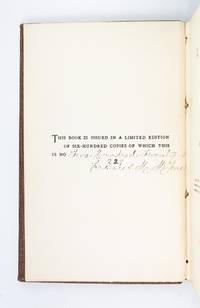
1895ST19567-179Buffalo: Charles Wells Moulton 1895. FIRST EDITION. No. 229 OF 600. 155 x 195 mm. 6 1/8 x 4 3/4". 79 1 pp. <br/> Publisher’s illustrated brown cloth binding edges beveled front board stamped in gilt flat spine top edge gilt. Photograph of the author mounted on page 6 facing the half title. SIGNED BY THE AUTHOR on the limitation page; title page printed in red and black. Cloth with just the slightest hint of wear and soiling; internally fresh and clean.<br/> <br/> This is an excellent copy of a very personal collection of poetry by a female writer of the late 19th century offered in a signed limited edition. Born in Northern Ireland Frances Margaret Milne 1846-1910 spent most of her life in San Luis Obispo California where she worked as a librarian and volunteered tirelessly for social causes. Much of her writing was political in nature: the 1893 publication "A Woman of the Century" a collection of biographies of "leading American women in all walks of life" said she had "made a profound study of economic and political questions and with pen and voice . . . and had aided in extending the discussion of the relations of progress and poverty and of individuals and society." She also published a number of fictional and poetic works; this was her second collection of poems. They primarily deal with themes of love and loss and while the poems have some of the formulaic gentility one would expect from a writer of this period and background the genuine emotions behind them are clear. By turns ebullient and poignant the text has works—such as the poem "To My Beloved at rest May 11th 1804"—that reflect the grief and joy of Milne's intense personal experiences. Copies of the book are not so readily available especially in the condition seen here. Charles Wells Moulton unknown
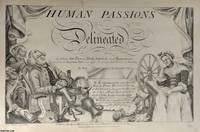
1860375751John Keywood Manchester Undated c.1860. Reprint of the 1773 edition. Full Cloth. Good Condition. A riot of grotesques drinkers schemers rustics hypocrites and wide-eyed innocents Bobbin's work captures the full unvarnished comedy of 18th century Lancashire life. Bobbin real name John Collier was a schoolmaster with a wicked eye for human folly and these plates are his private theatre: Hogarthian in spirit but rougher earthier and far more northern in their humour. What makes the book irresistible is its energy. Every face is pulled into some impossible contortion; every gesture is halfway between a joke and a confession. You can almost hear the muttered dialect the tavern clatter the sharp intake of breath before someone says something they shouldn't. Bobbin wasn't drawing polite society he was drawing people as they actually behaved and he does it with a kind of affectionate savagery. Victorian readers adored him. By the mid 19th century these plates were being reprinted for a new audience who saw in Bobbin a link to a vanishing world: the old Lancashire of alehouses gossip and broad humour before industrialisation scrubbed the edges off everything. That’s why so many later editions like this one mix the original 1770s plates with extra favourites such as Scotch Politics or They Who Have Ears to Hear. The Victorians weren’t curators; they were enthusiasts and they wanted more Bobbin for their money. Today the book stands as a wonderfully unruly document of popular art: part caricature part social history and part comic theatre. Later impressions from the original copperplates printed on mid 19th century paper likely c.1860 with plates bearing mixed imprints "Publish'd as the Act directs June 1773" and “Printed and Published by John Heywood Deansgate Manchester". Bound in the original cloth blind & gilt decorated as issued. The spine has been replaced a very long time ago and there is some wear with a little surface loss near the foot. There is also loss to the top left of the front board. Water staining to bottom left edge throughout but not impacting the images directly. Portrait frontis engraved title page 42 plates complete with tissue guards subscribers dedication list and plate explanation text pages. The plates are generally clean with minor age related marks but the tissue guards have done a nice job of keeping foxing away from the plates. A pleasing example in tall folio format of an increasingly uncommon book. Size: 27 x 42 cms. Category: Antiquarian & Rare; New Arrivals; This item may require more postage than the rates shown for delivery outside the UK. If extra postage is required we will contact you before processing your order and you will be given the details and option to decline the extra cost. John Keywood hardcover
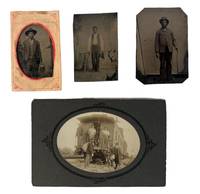
1870202721870. Early photographs of African Americans produced during the decades following emancipation provide important visual documentation of Black life during the Reconstruction and early Jim Crow eras. Portrait photographs and vernacular images from the late nineteenth century capture African Americans navigating newly won freedoms while confronting the economic and social constraints that defined the post slavery United States. Such photographs often record moments of labor travel and self presentation reflecting both the aspirations and realities of African American life during a period of profound social transformation. This small photographic archive dating from the 1870s through the 1890s preserves rare images of African American men during the generation immediately following the end of slavery.<br /> <br /> Archive of four original photographs including two tintypes and one albumen print measuring approximately 2.25 x 3.25 inches to 4.5 x 6.5 inches. The most visually complex image an albumen photograph dating from the late 1890s depicts a Black man and a young boy standing on railroad tracks behind a caboose where four white men are also present. The African American man wears a hat and carries a large sack across his back while the boy holds a basket filled with produce suggesting a scene connected to travel commerce or railroad labor in the expanding transportation networks of the late nineteenth century. The presence of the caboose and railroad workers situates the photograph within the rapidly developing rail infrastructure that reshaped the American economy during the post Civil War period. The remaining photographs consist of tintype portraits of African American men dressed in the formal attire of the late nineteenth century including bowler hats vests and tailored suits. One sitter is photographed wearing a three piece suit and holding a cane while another poses beside a table while holding his hat in hand.<br /> <br /> Portrait photography played an important role in African American communities during the decades after emancipation as newly freed individuals asserted dignity respectability and personal identity through formal portraiture. At the same time vernacular photographs such as the railroad scene record the economic realities and labor environments in which many African Americans worked during the late nineteenth century. Together these photographs document African American presence within both public labor landscapes and private studio portraiture during a formative period in the history of Black life in the United States. Four original photographs including tintypes and an albumen print measuring approximately 2.25 x 3.25 inches to 4.5 x 6.5 inches. One photograph with clipped corners; otherwise images clear and well preserved. Overall condition very good. unknown
1885139371885. Large 19th Century Original albumen Photograph 10.5" x 14" mounted on original cardboard to an overall size of 14"x20". A Jerusalem pastoral scene with olive trees in foregroundand the city of Jerusalem spread across the distance. Identified within bottom center of photo "Jerusalem. from Mt. of Olives. Jerusalem du Mont de Oliviers." and a logo appears in the lower right hand corner in the trunk of an olive tree "American Colony Jerusalem." Another image of the same size and condition is on the verso showing a different view of the Mount of Olives. In this image a hill rises up in the distance with olive trees and a few buildings strewn about between a maze of intersecting roads. Labeled in the bottom center of the photo "Mount Olivet." The logo "American Colony Jerusalem" appears in the lower left. A bit of warping to cardboard but photograph itself is in fine condition. unknown
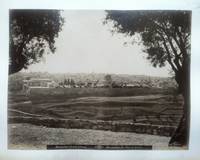
1885142171885. Sepia toned albumen 9.75" x 8.75". Photo by Oscar Kramer. Photograph of Vienna Austria. Image of trees in foreground hill tops in background and in middle 19th century Austrian city landscape. Most recognizable buildings are the Stefansdom Cathedral on the right and the Karlskirche Cathedral in the middle. Top corners have been cut round. unknown