340 résultats
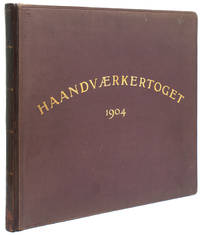
190439516Copenhagen: forhen A. Christiansens Forlag Hermann-Petersen 1904. 50 Double-page colored plates after Rasmus Christiansen mounted on stubs. Introduction by Jul. Wulff. 1 vols. Oblong folio. Original leather-backed burgundy cloth lettered on cover in gilt. Spine repaired inner hinges strengthened. Some minor rubbing pencilled numbers in upper right margin of several plates. Very good. 50 Double-page colored plates after Rasmus Christiansen mounted on stubs. Introduction by Jul. Wulff. 1 vols. Oblong folio. Fête Book. DANISH TRADES FESTIVAL PARADE. In July 31/1 August 1904 a grand festival and parade was held in celebration of Danish Industry and Tradesmen. The elaborate floats representing the trades are depicted in these fine double-page colored plates including those of the printers the bakers the stroller-makers the pavers the bookbinders the furriers barrelmakers cigar and tobacco merchants bicyclewheel makers photographers metalsmiths hatmakers carriagemakers clockmakers wigmakers and many others. Under each illustration is text describing those involved. forhen A. Christiansens Forlag (Hermann-Petersen) unknown books
1927250121New York: William Edwin Rudge 1927. First Edition. One of 50 copies specially bound with a double-page frontispiece color reproduction of a trade card for a Mitchell & Crosdale Philadelphia dealer in Sperm Whale Lard & Tanners Oils Candes Rice & c. of Whale killing. XLIV plates uncut. 25 pages of text. 1 vols. 4to. Bound in quarter vellum and patterned boards. Very Fine in chipped original glassine. First Edition. One of 50 copies specially bound with a double-page frontispiece color reproduction of a trade card for a Mitchell & Crosdale Philadelphia dealer in Sperm Whale Lard & Tanners Oils Candes Rice & c. of Whale killing. XLIV plates uncut. 25 pages of text. 1 vols. 4to. William Edwin Rudge unknown books
19505503N.p.: Ministerstvo Pishevoy Promishlennocti 1950. Octavo-sized accordion fold 25 x 18 cm. 24 pages. Illustrated with seventeen color plates by C.B. Popov. First edition. A trade catalogue of Russian liquors issued by the Russian Ministry of Food. The spirits are of all types with a wide range of vodkas but also a rich variety of cordials brandies and dessert liqueurs. The handsome color plates all stand out for their single color backgrounds and the printing process would appear to have been a hybrid combining photolithography and lithography and then colored. Whatever one makes of the Soviet cultural landscape in general it did attain high standards in some fields and in a modest way this trade catalogue is a proud reflection of its aesthetic achievement. Clean and bright within. Textured wrappers with debossed copper lettering and gilt ruling; lightly soiled and with wear and some separation at spine. Good. OCLC locates no copies. Ministerstvo Pishevoy Promishlennocti unknown books
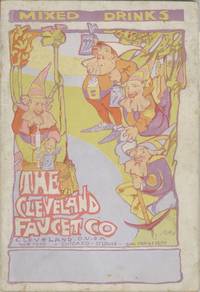
19037827Cleveland Ohio: Cleveland Faucet Co.; printed by A.C. Rogers Co. 1903. Octavo stapled in wrappers 18.5 x 13 cm. 80 pages. Illustrated. Indices of cocktails and drinks and of hardware products. Printed in black red and yellowish brown throughout. ~ Evident FIRST EDITION. A dual-purpose trade catalogue and cocktail recipe book issued by Cleveland Faucet Company makers of bar fixtures hardware and equipment. Seventy cocktail recipes plus additional recipes for tinctures colorings essences and syrups and prepared cocktails for bottling and fruit wines and brandy. In 1883 three Ohio natives Messrs. Collins Weatherhead and Mayer founded Cleveland Faucet Company a brass foundry specialized in a combination pump and faucet. Their "specialties are absolutely unrivaled for utility quality and adaptability to the purposes required of them and have no superiors." Leading Manufacturers and Merchants of the City of Cleveland and Environs. Akron 1886 page 172. Their first trade catalogue was issued in 1885 and a 48-page combined trade catalogue/drinks manual was published in 1897 titled Catalogue B was reissued in 1899 now under the title Catalogue B and Bartender's Guide. Following the 1902 publication of Mixed Drinks the company offered a number of smaller 24 page catalogues with recipes titled Fancy Drinks or Fancy Drinks and Latest Toasts. Not only is Mixed Drinks the most ambitious of these catalogues with nearly twice as many recipes but it is also the most fanciful with illustrations of gnome-like characters throughout the text and on the five-color decorated wrappers. The wrapper cover illustration is positively psychedelic depicting four gnomes in a wooded glen enjoying beer being poured from a pump and is initialed in the print "H. C.". The more traditional rear panel of the wrapper contains images of three of the manufacturer's plants one each for a Carbonic Gas Plant the Pump and Brass Department and the Woodworking Department. But even these are framed in a decorative Art Nouveau botanical motif. Some soiling and spotting throughout; a few leaves creased which appears to have been a printer's error. Light soil to the wrappers; corners bumped. Includes a cancel leaf with information about 1903 prices. Rare. OCLC locates no copies; Romaine page 21 refers to an 1894 trade catalogue by the firm; not in Noling Beverage Literature. Cleveland Faucet Co.; [printed by A.C. Rogers Co.] unknown books
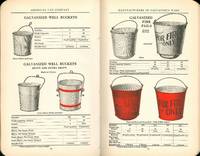
19083211Rome N.Y. 1908. Ten trade catalogues. Items mostly uniform in size ~ 19 x 12.5 cm. though page count does vary from 14 to 155. Each catalogue contains an index. Each catalogue is illustrated and most include select full-color images. Including the Erie Can Company's there are four general catalogues that cover a broad range of products; three catalogues are specific to syrup cans; and the remainder feature one specific type of product or another. ~ Incorporated in 1901 the American Can Company was a member of the "Tin Can Trust" that controlled a large percentage of the tin market. In 1913 the U.S. Government sued the company on the grounds of monopoly. The individual catalogues: 1. American Can Company. American Steel Lead Kegs. New York: American Can Company circa 1908. 24 pages. Steel kegs for lead manufacturers and lead users; features product descriptions for five unique kegs and over 25 testimonials from consumers across the country. Illustrated cover. Cream wrappers with black/red text bound with red ribbon and staple. Slight discoloration and creasing otherwise very good; 2. Tin Galvanized and Japanned Ware; Catalogue No. 16. No date. 147 pages plus index. Features Canco trademarked products also manufactured by American Can Company. In total over 275 unique products featured. Gray wrappers with embossed type. Rounded edges. Slight bumping to spine otherwise fine condition; 3. Tin Galvanized and Japanned Ware; Catalogue No. 17. No date. 155 pages plus index interleaved with graph paper. Very nearly same content as #16 but this edition is interleaved with graph paper presumably for consumers to mark their notes. Bound in black vinyl with gold print. Rounded edges. "E. Hoffman" printed on the cover. Edges of cover chipping but text is in fine condition; 4. Tin Galvanized and Japanned Ware; Catalogue No. 18. No date. 123 pages interleaved with graph paper. Same as #17 with variations in featured products. Bound in blue vinyl cover has white paint stain and printed name is scratched out. Otherwise very good; 5. Druggists' Tinware; Catalogue No. 21. No date. 98 pages. Illustrated throughout with select full-color images. Has ninety-nine unique products for druggists: arnica salve boxes cosmoline cans insect powder guns tooth powder boxes herb cans and more. Gray wrappers with green and gray text company name embossed on front cover and monogram embossed on back. Some pencil marks and slight discoloration on wrappers text in fine condition; 6. American Can Company. Syrup Cans; Catalogue 43. No date.15 pages. Illustrated throughout. Indexed catalogue of cans for syrups. Features twelve unique cans in variety of sizes and shapes. Light gray wrapper with red and black print. Interior text has some water staining; 7. American Can Company. Syrup Cans; Catalogue 45. No date.14 pages. Almost identical to #43 in form condition and content. Illustrations vary just slightly and this catalogue does not feature the "'Chelco'" Metal Swing Seal" thus features just eleven products; 8. Syrup Cans; Catalogue 47. No date. 14 pages. Same as #45; 9. Seamless and Pieced Boxes Hinged Slip and Sliding Covers; Catalogue No. 56. No date.37 pages. Thirty-eight seamless and pieced boxes in oblong square and miscellaneous shapes with slip hinge or sliding covers. Also highlights location of manufacturer: Brooklyn Richmond Philadelphia Boston Chicago St. Louis. Gray wrappers with green and black text pencil marks on back cover; water stains throughout; 10. Erie Can Company. Illustrated Catalogue Sheet Metal Specialties including Tea Coffee and Spice Cabinets Cans and Caddies and Sample Room Goods Etc. Chicago: Erie Can Company no date. 27 pages. Features thirty-three unique products from painters pots and brush safes to display cabinets and coffee caddies. In cream wrappers with some discoloration and slight edge chipping. Text slightly discolored by staple binding. As a collection overall condition is very good. unknown books
191260725London: Rowland Ward 1912. Price list. Four different examples of this publication from Rowland Ward two with the title above one from 1904 with the caption title "Stuffed Animals: Museum Specimens All Mounted in Standing Positions" and one from 1912 with the caption title "Price List of Mounted Specimens for Museums". 4to. The lists vary from three to ten pages rectos only two include a full page illustration of a stuffed elephant one torn three include a Rowland Ward decorated cover sheet. Animals from Africa predominate but there are also specimens from India Asia Europe North and South America and Australia; prices seem to top out at $500 for an African elephant typically an entry would include common name of the animal its genus and species its sex country of origin and price. Apparently none of these lists are located on OCLC. Folded for mailing one with a receipt stamp two with ink docketing. Very good lot of scarce Rowland Ward ephemera. Brad-bound in an upper corner. #7966. <br/><br/> Rowland Ward unknown books
1984285901984. 1887-1984 v. 1-367 lacking 23 books see below. 1887-1984 v. 1-367 lacking 23 books see below. Interstate Commerce Commission Decisions. Reports and Decisions of the Interstate Commerce Commission of the United States. Washington: Government Printing Office. 1887-1984. Original cloth. Ex-library. Vols. 1-367 lacking 23 books: Vols. 11 97 99 100 101 103 106 108 110 114 116 119 121 125 127 130 133 135 137 141 143 149 178. Special $1595. unknown books
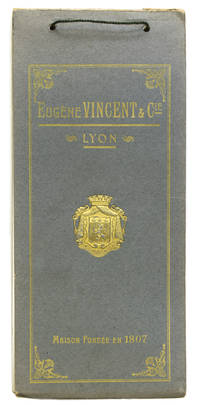
1907302671Lyon: Imprimerie Gougenheim Frères 1907. 30 numbered chromolithograph plates. Thin oblong 8vo 9-3/4 x 4-1/4 in. Printed gray wrappers stapled and with hole punches and string gold foil stamped arms on front cover. Light wear to covers. With the distribution stamp of Albert Martin 6 Rue des Tonneliers Marseille. 30 numbered chromolithograph plates. Thin oblong 8vo 9-3/4 x 4-1/4 in. A finely printed trade catalogue illustrating the liqueurs and brandies offered by the Lyon wine distributors Eugéne Vincent & Cie including Crème de Cacoa-chouva various brands of curaçao and triple sec anisette fruit brandies Peronneau absinthe and Grog Americain a bottled punch. Imprimerie Gougenheim Frères unknown books
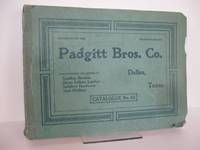
191757734Dallas TX: printed by Egan Printing Co. for the company 1917. Trade catalogue. Oblong 4to. 526 pp. Frontispiece trademark illustration and numerous other illustrations from line drawings and photographs. Padgitt Brothers Company was established in 1869 and incorporated in 1900; the company's success "in supplying the needs of the saddlery trade of the Southwest gave them first-hand knowledge of materials and design that were recognized as standard wherever good goods are sold." Their catalogues were "a veritable encyclopedia of saddlery facts classified for your convenience . there is no reason why this book should not prove a 'silent partner' in the success of every dealer who will utilize its pages freely." The profusely illustrated catalogue with pricing information is organized into sections for saddles and varieties of tack down to spurs buckles hobbles canvas wagon covers buggy tops blankets and feedbags. The Padgitt "Bronco Brand" saddle and accessories were widely known throughout the Southwest. OCLC locates two copies of this number National Cowboy & Western Heritage Museum San Jacinto Museum of History. Owner's name on front wrapper a very good copy. Printed green wrappers original printed cloth tape spine some soiling and chipping to wrappers tape repair to verso of rear wrapper chipping to margin of final blank. #6216. <br/><br/> (printed by Egan Printing Co., for the company) hardcover books
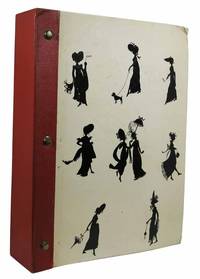
195742918Paris: Societe Paritys / Lebotys 1957. Post binder with 3 brass posts decorative screw tops. Publisher's color pictorial glazed boards blue spine and joints. Board edges rubbed and worn; short split to rear outer joint; inner joints tender paper splitting though cloth reinforcement beneath is intact. Page block foxed occasional foxing/spotting throughout; light offsetting from fabric samples to some pages. Fabric sample generally clean and bright with occasional creasing/fraying. Overall Gd. 97 pp. 16 color fashion drawings; ~ 740 pasted or tipped-in fabric samples. 16-1/8" x 12-1/8" <br/><br/>A mid-century salesman's sample catalogue from the winter collection of Parisian firm Société Paritys a haberdashery and fabric supplier established in 1946 and still in operation today. The fabric samples have been supplied by Lebotys a couture design firm in its own right and highly regarded for the quality of its textiles. As we find record of Lebotys having issued catalogues of its own collections in both the 1930s and 1960s we speculate that the two firms collaborated for a limited time possibly due to continuing post-war shortages and the need to adapt to the rapidly changing clothing market of the 1950s. The late 1950s saw a revolution in French fashion — and by extension Western fashion in general — due in no small part to the influence of material factors underlying the purely aesthetic side of the industry: availability of fabric continuing technological advances in synthetics and the surging post-war economies of America and Europe. The reluctant expansion of haute couture into the ready-to-wear market during the latter half of the century and the increasing reliance on synthetic fabrics to meet the demand would ultimately spell a major shift in the industry one that would impact fashion trends for decades to come. Some fashion houses like Dior whose “New Look” revitalized fashion at the beginning of the decade successfully managed to adapt by issuing couture ready-to-wear lines. Some however even long-established houses survived the war only to be undone by the prosperity that followed. The collaboration here of Société Paritys and Lebotys as well as the fabrics offered and styles displayed leads us to infer that the two firms were likely targeting the growing ready-to-wear market. The fabrics include a variety of silks cottons wools mohair etc. as well as nylon fibranne rayon Rhodia tergal crylor acetate and other “Matieres Synthètiques” often in blends and advertising their washable and/or antiwrinkling qualities. The styles in the illustrations still heavily influenced by the “New Look” emphasize wasp-waisted dresses hourglass silhouettes etc. No copies located on OCLC nor the major French institutions as searched on KVK. Societe Paritys / Lebotys hardcover books
195842919Paris: Societe Paritys / Lebotys 1958. Post binder with 3 brass posts. Publisher's pictorial glazed boards red cloth joints. Light extremity wear to boards; bumping to upper corner of front board; short split to front and rear joints. Page block lightly foxed foxing/spotting scattered throughout. Few white nylon fabric samples discolored by paste beneath. Fabric samples otherwise clean and bright with only minor occasional creasing/fraying. Overall VG. 80 pp. 12 color fashion drawings; ~590 pasted and tipped-in fabric samples 16-1/8" x 12-1/8" <br/><br/>A mid-century salesman's sample catalogue from the winter collection of Parisian firm Société Paritys a haberdashery and fabric supplier established in 1946 and still in operation today. The fabric samples have been supplied by Lebotys a couture design firm in its own right and highly regarded for the quality of its textiles. As we find record of Lebotys having issued catalogues of its own collections in both the 1930s and 1960s we speculate that the two firms collaborated for a limited time possibly due to continuing post-war shortages and the need to adapt to the rapidly changing clothing market of the 1950s. The late 1950s saw a revolution in French fashion — and by extension Western fashion in general — due in no small part to the influence of material factors underlying the purely aesthetic side of the industry: availability of fabric continuing technological advances in synthetics and the surging post-war economies of America and Europe. The reluctant expansion of haute couture into the ready-to-wear market during the latter half of the century and the increasing reliance on synthetic fabrics to meet the demand would ultimately spell a major shift in the industry one that would impact fashion trends for decades to come. Some fashion houses like Dior whose “New Look” revitalized fashion at the beginning of the decade successfully managed to adapt by issuing couture ready-to-wear lines. Some however even long-established houses survived the war only to be undone by the prosperity that followed. The collaboration here of Société Paritys and Lebotys as well as the fabrics offered and styles displayed leads us to infer that the two firms were likely targeting the growing ready-to-wear market. The fabrics include a variety of silks cottons wools mohair etc. as well as nylon fibranne rayon Rhodia tergal crylor lurex viscose imitation fur and other “Matieres Synthètiques” often in blends and advertising their washable and/or antiwrinkling qualities. The styles in the illustrations still heavily influenced by the “New Look” emphasize wasp-waisted dresses hourglass silhouettes etc. No copies located on OCLC nor the major French institutions as searched on KVK. Societe Paritys / Lebotys hardcover books
195942920Paris: Societe Paritys / Lebotys 1959. Post binder with 3 brass posts. Publisher's pictorial glazed boards white cloth joints. Light extremity wear to boards; short split to rear joint. Page block lightly foxed occasional foxing/spotting to margins throughout. Few white nylon fabric samples discolored by paste beneath. Fabric samples otherwise clean and bright with only minor occasional creasing/fraying. Overall VG. 108 pp. 16 color fashion drawings; ~800 pasted and tipped-in fabric samples. 16-1/4" x 12" <br/><br/>A mid-century salesman's sample catalogue from the summer collection of Parisian firm Société Paritys a haberdashery and fabric supplier established in 1946 and still in operation today. The fabric samples have been supplied by Lebotys a couture design firm in its own right and highly regarded for the quality of its textiles. As we find record of Lebotys having issued catalogues of its own collections in both the 1930s and 1960s we speculate that the two firms collaborated for a limited time possibly due to continuing post-war shortages and the need to adapt to the rapidly changing clothing market of the 1950s. The late 1950s saw a revolution in French fashion — and by extension Western fashion in general — due in no small part to the influence of material factors underlying the purely aesthetic side of the industry: availability of fabric continuing technological advances in synthetics and the surging post-war economies of America and Europe. The reluctant expansion of haute couture into the ready-to-wear market during the latter half of the century and the increasing reliance on synthetic fabrics to meet the demand would ultimately spell a major shift in the industry one that would impact fashion trends for decades to come. Some fashion houses like Dior whose “New Look” revitalized fashion at the beginning of the decade successfully managed to adapt by issuing couture ready-to-wear lines. Some however even long-established houses survived the war only to be undone by the prosperity that followed. The collaboration here of Société Paritys and Lebotys as well as the fabrics offered and styles displayed leads us to infer that the two firms were likely targeting the growing ready-to-wear market. The fabrics include a variety of silks cottons wools mohair muslin cashmere and others as well as nylon fibranne rayon Rhodia tergal crylor acetate Albène and other “Matieres Synthètiques” often in blends and advertising their washable and/or antiwrinkling qualities. The styles in the illustrations although still influenced by the “New Look” also show the influence of Dior's successor the young Yves St. Laurent who debuted his "trapeze line" in 1958. No copies located on OCLC nor the major French institutions as searched on KVK. Societe Paritys / Lebotys hardcover books
195741355Paris: Societe Paritys 1957. 1st printing thus. Publisher's color pictorial glazed boards post binder; 3 brass posts decorative screw tops. Red cloth joints. Some general extremity wear to binder with slightly bumped corners. Occasional dust soiling. Minor foxing. Overall VG with cloth samples generally VG to Nr Fine with the occasional crease to the odd sample or two. 104 pp printed in red on stiff-stock paper. 16 color fashion drawings; 897 of 898 tipped-in fabric samples. Folio. 16-1/4" x 12-1/8" <br/><br/>A mid-century salesman's sample catalogue from the summer collection of Parisian firm Société Paritys a haberdashery and fabric supplier established in 1946 and still in operation today. The fabric samples have been supplied by Lebotys a couture design firm in its own right and highly regarded for the quality of its textiles. As we find record of Lebotys having issued catalogues of its own collections in both the 1930s and 1960s we speculate that the two firms collaborated for a limited time possibly due to continuing post-war shortages and the need to adapt to the rapidly changing clothing market of the 1950s. The late 1950s saw a revolution in French fashion — and by extension Western fashion in general — due in no small part to the influence of material factors underlying the purely aesthetic side of the industry: availability of fabric continuing technological advances in synthetics and the surging post-war economies of America and Europe. The reluctant expansion of haute couture into the ready-to-wear market during the latter half of the century and the increasing reliance on synthetic fabrics to meet the demand would ultimately spell a major shift in the industry one that would impact fashion trends for decades to come. Some fashion houses like Dior whose “New Look” revitalized fashion at the beginning of the decade successfully managed to adapt by issuing couture ready-to-wear lines. Some however even long-established houses survived the war only to be undone by the prosperity that followed. The collaboration here of Société Paritys and Lebotys as well as the fabrics offered and styles displayed leads us to infer that the two firms were likely targeting the growing ready-to-wear market. The fabrics include a variety of silks cottons wools mohair etc. as well as nylon fibranne rayon Rhodia tergal crylor acetate and other “Matieres Synthètiques” often in blends and advertising their washable and/or antiwrinkling qualities. The styles in the illustrations still heavily influenced by the “New Look” emphasize wasp-waisted dresses hourglass silhouettes etc. Of particular note are the designs and fabrics for wedding dresses. No copies located on OCLC nor the major French institutions as searched on KVK. Societe Paritys hardcover books
193019955Leicester UK: Cascelloid ca. 1930s. Very good . Oblong 4to. album. Blue leather-covered boards. Contains 29 color photographs all 9" by 6.5" approx. mounted on rectos one each of light-gray cardboard leaves. About very good plus overall. Moderate rubbing and edgewear to boards. Several pages display mild soiling and offsetting from photos. Prints just a bit yellowed but remain sharp vivid and clean. <br/><br/>Beautifully-produced trade catalogue from the Cascelloid "Palitoy" company displaying a wide range of baby dolls and other toys. Several uncomfortable designs of black children with pitch-dark skin date this catalogue at roughly the 1930s when the Cascelloid company was dubbed the "House of Constant Progress" by the industry press for its material innovations with the plastics Bexoid and Plastex. One page features a celluoid model by the noted designer Mary Lucie Attwell a doll named "Diddums." The catalogue also displays the company's offerings of animal dolls die-cast trucks pool toys golf and ping-pong sets rattles pinwheels and more. Needless to say color photography was not the norm at this time and this catalogue comprises a beautiful set of vivid and sharp photographic prints. A truly exceptional example unlike anything we've seen: simultaneously surreal and nostalgic. [Cascelloid] hardcover books
191498381914. Presentation album promoting the work of the pioneering printing firm including unpaginated 16 pp. introductory text printed in blue black silver and white within elaborately ornamented borders and 12 mounted samples of work by the firm including publicity brochures advertisements pamphlets stationery and other items most in striking colors compositions and formats with descriptions on decorative tissue guards. Folio. Orig. ornamental cloth front cover a bit warped. Berlin n.d. circa 1914. A spectacular publication reflecting the firm's originality creativity and great attention to detail presenting striking designs for publicity material epitomizing later manifestations of Jugendstil aesthetics. hardcover books