155 résultats
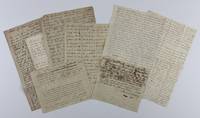
182012624Virginia and Alabama 1820. Eight manuscript documents totaling sixteen pages. Typical mailing folds and handling wear. Very good. Manuscript records from an extraordinary court case in modern-day West Virginia in which a free person of color named Caesar Freeman also known as Ceasar Cesar or Black Cesar and his family defended themselves and then sued to re-establish their own freedom over twenty years after being manumitted by their owner who had attempted to use them as collateral for a loan after their manumission. The case took place in Greenbrier and Pocahontas counties in West Virginia. Pocahontas County is located on the Virginia-West Virginia border and at the time of these documents was located in Virginia; Greenbrier County is a bit further west. A few of these documents emanate from or relate to Franklin County Alabama where one of the deponents had moved by the time of the legal proceedings.<br /> <br /> The case is detailed in a small pamphlet entitled Ceasar Mountain: Slavery and Freedom in Western Virginia by John Cohassey published in 2016. The opening paragraphs of said pamphlet provide excellent background on the case: “In Pocahontas County West Virginia lore tells of an 18th century legal feud between landowners George Massingbird and Thomas McCarty. In 1796 Massingbird secured a loan from McCarty. Thirty-two days after entering the contract and in need of collateral Massingbird claimed that his freed slaves – Cesar and family – were still his property. Nearly two decades later Massingbird remained indebted to McCarty who demanding final payment sought ownership of the Ceasar Freeman family. From the outset of this financial arrangement the Freemans served as collateral for a loan that Massingbird had intended to pay without likely expecting that the transaction would jeopardize the family’s freedom. When legally threatened to make the final payment Massingbird stated truthfully in a deposition that he had freed Caesar and family after the date of his initial loan. A Virginia statute stipulated that any slave manumitted after the date of a contract was not subject to reenslavement. But at this point Massingbird’s motivation for changing his story likely had more to do with his preventing McCarty‘s claim over the Freemans than to settle a debt that threatened him with serious legal consequences. Without money to pay McCarty upon the deadline of the debt Massingbird changed his story once again – that Cesar and family had not been freed after the contract. This untruthful claim as in the initial loan now placed the burden on the Freemans to prove their status as free persons of color. Assisted financially by local whites Ceasar and family won their case. Learning that Massingbird had on two occasions claimed them as collateral the Freemans sued both Massingbird and McCarty. Victorious in court the Freemans were awarded land in a region where they once were slaves – while the name of a nearby mountain was reputedly taken from their respected patriarch.†The mountain referred to here is known as Caesar Mountain in Pocahontas County.<br /> <br /> The present documents emanate from the case in 1819-20.  Two of the earliest documents dated in October and November 1819 relate to McCarty’s suit against Massingbird and mainly pertain to making sure Caesar and his family remain in the state. This included the jailing of Caesar and Sarah’s daughter Nancy Ware whom Massingbird apparently still claimed as a slave. One chief aspect of the importance of these documents lies in the fact that Caesar and his entire family are listed by name as such: “Caesar Sarah his wife Nancy Adam Zachariah John Esther Jim Sally Abraham Elizabeth Martha & Rebecca Children of Caesar and Sarah who are persons of colour.†Also of particular interest is that one of the documents appears to be signed by both Caesar and his daughter Nancy with their marks the day after Nancy was released from jail.<br /> <br /> In the remaining six documents Caesar and his family as well as defendant McCarty work through the Virginia and Alabama courts to secure a deposition from James J. Mayers a trustee of the Massingbird-McCarty agreement which supposedly still held the Freeman family in bondage. These documents are dated between July 1819 and February 1820. The earliest of these documents is a summons for Massingbird McCarty and Mayers to appear in Greenbrier County court “to answer a bill exhibited against them by Caesar and Sarah his wife as well as their adult children…who are permitted to sue in forma pauperis.†This is an extraordinary document encapsulating the right of free persons of color to sue their former owners and others in court in Virginia in 1819 and representing the Freemans’ fight for their continued freedom. The next document dated October 29 1819 contains testimony from George Massingbird confirming that “the Petitioners the Freemans were emancipated by your respondent Massingbird prior to the contract made by your respondent with his codefendant McCarty….†Finally the truth from Massingbird. In the third document dated the same day the trustee James Mayers asks to be dismissed from the case agreeing to all that was said by Massingbird in court.<br /> <br /> This was not enough for the courts or perhaps for one of the defendants Thomas McCarty. The final three documents dated between February and April 1820 further pertain to securing testimony from Mayers in the case. On February 21 1820 Virginia clerk John A. North addresses a one-page partially-printed form completed in manuscript to “any two Justices of the Peace for Franklin County State of Alabama.†The document was sent “on behalf of Thomas McCarty Defendant as of Caesar & other persons of colour Plaintiffs who are permitted to sue in forma pauperis.†The intentionof the document was to seek the help of Alabama officials in “examining whatever witnesses†they might have in the case. The next document is dated two days later and sent from McCarty to Caesar. Here McCarty informs “Black Caesar†that he intends to depose Mayers in Alabama on April 24 and that the deposition shall “bee red as evidence in the Chancery Court in a suit where you are plaintiff and myself and others are defendants.†Again a rare instance in which a white defendant writes to a Black plaintiff in the antebellum South involving the freedom of the latter.<br /> <br /> The final document chock full of detail on four folio pages contains the substance of Mayers’ deposition indeed given on April 24 1820. Here Mayers discloses all he knows of Massingbird’s contrary claims involving the case including the fact that Massingbird told him two contradictory stories about the Freeman’s manumission. Mayers professes that after Massingbird told him the whole truth of the matter he was “no little surprized at this declaration after what had taken place when application was made to draw the trust deed.†Sadly these four pages constitute the majority of Mayers’ testimony but seem to end mid-sentence leaving the remainder of his testimony to the vagaries of time. Still the most important part of the story is told here: Massingbird emancipated Caesar and then lied about it when he couldn’t pay his debts endangering the freedom of an entire family in the interest of cold hard cash.<br /> <br /> According to Cohassey’s 2016 pamphlet this testimony was “read aloud in court†and “no doubt revealed Massingbird’s duplicity in the matter.†Eventually Caesar and his family won the court case. Afterwards Massingbird deeded over 400 acres of land in Pocahontas County to the Freemans which apparently included Caesar Mountain. The Freemans lived out their remaining years as free people recorded in local tax lists between 1825 and 1843. unknown
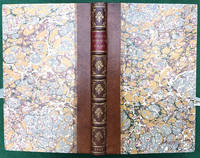
180158147<p>ELOQUENT ARGUMENT FOR ABOLITION OF THE SLAVE TRADE BY A WEST INDIES SLAVE OWNER - WITH A DESCRIPTION OF SUGAR PLANTATIONS</p><p>Full title: 'Letters on the Cultivation of the Otaheite Cane; the Manufacture of Sugar and Rum; the Saving of Molasses; the Care and Preservation of Stock; with the Attention and Anxiety which is due to Negroes. To these Topics are added a few other Particulars analogous to the Subject of the Letters; and also Speech on the Slave Trade the most important Feature in West Indian Cultivation.'</p><p>first edition 8vo. xvi 248 248 1 blank 249-290 291-301 prospectus with detailed contents for book on Leeward Islands 1 blankpp large folding table at p.247 modern quarter rich tan calf spine panelled by raised bands with the panels richly gilt tooled red morocco title label marbled sides scattered foxing some light old water staining to lower and fore margins most noticeable in gatherings B and L and never obtrusive else a nice copy in a very handsome binding.</p><p>SABIN 9850 Goldsmiths'-Kress no. 18156.4 Rare Books Hub records none at auction. <br />Clement Caines d. 1817-1822 trained as a barrister in London inherited his family's sugar plantations in St. Kitts around 1778 and became the largest slave owner in the island. In the General Assembly of the Leeward Islands in 1798 he advocated the abolition of the slave trade better treatment for enslaved workers and an end to the slave trade. He wrote extensively on the desirability of humane treatment for plantation slaves and the abolition of the slave trade as well as political topics including his support for the Embargo. <br />The first part of this book effectively a detailed description the workings of a West Indian sugar cane plantation benefits from Caines's first hand experience of the topic. The second part p.249-288 contains his 'Speech on the Slave Trade' delivered to the General Assembly of the Leeward Islands in March 1798 which was discussing a resolution that the abolition of slave trade 'would be oppressive to the British planter destructive to the sugar colonies and consequently to the British Revenue and of no benefit to the Africans themselves'. Caines unambiguously stated "the slave-trade ought to be abolished. It ought to be abolished immediately. It ought immediately to be abolished for the sake and benefit of the planter". Caines argued that the slave trade was injurious not only to the slaves but to their owners. Having observed the death rates from exposure overwork and disease involved in forest clearing he bluntly stated that slave labour "cements with blood the walls of every sugar-work that is raised where forests grew". He stated that his business had "never been delegated to others. The slaves who were committed to my care performed their work under my own eyes. My time was passed with them and my attention devoted to them and their condition. I could not fail then to become acquainted with their wants and sufferings - to remark their sickness disability and premature decay: - the diseases among their men the sterility of their women and the death among their children". He directly challenged his hearers for their calculation "that a hardy African can be purchased for less than a Creole infant can be reared" and their consequent failure to provide adequate housing for mothers and children. He reports that about a quarter of newly arrived slaves on discovering their situation "pine and droop linger rather than live and shortly sink into the grave". Only an end to the importation of new slaves could disrupt the planters' callous calculation that they could "run our Negroes for two or three years" in the certainty that they could be then be replaced. Caines's familiarity with the actuality of slave life and his eloquent and direct illustration of it give this work an especial power.</p><p><br />Interestingly in 1811 Caines wrote to both Thomas Jefferson and James Madison sending copies of his publications vide https://founders.archives.gov/documents/Jefferson/03-03-02-0394 .</p> Printed for Messrs Robinson hardcover
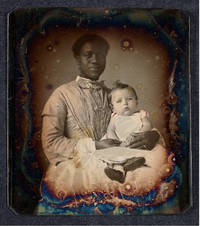
185332820729<p>Two sixth-plate daguerreotypes cased together. Left: nurse and child "Bradford & Ellen Sherwood his nurse" right: parents "Jonathan P. Harrison & his wife Caroline Denny Harrison". White family's cheeks are hand-tinted and the baby's dress is hand-colored. Some spots edges tarnished.</p><p><strong>A tremendous pair.</strong> Jonathan P. Harrison born 23 December 1829 and his wife Caroline Denny Harrison born c. 1834 are in one portrait while their son Bradford born c. 1853 and his black nurse Ellen Sherwood are in the other.</p><p>The Harrison family moved from Talbot County on Maryland's Eastern Shore to Texas in the 1850s to pursue ranching and farming opportunities. According to the U.S. Census in 1860 the family lived in Corpus Christi Texas with Jonathan reported as 29 years old Caroline 26 and Bradford 7 indicating a date of 1853 for this photograph.</p><p>The Harrisons and Dennys were prominent Maryland and Texas families. Jonathan served with the 1st Texas Cavalry during the Civil War. Identified daguerreotype portraits of slaves are rare and linked pairs such as this set are very rare. It is conceivable that Ellen Sherwood was a free black but given the status of the Harrison and Denny families it seems probable that she was a slave.</p><p>This splendid pair of photographs vividly demonstrates the complexity of black-white relationships in the antebellum South.</p><p><strong>Provenance: "Jonathan P. Harrison & his wife Caroline Denny Harrison / Their child Bradford & Ellen Sherwood his nurse" identified in a manuscript note beneath the right daguerreotype in the hand of Jonathan's niece Patty Belle Tilghman 1851-1931.</strong> See Hanson <em>Old Kent: The Eastern Shore of Maryland</em> p. 96.</p>
186064001London UK: William Tweedie 337 Strand 1860. Small 4to. 5.25 x 7.5 in. xv 1 3-172 xi 1 pp. Woodcut-engraved frontisp. of the author still preserving tissue guard. Publisher’s ribbed plum-coloured cloth dark maroon coloured title label & price of 1 shilling 6 pence mounted front cover very minor chipping head & foot of spine slight fraying title label stamping dimmed and minor bumping to a couple corners still a VG copy w/ London UK bookseller’s label partially removed at gutter margin front pastedown. First edition first printing of the first book wholly devoted to the Underground Railroad published only in England and by an African-American/Native-American author. Mitchell was a pivotal figure in the Underground Railroad who also aided the escaped slave “Eliza†whose escape over the Ohio River ice inspired the key dramatic moment in Harriet Beecher Stowe’s pivotal Uncle Tom’s Cabin. “Eliza†was sheltered originally in the network by noted abolitionist John Rankin passed on to Mitchell who then subsequently ensured her safe passage along the network overseen by Levi Coffin 1798-1877. Ironically the passage of the 1850 Fugitive Slave Act which criminalized those aiding in the Underground Railroad to free slaves with fines of $ 1000 and six months imprisonment fueled resistance and forced Mitchell to publish this seminal work in Great Britain rather than the U.S. As a freeborn orphan Black in North Carolina Mitchell was forced into apprenticeship with a North Carolina plantation owner where he witnessed the deprivations of slavery and became inspired to aid African-American slaves to escape to Canada. From 1842-1855 he helped over 1300 slaves reach Canada from his Washington Court House Fayette County Ohio way station. This memoir recounts many anecdotes of the formerly enslaved including: one enslaved woman who died from frostbite while protecting her three children and a former slave John Mason brought Mitchell in just 19 months of that 13 year span “265 human beings whom he had been instrumental in redeeming from slavery.†Mitchell further recounts Mason’s recapture in Kentucky and later escape from New Orleans to Canada. Mitchell estimates in his book that 60000 enslaved peoples escaped into Canada on the Underground Railroad modern estimates range from 40000 to 100000. At the end of the 1850’s he moved to Toronto and began serving as a minister to African-American Baptist Free Mission congregations largely composed of freed slaves and the final section details the lives of these Canadian Black immigrants. In the final appendix he urgently pleads for a boycott of Southern cotton by Great Britain attempting to overcome resistance to the economic impact and hardship it would have on British cotton mills and related industries. Mitchell c. 1826-c.1879 was encouraged to write this historic work by W.H. Bonner A British abolitionist and had toured Britain in 1860 with William Howard Day and British abolitionist George Thompson to oppose the condition of slavery before the outbreak of the Civil War. This work is quite scarce with only 2 copies at auction in the last 50 years and both those appear to have been the 2nd edition which removed the hyphen in “Under-Ground†extended the title and a couple other revisions. William Tweedie, 337, Strand, hardcover
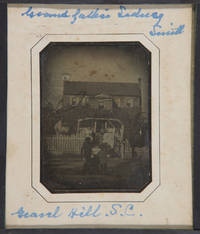
184542820850<p><strong>A unique survival.</strong> This important collection of largely identified photographs documents the home and family of Dr. Sidney Smith and those he enslaved at Gravel Hill his South Carolina plantation. The collection includes an extraordinary daguerreotype depicting Dr. Smith his two daughters and his brother posed together with two enslaved African American men. This is <strong>one of the earliest known images—if not the very earliest photograph—of an identified plantation owner posing with enslaved African Americans. </strong></p><p><strong> The photographs :</strong></p><p>1. Quarter plate daguerreotype 4 x 3 1/8 in. of Gravel Hill Plantation near Robertville St. Peter's Parish Beaufort District South Carolina. Ca. mid-to-late 1840s. Manuscript notation on passe-partout mat "Grandfather Sidney Smith Gravel Hill S.C." The image shows the plantation house with various figures engaged in an unidentified activity with a horse tied to a picket fence. The two girls in white may be Sidney Smith's daughters Arabella b. 1832 and Julia b. 1837 and the others may be enslaved African American children. An enslaved African American subject stands on the steps in the background. In the foreground are two figures with an unknown object perhaps a dog cart or a bone-shaker bicycle. In front of the house is a heavily-vined grape arbor presumably connected with Smith's efforts in viniculture.</p><p>2. A quarter plate tintype copy of the above daguerreotype.</p><p>3. Sixth plate daguerreotype of Sidney Smith his daughters Arabella and Julia his brother James Laurens Smith and two unidentified African American men almost certainly enslaved men. Ca. mid-1840s-1850. One of the girls is blurred because she is hold a struggling dog. Accompanied by the envelope in which the daguerreotype was discovered with penciled notation about the subjects as well as a tentative date of "1850 or thereabout."</p><p>4. Sixth plate daguerreotype of Smith's daughters Arabella and Julia pointing to a book and an unidentified object. Ca. mid-1840s-1850.</p><p>5. Sixth plate daguerreotype of Sidney Smith. Ca. 1845. Smith appears to be wearing a mourning band on his coat suggesting that the image was made following the death of his first wife Eliza in March 1845.</p><p>6. Sixth plate tintype copy of the above portrait.</p><p>7. Sixth plate tintype portrait of Maria King Smith second wife of Sidney Smith with an infant possibly William King Smith. A period copy image.</p><p>8. Sixth plate ambrotype of William King Smith son of Sidney and Maria Smith possibly as a cadet. Ca 1850s.</p><p>9. Quarter plate ambrotype of Sarah Smith sister of Sidney and James Laurens Smith aunt to Arabella and Julia. Ca 1850s-1860s.</p><p>10. Sixth plate ambrotype of Rosa Nicholes sister of Maria Smith with "Eddie" Postell possibly the Edward Postell who was killed in action in 1863 at Fort Wagner. Ca 1850s.</p><p><strong> Dr. Sidney Smith</strong></p><p>Sidney Smith was born in 1805 in or near Beaufort SC the son of William Smith a man of moderate wealth and Elizabeth Wilson Smith of Philadelphia reportedly a Quaker. Sidney was sent to Yale College and subsequently studied medicine in Ohio. His younger brother James Laurens Smith b. 1809 studied law but he apparently never practiced devoting himself instead to agriculture. Sidney Smith married Eliza Lawton in 1829. The two had several children including daughters Arabella and Julia. Smith was apparently practicing medicine in the vicinity of Robertville South Carolina as well as trying his hand at being a planter. In 1831 he appears in the Lawton Family Papers as having been paid two dollars for "expirating a Fungus Tumor from the head of Little Negro Shiloh" Inabinett 1963. His name appears in several land transactions in the upper St. Peter's Parish in Beaufort District where he experimented with various crops.</p><p>Smith's experiments with wine received wide-ranging coverage in the press. A notice in the Boston Daily Atlas of 28 December 1844 printed a report from a Savannah newspaper: "This editor of the Savannah Republican has samples of eight kinds of wine made by Dr. Sidney Smith of Robertville Beaufort District S.C. They are pure juice of the grape without the addition of any spirits whatever. One of the specimens is from the vintage of 1833 another from that of '38 and the other six from that of the present year. They differ in flavor according to the species of grape from which they were expressed … Dr. S. has on hand some 800 gallons of those wines which he finds useful for all medicinal and culinary purposes."</p><p>Smith's first wife Eliza died in 1845 at the age of 37 possibly explaining her absence from the group portrait. In 1846 Smith married Maria Ann King with whom he would have two children who survived into adulthood William King Smith b. 1846 and Walter Watson Smith b. 1849.</p><p>By 1850 Smith and most of his family had left Gravel Hill and relocated to Marietta Georgia where he acquired another plantation Rockford near Marietta. By this time Smith had acquired 74 slaves according to the 1850 Slave Schedules of the United States Census. He continued to run Gravel Hill as an absentee owner from Georgia.<br />In 1853 Smith sold Gravel Hill then comprising 700 acres and his other plantation properties in the Robertville area to John Goldwire Lawton in 1853 according to genealogical records at the Heritage Library Foundation. Smith's Gravel Hill home appears to have been on the site of present-day Gravel Hill Plantation the ca. 1910 hunting preserve near Robertville on the National Register of Historic Places. The elaborately decorated center-hall plan home as well as the town of Robertville was burned by W.T. Sherman's troops in 1865.</p><p>After the war the land was sold to Northern buyers. Newer structures were apparently built on the foundations of the original Gravel Hill around 1910 when it was refashioned as a gentleman's hunting plantation. Dr. Smith and his wife Maria died in 1856. Their sons Walter and William became wards of Smith's brother James who himself apparently died in 1865. Walter Smith was a student at the Georgia Military Institute when it closed at the time of W. T. Sherman's approach in 1864. At the age of 14 he and the other cadets were sent to guard the river crossings in the approaches to Atlanta. With his brother William Walter served in Confederate units until the end of the Civil War. Sidney Smith's sister Sarah known as "Aunt Sarah" to Walter and William Smith wrote vivid letters describing the evacuation of Marietta and her flight to Atlanta.</p><p>While no documentary evidence of the Smith family's views on slavery has been found Susan E. Geoffrey claims in her academic paper "A Southern Family in Transition 1830-1865" that Sidney and his siblings were "reasonably humane to their slaves according to the standards of their society." Geoffrey adds that Sidney's sisters Sarah and Hannah developed an interest in educating their brothers' enslaved children. Dexter's biographical sketch of Smith notes that Smith "opposed strenuously the act of nullification in South Carolina and by his personal efforts retarded the action of that State." Smith's brother James provided in his 1853 will that every tenth! child born into slavery in the estate should at age eighteen be granted freedom to be facilitated by the Colonization Society.</p><p><strong>The photographers</strong></p><p>The photographers of these images are unidentified but it appears that Smith himself may have made two of the daguerreotypes. <em>Biographical Sketches of the Graduates of Yale College with Annals of the College History</em> vol. 7 1913 notes of Smith: "He was a man of unusual mental gifts an earnest student and devoted to the community and mankind. When the art of the daguerreotype was first introduced he was a pioneer in cultivating it in the South."</p><p>Based on his interest in the "art of the daguerreotype" it is possible that Smith created the daguerreotypes himself perhaps with the aid of an assistant so he could be included in certain images most notably the group portrait. The informal group portrait shows a relaxed family posing together. Smith appears to have moved into the frame at the last moment after setting up the shot. Likewise the subjects in the Gravel Hill daguerreotype are in casual poses as if they are in a Daguerreian snapshot of the family rather than formally arranged portraits.</p><p><strong>Dating</strong></p><p>The approximate dating of the featured images has been determined based on the estimated ages of Smith's daughters Arabella and Julia who are pictured in two or perhaps three of the daguerreotypes. Arabella b. 1832 and Julia b. 1837 appear to be around the ages of twelve/thirteen and eight/nine respectively. The girls appear together in a sixth plate daguerreotype portrait and in the sixth plate group portrait of Dr. Sidney Smith his brother and two unidentified African American men almost certainly enslaved subjects. The sisters may also be the two girls in white dresses on the steps of the house in the quarter plate daguerreotype.</p><p>This dates those daguerreotypes to the mid-1840s and no later than 1850 thus making them among the very earliest photographs of a slave-holding antebellum plantation.</p><p><strong> A rare opportunity</strong></p><p>It is evident that Dr. Sidney Smith wanted to use the new art of photography to create a visual record of his plantation home at Gravel Hill and of his family and the enslaved individuals who worked for him. The daguerreotypes offered here most notably the group portrait of Smith with his brother daughters and two Black men are unique in depicting enslaved subjects posed together with their owner especially in a relatively informal setting. We are not aware of comparable images dating from the mid-to-late 1840s.<br />This exceptional collection of photographs from an identified family in the antebellum South is worthy of further research.</p><p><strong>References </strong></p><p>Dexter Franklin Bowditch. <em>Biographical Notices of Graduates of Yale College</em> 1913</p><p>Geoffrey Susan E. "A Southern Family in Transition 1830-1865" 1982 Accessed online through the Heritage Library History and Research Center in Hilton Head SC September-October 2024. Background on the Smith family is derived from this academic paper although the research center's copy is incomplete lacking numerous footnotes and bibliography. Some but not all of Geoffrey's sources have been located in the William King Smith Papers Wilson Special Collections Library UNC Chapel Hill.</p><p>1845-1850 four daguerreotypes and ca. 1855-1860 three ambrotypes plus three early tintype copy images. 10 items.</p>