[COSTUMES - CARNIVAL].Biblio.com
28 résultats
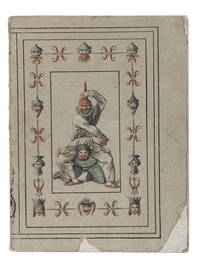
1804E5UG7Z4OCT3NLeipzig 1804. 16mo in 8s 14 x 10.5 cm. Friedrich August Leo Original publisher's paperboards printed from an engraved plate and hand-coloured each board with a costume scene in a decorated frame with caricature faces also with faces and decorations on the spine green paste-downs. With 2 stiff coated leaves at the end apparently intended for writing with a stylus. With 12 numbered engraved plates by Friedrich Wilhelm Nettling all coloured by a contemporary hand each showing several figures in carnival costumes. 31 1 blank pp. Very rare first and only published part of a series of hand-coloured carnival costume plates each of the 12 with a letterpress description in German and French. Only plates 9 and 10 bear the name of the German draughtsman and engraver Friedrich Wilhelm Nettling best known for his portrait of Bach but all may have been engraved by him. The mostly comical or farcical plates illustrate a fairy with her entourage a Chinese man Don Quixote and Sancho Panza a group of beast people and many other extraordinary figures. Two figures in one plate wear funnels as hats like the Tin Man in The Wizard of Oz. Besides the 12 plates in the booklet itself the engravings on the boards show two male figures gymnasts one in a clown-like costume on the front and a dancing woman with a tambourine on the back.With some minor stains and the front of the binding slightly damaged in the lower margin and lower right corner spine cracked. Good copy.l Baumgärtel Die Almanache Kalender und Taschenbücher 1750-1860 der Landesbibliothek Coburg p. 32; Köhring 111; WorldCat 633348944 465355875 3 copies; not in Colas; Hiler; Lanckoronska & Rümann; Lipperheide; for Nettling: Thieme & Becker XXV p. 400. ABE CAT Costumes & Uniforms hardcover
1820D6906N.p. but Germany possibly Liechtenstein c. 1820. Hardcover. Very Good. 4to 245 x 165mm. A compilation of 73 brightly colored watercolors many with manuscript captions in German some are dated for the costume all clipped and mounted into book and illustrating the costumes and attributions of court officials knights Templar Tartar costume St. George on horseback German orders of nobility also for Spain France Holland Italian Turkish Egypt and Babylon and other various orders as in Order of the Garter in England and France and religious dress of ordained and lay members of various orders including German Italian Spanish and Cistercian Carmelite Carthusian Capuchin and Franciscan monks. Also Jesuit pilgrims and sisters of the Benedictine Sylvestrine and Cistercian among other lesser-known orders and historical figures such as Leopold III of Austria and Louis III of Tremoilles. Early 19th-century half calf over imitation silk cloth-covered boards and decorative endpapers spine with label COSTUME; some light foxing most severe at beginning otherwise the colors remaining extraordinarily fresh and bright. Armorial bookplate from the Princely house of Liechtenstein on front pastedown. <br/><br/>Unique compilation of 73 expertly executed hand-colored watercolors of various religious knightly and official orders with a bookplate of the royal arms of Liechtenstein. Each figure is executed with extraordinary talent and is superbly hand-colored in a range of washes; many of these costumes have changed very little and have a history stretching back to medieval times. In the twentieth century an interest in costume and fashion books was spurred on by the dawning Victorian age in England in the 1830s which then spread to the continent. Each picture in this unique set is an individual work of art full of expression and with strikingly attractive faces and gestures. The expert attention given to each work of art strongly suggests this book was a maquette for a larger print-run of a souvenir book of costumes. Captions are in German and early provenance points to possible creation in the principality of Liechtenstein. One can think of the principalitys official motto For God Prince and Fatherland and see how all these official garments best represent a history of European court and important religious connections for an established royal line such as Liechtenstein. Perhaps this book was once in the royal home of the Johann I Joseph Prince of Liechtenstein who had fourteen children and it may have belonged to his son Prince Friedrich Adalbert 1807-1885 who later became the 1018th Knight of the Order of the Golden Fleece in Austria. With interesting connections to the royal house of Liechtenstein and 73 examples of hand-colored historic costumes this truly is a unique survival. hardcover
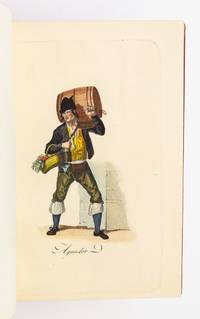
1832ST19313Madrid: Real Calcografía 1832-36. 240 x 160 mm. 9 1/2 x 6 1/4". <br/> ELEGANT MODERN RED MOROCCO VERY HANDSOMELY GILT in the style of the period BY ANTOLIN PALOMINO OLALLA hand-signed on front turn-in with swirling cornerpieces and central lozenge raised bands spine panels gilt gilt turn-ins all edges gilt in slightly worn red marbled paper slipcase. With engraved title page and 112 ENGRAVED PLATES by Juan Carrafa after drawings by Jose Ribelles y Helip and ALL WITH CONTEMPORARY HAND COLORING. Colas 646; Lipperheide 1224. Edges of some leaves with faint stains and thumb soiling of no consequence but the finely colored plates beautifully preserved and THE SPARKLING BINDING IN FLAWLESS CONDITION.<br/> <br/> This is a beautifully bound work filled with exquisitely hand-colored plates depicting early 19th century Spanish costumes. Neither Lipperheide nor Colas identifiy the artist but the San Fernando Royal Academy of Fine Arts in Madrid attributes the images here to the Spanish painter and draughtsman José Ribelles y Helip and identifies the engraver as Juan Carrafa. The plates were originally published by the Royal Academy in 1825 in 14 parts with eight plates per part and the present edition was produced around 1832-36 based on the dates found in the descriptive labels incorporated into two of the plates. The illustrations depict men and women in regional dress from across Spain as well as particular "types" including shepherds fishermen merchants musicians dancers bullfighters smugglers sailors and more. The superb hand coloring enlivens each illustration with vibrant colors and careful attention to shading patterns and accessories. Antolin Palomino Olalla 1909-95 was one of the great Spanish binders of the 20th century. A versatile and meticulous artist teacher and craftsman Palomino Olalla opened his Madrid workshop in 1942 and became especially renowned for his hand-gilding mosaic bindings and marbled paper techniques. He seems to have specialized in binding antiquarian books and attracted important institutional clients as well as discerning bibliophiles such as Bartolomé March Servera. The gilding on the present work is especially elegant and applied with laser precision adding another dimension of pleasure to an already appealing work. The book is uncommonly seen for sale at Anglo-American auctions. Real Calcografía unknown