6 résultats
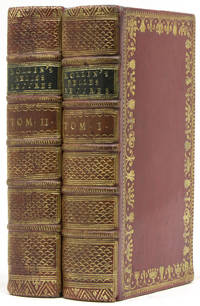
1788LV2153Paris:: Freres Etienne Chez Barrois 1788. 1788. New edition. 3 of 4 volumes lacking v.4. 12mo. xx 4 524; viii 456; viii 535 pp. Engraved frontispiece P.J.S. Original gilt-stamped tree calf; slightly worn. Bookplates of Hartford Seminary Foundation Case Memorial Library. Very good. Sold as a binding. New edition. Rollin held Jansenist principles a Christian theological movement originated primarily in France that emphasized original sin human depravity the necessity of divine grace and predestination. Unfortunately he was persecuted for his beliefs. Most of his writings including his works on ancient history came later in life when he had been forbidden to teach. The most important work was his Traite des etudes Paris 1726-31 and contains a summary of what was even then a reformed and innovative system of education including a more frequent and extensive use of the vernacular language and a discarding of lingering medieval traditions. "In 1750 the pedagogical views of Charles Rollin 1661-1741 - incorporated in his Traites des Etudes known also as De la maniere d’enseigner et d’etudier Les Belles-Lettres par rapport a l’esprit & au cœur 1727 - were introduced to Greek audiences by a Greek adaptation of Rollin’s ‘Preliminary Discourse’ in which were exposed his ideas about the importance of character formation and the role of moral and social virtues for making up of a good Christian and a citizen along with his liberal views about education teaching methods and the education of women." His Traite des etudes Paris 1726-31 contains a summary of what was even then a reformed and innovative system of education including a more frequent and extensive use of the vernacular language and a discarding of lingering medieval traditions. REFERENCES: Bardeen Charles William. A Dictionary of Educational Biography: Giving More Than Four Hundred Portraits and Sketches of Persons Prominent in Educational Work. C.W. Bardeen 1901. p. 68; Peter Kemp Asger Sørensen eds. Politics in Education. LIT Verlag Munster 2012. p. 65. Freres Etienne, Chez Barrois, 1788. unknown books
1732293080Paris.: Jacques Estienne. 1732 - 1733. 19th century marbled boards gilt ruled spines red spine labels. Near fine a few leaves dampstained. 12mo. 16.5x10 pp. French text. Heavy set will require extra shipping. weight: 4.0 lb. Jacques Estienne. hardcover books
1755233640Paris: Les Frères Estienne 1755. Nouvelle edition. 38 cxiv 502 8; 2 640 4 pp. 2 vols. 8vo. Bound in full contemprary red morocco gilt spine contrasting spine labels a.e.g. Fine. Eighteenth-century bookplate of Charles Smith with his signature dated 1767 on title of each volume. Nouvelle edition. 38 cxiv 502 8; 2 640 4 pp. 2 vols. 8vo. Charles Rollin January 30 1661-December 14 1741 was a French historian and educationist. He was born at Paris. He was the son of a cutler and at the age of twenty-two was made a master in the Collège du Plessis. In 1694 he was rector of the University of Paris rendering great service among other things by reviving the study of Greek. He held that post for two years instead of one and in 1699 was appointed principal of the Collège de Beauvais.<br/>Rollin held Jansenist principles and even went so far as to defend the miracles supposed to be worked at the tomb of François de Paris commonly known as Deacon Paris. Unfortunately his religious opinions deprived him of his appointments and disqualified him for the rectorship to which in 1719 he had been re-elected. It is said that the same reason prevented his election to the Académie française though he was a member of the Academie des Inscriptions. Shortly before his death he protested publicly against the acceptance of the bull Unigenitus.<br/>Rollin's literary work dates chiefly from the later years of his life when he had been forbidden to teach. His once famous Ancient History Paris 1730-38 and the less generally read Roman History which followed it were avowed compilations uncritical and somewhat inaccurate. But they instructed and interested generation after generation almost to the present day. A more important work was his Traité des études Paris 1726-31. It contains a summary of what was even then a reformed and innovative system of education advocating a more frequent and extensive use of the vulgar tongue and discarding the medieval traditions that had lingered in France. Brunet IV 1360 for 1740 ed. Les Frères Estienne unknown books
1748299744Paris: Estienne 1748. hardcover. very good. 13 volumes bound as 14 volume 11 is bound as 2 volumes. Illustrated with 3 copper engraved maps 2 engraved folding plates and 1 engraved folding plan. 12mo Contemporary mottled calf ornately gilt spines some rubbing. Nouvelle edition. Paris: Estienne 1748-1769. Very good .<br/><br/> Estienne unknown books
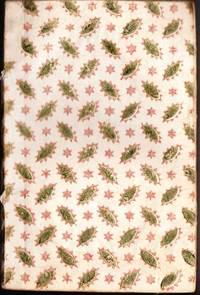
17926046Venice: Francesco Sansoni 1792-94. Very Good. Octavo 21 cm; 22 volumes. Half-titles present. Engraved portrait frontispiece Woodcut headpieces initials and tail-pieces. 21 copper engraved plates most of them folded including maps plans and images of monuments. Shoulder notes. In remarkable woodblock-printed Remondini decorated paper composed of green ovals and pink-brown six-pointed stars Filippetto in "Remondini: un editore del settecento" #50 and illustration p. 128. Untrimmed unsophisticated copy in desirable paper binding. Francesco Sansoni unknown books
174039705Paris: chez la Veuve Estienne 1740. 2 volumes 4to. 11 3/16 x 8 1/2 inches. 20 lxxvi 684 8; 676 31pp. Portrait frontispiece by C. Coypel and a woodcut vignette by LeBas representing the arts and sciences in volume 1. Text in French. 18th-century French red morocco boards with arms and ruled border spine gilt in six compartments with raised bands lettered in the second others with repeat decoration in gilt all edges gilt marbled endpapers.<br/> <br/>Beautiful copy of this teaching manual printed on large paper and bound for the Duke of Orleans Louis Philippe 1725-1785 the French prince and member of the House of Bourbon the royal dynasty that ruled France.<br/> <br/>Charles Rollin was a French historian and educator. Born in Paris Rollin was made a master in the Collège du Plessis at the age of 22. In 1694 he was made rector of the University of Paris where among other things he revived the study of Greek. He held that post for two years and was then appointed principal of the Collège de Beauvais in 1699. Rollin held Jansenist views and his career suffered as a result of his religious opinions disqualifying him to be elected for the rectorship a second time in 1719 and possibly the reason his election to the Académie Française was barred. In the later years of his life after he had been forbidden to teach Rollin began publishing literary works including his famous "Ancient History" published in Paris between 1730 and 1738. In the present celebrated work Rollin sought to pass down the useful lessons he learned from his long career at the University of Paris to young teachers. In the introduction he writes on the aims of teaching and a "well-rounded" education: intellectual training moral training Christian education and the development of judgment and literary and artistic taste. He includes the sciences mathematics French Greek and Latin languages poetry history and philosophy as essential subjects. This manual stays in the predominant educational tradition of the time but Rollin exhibits some interest in developing certain educational reforms considered radical at the time including studying and writing in French over the "dead languages" and using readings and examples as opposed to simple rhetorical exercises. The last part is made up of interesting memories and personal experiences elaborating on the psychological impact of the bond between teacher and student. chez la Veuve Estienne unknown books