Moy LéonLivre Rare Book
370 résultats
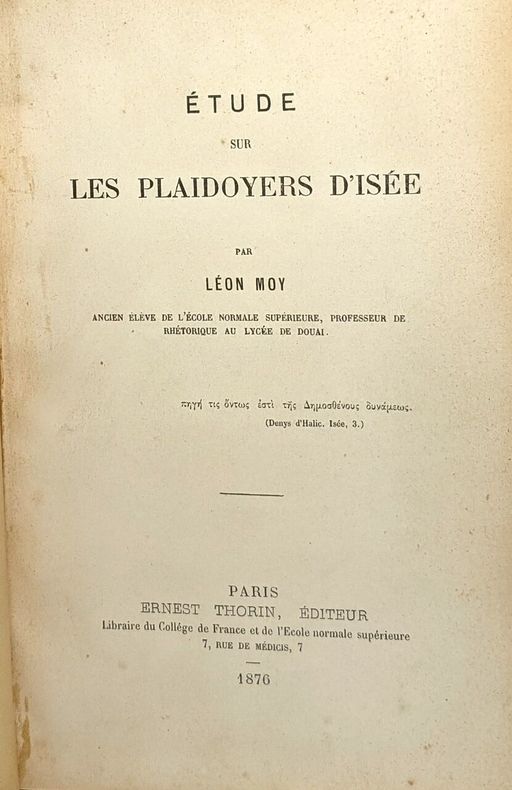
1876100070286Ernest thorin 1876 in8. 1876. Relié.
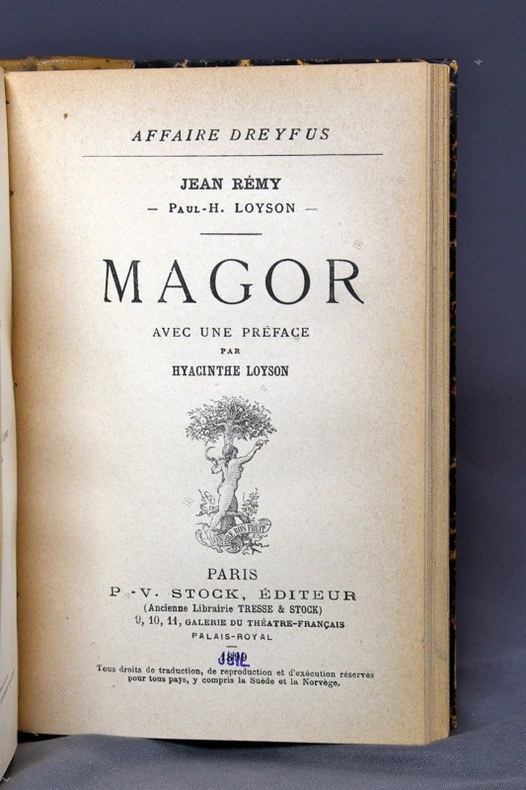
1898880Paris, Stock, 1898-1899. In-12 de 55; 35; 73; 115 pages, demi basane beige, dos lisse orné de filets dorés, 2 étiquettes de titre rouges. Tête à peine frottée.
1875ABE-1729121574665TROISIEME EDITION-382 PAGES-11,5 CM X 18,2 CM-DOS CUIR A FLEURONS-(100N)
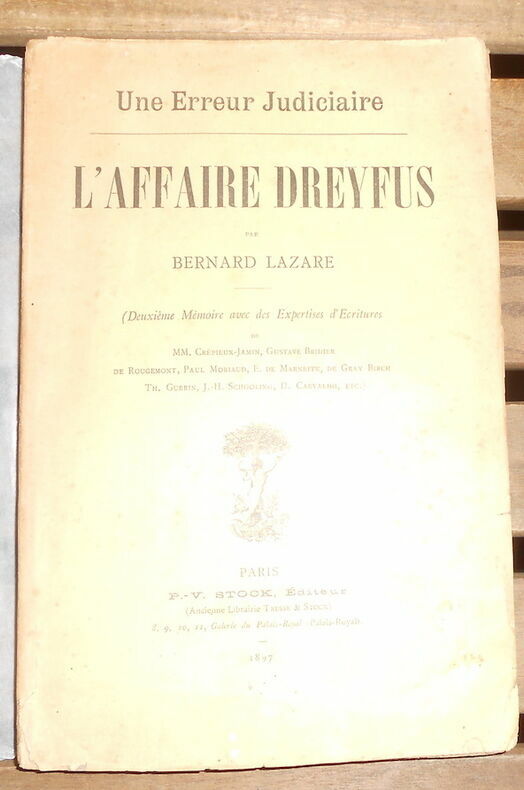
1897195391897. Paris P.-V. Stock Editeur 1897 - Broché 17 cm x 25 5 cm 303 pages - Texte de Bernard Lazare - Bon état
189877821898 S.l.n.d. [1962]. Une plaquette in-8 de 44 pages. Bon état.
187973325Couverture souple. Broché. 98 pages. Légèrement défraîchi.
1853J100496Bruxelles, Académie royale 1853 38pp., publié dans et extrait de "Mémoires de l'Académie Royale des sciences, des lettres et des beaux-arts de Belgique" Tome XXVII (27, 1853), mémoire présentée en la séance du 11 octobre 1852, in-4, toujours non coupée, bon état, (éventuellement à relier), J100496
1859J30896Bruxelles, 1859 39pp., in-4, [publié dans et extrait de "Mémoires de l'Académie Royale des Sciences, des Lettres et des Beaux-Arts de Belgique", T.31, 1859]
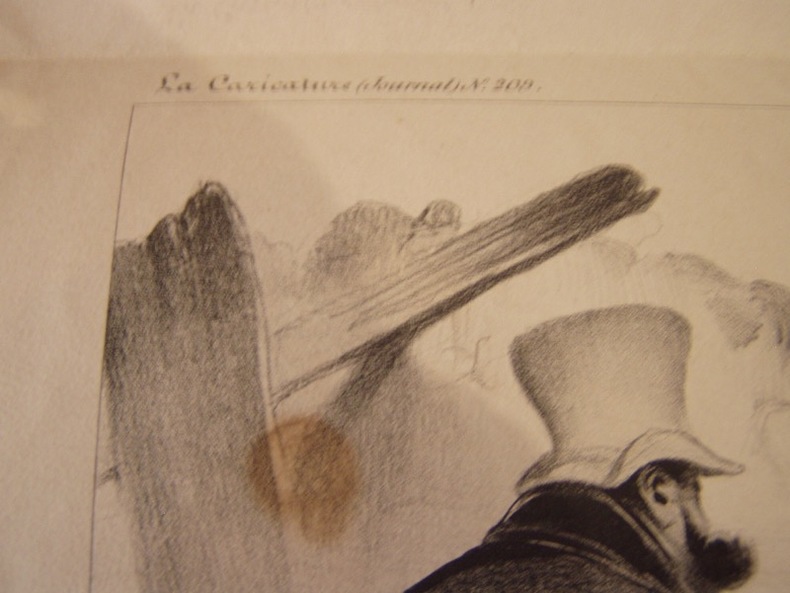
1834251211834 Planche 437 de La Caricature N° 209.La Caricature, 6 novembrebre 1834. Lithographie originale sur Velin blanc. . Delteil 94. épreuve en noir ; lithographie en noir sur velin blanc pli médian vertical,bon tirage bien noir,petite tache brune en marge - Delteil 94 ,
180128642BREST 1801 unn document de 2 pages, format : 21,5 x 32,5 cm, sur papier vergé crème ligné , à en-tête et texte pré-imprimé en noir et manuscrit à l'encre brune : TRIBUNAL DE GRANDE INSTANCE DE BEAUPRÉAU : ORDONNACE DE RENVOI A LA POLICE CORRECTIONNELLE DU 4 MAI 1727, JUGEMENT DE JULIENNE CHESNÉ, 52 ANS, NÉE A SAINT LAURENT DE L'AUTEL, FILEUSE ET JOURNALIERE, DEMEURANT A LA POITEVINIERE, ACCUSÉE ET RECONNUE COMME VOLEUSE D'UN MOUCHOIR, AU LAVOIR DU RUISSEAU DE LA POITEVINIERE, COMDAMNÉE A ETRE EMPRISONNÉE ET TRADUITE DEVANT LE TRIBUNAL DE POLICE CORRECTIONNELLE. ..... signatures manuscrites in-fine du Juge Pierre-Joseph MARTIN-DELAROCHE et de Fréderic DABURON, Juge d'instruction prés le tribunal, Beaupréau, le 4 Mai 1827.
1892100135548A. Durand et Pédone-Lauriel 1892 545 pages in8. 1892. Relié. 545 pages.
1866100070738Bruylant-Christophe et compagnie 1866 in8. 1866. Relié.
18232019Couverture souple Rossange Frères 1823 Paris 22x14 cm
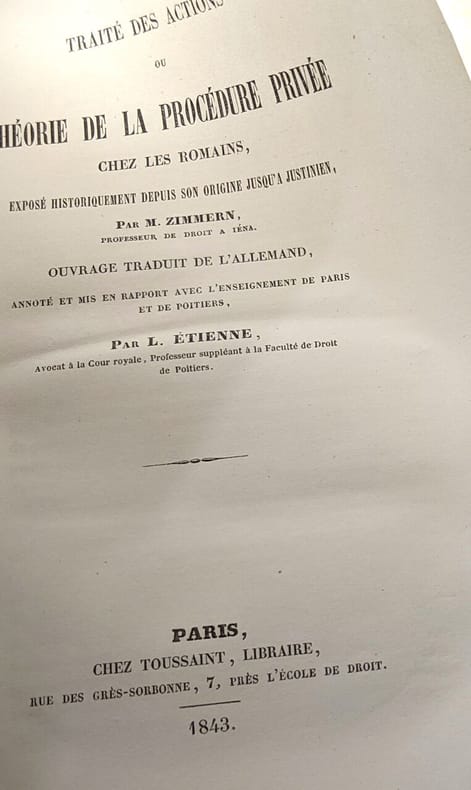
1843100129823Chez Toussaint 1843 in8. 1843. Broché.
1854010284paris 1854 Imprimerie et Libriairie Générale de Jurisprudence Half-Leather
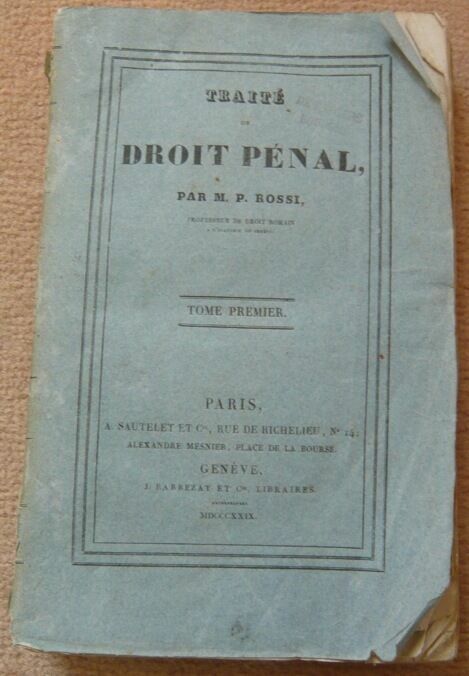
182974351829. Paris et Genève éditions A. Sautelet et Cie et J. Barbezat et Cie 1829 - Broché 14 cm x 21 cm IX + 308 pages - Texte de M. P. Rossi - Dos à restaurer sinon bon état intérieur
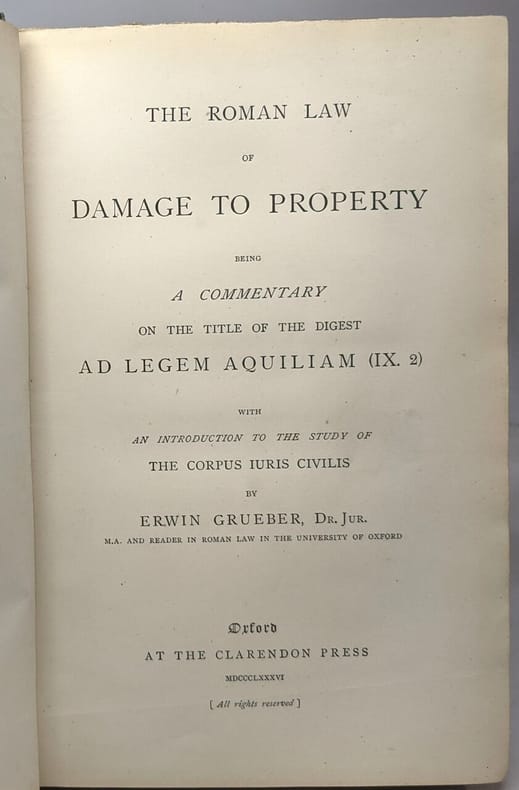
1886100132771At the Clarendon Press | Oxford 1886 in8. 1886. Broché.
186878101868 Paris, Victor Goupy, 1868. Une plaquette de 84 pages, couverture grise. Rousseurs.
1863114831863. Paris Librairie Parisienne 1863 - Broché 14 cm x 23 cm 174 pages - Texte de Gabriel Pélin - Rousseurs dos restauré avec de l'adhésif état moyen
1832100080295Imprimerie royale 1832 in4. 1832. Relié. Session de 1832 - proposition de loi pour le réglement définitif du budget de l'exercice 1830 et présentation du compte général de l'administration des finances (année 1831) et des comptes des ministres (exercices 1830 et 1831)
188097513Paris, A. Marescq Aîné 1880 In-12 18 x 11,5 cm. Reliure demi-percaline vert-foncé, IV-604 pp., notes en bas de page, table méthodique des matières, table alphabétique des matières. Exemplaire en bon état.
188271045Couverture souple. Broché. 30 pages. Couverture légèrement défraîchie. Quelques rousseurs.
187182497Couverture souple. Broché. 70 pages. Rousseurs.
184118481841. Paris Imprimerie Administrative Paul Dupont 1841 - Broché 17 cm x 27 cm 31 pages - Petit manque sur la quatrième de couv. sinon bon état
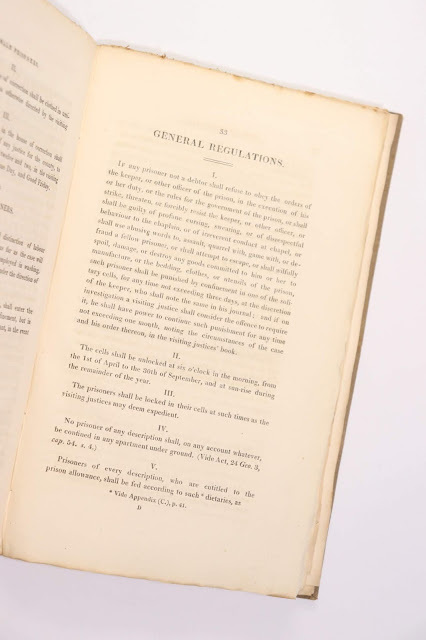
1820AMO-2714London, Printed by T. Bensley, 1820 1 vol. in-8 (23 x 14 cm) de VI-(1)-65 pages. 10 planches hors-texte (la plupart dépliantes). Voir le détail des sujets ci-après. Cartonnage de l'époque plein papier gris, relié sur brochure, non rogné, étiquette de titre imprimée au dos (d'origine). 1 planche détachée. Quelques rousseurs et feuillets jaunis, néanmoins excellent papier de qualité (papier vélin de cuve). légères usures au cartonnage néanmoins solide. First edition. "The society for the improvement of Prison Discipline, in submitting to the public the following suggestions respecting the proper regulations to be adopted in Prisons, deem it superfluous to detain their readers by endeavouring to prouve what is already obvious, that the judicious mangement of Gaols is a subject of the utmost importance. An intention has been imputed to this society, than which nothing can be more foreign from its real purpose, that of making the interior of a prison a more desirable residence than the habitations of the poor ; the motives which actuate the members of the society are allowed to be benevolent, but the consequences of carrying their views of reform or improvement into effect, are supposed by some persons to be mischievous ; it is presumed that offenders are intimidated, by the miseries and privations they have experienced or anticipate ; if prisons, it is said, are rendered places of comfort, where food and lodging are gratuitously provided, they become incentives to crime and a recompence for its commission. In this view of the subject, however, the society cannot coincide : it is true, they consider it desirable that prisons should be clean, and the food given to the prisoners, plain, wholesome, and sufficient ; but they are equally anxious that everything which borders on sensual gratification or unnecessary comfort should be entirely prohibited. They are of opinion that the punishment contemplated by the law should alone be inflicted, and that no collateral evils, the horrors of disease, and the corruption of principle, should be superadded ; but they are decidedly adverse to any permission of idleness, dissolute behaviour, or to any indulgencies, excepting those conferred as the reward of good conduct ; they are desirous that constant and imperative labour should occupy the prisoners, and prepare their minds for such instruction as may eradicate evil habits, and substitute good dispositions: a prison thus regulated offers no attraction to the vicious, and the society confidently appeal to the evidence of facts as confirming the deductions of reason, wherever this experiment has been fairly tried. It must be apparent to all who have directed their attention to this subject, that the system of Prison Discipline too. generally prevalent in England was confined to a single object, the safe custody of the prisoner ; and to one method of accomplishing that object, severe and sometimes unnecessary coercion : if the prisoner could be retained within the walls of a gaol by bars, by chains, or by subterraneous and unventilated dungeons, by the use of any rigour or privation ; this plan, aiming only at his personal security, was deemed sufficient: the possibility of reforming the criminal seems never to have been contemplated ; no rule was in force, no arrangement existed which could be referred to such a purpose: the attempt to disengage the culprit from long formed habits of vice, and to rekindle in his breast the latent sparks of virtue, were schemes known indeed by the writings of Howard, but generally regarded as the visionary efforts of an excessive philanthropy. Such has been the progress of public opinion, that it is not now requisite to dwell upon the expediency of making these attempts, or to contend against a system calculated to multiply offences, and to ripen indiscretion into crime; a new plan has been gradually developed, in which moral restraint removes the necessity of brutal violence ; in which the prisoner is justly considered as possessing rights which we must not v violate, and feelings which we must not wound, beyond what the sentence of the law demands: a system equally opposed to that dangerous indulgence which permits scenes of vice, drunkenness, or debauchery to be exhibited ; and to that useless cruelty, which, producing no beneficial effect in the way of example, tends to harden the character of those who are subjected to its operation ; a system, in short, which suppresses for a time at least many evil habits, and substitutes those of industry, decency, sobriety, and order. The strong interest taken by the public in this momentous question, the examples which have been adduced of the successful application of these principles to practice ; the zeal manifested by the magistrates in general throughout the country, and the appointment of committees in both houses of Parliament, furnish a well-grounded confidence that the improved system of Prison Discipline will now be fairly and fully tried. The society for the improvement of Prison Discipline have received so many applications for information respecting numerous particulars, that they apprehend they cannot more effectually consult the wishes or convenience of the public, than by an endeavour to collect and arrange those recommendations which the result of reflection and experience enables them to offer. Much consideration has been bestowed upon the plans which accompany this tract, and great assistance has been derived from the architectural skill of Mr. Ainslie, and Mr. Bullar, in the arrangement and illustration of these designs: these gentlemen have gratuitously afforded the Society most valuable aid, for which the Committee beg to express their sincere acknowledgments ; the object in view was to give such plans, as might best combine the advantages of inspection and classification, leaving it to the discretion of different districts to accommodate the same to their own local circumstances. With regard to the rules which are suggested, there is no pretension to originality ; the first aim of the society has been to obtain an accurate acquaintance with the actual management of the best regulated gaols ; to compare attentively the course pursued in each, with their practical consequences ; and then to select and combine, under one arrangement, those rules which appeared upon the whole most judicious and effective. The importance of providing employment for prisoners, and the difficulty of procuring it, have deeply engaged the attention of the society, but hitherto without enabling them to arrive at any conclusion which is universally applicable ; but there is one species of labour obtained by the introduction of mills, and especially of stepping mills, which may furnish constant occupation to a determinate proportion of the prisoners. The advantages derived from the use of mills in several prisons, have been very conspicuous, not so much perhaps in a pecuniary point of view, as in the moral benefits resulting to the prisoner. A stepping mill of a superior description, and which the Committee cannot too earnestly recommend for the employment of prisoners, has been lately constructed, on very ingenious principles, by Mr. Cubitt, Civil Engineer, of Ipswich. To the liberality and kind attention of this gentleman, the Committee are indebted for the annexed illustrations of the machinery, and explanation of its power and effects. . Should the recommendations here collected, be found useful in assisting those gentlemen, who unite the power with the inclination to promote the grand and progressive work of improvement in Prison Discipline, the object of the society will be fully attained. (Preface, London, 1st January, 1820, Samuel Hoare, Jun., Chairman of the Committee). Samuel Hoare Jr (9 August 1751 – 14 July 1825), chairman of the committee was a wealthy British Quaker banker and abolitionist born in Stoke Newington, then to the north of London. His London seat was Heath House on Hampstead Heath. He was one of the twelve founding members of the Society for the Abolition of the Slave Trade. The engravings are : 1. Plan of a County Gaols for 400 prisoners. Designed by George Ainslie. 2. Plan of a Gaol for on hundred and twenty prisoners. G.T. Bullar architect. 3. Plan of the Chapel and sleeping cells. 4. Plan of a house of correction for sixty prisoners. G.T. Bullar architect. 5. House of correction for twenty eight prisoners. G.T. Bullar architect. 6. Ground Plan of a design for a Prison Corn Mill. 7. Crofs section of design for Prison Mill shewing the elevation of Machinery. 8. Crofts sectiloln of design for Prison Mill, shewing the elevation of the tread wheels and method of working. 9. Longitudinal section of design for Prison Mill, shewing elevation of Machinery. 10. Plan and section for a Pump Mill. (complete). Very rare.