373 résultats
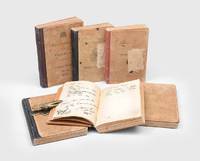
19231784971923-31. Policing Palestine An absorbing day-to-day record of British policing in Mandatory Palestine these diaries chart the volatile years from 1920 to the early 1930s offering a granular view of religious and social tensions and of Britain's often self-serving pursuit of "law and order". Major Laurence Harrington joined the Palestine Police at its inception in July 1920 rose rapidly and served mainly in Jerusalem and Jaffa. He witnessed the 1929 disturbances and later gave evidence to the Shaw Commission. His diaries consist of brief functional entries kept for official purposes with gaps when volumes were sent for inspection and frequent references to named officers and local figures. Religious violence dominates the record. Harrington repeatedly investigates killings framed explicitly in religious terms orders precautionary deployments and manages flashpoints such as Labour Day nationalist demonstrations anniversaries strikes and boycotts. He records crowd control operations armed patrols prison break-outs manhunts with shoot-to-kill authority and the tense aftermath of the 1929 riots including censorship confiscations and plain-clothes operations to suppress unrest. Alongside this the diaries document routine but hazardous police work - drug-smuggling busts raids on suspected agitators and the exposure of corrupt informants - as well as Harrington's ceremonial duties escorting senior British officials and visiting dignitaries. His proximity to power brings an active social life offset by football as a constant release. The final volume anticipates the worsening climate of the 1930s with police on continual alert for political and communal triggers. No other diaries by Harrington are known to survive making this candid administrative record an unusually fortunate and valuable witness to the mandate's daily realities. 6 vols octavo. Original quarter cloth five black one red rebacked boards lettered in black. Bindings rubbed covers with splash stains and tidemarks and labels torn away internally some foxing and finger soiling. Overall in condition commensurate with maintaining a diary on active duty: well preserved. hardcover
19812090202120415195Ryukei Shosha Fuji Publishing 1981. Soft Cover. Fine. Number of books: 1 Ryukei Shosha Fuji Publishing paperback
192478452Various places ca. 1924-1926. purchased half leather marbled-sided scrap album with added paper label on spine: "ESCAPE" numbered "90." . Some light edgewear and use to some of the circulars; very attractive. Folio. Many illustrated from photographs or with original photographs; some with fingerprints. Most items date-stamped "Received by Chief of Police." Some are annotated "captured." hardcover
19382091502135500850Not Available 1938. Soft Cover. Fine. Number of pages: 1135 pages of thick text 35 pages 50 pages of index Size: 19 x 27 cm Not Available paperback
19712081402109702570San'ichishobo 1971. Soft Cover. Fine. The book is in fine condition. San'ichishobo paperback
19712080202102900646San'ichishobo 1971. Soft Cover. Fine. Size: A5 size: 14 San'ichishobo paperback
198134372Newark Police Foundation. New. 1981. Paperback. FREE UPGRADE to Courier/Priority Shipping Upon Request - IN STOCK AND IMMEDIATELY AVAILABLE FOR SHIPMENT - FLAWLESS COPY PRISTINE NEVER OPENED -- clean and crisp tight and bright pages with no writing or markings to the text. -- FS REVIEW: The seeds of Kelling's pseudo-scientific approach are to be found here prior to the advent of the Broken Windows approach to crime. -- with a bonus offer-- . Newark Police Foundation paperback
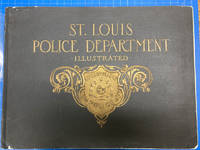
190248489St. Louis: Press of Woodward & Tiernan Printing Co.1902. 1902. First edition. Oblong 8vo. Original stiff wrappers with embossed design and titles in gold gilt on the front cover n. p. 256 pp. introductory profusely illustrated mostly from photographs portraits advertisements. In addition to the many photographs of policemen/patrolmen there are excellent views of city hall the court house Anheuser-Busch Plant District Police Stations the Railroad Station etc. Six Guns 2179 says: "Tells about the robbery of the Frisco train at Glendale Missouri and the final capture of Marion Hudgepeth the leader of the gang. It also tells about the capture of Ben Kilpatrick and Laura Bullion members of the Butch Cassidy gang." A copy of this book has eluded us for more than 65 years and this is only the third copy we have ever seen. Rear cover has a closed tear to the top edge chips to top edge and to lower edges else the interior is clean bright and tight. Overall a very good item. A choice item and difficult to find. Press of Woodward & Tiernan Printing Co.],1902. unknown
19712091502135708157San'ichishobo 1971. Soft Cover. Fine. The book is in fine condition. San'ichishobo paperback
1993004566New York: William Morrow & Co. 1993. First Edition First Printing. . Hardcover. Near Fine/Very Good. This mystery from McBain's celebrated police procedural series featuring the detectives of the 87th Precinct marks the return of the Deaf Man for the first time since "Eight Black Horses" in 1985. Bottom of the spine is lightly bumped and text shows a very slight spine lean o/w this copy is clean tight and unmarked. The dustjacket shows only quite minor surface and edgewear no tears creases or chipping not price-clipped. <br/> <br/> William Morrow & Co. hardcover
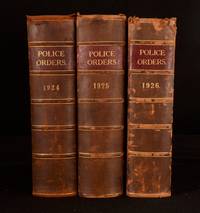
1924SET26-B-2London : Metropolitan Police 1924-1926. Leather. Good. 11" by 7.5". None. Three scarce volumes of daily police orders for the Metropolitan Police. Three large works giving the daily orders issued to the Metropolitan Police for the full years of 1924 1925 and 1926. Scarce in any condition. Each volume gives in great detail the movements and operations affecting the Metropolitan police as well as details of the minutiae surrounding the operation of the force. A unique snapshot of legal history. n half calf bindings. Externally a moderately rubbed with wear to the extremities. Heavier wear to the head and tail of the spines particularly to the 1924 and 1926 volumes which have loss and lifting to the head of the spine. Front joint starting to 1926 volume. Internally generally firmly bound aside from 1924 volume which has one page detached but present. Wear to foredge of 1924 volume. Institutional ink stamps of Lambeth Division Metropolitan Police Library to endpapers of all volumes. Pages bright and generally clean with occasional handling mark or crease. Good Metropolitan Police hardcover
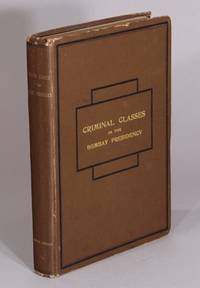
190871119Bombay i.e. Mumbai: printed at the Government Central Press 1908. First edition 8vo pp. xii 340 2; frontispiece 11 plates plus 7 more plates at the back showing 11 illustrations; original brown cloth stamped in black and gilt; lightly rubbed else very good sound and clean. Early ownership signature of S. P. Hieb Sholapur. From the Preface: "These Notes kindly revised while the proofs were going through the press by Mr. R. B. Stewart M. A. I. C. S. Inspector-General of Police Bombay Presidency are an attempt to bring together and up to date in a practical form such information as is available respecting the methods and distinctive characteristics of the Criminal Classes belonging to the Bombay Presidency and of certain foreign Criminal Tribes visiting it for the purposes of crime . To ensure accuracy and fullness of interesting and useful detail Gazetteers Police Records Major Gunthorpe's Notes on Criminal Tribes experienced Police Officers and reliable 'informers' have been consulted and the information thus obtained sifted and subjected to verification." The illustrations show a number of the purported perpetrators their weapons and other criminalia. printed at the Government Central Press unknown
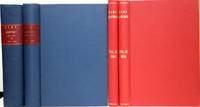
1933142091Ottawa: Royal Canadian Mounted Police July 1933-Fall 1994. Hardcover & Softcover. Very good. Volume 1 No. 1 July 1933 to Volume 59 No. 4 Fall 1994. Near complete run with only 14 issues missing. Made up of 2 different bindings with additional loose issues. 11-volume set bound in blue cloth contains issues from July 1933 to October 1954 with the original quarterly wrappers bound into the volumes from years 1945 forward. Previous owner's name written in front free endpaper - books were previously owned by former RCMP officer Frank P Baxter of Saskatchewan & Calgary. Partial 10 Volume set Volumes 28 to 41 bound in red cloth contains issues from years 1962 to 1976. Missing from this set are Volumes 30 37 and 38 with loose issues making up the missing years. Set has stamp from Mount Royal College on front free endpaper text edges and on some interior issue covers. Very good condition overall. The official Royal Canadian Mounted Police news bulletin filled with interesting articles photos illustrations and advertisements. The set includes information on the different "Divisions" retirements obituaries and generally what people were up to in the force. A heavy set which will require extra shipping charges. 1933 Royal Canadian Mounted Police paperback
19722080202103901775Kagoshima Police Headquarters 1972. Soft Cover. Fine. Book: 2 books Kagoshima Police Headquarters paperback
19942110502151003040Local Autonomy Research Association 1994. Soft Cover. Fine. Volume: 1 Local Autonomy Research Association paperback
19722080202103703229Kagoshima Police Headquarters 1972. Soft Cover. Fine. Size: Kikuban Kagoshima Police Headquarters paperback
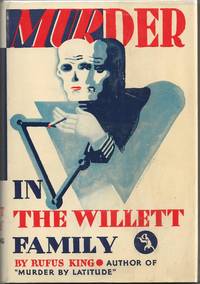
1931021122Garden City: NY: Crime Club Doubleday 1931. First edition so stated. Black cloth with bright red lettering top block edges dyed red a fine copy in a beautiful dust jacket with no rips or tears. A splendid copy. Unusual in that there is a 4 page insert on bright red paper giving a brief description and a location map! The 4th Lt. Valcour title. "An extortionist's note demanding $20000 in cash and threatening the kidnapping of Kate Willett's two mentally unbalanced sons sent Lieutenant Valcour rushing up to the Willetts' Adirondacks camp. There death struck with slashing suddenness while Valcour was talking to young Arthur Willett who was sprawled on a sofa smoking a cigarette. Listening to the crackling roar of flames in the fireplace Valcour detected the odor of burning cloth. He glanced at Arthur to find the cigarette lying in Arthur's lap and Arthur's chin slumped on his chest. Valcour rushed to his side and in stunned amazement stared at the dark mark where a bullet had entered Arthur's skull!." -- Publisher This copy although not marked as such comes from the auction of the Gary Groton Crime Fiction collection of detective fiction. First Edition. Hardcover. Fine/Fine. Illus. by Kauffer E. McKnight. Book. Crime Club Doubleday
19152092902140316186Security Division Akita Prefecture Police Department 1915. Soft Cover. Fine. Number of books: 1 Security Division, Akita Prefecture Police Department paperback
19792082702114901040Kochi Prefecture Police Headquarters 1979. Soft Cover. Fine. Size: chrysanthemum stamp Kochi Prefecture Police Headquarters paperback
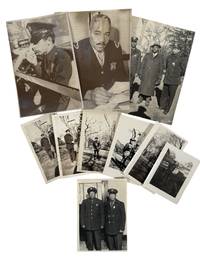
1960210231960. African American law enforcement photographic archive 1940s-1969 documenting the presence and professional roles of Black police officers during the decades spanning segregation and the Civil Rights Movement in the United States. These images record individual officers peer relationships and public-facing roles within police institutions providing visual evidence of Black participation in law enforcement at a time of limited access to such positions. The archive captures both formal portraiture and informal interaction situating these individuals within evolving social and institutional conditions.<br /> <br /> Archive comprises 11 vintage silver gelatin photographs ranging in size from approximately 2.75" x 5.5" to 5.5" x 7.25". A sequence of six smaller photographs depicts several African American men in uniform including officers wearing double-breasted dress coats with badges a patrolman in standard duty attire and one image showing a man in a Marine uniform standing beside a police officer. One photograph captures two uniformed officers shaking hands suggesting a moment of professional recognition such as academy completion. Another image shows two officers flanking a third individual in civilian attire possibly a legal official based on positioning and dress. A separate photograph includes two older uniformed officers with a handwritten inscription on the verso reading "This is your Brother A.B. and his buddy Ezell Anderson." The archive also includes a 1969 press photograph identifying Herbert A. Craigwell as a high-ranking officer in the Boston Police Department alongside accompanying text referencing increasing representation of Black officers in major city forces. An additional press image identifies Los Angeles patrolman Ronald Allen described in relation to the gradual inclusion of Black officers within urban policing structures. A signed photo of a policeman wearing small round glasses a hat with the number 7 above "Police" reads "Lovingly Kenny" depicting an African American officer likely from the mid 1940s at a municipal department.<br /> <br /> Created during a period marked by both institutional exclusion and gradual integration these photographs provide a record of African American participation in law enforcement prior to and during major Civil Rights reforms. The inclusion of press images and personal photographs reflects both public recognition and private documentation of professional identity. Minor edge wear and light fading visible across several photographs; overall very good condition. This archive offers a focused visual record of Black law enforcement presence in mid-twentieth-century America. unknown
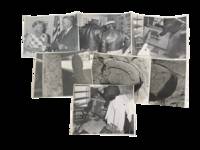
1950233981950. 1950s crime investigation archive documenting police evidence work during a period when departments increasingly relied on crime-scene photography forensic comparison procedure footwear evidence analysis fingerprint comparison and organized mid-century police evidence methodology to connect suspects to burglaries thefts and other property crimes. The material records officers inside a commercial or storage-room setting examining a desk or cabinet area inspecting the floor and documenting a shoeprint impression with a clearly visible sole pattern. One scene includes a Black officer standing among uniformed white officers a significant detail for mid-century police history since African American officers in many American cities were still restricted in assignment promotion or patrol authority during the 1940s and 1950s. The archive originated from Wisconsin house.<br /> <br /> Photo archive of 7 Very large format silver gelatin photographs each 11" x 13.75" United States circa 1950s-1960s. This archive showcases the order of investigative procedure with officers entering an interior crime scene locating possible points of entry or concealment documenting footwear evidence conducting footwear comparison analysis and marking distinctive characteristics for forensic comparison. Uniformed officers in leather jackets and peaked caps gather in a cramped small commercial setting lined with cardboard boxes while a Black officer is visible between them near the center of the room. Investigators examine the lower section of a desk or built-in counter with one man crouched partly underneath the work surface and another officer reaching toward the floor. Close-up evidence views record a shoeprint or boot impression pressed into dirt or soft material with original red circles marking specific cuts gouges or comparison points in the sole pattern. Additional views compare a dirty shoe sole against the recovered impression while another scene places a woman wearing a veterans' cap in conversation with a suited man in an office with an American flag possibly connected to witness victim or community context.<br /> <br /> The presence of a Black officer inside the active investigative setting adds a further historical layer placing African American law enforcement labor within the daily practice of police work at a time when many departments were only slowly expanding Black officers' authority beyond segregated or limited assignments. Light curling handling wear minor edge creasing and surface wear visible; images remain clear and detailed. Overall in very good condition. unknown
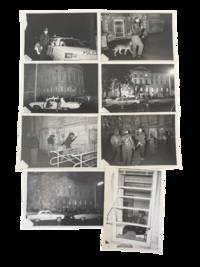
1960234741960. Police investigation photo archive depicting mid century law enforcement activity riot control operations and custodial procedures during the period when American police departments expanded specialized enforcement units in response to rising urban unrest and public disorder in the 1960s. After the riots in Watts in 1965 Newark and Detroit in 1967 and hundreds of smaller confrontations between police and civilians across American cities departments throughout the Midwest and East Coast increasingly organized motorcycle patrol divisions tactical crowd control units and coordinated search operations using dogs radios and mobile patrol systems. Police departments also adopted more militarized uniforms transportation fleets and surveillance procedures during the decade reflecting the growing emphasis on rapid response policing and visible authority in public spaces. The unidentified location and unnamed investigation place the archive within the broader operational culture of mid century American policing rather than a single sensational crime preserving the routine procedural atmosphere of municipal law enforcement during a period of national tension.<br /> <br /> Photo archive of 8 silver gelatin photographs likely Midwest or East Coast United States circa 1960s. A uniformed officer wearing a shoulder patch reading "Motorcycle patrol riot control" leads a police dog during a nighttime search outside a large civic building illuminated by streetlights and patrol vehicles. Several scenes show officers standing beside a man seated in the rear compartment of a police cruiser while smoking a cigarette. Additional photographs depict officers entering or exiting the building a sheriff standing inside a county jail entrance and investigators searching stairwells and sidewalks around the stone municipal building. Each print bears the "A.G. Oehler Photographer" stamp in the lower margin indicating professional or departmental photographic documentation for internal use.<br /> <br /> By the late 1960s many municipal departments reorganized patrol systems around riot squads motorcycle enforcement divisions and rapid mobilization units as demonstrations labor actions antiwar protests and urban unrest became recurring features of American public life. Light surface wear and occasional handling marks; overall in very good condition. Rather than focusing on dramatic violence these scenes preserve the quieter operational routines of custody perimeter searches interrogation transport and nighttime investigation that structured everyday police work during the era. unknown
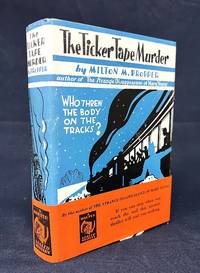
1930021149N.Y.: Harper & Brothers 1930. First edition so stated. Previous owner's name at inside cover. Some mnor rubbing at spine edges and along bottom edges with corners bumped. Some loss of white lettering at spine otherwise a very good near fine copy in a beautiful dust jacket no tears or creases and with the very rare wrap-around band for the Harper Sealed Mystery. "Philip Nixon is the president of American Motors the biggest auto concern in the world. On the eve of cornering the US automobile market his corpse is found on the train tracks. Sgt. Gilmore had been asked to act as a bodyguard to the financier. Fortunately Gilmore was a passenger on the train that hit Nixons body.Milton M. Propper 1906-62 was an American devotee of Freeman Wills Crofts and Lynn Brock. The book is the American equivalent of Crofts: a methodical policeman Detective Sergeant Gilmore and Tommy Rankin of the Philadelphia police-- not brilliant but capable and thorough-- testing discrepancies and checking alibis; finance; transport three different train and two cars thundering across New Jersey by night; and plenty of railway timetables. Like his British models Propper handles a complex plot admirably unfolding layer by layer each mysterys solution opening new possibilities. The pure puzzle satisfies because there is no fat. But which character doesnt need to be in the book has no motive and hasnt been suspected when all the other characters have been eliminated Theres your murderer! With Audobon stock soaring under his skillful manipulation with the money world aghast at the significance of the colossal corner the death of Philip Nixon was a calamity. Mangled on the steel rails of the East Shore Express his body yielded no clues. Armed with knowledge of blackmail threats Detective Sergeant Gilmore of the Philadelphia Police took the case with full confidence of pushing it to an obvious and rapid conclusion. But numerous motives appeared and soon the list of potential murderers included gangsters thirsting for revenge the brothers of a betrayed girl a desperate bear speculator and the mans own secretary once before convicted of manslaughter. Who threw the body on the tracks By sheer doggedness and an intelligence that missed no single detail Gilmore solved this thrilling mystery in a way that will delight the keenest reader." -- Nicholas Fuller at "The Grandest Game in the World" blog. This copy although not marked as such comes from the auction of the Gary Groton Crime Fiction collection of detective fiction . First Edition. Hardcover. Very Good-Near Fine/Fine. Book. Harper & Brothers
19582111902160305419Nagano Prefecture Police Headquarters 1958. Soft Cover. Fine. The book is in fine condition. Nagano Prefecture Police Headquarters paperback
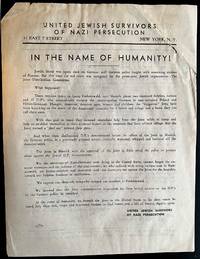
194743409New York The Organization No Date 1947. 1st edition. Double-sided English-Yiddish leaflet 2 pages. The Yiddish header translates roughly as "An Announcement To the Jewish Public"<br> Bilingual American Flyer condemning the Joint the American Joint Distribution Committee AJDC for not doing more to help the Jewish DPs and its "hiding" behind the German police when DP's demonstrated for more action on DP resettlement.<br> The issuing organization the United Jewish Survivors of Nazi Persecution/Farband fun Geveyzene Yidishe Katsetler un Partizaner was the first survivor network founded in the US. Their Yiddish name translates as "The Association of Former Jewish Concentration Camp Inmates and Partisans." The word "Katsetler" in their name is a contraction of "kontsentratsyonslager-er" using the letters K and Z "ka" and "tset" and thus short for "kontsetratsyonslager" a concentration camp inmate or survivor sometimes also noted as a "katsetnik." <br> <br> The flyer announces:<br> <br> "Jewish blood was again shed on German soil! German police fought with remaining victims of Nazism. But this time the sad event was instigated by the prominent Jewish organization-The Joint Distribution Committee.<br> <br> What happened<br> <br> There remains today in Camp Foehrenwald near Munich about two thousand helpless forlorn and ill D.P's who miraculously escaped the extermination furnaces in nazi-occupied Poland and Hitler-Germany. Hungry desperate destitute men women and children the 'forgotten' Jews have been knocking at the doors of the democratic countries for a haven and refuge and a home they can call their own.<br> <br> With this goal in mind they demand immediate help from the Joint while in camp and help to establish themselves in their eventual homes in the countries that have offered refuge. But the Joint turned a 'deaf ear' toward their pleas.<br> <br> And when these disillusioned D.P.'s demonstrated before the offices of the Joint in Munich the German police in a previously planned attack critically wounded whipped and battered off the demonstrators.<br> <br> The Joint in Munich with the approval of the Joint in Paris asked the police to protect them against the Jewish D.P. demonstrators.<br> <br> We the survivors of Nazi-Germany now living in the United States cannot forget the extreme torments and the inferno of the nazi-torture; we who suffered with many victims now in Foch- renwald are horror-stricken and dismayed and our hearts cry out against the Joint for the brutality toward our helpless brethern in misfortune.<br> <br> We express our deep-felt sympathy toward our brothers in Foehrenwald.<br> <br> demand that the Joint representatives responsible for these brutal attacks on the D.P.'s by the German police be punished.<br> <br> In the name of humanity we beseech the Jews in the United States to let their voices be heard help these sick tragic and frustrated victims to find homes and a life of human dignity again" From the English side of the flyer.<br> <br> <br> After World War II Munich served as a major center for Jewish Holocaust survivors the "Sh'erit ha-Pletah" who were living in DP camps. The "Joint" was the primary welfare organization providing aid clothing and food to these camps. While the Joint was a vital lifeline its Munich headquarters at Siebertstrasse 3 sometimes became the focal point for frustration regarding the pace of aid distribution or more frequently the slow pace of emigration to Palestine Aliyah and broader often frustrating postwar conditions.<br> Following the 1947 Exodus ship incident where Jewish refugees were returned to Germany by the British Jewish DPs felt trapped and staged intense demonstrations including protests at the offices of international organizations like the Joint to highlight their despair.<br> These demonstrations were part of a broader effort by survivors to assert their agency and demand rights during their time in Munich 1945-1951. For more on tensions between Munich's Jewish DPs and the Joint see www.juedisches-museum-muenchen.de/en/exhibitions/munich-displaced-online/moehlstrasse. <br> <br> Scholar David Slucki notes about the publishers of this leaflet that "Within months of arriving in the United States in 1946 Jewish Holocaust survivors began to organize themselves to help with the process of resettlement. The small band of socialists who established the Farband fun Geveyzene Yidishe Katsetler un Partizaner United Jewish Survivors of Nazi Persecution this group initiated a dual process of identity formation and memorialization of the Holocaust. <br> The first survivor network founded in the United States the Katsetler Farband this group developed a memorial culture that included commemorations and publications replete with its own rituals and calendar. Moreover the organization was part of a broader process of defining what experiences constituted the Holocaust and who was to be considered a survivor. Ultimately they were among a host of survivor networks in the United States to lay the foundation for Holocaust memorialization" Slucki D. 2017. A Community of Suffering: Jewish Holocaust Survivor Networks in Postwar America. Jewish Social Studies 222 116-145. https://muse.jhu.edu/article/649094<br> <br> We could locate no copies in OCLC-Worldcat Archive Grid nor using a google search. <br> <br> Touch of edgewear one diagonal fold paper generally bright and strong about Very Good- Condition. Holo2-163-28A. New York, The Organization, No Date unknown