16 résultats
1994317557Manila: Sinag-Tala Publishers Inc 1994. Paperback. Very Good. 109p. A large paperback book in near-fine condition. A couple of small creases in the back cover; otherwise clean and tight. Catholic children's book about St. Josemaria Escriva the founder of Opus Dei. Beautifully illustrated in color! Measures approx. 10.75" x 8.25 Sinag-Tala Publishers, Inc paperback
1951ZB478730Accra: 1951. narrow folio 25 pp library markings light general age toning good in paper wrappers. - If you are reading this this item is actually physically in our stock and ready for shipment once ordered. We are not bookjackers. Buyer is responsible for any additional duties taxes or fees required by recipient's country. Accra: unknown
1955ZB478734Accra: 1955. narrow folio 29 pp. folding table; library markings light general age toning soft vertical fold mark overall good in paper wrappers. - If you are reading this this item is actually physically in our stock and ready for shipment once ordered. We are not bookjackers. Buyer is responsible for any additional duties taxes or fees required by recipient's country. Accra: unknown
1958ZB478737Accra: 1958. narrow folio 31 pp. including a folding table; library markings light general age toning overall good in paper wrappers. - If you are reading this this item is actually physically in our stock and ready for shipment once ordered. We are not bookjackers. Buyer is responsible for any additional duties taxes or fees required by recipient's country. Accra: unknown
1956ZB478736Accra: 1956. narrow folio 33 pp library markings light general age toning overall good in paper wrappers. - If you are reading this this item is actually physically in our stock and ready for shipment once ordered. We are not bookjackers. Buyer is responsible for any additional duties taxes or fees required by recipient's country. Accra: unknown
193716674New York: Charles Scribner's Sons 1937. First Edition. Octavo. Blue cloth cover decoratively stamped in gilt and green; dustjacket; 332pp. Top edge of text block a little dusty else a tight VG copy in the original pictorial dustwrapper worn at edges and with a closed tear to base of front panel; Good or better. Fictionalized account of the author's real-life experiences on San Quentin's Death Row following a wrongful murder conviction. Lamson also published a non-fiction account We Who Are About To Die 1935. Oddly the setting is changed to Washington State Penitentiary for this fictional version. HANNA 2080. Charles Scribner's Sons unknown
1952ZB478731Accra: 1952. narrow folio 26 pp library markings light general age toning good in paper wrappers. - If you are reading this this item is actually physically in our stock and ready for shipment once ordered. We are not bookjackers. Buyer is responsible for any additional duties taxes or fees required by recipient's country. Accra: unknown
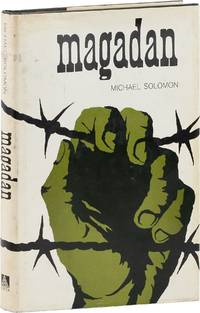
197188816Princeton: Vertex / Auerbach Publishers Inc 1971. First Edition. First Printing. Octavo 23.5cm; dark gray cloth with titles stamped in silver on spine; map endpapers; dustjacket; xii2431pp. Old sticker-pull to upper front endpaper some light finger-soil to text edges with some offsetting to terminal blank and inner rear endpaper from a laid-in newspaper article; Very Good. Dustjacket is unclipped priced $7.95 edgeworn lightly dust-soiled gently spine-sunned with several tiny tears and creases with a thin strip of adhesive remnant and some mild foxing on verso; Very Good. Harrowing memoir by a Romanian journalist imprisoned for eight years in Siberian work camps and "pardoned" for his crimes toward the end of 1955. 88816. Vertex / Auerbach Publishers Inc unknown
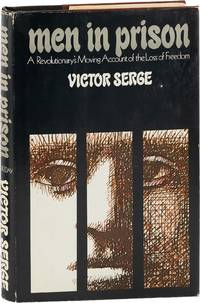
196984379New York: Doubleday 1969. First American Edition. Octavo. 21cm. Original black cloth spine over maroon boards titled in silver gilt to spine. Dustjacket. xxvi; 251pp. Strong and handsome with very light wear and some minor bumping to the spine ends; internally clean fore-edge untrimmed; in a strong bright illustrated dustjacket with some light scuffing in places and light wear to spine ends and corners. A very good copy. <br /> <br /> Originally published in French in 1967 as Les Hommes Dans Le Prison detailing Serge's experiences as a French political prisoner jailed in 1912 for revolutionary crimes. Doubleday unknown
194919179United States Bureau Of Prisons 1949. Hardcover. Very Good. Hardcover no dj. Clean and bright copy with gilt on spine and cover. Owner United States Bureau Of Prisons hardcover
194918441ARCHUnited States Bureau of Prisons 1949. 318 pp. Original black cloth covers w/ gilt title on spine. DJ has mild wear along edges. Light rubbing to rear panel. Illust. w/ b/w photos and diagrams. Contents very nice. Hard Cover. Very Good/Very Good-. Folio - over 12" - 15" tall. United States Bureau of Prisons Hardcover
19941862244900Scepter Publishing 1994. Paperback. Good. Pages can have notes/highlighting. Spine may show signs of wear. ~ ThriftBooks: Read More Spend Less.Shelf and handling wear to cover and binding with general signs of previous use. This copy is in a hardcover format. Binding and pages are intact. All pages are free from any markings. Light scuffing and bumping visible to boards. Secure packaging for safe delivery.Dust jacket quality is not guaranteed. Scepter Publishing paperback
191273780Jeffersonville IN: Reformatory Press 1912. First edition. Octavo. 8 ll. printed on rectos only and bound at the top. Publisher's string-tied brown wrappers with printed paper title label on front. Excellent.This pamphlet lauds the fact that one of the very first psychological laboratories in the country was opening at the Reformatory at Jeffersonville preceded by New York and Boston. This was a huge step forward in penal reform and reflects the growing importance of psychology in preparing inmates for the outside world. "The new laboratory was endorsed by academics and reformers across the country including sociologist Hasting Hart of the Russell Sage Foundation Charles Henderson from the University of Chicago Zebulon Brockway and Maude Ballington Booth. Warden Peyton explained how the lab would disseminate knowledge and significantly advance prison reform. He also emphasized that both heredity and environment played a role in crime. Interestingly Governor Thomas Marshall rejected this view because he said it would be necessary to reject the religious doctrine of original sin" P. R. Clark; Barred Progress 2008. Earlier it was commonly believed that the best course of action for the health of society was to sterilize the insane and "feeble-minded" inmates. But Dr. Petyton was of the new school of though and pushed for psychological reform rather than physical. "Fortunately for inmates the big push for sterilization fizzled and was replaced by a more sophisticated and nuanced approach to crime and the treatment of criminals. In the summer of 1912 prison officials and the scientific community collaborated to create a department of research at the Indiana Reformatory. The psychology laboratory paralleled the commencement of the research department but other sub-departments soon followed including those dedicated to medical and sociological research. The research department took individual testing classification and treatment to a new level. Using relatively new techniques such as the Binet-Simon IQ test researchers tested inmates for perception association memory reason orientation fatigue mental activity motor control moral appreciation the ability to profit by experience attention the ability to carry on a conversation and the ability to plan. Researchers further classified the inmates by the kinds of criminal activity in which they participated. These categories included habitual criminal born criminal criminal through passion criminal by chance accidental" Ibid. The Laboratory seemed to have functioned as both a guidance counselor and a low-skill trade school. David Peyton was a doctor prison warden and a champion of prison reform and published Psychology and Crime 1915; Principles of Prison Reform 1915; The Differential Diagnosis of Crime 1912; Crime as an Expression of Feeble-Mindedness 1913 and many others. He once risked his entire career when he decided to allow the inmates at the Reformatory to fight a local fire.OCLC only locates 2 copies and incorrectly gives the page count as 12. {Reformatory Press] unknown
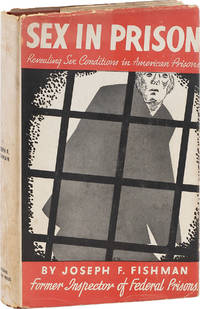
193480648New York: National Library Press 1934. First Edition. First Printing. Octavo. 24cm. Publisher's red cloth titled in gilt to spine. Dustjacket. 256pp. Minor bumping to the spine ends a little superficial wear to extremities strong and handsome with a few areas of discolouration to the bright red cloth in a clean solid dustjacket lightly sunned and spotted to the spine and with some soiling of the white areas and shallow marginal wear. A very good copy. Internally clean although there is some acid reaction or offsetting to the pastedowns and flyleaves toning to page edges. Six illustrative photographs. A rather fascinating early work on conditions for prisoners in US carcerial institutions Fishman pioneered what was referred to as "Deprivation Theory" citing lack of access to heterosexual relationships as a major cause of unrest and friction amongst inmates he was an early suggestor of conjugal visits and a reduction in overcrowding:<br /> "Why is there such a wall of silence encircling the subject of Sex in Prison We are living in a frank and realistic age yet the subject of sex in prison - so provocative so vital so timely in view of the recent epidemic of prison riots - is shrouded in dread silence."<br /> Fishman's researches despite encompassing a number of theories that we know today definitively contribute to unrest and violence amongst prison populations weren't favourably received until the 1960's when a new generation of reformers took sections of his research and advanced them into a more modern understanding of what happens to incarcerated peoples and why the concept of "punishment" is essentially useless without a conceptual pathway towards rehabilitation and a time "after punishment." An important book. National Library Press unknown
193176467Moundsville: Work & Hope 1931. First edition for this year OCLC records no holding for this year but does for 1927 4 1930 3 1932 3 1935 2 1937 1. Octavo. 48 pp. Extensively illustrated from photographs. Publisher's teal wrappers with red lettering and a large decorated border. Some finger soiling to rear wrapper else a very good copy.The publishers Work & Hope and printers and writers were all inmates of the Moundsville Penitentiary in West Virginia. Likely they worked in the hope of getting released as for a time the Moundsville Penitentiary ranked on the United States Department of Justice's Top Ten Most Violent Correctional Facilities list. The photographs herein present a different story of course. We see a beautiful chapel clean and tidy cells and prisoners at work in the shirt shop the broom shop and the whip shop. There are also photographs of the gothic prison itself. When it was built it was outside the town but by the time of closing it was right in the middle of a residential zone One of the countries most famous pre-historic mounds lent its name to the town.'The West Virginia Penitentiary in Moundsville was built in 1876 and closed in 1995. During its working history it was deemed as one of the most violent prisons in the U.S.A. seeing its fair share of riots murders and executions. Conditions were less than adequate and humane with the cells and rooms crawling with vermin and cockroaches.During its operation there were 36 reported murders and 94 executions. This does not take into account the suicides and accidents which take the total number of deaths to nearly 1000" A. Oborn 2019 Work & Hope unknown
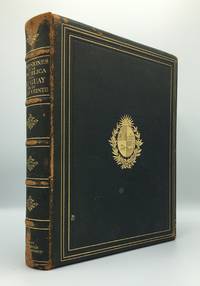
19121080Londres etc.: Lloyds Greater Britain Publishing Company Limited. 1912. First edition. Large quarto. Publisher's original full dark-green morocco; the upper board triple-ruled in gilt and with the Uruguayan crest in gilt; the spine with five raised bands compartments ruled and decorated in gilt and with titles in gilt. All edges gilt. Marbled endpapers. Title page contents page introduction and first text page with gilt borders and embellishments. Illustrated profusely throughout with black and white photographs and one map. Ownership inscription of the Australian writer Mary Gilmore to the head of the title page: "Mary Gilmore / Her book / 16. 3. 26". A very good copy the binding square and firm with a few small marks and scuffs to the boards rubbing to the spine and joints and wear to the corners. The contents with scattered foxing to the endpapers are otherwise in very good order and clean throughout. An interesting association copy of this comprehensive extensively illustrated and luxuriously produced survey of the people culture history politics economy industry agriculture geography and natural history of Uruguay at the beginning of the twentieth-century belonging to the influential Australian author journalist and poet Dame Mary Gilmore 1865-1962. </p><p>A prolific contributor to Australian literature and the broader national discourse during the first half of the twentieth-century Gilmore wrote for a number of leading newspapers and journals of the period serving as the editor of the women's section of The Australian Worker 1908-1931 as well as The Bulletin The Sydney Morning Herald and the Communist Party's Tribune becoming known as a campaigner for the welfare of the disadvantaged. Her first volume of poetry was issued in 1910 thereafter publishing prodigiously for the ensuing half-century coming to be regarded as one of Australia's most popular and widely read poets. Her poetry essays and memoirs covered a wide variety of themes although public imagination was particularly captured by her evocative views of country life with her best known work - 'No Foe Shall Gather Our Harvest' - serving as a morale booster during the Second World War.</p><p>A political progressive Gilmore gained a reputation as a 'fiery radical' - a champion of the workers and the oppressed. Involving herself with the burgeoning labour movement early in her life she had become a devotee of the utopian socialism of William Lane 1861-1917. In 1896 Gilmore and two hundred others followed Lane to Paraguay where they established a communal settlement called New Australia. She started a family there with William Gilmore whom she married in 1897 but the colony was ultimately short-lived with Gilmore leaving in 1900 living in Buenos Aires for six months followed by a period in Patagonia returning to Australia in 1902 after having saved enough money for a return passage.</p><p>Gilmore maintained a strong interest in Latin American politics culture and literature for the rest of her life. Indeed she also engaged in translation projects bringing Latin American literature to a wider audience notably endeavouring to produce a 'Uruguayan anthology' for which she corresponded with friends and associates in the country. This was perhaps also the origin of the present volume which itself forms a pleasing representation of Gilmore's wide-ranging ambitions.</p><p>By her later years Gilmore was a doyenne of the Sydney literary world and became something of a national icon making frequent appearances in the new media of radio and television and maintaining a significant literary output into old age publishing her last book of verse in 1954 aged 89. She died at the age of 97 and was accorded a state funeral a rare honour for a writer and has featured on the reverse of the Australian ten-dollar note since 1993. Londres [etc.]: Lloyds Greater Britain Publishing Company, Limited. hardcover