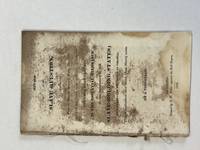
REVIEW OF THE SLAVE QUESTION EXTRACTED FROM THE AMERICAN QUARTERLY REVIEW DEC. 1832; BASED ON THE SPEECH OF TH. MARSHALL OF FAUQUIER: SHOWING THAT SLAVERY IS THE ESSENTIAL HINDRANCE TO THE PROSPERITY OF THE SLAVE-HOLDING STATES; WITH PARTICULAR REFERENCE TO VIRGINIA. THOUGH APPLICABLE TO OTHER STATES WHERE SLAVERY EXISTS. BY A VIRGINIAN
183341091Richmond: Printed by T.W. White 1833. 48pp. Disbound and foxed. Good.<br /> <br /> Nat Turner's slave insurrection in Southampton County Virginia brought to reality the South's worst nightmare. The incident sparked the only concerted effort by a Slave State to abolish slavery within its borders. Western Virginia's Charles Faulkner and Thomas Jefferson's grandson Thomas Jefferson Randolph led the struggle. Their bill would free all children born of slave parents after July 4 1840. They and their supporters argued that slavery diminished the value of free labor impaired the work ethic and thus fatally damaged the body politic for the sake of the enrichment of a few wealthy plantation owners. They failed in good part because the malapportioned Virginia legislature was tilted in favor of the Tidewater aristocracy. <br /> The author Jesse Burton Harrison was born and raised in Lynchburg. He believed-- like Thomas Marshall Faulkner and Randolph-- that slavery was a social evil causing "inanimation of public spirit- destruction of the spirit of industry in the free population- the degradation of labour itself- ruin of agriculture by a wasteful mode of cultivation- interposing obstacles to the improvement of the soil- and the encouragement of habits and opinions destructive of economy and enterprize." <br /> Haynes 7936. LCP 4631. Dumond 64. Sabin 70270. Printed by T.W. White unknown