18 résultats
200036167<p>Contains the original text in medieval-Byzantine Greek polytonic script and translation plus comments and introduction in modern Greek. Soft cover 21 cm 512 pp.; net weight 625 gr.</p><p><i>Το πλÎον σημαντικό από τα ÎÏγα που συνÎγÏαψε ο λόγιος πατÏιάÏχης είναι η "Βιβλιοθήκη" συλλογή πεÏιλήψεων-σημειώσεων από βιβλία του ÎµÎ¸Î½Î¹ÎºÎ¿Ï ÎºÎ±Î¹ χÏÎ¹ÏƒÏ„Î¹Î±Î½Î¹ÎºÎ¿Ï Ï€Î±Ïελθόντος. Οι πεÏιλήψεις αυτÎÏ‚ φÎÏονται να γÏάφτηκαν για Îναν και μόνο αποδÎκτη σε κλίμα συγκινησιακά φοÏτισμÎνο. Î ÏοσφÎÏονται στον ΤαÏάσιο τον αγαπημÎνο αδελφό του Φωτίου ως χαÏιστήÏιο ενθÏμιο λίγο Ï€Ïιν από το διπλωματικό ταξίδι του συγγÏαφÎα στους ΑσσυÏίους. ΠαÏά τον εσωστÏεφή και Ï€Ïοσωπικό χαÏακτήÏα η "Βιβλιοθήκη" γνώÏισε ευÏεία διάδοση.</i></p><p><br /></p><p><b><i><b>IMPORTANT: The shipping cost is an important parameter of this order; it is NOT included in the price and depends on the actual weight and destination; you will have to approve it after the confirmation of the order. You may ask for an estimate before placing the order at: dem.siatras@gmail.com</i></b><br /></p> Kanakis paperback
1926052475Istanbul-Beyoglu: Zelliç Biraderler Matbaasi = Zellitch Brothers 1926. 1st Edition . Hardcover. Very Good. 8vo - over 7¾ - 9¾" tall. In contemporary decorative cloth bdg. Demy 8vo. 22x 14 cm. In Ottoman script and English. 4 295 1 p. A practical English grammar for use in Turkish schools.= Türk mektebleri için Ingilizce amelî gramer. Only one copy in OCLC 82745106 Bogaziçi University Library.; Özege 21473. First and Only Edition. <br/> <br/> Zelliç Biraderler Matbaasi = Zellitch Brothers hardcover
198545063B. G. Teubner. 1985. Hardcover. Very Good in No Dust Jacket dust jacket. Scholar's name to ffep A. R. Littlewood. Foxing/dustsoiling to top of textblock.; Bibliotheca Scriptorum Graecorum Et Romanorum Teubneriana TEUBNER; 3; 182 pages . B. G. Teubner hardcover
198445062B. G. Teubner. 1984. Hardcover. Very Good in No Dust Jacket dust jacket. Scholar's name to ffep A. R. Littlewood. Light Foxing/dustsoiling to top of textblock.; Bibliotheca Scriptorum Graecorum Et Romanorum Teubneriana TEUBNER; 2; 253 pages . B. G. Teubner hardcover
198345061B. G. Teubner. 1983. Hardcover. Very Good in No Dust Jacket dust jacket. Scholar's name to ffep A. R. Littlewood. Light Foxing/dustsoiling to top of textblock.; Bibliotheca Scriptorum Graecorum Et Romanorum Teubneriana TEUBNER; 1; 197 pages . B. G. Teubner hardcover
199693005Edinburgh; Grand Rapids Michigan: T&T Clark ; Eerdmans 1996. Reprint. Originally published: Christian Literature Publishing Company 1890. Hardcover. Fine with personal owner name in small ink to front free endpaper. No jacket as issued. Quarto in rustic gey-brown polished cloth; 586p bibliographical references and indexes. Volume 3 only of 14 total. / Christian literature Early. Fathers of the church. Littérature chrétienne primitive. Pères de Reference works. Reference works. Ouvrages de référence. T&T Clark ; Eerdmans hardcover
198645064B. G. Teubner. 1986. Hardcover. Very Good in No Dust Jacket dust jacket. Scholar's name to ffep A. R. Littlewood. Foxing/dustsoiling to top of textblock.; Bibliotheca Scriptorum Graecorum Et Romanorum Teubneriana TEUBNER; 4; 190 pages . 3322002772 . B. G. Teubner hardcover
198745066B. G. Teubner. 1987. Hardcover. Very Good in No Dust Jacket dust jacket. Scholar's name to ffep A. R. Littlewood. Foxing/dustsoiling to top of textblock.; Bibliotheca Scriptorum Graecorum Et Romanorum Teubneriana TEUBNER; 6.1; 138 pages . 3322003612 . B. G. Teubner hardcover
198645065B. G. Teubner. 1986. Hardcover. Very Good in No Dust Jacket dust jacket. Scholar's name to ffep A. R. Littlewood. Foxing/dustsoiling to top of textblock.; Bibliotheca Scriptorum Graecorum Et Romanorum Teubneriana TEUBNER; 5; 265 pages . 3322003337 . B. G. Teubner hardcover
1910053669Istanbul: ADS. AH 1326 1910. No Binding. Very Good. Original manuscript autograph document sealed by Bosnevî Darülhadis Basmüderrisi i.e. Bosnevî Darülhadis School in Sehzâde Istanbul. Oblong: 12x145 cm. In Ottoman script. 1 p. 4 lines. "Huve. Bâdi-i sehâdetnâme oldur ki; Müderrisi bulundugum Sehzâde civarinda Darülhadis Bosnevî Medresesi'nde mukayyid talebe ilm-i sarf. Mehmed bin Mehmed Efendi'nin. 1326 1910 AD.". <br/> <br/> ADS., [AH 1326] unknown
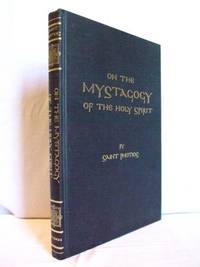
1985Q-0881410381St Vladimirs Seminary Pr 1985-04-01. Paperback. New. In shrink wrap. Looks like an interesting title! St Vladimirs Seminary Pr paperback
1910053167Istanbul: Mihran Iranian. c. 1910 1910. No Binding. Very Good. 8vo - over 7¾ - 9¾" tall. Original sepia-toned photograph printed in a period photograph paper. 19x25 cm. Descriptive text in French. Chipped and tear on margins. Iranian was born in 1890 in Constantinople Istanbul. It is known that he established his studio in 1891 in Pera district of Constantinople - the center of Armenian cultural and political life. In 1895 he enters into partnership with another photographer by the name of Gugasyan. By 1900s the business seems to have wound down as the images marked with his studio signature don't exhibit any over elements of the new century. Of all the major Armenian studios from Istanbul Iranian's photographs are the rarest and less than 300 are known to have survived. Iranian's primary subject was the city of Constantinople its picturesque landscape architectural heritage and the many types of artisans and workers that populated its streets. Using the latest photography techniques which allowed for very rapid exposures Iranian captured the bustle of the city streets with remarkable clarity. Teeming with life and movement these images have a remarkable immediacy and documentary veracity quite unlike similar views produced by other photographers of the period. The typical approach for many of Iranian's contemporaries such as Sebah & Joalier or Guillame Berggren was to achieve as clear a picture as possible with perfectly balanced compositions and highly visible details - the hallmark of a 'good' commercial photographer. In contrast Iranian's street views are full of photographic 'ruptures' - blurred figures in movement surprised glances of people caught unawares - which give his works the viscerality of snapshots. But above all Iranian was a master at capturing the mood of a place. Catching the Ottoman capital on the brink of rapid transformation the photographer aimed to record many of its ancient streets and quarters disappear or change the appearance. Thus like the Parisian street photography of Atget Iranian's images are 'nostalgic for the present' that is irrevocably slipping into the past. In his studio the clientele had the choice of a large range of costumes and props through which the modern urbanite could slip into the role of some long-gone ethnic or street type and become a part of history. It is this sense of melancholy that gives Iranian's photographs their subtle emotional power. This is also perhaps the reason why he was ultimately not as successful as a commercial photographer. Modernity had captured the imagination of the people and the wistful romanticism of Iranian's markedly less spectacular images was fast going out of fashion. The small legacy he has left behind is nevertheless of significance in the history of Near-Easter photography. He was one of the rare Ottoman photographers with an individual and subjective approach which deserves a proper evaluation. <br/> <br/> Mihran Iranian., [c. 1910] unknown
196513811Adolf M. Hakkert. 1965. Hardcover. Very Good in No Dust Jacket dust jacket. Spine a little sunned and discolored. Corners a little rounded. Light bump to top of spine. Light shelfwear.; Reprint of the edition Leiden 1864-1865. 459 456 pp; 2 Volumes in 1 COMPLETE; 1-2; 455 pages . Adolf M. Hakkert hardcover
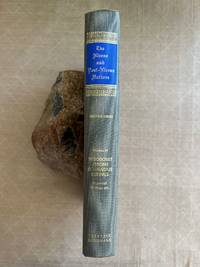
1981BN110682Dumbarton Oaks Center for Byzantine Studie 1981. 1981. Hardcover. Nicholas I. Patriarch of Constantinople : Miscellaneous Writings <br/><br/>Nicholas I. Patriarch of Constantinople : Miscellaneous Writings Dumbarton Oaks Center for Byzantine Studie hardcover
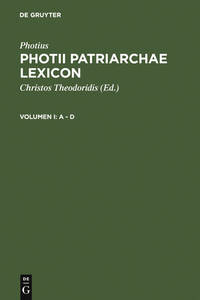
1998186332Berlin: De Gruyter 1998. Hardcover. VG Covers have very minor wear. Greek Text. Volumes I & II. Green cloth boards with light green lettering. Includes bibliographical references. De Gruyter hardcover
198215850Walter De Gruyter & Co. . 1982. Hardcover. Very Good in No Dust Jacket dust jacket. Scholars' bookplate to inner cover. Slight spine slant. Very minor shelfwear.; Volume 1 Only.; 1; 461 pages . 3110085305 . Walter De Gruyter & Co. hardcover
1983260207014Studion Publishers 1983. hardcover. Good. 9x6x1. Cover has light wear. Text unmarked small smudge on a few pages. Good solid binding. Ships Next Business Day. Studion Publishers hardcover
1913055948Rodosto & Constantinopoli: Manuscript & Typescript 3-9 October 1913. 1913. No Binding. Very Good. 8vo - over 7¾ - 9¾" tall. A one-page typed letter with autograph marginal notes and a two-page manuscript report in black ink. Both are written on bifolia papers with "Renage's Mill" watermark One is "Banknote Paper" the other is "Extra Strong". "Agenzia Consolare d'Italia Rodosto" & "Consolato Generale d'Italia in Constantinopoli" letterheads. 27x21 cm. The letter is in Italian report is in French. 1 p.; 2 p. Signed. Except for the horizontal centre-fold in very clean condition. A letter written by the Italian Consul General in Constantinople to the Italian chargé d'affaires accompanied by a historically significant report from the Consular Agent in Rodosto provides valuable first-hand information about the outbreak of epidemic diseases such as cholera and typhus among humans and anthrax and bubonic plague among animals in the Ottoman Empire in 1913. It also sheds light on the authorities' failure to address these public health crises while offering significant insights into the Muslim immigrants arriving in convoys to the region during the ongoing Balkan Wars. This is an invaluable firsthand account of the Sixth Cholera Pandemic in the Ottoman Empire "a time when the Empire's foundations were shaken by the Balkan War military defeats territorial losses the plight of refugees and immigrants and the dreadful calamity of the cholera epidemic between 1911 and 1913 during which no reliable official records exist regarding the exact number of cholera cases and deaths". Unat. The manuscript report opens by stating the number of direct death cases as rendered in the translation: "I believe it is my duty to inform you that on the 27th a case of cholera followed by death was reported in the town. The day before yesterday there were four other cases two of them fatal; yesterday four new ones two of which were fatal; today another case. So out of ten cases there have been five deaths." The letter goes on: "The other municipality requested a credit of 1000 piastres from Constantinople to take the measures required by the circumstances. Unfortunately no reply has been given and our local officials do not know to which authority they should turn." "Cholera is present in Kirklareli Quarante Églises Baba-Eski Babaeski à Vise Vize à Bounar-Hissar Pinarhisar à Luli Bourgaz Lüleburgaz à Ouzun Keupiru Uzunköprü and aound Krichan Kirikhan. In Tchorlou Çorlu typhus is wreaking havoc and smallpox is present here. Our entire region is devastated by an epizootic outbreak: smallpox and foot-and-mouth disease among the sheep anthrax and bubonic plague among the oxen and buffaloes. Money and serum have been requested from the Ministry of Agriculture but there has been no response. The chief veterinarian I spoke with assured me that it would be impossible to do anything until he has serum to treat the livestock and that if the epidemic disease continues to spread like this the livestock will be completely wiped out in our region." The Royal Consular Agent states that during and after the war between the Turks and Bulgarians also known as the Battle of Kirkkilise which was part of the Balkan Wars Muslim immigrants who continually flocked to Kirklareli and the surrounding areas brought cholera and other epidemic diseases to the region. "Regularly there are convoys of migrants who had left their villages in the surrounding areas of Adrianople Quarante Églises Lüleburgaz etc. before the Turco-Bulgarian War arriving from Anatolia by steamships. They are the ones who brought us cholera and the epidemic disease." He ended his manuscript report by stating there is no way to convince the authorities to have them disembark elsewhere outside the city or to prevent the arrival of these immigrants who are being directed utilizing forced requisitions to areas where cholera is spreading. This report was presented to the Italian chargé d'affaires with this letter additionally as below: "Healt <br/> <br/> Manuscript & Typescript, 3-9 October 1913. unknown