PERRAULT, Claude (1613-1688) -- HISTORY OF ACADEMIE ROYALE DES SCIENCES (Royal Academy of Sciences)Biblio.com

118 résultats
1734D4425Paris: Par La Compagnie des Libraires 1734. Hardcover. Very Good. Three volumes comprising Vol. III parts I to III of Memoires de lAcadémie Royale des Sciences depuis 1666 jusquà 1699. Paris: Par La Compagnie des Libraires 1733-1734. Part I: 231pp.; Part II: 294pp.; Part III: 215pp. 97 engraved folding plates depicting animals and skeletal diagrams. Engraved portrait frontispiece of Claude Perrault in first volume. Contemporary French calf spines gilt edges red; some occasional browning; repairs to joints some rubbing. Unidentified armorial bookplate to front pastedown beneath monogrammed bookplate D.P. with chipmunk and two mice. A later reduced format edition of Perraults Memoires of 1671-1676 Perraults study of this nature was first published in 1669 with the results of investigations of five animals and later expanded with studies of over forty animals. Prior to 1670 most descriptions of animals paid little attention to their internal structure and there were very few images in natural history encyclopedias that depicted skeletons or muscles. That changed with the establishment of the Académie des Sciences in Paris in 1666 by Jean-Baptiste Colbert with the approval of King Louis XIV. The Academy functioned with neither statutes nor regulations until 1699. At that time the Academy used the term mathématique to encompass the fields that are now called astronomy mathematics and physics and the term physique to encompass the fields that are now called anatomy botany zoology and chemistry. In January 1699 Louis reorganized the Academy giving it first regulations. The effect was to give the King more control over their activities in exchange for becoming an official institution under his protection with the new name Académie Royale des Sciences. One of the original academicians the physician Claude Perrault organized regular sessions at which participants could dissect deceased animals from Louis XIVs royal menagerie and record all they observed. Lions chameleons bears gazelles wolves ostriches crocodiles monkeys eagles tigers porcupines and salamanders among some were all laid open by the academics scalpels. These superb folding plates record in great detail the pioneering work at the Academy. These three volumes in three parts focus on the transformative and foundational years of the French Royal Academy of Sciences and Claude Perraults efforts which had made comparative anatomy a vital tool for the classifying naturalist. <br/><br/> Par La Compagnie des Libraires hardcover
1762032037Paris: Chez De Bure l'aine Quai Des augustins du Cote Du Pont Saint michel a Saint Paul 1762. Book. Very Good. Leather. FIRST VOLUME. PREMIER TOME. A gorgeous book bound in full leather with 5 raised bands to spine hand-marbled endpapers gilt lettering to spine and gilt dentelles to edges. 322pp. Engravings throughout. Some chipping to spine and corners otherwise very good. Remarkable condition considering its age. / Un tres beau livre reliure de cuir plats marblee letterage dore. Beaucoup de gravures. Accrocs au dos et coins autrement bonne condition. 322pp. Chez De Bure l'aine, Quai Des augustins, du Cote Du Pont Saint michel, a Saint Paul Hardcover
1762032038Paris: Chez De Bure l'aine Quai Des augustins du Cote Du Pont Saint michel a Saint Paul 1762. Book. Very Good. Leather. SECOND VOLUME. TOME SECOND. A gorgeous book bound in full leather with 5 raised bands to spine hand-marbled endpapers gilt lettering to spine and gilt dentelles to edges. 322pp. Engravings throughout. Some chipping to spine and corners otherwise very good. Remarkable condition considering its age. / Un tres beau livre reliure de cuir plats marblee letterage dore. Beaucoup de gravures. Accrocs au dos et coins autrement bonne condition. 322pp. Chez De Bure l'aine, Quai Des augustins, du Cote Du Pont Saint michel, a Saint Paul Hardcover
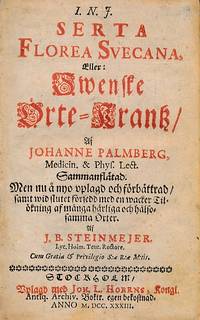
1738r2781bStockholm: Joh. L. Horrns. G : in good condition. 19th century binding. Cover rubbed with edge wear. Fep missing. Occasional foxing and darkening. 1738. Third Edition. Brown hardback half-leather cover with marbled boards. 170mm x 100mm 7" x 4". viii 282pp 62pp 118pp viii. Eighteenth century edition of Palmberg's Swedish herbal. . Joh. L. Horrns hardcover
1799018021Edinburgh: Printed for the author 1799. First edition. Octavo not illustrated pp xii 430 some age-toning throughout a little foxing otherwise sound and tight internally marbled edges contemporary half calf and marbled boards rubbed the spine-head frayed. One of the scarcer of Nicol's works and the first edition seems particularly elusive. Walter Nicol 1769 - 1811 was a Scottish garden and hothouse designer who wrote several books on practical horticulture. An advertisement leaf in this books mentions his terms for garden design and advice at One Guinea per day. He was born in Niddrie. He was employed at a number of estates in Scotland and improved the design and layout of gardens and glasshouses. Nicol is in particular responsible for the walled garden layout at Dalhousie Castle in Midlothian."His works which were of a very high standard became exceedingly popular" - Blanche Henrey 1178. First Edition. Half-Leather. Good. Printed for the author Hardcover
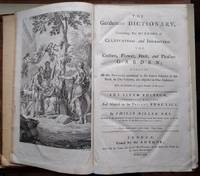
1752019969The Bible & Crown St Paul's Churchyard: John & James Rivington for the author 1752. Sixth edition carefully revised and adapted to the present day. Folio an engraved allegorical frontispiece and nine engraved plates a light marginal staining at the bottom inner corner of the first ten pages repeated a couple of times later a tear to the last page of the preface and another on a later page both without loss the title page a little creased the hinge between the dedication page and the preface is cracking but without any weakness otherwise quite clean and sound internally full contemporary calf very rubbed and scuffed with surface abrasion but still sound rebacked with a later calf spine probably nineteenth century torn at the spine head with a morocco title label. Bound in at the front is a second frontispiece - The Genius of Botany - drawn by S. Hale and engraved by C. Grignion; this is smaller in format than the book and the only reference I can find is that it acts as the frontispiece to Hill's "Eden" though it seems too small for that work. It is a little creased and lacking part of it's margin. Blanche Henrey 1110. An important edition as it is the last to contain pre-Linnean nomenclature. Includes the Index latinus the lengthy catalogues of plants The Gardeners Kalendar and the Appendix. Sixth edition. Full-Leather. Good. John & James Rivington for the author Hardcover
1702017826The Bible near the Piazza's of the Royal Exchange: J.R. for Ralph South 1702. Illustrated with a folding plate at the rear small octavo pp xiv 175 i age-toned endpapers unevenly browned but otherwise clean and sound internally contemporary calf rather worn and bleached rebacked at some point with the original spine laid down the corners repaired probably at the same time all still tight and sound. An early signature on the front endpaper - S. Smith Prior Park 1784. Richard Mead 1673 - 1754 was an English physician. His work "A Short Discourse concerning Pestilential Contagion and the Method to be used to prevent it "1720 was of historic importance in the understanding of transmissible diseases. The present work on poisons "fully displayed his commitment to Pitcairne's style of iatromechanics stating that mathematical learning would soon distinguish a physician from a quack. His most original contribution was his discussion of venomous snakes which had been instigated by his studies with Paul Hermann at Leiden. Mead dissected several vipers and accurately described the mechanism of the fang and its operation. He also confirmed Galen's observation that a puncture wound was necessary for the venom to take effect in part by swallowing a sample of venom without ill effect - ODNB". The other poisons and antidotes discussed cover tarantulas and rabid dogs through to poisonous minerals and plants opium and noxious vapours. First Edition. Full Leather. Good. J.R. for Ralph South Hardcover
1797021414Pater-noster Row & Strand London: G.G. & J. Robinson; T. Cadell & W. Davies 1797. Second edition "carefully revised corrected and very much enlarged and improved". Very thick quarto not paginated but probably 1200 pages or more with 11 engraved plates one of which is folding the plates are rather foxed and toned the text is slightly age-toned and foxed though not consistently so the hinge at the title page is cracked but in no way weak and the front endpaper IS loose and indeed the firmness and lack of damage to the pages throughout is remarkable; bound in contemporary speckled calf with marginal gilt lining the spine with gilt decoration and morocco label slightly worn overall very neatly re-backed at some time the original endpapers retained. At some time this copy found its way to the United States as it contains the tiny label of the notable horticultural bookseller Elisabeth Woodburn. Balnche Henrey 1087. One of the most comprehensive and detailed descriptions of horticultural practices at the end of the eighteenth century. Authorship is generally attributed to Abercrombie only. Second edition. Full-Leather. Very Good. G.G. & J. Robinson; T. Cadell & W. Davies Hardcover
1767016073London Norwich Chelmsford & York: W. Griffin; W. Chase; T. Toft & E. Etherington 1767. FIRST EDITION BUT LACKING ONE PAGE. Small octavo pp 422 one page bookseller's catalogue. The title page is mounted lacking a few small pieces around the margins; the preface page is a bit worn with a torn corner; otherwise contents generally a little used and dog-eared some staining and marking of which the worst is pages 190/191 see illustration; LACKING page 1/2 otherwise complete tight and sound; bound in a fairly recent half calf and marbled boards raised bands and title label. Blanche Henrey 1052. The true rare first edition. There were two printings in 1767 with differences in pagination - this is the first . First Edition. Half Leather. Good. W. Griffin; W. Chase; T. Toft & E. Etherington Hardcover
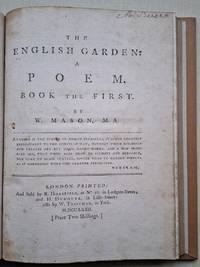
1772021679London & York: R. Horsfield & H. Dunover; W. Tessyman & J. Todd 1772. 1772 - 1781. Four parts each with title page. Book the First 1772 pp 2 30 advertisement leaf; Book the Second 1777 with the half-title pp 34 advertisement leaf; Book the Third 1779 with the half-title pp 32; Book the Fourth 1781 with the additional general title page for the whole work pp 54. Some age-toning and light marking throughout an early signature on the first title page - M. Berens a closed tear to the general title page but otherwise very sound and generously margined bound in a simple modern quarter calf and boards. Blanche Henrey 1036 1040 1042 1043. William Mason 724 - 1797 was an English poet divine amateur draughtsman author editor and gardener. "Mason was both a good horticulturist and an effective landscape gardener. As well as giving directions for gardening the poet traces the history of the art through the writings of Bacon Spenser Milton Temple and Addison and the garden work of Southcote Shenstone and Capability Brown.". First Edition. Quarter leather. Good. R. Horsfield & H. Dunover; W. Tessyman & J. Todd Hardcover
17535819London: John Noon 1753. Fourth edition. Hardcover. Very Good. 8vo 3/4 modern morocco raised bands marbled boards spine sunned <br/><br/>Revised and corrected with large additions by way of Notes and a new Preface. 26 copperplates. This was Martin's first book. "Martin discusses numerous topics of natural philosophy including both terrestrial and cosmological subjects and made the topics so as to be easily understood by students.5 The book underwent 6 reprints in a 40 year period was translated into 3 other languages and is considered to be his most successful publication - Wythepedia." Sowerby 3726 . John Noon hardcover
1796017752London: G. Nicol; G.G.& J. Robinson; J. Debrett 1796. Two volumes octavo pp xxxii 408 8; xx454 4 2 page publisher's advertisement some age-toning throughout otherwise tight and sound contemporary half calf and boards rubbed the boards a bit spotted and marked the second volume has been neatly recased with the original spine laid down. John Whitehall Dod's copy with his engraved crest label in each book. Two neat later signatures also on the endpapers. Published anonymously. Blanche Henrey 1229. "An eminent writer on agriculture and rural economy. This enlarged edition contains additional information on the laying out of grounds and descriptions of some noted estates visited by the author together with his critical remarks and suggested improvements. Second edition. Half Leather. Good. G. Nicol; G.G.& J. Robinson; J. Debrett Hardcover
17481641Amsterdam: Chez l'honore et fils libraires 1748. First Edition. Hardcover. Very good. 2 vols. in one. 8vo. I: 10 cxix 7 208 pp. 1 f. "Errata" for Tom. 1. II: 2 231 pp. 1 f. "Addition" 1 f. "Errata" for Tom 1 sic. First title page with unobtrusive paper defect on lower margin not affecting text; this copy is lacking half-title and Errata leaf for Tom. 2. Very attractive 19th-century French red glazed boards red morocco spine lettered in gilt directly two insignificant worm-holes on lower hinge leading nowhere; trifle wear to binding extremities. Completely unsophisticated. First printing of "Telliamed" in every way a remarkable book. Disguised as an Oriental fantasy it contains perhaps the earliest appearance of one of the most important of all evolution speculations namely the so-called ultra-neptunian theory: that the entire Earth was and is a marine deposit and that all life on land originated from creatures of the sea. Maillet hypothesized that the earth was once entirely covered with water and that the water gradually evaporated into space causing land masses to appear. Maillet also created an ingenious methodology to calculate the age of the Earth: he concluded that the Earth is 2 billion years old evolutionists today consider this figure to be more like 4.5 billion. It is known that Buffon Lamark Cuvier and Darwin read this book and that they were very much influenced by Maillet's unorthodox "heretical" views. Well aware that such an immense figure would incur the wrath of the Church de Maillet presented his conclusions in the guise of a dialogue between a French missionary and an Eastern mystic named Telliamed an anagram for the author's last name i.e. de Maillet spelled backwards. The manuscript remained unpublished until a decade after Maillet's death. In order to present his radical conclusions in the guise of an Oriental tale Maillet interspersed monsters and mythological creatures into his text. Overtly anti-Christian "Telliamed" dismisses the Flood of the Old Testament as a fable because rainfall that lasted forty days would have been insignificant to submerge entire mountains. Maillet asserted that the Earth's history could not be read from the Bible but through the rocks themselves. <br /> <br /> ¶ With uncanny prescience Maillet describes how species have overlapping physical characteristics that suggested a common life origin namely the sea. Through a Oriental mystic we are told that: "The little Wings had under their Belly and which like their Fins helped them to walk in the Sea became Feet and served them to walk on Land." <br /> <br /> ¶ REFERENCES: Caillet No. 7009. Versins Utopie p. 640. LITERATURE: "Charles Darwin et ses Precurseurs francais Paris 1870 Chapter 1: "the moss-grown fragments from the ruins of another world." See also Albert Carozzi "De Maillet's 'Telliamed' 1748: An Ultra-Neptunian Theory of the Earth" in: Toward a History of Geology; Proceedings of the New Hampshire Inter-Disciplinary Conference on the History of Geology Sept. 7-12 1967. Mary Efrosini Gregory "Evolutionism in Eighteenth-century French Thought" Chapter 1. See also the article on Maillet in DSB IX pp. 26 et seq: "Maillet's ideas unquestionably influenced many leading naturalists for almost a century notably Buffon and Cuvier. Chez l'honore et fils, libraires hardcover
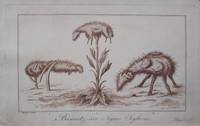
1791018460Bath: S. Hazard 1791. Latin text with some Greek; a few of Clayton's notes are in English. Engraved frontispiece of the Agnus Scythicus pp 138 very clean internally the hinge at the frontispiece crackig but no weakness bound in a ater unlettered cloth-backed marbled boards rubbed and chipped at the edges but otherwise sound. RARE. The Vegetable Lamb of Tartary Latin: Agnus scythicus or Planta Tartarica Barometz is a legendary zoophyte of Central Asia once believed to grow sheep as its fruit. It was believed the sheep were connected to the plant by an umbilical cord and grazed the land around the plant. When all accessible foliage was gone both the plant and sheep died. Underlying the legend is the cotton plant which was unknown in Northern Europe before the Norman conquest of Sicily. The Hunt Library Catalogue - Number 474 - devotes four pages to the earlier printings of this work - "One of the most curious little books in the Collection or even in the demesne of bibliography". This copy has an article bound in at the rear entitled Botany; it has 127 pages is probably late-Victorian and I have not traced its source. First Edition. Cloth-backed boards. Good. S. Hazard Hardcover
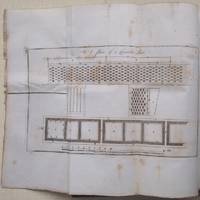
1795017372The Strand London & Edinburgh: T. Cadell & W. Davies; Bell & Bradfute 1795. Second edition. Illustrated with a folding plan of a cucmber bed a little foxed and browned slightly frayed at the fore-edge octavo pp xvi 312 fore-edge and bottom edge untrimmed a little foxed and age-toned throughout a neat early signature on the title page bound by Spink & Thackray of Leeds in a brown half buckram and boards slightly worn and with an armorial crest at the base of the spine. Blanche Henrey 1000. RARE - a good wide-margined copy. Second edition of the work which brought MacPhail's forcing frame and controversial method of cultivation to the public view. McPhail was gardener to Lord Hawkesbury at Addiscombe Place in Surrey. The brick frame was of his own design and a notable feature of this book is the detailed weather observations covering a complete year together with the precise treatment given to the plants on each day. The frame proved immensely popular and within 40 years Rogers 1839 was to state " an excellent invention that has certainly rendered the forcing of this vegetable more simple.there are few gentleman's gardens and few principal market gardens without them". . Second edition. Half cloth and boards. Very Good. T. Cadell & W. Davies; Bell & Bradfute Hardcover
1764015115Holmiae: Laurentii Salvii 1764. Title page printed in red and black pp xx 580 42 1 leaf of errata & emendada a little general age-toning of the pages but remarkably clean and sound internally marbled endpapers contemporary speckled calf lined in gilt dentelles in gilt a litlte worn mainly at the corners spine ornate gilt with raised bands rubbed and a bit more worn black leather title label lacking a corner joints cracking but still holding well. With the large folding portrait a bit creased which Soulsby mentions is only found in some copies. Soulsby 305. Full-Leather. Good. Laurentii Salvii Hardcover
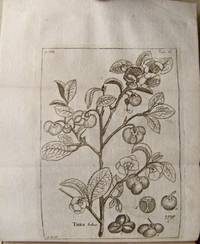
1769016541Lugduni Batavorum: Westenium 1769. Latin text throughout. Title page dedication leaf pp 506 ii with seven engraved folding plates and one folding table slight damage to the margin of the ornithological plate a little age-toning generally endpapers unevenly browned but otherwise very clean internally bound in full contemporary polished calf slight wear at the corners joints cracking slightly lacking a small piece at the head of the spine. The students whose names appear on the dissertations were not necessarily their authors; it was their function to present the dissertation and defend it in public debate but the responsibility for the content of the dissertation was largely that of the professor in this case Linnaeus. The fact that Linnaeus cited the Amoenitates as the place of publication for plant names he credited to himself indicates that he was generally the principal author of the work. At the end of this volume is a list of "Editiones operum auctoris" including the Amoenitates with the clear implication that Linnaeus is the author. Of great importance for "Potus Theae" in which Pehr Tillaeus discussed among other things the properties and benefits of tea as a medicine. Tillaeus's dissertation was the first in-depth botanical study of the tea bush and he also named parts of the plant. The tea plant had only been introduced to Sweden and Europe generally as recently as 1763. Also includes Hoffman's "Potus Chocolatae" - a botanico-medical essay on the merits of drinking chocolate flavored with vanilla. Botanical accounts are given of the cacao tree Theobroma cacao L. and of the vanilla orchid Epidendrum vanilla L. = Vanilla fragrans. The preparation of the chocolate beans and of the beverage by the Spaniards is described. Linnaeus advocated use of the beverage as a pleasant drink and for treatment of hypochrondria and hemorrhoids. Other essays include : Gahn's "Fundamenta Agrostographiae" - a classified list of grasses of economic importance preceded by a history of prior studies of grasses. Laurin's "Menthae usus" - an essay on the kinds of mints useful in medicinal preparations. Lado's "Motus polychrestus" - an essay on the importance of physical exercise as a preservative and restorative of good health. Tengborg's "Hortus Culinaris" - an essay on edible and economic plants of Sweden their culture and hardiness. Includes those then in use and others suggested. Backmann's "Fundamenta ornithologica" - an exposition of the fundamentals of Linnaeus' classification of birds. Uddman's "Lepra" - An overview of leprosy including hypotheses about causes types of leprosy possible treatments. Aphonin's "Usus historiae naturalis" - An essay on the importance of a knowledge of natural history to greater improvement of agriculture and horticulture with emphasis on those kinds of plants best suited as food for each kind of domestic animal. Osterdam's "Siren lacertina" - an account of the two-legged Siren lizard of South Carolina sometimes known as the Carolina mud iguana. Berlin's "Usus Muscorum" - an historical study of the economic uses of lichens in Sweden including Lapland. Roos' "Mundus Invisibilis" - a medico-botanical treatise on airborne spores and microorganisms some of which Linnaeus believed to be responsible for infectious diseases. Blad's "Fundamenta entomologiae" - an historical review of entomology with a list of 32 pre-Linnaean authors instructions on how to collect and preserve insects and the fundamentals of their classification. Wedenberg's "Varietas ciborum" - a medico-nutritional essay on the wide range of foodstuffs eaten by man and a classification of these foods into 10 groups and the effects of diets in which each group dominates and the diseases which might result. Linnaeus' concluding advice is "Ne quid nimis" nothing in excess ! With approximately ten other essays. LATIN TEXT THROUGHOUT. ONE OF THE MOST IMPORTANT AMOENITATES VOLUMES. RARE. Full Leather. Very Good. Westenium Hardcover
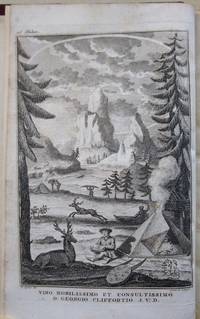
1792018826London: J. Davis for B. White et Filiorum 1792. Engraved frontispiece twelve folding plates with slight offsetting but otherwise good octavo pp l 390 16 light age-toning and occasional light foxing bound in twentieth century brown morocco with red cloth sides slight fading and very slight wear. With the bookplate of Kenneth Lazenby a founding father of the Alpine Garden Society. In the first edition of Flora Lapponica 1737 Linnaeus's ideas about nomenclature and classification were first used in a practical way making that the first proto-modern flora. This upddate by Smith cites Linnaeus as the main author and uses Linnaeus' binomial nomenclature. Second edition. Half-Leather. Very Good. J. Davis for B. White et Filiorum Hardcover
1792018827London: J. Davis for B. White et Filiorum 1792. Engraved frontispiece a little browned as is ithe title page twelve folding plates with slight offsetting and more age-toning and three with a little staining but otherwise good octavo pp l 390 16 light age-toning and occasional light foxing the hinge after the title page slightly open but absolutely no weakness quite a few interesting early neat marginal notes bound in contemporary boards a bit worn and marked a recent brown leather spine slightly scuffed. With the armorial bookplate of George Augustus Thursby; it is likely that he contributed the manuscript notes. In the first edition of Flora Lapponica 1737 Linnaeus's ideas about nomenclature and classification were first used in a practical way making that the first proto-modern flora. This upddate by Smith cites Linnaeus as the main author and uses Linnaeus' binomial nomenclature. Second edition. Quarter leather. Very Good. J. Davis for B. White et Filiorum Hardcover
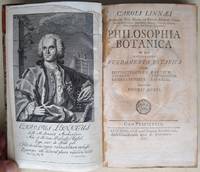
1751017563Stockholmiae & Amstelodami: Kiesewetter Godofr & Chatelain Z 1751. Latin text. Engraved frontispiece But see notes below octavo title page dedication page lectori botanico page 362 pages 9 engraved plates 2 full page engravings a little age-toning the occasional blemish or small mark the title page is a bit creased and stained in the gutter margin and there is offsetting from the frontispiece. which is chipped and with a closed tear repaired and mounted on a paper stub. Bound in possibly original marbled paper and more recent half calf slightly worn. Soulsby 437. The frontispiece is often lacking but the one we have here is not the usual frontispiece ! It is possibly a little smaller than the page size though this is not certain as it has been repaired and mounted; the offsetting to the title page which is obviously of some antiquity is definitely from the plate currently bound in. So - is it a variant or has it been added by a previous owner Interestingly I can only find one copy of this particular image online in the Wellcome Collection R. Burgess Portraits of doctors & scientists in the Wellcome Institute London 1973 no. 1778.10 ; listed as by Gustav Lundberg. It is "the first textbook of descriptive systematic botany and botanical Latin". It also contains Linnaeus's first published description of his binomial nomenclature. Philosophia Botanica represents a maturing of Linnaeus's thinking on botany and its theoretical foundations being an elaboration of ideas first published in his Fundamenta Botanica 1736 and Critica Botanica 1737 and set out in a similar way as a series of stark and uncompromising principles aphorismen. The book also establishes a basic botanical terminology. RARE. First Edition. Half Leather. Good. Kiesewetter, Godofr & Chatelain, Z Hardcover
174932455Paris: Didot. Good with no dust jacket. 1749. Hardcover. French Language; 12mo 7" - 7½" tall; 2 v-xij 4 600 pages; No leaves between title and A3 which is an advertisement. Mild foxing and dampstaining. Old ink ownership on title page scribbled out in ink. Inkstain to inserted leaf. Lacking free eps. Elaborately gilded spine full contemporary leather. . Didot, hardcover
1726023086Half-moon over against St Dunstan's Church: Tho. Woodward 1726. Folio with a very striking engraved frontispiece three very small text illustrations but lacking the two other plates which seem never to have been bound in pp 22 456 with slight makes to page 161/2 273/4 and 292-3 a tiny tear to the top margin of page 167/8 a minute marginal wormhole running through 199 to 248 otherwise really extremely clean and bright internally an unpressed copy so slight waves to the pages. full contemporary panelled calf with new leather spine and red morocco label. A striking copy. With the bookplates of the Victorian traveller Frances Louisa Swayne the earlier book label of Reveerend Peter Gunning Farmborough and the later bookplate of the Society of the Sacred Mission Kelham. Blanche Henrey 945. . Full Leather. Very Good. Tho. Woodward Hardcover
174851397Breslau Johann Jacob Korn 1748-51. Large 8vo. Uncut in mounted orig. marbled wrappers all 6 volumes later clotbacked. Wear to wrappers. Stamps on titlepages. Ca. 5000 pp. each vol. separately paginated. Textillustrations and 104 engraved plates some folding.Title-pages browned and brownspotted. Some browning and brownspots throughout. <br/><br/><em>Scarce first German translation of the pysical memoirs from the "Mémoires de l'Academie des Sciences" containing many importent papers by the leading French scientists: Amontons Cassini Bernoulli Homberg Lemery la Hire Reaumur Tournefort Maraldi Delisle etc. etc.Of special importence are GOTTFRIED WILHELM LEIBNIZ: "Erklärung der Arithmetica binaria die sich nur der Charakteren 0 und I bedienet nebst Anmerkungen von ihrem Nutzen und dem verstande den sie den alten chinesischen Figuren des Fohi giebt." pp. 88-93 Bd. II. Leibniz' BINARY NUMBER SYSTEM first published 1703. And JACOB JACQUES CASSINI "Abhandlung von der Grösse und Figur der Erde" pp. 431-756 and 14 engraved plates and maps.Poggendorff II 1000 </em> unknown
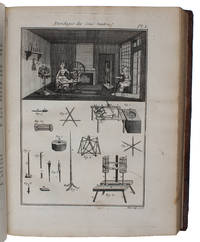
177156289Neuchatel L'Imprimerie de la Société Typographique 1771-83. 4to. Bound in 19 contemp. uniform full mottled calf. Raised bands. Gilt spines. Title-and tomelabels with gilt lettering. Spine-ends on nearly all volumes strenghtened. Stamp on title-pages. Each volume around 650 pp. With 508 fine engraved plates. <br/><br/><em>Second edition and the first 4to-edition was published in 19 volumes plus an additional volume by Jean Elie Bertrand where vol. 20 is an additional volume published much later 1799 - not present here - dealing with the art of printing. This importent collection of books on crafts was published by between 1761 and 1788. The full series comprises 113 parts cahiers in 27 folio volumes along with three supplements and "provide detailed accounts of a wide range of handcraft and manufacturing processes carried out in France at that time. The volumes are well-illustrated with precise engravings by Jean Elie Bertrand 1737-1779 a noted typographer from Neuchâtel where the printing was done. Many of them provide the background for shorter articles in Diderot's Encyclopedia which was appearing at much the same time. The project had its origin in request from Colbert in 1675 to the Academy Royal des Sciences for detailed accounts of various mechanic arts to be prepared and for new machines to be reported upon. This led to the formation of the Bignon Commission under Abbé Bignon. René-Antoine Ferchault de Réaumur 1683-1757 became editor soon after he joined the Academy. He inherited number of drawings the earliest prepared in 1693 and an illustrated manuscript on printing type and book binding which had been prepared in 1704. It was left to Réaumur's successor Duhamel du Monceau to bring about the publication of the series probably as the result of the competition from the Encyclopedia." Wikipedia.Brunet II618 ff. - Graesse II 367. </em> hardcover
174059025Paris L'Imprimerie Royale 1740. 4to. Fine contemp. full calf. Raised bands. Richly gilt spine. Tome- and titlelabels with gilt lettering. Gilt borders on covers. Light wear to top of spine. Engraved frontispiece. 8116410 pp. 7 partly folded engraved plates. Clean and fine. <br/><br/><em>With original papers by: de Mairan Winslow Nicole Geoffroy Cassini de Thury Camus Clairaut Buffon de Fouchy le Monnier le Fils de la Condamine Lémery Cassini Hellot Pitot Godin Reaumur. </em> hardcover