1 533 résultats
20132080202102704923University of the Ryukyus Faculty of Law and Literature Department of Human Sciences Folklore Laboratory 2013. Soft Cover. Fine. Page size: 230 pages Size: B5 size University of the Ryukyus Faculty of Law and Literature Department of Human Sciences Folklore Laboratory paperback
20112080202102705955University of the Ryukyus Faculty of Law and Literature Department of Human Sciences Folklore Laboratory 2011. Soft Cover. Fine. Page size: 232 pages Size: B5 size University of the Ryukyus Faculty of Law and Literature Department of Human Sciences Folklore Laboratory paperback
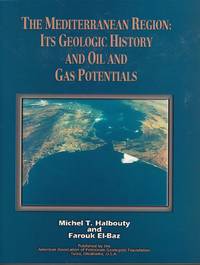
20029739AAPG. Very Good. 2002. Softcover. Book is clean and tight. "Original version of this paper was published in Geology of the Arab World: Proceedings of the First International Conference on geology of the Arab World Cairo University January 1997 volume 1 edited by Ali Sadek professor geology Cairo University." ; 4to 11" - 13" tall; 41 pages . AAPG paperback
20192081502111906283commercial stamp office 2019. Soft Cover. Fine. The book is in fine condition. commercial stamp office paperback
20102092902141505102commercial stamp office 2010. Soft Cover. Fine. Size: B6 size commercial stamp office paperback
20032091502135405359Pyongyang Social Science Publishing House 2003. Soft Cover. Fine. Number of books: 1 Pyongyang Social Science Publishing House paperback
20052081502111904290commercial stamp office 2005. Soft Cover. Fine. The book is in fine condition. commercial stamp office paperback
20132083002116300035Niheisha 2013. Soft Cover. Fine. The book is in fine condition. Niheisha paperback
20052090202118201172Not Available 2005. Soft Cover. Fine. The book is in fine condition. Not Available paperback
20012080202102701321Nanzan do 2001. Soft Cover. Fine. Page size: 1299 pages Size: A5 size Nanzan do paperback
20032080202102702986Domesu shuppan 2003. Soft Cover. Fine. Page size: 326 pages Size: A5 size Domesu shuppan paperback
20012080202104501774Tokyo Chemical Doujin 2001. Soft Cover. Fine. Volume: 1 Tokyo Chemical Doujin paperback
20082092902140700086Kyoritsu shuppan 2008. Soft Cover. Fine. Size: B5 Number of books: 1 book Kyoritsu shuppan paperback
20132091502135421763J. F. Oberlin University Institute for Northeast Asian Studies 2013. Soft Cover. Fine. Number of books: 1 J. F. Oberlin University Institute for Northeast Asian Studies paperback
20022091502135413746Shinkansha 2002. Soft Cover. Fine. Number of books: 1 Shinkansha paperback
20102092902140315547Ancient Mexican Olmec Civilization Exhibition Executive Committee 2010. Soft Cover. Fine. Number of books: 1 Ancient Mexican Olmec Civilization Exhibition Executive Committee paperback
20182081502111901773Chinese Social Science Publishing House 2018. Soft Cover. Fine. The book is in fine condition. Chinese Social Science Publishing House paperback
20172081502111900344Chinese Social Science Publishing House 2017. Soft Cover. Fine. The book is in fine condition. Chinese Social Science Publishing House paperback
20212081502111900910Chinese Social Science Publishing House 2021. Soft Cover. Fine. The book is in fine condition. Chinese Social Science Publishing House paperback
20162091202132703014Kanrin Publishing 2016. Soft Cover. Fine. The book is in fine condition. Kanrin Publishing paperback
201381285Washington DC: The National Academies Press 2013. Prepublication copy--subject to further editorial correction. Wraps. Good. 8 16 56 54 24 65 pages. Footnotes. Illustrations Tables and Figures. Rear cover creased. The potential for using fusion energy to produce commercial electric power was first explored in the 1950s. Harnessing fusion energy offers the prospect of a nearly carbon-free energy source with a virtually unlimited supply of fuel. Unlike nuclear fission plants appropriately designed fusion power plants would not produce the large amounts of high-level nuclear waste that requires long-term disposal. Due to these prospects many nations have initiated research and development R&D programs aimed at developing fusion as an energy source. Two R&D approaches are being explored: magnetic fusion energy MFE and inertial fusion energy IFE. An Assessment of the Prospects for Inertial Fusion Energy describes and assesses the current status of IFE research in the United States; compares the various technical approaches to IFE; and identifies the scientific and engineering challenges associated with developing inertial confinement fusion ICF in particular as an energy source. It also provides guidance on an R&D roadmap at the conceptual level for a national program focusing on the design and construction of an inertial fusion energy demonstration plant. The committee's final report represents the consensus of the committee after six meetings see Appendix C for the meeting agendas. The first four meetings were concerned mainly with information gathering through presentations while the final two meetings focused on carrying out a detailed analysis of the many important topics needed to complete the committee's assessment. This report describes and assesses the current status of inertial fusion energy research in the United States identifies the scientific and engineering challenges<br/>associated with developing inertial confinement fusion as an energy source compares the various technical approaches and finally provides guidance on an R&D roadmap at the conceptual level for a national program aimed at the design and construction of an inertial fusion energy demonstration plant including approximate estimates where possible of the funding required at each stage. At the outset of the study the committee decided that the fusion-fission hybrid concept was outside the scope of the study. While they are certainly interesting subjects of study comparisons of inertial fusion energy to magnetic fusion energy or any other potential or available energy technologies such as wind or nuclear fission were also outside the committee's purview. Although the committee carried out its work in an unclassified environment it was recognized that some of the research relevant to the prospects for inertial fusion energy was conducted under the auspices of the nation's nuclear weapons program and has been classified. Therefore the NRC established the separate Panel on the Assessment of Inertial Confinement Fusion ICF Targets to explore the extent to which past and ongoing classified research affects the prospects for practical inertial fusion energy systems. The panel was also tasked with analyzing the nuclear proliferation risks associated with IFE; although that analysis was not available for inclusion in the interim report the committee reviewed the panel's principal conclusions and recommendations on proliferation and these are included in this final report of the committee. The target physics panel exchanged unclassified information informally with the committee in the course of the study process and the committee was aware of the panel's conclusions and recommendations as they evolved. The panel produced both a classified and an unclassified report; the latter was timed so as to be available to inform this committee's final report; the Summary of the panel's unclassified report prepublication version is included as Appendix H. The National Academies Press paperback
201367299Washington DC: The National Academices Press 2013. Prepublication Copy--Subject to Further Editiorial Correction. Wraps. Very good. Cover has some wear and soiling. Various paginations approximately 225 pages. Includes illustrations. Bbliography of previous ICF studies consulted. Glossary. Title continues: "Physics and Astronomy. Committee on the Prospects for Inertial Confinement Fusion Energy Systems." From a National Academies internet posting: "The energy produced by nuclear fusion has the potential to provide a low-carbon base-load source of electricity; however significant scientific and engineering efforts are still required before the feasibility of a commercial fusion plant can be established. Initiating fusion based upon magnetic confinement and inertial confinement of the fusion plasma have been studied for decades. In inertial confinement fusion ICF a driver delivers energy to the surface of a pellet of fuel heating and compressing it. There are many approaches for initiation fusion using inertial confinement. For example different driver concepts have very different operating conditions and characteristics. Understanding the strengths and weaknesses of each approach is central to the effort to develop IFE as a power source. Given the current level of activity in ICF research now is an appropriate time to consider how to proceed regarding inertial fusion as a potential power source. An NRC committee and panel will be formed to provide findings and recommendations to advise DOE on the development of an R&D roadmap for inertial fusion energy. All the approaches to ICF will require much investigation and will need to be considered in any long-term R&D strategy." The National Academices Press paperback
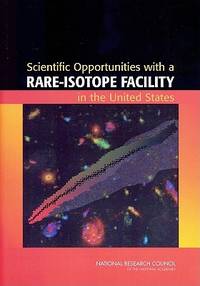
200767231Washington DC: The National Academies Press 2007. Presumed first edition/first printing. Trade paperback. Good. Typed letter signed by the two Co-Chairs John Ahearne and Stuart Freedman laid in. Rear cover creased. xii 140 8 p. Occasional footnotes. Illustrations some with cover. Glossary. Author continues: "Rare-Isotope Science Assessment Committee." Over ten years ago U.S. nuclear scientists proposed construction of a new rare isotope accelerator in the United States which would enable experiments to elucidate the important questions in nuclear physics. To help assess this proposal DOE and NSF asked the NRC to define the science agenda for a next-generation U.S. Facility for Rare Isotope Beams FRIB. As the study began DOE announced a substantial reduction in the scope of this facility and put off its initial operation date by several years. The study focused on an evaluation of the science that could be accomplished on a facility reduced in scope. This report provides a discussion of the key science drivers for a FRIB an assessment of existing domestic and international rare isotope beams an assessment of the current U.S. position about the FRIB and a set of findings and conclusions about the scientific and policy context for such a facility. From Wikipedia: "The Facility for Rare Isotopes Beams FRIB is a U.S. Department of Energy Office of Science DOE-SC national user facility supporting the mission of the Office of Nuclear Physics. FRIB will produce large quantities of a wide variety of rare isotopes by breaking stable nuclei into rare isotopes enabling scientists to make discoveries about the properties of rare isotopes in order to better understand the physics of nuclei nuclear astrophysics fundamental interactions and applications for society. The project is funded by DOE-SC Michigan State University and the State of Michigan and is being designed and established by MSU with construction expected to begin on campus in 2013. It will adjoin and upon commencement of operations subsume the National Superconducting Cyclotron Laboratory NSCL at Michigan State University. Currently final design of the FRIB conventional facilities the tunnel and support buildings is complete and ready for construction to begin upon approval from the U.S. Department of Energy. Pre-construction site preparation is complete and pilings for the earth-retention system have been placed. Research and development activities have been successfully completed with much of the R&D work accomplished in collaboration with national laboratories. Final design of the technical systems accelerator and experimental equipment is underway and anticipated to be complete in 2014. Project completion is expected in 2021 managing to early completion in 2019. Across the state of Michigan business and political leaders have called for continued funding of FRIB in support of scientific discovery innovation and economic impact. Articles and editorials are available on the FRIB project web site. FRIB is expected to provide research opportunities for an international community of approximately 1000 university and laboratory scientists postdoctoral associates and graduate students. FRIB will provide researchers with the technical capabilities to study the properties of rare isotopes and to put this knowledge to use in various applications including in materials science nuclear medicine and the fundamental understanding of nuclear material important to nuclear weapons stockpile stewardship. More than 20 working groups specializing in experimental equipment and scientific topics have been organized through the FRIB Users Organization. Based on the analyses and recommendations over the last decade DOE-SC determined that the establishment of a Facility for Rare Isotope Beams FRIB is a high priority for the future of U.S. nuclear science research. This determination and supporting rationale are reflected in the DOE/ National Science Foundation Nuclear Science Advisory Committee s 2007 Long Range Plan and the 2003 DOE report Facilities for the Future of Science: A Twenty-Year Outlook. DOE-SC announced the selection of Michigan State University to design and establish FRIB on December 11 2008 after a rigorous merit review. The National Academies Press paperback
20022080202102707222Okinawa Prefectural University of Arts 2002. Soft Cover. Fine. Page size: 81 pages Size: A4 size Okinawa Prefectural University of Arts paperback
20062081502111900810Chinese social sciences 2006. Soft Cover. Fine. Number of pages: 369p Size: A5 hardcover book Chinese social sciences paperback