31 résultats
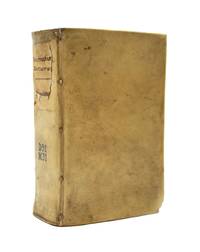
1685JLOebSOL70Amsterdam: '5445' ie. 1684 or 1685. 1685. folio. ff. 224. Hebrew title within elaborate woodcut border. woodcut ornaments & title vignette. 2 columns. Hebrew text. contemporary vellum overlapping fore-edges lacking rear endleaves Hebrew title repaired at lower & gutter edge some light browning. Third Edition including the second edition of the super-commentary Leket Shikchah first printed in the 1660-61 edition by Jacob Abendana Haham of the Spanish and Portuguese Synagogue London 1681-85. Amsterdam: '5445' [ie. 1684 or 1685]. hardcover
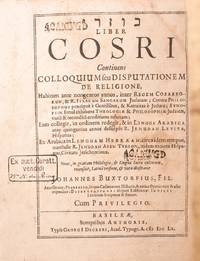
166066808Basileae Bâle Basel: Sumptibus authoris l'auteurtypis Georgi Deckeri 1660. Fine. Sumptibus authoris l'auteur typis Georgi Deckeri Basileae Bâle Basel 1660 16 x 20.50 cm relié Sumptibus authoris. Typis Georgi Deckeri Basileae Basel 1660 4to 16 x 20.5 cm 50 pp. 455 pp. 29 pp. modern vellum First edition of the Latin translation by Johannes Buxtorf The Younger of the first translation into Hebrew by Juda ibn Tibbon Juda Halevi's Arabic text not being rediscovered till 1887 today in the Bodleian. Modern vellum binding flaps. Skillful restoration to inside margin of final third of work without loss to text. A few small wormtracks filled in to lower margins of pastedowns as well as first and final endpapers. A few dampstains to lower portion and some pages browned. Stamp of the University Library at Leiden «Acad. Lugd.» to edges and title. Stamp of the restorer Willem Nicolaas du Rieu «Ex auct. Curatt. vendidi W. N. du Rieu» indicating its deaccession. A very rare copy of this classic of Medieval Jewish philosophy presenting the fears of Spanish Jews faced with two powerful religions Christianity and Islam. Written in 1140 in Arabic the Kuzari is couched in the form of a dialogue in five books. Charles Touati in his 1994 preface to the text summarizes the narrative thread of the work thus: «The king of the Khazars or Kuzari tormented by the religious question interrogates in turn a philosopher a Christian theologian and a Muslim one. Disappointed in their answers he feels he must turn to a learned man of the mocked and vilified minority a Rabbi who ends up convincing him at which the king converts to Judaism and continues his studies with the aid of this teacher.» This apologia allowed Juda Halevi to critique the appeal of philosophy Christianity and Islam for his contemporaries. According to him «philosophy denies all possibility of dialogue between Man and God and does not understand the religious phenomenon» ibid. Right from his starting point a proof of the existence of God he believes that we need only look to history and the revelation of God on Mount Sinai witnessed by thousands. Christianity and Islam are for him nothing but forgeries of Judaism: «they jeer at the humiliations and suffering of the Jews without realizing that they exalt in the founder of their own religions precisely that humiliation and suffering» ibid. The Kuzari is an emblematic text in the sense that it calls for the exiled community to return to Zion rather than submit. «It is better to leave everything and go back to Zion and there regain Divine favor instead of wearing ourselves out winning the favor of gentiles which in any case we will never have» ibid. Sumptibus authoris [l'auteur]typis Georgi Deckeri hardcover
163518006Amsterdam 1635. the author 2 works in 1 volume. 8vo. Contemporary calf rebacked with the original backstrip laid down. With a letterpress decoration on title-page Hebrew text of Psalm 85.11 in a frame a so-called "magical square" in which the the text can be read both horizontally as well as vertically some woodcut initials and some Hebrew passages in the text. 16 156 2 2 blank; 40 346 6 pp. Ad 1: First edition of a work on God's creation of Earth by the well-known Portuguese rabbi writer and printer Menasseh Ben Israel 1604-1657 who established the first Jewish printing office in the Netherlands. The work presents 30 questions or "problems" concerning God's creation of the Earth which Menasseh tries to answer and explain citing or referring to passages of the Tenach. Problems include "on which day were demons created" and "was there another world or earth before God created this one". The preliminaries including an important poem by Caspar Barlaeus which caused the Amsterdam authorities to consider the reintroduction of censorship for Jewish publications. As this didn't happen Barlaeus's poem can be seen as an indicator of the relationship between Jews and Christians and the religious tolerance in Amsterdam during the Golden Age.Ad 2: First edition of a work on the resurrection of the dead by the same author. The work is divided into three "books" and opens with several dedicatory letters an index of the chapters and 3 laudatory poems. The last page of the preliminaries gives a short list is of books translated from Hebrew into Spanish. The main text deals with the Last Judgment the resurrection of the dead and the immortality of the soul.With a bookseller's ticket and bookplate. Title-page of ad 1 slightly smudged browned throughout some water stains and small spots but still in good condition. Binding rubbed along the extremities and sides somewhat scratched rebacked with the original backstrip laid down.l Ad 1: Fuks & Fuks-Mansfeld p. 107; STCN 843242612 7 copies; ad 2: STCN 084840250 9 copies; for Menasseh in general: Fuks & Fuks-Mansfeld pp. 99-135; NNBW X cols. 604-613. unknown
164269492Amsterdam: Printed by the Author 1642. Full Description:<br> <br> MENASSEH BEN ISRAEL. Dissertatio de Fragilitate Humana ex Lapsu Adami Deque Divino in Bono Opere Auxilio. Amsterdam: Printed by the Author 1642.<br> <br> First edition. Small octavo 5 3/4 x 3 1/2 inches; 146 x 90 mm. 16 141 1 errata pp. Text in Latin interspersed with Hebrew. A woodcut device on title-page. Woodcut initials.<br> <br> Bound after:<br> <br> MENASSEH BEN ISRAEL. De Resurrectione Mortuorum Libri III. Amsterdam: Printed by the Author 1636.<br> <br> First edition. Small octavo . 22 133 11 137-241 11 245-346 6 index pp. Text in Latin interspersed with Hebrew. The woodcut printer's device on the title-page is a 'magical square' in Hebrew letters. Woodcut initials.<br> <br> Full contemporary vellum. Front inner hinge cracked but firm. Spine with torn paper label titled in ink manuscript. Some ink call numbers on spine but no other library markings. Vellum a bit soiled. Title-page of Dissertatio is backed with loss to fore-edge margin but not affecting text. Leaf A2 of the same book with repair to top margin just touching headline. Leaf T2 in Resurrectione with small closed tear touching some letters but with no loss. Front pastedown with bookplate from Rochester Theological Seminary. Overall very good.<br> <br> "Dissertatio de Fragilitate Humana ex Lapsu Adami" or "Dissertation on the Fragility of Man from the Fall of Adam" is a work in which Menasseh disputed the Christian doctrine of original sin. The work was also published in Latin in the same year.<br> <br> "As per many theological works by Amsterdam scholar and Hebrew printer Menasseh ben Israel Dissertatio de Fragilitate Humana was directed primarily to a Gentile audience. Dedicated to Gerbrandt Anslo a Christian Hebraist who was a pupil of Menasseh this study focuses upon the issue of predestination. In opposition to the Christian doctrine of Original Sin Menasseh was a staunch proponent of the traditional Jewish teaching that Man is born into the world pure and innocent." Kestenbaum and Company.<br> <br> De Resurrectione Mortuorum Libri III or 'Three books on the resurrection of the dead' is in Latin which suggests it was for a Christian audience. A Spanish version also exists however which indicates that this text was also written for a Jewish audience which in 1636 was split by theological dissent. This and the Sefer Nishmat hayim can be seen as a response to the challenges of Uriel Acosta 1585-1640. Acosta was a sceptic philosopher who in 1624 had published 'An Examination of the Traditions of the Pharisees'. Acosta was suggesting that rabbis were descended from the Pharisees. The Pharisees were theologically opposed by the Sadducees. Menasseh notes that his work is written "contra Zaducaeos" "against the Sadducee" almost certainly a reference to Acosta. Acosta questioned the idea of the immortality of the soul regarding it as a concept invented by the rabbis without any biblical foundation." University of Leeds.<br> <br> "Menasseh ben Israel 1604-1657 was among the most accomplished and cosmopolitan rabbis of his time and a pivotal intellectual figure in early modern Jewish history. He was one of the three rabbis of the "Portuguese Nation" in Amsterdam a community that quickly earned renown worldwide for its mercantile and scholarly vitality. Born in Lisbon Menasseh and his family were forcibly converted to Catholicism but suspected of insincerity in their new faith. To avoid the horrors of the Inquisition they fled first to southwestern France and then to Amsterdam where they finally settled. Menasseh played an important role during the formative decades of one of the most vital Jewish communities of early modern Europe and was influential through his extraordinary work as a printer and his efforts on behalf of the readmission of Jews to England." Menasseh ben Israel Rabbi of Amsterdam by Steven Nadler.<br> <br> "Menasseh ben Israel bridged the Jewish and the Christian worlds. He was a rabbi a scholar and a publisher who authored and printed works in Latin Portuguese Spanish and Hebrew. He also collaborated with Rembrandt who etched his portrait. Menasseh ben Israel is particularly interesting to Hebrew scholars and librarians. He revolutionised Hebrew printing and made Amsterdam the capital of Hebrew publishing. He helped create a new standard of Hebrew typography that became widely known imitated and pirated as "Defus Amsterdam" Amsterdam print and "Otiyot Amsterdam" Amsterdam Letters." University of Leeds.<br> <br> HBS 69492.<br> <br> $4000. Printed by the Author unknown
160636154Venice Zan. Zanetti 5422 =1606. Small 4to. Later marbled paper over earlier blue paper-covered boards paper spine over earlier cloth spine. Binding somewhat worn. Woodcut title-page and woodcut vignette at end depicting two lions under a tree. Old owner's stamp to title-page and to second and last leaf "D.L.W. - David Weissappel. Some marginal annotations in old Hebrew script. Last half of leaves turned brown otherwise a bit brownspotted. Top-corner torn off last leaf but this corner is present and there is no loss of text. Fairly well preserved and complete copy of this early Hebrew book. 51 ff. <br/><br/><em>First edition of this fourth book of responsa by Joseph Ben David Ibn Lev.Joseph Ibn Lev 1505-1580 was a Turkish Rabbi who moved to Constantinople in 1550. He reacted against Pope Paul IV due to his cruelty against the Jews. He is called "The Great Jurist" and is known to have written the four books of Responsa which were highly thought of. This is the fourth of the four books of Responsa that he wrote. The three first were printed in Constantinople around 1560-1573 and this fourth was printed in Venice in 1606. Other editions appeared later on but every one of these four books in the first edition rare and only few copies are registered. </em> hardcover
1684jos28London: William Thackeray. G : in good condition. Cover rubbed and marked. Rebacked. Edges of frontis engravings and title page chipped. Folding plan lacks a section and a corner missing from fold. 1684. Reprint. Brown hardback leather cover. 180mm x 100mm 7" x 4". 344pp 2pp 10pp. 2 laid down frontispiece engravings and folding plan. 'Whereunto is added a Brief of the ten captivities; with the Pourtrait of the Roman Rams and Engins of Battery &c. As also of Jerusalem; with the tearful and presaging Apparitions that were seen in the air before her Ruins. Moreover there is a parallel of the late Times and Crimes in London with those in Jerusalem'. Epistle Dedicatory by James Howel from the Prison of the Fleet Feb. 5. 1650. . William Thackeray hardcover
1641LS18142London 1641. Fair. Folio extract. 66pp. The complete play. Disbound and stained. <br/><br/> unknown
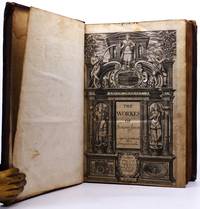
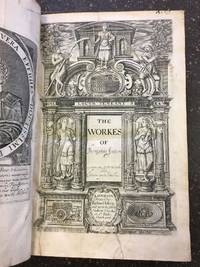
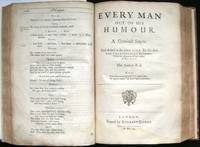
1616010148London: Printed by W. Stansby and to be Sold by Rich. Meighen 1616. Book. Very Good. Full Calf. First Edition. 4to - over 9¾" - 12" tall. 12 1015 1 blank with engraved allegorical title by William Hole Pforzheimer state A. Lacking the rare initial blank as with Pforzheimer's copy. Volume 1 1616 pages measure 10 3/8" by 7". a small-paper copy. The title to Every Man Out of his Humour has no border and reads LONDON: Printed by WILLIAM STANSBY for Iohn Smithwicke rule M. DC. XVI. The Dedication recto G2 is signed "By your true honorer Ben Jonson". Line 6 verso reads "PVNTERVOLO.; the catchword on recto G5 is "Naked" on verso "Where"; recto G6 begins "Where I want arte" ; and eighth line from bottom on versoG6 reads "But why enforce I this as fainting no". The title to Cynthia's Revels is in compartment with LONDON printed by W. Stansby 1616. The tirle for Poetaster p. 277 is in compartment and reads LONDON printed by W. Stansby for M. Lownes 1616. Bound in contemporary calf the late 18th c. bookplate of S.P PeachTockington at front paste down. About Very Good front cover separarting yet held by cords boards rubbed with a peeling lacquer at spine not quite obscuring the label. Internally tight and clean without foxing and with only a few spots of scattered browning. An unsophisticated copy of the earliest edition of Jonson's Works later volumes were published in 1640-41. Pforzheimer 560. Printed by W. Stansby and to be Sold by Rich. Meighen Hardcover
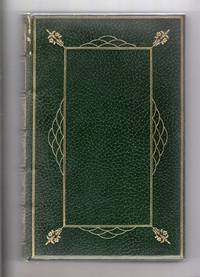
16169030996London: William Stansby 1616. 1st. Hardcover. Fine. Compiled and edited by Johnson published in two sizes. This is the small-paper edition originally 7 x 11 1/4 inches trimmed here to 6 1/2 x 9 7/8 inches with no loss of text. Rebound in dark green morocco with five raised bands on spine; spine and covers stamped in gilt. Contains 842 of roughly 1025 original pages including all plays: Every Man in his Humour Every Man out of his Humour Cynthias Revels Poetaster Seianus Volpone or The Fox Epicœne or The Silent Woman The Alchemist and Catiline as well as epigrams and Jonson's poetry collection "The Forrest." Missing engraved portrait title and contents page along with five of seven introductory dedication pages. Missing engraved title pages to all plays but "Poetaster" along with the Entertainments Panegyre Masques and Barriers which comprised the last 173 pages of the book. Two pages of introductory dedication have been rebound as final leaf. <br/><br/> William Stansby hardcover
16401396609London: Printed by Richard Bishop and are to be sold by Andrew Crooke 1640. Hardcover. Quarto 668 228 pages. In Good Minus condition. Spine is cracked brown with gilt lettering. Boards quarter bound with green leather to spine and brown leather to boards. Tattering to spine caps board corners worn and exposed wear to edges and hinges. Spine leather is agetoned brown and has mild cracking rear board has light scuffing. Marbled endpapers rear endpapers have darkening around perimeter. Former owner's name in ink on front endpaper. Cracked front hinge frontispiece and title page loose from binding faint damp stain to top portion of pages. Foxing within textblock consistent with age. Illustrated: b&w frontispiece portrait. Shelved case 0. Each part has special title page with imprint: London : Printed by Richard Bishop 1640 except for “Poëtaster†which has the imprint: London : Printed by Robert Young 1640. 1396609. Shelved Dupont Bookstore. Printed by Richard Bishop and are to be sold by Andrew Crooke hardcover
16401315045London: Printed by Richard Bishop and Robert Young and are to be sold by Andrew Crooke in St. Paules Church-yard 1640/1641. Second Folio Printing. Hardcover. Folios Three Volumes bound in two books. In Very Good condition. Rebacked with new calf spines and burgundy labels with gilt lettering with previous boards preserved. Both volumes have previous owners name and information on second free end page. Marbled endpapers.<br /> <br> <br /> <br> <br /> In the first book which contains only Volume 1 the subsidiary plays each have separate dated title pages. "Epigrammes" begins a new pagination and register; otherwise pagination and register are continuous. Most of the parts have special title pages with imprint: London Printed by R. Bishop 1640. "Poëtaster" has title page with imprint: "London Printed by Robert Young M.DC.XL." The title page is engraved and signed "Gulielmus Hole fecit". Signatures: A-Kkk6 Lll4; 2A-2T6. <br /> <br> <br /> <br> <br /> The second book contains Volumes 2 and 3. Volume 2 was edited by Jonson himself but Volume 3 was edited by by Sir Kenelm Digby. The three plays comprising Volume 2 "Bartholmew sic Fayre" "The Diuell is an asse" and "The staple of nevves" each have separate title page with imprint ". printed by Iohn. Beale. for Robert Allot . 1631." Signatures: A6 B-M4 Aa-Cc4 2D-H4 2I6 N-Y4 Vol. 3 B-Q4 R2 S-X4 Y2 Z4 Aa-Oo4 Pp2 Qq4 2A-K4 2L2 2M-R4 3A-P4 3Q2 3R-V4. Closed tear to L4. JK Consignment. Shelved in Case 0.<br /> <br> <br /> <br> <br /> Oversized books. Additional postage necessary for expedited/international orders. Economy International shipping unavailable due to size/weight restrictions. For international/expedited customers please inquire for rates. The first volume printed by Richard Bishop for Andrew Crooke was a 1640 reprint of the 1616 folio with corrections and emendations; it has sometimes been termed "the second edition of the first folio." The second volume was printed by James Dawson for Thomas Walkley in 1641 lacks a general title page and the order of the parts varies in published editions. This volume contains later works most of them unpublished or uncollected previously. ESTC S112456 ESTC S111824. 1315045. Shelved Dupont Bookstore. Printed by Richard Bishop [and Robert Young], and are to be sold by Andrew Crooke, in St. Paules, Church-yard hardcover
164085383London England: Printed by Richard Bishop and Robert Young and are to be sold by Andrew Crooke in St. Paules Churchyard; Printed by John Beale for Richard Meighen and Robert Allot 1640. Hardcover. Very Good. NO FIRST TITLE PAGE. Folio 11 3/8 in. x 7 1/4 in. Text: 10 7/8 in. x 7 in. Full contemporary leather double-ruled in gilt. 5 raised bands. Boards scuffed gilt mostly faded. Evidence of considerable cosmetic repair to boards spine and corners reconstituted <br /> <br /> Leather spine label ruled and lettered in gilt. Marbled paper to paste-down and endleaves Part of rear endleaf aliced away along outer edge app. 10 in. x 2 in. Contemporary ink inscription to flyleaf "Song to Celia/Drink to me only with thine Eyes Page 55." Ink ownership inscription to table of contents. Geo.Rockford Occasional ink or pencil annotation. Pages lightly tanned clean. <br /> <br /> Previous owner's name in "senior hand" to "The Catalogue" A3 page Geo.Rockford;that page with 5 1/2 in. x 1 1/2 in. headpiece depicting a lovely bare-breasted angel surrounded by vines flowers ripe grapes. 12 testimonial "blurbs" to Ben Jonson ii through viii from I Selden Ed. Heyward Wil. Hodgson Geor. Chapman Hugh Holland George Lucy E. Bolton Franc. Beaumont. <br /> <br /> Vol I: 8 668 228. MISSING frontispiece portrait and first title page. Contains EVERY MAN IN HIS HUMOR EVERY MAN OUT OF HIS HUMOR CYNTHIAS REVELLS POETASTER SEJANUS THE FOX THE SILENT WOMAN THE ALCHYMIST CATILINE EPIGRAMMES THE FORREST ENTERTAINMENTS PANEGYRE MASQUES BARRIERS. Each subsidiary play has its own titlepage dated 1640. All except Poetaster printed by Richard Bishop. Poetaster printed by Robert Young. Vol I is a reprint with corrections of the 1616 first edition. ESTC S112456 Gregg 1073<br /> <br /> On the Dramatis Personae page preceding the Prologue of "EVERY MAN IN HIS HUMOUR" under "The Principall Comedians were" is listed along with nine others "Will. Shakespeare".<br /> <br /> Vol II: 12 88 Misprint 12 as 6 13 as 3 31 as 13; 75 3 Misprint 19 as 9 22 as 16 63 as 36; 93-170 Misprint 99 as 97. Contains BARTHOLOMEW FAYRE THE STAPLE OF NEWES THE DIVELL IS AN ASSE. Printed by John Beale for Richard Meighen and Robert Allot. <br /> <br /> This Vol. II a reissue of the 1631 edition. Typically. it was bound together with Volume III not Volume I. Herein is no Volume III. The once visible now repaired by conservator exposed pasteboard on the back board reveals printed text likely dating to 18th c. which suggests that this volume I and II were bound together in the 18th c. WITHOUT Volume III. <br /> <br /> Each subsidiary play has its own titlepage with imprint "I.B. for Robert Allot" dated 1631. The pagination of the second volume differs slightly from the ESTC entry for Vol. II. which is 12 88 2 93-170 75. ESTC S111824. The pagination and misprints differ from Gregg's A Bibliography of the English Printed Drama.which is as follows: 12; 1-170 2 misprint 12 as 6 13 as 3 31 as 13 97 as 9 99 as 97 132 as 124 137 as 129; 2-75 misprint 19 as 9 22 as 16 63 as 36 Gregg 1076-1077. <br /> <br /> The publication history of Ben Jonson's works involves a series of complicated legal disputes over intellectual property. Percy Simpson has called the 1640 folio editions "a record of muddle evasion and dishonesty." cited in Williams "Chetwin Crooke and the Jonson Folios". The poet and playwright Ben Jonson 1572-1637 achieved a high level of literary success rivalled only by his contemporary William Shakespeare. Although of humble origins Jonson carved out a space for himself as one of England's foremost authors of the Jacobean period renowned for his elaborate court masques and poignant comedic plays. His mother a clergyman's widow remarried a bricklayer. Jonson received a schoolboys education at Westminster School where he studied under the antiquarian William Camden. As a young man Jonson worked for his step-father as a bricklayer. Unsuited to the task of bricklaying it had been reported that Jonson would recite lines of Homer while serving as his step-father's hod-carrier.<br /> <br /> In the 1690s Jonson joined English expeditionary forces to the Low Countries. Upon his return he worked with limited success as an actor. In the autumn of 1698 the premier of his Every Man in his Humor at the Curtain Theatre acted by Shakespeare's Company and with Shakespeare himself playing a leading role solidified Jonson's reputation as an accomplished playwright. The play introduced a new kind of vernacular comedy. His other early successes included Every Man Out of his Humor Cynthia's Revels and Poetaster.<br /> <br /> King James's ascension in 1603 marked a new upward phase in Jonson's career. At the Stuart court Jonson staged elaborate masques a genre of courtly entertainment with singing dancing acting music outlandish costumes scenery and automatons. Jonson's 1605 Masque of Blackness gained him royal favor. In this extravagant masque included in the present copy Queen Anne and eleven of her ladies emerged from a scallop shell painted as "Blackamores" and "strangely attired." In collaboration with Inigo Jones Jonson's masques of the Stuart court "achieved its most sophisticated form" ODNB.<br /> <br /> In addition to his literary achievements Jonson's interest in the publication of his work cultivated a sense of "authorial ownership and identity that is recognizably modern." Therefore he is a major figure in the history of intellectual property rights. Despite the fact that the theatre companies owned his plays Jonson collaborated with publishers to have his collected works printed in 1616. The present 1640 printing of Volume I is a reprint of the 1616 edition. In the years leading up to the 1640-41 printing of Volumes I II and III a series of legal disputes occurred between Jonson the printers the booksellers and the publishers. <br /> <br /> The enduring legacy of Jonson in the English canon cannot be understated. As Ian Donaldson writes "In theatre.Jonson perfected a kind of comedy more technically perfect in design more contemporary in subject matter than that of his greatest rival i.e. Shakespeare." His work influenced writers such as Abraham Cowley John Milton Lord Rochester and John Dryden. He remains a central figure of English poetry drama and verse. Printed by Richard Bishop [and Robert Young], and are to be sold by Andrew Crooke, in St. Paules, Churchyard; Printed by J[ohn] hardcover
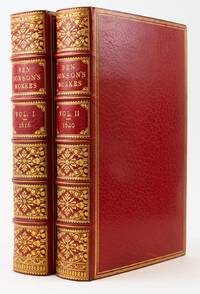
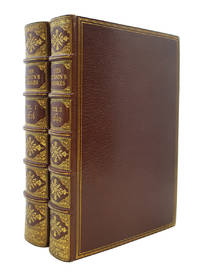
1616ST18707London: Will Stansby 1616; volume II printed for Richard Meighen and volume III printed for Thomas Walkey 1640 but 1641. FIRST COLLECTED EDITION of Each of the Three Parts. "Poetaster" with letterpress issue of the part title; Second Issue of part II with letterpress general title dated 1640; early state of "The Diviell is an Asse" part title. 280 x 175 mm. 11 x 6 7/8". Parts II and III with contents bound in a variant order but complete. Three parts bound in two volumes. <br/> HANDSOME SCARLET CRUSHED MOROCCO GILT BY RIVIERE & SON stamp-signed on front turn-in covers with French fillet border raised bands spine compartments with large lozenge centerpiece formed by flower and lancet ornaments curling vines bearing fruit at corners gilt lettering turn-ins with ornate gilt floral roll marbled endpapers all edges gilt. Engraved title by William Hole Pforzheimer's third state in first volume with part title to Every Man out of his Humour in woodcut border Pforzheimer's first state and part title to Cynthia's Revels with woodcut border. Front pastedowns with engraved bookplate of Doris Benz. Greg III 1070-73 1076-78 Pforzheimer 559 560 d; STC 14751 14754; ESTC S111817 S111824. First title leaf and likely the one beginning volume II carefully washed the text perhaps pressed--but crisp in any case--the bottom half of one page soiled occasional trivial smudges rust spots or other negligible imperfections elsewhere but the text still fine and IN A GORGEOUS BINDING IN PERFECT CONDITION.<br/> <br/> This first collected edition of Jonson's works—and of any collected dramatic works in English—comes in a very beautiful binding and with distinguished provenance. Excepting only Shakespeare Ben Jonson 1572-1637 was the most important literary figure of his age and in 1616 the year Shakespeare died he became England's first though unofficial Poet Laureate. In that same year he became the first playwright to publish his collected dramatic works when he issued the earlier volume in our set which was also the first printing of English drama in a folio-size book. The second collection here printed in two separate volumes but almost always bound as one appeared after Jonson's death in 1641. For the 21 years that he lived after Shakespeare Jonson was the unquestioned ruler in all things literary; unlike Shakespeare who borrowed heavily he was a fertile source for memorable plots and nobody before or after him has ever displayed the fascinating characters of London so vividly on the stage. As Pforzheimer tells us about the 1616 printing "Jonson began the preparation of this definitive edition in 1612. He used the quarto texts whenever available but scrupulously and systematically revised them cutting out many marginal notes altering the spelling typography and punctuation in accordance with a consistent . . . plan introducing considerable editorial matter." The playwright's hands-on approach to the printing of this text established it as the authoritative edition. <br /> <br /> As Pforzheimer notes this work appears with a number of bibliographic variants due to the fact that it was printed and issued over a number of years. Our set collates as in Pforzheimer with the exception of the bound order of the second and third parts. In part II which begins the second volume here "The Devil is an Ass" is bound between "Bartholomew Fair" and "The Staple of News" rather than after them. Part III leads off with "The Magnetic Lady" "Tale of a Tub" and "The Sad Shepherd" followed by the "Masques" and the "Diverse Poems." Greg notes that "the volume was printed in three sections the order of which is not altogether certain and differs in different copies." <br /> <br /> The tasteful binding was executed by the preeminent London workshop of Riviere & Son which supplied discriminating bibliophiles for more than a century. Robert Riviere began as a bookseller and binder in Bath in 1829 then set up shop as a binder in London in 1840; in 1881 he took his grandson Percival Calkin into partnership at which time the firm became known as Riviere & Son and the bindery continued to do business until 1939. Our set is in the superior condition typical of the books from the library of Doris Louise Benz 1907-84 who collected fine bindings the best of the private presses major English authors and manuscripts. Dickinson says that because she had acquired things very privately the book world was shocked at the richness of her collection when it came on the market in 1984. According to the Dartmouth College Library which was the sole beneficiary of the proceeds from the sale "Miss Benz was a quiet collector almost unknown to other collectors and to dealers except to Col. Marston Drake of the firm of James F. Drake of New York and to Maggs and Quaritch in London." She wanted her collection broken up and sold so that "others could enjoy the pleasures of identifying locating and acquiring books for their own collections" just as she had. Will Stansby unknown
169252207Thomas Hodgkin for H. Herringman E. Brewster T. Basset Et Al. Good. 1692. Second Edition. Hardcover. 2nd edition. Contemporary paneled calf morocco label gilt-decorated spine rebacked; six raised bands. Without portrait. With front and rear blanks. Moderate wear hinges cracking board loose title page repaired first signature detached included last signature partially detached. Scattered foxing pages tanned. Pp. 8264 281-368 371-382 393-744 4. The mispagination is found in other copies; no text lacking. ; Folio 13" - 23" tall . Thomas Hodgkin, for H. Herringman, E. Brewster, T. Basset, Et Al hardcover
1640OB317<p>London Printed by Richard Bishop. M. DC. XL 1640. Hard Cover. Folio: 226 63-668 pages headpieces initials marginal notes. A-S6 T5 G2-G6 H-Z6 Aa-Zz6 Aaa-Kkk6 Lll4; 29.5 cm. Each part has separate title-page and the above imprint except for "Poetaster" London Printed by Robert Young. M. DC. XL. Contents: Epigrammes. I. Booke. The Author B. J.; Part Of The Kings Entertainment In Passing To His Coronation. The Author B. J.; A Panegyre On The Happy Entrance Of Iames our Soveraigne to His first high Session of Parliament in this his Kingdome the 19 of March 1603. The Author B. J.; A Particular Entertainment Of The Queene And Prince their Highnesse at Althrope At The Right Honourable the Lord Spencers on Saturday being the 25. of Iune 1603. as they came first into the Kingdom; The Author B. J.; Masques At Court. The Author B. J. incomplete: ends with catchword 'Till'; Every Man Out Of His Humour. A Comicall Satyre. First Acted in the yeere 1599. By the then Lord Chamberlaine his Servants: With the allowance of the Master of Revells. The Author B. I.; Cynthias Revels. Or The Fovntaine Of Selfe-Love. A Comicall Satyre. First Acted in the yeere 1600. By the then Children of Queen Elizabeths Chappell. With the allowance of the Master of Revells. The Author B. I.; Poëtaster Or His Arraignement. A Comicall Satyre. First Acted in the yeere 1601. By the then Children of Queene Elizabeths Chappell. With the allowance of the Master of Revels. The Author B. J.; Seianus His Fall. A Tragedie. First Acted in the yeere 1603. By the Kings Maiesties Servants. With the allowance of the Master of Revells. The Author B. J.; Volpone Or The Fox. A Comedy. First Acted in the yeere 1605. By the Kings Maiesties Servants. With the allowance of the Master of Revells. The Author B. J.; Epicine Or The Silent Woman. A Comedy. First Acted in the yeere 1609. By the Children of her Maiesties Revells. With the allowance of the Master of Revells. The Author B. J.; The Alchemist. A Comedy. Acted in the yeere 1610. By the Kings Maiesties Servants. With the allowance of the Master of Revells. The Author B. J.; Catiline His Conspiracy. A Tragedy. Acted in the years 1611. Detailed collations on request. Faded dampstain through much of lower margin; outer bottom corner of p. 187/188 torn with partial loss of catchword; closed tears at inner tops of pp. 189/190 and 523/524; ink note on p. 600 with ink smear on inner margin. Expertly rebound by Dragonfly Bindery in red mottled calf gilt spine decoration red leather spine label. A very good and handsome copy. Stock#OB317.</p> Printed by Richard Bishop. , and are to be sold by Andrew Crooke in St. Paules Church-yard. M. DC. XL hardcover
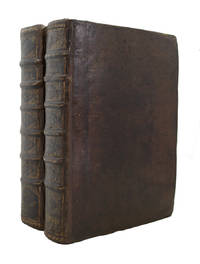
164069113London: Richard Bishop for Andrew Crooke & for Richard Meighen 1640. Full Description:<br> <br> JONSON Ben. The Workes of Benjamin Jonson. London: Richard Bishop for Andrew Crooke & for Richard Meighen 1640 1631.<br> <br> First edition of both parts one and two of the second volume containing the first appearance of the first three plays; Bartholomew Fayre The Staple of Newes The Divell is an Asse and second edition of the first volume. Part I of the second volume was originally printed in 1631 as a continuation of the 1616 Workes. With Pforzheimer's issue "f" of the second volume in which all parts are without the general title the first three plays are dated 1631 and Divell is an Asse with the 1641 imprint. The final page of Mortimer reads: "Left unfinished".<br> <br> It is also of note that William Shakespeare is listed as an actor in two plays of Volume I Everyman in his humor and Seianus His Fall.<br> <br> Three folio volumes in two 10 7/8 x 7 1/8 inches; 277 x 181 mm. Second volume slightly larger. Volume I with engraved title-page by William Hole and engraved portrait. Both volumes with woodcut initials and head- and tailpieces. First volume lacking A1 a blank and second volume is lacking A1 general title.<br> <br> Uniformly bound in contemporary dark brown acid-treated calf rebacked with original spines laid down. Spines elaborately stamped in gilt in compartments. Red morocco spine labels lettered in gilt. Some mild toning and occasional light spotting throughout both volumes. Volume II with a closed lateral tear to leaves Cc-Cc3 which has been neatly repaired with no loss. Overall a very good copy.<br> <br> Pforzheimer credits the failure of The New Inn as the reason work on the second volume ceased until after Jonson's death. The first leaf in the first signature in this part was left blank in anticipation of a general title but since the plans were cancelled the plays were sold as printed with only their individual titles all dated 1631. A general title-page was created for the 1640 first edition of the Workes and the unsold 1631 printings were included as the first of four parts.<br> <br> "The three plays of Volume Il were all that Jonson saw through the press of a projected continuation of his 1616 volume. His failure to complete the collection was probably due to the damning by the town of The New Inn which was published 1631 the same year as this volume. Because of Jonson's supervision of this part the text here given may be considered authoritative. As first printed Sig A was a blank there being no general-title. In 1640 a number of these 1631 plays still remaining unsold sheet AI and 6 was again passed the press this time of Bernard Alsop and Thomas Fawcett and the general-title. printed on recto A. This title refers only to the three plays printed in 1631 and describes them as 'The fecond Volume'. However bound with these three 1631 plays are normally found the three parts containing the masques plays and miscellany dated 1640 or 1641 which have no general-title nor any other preliminary matter. The fact that over a period of years the 1631 plays may have been sold as a supplementary volume to the 1616 Workes. would easily account for their being described as the second volume quite aside from the explicit statement of the 1640 general-title. Pforzheimer 560<br> <br> Greg III p. 1073-1076. Pforzheimer 560 the second volume. STC 14753 and 14754.<br> <br> HBS 69113.<br> <br> $15000. Richard Bishop for Andrew Crooke & for Richard Meighen unknown
161668586London: Printed by William Stansby 1616. Together with: The Workes of Benjamin Jonson. The second Volume.London: Printed for Richard Meighen 1631-1640-1641.<br> <br> First folio edition and first collected edition. Small-paper copy which precedes the large paper. Three folio volumes bound in two Volume II divided into four parts originally issued in two volumes. 10 3/4 x 7 inches; 272 x 177 mm.; 10 1015 1 blank; 12 88 2 93-170 75 1 79 70-122 133-155 1 blank 292 132 pp. Volume I with engraved allegorical title by William Hole Pforzheimer state A. Volume I without the rare initial blank same as Pforzheimer. Decorative woodcut head-and-tail pieces and initials. This set is complete with the exception to it being bound without the extremely rare initial blank in volume I. Volume I collates according to Pforzheimer and while Volume II differs in parts order than Pforzheimer all leaves are present.<br> <br> Volume I- In this copy the section title to Every Man out of His Humour p. 73 is within a woodcut border McKerrow and Ferguson 224 and has the imprint "Printed by W. Stansby for I. Smithwicke;" the section title to Cynthias Revels p. 177 is within the same woodcut border and has the imprint: "Printed by W. Stansby;" the section title to Poëtaster p. 271 is without the border and has the imprint: "Printed by William Stansby." With dedication leaf G2 in first state signed with "By your true honorer Ben Jonson." line 6 on G2 verso reads "PUNTERVOLO"; the catchword on G5 recto is "Naked"; on G5 verso "Where"; G6 recto begins "Where I want arte"; and the eighth line from the bottom on G6 verso reads: "But why enforce I this as fainting no."<br> <br> Volume II- Issue D with the 1640 general title-page the first three plays with the imprint dated 1631 same a Pforzheimer. The end of Mortimer reads: "Hee dy'd and left it unfinished".<br> <br> Both volumes uniformly bound by Riviere in full brown levant morocco. Boards triple-ruled in gilt. Spines elaborately stamped and lettered in gilt. Gilt dentelles. Board edges double-ruled in gilt. All edges gilt. Occasional light toning to pages. Marbled endpapers. Title-page and first few pages toned. Previous owner's light signature on title-page. Occasional toning throughout both volumes. Some browning to pages 273-280 in Volume I. Minor repair to upper margin of leaf B in Volume II not affecting text. Overall a beautiful copy of this set. Housed together in a cloth slipcase.<br> <br> "This book. is a handsome specimen of typography. It reflects great credit upon its printer Stansby who was an apprentice and then successor to John Windet and himself a master printer. Such work entitles him to a front rank among the printers of the reign of James I. Jonson is said to have prepared the plays for the press himself and one or two matters of editing. certainly appear to show the author's hand. At the end of each play for instance is a statement telling when it was first acted and by whom whether the king's or the queen's servants. The names of the actors are also given. All of the works not included in the first were intended for a second volume which however did not appear until after Jonson's death in 1640" Grolier 100 English.<br> <br> Grolier 100 English 17. Pforzheimer 559. Pforzheimer 560. STC 14751.<br> <br> HBS 68586.<br> <br> $19500. Printed by William Stansby unknown
161652220London. Good. 1616-1640. Hardcover. Old paneled calf rebacked later. Front board detached included. Contains: the Masques; Under-woods; Mortimer: his Fall. Horace; English Grammar; Timber: The Magnetick Lady; a Tale of a Tub. At the end are the first 7pp of the Masques. Lacks general title page. Ample margins in spite of mild marginal losses at leading edges with the exception of Discoveries which has slight losses to some of the printed marginalia. Pp. 1 sectional title 10-159 Masques ; 3 163-285 Under-Wood ; 1 287-290 291-292 Mortimer ; 1-29 Horace His Art of Poetrie ; 30-33 34-84 The English Grammar ; 85-96 one leaf excised 99-132 Discoveries ; 2 3-64 The Magnetick Lady ; 2 67-120 a Tale of a Tub which is misnumbered all of the 70's are repeated. 1-7 Christmas His Masque as it was Presented at Court. 1616 The last pages have some marginal repairs. ; quarto . hardcover
1640217317London: Anonymous 1640. Very Good Minus. 4to - over 9¾" - 12" tall. A complete play published only a couple of years after the death of Ben Johnson a playwirght famous for his colourful life that included murder and for being a contemporary of William Shakespeare. This play is compelte in its own right with title page persons that act prologue Acts and Scenes from Acts 1 - 5 and the epilogue. It paginates from page 67 - 113 I2 - Q2 Almost certainly publsihed originally in a book of the Workes of Benjamin Jonson. The second Volume. This volume would have contained three plays followed by three sections each with separate pagination containing A Tale of a Tub within this latter section. The title page of this play has 7 ink near contempoary lines running in parallel dividing the text into sections and underlining the place and date of publication. A number of the page corners are slightly rounded and turned with slight loss perhaps most noticeable to the title page no loss of text p 97 - 113 have one worm tract two thirds of the way up the leaf of 2 cm to the margin of the page in no way affecting the text. There is a little loss to the front margin of pp 75 and there is a light stain to the lower margin of pp 77 - 90. Scattered slight foxing. Slight ink dashes in ink to the margins and occasional ink underlining of the occasional word of pp 84 86 88 89 93 94 95 96 and 98 The title page has split from the tail of the play but remains attached for half the length of the spine from the head. The play holds together by the original cords though of course is lacking the original boards. Normal age toning. A surprisingly well preserved contemporarneous copy of a 17th century play. Anonymous hardcover
164038515London. Good. 1640. Softcover. Disbound. The final comedy of Ben Johnson. The title page shows a publisher's typo showing the date of 1440 instead of 1640. Decorative front endpage/wrap detached included. Dampstain to gutter and a few professional repairs. Missing the majority of p. 49-50. ; quarto; 64 pages . paperback
162711886Basel: Azeleah 1627. First edition. Hardcover. fair. 8vo. 68 leafs. 3/4 leather over black paper covered boards. String ties. Printed on high quality thick cotton rag. Illustrated title page. Early book on Hebrew Grammar and Language. Covers and Spine are worn. Hinges starting. Abrasions on cover. Back slip is chipped. Inscriptions and stamps on inside covers. Minor rippling throughout. Minor foxing throughout not affecting text. Interior in good condition. In Hebrew. Binding in poor inside in good condition. Bet Eked V.3 P.979 #733. Azeleah hardcover
161249853Hannoviyah Hanau: Hans Yakop Hena 1612. First edition. Hardcover. vg- to vg. Quarto. 9 92 leaves. Rebound in modern dark brown leather boards with gilt lettering red label and raised bands on the spine. Title page illustrated with historiated woodblock lettering at the top and encircled by text borders. Missing the final unnumbered initial leaf containing approbations and the final two leaves index. <br /> <br /> First edition of this compendium of Kabblistic topics by Prague rabbi Shabtai Sheftel ben Akiva Horowitz 1565-1619. Illustrated throughout with a total of 15 prominent and intriguing Kabbalistic woodblock diagrams and charts in black as well as some small tables. Among the specific subjects the work provides commentary and analysis of the work of previous Kabbalists including "Iggeret ha-Te'amim" Letter on the Accents by 16th century rabbi Aaron Abraham ben Baruch Simeon ha-Levi the writings of Rabbi Moses ben Jacob Cordovero aka the RAMAK 1522–1570 Sefer Yetzirah and the Zohar.<br /> <br /> Text throughout in Hebrew printed in two and three-column formats in multiple size fonts and some of the text in Rashi script.<br /> <br /> Binding with some light scratches to the covers. Title page with some staining some small worm holes reinforcement along the gutter and most notably a repaired tear along the left margin resulting in some loss of border text and text on the verso. Repaired marginal tears also on the 2nd and 3rd unnumbered initial leaves with no loss of text. The large diagram on the leaf 8 has been trimmed in the margin resulting in minor loss of the image on the left side. Closed tear to leaf 18. Pages throughout with some age toning occasion minor chipping to the edges and some sporadic water stains and smudges. Binding in very good interior in very good- condition overall. Hebrew title: ספר שפה טל<br /> Author: שבתי שפטל בן ×¢×§×™×‘× ×”×œ×•×™ הורוביץ<br /> Publication: ×”×× ×© ×™×קופ ×”×¢× ×”<br /> Alternate transliteration: Shabtai Sheftel ben Akiva ha-Levi Horowitz<br /> <br /> Bibliographic References: Vinograd p.162 Hanau 13; Steinschneider col. 2241; Cowley 630. Hans Yakop Hena hardcover
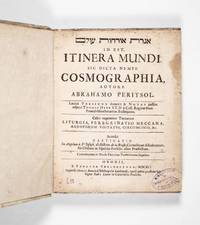
169048858Oxford: Sheldonian Theatre; Henry Bonwick 1690. First edition. Hardcover. Very Good -. Two parts quarto published in 1690 and 1691. A-Z4 pi4 b4 Aa4 Bb/CC4 Dd-Gg4 = 124 leaves. 16 196; 4 31 1 blankpp. Text in Hebrew and Latin in parallel columns. De Turcarum liturgia with separate title page dated 1690 and pagination. Contemporary vellum neatly rebacked. Old library stamp at bottom margin title front blank endleaf detached occasional oxidation spot and mild toning else a very good copy crisp and amply margined.<br /> <br /> First Hebrew-Latin edition of the first modern Hebrew work on geography the author’s most famous and important book. Abraham Farissol or Peritsol was a learned Jew from Avignon who compiled his cosmographical works at the court of the Estes in Ferrara. The present text was composed in 1524-25 and first published in Hebrew at Venice in 1586. The Latin translation and notes in the present edition were prepared by the English orientalist and librarian Thomas Hyde 1636-1703 with the assistance of R. Isaac Abendana working from a manuscript which Hyde located in the Bodleian Library. “Each of its 30 chapters deals with a certain geographical area or subject. In addition many cosmological and historical matters are also treated. The author collected all the evidence he could regarding Jewish settlements in each country. The inclusion of a description of the New World makes Farissol the first Hebrew writer to deal in detail with the newly-discovered America. The 14th chapter of Iggeret Orhot Olam which deals mainly with the settlements of the Ten Lost Tribes is of special interest. According to Farissol’s introduction to this chapter it is clear that what moved him to undertake this investigation was the appearance in Italy in 1523 of David Reuveni many of whose descriptions are included in this work†EJ 6.1185. Reuveni was "an adventurer who aroused messianic hopes in the early 16th century" EJ 14.114. The appended work is a tract on Islamic customs by Albert Wojciech Bobowski a Polish Christian who converted to Islam after his capture by the Ottoman Turks. Adopting the name Ali Ufki Bey he served as translator court musician at Topkapi and as a notator of Ottoman classical music. Bell F26. Christian Hebraism Cat. Harvard 1988 no. 39. ESTC R27480. Fürst Bibliotheca Judaica 1.276. Heller 17th Century pp. 1176-1177. Sabin 60934. Smitskamp PO 372. Vinograd Oxford 4. Wing F-438. Cf. Alden European Americana 1.187 Venice 1586; Heller 16th Century pp.732-733 ed. 1586. Full title beginning in Hebrew: ×גרת ×רחות על×<br /> Id est Itinera mundi sic dicta nempe cosmographia. Latinâ versione donavit et notas passim adjecit Thomas Hyde. Calce exponitur Turcarum liturgia peregrinatio Meccana aegrotorum visitatio circumcisio etc. Sheldonian Theatre; Henry Bonwick hardcover
1695045340Amsterdam: Chaim ben Rabbi Judah Lieb 1695. Hardcover. Good Condition. Early marbled paper covered wooden boards backed in vellum. Spine perished and vellum largely lacking paper chipped and torn from boards corners cracked with some loss of wood. Binding structure still more or less intact browning to page edges old stamp to title and final leaf. 1 33ff. Scarce Cabalistic commentary on Ecclesiastes. Size: Octavo 8vo. Quantity Available: 1. Shipped Weight: Under 1 kilo. Category: Religion & Theology; Inventory No: 045340. Chaim ben Rabbi Judah Lieb hardcover
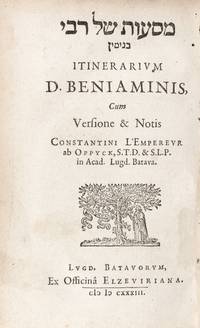
16336497Leiden: Elzevir 1633. First bilingual edition. Very Good. Octavo 16 cm.; 48 234 22 pages. Woodblock initials and vignettes. In marbled boards circa 1900 renewed endleaves spine artlessly reinforced in cloth worn at edges. Paper label apparently original. Provenance: Salomon Jakob Florsheim exlibris. Some light foxing. Reference: Willems 377; Blackmer 120. <br /><br />Hebrew text of "Ma'asot shel rabi Benjamin" accompanied by a Latin translation. This "travelogue" first published in Hebrew in 1543 and in Latin in 1575 recounts the author's journey through the Middle East and Central Asia in the 12th century. Da Tudela traveled from Spain through southern France Italy Greece Constantinople Cyprus Palestine Egypt on to Baghdad and visited many of the local Jewish communities. He is remembered as the most important traveler of Jewish origin in the Middle Ages. The narrative is an prime source for the history of the Jewish traditions in the Mediterranean area. He even described the lighthouse of Alexandria collapsed in 1326 one of the seven wonders of the ancient world. Elzevir hardcover