Cincinnati Industrial ExpositionBiblio.com
134 résultats
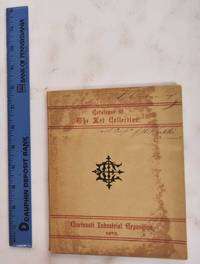
1873177886Cincinnati: Cincinati Industrial Exposition 1873. Softcover. Good. front cover has tanning & dampstaining w/ elegant pen inscription; back cover scuffed. text-block detached from covers. title & closing pgs have old dampstaining shadows & foxing. interior clean. tan wrappers w/ red & black printing & black emblem. 110 pgs. Seven punched & string bound sections that are still firmly held. The majority of the pages have greyed with a few still bright & tan. Pages have occasional smudges and foxing but overall very clean. A nice collectible of Mid-Western American History. Cincinati Industrial Exposition paperback
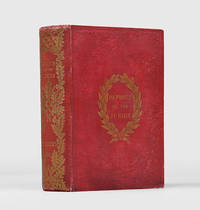
1852166563London: Printed for the Royal Commission William Clowes & Sons 1852. An exhibitor's copy Presentation edition with a copy presented to every exhibitor at the Great Exhibition of 1851; trade editions were also produced. The book is a key contemporary document for the Exhibition giving the jury awards and details of the 30 categories of exhibit and was selected in Printing and the Mind of Man as the representative book for the Exhibition. Quarto. With 3 chromolithograph plates. Original red cloth spine and front cover lettered in gilt spine and covers decorated with a wreath design in gilt and blind yellow endpapers gilt edges. Preserved in a custom slipcase. Bookplate to front pastedown. Expertly recased spine ends and corners a little rubbed; a very good copy. Printing and the Mind of Man 331. hardcover
1893ZB437486NP: 1893. 16 pp text browned and becoming fragile one tip chipped with no loss working copy only in self wrappers. - If you are reading this this item is actually physically in our stock and ready for shipment once ordered. We are not bookjackers. Buyer is responsible for any additional duties taxes or fees required by recipient's country. NP: unknown
188060949Montreal Canada: Imprime par J.B. Laplante 245 rue St. Jacques 1880. Two vols. 68 16; 15 1 pp. Blue-tinted printed softcovers for both vols. black lettering on front covers minor age toning slight chipping very minor creasing still both VG copies w/ presentation slip of Major. L.A. Huguet-Latour of the Prince of Wales Regiment of Rifles Montreal Canada noted bibliophile and manuscript collector ink inscription on 2nd piece at upper fore-edge. First editions of these uncommon original catalogue and the official list of contributing schools colleges and educational institutions to the 1880 Canada Dominion Exhibition held in Montreal for 10 days and also featured displays of industrial machinery farm products flowers along with horse racing lacrosse tournament and Highland games. The Dominion Exhibition was held annually in Canada from 1879-1913 and every year the location changed to assorted Provinces typically to coincide with local Fairs. It ceased at the outset of World War I. These catalogues detail all of the Catholic and Protestant schools convents monasteries colleges and universities appeared in Montreal often with samples of their student’s achievements in arithmetic geography literature history & art. Worldcat locates 7 copies of 1st Canada Archives U of Montreal Bibliotheque Nat. Strasbourg NYPL Cambridge Queens Univ. U of ONT IT; 4 copies of 2nd York U Lib. Leiden U of Torino Archives Nationales Quebec. Imprime par J.B. Laplante, 245 rue St. Jacques, paperback
187858603Paris: E. Neurdein Editeur Photographie 1878. Seven albumen cabinet card photos. Oblong 8vo. 6 x 3.8 in. mounted on 6.5 x 4.6 in. beige studio cards red & black printed captions red woodcut borders all w/ manuscript annotations on versos minor bowing to boards still VG set w/ bright sharp images. Seven souvenir albumen cabinet card photos chronicling the third great Paris World’s Fair proclaiming through pomp and events that the Third Republic had rebounded from the Franco-Prussian War and the Commune Revolt. The Exposition was far larger than any previously held occupying over 66 acres featuring an Avenue des Nations elaborate exhibition palaces the completed head of the Statue of Liberty and the first Exposition to feature outdoor electric lighting with massive arc lights. These images include the an updated public aquarium featuring undersea grottoes inspired by Jules Verne stories the Palais de Trocadero the Palais du Champ de Mars statue of the Republic the Galerie du Travail showing stoves weaving machines and more; as well as the statuary in the Grande Galerie Italienne. Etienne Neurdein 1832-after 1915 and his brother Louis Antonin 1840-after 1915 were intrepid traveling photographers throughout French Northern Africa particularly the Sahara and Algeria in the 1870’s and also known for portraiture and monuments photos. They were later awarded the status as official photographers of both 1889 and 1900 Paris Exposition Universelle. See: Arthur Chandler Heroism in Defeat The Paris Exposition Universelle of 1878 World’s Fair Magazine Vol. VI No. 4 1986; Orientalist Photography: Part One -- 19th Century Neurdein Brothers Twicemodern in Photography Jan 27 2013. E. Neurdein, Editeur Photographie, hardcover
189569945Paris:: Typographie Chamerot et Renouard 1895. First edition. publishers decorative wrappers printed in gold and tan. Some light use to wrappers; a very nice copy. 8vo. Illustrated from photographs. Typographie Chamerot et Renouard, unknown
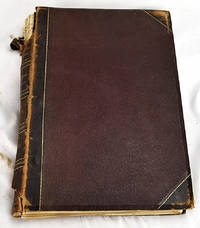
18772602080003Frank Leslie's Publishing House New York 1877. First Edition. Hardcover. Acceptable. World's Fair Poor binding pages loose. Contemporary 1/2 leather over burgundy boards. Binding torn at spine front board detached. 324 p. illus. 41 cm. One of the fold out plates is missing the outer half. Sold as is! Not collated. Nice fold out of Philadelphia. Chromolithographic frontisiece. "Embellished with nearly eight hundred illustrations drawn expressly for this work by the most eminent artists in America. Including illustrations and descriptions of all previous International exhibitions. Frank Leslie's Publishing House, New York hardcover
187761009New York: D. Appleton & Co. Publishers 1877. Folio. 10.25 x 13 in. iv 164 pp. plus 6 pp. illustrated publisher’s ads. With woodcut engraved illustrations throughout woodcuts in ads as well. Emerald green publisher’s cloth over beveled boards decorative gilt & black borders & lettering on front cover paper spine label w/ manuscript title a.e.g. minor edgewear minor bumping slightly shaken ex-lib markings on endpapers & title still VG- copy. First edition of this wonderfully illustrated depiction of the furnishings artworks silver American cut glass stained-glass windows and more all displayed at the 1876 Centennial International Exhibition in Philadelphia. Following the lead of the 1851 & 1862 Exhibitions the 1853-54 New York Exhibition and others the Centennial served as a vast space for thousands of vendors and manufacturers to display their wares. Many American artists were featured and these World’s Fairs served as key influences on designers decorators artists architects and the arts. Copies of this are surprisingly uncommon with nearly all listed in Worldcat as electronic or microfilm versions rather than physical. D. Appleton & Co., Publishers, hardcover
1889128480Paris: Librairie de la Nouvelle Revue 1889. Hardcover. 3 plans en couleurs. <b>Livre en français</b>. Couverture rigide. Illustrations cartes et plans. Pleine percaline. Titres dorés un peu fanés. 9 x 14 cm. 420 pages. 3 plans dépliants. <i>ref. 128480</i> Librairie de la Nouvelle Revue hardcover
1893303812New York Home Insurance Company 1893. 1893. First edition. 8vo. Frontispiece and over 50 b/w illustrations. Original stiff color pictorial wrappers. Very good. 32 pages. Notable for the description and illustrations of the Columbian Exposition as well as for the information on Columbus American history etc. plus facsimile signatures of Columbus and all the Presidents of the United States among others. 1st Edition. Soft cover. Very Good. New York, Home Insurance Company, 1893. paperback
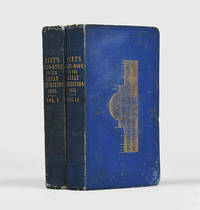
1851151696London: Spicer Brothers 1851. With a floor plan of the Great Exhibition First edition of this guide to the Great Exhibition of 1851. This work includes a list of some of the displayed objects and a floor plan of the 100000 exhibits. The exhibition was visited by Charles Darwin Charles Dickens and Karl Marx. Hunt's handbook offered the attendants information on the 8 miles of exhibits from over 25 countries. His work intended to teach the reader about the Victorian material science chemistry engineering and design featured in the exhibition. Hunt enlisted the help of several professionals such as William Brough who wrote about the printing presses and Professor Edward Forbes who wrote on the uses of flax and display of wines and spices on show. "From folding pianos and controversial semi-nude Greek statues to the largest diamond in the world The Great Exhibition of 1851 was unlike anything that had been seen before. It was a triumphant celebration of the most extraordinary achievements of the Victorian age from industry culture and engineering - gathered from all four corners of the world. 'Every conceivable invention!' as Queen Victoria wrote in her private diary"Royal Parks. Robert Hunt 1807-1887 was a chemist and photographer. He worked as a professor of mechanical science for the Royal School of Mines. In 1858 Hunt and the Royal Cornwall Polytechnic Society founded the Miners Association. 2 vols octavo. Folding frontispiece floorplan in Vol I. advertisement leaf bound before frontispiece in Vol. I. Original blue cloth spines lettered in gilt and ruled in blind covers decoratively panelled in blind front covers with vignette of Crystal Palace in gilt pale yellow coated endpapers edges speckled brown binder's ticket of Westleys & Co. on rear pastedown. Soiling and abrasions to cloth spine ends and tips bumped a couple of gatherings proud gutter starting in several places in Vol I. A good copy. "The Great Exhibition of 1851 in Hyde Park" Royal Parks. hardcover
18902082402113500372Not Available 1890. Soft Cover. Fine. The book is in fine condition. Not Available paperback
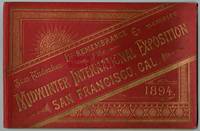
1894305504San Francisco Hergert & Frey Oblong octavo 9 5/8" x 6 1/4". 16 pages of plates from photographs accordion style panorama. Original elaborately gilt stamped red cloth text separated at one fold else very good. No signatures or bookplates. Numerous views of San Francisco Sausalito etc. [San Francisco? Hergert & Frey?, 1894. hardcover
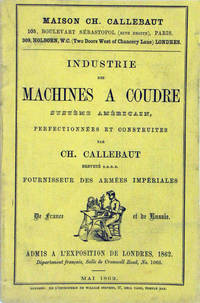
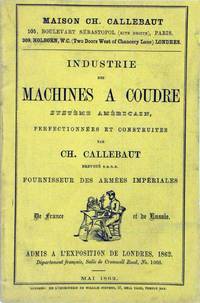
1862100967AParis & London Mai 1862. 8vo. 182 x 120 cm. 31 pp. Illustrated with woodcuts including 2 full-page.<br /><br /><b>Published for the London World Fair 1862 </b>with map of the exibition halls on the inside front cover. The "Expositions Universelles" or World Fairs were intended to show the latest innovations and inventions. The earliest of these fairs were held in France but were national. The first one of 1798 was the start of eleven national fairs. Sewing machines were invented during the first Industrial Revolution to decrease the amount of manual sewing work performed in clothing companies. Callebaut shows different models and explains the technqiue of them. Both full page illustrations of the factory show us what factories looked like at the time. At the 1862 exhibition about 50 types of sewing machine were on show on over 20 stands. M. Callebaut from Paris showed 'several modifications of shuttle sewing machines of the Singer type.' Callebaut was the Singer licencee in France the only occasion on which the Singer Co granted a licence rather than manufacturing itself. Callebaut patented these modifications in France and Britain in his own name. Most of them apply to the Singer No. 2 machine and enabled it to have a reversible wheel feed for finishing seams and to produce a 'herring-bone stitch' zigzag by moving the top feed presser foot from side to side. Another machine had twin needles on the same needle bar for making two lines of stitches on the top side and a zigzag on the underneath with a single shuttle thread. Not content with all these variants M Callebaut exhibited some glove making machines of fearsome complexity using detached lengths of thread!
18621009671862. Paris & London Mai 1862. 8vo. 182 x 120 cm. 31 pp. Illustrated with woodcuts including 2 full-page. Published for the London World Fair 1862 with map of the exibition halls on the inside front cover. The "Expositions Universelles" or World Fairs were intended to show the latest innovations and inventions. The earliest of these fairs were held in France but were national. The first one of 1798 was the start of eleven national fairs. Sewing machines were invented during the first Industrial Revolution to decrease the amount of manual sewing work performed in clothing companies. Callebaut shows different models and explains the technqiue of them. Both full page illustrations of the factory show us what factories looked like at the time. At the 1862 exhibition about 50 types of sewing machine were on show on over 20 stands. M. Callebaut from Paris showed 'several modifications of shuttle sewing machines of the Singer type.' Callebaut was the Singer licencee in France the only occasion on which the Singer Co granted a licence rather than manufacturing itself. Callebaut patented these modifications in France and Britain in his own name. Most of them apply to the Singer No. 2 machine and enabled it to have a reversible wheel feed for finishing seams and to produce a 'herring-bone stitch' zigzag by moving the top feed presser foot from side to side. Another machine had twin needles on the same needle bar for making two lines of stitches on the top side and a zigzag on the underneath with a single shuttle thread. Not content with all these variants M Callebaut exhibited some glove making machines of fearsome complexity using detached lengths of thread! hardcover
181952180Portland OR: n.p. July 18 1902. One panoramic silver gelatin photograph printed on matte finish thick photographic stock sized 8 x 24 in. preserved in the original dark stained wood frame sized 10.25 x 26.5 in. with very faint title inscription in white ink below image in clear cursive hand very minor damage & loss to the very lower right corner of image still VG copy expertly cleaned with new archival backing. This exceedingly scarce original photograph records the site selection inspection by the Lewis & Clark Exposition Board of Directors July 18 1902 the day after the Site Subcommittee had recommended on July 17 1902 that the Board choose City Park for the Exposition site. In fact many different sites were proposed at the meeting including Henry Corbett’s preference for City park while the Ladd interests advocated for a site along Hawthorne Boulevard. Nonetheless the Board adjourned into executive session and as a result of a last minute proposal by Henry Dosch it decided that they would examine the Guild’s Lake site in detail as evidenced by this photograph showing the several board members standing upon the Electric Railway line tracks on the Willamette Heights next to the land proposed for development by the Scottish-American Investment Company. When the Board reconvened after an August hiatus the vote was 6-2 in favor of Guild’s Lake. Robert Livingstone who owned the Scottish-American Investment Company set about with his real estate development partners Russell & Blyth to build a group of Arts & Crafts homes designed by Emil Schacht in the Willamette Heights subdivision which would inspire Portland residential architecture in the decades following the Exposition. Peter Guild 1797-1870 led his family over the Oregon Trail in 1847 lost a herd of cattle to the Oregon Territorial militia during the Cayuse Indian War and eventually homesteaded on Guild’s Lake constructing a large octagon block house which proved to be a very popular Public House and later the site for the 1905 Lewis & Clark Exposition. See: Jim Heuer & Roy Roos The Emil Schacht Houses in Willamette Heights: The Cradle of Arts and Crafts Architecture in Portland 2002 pp. 2-10; Thacher The Site of the Lewis and Clark Exposition The Pacific Monthly Vol. 7 pp. 210-212; Finn J.D. John Long-lost Guild’s Lake was Once Portland’s Water Wonderland Offbeat Oregon October 21 2012. n.p., unknown
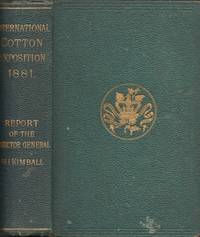
188235602New York: D. Appleton and Company 1882. First Edition. Hardcover. Good. Octavo. 1 vi 610 pages 3 pages advertisements 1. Errata page located between pages 342 343. Green cloth hardcover with illustrated gilt title inside a gilt circle on the front cover. Gilt title on the spine. Some rubbed spots to the cloth covers and spine. Light edge wear to the cloth extremities. The frontispiece is vertically creased and foxed. Pages 7 and 8 are loose. Binding cords visible in several sections but no other loose pages. Hinges are in good condition. Small piece of tape on the edge of pages 321 and 327. Light toning to the text. <br /> <br /> Illustrated with frontispiece engraved portrait of H. I. Kimball 4 plates in text folding "Plat of the Grounds and Buildings International Cotton Exposition Atlanta" engraved plate - "The Compound Tubular Steam Boiler Gold Medal Awarded." 2 more engraved plates a few illustrated advertisements and a folding plan - "Model of the Willimantic Company's Works at Willimantic Conn." Detailed contents make up this comprehensive report including history speeches reports agricultural sections a variety of forms and documents lists of groups awards committee members and much more. <br /> <br /> A nice inscription written on the front blank end sheet from Samuel Inman one of Atlanta's leading citizens of the period Inman Park in Atlanta is named after Samuel Inman. Inscription reads - "Henry S. Cave Compliments of Saml M. Inman Treasurer Atlanta Ga. June 23 1884." H. S. Cave from Atlanta inscription is written on the verso of the frontispiece. Another owners name in pencil on the front paste down "Augusta Wylie King." A later owner's address mailing label located in the upper left corner front paste down. From the New Georgia Encyclopedia:<br /> <br /> Atlanta held its first exposition named the International Cotton Exposition in Oglethorpe Park in 1881. The city then had fewer than 40000 residents and the primary sense in which the first exposition was “international†was the display of cotton plants from around the world. Nevertheless Atlantans were eager to host the 1881 exposition to promote investment and to help the city toward its goal of becoming an industrial center which was a primary component of Grady’s “New South†concept. Although attendance was lower than expected fewer than 200000 in paid attendance during its two-and-a-half-month run city leaders demonstrated that they could work together to host a major event and that Atlanta was serious about its role in textile production at a time when the North was beginning to grow dissatisfied with the efficiency of southern cotton processing. The exposition displayed new crop planters and cotton seed cleaners along with a model of Eli Whitney’s original cotton gin and speakers addressed the crowds about agricultural technology and political reforms. D. Appleton and Company hardcover
187660872Philadelphia: n.p. 1876. Oblong folio. 28.25 x 22.75 in. One woodblock-engraved printed linen scarf decorative borders large lozenge medallions for halls sewn at fore-edges minor age toning some spotting & soiling very slight foxing old pin-holes at corners still a VG exemplar. First edition of this wonderfully woodblock printed souvenir linen scarf for the 1876 Centennial International Exhibition held in Philadelphia that year. The large lozenge medallions feature the Main Exhibition Building which covered 21.5 acres constructed of wood & iron framework on 672 stone piers; the Horticultural Hall epitomized floral achievement in gardening and was designed in a Moorish style to be a permanent tribute to the Crystal Palace of London’s 1851 Great Exhibition -- it survived until severely damaged by Hurricane Hazel in 1954; and finally the Art Gallery now known as Memorial Hall and the only large exhibit building still standing on the Exposition site. President’s Washington & Grant anchored the upper corners with Centennial Medallions in the lower corners. [n.p.], unknown
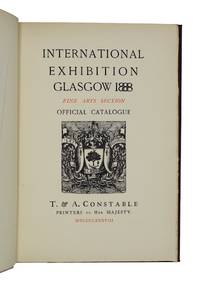
1888AQ33282Glasgow: T. & A. Constable 1888. One of 370 large paper copies. 6 157pp 1. Unopened in original publisher's vellum-backed red cloth boards contrasting red morocco lettering-pieces A.E.G. A trifle rubbed spine dulled. Internally clean and crisp. Letterpress presentation leaf completed in manuscript inscribed to Glaswegian art collector B. B. MacGeorge Esq. The generously margined official catalogue of the fine art collection presented at the International Exhibition of Science Art and Industry Kelvingrove Park Glasgow in 1888. The seven month long event - staged in order to raise fund for the construction of a permanent gallery and museum in the park - attracted in excess for 5.5 million visitors. . First edition. Quarto. T. & A. Constable hardcover
18629027602London: Clay & Lea 1862. Hardcover. Very good. Expertly rebacked with original spine pieces. Gilt titling on spine is still bright. New endpapers. <br/><br/> Clay & Lea hardcover
189370375brChicago 1893. Book. Very Good. Soft cover. Folio - over 12 - 15" tall. Softcover booklet with colour-printed front cover. Much local advertising in addition to the programme listSome slight toning to covers; rear cover panel partly obscured by paste/paper residue from being previously pasted in a scrapbook. Otherwise clean tight and unmarked. Very neat -- still a sound and handsome copy. Measures 309x236mm. 10 coverspp. Paperback
187981349Paris: Levy 1879. Gebunden. Levy unknown
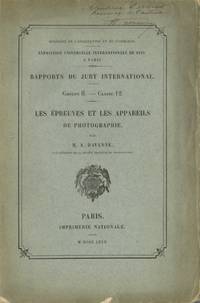
188053063Paris: Impr. Nationale 1880. First edition. 8vo. 67 pp. Original printed wrappers which are toned at the edges with a few chips and creases. Text is unopened. INSCRIBED by the author. Alphonse Davanne is a most important figure in the early history of photography. Born 1824 in Paris he was a founding member of the Société Française de Photographie the first photographic society in the world and subsequently its vice president and then president. His early collaborations were involved with photolithography and by 1854 he had mastered that process. His next experiments were on developing a direct positive process. Davanne served as the president of the jury for the photographic section of this International Exhibition.<br /> <br /> Largely concerned with the history cameras and equipment and the latest advances in photomechanical processes etc. <br /> <br /> Roosens and Salu No. 3697. Impr. Nationale unknown
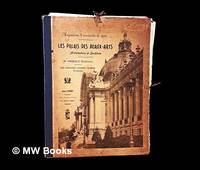
1900460037Paris : A. Guérinet 1900. First Edition. Hardcover. Good portfolio copy only in the original illustrated printed boards backed in modern cloth. All plates are disbound as issued and collated with No. 1-128 present. Portfolio boards somewhat foxed dust-dulled and rubbed along the edges with fastening ribbons tattered. Plates clean save for some marginal dust-dulling and with edges somewhat creased. Remains a very serviceable portfolio copy with well-preserved plates. Series; L'architecture & la sculpture : Exposition de 1900 ; 1. Physical description; 2 pages 128 plates : photographs black & white ; 41 cm. Subjects; Architecture. Sculpture. Exhibitions. Paris. France. 1900. Exposition universelle. Paris : A. Guérinet hardcover
1893047438New York: De Wolfe Fiske & Co. DeWolfe 1893. First edition 1893. Scarce item likely issued as a souvenir. Full color chomolithograph presentation of notable scenes of American history geared for young people with the rear cover a birds' eye view of the Columbian Exposition and President Cleveland opening the World's Fair. Oblong hardcover 8.25 x 12 inches eight pages of scenes including the covers Independence Hall on the front cover having doors you can open. Covers rubbed and spotted some dampstaining to upper corner right hand door of Independence Hall on the front cover detached but present left door chipped binding sound but not tight fair but complete. First Edition. Hard Cover. Fair. Oblong 4to. De Wolfe, Fiske & Co. [DeWolfe] Hardcover