307 résultats
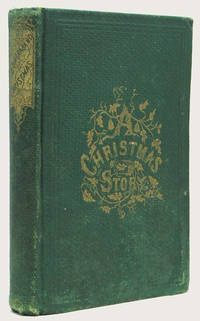
186434709Boston: E. P. Dutton and Company 1864. Very Scarce First Edition Worldcat lists only 22 copies of the first edition in institutional holdings and we are aware of no other copies currently on the market. With two engraved plates by Augustus Hoppin and with chapter headpieces and engraved initials Small 8vo in the publisher's original textured green cloth the upper cover framed in blind and lettered "A Christmas Story" in gilt with stylized decorative lettering the design repeated on the rear cover but in blind the spine blind lettered within a gilt decorative emblem yellow endpapers. 104 pp. A rare survival in original cloth and in unusually well preserved condition the text clean and with minimal mellowing the green cloth bright and unfaded the hinges firm and intact a little wear or rubbing to the corners and edges. This is one of the brightest and well preserved copies we have studied. RARE FIRST EDITION. A CIVIL WAR ERA RARITY. AN IMPORTANT WORK ABOUT FORMER SLAVES CELEBRATING THEIR FIRST CHRISTMAS AFTER EMANCIPATION the story reflects Northern sentiments and pro-emancipation ideals and recounts the first Christmas in the North celebrated by fugitive slaves and those liberated by the Emancipation Proclamation.<br> This scarce first edition is an important fugitive slave novel. The first edition was published toward the end of the Civil War then re-issued in 1865 at the war's conclusion. It is perhaps the first novel to discuss openly the "N" word and its possible derivation from the word "niger" and how the word was used to denigrate the individual and persist in pre-emancipation prejudice.<br> CONTRABAND CHRISTMAS tells the story of formerly enslaved people “contrabands†who have taken refuge with Union forces. As Christmas approaches they will be experiencing the holiday as free individuals for the first time. The story culminates in a Christmas gathering filled with hymns prayer and reflection. Themes include freedom slavery faith human dignity and the transformative impact of the Civil War. One point of note CONTRABAND CHRISTMAS contains one of the earliest explanations of the entirely derogatory character of the "N" word.<br> Worldcat credits the author as being Taylor Root but it is sometimes attributed to William Henry Hurlbert. Artist Augustus Hoppin was well known at this time for his Civil War imagery found in Harper's Weekly. E. P. Dutton and Company hardcover
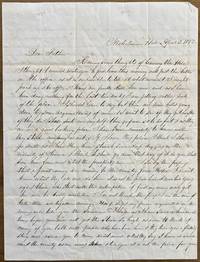
18524789Mokilomni Hill Ca: April 3 1852. Very good. 2pp. plus integral address leaf. Quarto on a folded folio sheet. Old fold lines minor wear. In a highly legible script. An interesting letter from a disillusioned fortune-seeker in Calaveras County advising his father not to come west as all the easy pickings are gone. He writes "Times are pretty dull here now and as I have been doing nothing for the last two weeks I am getting rather sick of the place. I should leave today but there are some holes going down by some acquaintance of mine & I want to see if they get anything. If they do I shall sink one myself they go from 50 to 60 feet & as they are in a good looking place I have some curiosity to know whether they strike anything or not. If I leave this place I think I shall go south as I hear they have struck some deep diggings in the vicinity of Sonora & think I shall go down that way. I see by the papers that a great many are coming to the country from Boston. I do not know what they all will do here it is not the place here it was two years ago & those who start with the anticipation of finding money easily got here will be badly mistaken. April 3 unknown
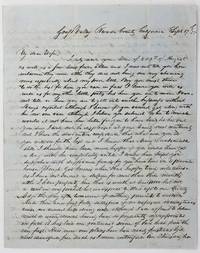
18554791Grass Valley Ca: September 17 1855. Very good. 4pp. on a folded folio sheet. Old fold lines minor wear. An intimate letter from a gold seeker in Nevada County California. Theodore Shaw writes to his wife about mixed luck in California a terrible fire his concern for their children and his great anxiety about the future. He writes in part: "I have property here that is worth at least $1000 but not a cent in my pocket but we expect to start up to our quartz ledge the day after tomorrow if nothing prevents to errect a mill up there. And now our plans have been nearly frustrated by a most dreadful fire such as I never witnessed. On Thursday last about 11 o'clock p.m. an alarm of fire was heard and by about half past 12 some 350 stores dwellings and buildings were consumed with a large portion of their contents our hotel included. . The entire business part of the town is in ruins.we have been sleeping under an old shed in the suburbs. This fire has injured us in this way several who had taken stock in our company have lost their means still we intend going on in a smaller way. We had formed a company with a Capital Stock of $50000 divided into 50 shares of $1000 each. Do you know Lydia I have more anxiety about your health than anything else as I know you work hard; only think what would happen to our dear children if anything serious should happen to your health and I away here in California. September 17 unknown
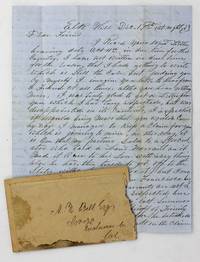
18534788Elk Hill Ca: December 17 1853. Very good. 3pp. on a folded folio sheet. Old folds light wear and soiling. With original mailing envelope. An informative letter sent from a miner in Gold Rush-era California to a friend in Tuolumne County primarily concerning a mining claim but also providing many interesting local details. The author writes "I managed to keep a claim for you which is joining to mine in this way it is one that my partner sold to a speculator who laid a land warrant on it." He discusses the process of the land warrants and how he made the man title the claim properly in San Francisco. "This claim was jumped last summer by W.H. Dixon first sheriff of Trinity City who died the day before he intended to occupy the house he built on the claim. He shot himself accidentally and never spoke." The author immediately stepped in and nabbed it for his friend but it was short-lived. "The claim is cheap at $2000 as soon as I made it known that I should not administer it was jumped by 3 in one day before 9 o'clock. So much for your not coming as I told you I could not keep them off any longer and you would not come if I had." He further mentions that he is digging potatoes which he deems the finest in the world discusses issues with the crop and further talks about new arrivals in the area. December 17 unknown
18717912San Francisco: A. L. Bancroft & Company 1871. First Edition. Hardcover. Good . 12mo. 256 pp. original green cloth lettered in gilt index to advertisers advertisements i-lvii. -- Moderate wear to the extremities some fraying to the spine tips & corner edges corners bumped. Blank paste-down and first free end-paper paper a little separated but hinges still strong. Rear hinges strong. Rear paste-down has an advertisement pasted on and a small stamp at bottom near the gutter of "H. K. Van Siclen Bibliophile 133 Nassau St. Ny". --. "This tourist guide for visitors of San Francisco and the Yosemite Valley offers a look at travel and accommodations in the late 19th century".-googlebks. A. L. Bancroft & Company hardcover
183870800London: Saunders & Otley 1838. First volume 302 pages; second volume 325 pages with 2 pages of ads. Translated by Henry Reeve. Date 1838 on title pages. Third Edition Stated. Hardbacks. Good Used Condition. Saunders & Otley Paperback
18632111902160201223Not Available 1863. Soft Cover. Fine. Volume: 1 Not Available paperback
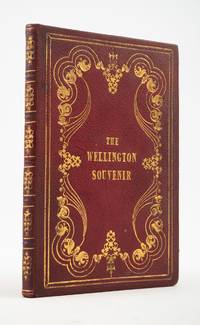
1852ST20768London: Simpkin & Marshall 1852. FIRST EDITION. 153 x 102 mm. 6 x 4". 64 pp. <br/> Publisher's deluxe red pebble-grain morocco gilt covers with graceful Romantic-style frame central panel of upper cover with gilt lettering that of lower cover with gilt ornament spine blind-stamped to resemble raised bands panels with gilt ornament gilt turn-ins pale yellow endpapers all edges gilt. With title page vignette frontispiece portrait of Wellington and three full-page engravings of battles. Printed entirely in gilt on "enamel" gloss paper. Front free endpaper with faint pencilled signature. Binding very slightly soiled joints and extremities a little rubbed trivial soiling to front endpapers otherwise quite a fine copy the text entirely clean fresh and bright with sparkling gold.<br/> <br/> This now-scarce luxuriously produced little volume celebrates the life and military achievements of Arthur Wellesley Field Marshall and 1st Duke of Wellington perhaps the most widely admired Briton of the 19th century--and does so in glittering fashion. The key facts of Wellington's life and the decisive battles of his storied career are related here in sparkling gold text and images on alabaster white pages. Poet laureate Tennyson's funerary ode described Wellington 1769-1852 as "the last great Englishman" and his death evoked great mourning in response to his life of public service. DNB notes that his defeat of Napoleon at Waterloo crushing the emperor's ambition for European dominance put him in a class of his own: "No man certainly no Briton had ever been in such a situation before in Europe the object of universal hero-worship and gratitude." Wellington was particularly notable among senior military officers for his determination to lead his troops on the frontline in battle. The three battles depicted in the illustrations here attest to this: in "The Battle of Assaye" we see him on horseback two horses were shot from under him during the conflict wielding his sword as he bears down on enemy cannon. At the "Battle of Vittoria" he is shown leading the infantry to face the enemy with bayonet fixed. And in the decisive "Battle of Waterloo" scene he is once again with the cavalry wheeling to attack the advancing French. The frontispiece shows Wellington astride his famed horse Copenhagen who was his mount at Waterloo. Our volume concludes with a chronology of principal events in the duke's life. It is notable that such a handsome memorial work was produced so quickly after Wellington's sudden death on 14 September 1852: a contemporary ad in Bent's Literary Advertiser notes our title was published on 15 November three days before Wellington's state funeral on the 18th. Copies of this work are rare: we could trace no auction sales and OCLC records only seven copies just one in North America. Simpkin & Marshall unknown
1832465994London : John Murray ; Parbury Allen & Co 1832. First Edition. Hardcover. Near fine text bound in good waxed green cloth with a contemporary paper spine label now age-toned. Covers and label scuffed with faint damp-stains to the margins. Endbands rubbed with the lower spine showing a tight crosswise tear and joint split with the the tail lifting; corners bumped. Preliminary and final leaves somewhat foxed with the interior very clean on the whole. Text remains tight with pages unread and unopened. A well-preserved example overall. Notes; Engraved subscriber's page for J. F. Davis Esq. F.R.S. bound in before title page somewhat foxed. Series; Oriental translation fund of Great Britain and Ireland. Physical description; ix 465 pages : table. Notes; ""Volume I."" No more published. Revised from the translation of Haji Mustefa and collated with the Persian original by John Briggs. Subjects; Muslims. India. History. 18th century. Mughal Empire. British India. London : John Murray ; Parbury, Allen, & Co hardcover
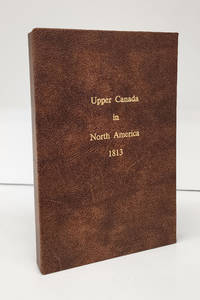
1813157227London: W. Faden Geographer To His Majesty and To His Royal Highness The Prince Regent 1813. Second Edition. Hardcover. Good. 125 p. 23 cm book in leatherette box. Chart pp. 4-10. One fold-out distance table. Book has brown cloth spine with grey paper boards the latter looking like original publisher's wraps. Worn extremities. Small tear in paper on front board. Front free endpaper loosening. Ink signature on title. <br/><br/>Second edition first was 1799 of the earliest published topographical description of the young province of Upper Canada prepared by its first surveyor-general. Smith 1764-1837 originally came to Upper Canada in 1793 serving as a quartermaster in a British regiment stationed at Niagara. That same year he was appointed to the position of surveyor-general by Gov.-Gen. Simcoe. Advertisement following the title states that the notes and gazetteer were drawn up at Simcoe's request to illustrate a separately issued map of the colony. This second edition was revised corrected and updated by Lt.-Gov. Francis Gore to accompany a new map compiled in the surveyor-general's office and published under his direction. Casey I 983. Lande 2208 with map. Morgan p. 353. Sabin 85205. TPL 736. W. Faden, Geographer To His Majesty, and To His Royal Highness The Prince Regent hardcover
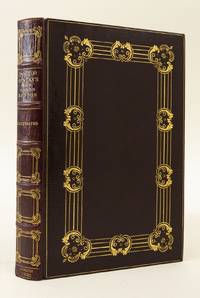
1820ST15905London: J. Johnston 1820. FIRST EDITION IN BOOK FORM. 233 x 143 mm. 9 1/8 x 5 7/8". iv 2 319 pp. <br/> Attractive contemporary purple straight-grain morocco covers with gilt frame in the Romantic style raised bands spine compartments framed in gilt with drawer-handle cornerpieces gilt titling gilt-ruled turn-ins with drawer-handle ornaments at corners green watered silk endleaves all edges gilt. With engraved title page featuring hand-colored vignette and 19 HAND-COLORED ENGRAVED PLATES. Front flyleaf with bookplate of Harald Pedersen and verso of front free endpaper with bibliographical notes in pencil. Abbey "Life" 265; Tooley 434. ◆Spine sunned to maroon bottom corners a bit rubbed frontispiece cropped close at foot with much of the imprint trimmed away otherwise quite a fine copy--the plates in excellent impressions and pleasantly colored without the typical offsetting from these kinds of illustrations and the binding lustrous and with scarcely any wear.<br/> <br/> With charming illustrations by one or more of the 19th century's leading caricaturists this work is an imitation of the popular "Tour" books of Doctor Syntax featuring a pedantic clergyman and schoolmaster meeting with an onslaught of amusing misfortunes in the course of his wanderings. The original "Tour" published in 1812 was conceived of as a parody of the books of picturesque travels then enjoying a considerable vogue and when it met with a great popular response itself two more tours followed in 1820 and 1821. Even this could not sate the public and a number of imitations of the Syntax books including the present work were issued. There is some disagreement as to whether Thomas Rowlandson 1756-1827 or Isaac Robert Cruikshank 1789-1856 created the illustrations here; as Tooley notes "Both Rowlandson and I. R. Cruikshank are credited with the designs for the plates the balance of opinion favoring Cruikshank but according to the advertisement . . . more than one artist was employed or at least a different engraver to the artist." Either way the amusing illustrations of the follies and faux-pas of the good Doctor Syntax do not disappoint. Aside from being in pleasing condition our copy also stands out for its particularly attractive contemporary binding. J. Johnston unknown
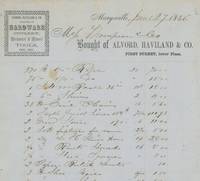
1860List2417Marysville 1860. Marysville 1850s-1860s the bulk mid-1850s. A collection of documents including eleven receipts three manuscript legal documents four manuscript documents relating to land claims; five partially printed documents relating to land claims; two letters from the US Land Office in Marysville 1858 regarding land claims; six billheads from Marysville firms with receipts for a range of goods some illustrated; one letter from Marysville written in 1853 concerning a death in a family. Generally fine condition. Fine. A mini-archive or assemblage of documents relating to the early Euro-American citizens of Marysville and its environs in the 1850s. The population of Marysville grew quickly after the town’s incorporation to 10000 by the mid-1850s due to its strategic location close to the gold fields but the levee system put in place to control flood damage limited the town’s growth beyond this initial phase. The documents here relate to Marysville in this early period of growth and include several quitclaim land deeds as well as illustrated billheads. As a group they offer an ephemeral record of the city in its early period with the legal documents and deeds showing the means with which the area was settled. A well preserved group overall. unknown
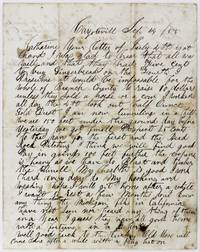
18553206Coyoteville: September 12 1855. Very good. 2pp. plus integral blank. Original mailing folds moderate toning staining and ink spotting but still easily readable. Bottom fourth of integral blank excised. An informative Gold Rush letter about mining in the long-vanished ghost town of Coyoteville which was an extraordinarily rich gold area for a couple of years in the early 1850s. A noted tunneling method nicknamed "coyoteing" was developed in the town and subsequently inspired the name of the town. In the present letter Moses Pine writes to "Catherine" in Branch County Michigan and signs his name simply as "Mose Esq" at the conclusion. The author informs Catherine presumably his wife or sister of his activities some of the economic realities and some of the practical details of prospecting for gold in California. Presuming that "it would be impossible for the whole of Branch County to raise $10 unless they sell a horse" Pine comments that he had ginger bread on the Fourth of July after working all day and yielding a "half Ounce Gold Dust." He then provides a detailed description of his mining: "I am now tunneling in a hill. We are 150 feet under the ground. Day before yesterday we got small respect 25 cents to the pan for the first and the bed rock pitching. I think we will find good pay in the going 100 feet further the expense is heavy as we have to blast and timber the tunnel." Pine also talks of his health and that "I work hard every day do my cooking and baking." He then expresses his hope to get back to Michigan to "rest a few months" but knows nothing of other Michigan folks in California: "Have not seen nor heard anything of them in a year. I guess they have all gone home with a fortune in a horn. Well good luck to the lucky. Old Mose will come home after a while with a pretty hat on." A nicely-detailed letter from an unusual and obscure Gold Rush location. September 12 unknown
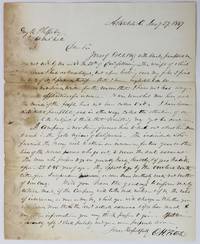
18492389Ashtabula Oh: January 29 1849. About very good. 1pp. on a bifolium. Previously folded. Light dampstaining and short closed tears along gutter somewhat affecting first few lines of text but not overall sense. An interesting letter from O.H. Field an aspirational field representative of the Connecticut Mutual Life Insurance Company in Ashtabula Ohio to the company secretary George R. Phelps inquiring about a policy for a group of men headed to the Gold Rush in California in January 1849. Connecticut Mutual was founded in Hartford three years prior to the composition of this letter in 1846. Fitch's missive begins with a report on his efforts to drum up interest in life insurance in his area with pamphlets and other materials sent to him by Phelps: <br /> <br /> "Yours of Oct 1 1849 with blanks pamphlets &c was not received by me until the 25th of Dec. following. I have not had any definitive applications for insurance. It was somewhat new here and the minds of the people had not been called to it. I have however distributed pamphlets and in other ways called the attention of our citizens to the subject. I think that something yet might be done.<br /> <br /> The letter goes on to describe a potential policy for a group soon leaving for the Gold Rush and requests a favorable rate in order to stimulate interest in policies from additional parties: <br /> <br /> "A company is now being formed to head out about ten men to work in the gold regions of California. The individuals who furnish the money wish to obtain an insurance for two years on the lives of the several persons who go out to secure the amount advanced. The men who propose to go are generally hardy healthy & of good habits & from 25 to 45 years of age. They expect to go by the overland route either from Independence Missouri or some more southerly route not south of Vera Cruz. Will you have the goodness to inform me by return mail if the company will take such risks -- & if so the rates of insurance as near as may be which you will charge -- whether you will insure more than the amt. actually advanced & if so how much & any other information you may think proper to give. If I receive a favorably sic reply I shall probably send you more proposals soon."<br /> <br /> A neat letter concerning the preparations and considerations necessary for a journey to California in the early days of the Gold Rush and the role and rise of early American insurance companies in the planning of such lengthy and dangerous overland travel. January 29 unknown
18670001244SS ALEPPO EUROPE MT. VESUVIUS ITALY. Good. 1867. Full-Leather. On offer is an original manuscript travel diary of a young woman who travels from America to Ireland on the S.S. Aleppo and then spends time in London and Paris before going to Italy. Stating "Bought at Dublin 12 Nov. 1867" then a later hand in pencil on the fep suggests the names of Julia L. Hale or Julia de Rubignir. Entries range from 1867 to 1868 and our diarist does a great job describing the journey from America to Ireland on the ship as well as all the places she visits. The passages of her witnessing the eruption of Mount Vesuvius and their attempt to be 'tourists' of the lava flow while in Italy are great. She adds further dimension by drawing a lovely folk art picture of the volcano in action. She also sees the Prince and Princess of Italy shortly after their marriage. Here are some snippets: We first caught sight of Vesuvius an hour and a half or two hours before we reached Naples it was then quite light and we could just see a silvery white cloud hanging over it but it became brighter and showed the fire as the day grew darker and we drew nearer. The first night at Naples we went to the Hotel Washington. I shall never forget the scene as we drove up to the door there was Vesuvius black as night except where the volcanic fires rose and fell while above the mountain a cloud hung even darker but a little on the right the full moon was just rising at first we could not see it but only its effects in the silver edges of the clouds and a lovely silver light which seemed to float up from a cloud then gradually it rose into sight flooding the whole city with light gleaming on the water in strange contrast to the reflection of the Red lights on the volcano. We could scarcely tear ourselves away from the windows that night and were very sorry to leave the Hotel the next morning but there was an odor which could not be explained away so we walked away We went ashore and went to the ruin of the temple of Jupiter we went to the amphitheatre which is believe the most perfect one in the world we killed quite a large snake which was nearly at the very top then all the others except John and I went to Solfatara which is a mountain called the back door of Vesuvius. First we went to Vesuvius and drove up as far as we could then walked about two mils till we came to the lave which was thrown up or down or both as Mary wrote. It looks something like as if very thick black or brownish mush had been boiling furiously and suddenly congealed or like a storm raging at sea. We only went about half way up but it was not considered safe to go farther but we could see the mountain perfectly of course and had a good idea of the lava. Here another accident happened while we were in the tunnels there was so much smoke and steam that the engineer was poisoned by it and first fainted and then had convulsions very badly but they fanned them with branches and after an hour or two he was well enough to go on. We then went to San Lazzaro an island about a mile and a half from Venus there is a learned and celebrated Armenian convent there the monks are all so handsome and look so intelligent we had such a lovely monk to go around with us he was very small but quite handsome he had large bright black eyes and such a merry pleasant expression he had curly black hair and wore spectacles and was very restless indeed we could scarcely glance at a thing before he would say No we will go. The most interesting things we saw were the autographs of Byron his portrait which was very handsome and the room which he occupied for three months while studying the Armenian language. Thursday morning the Prince and Princess and attendants came into town about half past ten there was a rope drawn across the grand canal just above the depot and none but private gondolas were allowed to go inside of it and our gondola was just outside and when the rope was taken away the jam was so great that no one could move scarcely the men shouted agua agua and there was the greatest hubbub and confusion and I really never saw anything so exciting in my life. Many of the hired gondolas go way ahead of the private ones ours was next but one to the prince's just before they landed so we could see them splendidly. The gondola or rather barge was finely ornamented there were a great many rowers the boys took off their hats and bowed the prince did the same to them he looked very tired and dusty he had a melancholy look as usual but we all liked him. The princess looked very pretty as usual she was dressed in a very handsome suit of dove colored silk. There were also several ladies of honor and two celebrated generals one has the highest position in the army or rather the command of the army I believe." Included is a CDV of Will Morgan who is talked about throughout the diary and was traveling with her although their connection is not fully explained in a casual reading. The spine is gone for the most part but otherwise overall G.; English; 12mo - over 6¾" - 7¾" tall; VOLCANO ERUPTIONS VESUVIUS ITALY TRAVEL EUROPE GENDER STUDIES WOMEN'S STUDIES antiquité contrat vélin document manuscrit papier Antike Brief Pergament Dokument Manuskript Papier oggetto d'antiquariato atto velina documento manoscritto carta antigüedad hecho vitela documento Manuscrito HANDWRITTEN MANUSCRIPT DOCUMENT LETTER AUTOGRAPH DIARY JOURNAL LOG KEEPSAKE WRITER HAND WRITTEN DOCUMENTS SIGNED LETTERS MANUSCRIPTS HISTORICAL HOLOGRAPH WRITERS DIARIES JOURNALS LOGS AUTOGRAPHS PERSONAL MEMOIR MEMORIAL PERSONAL HISTORY Monte Vesuvio Mons Vesuvius Pompeii Herculaneum. . hardcover
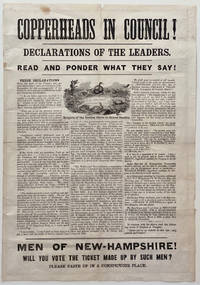
1863List1004New Hampshire: Printer Unknown 1863. First Edition. Printed broadside 16 ½ x 11 ½ inches archivally mounted and matted. A very good copy with some light toning small closed tear at upper margin light foxing at upper margin very tiny spot of loss to illustration at fold. Franklin Pierce remained politically active upon his return to New Hampshire following his presidency advocating for the Democratic cause and generally opposing the Civil War and Lincoln’s policies. This scarce pro-Union anti-slavery broadside printed for the 1863 New Hampshire elections which happened March 12 takes aim at Pierce and his fellow Democrats repeating the unfounded claim first made in 1862 by William Seward that Pierce belonged to the secret Knights of the Golden Circle the secret society formed with the goal of forming a new territory out of the CSA Mexico Central America and the Caribbean. There was never evidence that Pierce had any involvement in the KGC though the society had members in southern parts of some Union states such as Indiana Ohio Illinois and Missouri.<br /> <br /> The broadside printed for the March 12 elections quotes heavily from Pierce as well as the other Democrat candidates and party officials who were either running for office in New Hampshire or involved in politics a group which included Ira Eastman John Goerge Josiah Minot Thomas Treadwell Daniel Marcy William Burns and George Stevens. The broadside includes an engraving of coiled snakes each with these politicians named and the caption “et id omne genus.†Eastman the Democratic candidate for governor won the popular vote but lacked the constitutional majority necessary for election. Marcy was successful in his bid for the First District. “Men of New Hampshire!†the broadside asks: “Will you Vote the Ticket Made up by Such Men†with the final line imploring to “Please paste up in a Conspicuous Place.†<br /> <br /> Overall an uncommon survival from the 1863 elections. A very good copy with some light toning small closed tear at upper magin light foxing at upper margin very tiny spot of loss to illustration at fold. Quite scarce with OCLC locating two copies only at the Huntington Library and the New York Historical Society. Printer Unknown unknown
18990001206WASHINGTON DC LEIPZIG LEIPSIC. Very Good. 1899. On offer is the original 1899 manuscript diary handwritten by Rebecca P. Warner known by one and all as Bess or Bessie who was 26 at the time. Bess the oldest of 9 children offers the reader a unique view of how a prominent wealthy Washington DC family the lived at the end of the 19th century but even more important is the very intimate interesting view of Germany during one of the country's most fascinating eras of historical development pror to World War I. Bess' father was Brainard Warner Sr. who was a lawyer but made his fortune in banking real estate and land development. His company was responsible for the oversight or building of over 1000 buildings and homes in the Washington DC area. Bess's mother was Mary Jacobs Parker Warner who was descended from Edward Doty a Pilgrim and indentured servant who sailed over on the Mayflower signed the Mayflower Compact and helped to settle Plymouth Colony. This diary describes Bess' trip with her sister Anna and brother Brainard Jr. to Leipzig Germany where Brainard Jr. was the US Consul. Bess does a super job of detailing setting up house in Leipzig and also about their daily lives there. They also did a lot of traveling within Germany and she describes that as well. Research notes that the Warner family endured a lot of sadness. They lost three children at birth or very early in life. They lost their mother Mary Jacobs after the birth of Lucy who then died. They lost their son and brother Southard who committed suicide at age 33 by shooting himself while stationed as a consul in China. Then Brainard Warner Sr died two years after the death of Southard. Here are some snippets and observations from a casual reading: They went to the motette at St Thomas Kirche which was very beautiful. The church was crowded. Students belonging to a club were there. They stayed after the service and thought they might see a German wedding. They have them nearly every Saturday after motette. They got caught in the middle of a religious service. They were sitting right in front of the minister and Bess was afraid they'd get called up to do something In the evening Mrs Young telephoned to ask them over. Brainard had an engagement but Bess and Anne went. They left Leipzig for Chemnitz and went directly to the consulate where they had supper. They went with Mr Monaghan to Schellenburg where his family was summering. "This was a queer little town located on the top of a mountain" There is a beautiful castle and some old walls. Aside from that Bess thought it was an uninteresting place to spend a summer. They left on Monday. They went to a parade in honor of the King of Saxony. About 5000 men were received. They expected to see the King on horseback but he was on foot with other officers. They met Professor Gregory who showed them around some parts of the University. In the afternoon Brainard Anne and Bess called on Mrs Monroe. Brainard went out in the evening with friends. "Today is the Emperor's birthday and all the flags are out. We stood for a long time to watch the Lieut General review the officers. It was a fine sight. what little we could see though the crowd But we were nearly frozen it was so cold" Bess practiced and then went for a lesson with Herr Krause only he wasn't in. She went again at 4 pm. "He was very discouraging and said I had no independence of fingers" Bess thought it would take her several lessons to get the right finger position and that there was no royal road to piano playing. "Hard work is the only road to success in anything". She went home. They had letters from Mamma and Pa. Then they went over to hear the St Thomas Kircke choir practice such beautiful voices. They had a number of people who stopped by for visits." We actually had a count call on us Graf Laisher who was very bright and interesting. He is studying medicine at the University" He said he couldn't speak English but he was very fluent. He proceeded to show them some of his feats of exercise and they were petrified because of their rented furniture. But everything was whole when he left. In the evening Bess and Anne went to the home of Mrs Morris. They danced but it was more of a lesson for the young grandson. He fancied Bess as a teacher and so they whirled around in a circle for 2 hours. Bess wrote that dancing on the ship over was "nothing compared to my feelings after dancing in the mad German fashion" Bess Anne and Lucy went to the Catholic Church which the royal family attended. "I must say I was thoroughly disappointed in royalty as exhibited here. The king queen and two other members of the family sat in boxes on a level with the gallery of the church and just to the left of the altar. Princess Matilda is one of the coarsest people I have ever seen. She spent most of her time yawning. She must weigh at least 200 lbs. We only stayed while the King and Queen were there." The diary has approximately 141 pages of entries from January 1 1899 to August 2 1899 with some gaps in this 4" x 6 ½" diary. Overall G.; English; 12mo - over 6¾" - 7¾" tall; MAYFLOWER GENDER STUDIES TRAVEL PRE WORLD WAR I BRAINARD WARNER DOTY WOMEN'S STUDIES GERMAN ROYALTY DEUTSCHLAND ANTI SEMITISM GERMANY AUTOGRAPH HANDWRITTEN MANUSCRIPT Gründerzeit Emperor William II antiquité contrat vélin document manuscrit papier Antike Brief Pergament Dokument Manuskript Papier oggetto d'antiquariato atto velina documento manoscritto carta antigüedad hecho vitela documento Manuscrito HANDWRITTEN MANUSCRIPT DOCUMENT LETTER AUTOGRAPH DIARY JOURNAL LOG KEEPSAKE WRITER HAND WRITTEN DOCUMENTS SIGNED LETTERS MANUSCRIPTS HISTORICAL HOLOGRAPH WRITERS DIARIES JOURNALS LOGS AUTOGRAPHS PERSONAL MEMOIR MEMORIAL PERSONAL HISTORY . unknown
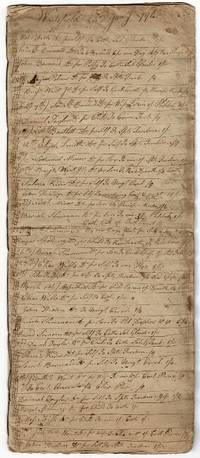
180559752Waitsfield Vermont 1805. Narrow tall folio approx. 15½" x 6¾" 112 pp. in ink five separately sewn signatures; a few pages loose some pages darkened or chipped at edges; some entries faint. This account book is the record of the practice of either Stephen Pierce or Simeon Stoddard practicing in Waitsfield Vermont between 1795 and 1806. These were the second and third physicians to have settled and practiced in Waitsfield. Most likely it is the record of Pierce who is supposed to have settled in Waitsfield in 1795. The first physician in Waitsfield Moses Heaton remained there only between 1793 and 1796. Depending on the source Pierce was the third physician to practice in Waitsfield and/or the first to practice in Moretown a settlement to the northeast of Waitsfield. He farmed as well as doctored and his farm lay mostly in Moretown his office in Waitsfield. He was a respected and successful physician who served the community in other capacities: as selectman representative delegate to the Constitutional Convention of 1814 and Assistant Judge of the County Court. One source claims that he succeeded Judge Kinne December 1 1814 and served one year and that he was a justice of the peace in Waitsfield. He died either in 1854 after living in Waterbury and Berlin Vermont or he died in Barnard in 1864. See: History of the Town of Waitsfield Vermont 1782-1908 by Matt Bushnell Jones Boston 1909 p. 182. Simeon Stoddard on the other hand was born December 12 1761 either in Saybrook Connecticut or in Waitsfield. On August 19 1784 he married Abiah Thompson who had been born in 1763 in Waitsfield. Some sources state that he moved to Waitsfield from Saybrook in 1794. He served the southwestern area of Waitsfield and died in 1841. This account book records each date of visit the householder's name the relationship of patient to householder the medicine prescribed and its price and the cost of the doctor's visit. The doctor whether it be Stoddard or Pierce treated thirty to forty patients each month and as many as fifty-six in December of 1801. He charged as little as 4 pence and as much as 42 shillings 10 pence for his services. As a comparison the tax on an acre of land in Waitsfield was 2 pence an acre. The poll tax list of 1795 showed fifty voters so the doctor seems to have treated the members of nearly every family. The diseases treated are not stated in the entries made but he seems to have prescribed antimonium tartaricum in many instances and also digitalis. Waitsfield was founded by Col. Benjamin Wait or Waite and others who were granted a charter on February 25 1782. Wait had served under Gen. Jeffery Amherst in the French and Indian Wars and had fought in the Revolutionary War. Both Waitsfield and Moretown are now somewhat renowned as the areas around Mad River a popular ski resort. Mad River has been remarkable from the settling of the area as the source of numerous sudden destructive and deadly floods. The Green Mountains the northern extent of the Appalachians rise just to the west of the town. The doctor records having treated members of the Wait family including Benjamin's wife Martha d. April 3 1804 Ezra Thomas and Gilbert. The family names of the community are listed making this a good source for early settlement history and genealogical research. Among the householders who required the doctor's services are Smolly Skinner Taylor Spalding Hitchcock Parkhurst Carpenter the family had a tannery and potash works Heaton Burdick Johnson Rider Fuller Symonds McNight Chamberlain Atherton Lyon Butterfield Barnave Osgood Foster Hobson Robinson Brun Latimer and Sherman. Many of the names appear often. unknown
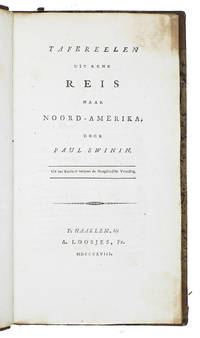
1818ABC_45491Haarlem 1818. Large 8vo. A. Loosjes Pz. Contemporary half calf marbled sides. 4 IV 127 pp. Very rare first and only edition of the only Dutch translation of a Russian description of the United States of America. The title-page notes that it is translated from the German translation 1816 and the preface notes that the first edition in Russian appeared in 1815. A second Russian edition appeared at St. Petersburg in 1818 and has sometimes been described as the first.The great Russian author Pavel Petrovic Svinyin or Svin'in here westernized to "Paul Swinin" is best known for his Sketches of Russia published in the West under the name "Suinine". The identity of the Dutch translator of the present work is unknown. It gives an interesting "picturesque" travel account of the United States spanning the year 1813 and provides five main accounts covering different subjects: a statistical survey; a religious overview with descriptions of the several Christian communities naming Methodists Quakers Shakers Baptists and more; a description of the different types of steamboats used in North America; a biography of the French general Jean Victor Moreau who lived in exile in the United States from 1805 to 1812; and a description of the dancing rituals of indigenous American "Indians" naming the Osage Arkansas Sioux and Saki tribes which the Russian author interestingly compares with tribes in the Caucasus.With the bookplate of the society Doctrina & Amicitia on the front paste-down. Some browning on the first and last few pages. Covers very slightly rubbed. Otherwise in very good condition.l NCC; Sabin 93997; WorldCat 10553560 & 656756512; not in Howgego. ABE CAT Anthropology & Ethnography unknown
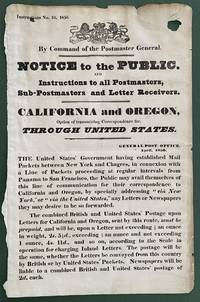
1850List2416Great Britain 1850. Broadside measuring 9 ⅞ x 15 ⅜ inches. Some chipping and wear to edge ink number written in corner two small section of loss due to improper mounting very good overall. Coat of arms of the United Kingdom above printed text. Very Good. A scarce broadside relating to British postal rates across the Panama Route through the Chagres River which supplied mail to California and Oregon beginning in 1848 before eventually being replaced by the Overland route in 1860. The service was characterized by long delay times as steamships on either side of the isthmus were often not coordinated causing major delays in the delivery. Several different steamship companies operated privately some carrying express mail. The letters were transported by canoe or pack animal across the isthmus. Postmaster General Cave Johnson began establishing post offices in California in 1848. Johnson also oversaw the transition to the prepaid delivery system. The broadside here of which we find no other records does state that postage must be prepaid and that the route can be accessed by writing “via New York†on the letters. A scarce postal history item relating to the expansion of mail services to California. We find no other records of this institutionally or in the trade. unknown
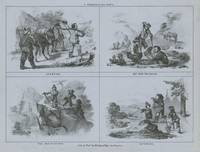
1850List1315Britton and Rey 1850. Single sheet measuring 8 ¼ x 10 ¾ inches on blue wove paper. Small chip to corner not affecting image some older tape repairs verso at margins else fine very good plus overall and quite attractive. Very Good. A series of four illustrations telling the story of a mining party that heads out with a pack mule only to fail to find gold and lose their mule before returning to a new prospect with their clothes in shambles. This is entry 209 in Baird’s California’s Pictorial Letter Sheets in which he sets the publication date as being prior to 1855. The series possibly illustrates scenes from a song. A particularly fine example on the classic blue wove paper of the period. unknown
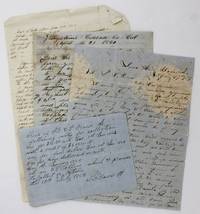
18604301Eldorado & Iowa Hill 1860. Good. Four manuscript documents including three letters totaling six pages. Old folds moderate toning minor edge wear a few tears a small hole in one letter. A neat group of four manuscript letters and documents all related to the mining activities of L.D. Davis of Georgia over a four-year period during the latter years of the California Gold Rush. Davis appears to be a lawyer living somewhere back east and may have been an investor in California mines or managing the financials for some mining concern from afar. The documents include an 1856 promissory note regarding "noted for collection" a long undated letter likely from California to Davis detailing amounts of gold taken from an unspecified mine and the mine's ownership situation and two letters overtly datelined from California -- the first from Iowa Hill in 1859 and the second from Georgetown in El Dorado County in 1860. Each document presents a unique set of concerns for Davis. Notable details of the three letters are as follows:<br /> <br /> 1 Autograph Letter Signed from A.J. Huff to Mr. L.D. Davis. Iowa Hill Ca. April 17 1859 2pp. The text reads in part "I have been very very sick for the last three weeks but am at this time improving.the disease is caused by the exposure of this last winter having worked continually in the rain and snow preparing my claim for the season. Times are very hard in this country now everyone has to work hard and is in big luck if he makes a decent living. A great many are making money very fast but in comparison not one in ten to the number than used several years back to make money or in other words the chances are about one in ten when they were one in fifty two and three in this country. If a man can get a good claim he can make more clear money out of it than he could then owing to the fact that everything is cheaper and experience has taught the People of California a great deal in respect to saving the gold and expediting the work. I think I have a very good claim which will last for a long time three or four years. It has been very expensive opening it but that is pretty well all over with now."<br /> <br /> 2 Autograph Letter Signed from J.D. Arranaut to L.D. Davis. Georgetown Eldorado County Ca. April 28 1860 2pp. Here a colleague of Davis's in California seems to be struggling and writes thanking Davis for a loan. The text reads in part with spelling normalized: "I was glad to hear from you and to.learn that you would comply with my request by letting my wife have $25 worth of corn for her use and please find enclosed a bank draft. I take it as a great favor as I am far from home. Let me know how my wife is getting along and if she stands in need of anything."<br /> <br /> 3 Autograph Letter Signed from J.H. Worley to L.D. Davis Esq. N.p. n.d. 1p. The letter concerns percentage ownership in an unspecified mine and opens with a four-line listing of the "amt. of gold taken from mine 513.51.1 while under my control." The author then writes in part: "The rent and expenses were take out of the above account and after the gold was sold one half after paying expenses. I know you are too well positioned in law to know that I dare not have settled with any other person unless I had been so instructed according to law. When Mr. Findley returned from Burke County he stated to me that one half the mine was for Mr Adams and myself and the other was for himself and his friends but did not say who they were. unknown
1813elala1132London: Published By W.Faden Geographer To His Majesty 1813. 1813. 8vo. pp. 2 p.l. 123. folding table. contemorary half calf extremities bit rubbed. armorial bookplate of General Aylmer. Second Edition. First published in 1799 this was the earliest published topographical description of the young province of Upper Canada prepared by its first surveyor-general. Smith who had originally come to Upper Canada in 1792 serving as a quartermaster in a British regiment stationed at Niagara was appointed to the position of surveyor-general of the province in 1793 by Governor-General Simcoe. The advertisement following the title states that the notes and gazetteer were drawn up at Simcoes request to illustrate a separately published map of the colony and that this second edition was revised corrected and updated by Lieutenant-Governor Francis Gore to accompany a new map compiled in the surveyor-generals office and recently published under his direction. Casey I 983. Lande 2208 with map. Morgan p. 353. Sabin 85205. TPL 736. DCB VII pp. 811-13. London: Published By W.Faden, Geographer To His Majesty , 1813. unknown
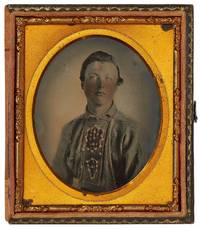
1859423474Salt Lake City 1859. Unbound. Near Fine. A hand-colored sixth plate ambrotype portrait of a young man wearing what appears to be a battle shirt identified on the verso of the plate and in pencil on the paper lining behind the image as "Leivingston Moore. Salt Lake" and dated April 22nd 1859. Slight tarnish along perimeter of image; some tarnish on mat; lacking half of the leather covered case.<br /> <br /> According to Census records Livingston Moore was born in 1840 in Jamestown Missouri lived in St. Louis and finally died in Moran Missouri in 1911. Likely a Mormon Livingston Moore lived most of his life in Missouri which had a large Mormon population until The Missouri Mormon War took place in 1838 and forced more than 10000 Mormons to leave the state. Many settled near or in the city of Nauvoo Illinois. Moore's census records do not indicate why he was in Salt Lake City in 1859 but it is possible that he was sent there as a member of the Nauvoo Legion a militia employed by LDS leaders for protection of the community. Between May 1857 and July 1858 a confrontation between the Mormon settlers in the Utah Territory and the U.S. Federal Government took place referred to as the Utah War. This armed dispute stemmed from an attempt by President James Buchanan's administration to replace Brigham Young as governor of Utah Territory. Although the conflict was over by April 1859 it is conceivable that Moore may have been stationed in Salt Lake in case any additional uprisings occurred against the Mormons. unknown
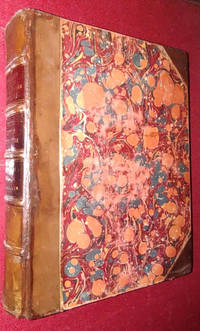
183645698Paris: Imprimerie Royale. 1836. First Edition. Hardcover. Very Good. Collection de Documents Inedits sur L'Histoire de France.; 4to; 2 ff. CCIII p. 1 f. 677 p. 1 f pages; Quarto. The first leaf is a half title for the series in which this is a particularly distinguished individual publication: "Collection de Documents Inedits sur L'Histoire de France." Contemporary brown half morocco over marbled paper-covered boards five shallow raised bands on the spine which has three labels lettered in gilt -- two series titles and the specific title of Abelards previously unpublished work. Marbled endpapers and edges of the text block cut polished and marbled -- all matching the boards. The binding shows only trifling wear. There are very light marks of damp to the blank upper and lower margins of some of the leaves scattered throughout. The binding shows no evidence of this; this may have affected the paper before binding. Following his long introduction in French 203 pp. = CCIII enumerated in Roman Numerals Victor Cousin has divided the contents of this important introduction to some of the works of Abelard into print into sections: logically the first is Abelard's major philosophical work: 'Sic et non.' This is followed by Dialectica; Fragmentum Germanense da generibus et speciebus; Glossae in Porphyrium; Glossae in Categorias; Glossiae in librum de Interpretatione; and Glossae in Topica Boethii." In the popular mind Abelard is best known for his passionate and ultimately tragic love affair with Heloise d'Argenteuil who had been his brilliant student and who eventually became his wife. Those who would find this book appealing hardly need be told that Peter Abelard was a leading medieval French scholastic philosopher. In fairness considering his wide range of thought and teachingAbelard must also be assessed as a logician theologian teacher musician composer and poet. Some view him as the "Descartes of the twelfth century." Abelard coined the very term "theology" -- it seems impossible to study that field deeply without assessing his thought and achievement. In our own times Pope Benedict XVI who found himself in opposition to Abelard's conception of the trinity untimately found that St. Bernard's "theology of the heart" and Abelard's "theology of reason" represent the importance of healthy theological discussion and humble obedience to the authority of the Church. The editor of this significant contribution to the history of Philosophy Victor Cousin was himself a highly distinguished philosopher lecturer and administrator of public instruction. He earned a high reputation as a classical scholar in addition to his achievements as a philosopher Sandys in his 'History of Classical Scholarship' makes a point of mentioning Cousin's important work on the lesser works of Abelard -- "professor at the Sorbonne in 1815-22 and 1828-30 and Minister of Education in 1840. He is connected with Greek scholarship by his editio princeps of Proclus 1820-7 and by his French rendering of the whole of Plato 1821-40. He threw new light on the lesser-known works of Abelard and contributed to the elucidation of the history of the scholastic philosophy." vol. III p. 251. Cousin is especially noted for his mastery of German; during his lengthy travels and residences in parts of German Cousin came to know Hegel and Friedrich Wilhelm Joseph Schelling. Cousin can be considered the the founder of "eclecticism" which combined elements of German idealism and Scottish "Common Sense" Realism. For political reasons Cousin was forbidden to teach and lecture publically in France for nearly a decade. When he was allowed to resume his lectures at the Sorbonne the crowds gathering to hear him are said to have rivelled those who lined up in Paris to see Peter Abelard at the high point of his influce seven hundred years before. There is a much-quoted assessment of Cousin's own merits and achievements as a philosopher from a significant English philosopher Sir William Hamilton -- whose own thinking it must be noted was resolutely opposed to Cousin's. Hamilton wrote: "Cousin was a profound and original thinker a lucid and eloquent writer a scholar equally at home in ancient and in modern learning a philosopher superior to all prejudices of age or country party or profession and whose lofty eclecticism seeking truth under every form of opinion traces its unity even through the most hostile systems." . Imprimerie Royale hardcover