191 résultats
194925761949 P., Bibliothèque française, 1949, in 12 broché, 189 pages
198511379(Hamburg, 1985). 40 S. Mit s/w Abb. OBrosch.
19592081502111706531Japan Carbon Takamatsu Labor Union 1959. Soft Cover. Fine. Number of pages: 772p Plate size: 22cm Japan Carbon Takamatsu Labor Union paperback
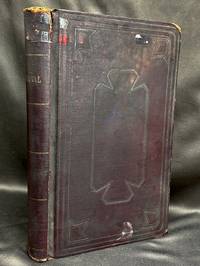
1906h42263Mutual PA 1906. Hardcover. Good. 14.25 x 9.5 inches dark maroon cloth good with some wear to corners and spine ends binding a little worn and dusty contents very good. Identified as coming from the Mutual Coal Mine Co. by a small antique dealer's price tag and with "Mutual" in pencil on first page but we could be all wrong about this: on p. 277 there is a transaction for H. C. Frick Coal Co. in Mutual for 49 gallons of sperm oil so we don't really know what to think. The Mutual Coal Company was a subsidiary of the H. C. Frick Coal and Coke Company based in Mutual PA south of Greensburg and east of Youngwood. The mines closed in 1923 but in its heyday the company both mined and refined coal and had over 200 beehive coke ovens in operation. The ledger is from 1901-1906 and details the supplies needed to run the company with purchases for a wide variety of products -- building materials bricks straw tools machinery lumber even sperm whale oil for the miners' lamps etc. purchased from some major western Pennsylvania firms including much from the Carnegie Steel Company National Tube Works Lemont Brick Works Oil Well Supply Co. Joseph Woodwell Co Vulcan Iron Works American Mine Door Co. Harbison Walker Standard Supply & Equipment Co. Oliver Iron & Steel Co. American Lime and Stone Co. Baldwin Locomotive Works near Philadelphiaas well as various companies in Scottsdale Connellsville Greensburg etc. More research from someone who knows what they're doing can probably yield more information about where this ledger comes from and what it represents but it's an excellent look at the economics of running coal and coke operations back then. hardcover
1951ZB444066Denver etc.: 1951-55. 5 volumes approx. 500 pp original paper wrappers illustrated spines worn glue residue on some spines covers faded text clean and tight overall good. - If you are reading this this item is actually physically in our stock and ready for shipment once ordered. We are not bookjackers. Buyer is responsible for any additional duties taxes or fees required by recipient's country. Denver, etc.: unknown
19572090502113713031Not Available 1957. Soft Cover. Fine. The book is in fine condition. Not Available paperback
1957ZB416750Denver: 1957. 71 23 ads pp very good in original paper wrappers. - If you are reading this this item is actually physically in our stock and ready for shipment once ordered. We are not bookjackers. Buyer is responsible for any additional duties taxes or fees required by recipient's country. Denver: unknown
1958ZB416749Denver: 1958. 52 24 ads pp original paper wrappers faded at spine good. - If you are reading this this item is actually physically in our stock and ready for shipment once ordered. We are not bookjackers. Buyer is responsible for any additional duties taxes or fees required by recipient's country. Denver: unknown
1959ZB416748Denver: 1959. 56 24 ads pp original paper wrappers faded at spine with light extraction roughness good. - If you are reading this this item is actually physically in our stock and ready for shipment once ordered. We are not bookjackers. Buyer is responsible for any additional duties taxes or fees required by recipient's country. Denver: unknown
1960ZB416747Denver: 1960. 54 26 ads pp small chip at tail of original paper wrappers with light extraction roughness at spine and pen note on front cover good only. - If you are reading this this item is actually physically in our stock and ready for shipment once ordered. We are not bookjackers. Buyer is responsible for any additional duties taxes or fees required by recipient's country. Denver: unknown
1961ZB444065Denver: 1961-65. 5 volumes bound together approx. 500 pp original paper wrappers illustrated ex library good-very good. - If you are reading this this item is actually physically in our stock and ready for shipment once ordered. We are not bookjackers. Buyer is responsible for any additional duties taxes or fees required by recipient's country. Denver: unknown
1977ZB444062Denver: 1977. 136 pp original paper wrappers illustrated very good. - If you are reading this this item is actually physically in our stock and ready for shipment once ordered. We are not bookjackers. Buyer is responsible for any additional duties taxes or fees required by recipient's country. Denver: unknown
1978ZB444063Denver: 1978. 83 pp original paper wrappers illustrated very good. - If you are reading this this item is actually physically in our stock and ready for shipment once ordered. We are not bookjackers. Buyer is responsible for any additional duties taxes or fees required by recipient's country. Denver: unknown
1979ZB444064Denver: 1979. 123 pp original paper wrappers illustrated very good. - If you are reading this this item is actually physically in our stock and ready for shipment once ordered. We are not bookjackers. Buyer is responsible for any additional duties taxes or fees required by recipient's country. Denver: unknown
1991LFA00977Un ouvrage de 223 pages, format 305 x 215 mm, illustré, relié cartonnage couleurs, publié en 1991
19762082402113509688Gabun Publishing Company 1976. Soft Cover. Fine. Volume: 1 Gabun Publishing Company paperback
190220871Philadelphia: George W. Jacobs 1902. First Edition. 7.5 x 5 in. 97 pp with three illustrations from photographs in original pictorial cloth. Light scuffing to corners and spine ends pale stain to frontis not affecting illustration previous owners' names on front endpapers. Very good. In 1902 the United States depended on anthracite or "hard coal" for domestic heating. Anthracite coal miners in Pennsylvania went on strike on May 12 demanding higher wages a shorter workday and recognition of their union the United Mine Workers of America. As the strike dragged on over several months public anxiety about fuel shortages led President Roosevelt to take the unprecedented action of stepping in to bring about a resolution. On October 3 1902 he met with presidents of the mine-owning railroads and union leaders. The owners refused to enter into negotiations with the union and the conference disbanded without resolving the crisis. Roosevelt then formed a commission to investigate the strike. Secretary of War Elihu Root and banker J. P. Morgan convinced railroad leaders to abide by the findings of the presidentially appointed commission. The union also accepted the commission and on October 20 voted to end the strike. In March 1903 the anthracite-coal commission recommended increasing miners' pay by ten percent one half of their demand and reducing the working day from ten to nine hours. Stewart Culin was a private in the Second Troop Philadelphia City Cavalry which was sent in August 1902 to maintain peace and order in Carbon County where the strike was centered. He later became an important ethnographer and his considered narrative and analysis of the strike reflects the eye of a keen observer. George W. Jacobs hardcover books
1925009741Fairmont West Virginia: Fairmont Printing Co. 1925. Full title from front wrapper reads: Agreement. Memorandum agreement between the Consolidation Coal Company and its employees in West Virginia Division. The local organization of employees at each operation take the name and number of the mine and is know as "space in text Miners' Association No. space." Original green printed wrappers. 40 pp. Unrecorded on OCLC/WorldCat. First Edition. Soft Bound. Fine. Fairmont Printing Co.
1990LFA-126734976N° 3 - Mai-juin 1990: une revue de 98 pages, format 210 x 270 mm, illustrée, brochée couverture couleurs, bon état
1951LFA-126740891Une revue de 36 pages, format 240 x 315 mm, illustrée, brochée, publiée en 1951, Editions de la Propagande de France, bon état
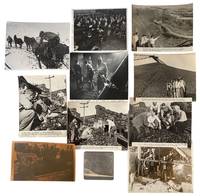
1943213381943. Anthracite coal mining photographs circa 1930s to 1950s document the daily labor conditions environmental hazards and union activity within Pennsylvania's coal industry and provide direct visual evidence of industrial work in one of the most significant energy sectors in the United States. Created during a period when anthracite coal production remained central to regional economies and national energy supply these images record both above ground and subterranean labor processes as well as the collective organization of workers responding to unsafe conditions and economic pressures. The archive supports research into labor history industrial practices occupational health and union movements in mid twentieth century America.<br /> <br /> Eleven silver gelatin photographs ranging approximately from 4 x 6 inches to 8 x 10 inches some with typed captions attached depicting mining activity and related scenes in Pennsylvania's anthracite region. Images include miners traversing severe winter conditions while guiding donkeys hauling coal carts through heavy snow; workers shoveling coal in enclosed dimly lit environments with airborne dust visible in the light captioned "Coal shoveling brigade or how I spent my summer vacation"; and inspection scenes in which workers examine coal samples prior to distribution. Additional photographs show large scale coal piles dwarfing individual laborers emphasizing production scale. One press photograph dated January 15 1943 documents a mass meeting in Hazleton Pennsylvania where union leader Andrew Yevchak addresses striking miners with caption noting that 17000 workers were ordered to return to work following the gathering.<br /> <br /> Produced during a period marked by ongoing labor disputes mechanization and heightened awareness of occupational hazards such as coal dust inhalation these photographs capture both the physical demands of mining and the organizational structures that shaped worker response. The inclusion of the 1943 Hazleton meeting situates the archive within broader wartime labor tensions when coal production was critical to the war effort and strikes carried national implications. Together the images provide a grounded record of industrial labor environmental exposure and collective action within the anthracite coal industry preserving visual documentation of work that was both economically essential and physically hazardous. Minor edge wear and light creasing to a few prints with strong image clarity overall; condition very good. unknown
1953ZB418164Cheyenne: 1953. 58 pp very good in original paper wrappers. - If you are reading this this item is actually physically in our stock and ready for shipment once ordered. We are not bookjackers. Buyer is responsible for any additional duties taxes or fees required by recipient's country. Cheyenne: unknown
1950ZB418163Cheyenne: 1950. 60 pp library markings soft corner bend good in original paper wrappers. - If you are reading this this item is actually physically in our stock and ready for shipment once ordered. We are not bookjackers. Buyer is responsible for any additional duties taxes or fees required by recipient's country. Cheyenne: unknown
1948ZB418165Cheyenne: 1948. 53 pp library markings else very good in original paper wrappers. - If you are reading this this item is actually physically in our stock and ready for shipment once ordered. We are not bookjackers. Buyer is responsible for any additional duties taxes or fees required by recipient's country. Cheyenne: unknown
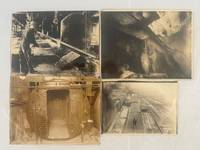
1920224531920. Appalachian Coal Mining Operations; Photo Archive of Five Original Gelatin Silver Photographs ca. 1910s-1920s. Five gelatin silver prints measuring betweenand 8" x 9" to 5" x 7" Striking vernacular archive documenting early 20th-century industrial coal mining practices through four large-format photographs capturing both above- and below-ground operations.<br /> <br /> One image depicts a smelter or foundry worker tending molten material in a heavy industrial setting possibly related to coke production-a critical process in transforming coal into fuel for steelmaking. The worker wears a protective leather apron gloves and a helmet with face shield using a long paddle to manipulate the material. Industrial piping and steel platforms surround the workspace and a massive crucible or furnace stands nearby. Another photograph captures a dramatic underground mining scene. Two Black miners in heavy coats and headlamps drill upward into the cavern ceiling using a compressed-air jackleg drill. The low uneven rock walls exposed support timbers and scattered equipment emphasize the confined and hazardous conditions of subsurface labor. Coal dust visibly clings to their garments hinting at prolonged exposure to harsh particulate-laden environments common in deep mining shafts. One image centers on a large cylindrical steel structure-likely a pressure chamber or industrial boiler associated with coal-fired power or steam generation. The riveted iron shell and complex pipe fittings suggest this is part of an early steam engine or autoclave. Tools such as a coal shovel and rake lean nearby alongside a coal scuttle reinforcing the manual labor involved in operating and maintaining this machinery. Another photograph presents an expansive view of a coal rail yard in winter. A lone worker walks atop a line of boxcars amid snow-covered tracks while coal smoke rises from the buildings along the rail lines. <br /> <br /> The archive offer a vivid and textural record of early 20th-century coal mining labor and its related technologies. At this time coal mining was one of the deadliest occupations in the United States; between 1900 and 1930 tens of thousands of miners died in accidents or from occupational illnesses such as black lung disease. Light edge wear and surface handling; one image with silvering and faint creases. Well-preserved examples of early 20th-century industrial photography documenting coal mining infrastructure labor and technology during a critical era of American energy and industrial history. Minor edge wear and light creasing; one image with mild silvering; overall very good. unknown