[FASHION]; Horn, Francine (editor)Biblio.com
300 résultats
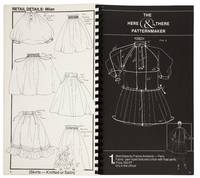
19781003703Westport Connecticut: Here & There 1978. June 1978 issue of Here & There Francine Horn's groundbreaking fashion trend report advising American retailers on the upcoming European fall collections. The only photo story in the issue "The London Collections Fall '78" is also the largest. A statistical analysis of the new styles purchased by three hundred French retail stores at the Port de Versailles exhibition breaks down the data by clothing item number of interested stores and percentage of retailers' projected budgets an unusual feature in forecasting reports. The "Retail Details" section highlights oversized silhouettes by Agnes B. and Thierry Mugler in Paris early Laura Ashley and Elle coordinates in London and separates by Max Mara and Kenzo in Milan. Both a major trade publication and a savvy ad for Francine Horn's fashion trend consultancy Here & There was an industry must-read a success due in part to her husband David Charles Horn's candid photography and provocative editorials. Like most fashion forecasting reports from the 1970s this number of Here & There is scarce in commerce and in institutional holdings. A very good example. Single volume measuring 14 x 8 inches: 94. Original coil-bound stiff black wrappers lettered in white. First leaf printed on orange paper black-and-white photographs and line drawings throughout text. Light shelfwear top right corner of upper wrapper clipped. Here & There unknown
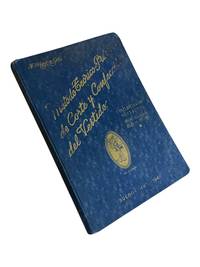
19408804Buenos Aires: Lopez and Co 1940. Fifth edtition. 4to 5 333 v 1pp. Text in Spanish with index at rear illustrations diagrams cut-out patterns throughout one folding. Publisher's shell patterned blue cloth stamped in gilt. First 40 or so pages lightly damp stained around edges and with rippling. Spine gilt worn away corners bumped still a very good sound and complete copy. <br /> <br /> Very uncommon technical treatise on dress making by F. Marti de Gili who is described on the title page as the Founder and Director of the Barcelona Women's Technical Institute and contributor to European and American fashion magazines. The book is copiously illustrated with over 1300 drawings and patterns all new and original. <br /> <br /> OCLC listings seem to indicate this book was published under various titles and likely heavily revised each time to keep up with the fashion between 1935 and 1962. There are perhaps 10-12 holdings in total for the various titles and we find no holdings for this 1940 edition. Lopez and Co unknown
195346799New York: Reporter Publications 1953-1955. Four vols. Folio. 151 1; 116 2; 116 16; 100 pp. 100s of colour and black & white illustrations some tipped-in plates over 200 tipped-in fabric samples including nylons worsted wools cotton blends taffeta ribbons quilted fabrics and more. Colour-illustrated softcovers first with Chinese still live cover art 2nd w/ Van Gogh Starry Night; 3rd w/ Hiroshige 4th with Herman Miller textile patterns minor shelfwear slight creasing VG set. First editions of these four issues of William Segal’s famed American Fabrics magazine that was considered the bible of the fashion industry at the time. All of the issues included sophisticated layout special inserts varied textures fashion design fashion art and promoted fabrics and textiles of the period. The articles on the silk section in No. 26 are of particular interest as are the numerous references to Army uniforms aviation fabrics automobile fabrics and of particular interest is the index to the first 28 issues in No. 29. Reporter Publications, paperback
1980001922New York: Dial Press 1980. First American Edition. stapled wrappers. Near Fine/issued without. Helmut Newton Sanchez Garcia and other photographers. Folio 48 pages <br/><br/> "'Does one send flowers to a kneecapped friend' What is the relationship between revolutionary politics and revolutionary couture These are the questions asked and discussed in this absolutely important new novel from the front lines of fashionable embattled Rome ." Dial Press unknown
193747916Praha Prague: C. Wolfrum 1937. First edition. Paperback. Very good. Vlasta Novakova. Very slim quarto 30.5 cm Original beige handmade paper wraps bound with a stringtie binding and three punch holes and with the Wolfrum gold monogram on the front cover. Eighteen leaves with color lithograph fashion illustrations on every leaf. Light dust soiling on the wraps; some occasional thumbing in the margins of the pages; minor markings and notations in pencil here and there. A first edition of this scarce original trade catalogue issued by the C. Wolfrum textile firm in Czechoslovakia and featuring the "Chic Parisien" line created by Vlasta an in-house designer. The designs in this catalogue highlight the growing influence of militaristic styles such as square-edged shoulder pads plate hats and an emphasis on tight waists and long skirts. C. Wolfrum paperback
1998124483Museu de Arte de Sao Paulo Ass 1998. paperback. New. 0x0x0. Brand new gift quality softcover oversized and overweight. D52 Please email for photos. Museu de Arte de Sao Paulo Ass paperback
1934011484London: The Studio Ltd 1934. Slight foxing to end papers. No other marks or inscriptions. A very clean very tight copy with bright unmarked bevelled boards with very clear gilt art deco lettering to front and spine gilt upper page edges and no bumping to corners. Dust jacket not price clipped but foxed and chipped with a piece about 3x1 inch missing from lower rear corner. Sixteen pages adverts plus 141pp. A superb copy of a scarce work with the even rarer dust jacket. Very well illustrated in black & white plusi six colour photographic plates. Includes a tucked-in four page illustrated flyer for Derek Patmore's book 'Modern Furnishing and Decoration'. First Edition. Hard Cover. Very Good /Good -. 11.5 x 8.25 inches. The Studio Ltd Hardcover
2000044278New York: Vendome Press 2000. 1st Edition 1st Printing. Hardcover. Fine/Fine. Photographs By Jean-Bernard Naudin. 182 Pp. First Printing Hardcover Fine In Fine Dust Jacket. Large Format. <br/> <br/> Vendome Press hardcover
1987DADAX348431074XDe Gruyter 1987-01-01. Reprint 2010 ed. perfect. New. 6.14x0.38x9.21. Buy with confidence. Excellent Customer Service & Return policy. De Gruyter unknown
199116260New York City NY: Conde Nast & Company 1991. First Edition. First Printing. Softcover. As New/No Dust Jacket As Issued. New York City NY: Conde Nast & Company 1991. Softcover. As New/None As Issued. First Edition/First Printing. 100 pages. Rare Bruce Weber Calvin Klein and Vanity Fair Magazine collectible item. A pristine copy of the complete set: Vanity Fair Magazine's "Jessica In Love" October 1991 Issue with the Calvin Klein Magazine Supplement/Insert that accompanied it. Limited Edition of 10000 copies. Inserted randomly and distributed to subscriber copies in the United States only. There is no ISBN. The complete set is now rare. Pictorial softcovers with titles on the cover and spine as issued. Photographs by Bruce Weber. The Supplement/Insert has no text. Printed on pristine-white thick coated stock paper in the United States to the highest standards. Unlike most books being published today American magazines are still being printed in America; many of them are not only superior in quality they will last in terms of production values. In publisher's original shrinkwrap. Without DJ as issued. Presents the complete Calvin Klein and Bruce Weber Magazine Issue-cum-Magazine Supplement/Insert. Weber's single best portfolio for Calvin Klein. It's the kind of inventive mass-media merchandising Calvin Klein pioneered and became known for generating tremendous press and consumer attention for himself and his eponymous brand influencing and revolutionizing the way the fashion industry does advertising even in our Social Media Age. The CK advertising campaign "had a seismic effect on America's social and cultural scene. Weber's photographs are part of the phenomenon they document. His advertising campaigns have come to stand for the acceptance of this imagery by the cultural mainstream. For those who can recall a time before it became acceptable for men to regard their underwear as fashion statements Weber's images must count among the most revolutionary tools yet devised in the history of consumer manipulation" The New York Times Magazine. Sexy photographs of the world's supermodels such as Christie Turlington and Marcus Schenkenberg beauties who are now iconic figures of fashion. Showcases another look perfected by the photographer and much copied by others: Racier and sexier in a cosmopolitan "metrosexual" way long before the latter term gained mass currency in contrast to the trademark "All-American" look that is identified with the Bruce Weber of "Bear Pond". An absolute "must-have" title for Bruce Weber and Calvin Klein collectors. This Calvin Klein/Bruce Weber Magazine Issue-cum-Magazine Supplement/Insert is a contemporary erotic photography classic. As far as we know this is the only complete set available online is still in the publisher's original shrinkwrap and is in especailly fine condition: Clean crisp and bright. Please note: "Loose" copies of just the Insert available online have serious flaws yet command hundreds of dollars. Since this was after all an ephemeral magazine issue 99.9% of remaining copies of the Supplement/Insert are opened the shrinkwrap removed separated from the Magazine Issue itself in heavily used soiled condition. For those who have everything else by BW this is it. A rare copy thus. Lavishly illustrated with duotone plates. Bruce Weber's "O Rio de Janeiro" perhaps the sexiest photography book ever published was selected as one of the "Seminal Photography Books of The 20th Century" in the "Book of 101 Books". One of the finest photographers of our time. A fine collectible set. SEE ALSO OTHER BRUCE WEBER TITLES IN OUR CATALOG. Conde Nast & Company paperback
194547397New York: Rosecliff-Quaker 1239 Broadway 1945. Folding sample case portfolio divided into 3 panels w/ flap and snap closure -- 5 x 8.5 x 1.5 in. when folded up; 18.5 x 8.5 when opened up. The left panel with brochure for Firm-edge comfort collar; right hand panel with 7 leaves with 38 cotton gabardine ascot twill Siltex and other blends; center panel with 52 cotton blend & broadcloth samples divided into 5 sections with colour-printed covers. Sample case binding is pebbled black cloth rivets on center panel verso snap for flap 1 minor scuff on flap hinge minor soiling to a few samples hinge repaired still a G copy. First edition of this exceedingly scarce and imaginative salesman sample case for men’s shirts and sport shirts with man in golf shirt on front cover of right hand sample catalogue. The wonderfully engineered catalogues mounted in the folding case display beautifully. Rosecliff-Quaker was best known for their men’s shirts with firm-edge comfort collars and Sanforized or double shrunk so the shirts would not shrink after purchase. The company was founded in 1895 and retained an active sales force for their shirts for years. No copies located in Worldcat. Rosecliff-Quaker, 1239 Broadway, hardcover
193019806AB1930. n.p. 1930ties 48 : 36 cm. Four sheets with coloured aquatints partly hightened in gold Six designs for Ladies evening dresses. One plate signed Boris. While men's style changed little women's looks changed significantly over the course of the 1930s. The previous Roaring Twenties were still characterized by a new very androgynous image of women and the so-called Flapper Girl was a symbol of the independent modern woman. But in the 30s this trend changed to the complete opposite: the elegant lady was popular again. This was reflected above all in the rediscovery of the female figure. Reason for this: The woman as a caring mother and housewife was THE ideal of the time. This conservative image was also accompanied by a hyperfeminization of women. This value attitude was particularly evident in the emphasis on the high waist. unknown
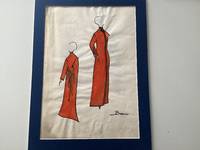
193225922Paris: Au Printemps 1932. 1 vols. Image 11-1/2 x 8 inches matted to 17-1/2 x 14 inches. 1 vols. Image 11-1/2 x 8 inches matted to 17-1/2 x 14 inches. Reynaldo Luza 1893-1978 pre-eminent fashion artist was born in Lima Peru. He began training as an architect at the University of Louvain Belgium but returned to Peru at the outbreak of World War I where he changed his studies from architecture to art. In 1918 he came to the United States where he earned his living by contributing drawings to several fashion publications principally VOGUE HARPERS BAZAAR and VANITY FAIR. In 1921 he joined HARPERS BAZAAR as the principal fashion artist a position he was to hold for 27 years. He divided his time between New York Paris and London working closely with all of the leading fashion designers of the times--Poiret Patou Lelong Paquin Douillet Doucet Cheruit Worth Drecoll Callot Soeurs Redfern Martial et Amand Premet Reboux Chanel Vionnet Molyneaux Schiaparelli Hartnell Steibel and Balenciaga among others.<br /> <br /> In 1940 Luza made New York his principal base where over the next few years he continued his activities at Harpers as well as creating fabric and furniture designs and the costumes for the movie "The Bridge of San Luis Rey". Among other distinctions he received several honorary appointments from the government of Peru including that of Artistic Director of the Paris Exposition of 1938 and the New York World's Fair of 1939-40; he also did the interior design of the new Lima airport.<br /> <br /> In 1950 Luza returned to Peru where he began a second career as a portrait painter exhibiting his work over the next few years in Paris New York and Washington D.C. Au Printemps unknown
191152192Paterson NJ Allentown PA Williamsport PA Dundee Lake NJ: National Silk Dyeing Company 1911. 8vo. 4 leaves of thick card stock bound in accordion-style format which fold out into 9 x 25.5 in panorama with 178 tipped-in colour skein silk samples in rainbow of colours a few discontinued colours removed along with their inventory numbers. Black cloth gilt lettering on front cover metal snap closure minor shelfwear some rubbing still G reference copy. First edition thus of this excellent sample catalogue filled with dyed silk thread samples including such Edwardian colour names as Desdoux Aloes Salambo Eclipse Champignon Glycine Pistache Oseille Cuite Myrthe and Matelot. The National Silk Dyeing Company began life as the Auger & Simon Silk Dyeing Works which was moved to Paterson in 1884 and grew quickly during the Victorian era but in 1908 Charles Auger chose to merge operations with five other Paterson NJ dye works forming the National Silk Dyeing Company. They would enter bankruptcy during the Great Depression. Worldcat locates 1 copy of 1913 Dyeing catalogue Brooklyn Museum. National Silk Dyeing Company, hardcover
195556299Vienna: Wiener Modellgesellschaft M.B.H. Editions de Mode Fashion Publications 1955. Folio. 9 x 13 in. 23 colour plates in pochoir-inspired hand-coloured style. Printed beige softcovers minor creasing head of spine minor dustsoiling still VG bright copy. First edition thus of this beautifully rendered collection of haute couture summer dress designs issued by the Viennese fashion cooperative in the 1950s. These designs show the decided shift towards elegance and perfectly matched accessories for women during the 1950s with nipped-in waists full-skirted dresses as well as tailored fitted clothes with a hint of playfulness and exuberance inspired by the designs of Cristobal Balenciaga and Hubert de Givenchy as well as the feminine silhouette of Christian Dior. No copies in Worldcat of this issue. Wiener Modellgesellschaft, M.B.H., Editions de Mode, Fashion Publications], paperback
193559961Chicago: Sears Roebuck & Co. 1935. 4to. 20 pp unpaginated. including 4 pp. order blank with measuring instructions. With printed illustrations throughout in orange & black 50 mounted fabric swatch samples of worsted wool and worsted wool blends. Self-printed colour-illustrated softcovers in orange & black Art Deco cover art & lettering w/ “Easter†promotional label mounted at upper left front cover dated March 23 1935 minor creasing shelfwear still a VG copy. Early edition of this scarce and unusually complete sample catalogue for men and young men’s suits featuring the Syracuse Parkway Collegian Kenwood Wall Street & Walton styles from Sears Roebuck & Co. These special sample catalogues were issued as supplements to their famous catalogue which were issued in millions of copies even during the Great Depression. These catalogues were more expensive to produce and were intended to provide a reasonable alternative to the larger Men’s suit purveyors such as J.L. Taylor M. Born and others. This catalogue provides invaluable illustrated historical reference for the colours styles and fabrics during the era of fashion influenced by the elegance and glamor of Hollywood films at the time. There is definite evidence of influence from the popular Film Noir films of the period. The men’s suits showed a trend towards padded shoulders suit lapels that were not as long and an increased weight and drape to the clothes as well as wider legs for the younger “fast†crowd. Worldcat locates only 1 copy Ohio University. Sears, Roebuck & Co., paperback
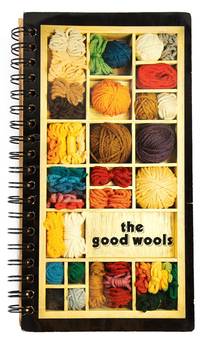
19771004235New York: The Wool Bureau 1977. Original trend report on American knitwear for fall 1977 featuring fashion sketches on every page each captioned with the name of the manufacturer the wool content and the retail price. Featured designers of these ready-to-wear styles include Donna Karan for Anne Klein Gloria Vanderbilt and Kay Unger. Also represented are the mass-market "sport" lines of Givenchy and Pierre Cardin. The Good Wools was issued by The Wool Bureau the American branch of the International Wool Secretariat. The IWS shaped global fashion trends for decades through forecasting reports like this one and through the International Woolmark Prize which launched the careers of designers Yves Saint Laurent and Karl Lagerfeld. In 1997 the IWS would rebrand as The Woolmark Company keeping their iconic logo the stylized skein of yarn used throughout The Good Wools to signify 100% wool content. Provenance: Ellen Robinson uncredited designer of the tweed separates created for a New Division of Alex Colman page 81. A near-fine copy. Spiral-bound volume measuring 10 x 5.25 inches: 8 170. Original color photographic wrappers. Text printed on tan paper with brown card chapter dividers line drawings on every page. The Wool Bureau unknown
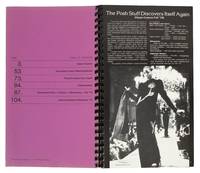
19781003704Westport Connecticut: Here & There 1978. September 1978 issue of Here & There Francine Horn's groundbreaking fashion trend report focusing on haute couture Japanese fashion and resort wear: "The posh stuff is back in line for Fall '78." Forecasting a year in advance the pages reveal trendsetting European designs for Fall 1979 alongside their American counterparts with lively editorial commentary. The opening chapters celebrate the return of haute couture and its translation to ready-to-wear led by St. Laurent and Givenchy and inspired by Hollywood glamour Chesterfield overcoats and vintage cocktail looks. The coverage of American resort wear highlights the role of the fashion illustrator in forecasting. Because those collections were presented in private showrooms that prohibited photography Here & There charged their "much overworked illustrator Mr. Frank Spina with the prodigious task of capturing with his 'rapacious rapidograph' the highlights of these resort collections" which included designs by Bill Blass Norma Kamali Perry Ellis and Willie Smith. Both a major trade publication and a savvy ad for Francine Horn's fashion trend consultancy Here & There was an industry must-read a success due in part to her husband David Charles Horn's candid photography and provocative editorials. Like most fashion forecasting reports from the 1970s this number of Here & There is scarce in commerce and in institutional holdings. A very good example featuring original patterns and twenty original mounted textile swatches. Single volume measuring 14 x 8 inches: 123 1. Original coil-bound stiff black wrappers lettered in white. First leaf printed on magenta paper; black-and-white photographs and line drawings throughout text; twenty tipped-in fabric swatches. Light shelfwear corners bumped lower wrapper creased. Here & There unknown
1945D3115Holland 1945. Cloth-backed paper over boards 10.25 by 13.75 inches; approx. pp. 200 handwritten and illustrated in black and red ink. Contains more than 50 patterns for women's clothing as well as few for little girls -- including dresses blouses skirts coats and underwear. Boards a bit worn and warped but contents are nice and fresh. Very little text -- all of it in Dutch -- but the patterns are universally applicable. Presumably created by a student the patterns are painstakingly neat and exact and accompanied by drawings of the finished apparel as well as wonderfully adept drawings of ladies modeling them offering complete looks from hat to shoe. Also includes cut-outs of patterns many of them still holding pins laid-in here and there. Lovely legible and careful throughout you can see that they were first drawn in pencil then traced over in ink and the student's ruler and blotting paper are laid-in at the back. Unique and accomplished. A gem. <br/><br/> hardcover
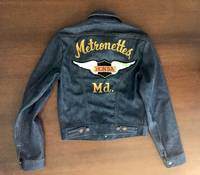
197042056Maryland 1970. Small men's 70s denim jacket from a female biker gang or motorcycle club. We find no information or reference to the "Metronettes" but as they were driving Honda's most likely Gold Wings they were probably on the more wholesome - rather than outlaw - end of the spectrum. Blue Wrangler "No Fault" denim jacket size 36. With name "Chan" and zodiac sign - "Pisces" embroidered in yellow above each breast pocket. "Metronettes" and "Md." enbroided in matching color to back of the jacket above and below a period Honda motorcycle patch. Generally fine condition. unknown
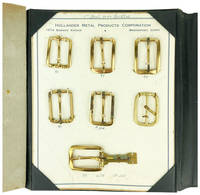
195029382Bridgeport CT: Hollander Metal Product Corp 1950. Very Good. Bridgeport CT: Hollander Metal Product Corp. ca. 1950s. Six-panel folding trade catalog with 58 belt buckle samples. Belt buckles tied down and numbered and first four sample pages are labeled either bronze cast bronze brass wire or steel wire. Variance in design and size are subtle though apparent. Hollander would go on to produce belt buckles for the Department of Defense during the Vietnam War. Folder edgeworn scuffed and rubbed with brief exposure to edges. Rust-spotting and dust soiling to interior; overall Very Good. Hollander Metal Product Corp unknown
2000981024097XWorld Scientific Publishing Company 2000. New/New. <p><strong>Author:</strong> Charles J. Mode Candace K. Sleeman</p><p><strong>Publisher:</strong> World Scientific Publishing Company</p><p><strong>ISBN:</strong> 9789810240974</p><p><strong>Release Date:</strong> 2000</p><p><strong>Languages:</strong> English</p><p><strong>Binding:</strong> Hardcover</p><p><strong>Number Of Pages:</strong> 768</p><p><strong>Details:</strong> AIDS autoimmune deficiency syndrome is a devastating human disease caused by HIV a human immunodeficiency virus which may be transmitted by either sexual or other contacts in which body fluids are exchanged. Cases of AIDS have been reported in a majority of countries throughout the world indicating that the HIV/AIDS epidemic is international in scope.This book deals with the mathematical and statistical techniques underlying the models used to understand the population dynamics of not only HIV/AIDS but also other infectious diseases. Attention is given to the development strategies for the prevention and control of the international epidemic within the frameworks of the models. Two distinguishing features of the book are the incorporation of stochastic and deterministic formulations within a unifying conceptual framework and the discussion of issues related to the mathematical designs of models which are necessary for the rigorous utilization of computer-intensive methods. The book will be of value to applied mathematicians biomathematicians biostatisticians epidemiologists and other scientists interested in applying mathematics and computers to not only the HIV/AIDS epidemic but also other fields of epidemiology. Editorial Reviews Review ""Everyone working or wishing to work on epidemic modelling will certainly benefit from this book."" -- Mathematical Abstracts 2001<br><br>""Quantitative epidemiologists and graduate students and researchers interested in stochastic epidemic models should find this to be a helpful reference."" -- Journal of the American Statistical Association 2001<br><br>""Researchers in applied mathematics and statistics interested in stochastic epidemic models should find this a helpful reference."" -- JASA 2001<br><br>""The book is carefully written from both the mathematical and didactical points of view and supported by suggestive figures/exercises."" -- Mathematical Reviews<br><br>""The book is self-contained and well-readable. and is going to become a standard graduate text on design-based local stereology."" -- Mathematical Abstracts 1999<br><br>I believe everyone working or wishing to work on epidemic modelling will certainly benefit from this book. -- Mathematics Abstracts 2002</p> World Scientific Publishing Company hardcover
195346794New York: McGregor Doniger ca. 1953. Elephant folio. 19 x 28 in colour poster expertly mounted on linen backing with 1.5 in. border around the entire poster NF copy. A wonderfully rendered advertisement which was intended for men’s sportswear and jackets sold by the McGregor-Doniger company as part of their Color of the Hebrides campaign in 1953. The image shows the model dressed in the Hebrides Mustard-coloured corduroy suit with blue & gray tartan vest & lining against the backdrop of Lewis Island with the bold McGregor company name in tartan colours at the lower fore-edge. The McGregor company was founded in 1921 by David D. Doniger a hat-maker and tailor from Scotland who left the family clothing business to establish himself in the United States. He focused on sportswear clothing that was both comfortable but also with fabrics colours and styles which were chosen to compliment one another. The McGregor line became the epitome of Preppy fashion during the 1940s and are perhaps best remembered for the red Anti-Freeze jacket worn by James Dean in the 1955 Rebel without a cause. McGregor Doniger, hardcover
195346793New York: McGregor Doniger ca. 1953. Elephant folio. 19 x 28 in colour poster expertly mounted on linen backing with 1.5 in. border around the entire poster NF copy. A wonderfully rendered advertisement which was intended for men’s sportswear and jackets sold by the McGregor-Doniger company as part of their Color of the Hebrides campaign in 1953. The image shows the model dressed in the coat against the backdrop of the Isle of Skye with the bold McGregor company name in tartan colours at the lower fore-edge. The McGregor company was founded in 1921 by David D. Doniger a hat-maker and tailor from Scotland who left the family clothing business to establish himself in the United States. He focused on sportswear clothing that was both comfortable but also with fabrics colours and styles which were chosen to compliment one another. The McGregor line became the epitome of Preppy fashion during the 1940s and are perhaps best remembered for the red Anti-Freeze jacket worn by James Dean in the 1955 Rebel without a cause. McGregor Doniger, hardcover
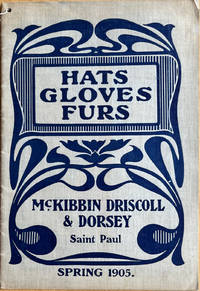
190562191St. Paul MN: McKibbin Driscoll & Dorsey Broadway and Fifth Streets St. Paul Printing Co. 1905. Tall 8vo. 27 1 pp. With text illustrations photo illustrations throughout. Gray decorated softcovers Arts & Crafts cover art & lettering in blue factory & warehouse & offices depicted on back cover small hole punch at upper left corner w/ gray silk braid as issued minor chipping to couple corners minor age-toning to fore-edges still a VG- copy. First edition of this surprisingly scarce Progressive-Era catalogue for the storied company founded originally in 1888 by McKibbin 1856-1941. This catalogue offers McKibbin Stiff Hats bowlers soft-brimmed Western hats such as the Columbia Dakota Manitoba & Railroad along with several Fedora hats. Advertised as well is an interesting novelty called the “Pin Wheel Hat†which were marketed in a round box rolled up and sold by the dozen for $ 4.50. Ladies and young women’s hats are included gloves sheep-lined coats and more. McKibbin was an orphaned self-made business man who managed to attend Princeton and Western University before moving to St. Paul where he eventually launched the business in 1888 which he sold in 1926 to T.W. Stevenson Manufacturing. No copies in Worldcat; See: David Pierce Joseph McKibbin Sept. 27 2014 & Men of Minnesota 1902 p. 372. McKibbin, Driscoll & Dorsey, Broadway and Fifth Streets, [St. Paul Printing Co.], paperback