300 résultats
19762083002117402880Mako-sha 1976. Soft Cover. Fine. Number of books: 6 books Mako-sha paperback
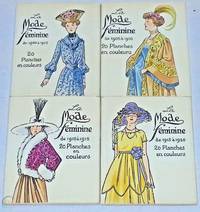
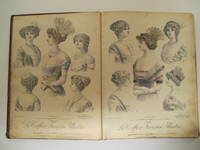
192673817Paris: Editions Nilsson 1926. First editions. There was a large and small edtion published; these are all the small size 3 1/8 x 3 3/4 inches. La Mode Feminine is complete is three volumes. Each volume in four parts and each part with 20 color card depicting French fashion of that date and each part in a printed paper portfolio. Each volume i.e. four parts housed in a floral slipcase with a printed paper spine label Slipcase for the third volume with some tape repair but overall a very clean and charming set of all 240 color plates.Together with a companion volume also published by Nilsson: Les Costumes du Pays de France. This volume only has three parts of 20 cards each complete and have paper portfolios and slipcases as in the above. Complete with 60 color cards. A very good set. For a total of 300 cards bearing charming color illustrations of French fashion through the ages all in their proper printed paper portfolios and slipcases. Editions Nilsson unknown
195054848Cincinnati OH: The Melville Company ca. 1950. 4to. 39 8.5 x 11 in. fashion plates with 97 tipped-in fabric samples including cotton cotton blends cotton-rayon blends satin nylon for men & women’s fashions dresses lingerie pants suits skirts. order blank booklet preserved in original cardboard portfolio w/ company design logo on rear flap an excellent collection. First edition of this scarce and unusually complete salesman sample sales kit for women’s dresses fashions coats lingerie as well as men’s overcoats underwear & socks and even women’s outerwear rubber pocket books and overcoats in post-World War II America. The Melville Company was a coordinated direct-sales fashion company supplied by Harford Frocks Inc. which maintained a large mail order tailoring operation in Ohio from the early 1920s up through the 1970s employing 100s of tailors and seamstresses to fill orders together with J.C. Field & Son Inc. direct marketing firm. The company focused on “plus sizes†while maintaining how these fashions emphasized trim appearances survived on a constant sales force composed primarily of young women and house wives earning extra money willing to peddle door-to-door and created a high-quality product. The catalogue offers invaluable illustrated historical reference for the colours styles and fabrics during the explosion and impact of Christian Dior’s new designs reflecting the refined femininity with severely cinched waists extra padding to the hips longer and decidedly more romantic skirts and dresses as well as nicely fitted jacket-and-skirt tailored suits. Israel 1901-1991 built and ran this very successful mail order dressmaking operation which also owned the Fashion Frocks Dress Company as well and operated out of the Oesterlein Machine Company historic building in Cincinnati OH now home to the American Sign Museum. The Melville Company, unknown
19042923New York: The Jno. J. Mitchell Co 1904. First Edition First Printing. Hardcover. Very Good. 10 1/4 X 13 1/4 Inches. 255 PP. Scarce original early 20th century guide to tailoring by J.O. Madison the son of American tailor Otis Madison. Signed by J.O. Madison under his frontis portrait. A profusely illustrated guide to the tailoring of men's clothing. Binding a bit shaken but a solid copy overall. The Jno. J. Mitchell Co hardcover
193562566Tacoma WA: Day’s Tailor-D Clothing Inc. ca. 1935. Folio. 15.75 x 22 in. Colour serigraph counter display on masonite w/ cardboard stand unfolded on verso minor tidemark some soiling back cover minor curving to the masonite still VG bright exemplar. An exceptional original brightly counter display for these popular durable corduroy slacks which became known as the “College Cords†and expanded the company’s popular offerings beyond their iconic “Big 5†work overalls. The “College Cords†also proved to be popular durable work pants but were initially targeted towards the college man. The company was founded by Day 1874-1947 in 1903 and quickly began selling the “Big 5†work overalls and in 1906 were unionized by the United Garment Workers of America forming Local 201 and embraced the slogan “Western Made Union Made.†The company in 1928 changed its name to Day’s Tailor-D Clothing Inc. and sons Hollis and Judd Day took over the company after 1947. During the 1950’s they maintained 400 employees and $ 1 million dollar payroll best known as one of the largest Pacific Northwest employers of women in the region. In 1973 the company merged with Warnaco. See: Day’s College Cords Marketing Tacoma Library Northwest Room 2022; Day’s Tailor-D Clothing, Inc., hardcover
198662982New York & Troy NY: Arrow Company Cluett-Peabody Co. 1986. Four oblong folio colour-printed advertising displays sized 16.5 x 11.25 in. colour-printed on thick card stock all four retaining their original fold back easels on versos slight edgewear very slight bowing still a NF set. First editions of these original counter displays marking Arrow’s attempts to revive their Arrow Man shirts with “Fancies†-- coloured shirts and intended to bring back the label in much the same way that Leyendecker’s striking illustrations had helped the company dominate the market through the first part of the 20th Century. Neiman in the 1980’s was not only well-known for his monthly illustrated sporting and lifestyle column in Playboy Magazine but also noted painter of the Indianapolis 500 races Official Painter of five Olympics boxing matches -- with Muhammad Ali a particular favorite as well as capturing basketball boxing hockey gymnastics swimming billiards and more. The Brigade Collection is here depicted by Neiman with an illustration of a boxer heading to the ring at Madison Square Garden; the stylish Dover Collection is depicted with stylish couple in Lutece’s bar in New York City; the finest level Bradstreet Collection which featured white collar and French cuffs is shown here with Arrow man at a horse race walking with his jockey and finally a couple shooting pool represents the cheapest line or “opening price point†Trump collection which was one of the oldest lines dating back to the early 20th Century and after Leyendecker featured illustrations by Frederic Stanley. No copies in Worldcat; See: Philip Dougherty Advertising: Arrow Man is Painted by Neiman New York Times Jan. 6 1986; Carl Johnson Cluett Peabody & Co. Hoxsie! The History of Albany Schenectady and Troy Feb. 7 2012. Arrow Company, [Cluett-Peabody Co.], unknown
192258300New York: James H. Dunham & Co. 336-338-340-342-344 Broadway 1922. Folio. 10.25 x 13.5 in. 22 108 2 201-280 pp. w/ 32 pp. of product insert promotions and plates 3 large folding. With 100’s of illustrations photos 24 tipped-in fabric swatches & samples in assorted colours and textiles. Quarter-black cloth over printed illustrated softcovers rounded corners illustration front cover printed borders dustsoiling to fore-edges darkening to textblock couple minor closed tears toning to order forms still VG- copy. First edition thus of this expansive and well-illustrated dry goods catalogue filled with listings and samples of Percale Suitings Chiffons Ginghams Chambrays and Fine Zephyrs embossed colour samples Cannon and Boott Mills towels ads for Bear Brand Hosiery and more. Also present are ads and pricing for Dunham’s fancy ribbons Burson fashion hosiery petticoats flannel wear sateen bloomers buttons and Fleisher yarns. Founded originally in Hartford CT by Amos Eno the company would go through several incarnations and reformulations as a dry goods business in New York until new large warehouse and retail site was built on Broadway after the death of James Dunham d. 1901. Worldcat locates 1 copy Hagley similar pagination. James H. Dunham & Co., 336-338-340-342-344 Broadway, paperback
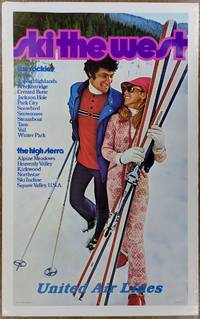
197371228United Air Lines Inc 1973. Poster. Very Good. Poster measuring 40"h x 25"w. Some very light wear. Vintage promotional airline travel poster advertising skiing at Park City and Snowbird Utah resorts. Also highlights skiing in other Western states such as California Colorado Wyoming and New Mexico the Rockies; Aspen; Crested Butte; Steamboat; Jackson Hole; Taos; Vail; Alpine Meadows; Heavenly Valley; Northstar. United Air Lines, Inc unknown
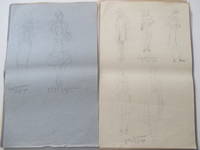
194214634AB1942. Vienna 1942. 46 : 30 cm. Many designs some in colour on 17 plates. All signed and dated. The designs show different woman's cloth dresses coats skirts etc. some with water-colours all on paper of different colours. All signed Ruth Brose and dated 1942. - with light middle fold. hardcover
19202413Paris Editions Nilsson. c.1920. Four little volumes containing 80 pochoir color cards 20 in each volume of women's fashions from 1900-1920. Small 16mo. 9.4 x 7.25cm. Each volume In original hand colored printed wrappers with women in costume on the front of each volume. Housed in the original patterned paper covered card slipcase with rose design on inside covers with printed paper spine label. Box is shaken. Interior volumes are fine. Ties are perfect. Editions Nilsson
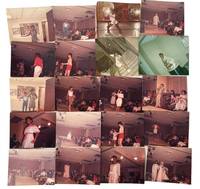
1984197351984. Photographic archive 1984 documenting African American participation in fashion runway culture during a period of expanding visibility for Black models within commercial and public-facing fashion events. The images center on runway presentation styling and performance with emphasis on clothing posture and audience reception. The material supports research into Black representation in fashion the aesthetics of 1980s design and the intersection of race visibility and consumer culture within the fashion industry.<br /> Archive of 20 original color photographs dated July 1984. Prints measure approximately 4 x 4.5 inches to 5 x 6 inches. The photographs depict multiple runway scenes featuring Black models in varied outfits including bright casual wear dresses athletic ensembles and business-influenced styles. Specific images include a model wearing a pink lace floral dress with ribbon detailing and white heels figures in coordinated athletic-inspired outfits with bold color accents and a model in a white dress trimmed with pink ruffles and pearl-like ornamentation. One image shows a male model in white flared overalls and sandals. Additional photographs capture audience members of mixed racial identities seated along the runway as well as backstage moments in which models pose against a wall displaying portraits of other figures associated with the production or company. Several prints bear date stamps reading "7/84" on the verso.<br /> Produced during a decade marked by gradual shifts in fashion industry representation these photographs provide visual evidence of Black models occupying central roles in runway presentation while engaging with broader stylistic trends of the period. The inclusion of both runway and backstage scenes allows for study of performance preparation and audience interaction within fashion environments. Light handling wear and minor surface marks; overall very good condition. A cohesive visual record of 1980s runway culture with emphasis on African American representation. unknown
190511083AB1905. 2 parts in 1 volume. Paris and Berlin Brunet resp. Liebig 1905 - 1911. 365 : 27 cm. with together 56 4 double-page partly coloured plates with many illustrations. Cloth. Interesting compilation of French and German hair style at the beginning of the 20th century. With many extravagant samples. - Edges a bit stained and wrinkled; binding a bit rubbed. hardcover
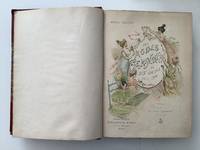
190210884AB1902. Paris Societé Francaise d'Éditions d'Art 1902. 305 : 235 cm. 14 pages with 100 plates in coloured etching and 1 coloured etched title-vignette. Contemporary red half calf spine richly gilt top edge gilt. One of only 600 numbered copies of the only edition. Wonderful coloured etchings which show perfectly the style of that time. - "Henri Boutet 1851-1919 a traduit a la point-seche avec un elegance zn peu mievre les graces de la Parisienne. Dans l'eau-fort en couleurs il a fait preuve d'un art beaucoup plus sur. Certains de ses dernieres estampes notamment ses paysannes normandes ont un veritable caractere" Benezit. - Reliure demi-cuir à coins jolis motifs au dos. Couvertures du broché conservées mais pas le dos. Chaque illustration est protégée par une serpente épaisse le papier lui-même est très épais si bien qu'en dehors d'une courte préface de Clarétie le livre ne contient en fait que les 100 illustrations une par feuille le recto est vide. Collationné complet. Henri BOUTET Les Modes féminines au XIXe siècle interprétées en cent pointes sèches aquarellées au pinceau 1801-1900. Préface de Jules Clarétie. Paris Société Française d'Éditions d'Art 1902. l'un des 600 après 60 sur Japon les 2 seuls tirages. 100 illustrations aquarellées une par année. Binding a bit rubbed otherwise a mint copy. unknown
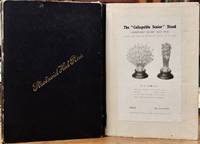
191016878Birmingham England: Stratnoid later Stratton & Co. n.d. ca. 1910. Three board panels with two cloth spines connecting boards. Bound in dark blue leather with gilt title. . Folding triptych display 8" x 11". With thirteen original Stratnoid silver hatpins nickel-plated eight with attached printed paper labels "Stratnoid Untarnishable heads". Also with three mounted illustrated advertisements for hatpin stands and sets of pins: the Collapsible Junior Stand the Collapsible Senior Stand and the De Luxe Collapsible Stand. A paper strip labeled in manuscript identifies which pins are part of the Junior Senior or De Luxe Stand sets. With spaces for the fifteen other hat pins in the set not present. Cracking and wear to joints and some chipping to leather. Some rubbing to extremities. Pins stuck into blue velvet pad with sheet of protective felt. Some foxing to felt and some light toning inside. A very good copy of a rare item. Stratnoid or Stratton and Company after 1920 was founded in 1860 as a producer of knitting needles. By the twentieth century the company was a major producer of powder compacts lipstick holders jewelry hat pins and other metal accessories. Business boomed in the late Victorian and early Edwardian eras as actresses like Lillie Langtry and Lillian Russell began wearing large elaborate hats secured with pins. b b b The hatpins in the present item feature the special Stratnoid Untarnishable heads which were warrantied for ten years and were designed in a variety of shapes like a stylized golf club an acorn and more. The collapsible stands would have been used to display the pins in women's stores and millinery shops. Stratnoid (later Stratton & Co.), hardcover
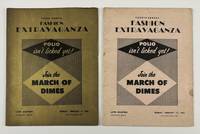
19574585Detroit: Bolar Printing & Publishing 1957. Good plus. 20; 36pp. Original printed wrappers stapled. Moderate soiling and wear. A pair of rare programs issued for the 1956 and 1957 benefits for the March of Dimes Fashion Extravaganza at the Latin Quarters in Detroit. The programs include information on the organization's committee hostesses sponsors and more. The event itself is titled "Fashion in Colorama" in the earlier program and "Spring Fashions in Symphony" in the latter with a schedule of events listed in both cases. Each program is profusely illustrated with photographs pertaining to the event itself but also in the numerous advertisements which populate both throughout. The ads feature a wide variety of local Detroit businesses providing critical information on commercial entities both owned by African Americans in and around Detroit and also those friendly to the local African American community. The only institutional holdings for these programs in OCLC reside at the Detroit Public Library. Bolar Printing & Publishing unknown
195061496Chicago IL: Hart Schaffner & Marx ca. 1950. Two large colour lithograph advertising posters sized 38.25 x 51 in. and 28.75 x 38.5 in. respectively both bearing the Golden Trumpeter logo as rendered by noted artist Robert Reinhardt von Liski minor dustsoiling creasing faint dampstain to very lower right fore-edge of larger poster minor closed tears neatly repaired light age toning still both bright VG- copies now mounted and shrink wrapped on archival foam core. The Hart Schaffner & Marx logo for men’s fashion was first created by Edward Penfield in 1914 with the trumpeter bearing an upright lance but the next year had turned into a trumpet and would continue on HSM suits until the late 1980’s. Hart Schaffner & Marx was founded in 1887 by Harry and Max Hart Marcus Marx and Joseph Schaffner. By the early 20th century they owned dozens of small garment factories around Chicago and was one of the first tailoring/garment manufacturing firms to become unionized. They continued to grow through the 20th century and by the end of the 1960s had 38 factories and 250 retail stores around the country. The Company continues to operate under the Hartmarx label and is one of the leading men’s clothing wholesalers to this day. Von Liski 1908-1991 was a noted self-taught artist and commercial artist who worked for various studios and was a partner in a Chicago advertising agency. No copies located in Worldcat; See: Leif Peng & Nan Hall Tom Hall Today’s Inspiration Celebrating Illustrations Design Cartoon and Comic Art of the Mid-20th century 2016; Hart Schaffner & Marx Encyclopedia of Chicago 2005. Hart Schaffner & Marx, hardcover
195352352Boston: Houghton Mifflin Co. 1953. 8vo. 86 2 pp. Illustrated half-title illustrated title page numerous text illustrations & plates 3 colour plates colour-illustrated endpapers. Blue-green coloured cloth illust. of doll in yellow holding parasol on front cover yellow lettering on spine very minor shelfwear minor rubbing & very slight bumping to lower corners w/ d.j. cover art of fashion doll by Bannon minor chipping head & foot of spine wear to corners minor rubbing upper corner clipped $ 2.25 price written in lower corner in pencil VG/VG copy. First edition of this remarkably rare and beloved children’s book surrounding the mystery and treasurer hunt for a 19th-century fashion doll in Peterborough NH by a young girl hidden by her ancestor in a secret room. Fashion dolls also called Queen Anne Dolls were often made of wood plaster or bisque with a fashionable hairstyle in flax or wool and dressed in miniature clothes showcasing the latest couture of the day. The most desirable dolls in the 19th-century were the French bisque dolls distributed all over Europe and were originally modeled on teen girls or adult women although these eventually changed over into child like bisque doll babies which would dominate the market from the 1860s onward. Bannon 1895-1963 was inspired to write this work while staying at the famed MacDowell Art Colony in Peterborough NH which carried a legend of a secret room in the MacDowell farmhouse. Original copies of this work have become quite scarce especially first editions. Houghton Mifflin Co., hardcover
196861495Portland OR: Jantzen Knitting Mills 1968. One giant colour lithograph advertising poster sized 40.5 x 46.5 in. on thick paper stock minor creasing edgewear agewear and couple closed tears w/ repairs still a bright copy now mounted on archival foam core and shrunk-wrapped from the library of Keith Albert Zilk 1927-2020 Korean War Vet Company D 40th Infantry and photographer with Condit Photo Studio and later with Jantzen Swimwear. First edition of this exceedingly scarce promotional swimwear poster for Jantzen produced under the direction of Roger Yost former Jantzen Art Director & Advertising & Marketing Manager designer Byron Ferris and copywriter Homer Groening 1919-1996 for the 1968 season the year after Jantzen had become the NFL’s first apparel licensee. Replacing the iconic “Just wear a smile and a Jantzen†with “Jantzen Speaks Your Language†this poster also sports the revised Jantzen Logo created by Thomas Lincoln who created a sort of condensed Bodoni which did not previously exist and worked with John Pistilli a New York type designer to create the entire alphabet. The swimwear advertising campaign featured such athletes as Frank Gifford Jerry West and Paul Hornung wearing wearing the striped trunks and were also used in 30-minute television biopics created by Portland filmmaker Homer Groening for 120 TV stations. We could find no similar surviving example; See: Trudy Chin Jantzen Collaboration Between Design & Advertising in the Jantzen Bullpen Portland Design History 2020; Ash Horn Homer Groening The Vanguard Cartoonist Filmmaker and Ad Man Who Did it All Portland Design History 2020. Jantzen Knitting Mills, unknown
199458623Milan et al: Valentino Atelier by Carnet Elegance Exclusive Distributor for North America 1994. Thick 4to. 12.75 x 12.25 in. 106 pp assorted pagination. With 51 colour fashion designs 136 tipped-in cotton silk wool acrylic and blend fabric sample swatches several printed fabric samples. Black silk cloth gilt lettering stamped on front cover numbered on colophon at rear very minor rubbing edgewear still VG bright copy. First edition No. 970 of this sumptuously illustrated sample fashion catalogue from one of the greatest Italian Couturiers Valentino Clemente Ludovico Garavani the incomparable fashion designer. This collection was representative of many of Valentino’s collections of the 1990’s integrating themes of revival and self-reference-flounces embroidery and dots partly as a way of highlighting his 30 years of fashion designs. In addition these designs and their fabrics reflect a foreshadowing of the later mid-1990’s shift towards a more bohemian style drawing upon 1970’s fashions mixing fabrics embroidery and Eastern influences in their designs. No copies located in Worldcat; See: Pelle & Mauries Valentino. Thirty years of magic 1990; Pelle Valentino’s Magic 1998. Valentino Atelier by Carnet, Elegance, Exclusive Distributor for North America, hardcover
19782092902138901163Not Available 1978. Soft Cover. Fine. The book is in fine condition. Not Available paperback
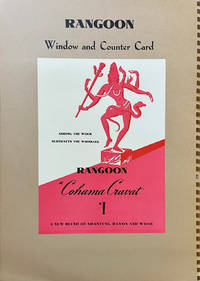
194061451New York: Cohama Cravats United Merchants & Manufacturers 1412 Broadway 1940. Atlas folio. 13 x 18 in. 34 pp unpaginated. printed on thick tan paper stock with 21 different tipped-in advertising promotional samples including camera-ready newspaper ads sample window & counter display cards and folded promotional brochures for mailing each to be imprinted with the retailer’s name order book tucked into rear pocket mounted on last leaf. Tan boards plastic-comb binding to spine minor bumping to couple corners some dustsoiling minor chipping to foot of spine still a VG bright exemplar. First edition of this exceedingly scarce sales and advertising catalogue designed to present the 1940 plan by the company for their $ 1.00 men’s cravat ties. Featured are the proposed newspaper ad lines for the six different Cohama Cravats in the Spring & Summer including the Briar Bahama Camelot Rangoon Gamester and Seminole. American tie manufacturing emerged as a significant force at the end of the Jazz Age and through the 1930’s as their popularity grew world wide for their heavy use of colours vivid patterns and breaking away from the more sedate colour palate of the British tie industry. Contributing to the explosion of tie manufacturing in the 1930s and 1940s were the need by many men during the Great Depression and then the War years to change their fashion look by adding a decorative tie rather than buying a new suit or set of clothes. The Duke of Windsor heavily influenced ties styles and wearers by not only developing the Windsor knot but also wearing them with many different types of clothing. Cohama was a trademark of United Merchants which was a textile firm originally founded in 1912 as the Cohn-Hall-Marx Co. merging with United Merchants in 1928 and later clothing chains across the East and South through World War II. No copies located in Worldcat; See: Gibbings The tie trends and traditions 1990. Cohama Cravats, United Merchants & Manufacturers, 1412 Broadway, hardcover
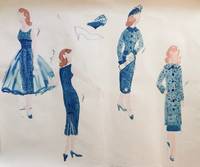
195358213Seattle WA: Nancy Paine ca. 1953-54. Twenty-one original fashion design watercolour paintings all oblong folio 9 sized 15 x 12 in.; 12 sized 18 x 15 in. 1 is painted title only many of them signed by Nancy down in lower corner 1 graded and reviewed by teacher several with neat cursive annotations some curling minor edgewear to corners some toning still VG set with the 2nd set retaining the original portfolio cover sheet. These original watercolour fashion designs reflect the 1950’s emphasis on full circle skirts swing skirts pencil skirts tea length dresses and fitted tight waist blouses reflecting the influence of Christian Dior towards increased femininity in the post-World War II era. For the College Coed portfolio our young artist has included designs for Capri pants lingerie fitted wool dresses flowing “poodle†skirts bathing suits tennis outfit ice skating clothing riding outfits and evening wear. The second portfolio incorporates diamond pattern one-piece bathing suits terrycloth robes different evening weather and nighttime negligee. Although young Miss Paine would not go onto becoming a commercial artist she did work as office manager for many years for the Simpson Lumber Company. Nancy Paine, hardcover
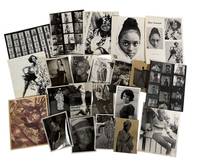
1950211751950. Archive of fashion photography documenting African American women's participation in commercial and editorial modeling from the 1950s through the 1980s a period in which the American fashion and advertising industries remained overwhelmingly centered on white beauty standards and limited Black representation in print media. Working in Cultural / Representational Mode the material illustrates changing presentations of Black femininity glamour and natural beauty across several decades of American fashion culture. The photographs provide visual evidence of evolving aesthetic conventions surrounding race cosmetics hairstyles leisure and commercial image-making during the postwar and Civil Rights eras. Particularly notable are several 1970s images depicting Black models with natural hairstyles and minimal cosmetic styling reflecting broader cultural shifts associated with Black pride movements and changing representations of African American identity in fashion and advertising imagery.<br /> Collection comprises 23 silver gelatin photographs and one color photograph produced by several professional photographers between the 1950s and 1980s. Images include editorial fashion shoots casting and publicity photographs scanned negatives and studio portraiture featuring predominantly Black women alongside several white models photographed by the same studios. Two 1970s editorial images depict a lean Black model with closely cropped natural hair posed in a leopard-print wrap. Four photographs focus specifically on Black women including close-up portraits emphasizing natural presentation and informal styling. One younger woman appears without visible makeup wearing a bandana and t-shirt while another is photographed in a straw hat with hoop earrings and patterned sash. Additional photographs include a Black model posed in a bikini atop the rim of a classical fountain featuring Aphrodite imagery. Four professional photographs and one casting card depict singer and actress Sylvia Vanderbeilt in commercial studio poses. Several scanned negatives portray a Black female model in multiple outfits and poses characteristic of 1970s fashion photography including one sequence featuring both the model and a young Black girl during apparent test shoots. The latest material consists of scanned negative strips from an apparent 1980s fashion session featuring a Black model with a sleek bob hairstyle modeling padded blazers and contemporary commercial attire. Other photographs depict white women in evening gowns fur wraps and casual mid-century fashions including two images by photographer Lee Brian showing the same model posed in mid-length evening gowns amid neoclassical architectural settings one with an elaborate mink shawl. Several photographs bear photographer or studio stamps on the verso including L.W. Ward of Cedar Rapids Iowa and Lee Brian of Palm Beach Florida.<br /> The archive traces substantial shifts in fashion photography and racial representation across three decades of American commercial imagery from heavily stylized mid-century glamour photography to the more natural aesthetics associated with 1970s fashion editorials and Black cultural self-presentation. The inclusion of both editorial and test photography offers insight into the production practices of commercial modeling studios as well as the visual conventions used in presenting Black women to advertising and fashion audiences during a period of gradual but uneven industry integration. Minor wear and light handling marks throughout; photographs otherwise remain in very good condition overall. A visually strong grouping documenting African American representation within postwar American fashion photography and commercial image culture. unknown
192462500Tacoma WA: A.V. Love Dry Goods Co. 2102-2106 Pacific Ave. 1924. 4to. 4 286 i.e. 338 10 pp. Including 52 pp. of colour lithograph sample pages many w/raised colour-embossed plates of bolts of cloth or fabric samples ribbon samples colour swatches 100’s of text illustrations photo illustrations. Brown-cloth backed colour-illustrated flexible covers cover art of 1920’s bobbed-hair woman measuring bolts of cloth Love Co. advertisement on back cover minor chipping & creasing to corners edgewear minor scuffing couple minor closed tears still VG- copy. First edition of this very scarce and lavishly illustrated wholesaler’s dry-goods catalogue issued by A.V. Love Dry Goods Co. during the Roaring 20’s. As a wholesale catalogue goods and counter displays are depicted and priced such as those for cuff buttons combs hair pins perfumes pipes sewing goods textiles and yarns. Of particular interest are the beautifully colour-printed & embossed inserted sample pages for trimmings silks silk threads yarns underwear towels blankets and more. Sections specifically devoted to work clothes including overalls work gloves boots logger’s plaid work shirts wool flannels and even bathing suits are also featured. Love Sr. 1868-1942 a Virginia grocer first moved to Washington State before 1900 and by 1902 had established his own firm in Tacoma for the A.V. Love Dry Goods Co. eventually with sample showrooms in Seattle Portland Bellingham Bremerton Everett Yakima Walla Walla Aberdeen Eugene Lewiston Wenatchee and Juneau & Fairbanks Alaska Territory. The company erected the Love Dry Goods and Loft Building in 1925 built by Heath Gove and Bell located in the Denny Triangle neighborhood and was an excellent example of Seattle’s early Art Deco Architecture. The company moved their base of operations to Seattle from Tacoma on Pacific Ave. after completion. No copies in Worldcat; See: A.V. Love Dry Goods and Loft Building Photograph Collection Boyle Wagoner Architects Univ. of Washington Lib. Spec. Collects. PH0639. A.V. Love Dry Goods Co., 2102-2106 Pacific Ave., hardcover
195025923n.p. 1950. Sold individually. Please inquire for images of each. Image approximately 12 x 10 inches plus margins. Sold individually. Please inquire for images of each. Image approximately 12 x 10 inches plus margins. Reynaldo Luza 1893-1978 pre-eminent fashion artist was born in Lima Peru. He began training as an architect at the University of Louvain Belgium but returned to Peru at the outbreak of World War I where he changed his studies from architecture to art. In 1918 he came to the United States where he earned his living by contributing drawings to several fashion publications principally VOGUE HARPERS BAZAAR and VANITY FAIR. In 1921 he joined HARPERS BAZAAR as the principal fashion artist a position he was to hold for 27 years. He divided his time between New York Paris and London working closely with all of the leading fashion designers of the times--Poiret Patou Lelong Paquin Douillet Doucet Cheruit Worth Drecoll Callot Soeurs Redfern Martial et Amand Premet Reboux Chanel Vionnet Molyneaux Schiaparelli Hartnell Steibel and Balenciaga among others.<br /> <br /> In 1940 Luza made New York his principal base where over the next few years he continued his activities at Harpers as well as creating fabric and furniture designs and the costumes for the movie "The Bridge of San Luis Rey". Among other distinctions he received several honorary appointments from the government of Peru including that of Artistic Director of the Paris Exposition of 1938 and the New York World's Fair of 1939-40; he also did the interior design of the new Lima airport.<br /> <br /> In 1950 Luza returned to Peru where he began a second career as a portrait painter exhibiting his work over the next few years in Paris New York and Washington D.C. unknown