FASHIONBiblio.com
300 résultats
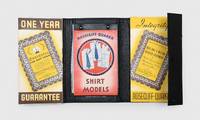
1938162513New York: Rosecliff-Quaker Corp. 1938. First in the field with the newest styles An ephemeral window onto menswear retailing in FDR's America offering the dream of personalized tailoring at an affordable cost. The Rosecliff-Quaker Corporation boasted that it employed 10000 people coast to coast used only unionized labour and guaranteed its shirts for a year. Octavo 214 x 120 mm. Original leatherette wallet binder unfolding to 214 x 460 mm two folding printed card advertising panels with mounted fabric samples 20 tie and 27 hosiery 50 shirt fabric samples each 170 x 120 mm in post-binder with four interleaved printed advertisements central panel lettered in silver. Occasional old pencil annotations. Binder sturdy and still fresh all samples present occasional offsetting and soiling to card panels majority of shirt samples with original paper information slips crudely removed with resulting paper residue. A very good example. hardcover
192453221New York: The Charles William Stores Inc. 1924-1925. Two vols. 4to. 548 8; 518 8 pp. With numerous colour plates colour-tinted text illustrations over 1000 black & white text illustrations diagrams. Colour-illustrated softcovers minor soiling wear slight sunning front cover of vol. 1 creasing to spine; minor creasing shelfwear vol. 2 light uniform interior toning as usual still VG- set. First edition of the complete year of Jazz Age catalogues from the Charles William Stores which offered a treasure trove of everyday fashions work clothes and household and consumer goods during the Roaring 20s offering the glamour and style of New York to the rest of the country. Their fashions were intended for the average American with emphasis on the more “endowed†woman and “stout†man during the Jazz Age emphasizing chic styles and well-woven fabrics. These catalogues detail the high grade work pants riding breeches denim jeans corduroy work pants along with triple-sewed work denim overalls and coats which could be purchased as well as those made out of Wabash Stripe Stifel denim cloth noted for its durability. No copies located in Worldcat of Spring & Summer 1925; 3 copies located of Fall & Winter 1925 Henry Ford Harvard American Textile History Museum. The Charles William Stores, Inc., paperback
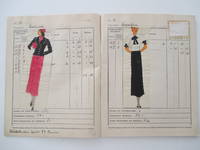
193111073AB1931. Vienna 1931. 245 : 20 cm. 43 pages With 34 mounted coloured designs for dresses. Interesting workbook indicating the time which was necessary to produce the dress the material which was used and the price of the material. Some of the designs with mounted samples of the material used. unknown
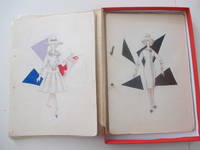
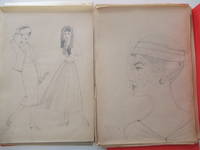
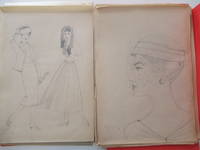
1950218271950. Unknown designer fashion illustration archive circa 1950s-1960s documenting women's garment design and construction practices in the mid-twentieth century. The material operates in Cultural/Representational Mode illustrating the aesthetics technical processes and stylistic evolution of women's fashion during the postwar and early modernist period and offering insight into how clothing design was conceptualized drafted and annotated at the working level. The archive reflects shifting silhouettes and decorative approaches associated with mid-century fashion including structured postwar forms and emerging streamlined influences.<br /> Archive comprises over 100 original fashion illustrations each executed in ink on sheets measuring approximately 6.5 x 9 inches. The drawings depict a range of garments including cocktail dresses coats suits blouses and eveningwear with attention to silhouette drapery and surface embellishment. Many sheets include handwritten annotations in cursive along margins and versos detailing construction elements such as measurements fabric choices and stylistic variations. Examples include labeled designs such as "cocktail dress" "coat" and "suit" with notes specifying features like "turtle neck - bare cut out - colors - gold" and "square low neckline with studded pearls. colors - purple - gold." The annotations suggest iterative design thinking with references to materials color palettes and structural adjustments indicating use as a working portfolio rather than presentation-only sketches.<br /> This archive provides detailed evidence of mid-century fashion design practices at the level of individual garment planning bridging artistic representation and technical instruction. The combination of visual sketches and written notes demonstrates how designers translated aesthetic concepts into wearable forms contributing to the study of dressmaking textile use and women's fashion history during a period of stylistic transition. The volume and consistency of the material suggest sustained use potentially within a professional or training context. Light wear and minor handling marks; overall very good condition. A substantial working archive illustrating mid-twentieth-century women's fashion design and construction methods. unknown
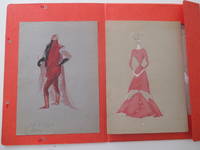
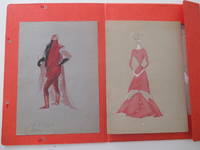
192014632AB1920. Vienna n.d. ca.1920 36 : 30 cm - 15 : 12 cm 21 water-colours partly heightened in white on grey cardboard. Beautiful very detailled elaborated custome designs in different colours white black blue red green yellow pink. The designs show mainly woman maybe designs for Bizet's 'Carmen' Two plates show actors and actress dancing with masks. unknown
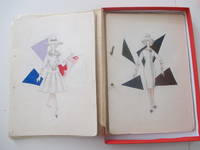
195014633AB1950. Vienna ca. 1950. 31 : 23 cm. Many designs on 97 pages some with mounted textile samples. Desgins for woman clothes coats pants etc. on plate with children's cloth 8 plates in colour with mounted textile samples. A few marked with 'Dior falte' Dior pleat some 'Dior Rock' Dior scirt some marked model summer model Margit etc. one plate with applications in different colours. hardcover
192018450AB1920. Vienna ca.1920 36 : 30 cm - 15 : 12 cm 21 acuarelas en parte elevados en blanco sobre cartón gris. Preciosos y muy detalladas diseños de trajes para el teatro y la opera en differentes colores blanco negro rojo verde amarillo lila. Los diseños muestran sobre todo mujeres tal vez para la opera de Bizet 'Carmen'. Dos láminas muestran actor y actriz bailando con mascaras. unknown
195018447AB1950. Vienna ca. 1950. 31 : 23 cm. Muchos diseños en 97 paginas con muestras de textil montados. Diseños para vestidos de mujeres abridos pantalones etc. 1 página con diseños para ropa de niños 8 páginas con muestras de textil in color montados. Algunos señalados con 'Dior falte' algunos con 'Dior Rock' Dior falda algunos señalados modela verano modelo Margit etc. Una página con aplicaciónes en diferentes colores. unknown
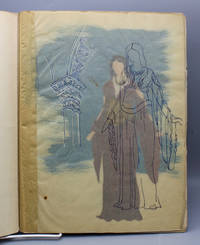
192017641<p>n.p. France: n.d. ca. 1920s architecture styles of historical periods in various geographical regions to the fashion styles of those periods. Styles illustrated include those of Greece Rome Egypt and Persia; late medieval Europe; the reign of Louis XIV; traditional Japanese attire; and fashionable 1920s dress. The background illustrations include a Roman archway seventeenth-century furniture and even a classical Greek vase that frames an illustration of three women. The fashion illustrations reflect certain design elements in the background illustrations for example the patterned fabric in the ancient Egyptian fashions match the decorative style of the columns in the background of the illustrations. . Original blue stiff paper folder with ribbon binding at spine. . 9 x 12 in. With twenty-eight pages of beautifully painted fashion designs dresses hats Greek chitons etc. from throughout history some with background elements furniture and architecture and two with real fabric accents pasted down and two pages of manuscript text explaining architectural and sculptural styles. Some of the fashion designs are captioned in manuscript. Also with eight tracing paper leaves illustrated in ink overlaying matching designs below one with pencil annotations noting types of fabric and other design elements. Some soiling to folder. Some offsetting and some foxing. Very good. We could not locate any information on Josette Eynac the student who illustrated this album though she was clearly a capable artist.</p>
196056965Pasadena CA: n.p. ca. 1960. Folio. 14.5 x 20 in. Twelve original gouache paintings on thick artist’s board 10 of them either w/ typed or manuscript labels 1 entitled “Garden Party†written in manuscript at upper fore-edge 8 preserving their cloth fabric swatch samples some w/ designer’s notes trimmings etc. All are preserved in a gray linen clamshell case minor edgewear rubbing wear to corners still a well-preserved fine set of paintings. This nicely executed set of fashion designs were apparently created for a Civil War theatre production in Southern California around 1960 with characters named Florence Bagshot Mrs. Ludley Bagshot Agatha Mrs. W.D.P.S. and Mrs. Forbes. The designs primarily focused on the women characters including one of a nurse standing in costume in gray striped dress apron and cap with Confederate cavalry trooper in kepi astride his horse and hatless officer with sash standing in the background. Many of the designs reflect the colour palate of the early 1960’s with avocado green vivid blues solid brown earth tones and bright nearly neon orange gauze fabrics in the renderings and samples which would not have been common in those combinations during the Civil War era. Still most of the dress designs incorporate the hoop skirts of the period often with crinoline and/or crinoline cage hoop skirts and high collars with ties and ribbons at the neck and trim patterns typical of the period. The design for Florence Bagshot’s bedroom wear incorporates elements of Mid 20th-Century design and sensibilities rather than the more common chemise and sturdy cotton for the 1860’s. The Confederate Nurse design was painted on “Brownie Board Cold Pressed Duncan Vail Co. Los Angeles†which appears in California art supply advertising from about 1960-1963. We were unable to identify the production after an extensive search through contemporary theatre production trade magazines newspapers and other industry publications. n.p., hardcover
194157736New York: Apparel Arts Esquire Inc. Esquire Building Madison at 46th March 1941. Folio. 10.75 x 14.25 in. 98 pp. Numerous colour plates many double-page colour photographs 23 of 30 fabric samples tipped-in photo illustrations colour photo illustrations. Quarter-blue cloth over colour-illustrated photo boards cover art of divers in swim suits from high dive platforms edgewear rubbing rubbing to corners some dustsoiling still VG- copy. First edition of this World War II-era trade magazine launched in 1931 in the depths of the Great Depression by Weintraub Smart & Gingrich from the Menswear Service Corporation. This issue features illustrations and advertisements by such artists as John Lagatta 1894-1977; Allen for Portis hats the modernist master Paul Rand’s 1914-1996 Summer 1941 poster the iconic fashion illustrator Laurence Fellows 1885-1964 and other mainstays. This installment features advertisements from such menswear brands as Botany Worsted Mills Jockey Manhattan Shirt Co. Dobbs Hats Hickok John Cyril Woolen Co. and even Pittsburgh Plate Glass Co. fashion displays. By the 1940’s the magazine was printed by Esquire Inc. issued 8 times a year continuing in print until replaced by Gentlemen’s Quarterly GQ in 1959. See: Marianne Brown Apparel Arts & Conde Nast May 10 2017. Apparel Arts, Esquire Inc., Esquire Building, Madison at 46th, hardcover
1996403084California 1996. Hardcover. Near Fine. A Collection of 100 used concert tickets featuring punk new wave and heavy metal bands performing in California from 1983 through 1996. The tickets vary in size from 3†x 2†to 5.25†x 2.5â€. All items are near fine with light soiling and a modest amount of creasing except for three torn tickets and 4 tickets stubs from use. The L.A. and Bay Area rock scene started in the late 1970s until new wave and heavy metal bands became the central focus of the 1980s. Some of the bands include: Mötley Crüe Iron Maiden Guns N’ Roses Depeche Mode Fatal Attraction Porno for Pyros Billy Idol Culture Club and others. The tickets span from Los Angeles to San Francisco and cities in between from 26 different venues some of which include The Troubadour Coconut Teaszer The Stone Trocadero Transfer The Metro Cow Palace The Palomino and Filthy McNasty Station. Many of the tickets are bright colors with printed pictures and stamped band logos showing the typographic designs of the time frame.<br /> <br /> Many bands kicked off their careers in California during this time. Mötley Crüe a popular heavy metal band formed in Los Angeles in 1981 is featured here playing at Oakland stadium on October 10 1987. The band is well known for their heavy make-up shocking clothing high-heeled boots and their abuse of drugs and alcohol. In 1985 the band transitioned to a more glam metal style influencing the heavy metal signature look. Guns N' Roses formed in 1985 in Los Angeles and is featured here playing at the Warfield Theatre on February 5 1988. They are a hard rock band that quickly gained popularity after the release of their debut album “Appetite for Destruction†which has sold over 28 million copies worldwide. The band has been labeled as the "the most dangerous band in the world" due to their rebelliousness and were credited to the rekindling of rock music during a time of dance music and glam metal. 1n 1992 Porno for Pyros formed in Los Angeles as an alternative rock group formed out of Jane’s Addiction. They are featured here playing at the Trocadero Transfer on June 19 1996. Their shows featured props extras and pyrotechnics. The band lasted through the mid-1990s and mixed the sounds of grunge and rock together.<br /> <br /> In the 1980s California became the melting pot of music genres mixing in punk rock new wave and metal. Certain venues became synonymous with the music genres and bands of that time. The Stone opened in the 1980s and was linked to the Keystone Berkeley and Keystone Palo Alto. It was large enough for a capacity of 700 sold only hard liquor at the bar and attracted an audience with bigger hair bigger shoes and makeup. It featured many local and big name artists in its day and was an important part of the Bay Area rock scene in the 1980s. The Coconut Teaszer operated from the 1980s through the mid-2000s. It hosted bands from all genres and featured a downstairs acoustic bar named “8121â€. Sawdust on the dance floor and giant goblets for draft beer were some of the popular trademarks of the venue. One of the notable and peculiar policies of the venue was “no open toe shoes†which was painted on the front door. The Troubadour which is still functioning today opened in 1957. New wave and punk was the main feature for The Troubadour in the late 1970s and early 1980s. Through the 1980’s the venue became synonymous with the heavy metal genre and glam bands during that time. Today The Troubadour is revered as one of Hollywood’s most respected places to see live music.<br /> <br /> <br /> An attractive collection of brightly colored concert tickets featuring popular heavy metal and punk bands from the 1980s through the mid-1990s displaying over a decade of music in California. hardcover
1940D12397America c. 1940s. Group of approximately 30 costume and fashion designs for women; on a variety of papers or board ranging in size from about 8x10 to 15x21 inches; using chalk crayon watercolor ink and even a bit of collage. Includes dresses hats and gowns -- many possibly for Advance Patterns Fashions and Fabrics. Some dated all signed by the artist. Some a little worn along the edges but condition is VG or better overall suitable for display. <br/><br/>Much of Teed's original artwork is now in the collection of the Museum of Fine Arts in Boston. This diverse group shows glamorous fashion in a variety of illustrative styles from spare line drawings on black paper to gowns trimmed in paper doily to finished and highly detailed watercolors. unknown
193963709Aussig Usti Nad Labem Czechoslovakia & Vienna: C. Wolfrum ca. 1939. Folio. 50 leaves. 1 leaf with type-written explanation of all the fashions illustrated in the catalogue. 44 hand-coloured pochoir fashion designs on translucent paper each with item number printed below 5 leaves with printed designs showing the backs of all the fashions some pencil shading and details added. Original textured beige softcovers embossed WMI Wolfrum Manufacturing on front cover metal spiral bound as issued some dustsoiling & wear to fore-edges of covers very slight bumping to couple corners still a VG copy w/ beautifully illustrated fashion designs. First edition of this exceedingly scarce original trade catalogue issued by the C. Wolfrum textile firm in Czechoslovakia for its Vienna Austria market around the time of the forced annexation of the Sudetenland by Nazi Germany in 1939. The firm was famed for its woolen & silk textiles for women’s fashions and their catalogues were very desired. This catalogue includes fashions for silk rayon & wool women’s dress suits leisure suits formal evening dresses & winter coats all evoking the fashion trends of the period. The designs in the catalogue reflect the rising influence of militaristic styles and fascism with square-edged shoulder pads the plate hats as well as the emphasis on tight waists and long skirts. There are a couple designs with distinctive chocolate brown for leisure wear reflecting the heavy Nazi-influenced fashion design of the period. In addition the slim lines were enhanced by cutting clothes across the fabric avoiding bunches of gathers at the waist for full skirts allowing material to flow. In addition the evening wear dresses emphasized low or no backs and hair was to be grown long and worn swept up. This catalogue also includes a few evening formal dress designs clearly inspired by the dresses worn by Vivien Leigh in the 1939 Gone With the Wind Movie with the puffed sleeves polk-a-dot patterns and fabrics. No copies in Worldcat. C. Wolfrum, paperback
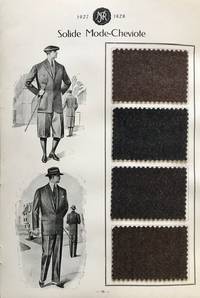
192757311Graz Austria: Richard Neurath Kaiserfeldgasse 19 und 21 1927. Two vols. 1st - Folio. 11 x 13.75 in. 45 1 pp. on thick boards. With 246 tipped-in fabric samples of wools wool blends 27 fashion plate illustrations 2 for women’s coats w/ price list and letter to salesmen dated August 1927. Original quarter-black cloth over embossed & decorated boards flaps at fore-edges w/ handle and clasp raised gilt lettering on front cover minor shelfwear rubbing clasp guard repaired & reinforced still VG complete exemplar retaining the original button clasp; together with 4to. 8.25 x 11.25 in. 4 pp unpaginated. w/ 16 additional wool and wool-blend samples tipped-in self-printed covers rounded corners. First edition of this unusually rare fashion salesman sample catalogue for men’s suits and sporting wear during the Roaring 20’s with many of the suits sporting vests while also featured are shooting & hiking suits sportswear and a rich array of fabrics drawing upon English fashion designs. Following World War I there was a concerted move away from starched collars and formal three-piece suits towards soft collars one- or two-button suit jackets and even often worn without a waistcoat. Also featured in this catalogue are many examples of the plus-fours developed out of ordinary knickers these short-legged pants were a baggier version of their predecessors and proved popular for hikers golfers and other outdoors activities. Also featured are winter coat fabrics and designs for women in velour and thick felt twill. The laid-in additional catalogue promoted the latest Loden Merino wool fabrics and thick camel hair woolens. Neurath 1882-1948 operated a successful mail-order tailoring business until the 1938 Anschluss when the Nazi’s annexed Austria and forced the April 10 plebiscite. He survived the War and later died in Tel Aviv Israel in 1948. The building which housed his offices and tailoring facilities in Graz is now the home of the popular Cafe Kaiserfeld. No copies in Worldcat. Richard Neurath, Kaiserfeldgasse 19 und 21, hardcover
193953215New York: Singer Sewing Machine Manufacturing Co. Departamento de Educacion January 1941; 1939. Two vols. 1st - Tall 8vo. 225 1 pp. Over 150 colour and black & white photo illustrations diagrams. Black textured softcovers gilt lettering & decoration printed on front cover edgewear bumping to corners minor soiling old tape repairs to front cover still G- copy; 2nd -- Oblong 4to. 12 x 7.75 in. 54 pp. on pink-tinted paper with 57 tipped-in fabric embroidered sewing samples including over on linen silk lace satin and wool textiles each w/ school stamp approving sample. Half-blue cloth post-binder over blue goards gilt lettering stamped on front cover sewn at gutter margin w/ white silk ribbon soiling minor dampstain curving to covers from the bulk of the tipped-in samples on the leaves still a VG exemplar. Both preserved in blue textured cardboard box & lid minor edgewear faint tidemark to lower fore-edge 1 corner. Fourth revised edition of this well-illustrated embroidery guide on stitches to be learned and executed on Singer Sewing Machines together with a beautifully done sample book showing Ms. Alos’ skills in learning the necessary skills in her Singer school in Villa Canas Argentina. The Singer Sewing Machine company developed special Singer Sewing Academia in Argentina Mexico and many other South American countries as well as Spain between the World Wars. These special private schools for professional dressmakers using the Singer manuals allowed female-owned dressmaking businesses to grow and create professional spaces separte from men. In addition these academias allowed women to pay by the class and embroidery was one of the advanced skills which commanded higher wages for women at the time. Singer actively encouraged this movement in order to develop home-based businesses and academias which in turn increased their sales of sewing machines. The sample book begins with a number of decorative types of embroidery stitches monograms and then displays floral patterns spider-web patterns laces a beautifully embroidered red roses and carnations on purple silks and satins. Worldcat locates 2 copies of the Libro Singer Bibliotecas del Tecnologico de Monterrey Mexico; British Library 3rd editions; See: Ketteler Sewing through the years in art women and society; Paula de la Cruz-Fernandez Atlantic Threads: Singer in Spain and Mexico 1860-1940 pp. 198-210. Singer Sewing Machine Manufacturing Co., Departamento de Educacion, paperback
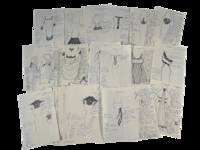
195614629AB1956. Vienna 1956-1958. 47 : 32 cm. 64 pencil drawings of special paper. Womans dresses from the 1950-ties also designs for hats shoes etc. From a pupil of the prestigious Viennese fashion-school housed in the castle of Hetzendorf a suburb of Vienna which was founded in 1846 in an 1694 build castle and which is now famous worldwide. Gives a good inside of the designs and fashion the in the late 1950-ties. unknown
195618448AB1956. Vienna 1956-1958. 47 : 32 cm. 64 dibujos en lapiz en papel especial. Vestido de mujeres de los años 1950 tambien diseños para sombreros zapatos etc. Hechos por una alumna de la prestigiosa escuela de moda 'Hetzendorf' en las afueras de Viena la cual fue fundada en 1846 en un castillo que fue construida en 1694 y que ahora esta famoso en todo el mundo. Transmite una buena ojeada sobre la moda de los años 1950. unknown
191151747England: n.p. 1911. Tall 8vo. 5 pp. on thick card stock printed in gilt & black 7 x 10.24 in. with 240 vegetable ivory buttons all with stock numbers below and to the side many in the dark brown patterned material some jet black and many with incised or woven patterns each page with padded pink silk leaves to protect the buttons each of the cards has some contemporary ink annotations below the buttons or along the side in the margins. Quarter-black calf over black pebbled cloth gilt lettering & design on front cover spine minor chipping & tearing to head of spine affecting lettering slight shelfwear still a VG- exemplar with the buttons entirely complete and in perfect condition. First edition of this very scarce and beautiful Edwardian button sample catalogue. Included are a number of different styles of buttons in vegetable ivory for clothing coats sportswear and more which were sold by this English manufacturer for export. Vegetable Ivory is a very dense material that is manufactured into buttons from the Corozo nut that grows on the Tague Tree a type of Palm. It was named Vegetable Ivory in the 19th Century because it resembles real ivory but was not as heavy or dense. These types of buttons were first introduced at the 1862 International Exhibition in England and then reached full popularity at the 1867 Paris Exposition. The sample buttons preserved here come in pressed carved and fine lined patterns some of them painted with a dark flat black other shiny black and many with a beautiful rich shiny mottled effect. During the Victorian and Edwardian periods and prior to the growth in production and popularity these were the buttons of choice for men’s suits. No copies located in Worldcat. n.p.], hardcover
19692091502133700842Kakusado Publishing Co. Ltd. 1969. Soft Cover. Fine. The book is in fine condition. Kakusado Publishing Co., Ltd. paperback
193773769Chicago: Ferris Woolen Company 1937. Original hinged sample case with drop front 27 3/4 x 11 x7 1/2 inches. Containing 174 thick cards printed in black and red; each with a mounted woolen worsted wool imported wool sample. Original sample display case w/ green textured cloth over boards divided into Three compartments nickel plate slider hinges printed advertising on inner lid and drop front reinforced corners a remarkable display case from the John the Tailor Shop Suits and Overcoats made to order. Wonderful graphic label on interior of lid featuring dapper dressers and period automobiles.Spectacular tailoring sample counter display for men’s suits and overcoats in the Fall & Winter of 1937-1938. Ferris Woolen Company a subsidiary of Wawak Woolens was originally founded in 1922 in Chicago along with Detmer Woolen Co. Bruner Woolen Co. Mason & Hanson Inc. and Salter & Wolf to supply woolens and trimmings to tailors and department stores across the United States. The companies were known for their high-quality wools at a reasonable price and often incorporated imported wool wool silk blends gabardines and tweeds especially from Scotland Wales France and Great Britain. In 1933 the Wawak Co./Ferris Woolen Co. purchased the exclusive right to all the Detmer Bruner Co. customers West of the Mississippi. They quickly began commissioning and producing display cases reflecting the change and proved very successful with the Ferris Woolen Co. catering to the trade into the 1960s. These sample cases were very expensive to produce and so were most often found in department stores mercantiles and men’s stores which would have these display on the sales floor for two seasons or more often adding or subtracting fabrics as they became available. The samples included with this case offer invaluable textile reference for the colors and fabrics during the era of fashion influenced by the elegance and glamor of Hollywood films and film noir at the time. The styles depicted on the inside of the lid and the drop-down front are reminiscent of the very popular Thin Man fashions worn by William Powell and Myrna Loy at the time. Ferris Woolen Company hardcover
193045898Troy NY: Arrow Shirt Co./ Cluett Peabody & Co. Inc. ca. 1930; 1955. Quarter-sawn oak salesman sample counter display case 18.75 x 6 x 6 ins. with glass top & front door in back with catch w/ original label at bottom of the display indicating that this case was only to be used for the display of the Company collars preserving two Arrow Shirt Co. Collars some scuffing and wear to label at bottom of case affecting lettering minor wear to sides of case together with original Leyendecker advertisement printed on canvas w/ oak frame 28.5 x 21.5 ins. the piece has been professionally cleaned and mounted on archival foam core and removed from the original bars which were damaging the image and placed back in the oak frame some sunning faint discoloration to upper left margin still remarkable pieces. A wonderful advertising display for Arrow shirts and collars including pre-World War II counter sample case and 1950s promotional ad reproducing one of the famed Leyendecker images. These pieces originally came out of a small men’s clothing shop in Bend Oregon. The Arrow collars grew from the marketing idea by Cluett Peabody & Co. in Troy NY that it gave women an easier way to clean their husbands’ stained shirt collars without having to wash the entire shirt. In addition the collars wore out a much faster rate than the rest of the shirts so these replaceable collars would extend the life of the garments. This style of detachable collars remained popular up until the mid-1930s and largely declined out of use by the end of World War II.Leyendecker 1874-1951 created the Arrow Collar Man which was an advertising campaign that ran from 1905 - 1931 and was perhaps one of the most successful product brands in history. He created 100s of images and many of them are still synonymous with men’s fashion and styles. This advertisement was part of a revived campaign by Arrow Shirt Co. in the 1950s through early 1960s as they revived the nostalgia of the Leyendecker ads and pushed their shirts with soft collars. Arrow Shirt Co./ Cluett, Peabody & Co., Inc., hardcover
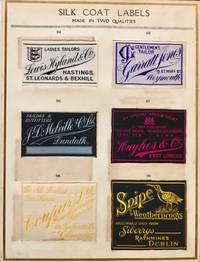
190555463Conventry London & New York: J. & J. Cash Ltd. ca. 1905. 4to. 16 pp unpaginated. thick double-sided coated card stock w/ 153 of 154 woven silk labels sized from .5 x 1 in. up to 3 x 3 in. or 2.25 x 5 in. in a myriad of colours many pictorial assorted font styles. Full calf gilt lettering stamped on front cover scuffing edgewear minor ink stain to fore-edge of front cover not affecting textblock minor damage & repair to inner front hinge still a VG- copy. First edition of this exceedingly rare and fascinating salesman sample catalogue of woven silk labels produced by the famed millinery and ribbon novelties company. Founded originally as a ribbon weaving company in 1846 by John and Joseph Cash the firm quickly expanded and developed it’s techniques and products throughout the Victorian and Edwardian eras. They developed whole lines of monogrammed silk labels striking manufacturers silk labels and tailoring labels for identifying clothing lines hosiery hats blankets and more. The labels could be purchased in “Best Quality†and “B Quality†lots by the prospective companies and these samples within the catalogue encompass such examples as those for Spirella Corsets I.&R. Morley’s Theta Flying Wheel shirts H.C Lucking Tailor & Outfitter Shoreham with view of the suspension bridge Snipe Weatherproofs with iconic image of snipe Dracoproof for all Weathers Fair or Foul with image of swimming mallard duck and so many others. The catalogue also includes silk millinery ribbons and labels made in 14 inch lengths quality coat hanger labels beautifully monogrammed badges and hat bands and also includes labels which can be carefully lifted from elastic to show the quality of the weaving. No copies located in Worldcat. J. & J. Cash Ltd., hardcover
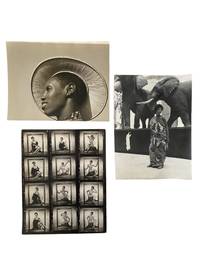
1950206231950. Archive of three black and white silver gelatin photographs of black models dating from the 1950s-70s. Photographs measure approx. 8" x 10". This archive includes a press photo from 1974 showing model Beverly Bradshaw posed in front of a museum display of elephants wearing a traditional Nigerian Ibo wrapped dress designed by Angie Ihejirika. Article on verso from the Chicago Sun Times details Mrs. Ihejirika's demonstration of the art of African wrapping at the Field Museum of Natural History. Photo has a bald patch on left side not affecting subject matter. Also included is a print of twelve Kodak film cells showing actress and model Nancy Westbrook in a series of poses sitting within a large picture frame. Seven images show Westbrook in a bikini and five wearing only a fur stole. These photographs date to the early 1950s and least one the third down on the left appeared in Jet Magazine with a short profile of Ms. Westbrook in 1953. Another photograph undated shows a black model in profile from the neck up smiling in a sun hat tilted away from camera to frame her head with a halo-like effect. Modeling in fashion and print has historically been dominated by white women reflecting a bias in beauty standards in the United States. These images show black women claiming space in the often exclusionary fashion world of the mid-late 20th century. Overall very good condition. Three images of black fashion models in the US 1950s-70s. unknown
190556908Chicago IL: American Woolen Mills Co. 1905. Thick elephant folio 17.5 x 21.5 x 3.25 in. 58 pp. printed on thick card stock each mounted on linen hinge. With 6 black & white fashion plates illustrating suit styles of the period with 380 of 400 -- many marked in pencil “O.S.†or Out-of-Stock mounted textile samples in wool wool-silk blends -- all samples clearly marked with prices and availability numerous text illustrations decorative borders printed in colour many showing bucolic scenes of sheep pastures and winter frolics. Black & blue cloth Arts & Crafts gilt lettering & ornament on front cover expertly rebacked and back cover renewed dustsoiling and occasional soiling to some leaves some samples w/ predation and minor loss dampstaining to gutter margin of last few leaves minor loss & damage to last couple leaves still a good copy. First edition of this scarce Progressive-era salesman sample catalogue for Winter season men’s suits overcoats and evening wear. The American Woolen Mills Company also known as the “Progressive Tailorsâ€maintained a huge tailoring operation in Chicago at Union & Washington until the Great Depression employing hundreds of tailors and seamstresses to fill orders. Unlike J.L. Taylor Royal Tailors and many of the other tailoring houses of the period the American Woolen Mills targeted the average white collar clerk or American immigrant salesman and merchant trying to look professional and offered $ 15.00 high class made to measure suits. These catalogues were very expensive to produce and were often issued with minimal company brand names allowing their sales force to target small shops mercantiles and general stores which would have these catalogues on the sales floor for several years. Sales people were directed to simply clip the corners of samples for out-of-stock and discontinued fabrics but they often chose to remove the entire sample in order to not distract potential customers. The catalogue offers invaluable illustrated historical reference for the colours styles and fabrics during the era of Teddy Roosevelt and the Anti-Trust policies even referring to these in their sales pitch by claiming that unlike Trusts which “by combining saves numerous expenses and sticks ALL the savings in its own pocket. . . there is no Trust in the tailoring trade.†They further claim that they remove all middlemen procure woolens directly from the weavers and by avoiding wastes of all kinds that AWM CO. lowers their prices and “it is a public benefit.†The textiles here focus on darker shades and very muted colours along with durable thick fabrics while marketing their double-breasted sacks 3-button frock coats 2-button single breasted suits assorted overcoats and more. No copies in Worldcat; See: Swell Nifty Suit Free! The Household Journal Vols. V No. 8 August 1912 p. 6; Machinists’ Monthly Journal Vol. XVII No. 3 March 1905 p. 282. American Woolen Mills Co., hardcover