Fashion History SketchesBiblio.com
300 résultats
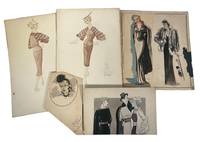
1920199741920. Vernacular fashion illustration archive circa 1920s-1950s documents the evolution of women's dress and stylistic ideals across early and mid-twentieth-century design with emphasis on silhouette material and aspirational presentation. The drawings capture shifts from the elongated androgynous forms associated with 1920s and 1930s fashion to the structured tailoring and fitted garments of the postwar period. Elements such as exaggerated shoulders cinched waists and coordinated ensembles situate the works within broader developments in women's fashion including the influence of tailored suits and formal eveningwear. The illustrations also record accessory culture including gloves hats and jewelry positioning dress within a larger system of social signaling and presentation tied to class gender norms and modern consumer identity.<br /> <br /> United States and possibly Europe circa 1920s-1950s. Archive of six original gouache and pencil fashion illustrations on hard mat boards and one on thick watercolor paper each measuring approximately 10 x 7 to 10 x 15 inches. Several works bear artist signatures or initials including examples signed "Virginia" and "G. Wichner." Two dated compositions from April 11 1954 depict coordinated ensembles including a rose-toned set with a pencil skirt and structured blazer rendered with detailed attention to tailoring and fabric accents. Other illustrations include multi-figure studies of women in draped garments with belted waists a single-figure composition in a long gown with fur coat and elongated cigarette holder and portrait studies featuring headpieces veils and bold cosmetic styling. Use of shading color variation and line work emphasizes fabric texture garment movement and body form.<br /> <br /> Produced during a period of significant transformation in women's fashion these illustrations align with the development of modern fashion media including editorial illustration design sketching and commercial garment production. The visual emphasis on proportion tailoring and accessorization reflects the increasing codification of fashion as both industry and cultural expression in the twentieth century. As original works the drawings provide insight into the processes of design visualization and stylistic interpretation supporting research into fashion history gender presentation and visual culture. Light handling wear to mounts and sheets; overall very good condition. unknown
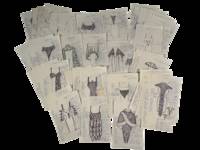
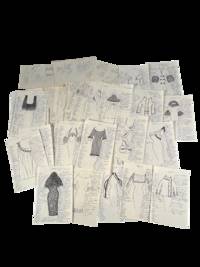
1950218261950. Fashion design archive. 1950s-1960s. This group documents mid-century women's fashion design practice through a sustained body of original sketches and working notes showing how garments were conceived annotated and prepared for construction during a period of stylistic transition in American dress. The material provides direct evidence of design thinking at the level of silhouette fabric selection and pattern planning including repeated attention to cocktail wear outer garments and formal dress. It captures the movement from structured postwar styles toward more experimental and decorative approaches associated with later mid-century fashion with particular emphasis on the technical and aesthetic decisions made by a designer or dressmaker.<br /> <br /> Archive of over 100 original hand-drawn fashion sketches on individual sheets measuring approximately 6.5 x 9 inches executed in ink with extensive handwritten annotations on rectos versos and margins. The drawings depict a range of women's garments including dresses blouses coats and evening wear with recurring titles such as "cocktail dress" "cocktail cape" and "dress." The figures are rendered with attention to line proportion and textile texture often emphasizing drape fitted bodices and surface embellishment. Annotations provide detailed construction guidance including measurements fabric types and pattern instructions. One design for a strappy dress specifies "Pattern: leopard or zebra fur attached.fabric velveteen.color red -- orange -- black." indicating experimentation with bold materials and color combinations. The consistent pairing of image and instruction suggests use as a working portfolio either for client presentation dressmaking production or formal training.<br /> <br /> Mid-century fashion in the United States expanded through department stores home sewing and professional dressmaking with designers and students producing working sketches that translated style into reproducible garments. The presence of detailed technical notes alongside finished illustrations places this archive within that production process linking aesthetic design to practical construction. Light wear from handling; overall very good. A concentrated record of mid-century women's fashion design practice preserving both the visual language and technical methods used to create garments during a period of evolving style. unknown
1950218281950. Fashion design archive likely 1950s to 1960s documenting women's garment design during the mid-century through original working sketches that preserve both style development and the practical language of dressmaking. The archive is strongest as evidence of how women's fashion was conceived on paper before production with repeated attention to silhouette trim fabric and construction. Dresses blouses coats and eveningwear appear throughout placing the material within the visual world of postwar American fashion as it moved from structured elegance toward sharper and more decorative later mid-century forms.<br /> <br /> Archive of over 100 original hand-drawn fashion sketches on individual sheets measuring approximately 6.5 x 9 inches. The drawings are executed in ink and depict a wide range of women's clothing including fitted dresses capes blouses coats and formal designs with careful attention to drape proportion neckline sleeve treatment and surface embellishment. Many sheets are accompanied by dense handwritten notes in the margins or on the reverse recording measurements fabric suggestions and pattern or construction instructions. The combination of illustration and notation gives the sheets the character of working designs rather than purely display drawings and suggests use in dressmaking training or client planning.<br /> <br /> The archive belongs to the history of women's fashion not only as a record of finished styles but as evidence of the design process itself preserving the intermediate stage between idea and garment. Such working sketches show how fashion circulated through manual skill technical knowledge and close attention to fabric and form in the decades before design became fully digitized. Light general wear from use; overall very good. A substantial mid-century design archive that preserves the visual and technical vocabulary of women's fashion making across more than one hundred original sketches. unknown
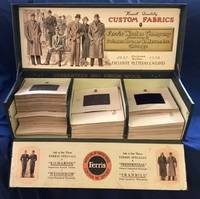
193754988Chicago: Ferris Woolen Co. Successor to Detmer Brewer & Mason Wawak Co. Inc. 1937. Sample case. 27.75 x 11 x 7.5 in. Containing 172 thick cards w/ black & red advertising lettering stock & style Nos. with 172 woolens worsted wool imported wool samples some preshrunk all mounted on the cards. Original sample display case w/ green textured cloth over boards divided into 3 compartments nickel plate slider hinges printed advertising on inner lid and drop front reinforced corners some minor wear insect predation around fore-edges of a few samples still a remarkable display case from the John the Tailor Shop Suits and Overcoats made to order Wausau WI w/ stamp on top Wawak sample card. First edition of this spectacular tailoring sample counter display for men’s suits and overcoats in the Fall & Winter of 1937-1938. Ferris Woolen Company a subsidiary of Wawak Woolens was originally founded in 1922 in Chicago along with Detmer Woolen Co. Bruner Woolen Co. Mason & Hanson Inc. and Salter & Wolf to supply woolens & trimmings to tailors and department stores across the United States. The companies were known for their high-quality wools at a reasonable price and often incorporated imported wool wool silk blends gabardines and tweeds especially from Scotland Wales France and Great Britain. In 1933 the Wawak Co./Ferris Woolen Co. purchased the exclusive right to all the Detmer Bruner Co. customers West of the Mississippi. They quickly began commissioning and producing display cases reflecting the change and proved very successful with the Ferris Woolen Co. catering to the trade into the 1960s. These sample cases were very expensive to produce and so were most often found in department stores mercantiles and men’s stores which would have these display on the sales floor for two seasons or more often adding or subtracting fabrics as they became available. The samples included with this case offer invaluable textile reference for the colours and fabrics during the era of fashion influenced by the elegance and glamor of Hollywood films and film noir at the time. The styles depicted on the inside of the lid and the drop-down front are reminiscent of the very popular Thin Man fashions worn by William Powell and Myrna Loy at the time. No copies located in Worldcat. Ferris Woolen Co., Successor to Detmer, Brewer & Mason, Wawak Co., Inc., hardcover
191148842Cincinnati OH: Goldman Beckman & Co. 1911. Elephant folio. 21 x 18 x 1.75 in. 50 pp unpaginated printed on thick card stock each mounted on linen hinge. 17 colour plates 1 page w/ colour-illustrated borders 8 black & white plates with 150 mounted textile samples in wool wool worsted blends some felt backed moleskin cashmere and more -- all samples clearly marked with prices and availability many with damage from insecty predation occasional soot soiling soiling to fore-edges many of the images with illustrations of models in period dress in backgrounds and around borders. Half-black cloth over green gilt lettering and embossing of Company logo on front cover illustrated endpapers with the different suit models on pastedowns occasional soot soiling foxing minor dustsoiling from fabric dust cloth covers renewed w/ original company logo & title mounted front cover still a G copy entirely complete with all samples present. First edition of this scarce salesman sample fashion catalogue for men’s suits in the Edwardian era prior to World War I. Goldman Beckman & Co. was owned by Louis Goldman 1850-1921 who had founded the firm in 1894 after decades in the wholesale suit tailoring business marketing to men & young men. The catalogues were very expensive to produce and so were most often found in department stores mercantiles men’s clubs and men’s stores which would have these catalogues on the sales floor in the Cincinnati area. This catalogue offers invaluable illustrated historical reference for the colours styles and fabrics during the Progressive Era. Many of the plates show elegantly dressed men and women in the park the flower show at the museum playing sports and even preparing to go on a canal boat. In addition there are a number of plates showing properly cut trousers and the available cuts special sections devoted to fancy cuffs and pockets fitted backs men’s hats formal wear and much more. No copies located in Worldcat. Goldman, Beckman & Co., hardcover
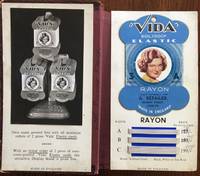
193057289Nottingham UK: Vida Mills Jones Stroud & Co. Ltd. ca. 1930. Thick 8vo. 26 pp unpaginated. on thick card stock w/ burgundy linen hinges at gutter margin w/ 113 rayon elastic nylon elastic rubber and silk rayon blend trims 1 silver gelatin frontisp. photo mounted on front pastedown sized 3.5 x 5.5 in. w/ 10 colour-printed & illustrated labels and elastic holders tipped-in numerous printed photographic plates. Quarter-burgundy coloured cloth over simulated alligator boards screw posts at gutter margin minor rubbing slight bumping to corners 1 sample removed still a VG copy. First edition thus of this extraordinary and inventive salesman sample catalogue for elastic trims between the Wars. Horace Jones had invented a specialized braiding machine in 1927 for creating elastics by braiding rubber filaments together with rayon nylon cotton or silk-rayon blends to create a number of different “Elastic†Boil Proof Vida trims. Prior to the widespread introduction of many stretchable and elastic fabrics following World War II Vida Mills products were used shoulder straps for lingerie suspenders both for men and women’s fashions swim trunk and briefs trunk top elastic bands. In addition these were used for car covers bags accessories creating pleats sleeve hems and much more. In addition there are a number of samples included here for durable boot and shoe laces. The coloured and metallic Ric Rac trims were used in costumes uniforms decorative elements on clothing and many other applications. By 1930 the company had deployed 3000 braiding machines generating over 52 million yards of elastic braid annually and in 1940 expanded into manufacturing glass tapes and woven fabrics for electrical installations and industrial Wartime applications. The company still operates today as the Jones Stroud Insulations Ltd. subsidiary of the Krempel Group since 2000. No copies in Worldcat; See: History of Jones Stroud Insulations -- Timeline Krempel 2015; Trade Marks Ordinance Official Gazette Kenya Dec. 4 1956 p. 1315. Vida Mills, Jones Stroud & Co., Ltd., hardcover
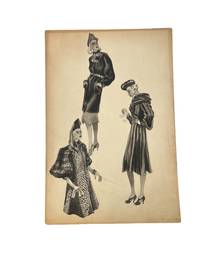
1930D4922likely America c. 1930s. Fine. Group of 10 original costume studies on heavy cardstock mounts ranging in size from about 9.5-by-10.5 inches to 13-by-18 inches in pen-and-ink or grey wash heightened in white. Circa 1930s America. Presumably created by S. C. Cavanagh Ltd. with the firm's name in pencil along the bottom edge of many of the studies. Expertly carried out illustrations of elegant women in long coats or evening jackets pinky fingers held delicately aloft. All cards a little rubbed and smudged along the edges but overall nice and bright suitable for display. A wonderful collection for the classic or vintage stylist. <br/><br/> unknown
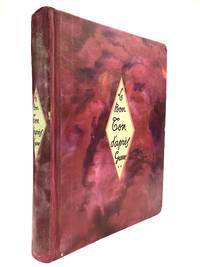
192278454Paris: Dorbon-Ainé 1922. Hardcover. The second volume only. Collection of beautifully colored pochoir plates depicting elite fashion published originally in La Gazette du Bon Ton between 1920 and 1922. Includes work by Barbier Benito Bonfils Brissaud and many others. Royal octavo: 2 pp. with 100 color plates one two-panel. The red marbled paper-covered boards have been expertly rebacked with the original spine strip laid down. Small indentation to the fore-edge of about a quarter of the plates not affecting the images. Some general edgewear to the boards. Dorbon-Ainé hardcover
1934FASHION004963J.H. Ltd no place. 1934. First edition. Folio. A fashion illustration portfolio with twenty nine colour lithographic plates each measuring approx 37 x 31cm showing women's dresses in various fabrics from silk to tweed. The covers are unusual: full gilt textured cloth with titles in art deco style on front.Some spotting. Very good indeed. J.H. Ltd, no place. hardcover
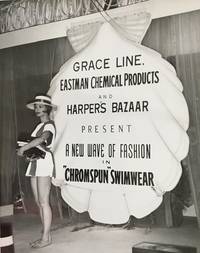
195956594New York & Rochester NY: Grace Line Harper’s Bazaar & Eastman Chemical Products subsidiary of Eastman Kodak 1959. 4to. With 33 black & white photographs inserted in mylar sleeves. Recent flexible black vinyl cover portfolio NF exemplar w/ images having bright strong contrast. First edition of this remarkably scarce group of photos advertising the 1959 fashionable swimsuits made from Chromspun acetate yarn developed for textiles by Eastman Kodak in the early 1950s. Discovered while developing cigarette filters the yarn proved durable and elastic enough for swimsuits other apparel home furnishings and other applications. The swimsuits modeled in this show were influenced by and possibly included the very popular Rose Marie Reid line of swimwear which was heavily marketed by Harper’s Bazaar during the 1940s and 1950s and was considered to be the quintessential California swimsuit worn by such stars as Jane Russell and Sandra Dee in the first Gidget movie produced by Columbia in 1959. Represented in these photos are the swimsuits included the strapless bikini princess bubble Baby Doll often with stripes and cover-ups. Although not indicated in the photographs this fashion show was probably held on one of the new Grace Line ocean liners the Santa Rosa which was delivered in 1958 and serviced the Caribbean South America and traveled through The Saint Lawrence Seaway into the Great Lakes. See: Rose Marie Reid Glamour by Design Special Collections Exhibit Brigham Young University 2015-2016; Michael Grace The Grace Line History Cruising the Past Travel and Social History 2009; Jean Was a “Young American Goddess of Paris Couture†Jean Patchett Prose on Genesis 2020. Grace Line, Harper’s Bazaar, & Eastman Chemical Products, subsidiary of Eastman Kodak, unknown
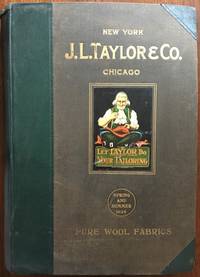
192658100New York & Chicago: J.L. Taylor & Co. 1926. Thick elephant folio 17 x 23.25 x 2.5 ins. 75 3 pp. printed on thick card stock each mounted on linen hinge. With 17 colour fashion plates illustrating Taylor styles of the period verso of almost all pages with 364 of 375 mounted textile samples in wool wool-rayon blends some felt backed silk moleskin corduroy cashmere waistband sample and more -- all samples clearly marked with prices and availability some of the 12 missing samples are indicated in pencil as being “Out†as well as a few present 1 additional pinned-in numerous illustrations throughout in blue-green colour tinting including Chicago & New York factories some diagrams charts and graphs. Original half-green cloth over gray green cloth corners gilt lettering on front cover colour plate w/ J.L. Taylor tailor mounted front cover some wear & minor bumping to fore-edges corners some minor soiling & occasional foxing to interior leaves -- some of it dust from the wool samples 10-15 samples with minor deterioration and evidence of old predation still a very good unsophisticated and remarkably complete example w/ original 9 x 21 in. double-sided stock list in red & black laid-in. First edition of this scarce and unusually complete salesman sample catalogue for Jazz era men’s suits in 1928-1929. J.L. Taylor maintained a huge tailoring operation in both Chicago and New York until after World War II employing hundreds of tailors and seamstresses to fill orders. The catalogues were very expensive to produce and so were most often found in department stores mercantiles and men’s stores which would have these catalogues on the sales floor for two years or more. The catalogue offers invaluable illustrated historical reference for the colours styles and fabrics during the era of F. Scott Fitzgerald and the Flappers. Most of the colour fashion plates illustrating the available styles have elegantly dressed women and settings in the background including with an emphasis on sporting in summer so golf tennis croquet canoeing boating and swimming all make an appearance. Of particular interest is the wonderful dress chart indicating styles needed clothes accessories and shoes which one would need for Day Wedding Matinee Reception Evening Dress and many others offering an excellent marketing opportunity for the store to sell the customer items to compliment his suits overcoats and other fashion wear ordered from J.L. Taylor. The final plate focuses on the lightweight “Palm Beach†& “Mohair†suits at the height of the 1920’s boom in Florida featuring snappily dressed models in Panama straw hats and a lightweight fedora. Worldcat locates 1 partial copy Preserved at the Library of Congress stripped of samples and used as scrapbook for Wilbur’s Drug Store prescriptions of Portland ME -- not an unusual occurrence. J.L. Taylor & Co., hardcover
191151748France: n.p. 1911. Tall 8vo. 6 leaves on thick card stock printed in gilt & black 7 x 11 in. with 369 black silk & vegetable ivory buttons all with stock numbers below and to the side many in the dark brown patterned material some jet black and many with incised or woven patterns each sample card carefully mounted within corners with facing padded red silk leaves to protect the buttons many with ink annotations indicating whether they were available in stock or not. Quarter-black cloth over purple patterned cloth gilt lettering on front cover spine very minor rubbing at the hinges slight bumping to corners still a NF exemplar with the buttons entirely complete and in perfect condition. First edition of this remarkably beautiful Edwardian button sample catalogue which are exceedingly scarce in such exceptional condition. Included are a number of different styles of buttons in vegetable ivory for clothing coats sportswear and more which were sold by this French manufacturer for export together with a number of beautifully woven black silk cloth buttons for women’s coats hats and dresses. Vegetable Ivory is a very dense material that is manufactured into buttons from the Corozo nut that grows on the Tague Tree a type of Palm. It was named Vegetable Ivory in the 19th Century because it resembles real ivory but was not as heavy or dense. These types of buttons were first introduced at the 1862 International Exhibition in England and then reached full popularity at the 1867 Paris Exposition. The sample buttons preserved here come in pressed carved and fine lined patterns some of them painted with a dark flat black other shiny black and many with a beautiful rich shiny mottled effect. During the Victorian and Edwardian periods and prior to the growth in production and popularity these were the buttons of choice for men’s suits. No copies located in Worldcat. n.p.], hardcover
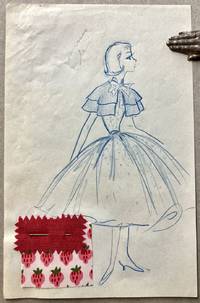
195516984n.p. Los Angeles areaa: 1955-57 Stored in a contemporary accordion-fold card paper portfolio hand-labeled "Sketches of Accepted Designs.". 137 sheets of hand-drawn sketches sixty-two on 9" x 11 " sheets 75 on 5 " x 8 " sheets. Most with handwritten design descriptions notes and accompanying fabric swatches pinned or taped onto the sheets. Also with price lists inventories and printed ads for the Candy Jr. brand ads correspond with designs made by Saunders that are included in the present set. Portfolio somewhat worn and creased. Enclosed are eight contemporary manila folders organized by season Holiday 1955 Fall 1956 Spring 1957 etc. all hand-labeled in pencil. Some designs signed "V. Saunders" or "Vivian Saunders." Some toning and creasing to leaves. A few fabric swatches detached from leaves. Overall a very good set of striking original sketches of 1950s-era fashion designs for young women. Most of the sketches are for party dresses and evening gowns made for young women in their early teens to early twenties juniors and misses. The designs include many iconic designs associated with the 1950s including "poodle" skirts with ample petticoats boleros and cardigans and sheath dresses with cinched waists. The 26 swatches indicate a wide range of textures colors and patterns like gingham plaid organza metallics appliques ribbon velvet fur and much more." unknown
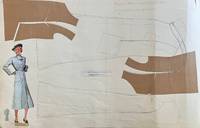
193059525Hannover: Schneidermister ca. 1930-1933. Oblong elephant folio. 23.5 x 14.5 in. 25 leaves unnumbered. Original women’s fashion patterns in pencil throughout many with tipped-in pattern cutouts mounted on the sheets as well as colour images of the finished design tipped-in and mounted manuscript pencil notes & directions in some colour pencil additions to a a few patterns. Stiff limp beige covers black cloth spine title mounted on front cover scutting edgewear repair to corners of front cover corner still a remarkable manuscript w/ tipped-in instructions for taking measurements and fashion by the Nazi Party on first leaf including one entitled “Ein Modewart macht Propaganda.†This German fashion pattern tailoring and pattern manuscript provides an exceptional original artifact of the period when the Nazi Party began to force educational and cultural changes upon German Society against the tailoring and fashion industry in Germany during the early 1930’s. By 1930 Berlin had emerged as an international fashion capital drawing Parisian fashion designers and most of the tailoring schools and fashion houses were operated by generations of Jewish family owners. Tailors and fashion designers were constantly reminded that they must create a wholly Aryan fashion and that they were to avoid French or other outside influences. Despite the pressure most women tailors and fashion designers in the tailoring or cutting schools continued to still draw their influences from Parisian and American couturiers by creating their own patterns and pattern books from which these internationally themed clothing designs could be made. This fashion pattern book by Bode focuses on women’s suits skirts capes coats and knickerbockers. However the Party never succeeded in creating a unique Fashion industry especially because of the drive to dress women in peasant costumes or uniforms even as the Nazi Party would confiscate the assets of over 2700 Jewish fashion houses retailers and manufacturers with 1000’s of tailors and seamstresses forced into labor and concentration camps to produce clothes for military and high society. See: Uwe Westphal Fashion Metropolis Berlin 1836-1939: The Story of the Rise and Destruction of the Jewish Fashion Industry 2019. Schneidermister, hardcover
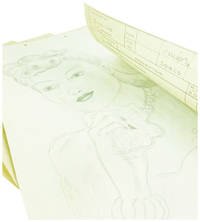
194114713England 1941. Very Good. Substantial collection of original amateur artwork and fashion plates dated 1941 to 1945 by a young woman named Gladys Warren almost all pieces signed "G. Warren" "G.W." or "Gladys Warren". The collection consists of nine large format watercolors 56x38cm.; one small format watercolor 32.5x23; four large format pencil sketches 56x38cm.; and twelve small format pencil sketches 33.5x19cm. totaling twenty-six 26 individual pieces. Some dust soil and minor wear from handling watercolors not examined out of individual shrink wrap. A Very Good or better collection overall.<br /> <br /> Collection of drawings and watercolors almost exclusively depicting women in the latest fashions or in uniform. The range of the large format watercolors indicate that this was possibly a burgeoning professional dossier including examples of day wear sleep wear evening wear and swim wear. The large format pencil drawings include two historic fashion illustrations the only titled image in the group is "Madeira 1884" and one nude study. <br /> <br /> Of special note however is the series of twelve small pencil sketches all accomplished on the versos of what appear to be mimeographed World War II aircraft maintenance reports. Indeed the October 28 1941 "London Gazette" lists a Gladys Florence Warren among the members of the Women's Auxiliary Air Force WAAF though we find little else to pinpoint the artist. With the dearth of ready paper experienced during World War II perhaps Warren filched these leaves on which to practice her art Most of these sketches depict attractive women either seen in close-up or as usual modeling the latest uniforms and fashions while the verso details the assemblage or maintenance of engine covers handbrakes or a "carburettor." <br /> <br /> A pleasing survival of the English home front juxtaposing fashion femininity and aircraft mechanics. unknown
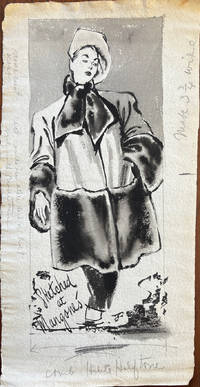
194261064Brooklyn NY: Barbara Duffy ca. 1942-1945. Seven pieces of original pen & ink art and gouache colouring and overpainting sized from 10 x 15 in. 3 up to 15 x 20 in. 3 on “Winsor & Newton’s Illustration Board 30 x 40†while the 7th piece is 9 x 17 in. executed on textured thick laid-paper pencil annotations in MS on fore-edges all pieces signed in thick black pen on versos some dustsoiling staining to fore-edges to a couple bumping to corners edgewear still a VG set of well-done exemplars. These original fashion design illustrations encompass women’s dresses hats fur coats evening wear and a post-War design by Mangone. The two dresses drawn by Duffy are reminiscent of the Claire McCardell easy to wear and comfortable dresses which emerged at the end of the War and featured a cinched-in waist floppy collars and padded shoulders retaining the influence of men’s tailoring on women’s fashions during the War. The “Toppers†are splendid examples of box or swagger coats often made in light wool cotton or rayon blends and in this case with fetching hats and cinched-in waists. The two smaller designs with mink or beaver coats include one with a matching purse and the other with a pillbox hat. The two “Paris†style Cloche hats are nicely drawn and one is fitted with a mesh veil. The exceptional Mangone design indicates it was “Sketched at Mangone’s†which was probably one of the frequent sessions the designer would put on fashion shows at the Fashion Institute or local boutiques in and around New York following World War II and features a coat trimmed in beaver fur with Cloche hat and according to Duffy was available in light and dark wool along with an ascot. Mangone 1884-1957 was not only a significant Italian-American designer who quickly adapted Paris fashion trends into his own American style and was very popular from before World War I until after World War II. Strikingly he also was a survivor of the Hindenburg disaster who managed to leap from the Zeppelin at Lakehurst NJ with his daughter and grand-daughter looking on suffering significant burns and after shock and hospitalization spent considerable time recovering. Duffy b. 1919 taught at the Jacob Gould Vocational School for girls in Prospect Park Brooklyn NY from the time she left college until after World War II after which she worked as designer in local department stores and then disappears from census and public records. Barbara Duffy, unknown
194995082Paris: Lucien Lelong 1949. First edition of this notably rare spectacular promotional brochure for Lelong's fragrances with no other copies traced. Largely forgotten today apart from amongst the couture cognoscenti Lelong 1889-1958 was enormously influential. After the First World War Lelong took charge of his parents' small fashion house which was noted for its espousal of the modern look - the chic autobiographical heroine of Colette's 1908 novella Les Vrilles de la vigne is dressed by Lelong - and continued their tradition of innovation advancing the concept of the "kinétique" clothes "constructed in such a way that their true shape would emerge in movement not at rest". Not a designer himself he employed a number of young designers who were later to strike out on their own. Christian Dior Pierre Balmain and Hubert de Givenchy all spent time developing collections for Lelong. His contribution to the success of the house was in his vision and his marketing brilliance: he redesigned his parents' salon decorating entirely in black so that it was said to resemble a black-lined jewellery box he offered discounts to society women who agreed to be photographed in his dresses and was early into the branded perfume market. The first fragrances offered by Lelong were enigmatically named A B C J and N intending to evoke a sense of mystery and romance. The artfully designed bottles were largely the work of Lelong himself. Over 30 years he created a total of 27 different fragrances. This superbly produced catalogue features ten suitably mysterious and evocative plates by Cassandre né Adolphe Jean-Marie Mouron the Ukrainian-born French painter illustrator poster designer and typographer probably best-known for his imposing poster for the great CGT liner Normandie. Octavo. With 10 chromolithographic plates after illustrations by Cassandre and similarly printed plates from photographs of the perfume bottles themselves by Réné Messager. Original plain boards in cream wrapper front panel with company device embossed within debossed cartouche. Wrappers a little rubbed and irregularly toned spine slightly chipped at ends repair to short split at head of front joint contemporary gift inscription to front free endpaper else very good. hardcover
1951200661951. Fashion Women's fashion design sketches dated 1951 document the rapid transformation of female dress following the end of wartime rationing and the international adoption of Christian Dior's "New Look" silhouette. These drawings show designers experimenting with narrow waists structured bustlines wide skirts and dramatic outerwear styles that defined postwar femininity and reshaped global fashion culture in the late 1940s and early 1950s. Such instructional sketches provide visual evidence of how couture aesthetics circulated through design schools and professional training environments during a moment when fashion industries in Europe and the United States were rebuilding after World War II.<br /> <br /> Archive of fifteen original women's fashion design sketches executed on nine illustration boards measuring approximately 11 x 14 inches. Drawings are rendered in pencil ink watercolor and collage techniques and depict coats dresses trench coats and daywear ensembles characteristic of early 1950s style. Several boards include multiple designs including sheath dresses with high necklines and plunging backs bell sleeved coats trimmed with fur and children's pinafore dresses worn over blouses. One design shows a woman wearing a flight jacket cravat and pleated trousers recalling mid century women adopting traditionally masculine tailoring. One board bears the signature "Reindel" on the verso.<br /> <br /> Designs prominently feature hourglass silhouettes associated with Dior's New Look including cinched waists sloped shoulders and flared skirts. Other garments incorporate menswear inspired coats and tailored outerwear reflecting the hybridization of wartime practicality and postwar luxury. Boards show light foxing and minor handling marks. Very good condition. A visual teaching archive illustrating postwar fashion design practice during the early Cold War era. unknown
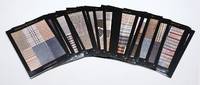
1980140454Milan: Styling Consulting Service 1980s. Rare visual reference for patterned textiles First and only edition of this visually beguiling and historically informative collection. The title leaf reports that "this photographic publication composed of pictures of original fabrics from 1903 up to 1925 taken from private files has been created to offer a proof of art and culture in the evolution of costume". We have been unable to trace any other copies. There is no indication of a printer or publisher anywhere in either volume or in the custom boxes nor any other hints as to the origin of this fascinating collection of pin-sharp colour photographs of fabric swatches. The work however is clearly of Italian origin and there is a hint of FMR in the thematic and in the precision of execution and presentation. The first volume concentrates on wool weaves; tweeds herringbones plaids and checks in a wide range of weights and colourways; the second is filled an even wider selection of patterned cottons a fabulous array encompassing design trends from the early decades of the 20th Century with inevitable hints at art deco art nouveau and sometimes brasher "jazz" influences; all kinds of stripes gingham tartans textiles suggestive of ties cravats suit linings waistcoats figured fabrics for dresses or skirts women's coats or jackets even upholstery or blinds. A painstaking and no doubt costly exercise the precision in the execution of the photography and processing bespeak a seriousness of purpose which makes the anonymity of the project even more extraordinary. 2 vols folio 297 x 210 mm. Black rough-weave cloth solander boxes with drop sides title gilt to spines and front boards explanatory title leaf to vol. I gold printed on glossy black medium card-stock the boxes containing respectively 50 and 100 loose sheets of similar card-stock each with mounted high-quality colour photographs c.180 x 180 mm to c.228 x 172 mm of fabric swatch composites between 3 and 8 samples to each lettered and numbered in gold. Slightly rubbed and a little dusty spines sunned corners bumped small neatly repaired tear at foot of spine of volume II card leaves with the occasional minor scuff but remains very good. hardcover
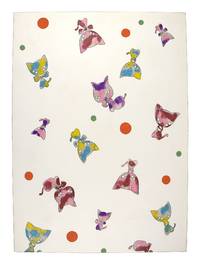
194033730Suzuka Japan et al. 1940. Very Good . Suzuka Japan: n.d. ca. 1940-1960. Nineteen original hand-stenciled designs ca 48x35cm; thirteen examples with rubber-stamp from two different craft shops the remaining six unattributed. Light wear and soil else a Very Good to Near Fine collection.<br /> <br /> Colorful multi-decade sampling of designs for the Japanese casual summertime cotton kimono known as yukata. The designs were almost certainly designed for children's outfits decorated as they are with baby birds puppies ducklings circus elephants bunnies musical instruments and teddy bears. The ten earliest examples all hail from the same shop and all use the same color scheme of navy blue slate blue and orange-brown. Later examples expand the color palate to much more vibrant and neon colors. One design in particular of a small child in a red bunny costume anticipates both the manga and the Hello Kitty aesthetic that became a global phenomenon beginning in the 1970s and 1980s. unknown
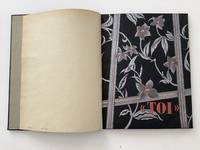
192719102AB1927. Paris Draeger 1927. 275 : 22 cm. 8 leaves with the text of Colette 6 plates by Jean Dupas 1 mounted plate. Original cloth original black wrappers illustrated in silver and red bound in. Excellent copy of the album Toi founded by Maison Les Fourrures Max and illustrated by Jean Dupas for the poems of Colette. One of the most beautiful catalogues created in art-déco."Ce bel étui noir onré de fleurs rouges et argent contient de superbes planches en camaieu gris et noir. La provocation des nus féminins que Jean Dupas a drapé des fourrures de la novelle collection est atténué par leur hiératisme de statue" in 'Arts et Métiers Graphiques' No.1 1927 - Bibliothèque Exposition Forney 1988. No.18. Jean Dupas Bordeaux 1882 - 1964 Grand Prix de Rome of painting in 1910 lead this album to the summit of publicity. - Some text-pages verso with mist of stains otherwise a superb copy of this mark stone of art deco. hardcover
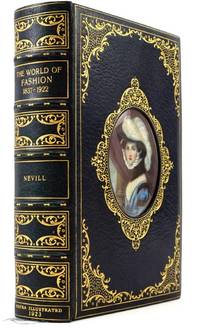
1923ST20131London: Methuen & Co 1923. 218 x 138 mm. 8 1/2 x 5 1/2". vii 1 280 pp. <br/> ELEGANT DARK BLUE MOROCCO GILT BY BAYNTUN stamp-signed on front turn-in covers with gilt fillet frame stippled volute cornerpieces UPPER COVER WITH LOVELY MINIATURE PORTRAIT of a fashionable lady the painting under glass and surrounded by a gilt-tooled frame raised bands spine compartments with volute frame gilt lettering gilt-framed turn-ins ecru moiré silk endleaves all edges gilt. WITH 21 PLATES OF FASHIONABLE PEOPLE five of these called for one color and 16 EXTRA-ILLUSTRATED seven of these in color one double-page and nine in black & white all with tissue guards. Spine gently sunned to navy blue just a hint of rubbing to joints but still quite a fine copy--clean and fresh internally and with almost no signs of use inside or out.<br/> <br/> This handsomely illustrated look at the London social scene during the Victorian and Edwardian eras and after the Great War comes in a suitably chic binding by the last Victorian bindery still in family hands. Author Ralph Nevill 1865-1933 was a denizen of the world he writes about being the son of one of the leading hostesses of the day Lady Dorothy Walpole Nevill 1826-1913; DNB notes that "family tradition" held that Ralph's father was her close friend Benjamin Disraeli Lord Beaconsfield. Nevill has a wide array of insider anecdotes to share about country house life the pleasures of London society and prominent politicians and journalists. He makes it clear that the Victorian era was preferable to the 20th century and nothing is more drab that the post-war world. The illustrations feature portraits of prominent men landscapes of stately homes and scenes from the balls operas and royal occasions that made up the London Season. The very pretty binding is in the Cosway style made popular by bookseller Henry Sotheran and the Riviere bindery characterized by a miniature painting set under glass on the covers or doublures. Our binding was done by the venerable English firm founded in Bath by George Bayntun in 1894. Among the great English workshops of the Edwardian "golden age" of lavish bindings Bayntun has the distinction of being the only one located outside London's West End to be sought after by bibliophiles. Bayntun was a worthy rival to the likes of Sangorski & Sutcliffe and Riviere & Son the latter being subsumed by Bayntun in 1939. Bayntun of Bath continues to create fine hand bindings for bibliophiles. Unusually the miniature painting in our binding is signed by the artist but we were unable to decipher the signature and the Bayntun bindery did not have any information about the painter's identity. Methuen & Co unknown
1913D7495Paris 1913-1918. Hardcover. Very Good. Morocco backed original cloth; oblong 380 x 305 mm; contains over 100 drawings of dresses hats jackets and more done primarily in pen and ink and colored in pencil or gouache; and highlighted by 5 mounted photographs of a woman modeling different gowns. From the Parisian fashion house Detrois et Cie. Women's garments shown from the front and back and professionally presented -- drawings are polished and nicely detailed and colored. Scuffing along spine and edges of boards; binding a bit shaken. <br/><br/> hardcover
1985333396New York: alp 1985. hardcover. near fine/very good. Color and b/w illustrations. 312 pages. 4to pictorial cloth d.w. slightly de-laminating. New York: Alpine Fine Arts 1985. A near fine copy in a very good dust wrapper.<br/> <br/> alp unknown
195562463New York NY Kansas City MO & Carmel Santa Barbara & San Francisco CA: Marian Ross Mizelle Madrigal 1955-1974. Four Vols. and original Store Sign for Carmel CA boutique. Folio. 2 - 12 x 15.25 in. & 2 - 13 x 19 in. 48; 48; 48; 48 pp unpaginated. all w/ mylar sleeves archival black paper insert backings with 151 original designs in gouache watercolour chalk and pen & ink 38 in pen & ink or pencil sized from 7 x 11 in. up to 10 x 15 in. and nearly all signed by Marian Ross three feature original fabric sample swatches affixed to them including one w/ pencil MS “Winner†and mimeographed description affixed to verso several of them are translucent pochoir stapled to backing paper many are on thick stiff studio board while others on assorted textured paper stock. In addition there are three newspaper and magazine clippings 1966 & 2013 a photostat copy of early Ross Mizelle “Mod†fashion designs and original black & white silver gelatin photo of young Marian Ross modeling a wedding dress. All are preserved in flexible vinyl portfolios printed labels on spines some minor scuffing & shelfwear to portfolios occasional very minor closed tears or edgewear to the designs a few w/ minor holes from removed staples still an exemplary archive of designs together with the original Madrigal signboard sized 16 x 27 in. from their Carmel CA store. This sensational archive of original fashion designs for Kansas City MO based department store suppliers by Marian Ross Mizelle before her move to California in the 1970’s to establish the Madrigal boutique with her husband Elliot A. Mizelle 1916-2007. These vividly reveal the Mid-20th-Century fashion trends following World War II. Many of the designs in this collection reflect the transition from the late 1950’s elegance and emphasis on Dior’s “New Look†highlighting femininity and opulent use of fabrics towards the more youthful designs emerging out of Swinging London which were a slimming down beginning to raise hemlines with short skirts bolero tops and increasing influence of Pierre Cardin Andre Courreges and Givenchy. The Mid-20th-Century saw a tremendous upsurge in marketing slimmer lines tighter fitting bodices and fashions emerging from such cultural events as Audry Hepburn in her iconic 1961 “Breakfast at Tiffany’s†film which heavily influenced a generation of young women.Young Marian Ross b. 1936 after completing her Fashion Academy certificate in 1955 free-lanced and worked in the New York fashion industry before landing with the influential and hot-selling Gay Gibson label with Gernes Garment Co. in 1961. The Gernes Garment Co. had been originally founded in 1928 by Sara Desaix Gernes 1896-1978 and her husband Alexander Gernes 1882-1947 to market her groundbreaking fashion designs targeting everyday fashion for young women juniors and teens. Her designs proved very popular as she initiated and fashioned sizing and dresses and clothing for teenagers through young college-age women and her designs proved very successful and were marketed through Chicago’s Marshall Field’s department store. By 1961 the Gernes Garment Co. moved their design and pattern making department to New York to capture young fashion designers such as Marian Ross as well as be closer to the influential couturier houses in New York & Paris. The Gay Gibson label was marketed in Mademoiselle Seventeen Glamour and Vogue magazines with Twiggy often modeling Gay Gibson dresses in the 1960’s. Marian’s designs were inventive playful and emphasizing movement as well as comfort. Many of the fashion patterns depict her models in flats ballet flats or even shoeless while dressed in elegant evening or formal dress. Also depicted are designs such as billowing harem pants modified and sleek upscale poodle skirts and Tartan patterned capes pockets dresses and accessories. Others encompass swimwear ski wear as well as the emphasized and often enforced domesticity of the late 1950’s to 1960’s with stylish plaid house-dresses in the kitchen and bar as well as frequent use of lace. The Gay Gibson label maintained a showroom at 1407 Broadway on the 39th Floor in New York ad held over 24 showings from 1961-1969 including Junior Dresses Summer Collections Spring Junior Collections as well as Holiday and Resort collections. By the early 1970’s the label was having financial difficulties and the popularity began to drop with the company run by Desaix Gernes her mother and husband Paul before folding a few years after Sara Desaix Gernes’ death. Marian and Elliot Mizelle established Madrigal Inc. name chosen because of the seductive chic of Manhattan’s Le Madrigal restaurant and grew into a legendary luxury boutique at one point operating store fronts in Santa Barbara downtown San Francisco and Carmel CA. In her 2015 interview for “Women in Business†with the Carmel Pine Cone Marian stated she “wanted to be an actress but it didn’t work out that way. I used to sketch a lot so I studied design instead. Everything I touched while was designing worked. I got a lot of jobs and was featured on a lot of Seventeen magazine covers.†This cataloguer could find not similar extant archive of original designs for the 1960’s period of the Gay Gibson label or for Marian Ross Mizelle; See: Interview with Desaix Gernes Garment Industry Oral History Collection The Kansas City Public Library Jan. 14 2005 SC229 Series 2 2024; Gay Gibson Vintage Fashion Guild 2025; Donnelly Garment Company vs. International Ladies Garment Workers Union et al Photographs Clothing Demonstration The Pendergast Years Kansas City in the Jazz Age & Great Depression 2025. Marian Ross Mizelle, Madrigal, hardcover