300 résultats
1997166527Boston: Bulfinch Press 1997. First Edition. Softcover. First Edition. Illustrated with 650 color 405 halftone and 150 duotone illustrations. <br /> <br /> Published in conjunction with a traveling exhibition which opened on November 8 1997 at the Whitney in New York and closed at the Andy Warhol Museum in spring of 1999. <br /> <br /> Near Fine in perfect-bound wrappers. Bulfinch Press unknown
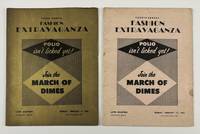
19574585Detroit: Bolar Printing & Publishing 1957. Good plus. 20; 36pp. Original printed wrappers stapled. Moderate soiling and wear. A pair of rare programs issued for the 1956 and 1957 benefits for the March of Dimes Fashion Extravaganza at the Latin Quarters in Detroit. The programs include information on the organization's committee hostesses sponsors and more. The event itself is titled "Fashion in Colorama" in the earlier program and "Spring Fashions in Symphony" in the latter with a schedule of events listed in both cases. Each program is profusely illustrated with photographs pertaining to the event itself but also in the numerous advertisements which populate both throughout. The ads feature a wide variety of local Detroit businesses providing critical information on commercial entities both owned by African Americans in and around Detroit and also those friendly to the local African American community. The only institutional holdings for these programs in OCLC reside at the Detroit Public Library. Bolar Printing & Publishing unknown
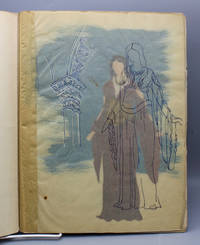
192017641<p>n.p. France: n.d. ca. 1920s architecture styles of historical periods in various geographical regions to the fashion styles of those periods. Styles illustrated include those of Greece Rome Egypt and Persia; late medieval Europe; the reign of Louis XIV; traditional Japanese attire; and fashionable 1920s dress. The background illustrations include a Roman archway seventeenth-century furniture and even a classical Greek vase that frames an illustration of three women. The fashion illustrations reflect certain design elements in the background illustrations for example the patterned fabric in the ancient Egyptian fashions match the decorative style of the columns in the background of the illustrations. . Original blue stiff paper folder with ribbon binding at spine. . 9 x 12 in. With twenty-eight pages of beautifully painted fashion designs dresses hats Greek chitons etc. from throughout history some with background elements furniture and architecture and two with real fabric accents pasted down and two pages of manuscript text explaining architectural and sculptural styles. Some of the fashion designs are captioned in manuscript. Also with eight tracing paper leaves illustrated in ink overlaying matching designs below one with pencil annotations noting types of fabric and other design elements. Some soiling to folder. Some offsetting and some foxing. Very good. We could not locate any information on Josette Eynac the student who illustrated this album though she was clearly a capable artist.</p>
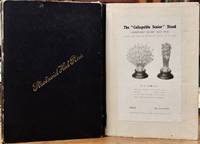
191016878Birmingham England: Stratnoid later Stratton & Co. n.d. ca. 1910. Three board panels with two cloth spines connecting boards. Bound in dark blue leather with gilt title. . Folding triptych display 8" x 11". With thirteen original Stratnoid silver hatpins nickel-plated eight with attached printed paper labels "Stratnoid Untarnishable heads". Also with three mounted illustrated advertisements for hatpin stands and sets of pins: the Collapsible Junior Stand the Collapsible Senior Stand and the De Luxe Collapsible Stand. A paper strip labeled in manuscript identifies which pins are part of the Junior Senior or De Luxe Stand sets. With spaces for the fifteen other hat pins in the set not present. Cracking and wear to joints and some chipping to leather. Some rubbing to extremities. Pins stuck into blue velvet pad with sheet of protective felt. Some foxing to felt and some light toning inside. A very good copy of a rare item. Stratnoid or Stratton and Company after 1920 was founded in 1860 as a producer of knitting needles. By the twentieth century the company was a major producer of powder compacts lipstick holders jewelry hat pins and other metal accessories. Business boomed in the late Victorian and early Edwardian eras as actresses like Lillie Langtry and Lillian Russell began wearing large elaborate hats secured with pins. b b b The hatpins in the present item feature the special Stratnoid Untarnishable heads which were warrantied for ten years and were designed in a variety of shapes like a stylized golf club an acorn and more. The collapsible stands would have been used to display the pins in women's stores and millinery shops. Stratnoid (later Stratton & Co.), hardcover
19632110502150415394Futabasha 1963. Soft Cover. Fine. Volume: 1 Futabasha paperback
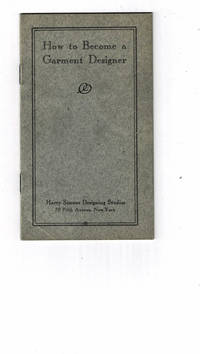
192399609<p>New York: Harry Simons Designing Studios 1923. 1923. Very good. - Tricesimo-secundo 32mo 5-3/8 inches high by 3-1/8 inches wide. Softcover bound in printed light gray wraps. 16 pages with a chart of proportions. The bottom inner corner of the covers and pages is creased. Very good.</p><p>RARE. WorldCat locates only 2 copies.</p> New York: Harry Simons Designing Studios, (1923). paperback
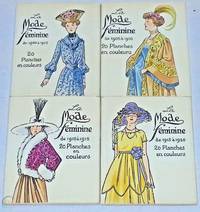
19203395<p>A small portfolio of women's fashion designs broken into four folders of loose plates 20 plates per folder for a total of 80 plates. This copy missing one plate from the second series 1905-1910. Beautifully hand colored pochoir plates illustrating the fashions of the time each card measuring 7 1/2 inches by 5 1/2 inches. The year shown at the bottom of each card. Each wrapper also illustrated with a color plate. Charming original folding case with patterned papers and silk ties. Hinge paper broken as usual but covers still holding case is slightly worn but all four paste on labels are present. Brown silk ties still there. All wrappers clean and unworn.</p> (Editions Nilsson)
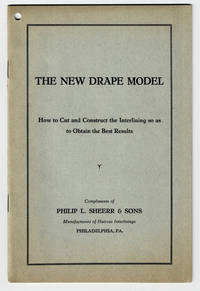
1930100098Philadelphia New York & Chicago: Philip L. Sheerr & Sons circa 1930's. 1930's. Very good. - Octavo 9-1/4 inches high by 6-1/8 inches wide. Softcover bound in printed light gray wraps titled in black on the front cover. The edges of the covers are faintly darkened and there is a tiny slit to the tail of the spine. A hole is punched through the top left corner of the book. 16 pages with illustrations and patterns. Very good. <p>RARE.<p>A more comfortable alternative to the confining slim suits of the war years the athletically cut drape suit had more fabric through the shoulders and chest with a slight drape. It could be made as a single or double-breasted suit. Philadelphia, New York & Chicago: Philip L. Sheerr & Sons, circa [1930's]. paperback
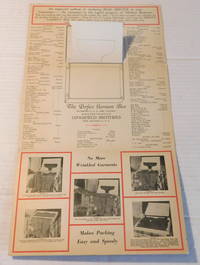
1920100865<p>New Orleans: Lengsfield Brothers circa Late 1920's -1930's. Late 1920's -1930's. Good. - A 19-3/4 inch high by 10-3/4 inch wide broadsheet printed on buff card stock advertising the firm's garment boxes. Text printed within an orange ruled frame at the at the top proclaims "An improved method of rendering real service to our Customers----So necessary to the logical progress of Modern Business. This new packing idea was first placed on the market July 1927 -- It has been accepted and adopted by the leading Clothiers of the Country -- Note the list of Leading Merchants now using the Perfect Garment Box who believe that it pays in dollars and cents -- and the most valuable of the Retailers Assets -- Good Will". Columns on either side list the numerous clothiers and businesses who use their product with the broadsheet's title printed at the center. Five illustrations from photographs depicting clothing being gently folded into the boxes are printed at the bottom within orange ruled frames. A cut-out folding insert centered near the top reproduces the coat hanger which holds the clothing within the firm's boxes. Folded twice horizontally to 7 inches high by 10-3/4 inches wide with promotional text printed within decorative orange rules on one panel and an illustration in shades of black gray & orange depicting a valet or butler holding a suit printed on the other panel boldly titled "Service!" next to 3 ruled address lines. The broadsheet was mailed to "The Clothing Trade Journal" with the periodical's address penned in with a correction and with a slit "New Orleans" postage seal along the bottom of the fold. The edges are darkened with a couple of tiny chips and a tiny tear to the right edge of the top fold. Good.</p><p>Lengsfield Brothers was a paperboard packaging & design firm known for award-winning package designs.</p> New Orleans: Lengsfield Brothers, circa [Late 1920's -1930's]. hardcover
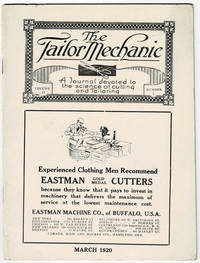
192099548<p>New York 1920. 1920. Very good. - Octavo 7-3/4 inches high by 5-3/4 inches wide. Softcover bound in printed cream wraps. The covers are soiled with a chip to the bottom corner of the front cover and top edges. There is a short tear along the spine and the booklet is vertically folded down the center. 21 & 1 pages with numerous textual illustrations and patterns. Very good.</p><p>"This is the first number of the New Edition of The Tailor Mechanic. The old edition was discontinued before this country entered the World War". Quoted from page 6. Numbered Volume 1 Number 1 on the title page.</p><p>Of particular interest is an article by Felix J. Koch on "Making Clothes for Jugo-Slovakian: Strange and Interesting Manners and Customs That Attach to the Fashioning of the Garments of the New Nation" illustrated with photographs presumably by Koch. Felix John Koch 1882-1933 was an author and freelance photographer. He traveled to the Balkan Peninsula in 1904. Koch traveled throughout the world from Labrador and Newfoundland to Panama and throughout Europe documenting in words and pictures the customs people and sights of the many regions through which he traveled. He was the official War Department photographer for the Cincinnati area documenting local war efforts.</p><p>RARE.</p> New York, 1920. paperback
19203396<p>A small portfolio of women's fashion designs broken into four folders of loose plates 20 plates per folder for a total of 80 plates. This copy missing plate 20 from the third series 1720-1775. Beautifully hand colored pochoir plates illustrating the fashions of the time each card measuring 7 1/2 inches by 5 1/2 inches the year shown at the bottom of each card. Each wrapper also illustrated with a color illustration. Charming original folding case with patterned papers and silk ties. Case is worn but intact with short silk ties remaining. Former owners name in ink on several plates in the first series some of the signatures across the bottom of the images.</p> (Editions Nilsson)
19253398<p>A small portfolio of women's fashion designs broken into four folders of loose plates 20 plates per folder for a total of 80 plates. This copy missing two plates from the second series 1820-1845. Beautifully hand colored pochoir plates illustrating the fashions of the time each card measuring 7 1/2 inches by 5 1/2 inches. The year shown at the bottom of each card. Each wrapper also illustrated with a color illustration. Charming original folding case with patterned papers and silk ties. Case is worn on the spine but complete with four paste on labels intact and patterned covers bright. Ties present.</p> No Publisher
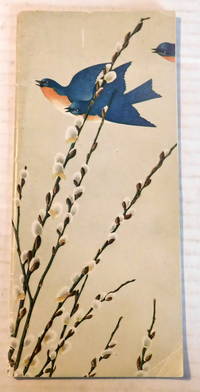
1921100820<p>New York: Abercrombie & Fitch Co. 1921. 1921. Very good. - Tall narrow octavo 9-1/8 inches high by 4 inches wide. Softcover bound in pictorial light gray stapled wraps with color illustrations of Blue Birds among pussy willows on the covers. The covers are slightly soiled and the bottom corners creased. The wraps are splitting along the head & tail of the spine. 36 pages with profuse black & white illustrations of women's sporting fashion including clothing for camping and hiking riding golf tennis and polo with accessories. Very good.</p> New York: Abercrombie & Fitch Co., (1921). paperback
193773769Chicago: Ferris Woolen Company 1937. Original hinged sample case with drop front 27 3/4 x 11 x7 1/2 inches. Containing 174 thick cards printed in black and red; each with a mounted woolen worsted wool imported wool sample. Original sample display case w/ green textured cloth over boards divided into Three compartments nickel plate slider hinges printed advertising on inner lid and drop front reinforced corners a remarkable display case from the John the Tailor Shop Suits and Overcoats made to order. Wonderful graphic label on interior of lid featuring dapper dressers and period automobiles.Spectacular tailoring sample counter display for men’s suits and overcoats in the Fall & Winter of 1937-1938. Ferris Woolen Company a subsidiary of Wawak Woolens was originally founded in 1922 in Chicago along with Detmer Woolen Co. Bruner Woolen Co. Mason & Hanson Inc. and Salter & Wolf to supply woolens and trimmings to tailors and department stores across the United States. The companies were known for their high-quality wools at a reasonable price and often incorporated imported wool wool silk blends gabardines and tweeds especially from Scotland Wales France and Great Britain. In 1933 the Wawak Co./Ferris Woolen Co. purchased the exclusive right to all the Detmer Bruner Co. customers West of the Mississippi. They quickly began commissioning and producing display cases reflecting the change and proved very successful with the Ferris Woolen Co. catering to the trade into the 1960s. These sample cases were very expensive to produce and so were most often found in department stores mercantiles and men’s stores which would have these display on the sales floor for two seasons or more often adding or subtracting fabrics as they became available. The samples included with this case offer invaluable textile reference for the colors and fabrics during the era of fashion influenced by the elegance and glamor of Hollywood films and film noir at the time. The styles depicted on the inside of the lid and the drop-down front are reminiscent of the very popular Thin Man fashions worn by William Powell and Myrna Loy at the time. Ferris Woolen Company hardcover
1913218820London: Sampson Low Marston & Company Ldt 1913. First edition. 155 colored plates several in black and white which are printed on both sides. 1 vols. 4to. Green morocco-backed boards. Very good. First edition. 155 colored plates several in black and white which are printed on both sides. 1 vols. 4to. An excellent survey of French and English mode of dress between 1786 and 1912. Colas 2426; Hiler & Hiller p. 722 placing date as 1912 Sampson Low, Marston & Company Ldt unknown
193225922Paris: Au Printemps 1932. 1 vols. Image 11-1/2 x 8 inches matted to 17-1/2 x 14 inches. 1 vols. Image 11-1/2 x 8 inches matted to 17-1/2 x 14 inches. Reynaldo Luza 1893-1978 pre-eminent fashion artist was born in Lima Peru. He began training as an architect at the University of Louvain Belgium but returned to Peru at the outbreak of World War I where he changed his studies from architecture to art. In 1918 he came to the United States where he earned his living by contributing drawings to several fashion publications principally VOGUE HARPERS BAZAAR and VANITY FAIR. In 1921 he joined HARPERS BAZAAR as the principal fashion artist a position he was to hold for 27 years. He divided his time between New York Paris and London working closely with all of the leading fashion designers of the times--Poiret Patou Lelong Paquin Douillet Doucet Cheruit Worth Drecoll Callot Soeurs Redfern Martial et Amand Premet Reboux Chanel Vionnet Molyneaux Schiaparelli Hartnell Steibel and Balenciaga among others.<br /> <br /> In 1940 Luza made New York his principal base where over the next few years he continued his activities at Harpers as well as creating fabric and furniture designs and the costumes for the movie "The Bridge of San Luis Rey". Among other distinctions he received several honorary appointments from the government of Peru including that of Artistic Director of the Paris Exposition of 1938 and the New York World's Fair of 1939-40; he also did the interior design of the new Lima airport.<br /> <br /> In 1950 Luza returned to Peru where he began a second career as a portrait painter exhibiting his work over the next few years in Paris New York and Washington D.C. Au Printemps unknown
19202413Paris Editions Nilsson. c.1920. Four little volumes containing 80 pochoir color cards 20 in each volume of women's fashions from 1900-1920. Small 16mo. 9.4 x 7.25cm. Each volume In original hand colored printed wrappers with women in costume on the front of each volume. Housed in the original patterned paper covered card slipcase with rose design on inside covers with printed paper spine label. Box is shaken. Interior volumes are fine. Ties are perfect. Editions Nilsson
19042923New York: The Jno. J. Mitchell Co 1904. First Edition First Printing. Hardcover. Very Good. 10 1/4 X 13 1/4 Inches. 255 PP. Scarce original early 20th century guide to tailoring by J.O. Madison the son of American tailor Otis Madison. Signed by J.O. Madison under his frontis portrait. A profusely illustrated guide to the tailoring of men's clothing. Binding a bit shaken but a solid copy overall. The Jno. J. Mitchell Co hardcover
195025923n.p. 1950. Sold individually. Please inquire for images of each. Image approximately 12 x 10 inches plus margins. Sold individually. Please inquire for images of each. Image approximately 12 x 10 inches plus margins. Reynaldo Luza 1893-1978 pre-eminent fashion artist was born in Lima Peru. He began training as an architect at the University of Louvain Belgium but returned to Peru at the outbreak of World War I where he changed his studies from architecture to art. In 1918 he came to the United States where he earned his living by contributing drawings to several fashion publications principally VOGUE HARPERS BAZAAR and VANITY FAIR. In 1921 he joined HARPERS BAZAAR as the principal fashion artist a position he was to hold for 27 years. He divided his time between New York Paris and London working closely with all of the leading fashion designers of the times--Poiret Patou Lelong Paquin Douillet Doucet Cheruit Worth Drecoll Callot Soeurs Redfern Martial et Amand Premet Reboux Chanel Vionnet Molyneaux Schiaparelli Hartnell Steibel and Balenciaga among others.<br /> <br /> In 1940 Luza made New York his principal base where over the next few years he continued his activities at Harpers as well as creating fabric and furniture designs and the costumes for the movie "The Bridge of San Luis Rey". Among other distinctions he received several honorary appointments from the government of Peru including that of Artistic Director of the Paris Exposition of 1938 and the New York World's Fair of 1939-40; he also did the interior design of the new Lima airport.<br /> <br /> In 1950 Luza returned to Peru where he began a second career as a portrait painter exhibiting his work over the next few years in Paris New York and Washington D.C. unknown
195025924n.p. 1950. Sold individually. Please inquire for images of each. Approximately 11 x 10 inches. Sold individually. Please inquire for images of each. Approximately 11 x 10 inches. Reynaldo Luza 1893-1978 pre-eminent fashion artist was born in Lima Peru. He began training as an architect at the University of Louvain Belgium but returned to Peru at the outbreak of World War I where he changed his studies from architecture to art. In 1918 he came to the United States where he earned his living by contributing drawings to several fashion publications principally VOGUE HARPERS BAZAAR and VANITY FAIR. In 1921 he joined HARPERS BAZAAR as the principal fashion artist a position he was to hold for 27 years. He divided his time between New York Paris and London working closely with all of the leading fashion designers of the times--Poiret Patou Lelong Paquin Douillet Doucet Cheruit Worth Drecoll Callot Soeurs Redfern Martial et Amand Premet Reboux Chanel Vionnet Molyneaux Schiaparelli Hartnell Steibel and Balenciaga among others.<br /> <br /> In 1940 Luza made New York his principal base where over the next few years he continued his activities at Harpers as well as creating fabric and furniture designs and the costumes for the movie "The Bridge of San Luis Rey". Among other distinctions he received several honorary appointments from the government of Peru including that of Artistic Director of the Paris Exposition of 1938 and the New York World's Fair of 1939-40; he also did the interior design of the new Lima airport.<br /> <br /> In 1950 Luza returned to Peru where he began a second career as a portrait painter exhibiting his work over the next few years in Paris New York and Washington D.C. unknown
1950245213n.p. 1950. 1 vols. Image approximately 6 x 4-1/2 inches matted to 12 x 10-1/2 inches. Creased across upper left corner light spotting. 1 vols. Image approximately 6 x 4-1/2 inches matted to 12 x 10-1/2 inches. Reynaldo Luza 1893-1978 pre-eminent fashion artist was born in Lima Peru. He began training as an architect at the University of Louvain Belgium but returned to Peru at the outbreak of World War I where he changed his studies from architecture to art. In 1918 he came to the United States where he earned his living by contributing drawings to several fashion publications principally VOGUE HARPERS BAZAAR and VANITY FAIR. In 1921 he joined HARPERS BAZAAR as the principal fashion artist a position he was to hold for 27 years. He divided his time between New York Paris and London working closely with all of the leading fashion designers of the times--Poiret Patou Lelong Paquin Douillet Doucet Cheruit Worth Drecoll Callot Soeurs Redfern Martial et Amand Premet Reboux Chanel Vionnet Molyneaux Schiaparelli Hartnell Steibel and Balenciaga among others. In 1940 Luza made New York his principal base where over the next few years he continued his activities at Harpers as well as creating fabric and furniture designs and the costumes for the movie "The Bridge of San Luis Rey". Among other distinctions he received several honorary appointments from the government of Peru including that of Artistic Director of the Paris Exposition of 1938 and the New York World's Fair of 1939-40; he also did the interior design of the new Lima airport. In 1950 Luza returned to Peru where he began a second career as a portrait painter exhibiting his work over the next few years in Paris New York and Washington D.C. unknown
192673817Paris: Editions Nilsson 1926. First editions. There was a large and small edtion published; these are all the small size 3 1/8 x 3 3/4 inches. La Mode Feminine is complete is three volumes. Each volume in four parts and each part with 20 color card depicting French fashion of that date and each part in a printed paper portfolio. Each volume i.e. four parts housed in a floral slipcase with a printed paper spine label Slipcase for the third volume with some tape repair but overall a very clean and charming set of all 240 color plates.Together with a companion volume also published by Nilsson: Les Costumes du Pays de France. This volume only has three parts of 20 cards each complete and have paper portfolios and slipcases as in the above. Complete with 60 color cards. A very good set. For a total of 300 cards bearing charming color illustrations of French fashion through the ages all in their proper printed paper portfolios and slipcases. Editions Nilsson unknown
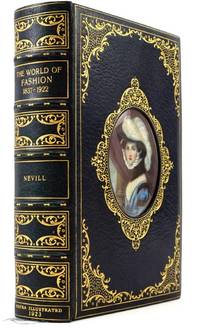
1923ST20131London: Methuen & Co 1923. 218 x 138 mm. 8 1/2 x 5 1/2". vii 1 280 pp. <br/> ELEGANT DARK BLUE MOROCCO GILT BY BAYNTUN stamp-signed on front turn-in covers with gilt fillet frame stippled volute cornerpieces UPPER COVER WITH LOVELY MINIATURE PORTRAIT of a fashionable lady the painting under glass and surrounded by a gilt-tooled frame raised bands spine compartments with volute frame gilt lettering gilt-framed turn-ins ecru moiré silk endleaves all edges gilt. WITH 21 PLATES OF FASHIONABLE PEOPLE five of these called for one color and 16 EXTRA-ILLUSTRATED seven of these in color one double-page and nine in black & white all with tissue guards. Spine gently sunned to navy blue just a hint of rubbing to joints but still quite a fine copy--clean and fresh internally and with almost no signs of use inside or out.<br/> <br/> This handsomely illustrated look at the London social scene during the Victorian and Edwardian eras and after the Great War comes in a suitably chic binding by the last Victorian bindery still in family hands. Author Ralph Nevill 1865-1933 was a denizen of the world he writes about being the son of one of the leading hostesses of the day Lady Dorothy Walpole Nevill 1826-1913; DNB notes that "family tradition" held that Ralph's father was her close friend Benjamin Disraeli Lord Beaconsfield. Nevill has a wide array of insider anecdotes to share about country house life the pleasures of London society and prominent politicians and journalists. He makes it clear that the Victorian era was preferable to the 20th century and nothing is more drab that the post-war world. The illustrations feature portraits of prominent men landscapes of stately homes and scenes from the balls operas and royal occasions that made up the London Season. The very pretty binding is in the Cosway style made popular by bookseller Henry Sotheran and the Riviere bindery characterized by a miniature painting set under glass on the covers or doublures. Our binding was done by the venerable English firm founded in Bath by George Bayntun in 1894. Among the great English workshops of the Edwardian "golden age" of lavish bindings Bayntun has the distinction of being the only one located outside London's West End to be sought after by bibliophiles. Bayntun was a worthy rival to the likes of Sangorski & Sutcliffe and Riviere & Son the latter being subsumed by Bayntun in 1939. Bayntun of Bath continues to create fine hand bindings for bibliophiles. Unusually the miniature painting in our binding is signed by the artist but we were unable to decipher the signature and the Bayntun bindery did not have any information about the painter's identity. Methuen & Co unknown
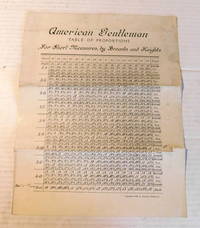
1908100872<p>American Fashion Co. 1908. 1908. Good. - An original 14 inch high by 11 inch wide broadside on heavy glossy coated stock with two perforations at the top. A handy measurement chart with a column down the left listing heights from 5 foot 4 inches through 6 foot tall with a row above the columns across the right listing breast chest width with relative measurements for "Waist Length" "Scye" "Strap" and "Overshoulder". An annotation is penned near the bottom of the left border. The broadside is folded twice horizontally with tears to the right edge of the folds. There is also a tear to the top edge as well as creases to the edges. Good.</p> American Fashion Co., (1908).
19772090502113716368Not Available 1977. Soft Cover. Fine. The book is in fine condition. Not Available paperback