[FASHION DOLL].Biblio.com
49 résultats
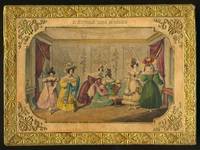
18352200376<p><i>Including a double-sided hand coloured lithograph mannequin 14.5cm high; together with 5 outdoor slipover costumes and matching hats and one indoor costume; a stand 9.5 x 13.5 cm in the form of a carpet with a hand coloured lithograph design on a red ground; </i><i>contained in the original decorated box 14 x 10 x 2.5 cm the lid with a scene of a dressmakers salon with five ladies and the milliners showing her wares; enclosed within a decorative shaped and gilt embossed paper border; The underside of the box with the label of 'Delaville Sucr. de Terzuolo-Despilly. Papetier du Roi. Rue de la Chaussée d'Antin No. 15.'</i></p><p>An early dressing game based on contemporary costumes and a visit to the milliners shop.</p><p>The quality of this paper doll indicates it was made for the most expensive end of the market confirmed by the label of Delaville who from 1822 had been 'Papetier du Roi'. Delanville had been active from 1804 and got his royal warrant in 1822 he traded from the address Rue de la Chaussée d'Antin during the late 1820s through to at least 1833 but no longer appears in the Parisian <i>l'Almanach du Commerce</i> of 1837.</p><p>The lid shows the scene of a well appointed milliners shop with six women conversing or examining merchandise the two central figures show a seated lady being shown a pink dress by her milliner. The mannequin is of a young lady in her under garments including laced bodice over a light cotton petticoat and wearing a neckless of emeralds rubies and gold.</p><p>All clothing items show the front and back of the young woman including: 1 a silk dress with large puffed out sleeves and embroidered with flowers and shaped tongue ornaments; 2 a green gingham check dress and embroidered shirt with puffed sleeves and a ruff neck holding a parasol; 3 an ochre dress with green open-work lace and fringe banded collar waist and dress band; 4 a white evening dress with grape and vine decorated collar and matching dress with flowers wheat sheaves and roses a green belt with a key on a ribbon and holding a fan in her gloved hand; 5 A light overall decorated dress with leafy fronds and shell decoration wearing tow bracelets and clasping a book; 6 a turquoise evening dress with a white boa around the shoulders and long white gloves. The five interchangeable hats decorated with feathers ribbons and flowers.</p> Delanville
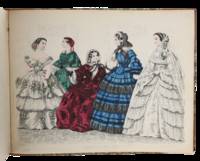
185635856Paris: Goubaud et Cie 1856. First Edition. Hardcover. 380pp. Contemporary marbled boards. With twelve hand-coloured wood engravings depicting various styles of clothing and numerous b&w in-text illustrations including embroidery styles. Articles on home economics travels beaux-arts history the Louvre and the Tuileries Palace and much more. Front board is detached with title page and two leaves internally mostly clean with some foxing and toning. Text in French. ; Large Octavo. Goubaud et Cie hardcover
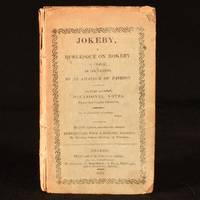
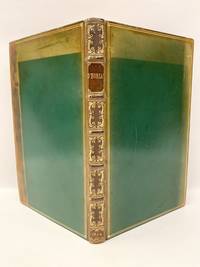
1813986N24London: Thomas Tegg 1813. Hardback. Good. 7" by 4". None. The fifth and enlarged edition of Robert Coates's nonsensical poem showcasing his idiosyncratic humour and style. The fifth and enlarged edition of Jokeby A Burlesque on Rokeby A Poem in Six Cantos by eccentric actor Robert Coates 'An Amatur of Fashion'. Printed for Thomas Tegg in 1813.In the publisher's original paper boards.A nonsensical poem Robert Coates was known for his humour and idiosyncrasies as an actor. First appearing in his own productions in Bath he later attracted fame for his improvised dialogue scenes and peculiar costumes. This book was written at the height of his fame. The enlarged edition contains comical notes which comment on the poem. In the publisher's original paper boards. Externally marks to the boards and fading to the extremities and spine. Bottom half of spine has rubbed away and there are small chips to the board extremities. Slight bumping to the tail of the spine and to the extremities. End papers are generally bright and clean with very minor marking. Internally firmly bound. Pages are generally bright and clean with the odd spot to the extremities. Good Thomas Tegg hardcover
188848840Paris: Grande Maison de Blanc ca. 1888. 12mo. 42 pp unpaginated. Colour chromolithograph illustrated title 18 colour chromolith plates. Dark green silk gilt lettering on front cover very minor soiling edgewear front cover rear inner hinge starting still a VG bright copy stapled textblock as issued. First edition of this delightfully produced and illustrated history of gloves through the ages. These include descriptions of mesh gloves used by the Egyptians metal gauntlets used by Roman gladiators gloves to keep warm by monks during the Middle Ages leather gloves to protect the hands and arms of the falconer fencing gloves beautiful silk & lace gloves for noblewomen at the courts of Louis XV and Louis XVI and riding gloves for women during the Second Empire of Napoleon III and finally the Belle Epoque. Grande Maison de Blanc was a renowned firm in Paris during the Belle Epoque who were especially proud of selling French-manufactured gloves linens cravats and other household goods at a discount compared to many other stores at the time. They were pioneers in not only producing their own products in house by maintaining factories in Tarare Lille Fives and other areas around France but pushing other suppliers to offer steep wholesale discounts. Worldcat locates 2 copies NYU Princeton. Grande Maison de Blanc, hardcover
1846DEMO014603IPhiladelphia: George R. Graham 1846. First edition. Hardcover. Good. mezzotintsengravingsmusic. Octavo contemporary half calf marbled boards scuffed some foxing <br/><br/>Contains "Marginalia" and "The Philosophy of Composition" by Poe and a review of Herman Melville's "Typee". The Parisian fashion plates are by Le Follet. Also there is an article on California by Charles Jacob Peterson aka Harry Danforth. And with book reviews on THE WILDERNESS AND THE WARPATH by James Hall and Darwin's VOYAGE OF A NATURALIST. George R. Graham hardcover
185935872N Y: Frank Leslie's Publishing House. Fair with no dust jacket. 1859. First Edition. Hardcover. Color Illustrations; 572 pages; Six color fashion plates color frontis of ladies exiting coach and examining a baby. Disbound partial spine laid in. Plates are VG. A little spotting to end paper leaves but otherwise clean. 8.25 x 12". Includes Japan and the Japanese with 9 b/w engravings. All months are present . Frank Leslie's Publishing House hardcover
189554146New York: Standard Fashion Company June 1895. 4to. 96 pp. 1 large folding colour chromolithograph frontisp. sized 21.5 x 10.75 in. 1 colour chromolithograph plate over 150 woodcut text illustrations & engravings. Gold-coloured printed softcovers brick-red lettering minor dustsoiling light wear to creases of folding frontisp. still VG copy. First edition of this scarce and beautifully printed fashion magazine which was published under this title only from 1894 through 1896 when it was forced to change the name to The Standard Designer after losing a lawsuit brought by the Butterick Publishing Co. against Frank Koewing d. 1933 their former western sales manager for Butterick. Founded in 1887 the Standard Fashion Co. would eventually become a serious rival to the Butterick Pattern Co. appropriating the “Delineator†for his magazine poaching employees and eventually building the company to issuing over 100000 cut patterns a week. While often facing bankruptcy and litigious to a fault the company was acquired as a subsidiary in 1900 by Butterick and the combined companies would thrive through the ensuing decades. Each of the Standard Delineator magazine issues featured a large chromolithograph frontispiece of the latest fashions as well as a smaller one of millinery designs. Worldcat locates primarily microfilm copies however individual issues are held by Notre Dame and Davidson College; See; A Man of the Hour Frank Koewing The Bookseller and Newsman Vol. 13 1896 pp. 4-5; Carol Ann Dickson Patterns for Garments: A History of the Paper Garment Pattern Industry in America 1979. Standard Fashion Company, paperback
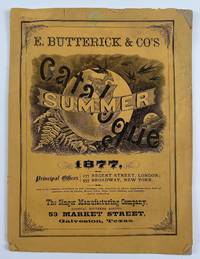
18772152New York 1877. Good. 311pp. Folio. Original orange pictorial wrappers. Light wear and soiling some minor loss to wrappers. Text toned slight biopredation to final leaf. A lovely catalogue of patterns for clothing of all types issued by E. Butterick & Co. The catalogue opens with styles for ladies' coats and dresses moving on to wraps and jackets then skirts and tops followed by essentials such as bloomers and corsets and aprons and chemises. There is a section of clothing for "Misses and Girls" as well as doll patterns children's clothing and "Boys and Gentlemen." Menswear includes everything from smoking jackets and caps to overalls and kneebreeches. The rear cover advertises Singer Sewing Machines which received numerous awards at the Centennial Exhibition in Philadelphia the previous year. The front cover notes agents for Singer machines in Galveston Texas pinpointing the distribution area for the present catalogue. An excellent source for fashions of the period. unknown
1854DEMO016154ILondon: Arthur Hall Virtue & Co. 1854. First edition. Flexible covers. Good . 48 sketches. 16mo 173 24 pages flexible green cloth w. breaks at spine; ads dated 06/1854 <br/><br/>"In a state so highly civilised as that in which we live the art of dress has become extremely complicated." 48 sketches. Arthur Hall, Virtue, & Co. unknown
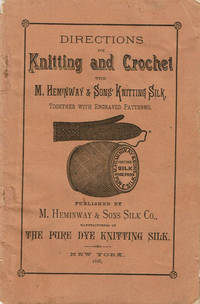
188696340New York: M. Heminway & Sons Silk Co. Manufacturers of The Pure Dye Knitting Silk 1886. 1886. Good. - Small octavo 7-3/8 inches high by 4-7/8 inches wide. Softcover bound in peach wraps titled and illustrated in black on the front and rear covers. The front edge of the covers and the head and tail of the spine are slightly chipped. There is a stain from an early sticker to the top of the rear cover with calculations penned at the bottom of the rear cover. 44 pages plus 4 pages of ads for the company's silk and thread with occasional textual illustrations. The pages are creased. Good. <p>SCARCE. New York: M. Heminway & Sons Silk Co., Manufacturers of The Pure Dye Knitting Silk, 1886. paperback
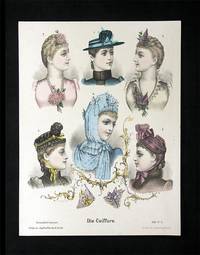
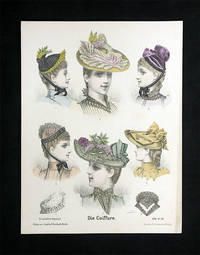
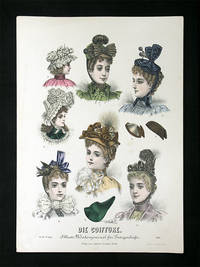
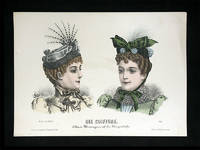
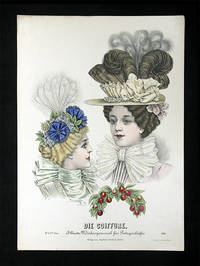
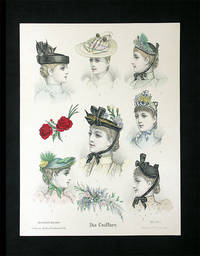
1891341DG1891. Berlin Siegfried Cronbach 1891 Colorierte Lithographie. Bildformat: 39 x 28 cm. Illustr. Modenjournal für Putzgeschäfte. -Signiert: Tarrt. B. . - N°2. - Leicht stockfleckig Faltknick. unknown
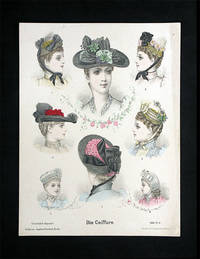
1891344DG1891. Berlin Siegfried Cronbach 1891. Colorierte Lithographie. Bildformat: 39 x 28 cm. Signiert: Tarrt. B. . - N°10. - Leicht stockfleckig Rand leicht angestossen. unknown
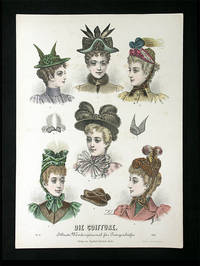
1894339DG1894. Berlin Siegfried Cronbach 1894. Colorierte Lithographie. Bildformat: 39 x 28 cm. Illustr. Modenjournal für Putzgeschäfte. -Signiert: Tarrt. B. . - N°19 I tes Blatt. - Leicht knitterfaltig. unknown
1893338DG1893. Berlin Siegfried Cronbach 1893. Colorierte Lithographie. Bildformat: 39 x 28 cm. Illustr. Modenjournal für Putzgeschäfte. - N°20 II tes Blatt. - Signiert : B.J. - Rand leicht angestossen. unknown
1896337DG1896. Berlin Siegfried Cronbach 1896. Colorierte Lithographie. Bildformat: 39 x 28 cm. Illustr. Modenjournal für Putzgeschäfte. - N°12 II tes Blatt. - Signiert : B.J. - Ecken angestossen ein kleiner Riss im Randbereich. unknown
1891342DG1891. Berlin Siegfried Cronbach 1891. Colorierte Lithographie. Bildformat: 39 x 28 cm. N°14. - Leicht stockfleckig Faltknick Ecken leicht angestossen. unknown
1890343DG1890. Berlin Siegfried Cronbach 1890. Colorierte Lithographie. Bildformat: 39 x 28 cm. N°9. - Leicht stockfleckig Ecken und Rand leicht angestossen. unknown
1894340DG1894. Berlin Siegfried Cronbach 1894. Colorierte Lithographie. Bildformat: 39 x 28 cm. Illustr. Modenjournal für Putzgeschäfte. - N°17 . - Signiert : B.J. - Leicht stockfleckig Ecken teilweise leicht angestossen. unknown
184449820London: William Strange 1844. First Edition. Full leather. Very good. 174p octavo illustrated by George Standfast. A fine copy bound in full green cald top edge gilt with raised bands and gilt stamped inner dentelles. Offset to both front and rear panels Engraved bookplate of book collector Thomas W Lawson <br/><br/> William Strange hardcover
188546789Auburn NY: L. Marshall ca. 1885. Tall 8vo. One colour chromolithograph card 6.75 x 11.75 in. very slight toning to fore-edges very slight bumping to couple corners still a VG bright copy. First edition thus of this advertising card for L. Marshall who were a very successful and popular Victorian clothing and furnishing store in Auburn New York. They were particularly well known for their beautiful colour advertising cards sent out as promotions and were at their height of popularity at the end of the 19th century. L. Marshall, hardcover
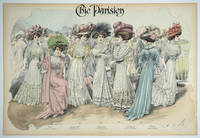
189023483Paris: Eberle 1890. Very good condition. Double spread women's fashion lithograph with early hand color showing an array of seven fashionable gowns. The lithograph depicts a row of ladies at a public event each with her gown and elegant hat depicted in great detail including one showing the intricate ties on the back of the gown. Chic Parisien a competitor to the "Gazette du Bon Ton" was a monthly fashion magazine when dressing well really meant something. 24 1/4 x 16 1/2" Eberle unknown
188755685New Haven CT & Pittsburgh PA: L. Candee & Co. H. Childs & Co. 1887. 8vo. 28 pp. Decorated title page lithographed illustrations throughout. Embossed & decorated softcovers front cover decorated & illustrated in gilt & burgundy w/ peacock feather above lettering and nicely executed lithograph on back cover of young saleswoman standing next to a rack of rubber boots & shoes for sale minor toning shelfwear very slight tidemark at upper fore-edge front cover still a VG copy. First edition of this nicely printed Victorian catalogue for rubber boots and shoes. The nicely executed lithographs promote the Hip Boots hip waders thigh high sporting boots double thick Pebble Leg Boots and Fairy Boots reminiscent of cowboy boots as well as the rubber Duck or Canvas Boot for hunting. Also included are many different styles and varieties of rubber shoes for women and children including No Heel Imitation Sandals Gossamer Imitation Sandals Buskins with cotton flannel lining Opera Dew Drop Feather Weight and many others. The company also produced tennis rubber soled shoes croquet shoes as well as heavy duty Stalwart Lumbermen’s Shoe intended to fit over logger’s Wool Boots or German Socks. Leverett Candee 1795-1863 obtained early patent rights from Goodyear for manufacturing rubber shoes as early as 1844 and by 1852 had organized the large Candee Rubber Co. factory with the Hotchkiss Brothers in New Haven and Timothy Lester. No copies located in Worldcat; See: Davis The New England States Vol. I pp. 344-346 1897; Joseph Kane Famous First Facts 1950. L. Candee & Co., [H. Childs & Co.], paperback
183362953Leipzig Industrie-Comptoir / Baumgärtner etc. 1833-1856. Small queer-folio 22 x 285 cm. Nice later light brown half calf from ca. 1900 with five raised bands and gilt lines to spine Carl Petersens Enke. Slight wear to extremities. 100 engraved plates in contemporary colouring. A bit of even browning and occasional offsetting. A few plates with more browning. Some plates with tiny holes in blank margin from original stiching having been vertically bound with text-leaves. Occasional light creasing. One plate with a tear no loss. A few plates signed A. Brückner most plates numbered and dated and some plates having "Extra-Kupfer" or "Les Modes Parisiennes Réunis" the last five underneath. <br/><br/><em>A lovely collection of 100 beautiful contemporarily coloured engraved fashion-plates from between 1833 and 1856 importing the highest Parisian fashion of the time to Germany. This beautiful collection magnificently documents the clothing fashion and development of two decades primarily for women but also for children and men. Also in the mid-19th-century Paris was seen as the quintessence of elegance and style. The Allgemeine Moden-Zeitung kept the German-speaking public up to date with the latest fashions from Paris. The magazine “Les modes parisiennes reunites†did the same; that too was produced for the German public despite its French title. As well as outfits for appearing in high society eg. at the theatre the fashion plates collected here show clothes and notably also accessories for almost all other parts of life - paying and receiving social calls going for walks attending different events musical siorées going out with the children etc. “As part of her evening wardrobe every fashionable lady simply had to have elegant dresses in brightly coloured silks and satins with frills and lace bows and flounces tight bodices natural waistlines and exposed shoulders which gave the female figure an hour-glass silhouette. The first thing that strikes one about these ladies’ fashions are the stiff voluminous underskirts. Horsehair crinolines invented in 1850 supported wide sweeping skirts which could measure up to two or two-and-a-half metres in diameter and made the upper body look even slimmer.†Deutsches Historisches Museum. "From the 1820s onwards and particularly under the ostentatious Second Empire 1852–1870 the classicising taste of the Napoleonic era changed completely. Instead fashion now drew inspiration from the elegance of the Rococo period so much so that the period became known as the “second Rococoâ€. The waistline returned to its natural level but was awkwardly styled – at least from a health point of view: agonisingly tight corsets emphasised the so-called “wasp waistâ€. Ostensibly guided by aesthetics on closer inspection this fashion trend also had social consequences: with styles that afforded women so little freedom of movement fashion focused on the ostentatious requirements of ladies from the upper echelons of society who didn’t have to work. Practicality was not its concern. This ostentatious and – certainly from the perspective of the 21st century – inconvenient fashion style appealed not only to the fine ladies of high society but also to women from the middle classes and the petty bourgeoisie. The expansion of the textile industry and the rise of the chemical industry made the production of dyes fabrics lace and embroidery and the processing of raw materials and textiles imported from the colonies both quicker and cheaper.†DHM </em> hardcover
188054558Amsterdam: A. Jager ca. 1880. 12mo. 3.5 x 5.25 in. 12 hand-coloured albumen carte de visite images sized 2.25 x 3.5 in. mounted on thick 3 x 5 in. cards text in lower fore-edge of board bound in leporello accordion-style format linen hinges renewed. Original publisher’s decorated red cloth over beveled boards elaborate gilt decorated front cover and lettering minor rubbing edgewear minor bumping to corners still VG exemplar w/ most images retaining strong contrast and colour bookseller’s label of Joh. G. Stemler Cz. Algemeene Goekhandel Amsterdam on rear pastedown. Early printing of this charming photographic souvenir with hand-coloured albumen CDV photos illustrating the styles of folk costumes in different regions of the Netherlands. The villages and regions include Marken North Holland a fisherwoman carrying basket on her head from Scheveningen a fishing port a middle class orphan girl from Amsterdam a young girl wearing elaborate hat from Krommenie North Holland northeast of Haarlem. Jager 1825-1905 published many different series of these souvenir fashion photos as well as images of scenes in and around Amsterdam often as stereoviews some working with Dutch photographer Pieter Oosterhis. See: Maartje van den Heuvel The Rise of Dutch Landscape Photography. How a Vision of Painting Entered Photography Depth of Field Vol. 6 No. 1 July 2015. A. Jager, hardcover