Miller I.ABAA
30 résultats
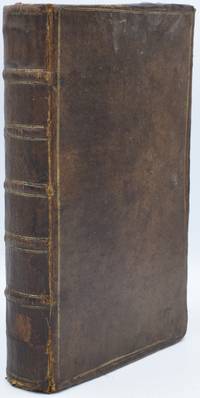
175938825London: P. Miller 1759. Faint foxing left margin a bit chipped. P. Miller unknown books
1765WRCAM46139New England 1765. Pen-and-ink on laid paper with the road colored in sepia and with water elements in green with a yellow wash border within the gradients on seventeen of eighteen sheets. Sheet size: 27 1/2 x 214 inches overall if joined. Minor repairs one small blank section in the upper border lacking. Very good. Provenance: Sir Francis Bernard Colonial Governor of Massachusetts 1712-79; by descent to Robert Spencer Bernard Nether Winchendon House Buckinghamshire England. A truly massive road map measuring over seventeen feet from east to west showing the roads across the colony of Massachusetts in great detail. It is one of only a handful of road maps to survive from the colonial era. It was created for Sir Francis Bernard then colonial governor of Massachusetts. <br> <br> In November 1969 noted historian of cartography William P. Cumming discovered in the family home of Sir Francis Bernard "a collection of maps that in purpose and type differed so markedly from the more usual military coastal and general colonial maps of the time that it stands out in both interest and importance. These were domestic maps of a gentleman's estates and the roads to them.Probably Sir Francis's most important contribution to cartography was to have careful surveys made of the roads from Boston.westward to Albany New York on a one-inch to two-thirds-mile scale. It was along part of this Albany to Boston road that the American rebels dragged the heavy cannon captured at Fort Ticonderoga that set up on Dorchester Heights forced General Howe's evacuation of Boston in 1776.No route maps as detailed as these except for two short New Jersey road maps are known for any other section of the eastern seaboard until those of Christopher Colles in 1789" Cumming pp.29-30. <br> <br> The present manuscript map depicts the road across Massachusetts but does not extend as far as Albany. The road divided into miles throughout extends from Boston to Springfield where it splits into two westward routes to Albany: the first a more southerly route via Great Barrington Massachusetts which ends on the present map at a point approximately thirty-three miles from Albany; and the more northerly route which is shown on the map as far as Northampton just past the Connecticut River. The map is done on a very large scale of approximately two-thirds of a mile to the inch with towns rivers mountains residences meetinghouses and numerous taverns identified along the way. Cumming records this map as four separate entries i.e. MP21-24 although with an incorrect sheet count. <br> <br> Comprised of eighteen sheets one narrow blank sheet is missing the top half of the map is comprised of ten narrow sheets varyingly long and short while the bottom half is comprised of eight uniform sheets each measuring 18 1/2 x 26 1/2 inches. The sheets are as follows: <br> <br> 1 Southeast corner of the map blank except wash border. <br> <br> 2 Blank except for wash border with a segment of rhumb line. <br> <br> 3 missing but would clearly be blank except for wash border with section of rhumb line <br> <br> 4 Text reading "Boston to Albany." <br> <br> 5 Text reading "Way to Spr-" with part of the southern road. <br> <br> 6 Text reading "-ingfield" with part of the southern road including Springfield and the Connecticut River. <br> <br> 7 A small sheet containing text reading "and" and part of the southern route. <br> <br> 8 blank except for wash border <br> <br> 9 blank except for wash border <br> <br> 10 Southwest corner of the map blank except for wash border. <br> <br> 11 Northeast corner of the map containing Medford Boston and the route as far as Framingham. <br> <br> 12 Text reading "the road" with the northern route from Sudbury to Westborough. <br> <br> 13 Text reading "from" with the route from Shrewsbury to Leicester. <br> <br> 14 Text reading "by" and "road b-" with the route from Brookfield west to Coy's Hill and the Porpoodock Mountains. <br> <br> 15 Text reading "-y way of Northampton to Albany" showing the route from Belchertown to Northampton including part of the Connecticut River and the Hadley Mountains. <br> <br> 16 Text reading "Gr-" with part of the route showing Blandford. <br> <br> 17 Text reading "-eat Barrington" showing the route from the Farmington River to Tyringham. <br> <br> 18 Northwest corner of the map showing Great Barrington and a bit beyond to the Massachusetts-New York border. <br> <br> Sir Francis Bernard became the colonial governor of Massachusetts in late 1759 shortly after British troops were victorious in the Battle of Quebec. That decisive French and Indian War victory opened a vast region for renewed English settlement and trade thus necessitating the need for more accurate surveys of the roads. The present manuscript map was surveyed and drawn by talented military mapmaker Francis Miller in 1765 for Bernard the details of which are recounted by Bernard in a 1766 letter to Lord Barrington: <br> <br> "I am desired to certify to your Lordship that at the beginning of the Year 1764 Genl Gage at my Request gave Leave to Ensign Francis Miller of the 45th regiment then stationed in Newfoundland to come to Boston to assist me in some Works of Public Surveying which I had undertaken in pursuance of resolutions of the general Assembly & partly by Orders from England. Mr Miller being then at an outpost & not easily relieved did not arrive at Boston till Nov in that Year when the Season for actual Surveying was over. He was employed that Winter & Spring following in protracting the Surveys made that Summer among which was a compleat Route from Fort Pownal on the River Penobscot to Quebec & some other curious explorations of the Eastern parts of New England hitherto unknown to Englishmen: of which elegant Maps drawn by Mr Miller have been transmitted to the Board of Trade. Early in the Last Summer I employed M' Miller having previously informed Genl Gage of the Intention to make an actual Survey from Boston to Albany & back again by another Way being near 200 Miles; & afterwards from Boston to Penobscot being above 200 Miles; by which Means a true Geometrical Line of 400 Miles in length through part of New York & all the habitable part of New-England has been obtained which will afford great Assistance to the Ascertaining the Geography of this Country & its Sea Coast. After this Survey was finished he was employed in protracting the Same & making Drawings thereof which he has done with great Accuracy & Elegance" Bernard to Barrington Jan. 1 1766 quoted in THE BARRINGTON-BERNARD CORRESPONDENCE p.103. <br> <br> This important manuscript map detailing the route from Boston westward towards Albany constitutes among the earliest of American road maps. CUMMING BRITISH MAPS OF COLONIAL AMERICA Chicago: University of Chicago Press 1974 pp.29-30 and Appendix A. THE BARRINGTON-BERNARD CORRESPONDENCE Cambridge: Harvard University 1912. unknown books
1745WRCLIT57771London: Printed for J. Watts.and sold by B. Dod. 1745. 45-35pp. Small octavo. Full polished calf spine elaborately gilt extra by Riviere. Bound without four terminal leaves of ads noted by ESTC title slightly smudged and dust-soiled trimmed a bit close costing a few catch- words and signature marks otherwise a good copy handsomely bound. First edition. An adaptation to the English stage of Moliere's SGANARELLE published the year after Miller's death. It was produced at the Theatre-Royal in Drury Lane in February and includes a Prologue by Mr. Havard. NCBEL II:796. ESTC T42283. Printed for J. Watts...and sold by B. Dod... unknown books
1734WRCLIT57773London: Printed for J. Watts. 1734. 8879pp. Small octavo. Three quarter mottled calf gilt label for Dulau. Joints rubbed title a bit dust-soiled but internally very good with the terminal ads. First edition. With a Dedication to the Countess of Hertford and a Prologue spoken by Mr. Mills. NCBEL II:796. ESTC T41459. Printed for J. Watts... unknown books
1762100365<p>8vo contemporary calf Illustrated 369 11 pp. Ex-library copy binding scuffed in places with blind library stamp on upper cover Westminster Public Library and shelf number on the spine small piece missing from top of spine hinges are a little weak small library stamp at foot of title and stamp on verso of title and front free endpaper bookplate and library sticker on endpaper bar code sticker on front endpaper normal aging and some minor creasing; still a very decent copy. Miller was the gardener of the Chelsea Physic Garden for the Society of Apothecaries and this was his most popular work Henry Vol. II p.221. According to Hunt Miller’s work which was published in many editions beginning in 1732 was the most popular Gardener’s Calendar in the 18th century. The work includes five black and white folding plates. Hunt p. 186. Henry Vol. II p. 221. </p> books
1760287862London: Printed for the Author and Sold by John Rivington C. Hitch and L. Hawes R. Baldwin and others 1760. Twelfth Edition. Full Leather. Very Good binding. The twelfth edition with frontispiece and five folding plates and a Short Introduction to the Knowledge of the Science of Botany pp. 371-417 freely adapted from Linnaeus's early works on binomial nomenclature and descriptive systemic botany. The preface states that "to this edition of the Gardeners Kalendar the author was advised to subjoin a short Introduction to the Science of Botany; in which the definitions of terms of art which are used in the present favourite system of Doctor Linnaeus should be explained for the benefit of practical gardeners . the whole was prepared for the press before the translation of Linnaeus's Philosophia Botanica published by Mr. Lee made its appearance." This is presumably one of the first English explanations of Linnaeus's taxonomic work which was still being fleshed out by Linnaeus though it is certainly the first of Philip Miller's popular works to be based on the Linnaean system and also the first with more than simply a frontispiece; the five additional folding plates depict examples of plant Families from the Short Introduction. Index and publisher's advertisements at the rear. Full calf with wear to the joints and beginning of separation to the front joint. ESTC T59406. British Museum A Catalogue of the Works of Linnaeus 463-4. Very Good binding. Printed for the Author, and Sold by John Rivington, C. Hitch and L. Hawes, R. Baldwin, and others unknown books
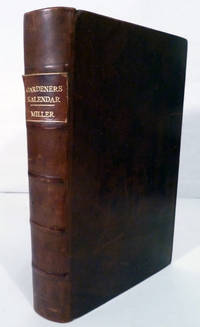
174819957London: John and Francis Rivington 1748. Eighth edition. leather_bound. Modern full brown calf. Fine. 343 & 9 page index. 20 x 13 cm. Engraved allegorical frontispiece by John Pine an accomplished engraver and friend of Hogarth. First published 1731. The author was Gardener of the Chelsea physic garden of the Society of Apothecaries and this work his most popular see: HENREY Vol.II p.221. Raised bands leather spine label printed in gilt text clean. John and Francis Rivington unknown books
175135890London: for John and James Rivington 1751. 8vo. xviii 343 11pp. Frontispiece engraved by J. Pine. Publisher's advert on the terminal page. Title page paper-backed. Early calf rebacked endpapers renewed.<br/> <br/>One of the earliest and most well-regarded of the gardener's "Kalendars."<br/> <br/>This popular work by Miller the most well known 18th century English horticulturalist before Arthur Young first published in 1732 went through fifteen editions in the author's lifetime. This ninth edition is described on the title as having the addition of "a list of the medicinal plants which may be gather'd in each Month for use."<br/> <br/>Henrey 1136; ESTC T73179. for John and James Rivington unknown books
173435495London: for the Author and sold by C. Rivington 1734. 8vo. xv 1 278 8pp. Frontispiece engraved by J. Pine. Minor dampstaining to frontispiece and first few leaves. Nineteenth century green patterned cloth red morocco lettering piece<br/> <br/>One of the earliest and most well-regarded of the gardener's "Kalendars."<br/> <br/>This popular work by Miller the most well known 18th century English horticulturalist before Arthur Young first published in 1732 went through fifteen editions in the author's lifetime. This 1734 third edition is described on the title as "with a large Index and an addition of the work necessary to be done in the nursery in each month."<br/> <br/>Henrey 1129; ESTC T59407. for the Author, and sold by C. Rivington unknown books
17695057London: Printed for the Author; and sold by John Rivington in St. Paul's Church-Yard C. Hitch and L. Hawes H. Woodfall etc. 1769. Thick octavo lxvi ii 382 22 pages. Engraved frontispiece and five folding plates. Fifteenth Edition. Occasional light browning. Very good in recent full calf. Printed for the Author; and sold by John Rivington in St. Paul's Church-Yard, C. Hitch and L. Hawes, H. Woodfall, etc. unknown books
1737277646London: Rivington 1737. Third. hardcover. very good-. 6 copperplates including frontispiece. 2 volumes thick folios printed in double column full original calf worn with front hinge loose on volume 1 nice clean interior small bookplate. London: Rivington 1737 1739. A very good- copy.<br/><br/> Rivington unknown books
1735WRCAM40924London: Printed for the Author; and sold by C. Rivington 1735. Two volumes. viii480; 546pp. plus frontispiece and two plates. Contemporary calf rebacked preserving the original leather labels. Bookplate on front pastedown and verso of frontispiece. Bright and clean internally. Very good. The first octavo edition of Miller's very popular dictionary which first appeared in folio format in 1731. This constitutes an abridgment of the first volume of the folio edition. The author states that he learned that the price of the folio edition was too high for some who were engaged in the practical art of gardening and he hopes they will find this less expensive version useful. Philip Miller 1691-1771 was appointed gardener to the Society of Apothecaries in London and made the name of the Chelsea Physic Garden famous throughout European botanical circles. ESTC T61256. HENREY 1117. Printed for the Author; and sold by C. Rivington hardcover books
1759184378London. : Printed for the Author. 1759. 7th edition. . Contemporary full calf raised bands red spine label gilt title. Good plus covers shelfworn hinges weak old library stamp to title page otherwise a very good tight clean copy. folio. 41.5x27 cm. . 7th edition of the very popular botanical reference work with the extra illustrations. Very heavy book weight: 14.7 lb. will require extra shipping. Engraved frontis 18 full-page engravings not in earlier editions. Printed for the Author. hardcover books
1769011363London: Printed for the Author and sold by J. and F. Rivington et al. 1769. 15th Edition. Hardcover. Very Good. Fifteenth edition 8vo lxvi 382 index 1p adv. likely early 19thc calf with single rule in gilt raised bands red leather label spine. Covers heavily worn with some loss spine tips. Miller's Gardener's Dictionary went through eight editions in his lifetime and it is said that before its appearance not more than 1000 species of plants were in cultivation. At Miller's death there were more than 5000. Miller accepted the introduction of the Linnean system of nomenclature in 1759. The Gardener's Kalendar reached a 15th edition in 1769 and was also published on the Continent. Printed for the Author, and sold by J. and F. Rivington, et al. hardcover books
1732011361London: Printed for the Author and sold by C. Rivington London 1732. 1st Edition. Hardcover. Very Good. Uncommon first edition. 8vo xvi 252 4p publishers' listings frontispiece engraved by Pine contemporary speckled panelled calf with rules and ornaments in blind gilt dentelles and cover edges. Front cover hinge partially revealed loosening covers soiled but a nice unsophisticated copy. Miller's Gardener's Dictionary went through eight editions in his lifetime and it is said that before its appearance not more than 1000 species of plants were in cultivation. At Miller's death there were more than 5000. Miller accepted the introduction of the Linnean system of nomenclature in 1759. The Gardener's Kalendar reached a 15th edition in 1769 and was also published on the Continent. Printed for the Author, and sold by C. Rivington, London hardcover books
175914435London 1759. Left margin a bit chipped. unknown books
17976624London: John Murphy 1797. Mezzotint printed in colours and finished by hand by Gosse. A charming colour-printed mezzotint of English rural life<br/> <br/>Two young children are shown leaning on a stile looking out with interest at the world outside the confines of their home. The family dog looks up at the viewer. Behind them a fairly substantial cottage built of stone with two brick chimneys sits comfortably in its wooded surroundings beneath a pleasant blue sky. The whole scene is composed of richly contrasting colors and forms and could serve to illustrate the beginning of a fairy tale. John Murphy unknown books
1741043831London: J. Watts 1741. First Edition. Hardcover Full Leather. Good Condition. Full contemporary gilt and treated calf worn front board detached stamped Sober Society in gilt on the covers. Planned to continue past volume 1 it was never completed and Miller died in 1744. Collects Harlequin-Horace or the Art of Modern Poetry; Of Politeness; The Political Pillory; Poems on Several Occasions; and a group of plays: The Humours of Oxford. A Comedy; The Mother In Law; The Man of Taste; The Universal Passion. Each with a separate half title and with 2 plates as frontis pieces. The last two plays with large persistent stains that are unsightly but do not obscure any text. Scarce. Size: Quarto 4to. Previous owner's inscription in ink neat. Quantity Available: 1. Shipped Weight: Under 1 kilo. Category: Poetry; Theatre & Plays. Inventory No: 043831. <br/><br/> J. Watts hardcover books
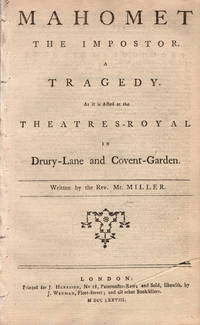
17781112London: J. Harrison 1778. 8vo. 16 pp. lacking plt. <br><br>Based on Voltaire's "Mahomet" with minor revisions by John Hoadly and David Garrick. <br>Â Â Â Â <br>Â Â Â Â ESTC T38846. Very good; removed from nonce volume with sewing holes. Lacking plate. J. Harrison unknown books
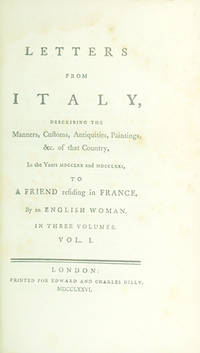
177628112London: Printed for Edward and Charles Dilly 1776 1776. First edition. ESTC T89035; Pine-Coffin 770-4; Robinson page 186; ODNB. Some light foxing and stains in the text particularly volume one; edges a little rubbed; very good copy. 3 vols 8vo contemporary calf red morocco spine labels gilt lettering. With half-titles. Lady Anna Riggs Miller 1741-81 a wealthy heiress set off with her husband John Miller in 1770 on an "ideal jaunt" to Italy - travel for travel's sake - which she recorded in letters to her mother. The correspondence was not at first intended for others but as the tour progressed Miller began to recognize the inadequacies and inaccuracies of other works of travel to Italy - several which she correctly surmised were borrowed from earlier works - and she committed herself to improve upon them for the benefit of future travelers. The result was the first account of the Grand Tour by an English woman writer and with it came a fresh female perspective on the subject that would resonate with future travelers and travel writers for decades. Miller's lengthy work was not only a guide to the traveler but also a survey of Renaissance art and architecture; and her assessments of the contemporary art scene were meant to assist future connoisseurs as they entered the Italian art market as consumers. She became personally acquainted with the artists as she accessed their work and prices and even their personalities e.g.: Giovanni Battista Piranesi "on a good day could be 'agreeable to strangers'" - as quoted in Brian Dolan Ladies of the Grand Tour 2001. Miller's work was referred to countless times by future travelers in their writings both by those who questioned her art criticism and those who praised it her eloquence and comprehensiveness. Lady Miller and her husband later became known in English literary circles for the salon held at their home at Batheaston and for compiling the anthology Poetical Amusements at a Villa near Bath 1775-81. Contemporary ink signature on the front free endpapers. <br/><br/> London: Printed for Edward and Charles Dilly, 1776 unknown books
1739227332London: T. Read 1739. hardcover. near fine. First carefully collected in the Company and many of them transcribed from the Mouth of the Facetious Gentleman whose Name they bear; and now set forth and published by his lamentable Friend and former Companion Elijah Jenkins Esq. 2 70pp. Thin 12mo bound by Riviere in 19th century straight-grained olive green morocco a.e.g. lightly edgeworn but sound; light foxing and toning throughout; several bookplates on endpapers and one description mounted to flyleaf; housed in an attractive cloth-backed marbled board slipcase with leather spine label. London: Printed and Sold by T. Read 1739. Genuine first edition with "Price One Shilling" at bottom of title. Scarce. Near fine.<br/><br/> Extremely scarce. First edition of the most famous collection of anecdotes and humor. Compiled by Elijah Jenkins pseudonym of John Mottley partially from several other jestbooks. Mottley named the book in honor of Josias Miller the famous comic actor who had died the previous year. --DNB; ESTC T124768.<br/><br/> T. Read unknown books
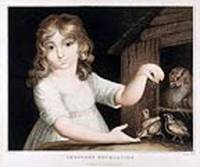
180013709London: Published by Testolini 1800. Colour-printed stipple engraving. Very good condition apart from some mild mat burn and a few tiny nicks at the edge of the top margin. A delightful intimate genre scene in a domestic interior.<br/> <br/>The scene depicted in this charming print is an allegory of innocence. It pictures a young girl who herself personifies virtue engaged in the innocent activity of feeding her pet fowl. Clad in a white dress she smiles and gazes at the viewer with a wide-eyed expression of childish wonder as she sprinkles breadcrumbs over the beak of a young bird awaiting the snack in anticipation as its mother looks on approvingly. Published by Testolini unknown books
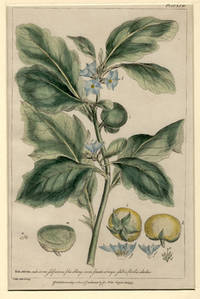
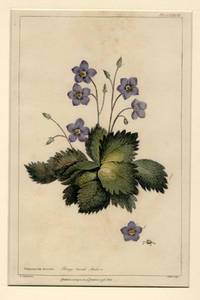
175534775London: Printed for the Author; and sold by John Rivington and others 1755. 2 volumes folio. 16 1/2 x 10 3/4 inches. Engraved allegorical headpiece to the dedication leaf after and by J. S. Miller woodcut headpiece and initial-frame. 300 hand-coloured engraved plates two folding after G. D. Ehret J. Bartram W. Houston R. Lancake and J. S. Miller by Miller T. Jefferys and J. Mynde. Uncut. Contemporary marbled paper boards expertly rebacked to style in tan calf spine gilt with raised bands. Housed in a slipcase.<br/> <br/>A lovely set of the first edition of Miller's illustrated supplement to his overwhelmingly popular Gardeners Dictionary.<br/> <br/>While conceived as a complement to an earlier publication Miller's Figures of . Plants "is a sufficiently complete work and may be rated on its own merits" Hunt. In the preface Miller stated his intention of publishing one figure of a plant for every known genus but abandoned this in favor of ".those Plants only which are either curious in themselves or may be useful in Trades Medicine &c. including the Figures of such new Plants as have not been noticed by any former Botanists." The plants illustrated were either engraved from drawings of specimens in the Chelsea Physic Garden or drawings supplied by Miller's numerous correspondents including John Bartram the Pennsylvania naturalist cf. plate 272 and Dr. William Houston who travelled widely in the Americas and West Indies and bequeathed Miller his papers drawings and herbarium cf. plates 44 and 182. For the plants drawn from examples in the Garden Miller employed Richard Lancake and two of the leading botanical artists and engravers of the period Georg Dionysius Ehret and Johann Sebastian Miller. Like Miller's Catalogus Plantarum many of the etched and engraved plates are delicately printed in colour i.e. green to give a more life-like impression after hand colouring. The work was published by subscription in 50 monthly parts with each part containing 6 plates between 25 March 1755 and 30 June 1760. Two later editions were published in 1771 and 1809. Complete sets of the first edition are scarce particularly in such lovely original condition.<br/> <br/>Nissen BBI 1378; Great Flower Books p. 121; Dunthorne 209; Henrey 1097; Hunt 566; Stafleu and Cowen TL2 6059; Pritzel 6241. Printed for the Author; and sold by John Rivington [and others] unknown books
178625988Ephrata: The Cloister 1786. First edition 4to pp. 6 250 2; printed in black letter throughout; engraved vignette pasted on title page; prelims and terminals waterstained small tear in the lower margin of title not touching letterpress old ownership signature at the top of the title page of Christian Stauffer 1736-1808 and a 30-line poem also presumably by him on the final blank leaf as well as a few marginal annotations; contemporary full calf front cover detached but present; the whole in a new cloth clamshell box. An abstract of the diary of the Brotherhood which had been kept by Brother Lamech and continued and edited by Brother Jaebez Agrippa i.e. Johan Peter Miller. Brother Lamech has been identified as Jacob Gass by Seidensticker First Century of German Printing in America p. 117. Evans 19558: "This biography of Johann Conrad Beissel the founder of the Ephrata Community is the principal source of information regarding that remarkable institution. Brother Agrippa is Johann Peter Miller; and Brother Lamech's secular name is said to be Jacob Gass. An English translation was printed in Lancaster Pennsylvania in 1890." Howes G76 identifying this as the second issue of three with the title page seal pasted on. <br/><br/> [The Cloister] hardcover books
17871466Hartford 1787. Letter. Very good. In the fall of 1785 after Revolutionary War service Greene and family settled to Mulberry Grove in Chatham County Georgia near Savannah where land had been gifted from the State of Georgia and the Carolinas yet Nathanael's time there would be short -within one year Greene was dead. The children's tutor Phineas Miller took up the role of plantation manager. It is within this time period that this letter was written I have sent you the best assortment of garden seeds I am now able to procure - They are from a retailer who received them fput up mark'd and warranted from Col. Wadsworth's gardener. Col. Jeremiah Wadsworth was a friend of General Greenes. I intended to have had a larger assortment selected by himself but he went out to West Division early this morning with the intention of putting them up this evening and Capt. Sweet sails today so that I had no alternativebut to get them of the retailer - I have put on board a salmon for your family and Mrs. Ward with very particular directions to Capt. Sweet to take care of it and hope it may arrive good and prove agreeable - Please to present my most respectful compliments to the Governor and family and permit tme to to be Madam your Most Obedient and Very Humble Servant. -- Phins. Miller. In 1792 after passionate and active work on the part of the widow the crushing debt that General Greene amassed during the Revolutionary War was erased. In this same year Eli Whitney came aboard the plantation to assist. Within the year the cotton gin was fully developed. On March 14 1794 Whitney received a patent for the cotton gin - it was debuted on the plantation grounds. By some reports she was in partnership with Miller in the financial and logistical support of the process of patent and production of the gin. In an 1883 article in The North American Review titled "Woman as Inventor" the early feminist and abolitionist Matilda Joslyn Gage claimed that Mrs. Greene suggested to Whitney the use of a brush-like component which was instrumental in separating the seeds from the cotton. In 1796 Phineas and Catherine were married but Mulberry Grove would not outlast the duo. By 1798 it was sold and the Millers moved to Cumberland Island to land given to Gen. Greene. <br/><br/>Sheet folded with creaselines and wax seal. Foxing with no loss text clear to read. unknown books