MARDRUS, Joseph-Charles - SCHMIED, F.-L.Livre Rare Book
2 402 résultats
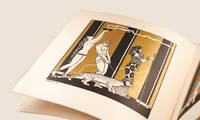
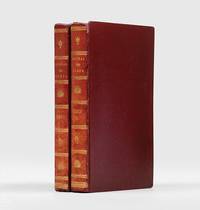
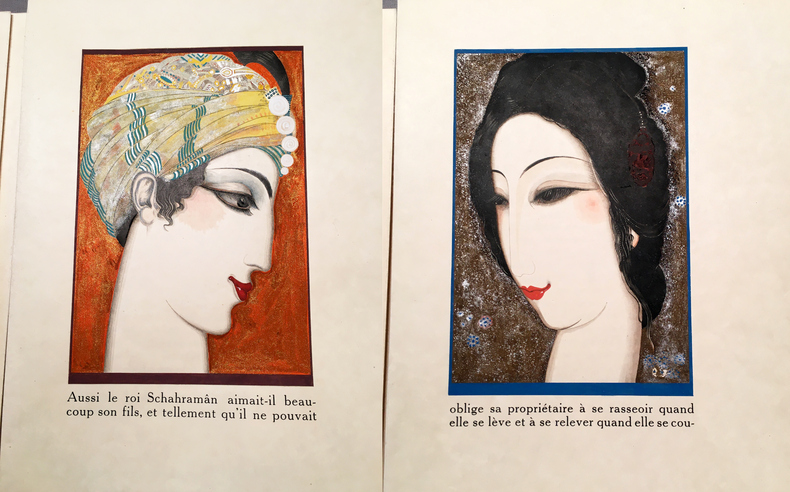
19261290Paris, [Schmied], 1926. Un volume in-4 (27,7 x 20 cm), en feuilles, 102 pages, n.ch., couverture rempliée, chemise et étui décoré de l’éditeur, emboîtage de maroquin vert doublé de maroquin jonquille, dos titré (G. Cretté succ. de Marius Michel). Édition originale de la plus grande rareté, tirée à seulement 20 exemplaires numérotés sur japon. Splendide illustration en couleurs de François-Louis Schmied: environ 50 bois dont 18 de très grande taille, dans le texte, TOUS ENTIÈREMENT PEINTS À LA MAIN dans les ateliers de laquage de Jean Dunand ; près de 300 lettrines et bouts de lignes peintes à la main dans le texte, dans des harmonies de couleurs variant selon les pages, avec rehauts d'or, d'argent ou de blanc, traçant des motifs géométriques ou érotiques. Tirage unique à 20 exemplaires numérotés et signés du monogramme en rouge de FLS, tous sur papier Japon, celui-ci n° 13. Conservé à l'état d'origine dans un splendide coffret en maroquin doublé de Cretté. - Notes bibliographiques (pour ceux qui prennent le temps): « La Princesse Boudour est regardée par ceux qui savent voir, comme le livre capital de ce premier quart de siècle. Par sa graphie et sa technique générale, elle est une exception préméditée dans le faire de son auteur. Pour la réaliser, il s’est véritablement amusé, cette fois – en tant que lecteur enthousiaste des Mille nuits et une nuit - à commenter graphiquement le texte qu’il connaît si bien et dont il est comme imbibé [...]. Il nous a [...] octroyé le délectable cadeau de trois cent quatre-vingt-dix vignettes et en couleur, et toutes différentes, et qui se rapportent au texte [...]. Et cette munificence schmiedienne n’est-elle pas, en définitive, l’exaltation de notre modernité, et en conformité avec nos goûts, du faire des imagiers incomparables de l’Orient ? [...]. Avec quel attendrissement, avec quelle passion sourde et contenue, qui n’appartient qu’à lui, il a rendu, au moyen des fragiles outils du graveur et du coloriste, la grâce masculine des adolescents, et la tendre chair de banane des radieuses jouvencelles ! [...] Je pense que s’il fallait absolument appliquer une épithète au sourire des adolescentes schmiediennes, et même à celui des adolescents, rien ne leur conviendrait mieux que le mot ambigü... Une atmosphère de pures délices enveloppe cette oeuvre boudourienne, multiple, voluptueuse, spirituelle, et d’une telle essence d’authentique Orient qu’elle nous fait vraiment respirer tous les parfums de l’Arabie. » (Préface du catalogue de l’exposition Schmied à la galerie Arnold Seligmann Rey à New York, mars 1927, pp. 34-37).
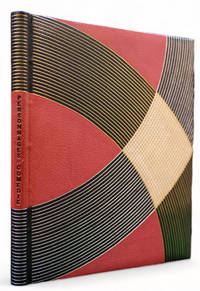
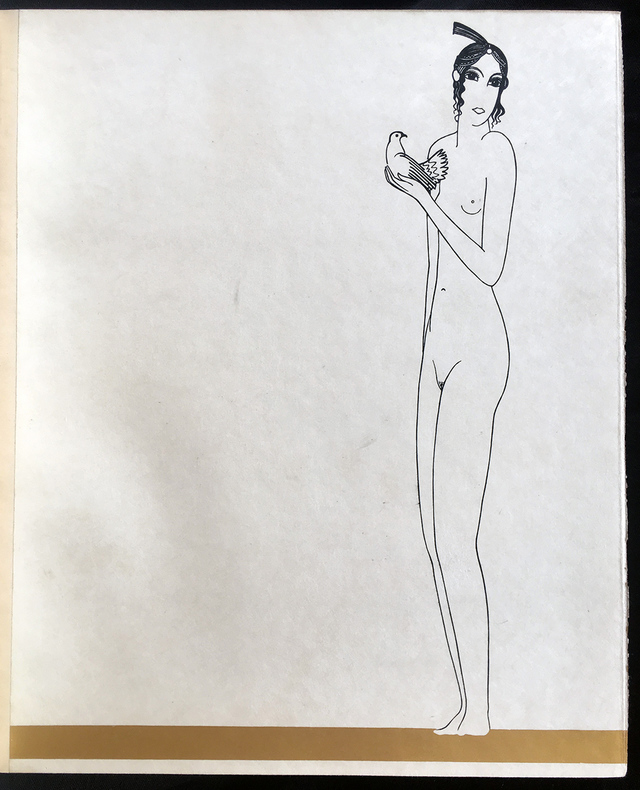
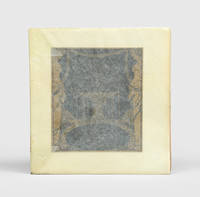
19221<p>SINGLE PRINT LIMITED TO 150 COPIES ON HOLLAND VELUM OF THE MOST FAMOUS WORK FROM THE COLLABORATION OF Barbier and Schlied. Copy n°97 signed by the author.</p><p>40 Figures headbands decorated letters by Georges Barbier engraved on wood in colors and worked by F.L. Schmied. Cover enhanced with gold and silver. Calligraphic text.</p><p>Lined and mosaic binding signed by Jeanne Langrand 1931.</p><p>Raspberry morocco crossed from one plate to the other and extending on the back with two wide strips of black morocco highlighted with twenty-five threads gilded for one of the strips palladium for the other the two strips crossing each other on a piece of cream morocco forming a decoration of iridescent lattices; smooth spine crossed with the same decoration gilded fillets at the head and palladium at the tail Title in large black letters; linings extending and repeating in symmetry the mosaic decoration of the covers; guards of pink moiré silk. Edges with matte gilding on witnesses. Covers and spines preserved.</p><p>Perfect condition case a little rubbed.</p><p><strong>DAZZLING ART-DECO MOSAIC BINDING DUE TO Jeanne LANGRAND.</strong></p><p>Jeanne Langrand was one of the pioneers of the modern style in the field of bookbinding. After the First World War with her sister Andrée she found herself at the School of Decorative Arts Jeanne as assistant professor and Andrée as director.</p><p>In this breathtaking binding of perfect mastery and great decorative audacity we can only admire the elegance of the mosaic tones the refined geometry of the composition with its symmetrical repetition in linings. Even the case bears witness to its particularly sober and relaxed style.</p><p>One of the great successes of the art of illustration from the interwar period in a brilliant binding in perfect harmonious harmony.</p> chez Meynial
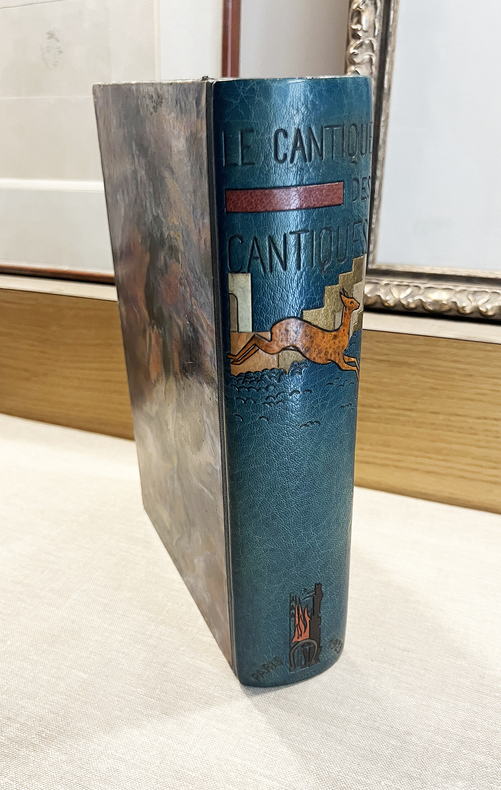
19271833Paris, François-Louis Schmied, 1927. Un volume in-4, reliure plein maroquin bleu, doublure et gardes de soie brochée gris-bleu sertie d’un jeu de filets dorés, dos lisse orné, couverture, tranches dorées, étui bordé de même maroquin (G. Cretté succ. de Marius Michel). Édition originale et tirage unique de ce conte oriental de Joseph Charles Mardrus magnifiquement illustrée et ornementée par François-Louis Schmied qui assura lui-même la mise en page et l'impression de ce chef d'œuvre du livre Art déco : le trait des planches a été gravé sur bois, la peinture en a été exécutée à la main, d'après les originaux, dans les ateliers de laquage de Jean Dunand. Cette illustration se compose d'une couverture illustrée, un frontispice, 7 illustrations à pleine page, une grande planche dépliante formant un triptyque, 29 bandeaux horizontaux dont 22 grands, la plupart en-tête, 32 lettrines ornées ou petites vignettes dans le texte, 6 petits bandeaux verticaux et de nombreux bandeaux et lettres mis en couleurs et dorés. TIRAGE UNIQUE À 25 EXEMPLAIRES SUR JAPON, SIGNÉS PAR SCHMIED. Celui-ci (n° XXV) comporte l’une des rares suites des bois tirés en noir sur Japon. L'ouvrage est entièrement monté sur onglet.
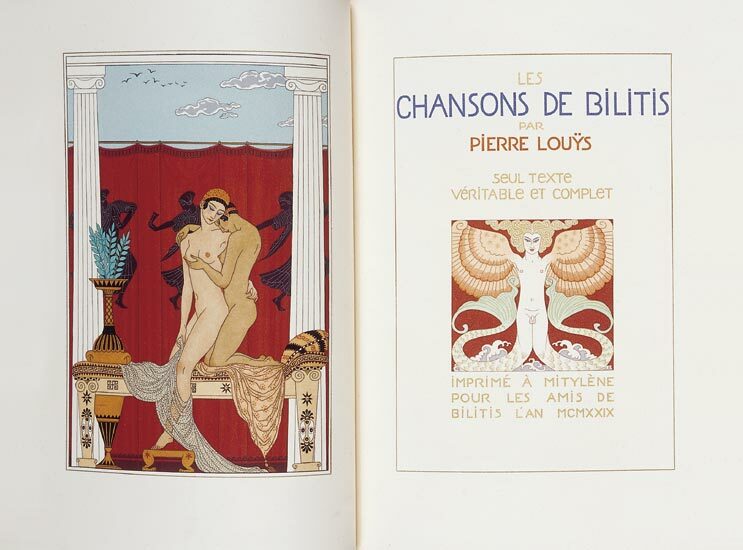
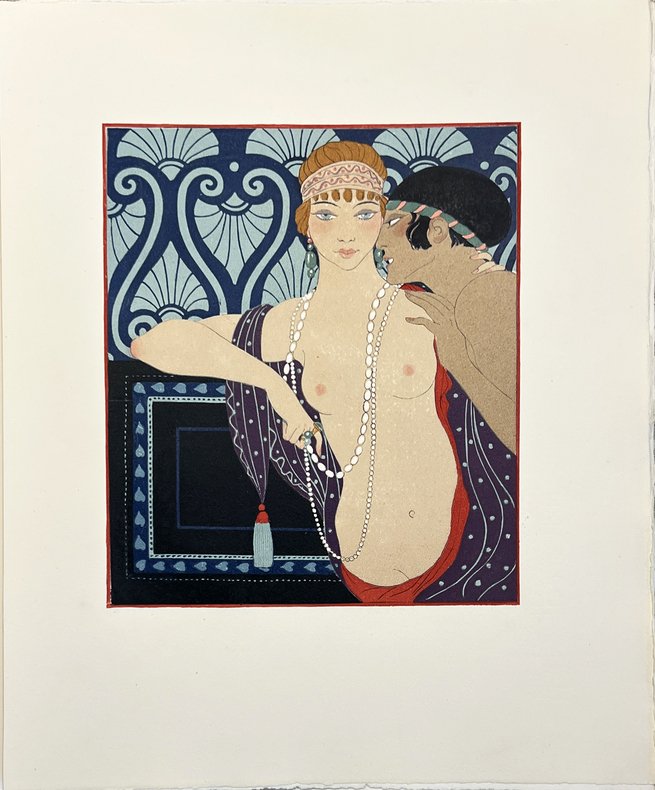
19291850Imprimé à Mitylène pour les amis de Bilitis [Paris: P. Bouchet], 1929. Volume petit in-4 (24,5 x 19,5 mm) relié en plein maroquin mosaïqué, doublé et décoré, étui. - 62 COMPOSITIONS GRAVÉES SUR BOIS EN COULEURS DE GEORGE BARBIER dont un frontispice et 6 à pleine page, 24 sujets à mi-page et de nombreuses lettrines et culs-de-lampe. - PREMIÈRE ÉDITION INTÉGRALE de ces 22 chansons, publiée pour le compte de Louis Barthou, Jacques André et Georges Miguet. Réalisé en 1929, période où le talent de l'artiste était alors à son apogée, ce livre est l'une des productions les plus importantes des années trente. - LE LIVRE LE PLUS RARE DE GEORGE BARBIER TIRÉ SEULEMENT À 25 EXEMPLAIRES. Un des 20 sur papier vélin filigrané au titre de l'ouvrage, celui-ci, non numéroté mais d'une prestigieuse provenance, est augmenté d' UNE SUITE COMPLÈTE DU TRAIT EN BRUN/ROUGE SUR JAPON. La suite tirée à 5 ou 6 ex. comprend également l' illustration des couvertures et une planche inédite. La reliure à décor d'attributs érotiques a été commanditée à Charles Septier par le bibliophile Beauvillain. Avec son ex-libris gravé : "Et BEAUVILLAIN ? / toujours il vous aime". SUPERBE EXEMPLAIRE RELIÉ EN PLEIN MAROQUIN DOUBLÉ MOSAÏQUÉ DE L'ÉPOQUE. - Références : Carteret Illustrés IV, 251 ; Dutel II, 1183 ; Pia Enfer 201-203. - Notes : Les Chansons de Bilitis sont l’œuvre la plus célèbre de Pierre Louÿs (1870-1925) qui s'est ici amusé à monter une petite mystification, faisant croire qu'il s'agissait d'un véritable document historique retrouvé, les œuvres d'une contemporaine de Sappho, dont il ne nous reste que quelques bribes de poèmes… Il n'a pas même négligé de citer de vrais ouvrages savants issus de l'industrieuse université allemande, d'inventer des découvertes archéologiques, et de multiplier les évidences pour donner du corps à son invention. Elle a eu le bonheur d'attraper quelques érudits enthousiastes, professeurs d'université offrant leurs services pour améliorer la traduction ! Bilitis est même devenu un nom commun, comme Sapho. "Je voulais entendre Le rire de Sappho Et la voix de Sa lyre Ce qui me parvint fut Le marmonnement moustachu Des grammairiens Des ptérodactyles grecs Et des dodos victoriens". Il s'agit en fait d'un pastiche, mélangeant bribes saphiques, épigrammes de l'Anthologie Grecque, et de tout ce que peuvent offrir Alciphron (Lettres de pêcheurs, de paysans, de parasites et d'hétaïres), La Pastorale de Daphnis et Chloé de Longus, Lucien et tous les romans grecs... Au final, on a plus d'une centaine de poèmes suggestifs et ingénieux, fruit de la malicieuse imagination et de l'art imitatif de l'auteur. Ce n'est pas mal du tout, mais quand même: c'était bien trop beau pour être vrai ! L'introduction : Vie de Bilitis, est excellente, et remplit parfaitement son office… "Bilitis naquit au commencement du sixième siècle avant notre ère, dans un village de montagnes situé sur les bords du Mélas, vers l’orient de la Pamphylie. Ce pays est grave et triste, assombri par des forêts profondes, dominé par la masse énorme du Taurus ; des sources pétrifiantes sortent de la roche ; de grands lacs salés séjournent sur les hauteurs, et les vallées sont pleines de silence. Elle était fille d’un Grec et d’une Phénicienne. Elle semble n’avoir pas connu son père, car il n’est mêlé nulle part aux souvenirs de son enfance. Peut-être même était-il mort avant qu’elle ne vînt au monde. Autrement on s’expliquerait mal comment elle porte un nom phénicien que sa mère seule lui put donner. Sur cette terre presque déserte, elle vivait d’une vie tranquille avec sa mère et ses sœurs. D’autres jeunes filles, qui furent ses amies, habitaient non loin de là. Sur les pentes boisées du Taurus, des bergers paissaient leurs troupeaux. Le matin, dès le chant du coq, elle se levait, allait à l’étable, menait boire les animaux et s’occupait de traire leur lait. Dans la journée, s’il pleuvait, elle restait au gynécée et filait sa quenouille de laine. Si le temps était beau, elle courait dans les champs et faisait avec ses compagnes mille jeux dont elle nous parle. Bilitis avait à l’égard des Nymphes une piété très ardente. Les sacrifices qu’elle offrait, presque toujours étaient pour leur fontaine. Souvent même elle leur parlait, mais il semble bien qu’elle ne les a jamais vues, tant elle rapporte avec vénération les souvenirs d’un vieillard qui autrefois les avait surprises. La fin de son existence pastorale fut attristée par un amour sur lequel nous savons peu de chose bien qu’elle en parle longuement. Elle cessa de le chanter dès qu’il devint malheureux. Devenue mère d’un enfant qu’elle abandonna, Bilitis quitta la Pamphylie, d’une façon assez mystérieuse, et ne revit jamais le lieu de sa naissance. Nous la retrouvons ensuite à Mytilène où elle était venue par la route de mer en longeant les belles côtes d’Asie. Elle avait à peine seize ans, selon les conjectures de M. Heim qui établit avec vraisemblance quelques dates dans la vie de Bilitis, d’après un vers qui fait allusion à la mort de Pittakos. Lesbos était alors le centre du monde…" - ENGLISH DESCRIPTION : Pierre Loüys- George Barbier : LES CHANSONS DE BILITIS. Seul texte véritable et complet. Imprimé à Mitylène pour les amis de Bilitis, 1929. Small 4to. (246 x 192 mm). pp. (iv), 56, (i), (i). Wood-engraved colour frontispiece, printed title in various colours with colour wood-engraved vignette and Louÿs test in three sections ('Bucoliques en Pamphylie', 'Elegies à Lesbos' and 'Epigrammes dans lIle de Chypre') illustrated with 60 wood-engraved illustrations by Pierre Bouchet after George Barbier, 54 in colour, seven full-page, 24 decorating the text, the remainder culs-de-lampes or vignettes, final leaf with justification and achevé d'imprimer; three-line initials in colour against gilt background throughout as well as numerous head- and tail-pieces and initial letters, verse numbering in gilt in Roman numerals, text in capitals ruled throughout and two additional wood-engravings for the wrappers; this copy with the additional suite printed in outline in bistre on Japon including the cover illustrations and a "planche refusée" in black. Our copy is not numbered but comes from a important collector and provenance with ex-libris. Full contemporary emerald crushed morocco by Charles Septier with his signature gilt, front and rear boards ruled in gilt to surround a decorative border of inlaid jade morocco with gilt Greek key pat-tern around curvilinear jade morocco surround with gilt roll tool for a central vignette with argent disc supported by lamp tools, banded spine in five compartments with gilt titles and elaborate decorative tooling, doublures of tan morocco with gilt surrounding an inner border of red and black inlaid morocco, central inlaid circular medallions illustrating vignettes from the book in colour morocco, gilt floral, foliate, phallic and vulvic tools at corners, patterned silk guards, marbled endpapers, board edges ruled in gilt, original wrappers with gilt illustration and backstrips preserved, a.e.g., matching morocco-edged wool-lined marbled board slipcase. The binding was commissioned by Beauvillain as he had commissioned other bindings from Septier and that his ex libris is bound in as a full sheet rather than pasted on one of the pages. Provenance: leaf with engraved ex-libris of Robert Beauvillain by Jouas bound in with the text: "Et BEAUVILLAIN ? / toujours il vous aime". - BARBIER'S RAREST BOOK, Les Chansons de Bilitis, bound by Septier and with the very rare additional suite. From the edition limited to 25 copies on vélin d'Arches only, this copy also with the very rare suite printed in outline in bistre on Japon of which very few copies were printed. Also with an extra unpublished full page print in bistre bound in the suite. The rarest and most recherché and erotic work by George Barbier. The magnificent binding by Septier features phallic and vulvic tools to the doublures and a central circular vignette to each: that for the front doublure is after the illustration for the second poem Je me suis dévêtue pour monter a un arbre ... ); that for the rear is after the twenty-third (D'abord je n'ai pas répon-du ... ). First published in Paris in 1894, this purports to be translations of poems by a woman named Bilitis, a contemporary and ac-quaintance of Sappho. This caused a sensation, not only because finding an intact cache of poems from a completely unknown Greek poet circa 600 B.C. would be a miracle, but because of its open and sensitive exploration of lesbian eroticism. Actually Bilitis never existed. The poems were a clever forgery by Pierre Louÿs -- the "translator"; to lend weight, he had even included a bibliogra-phy with bogus supporting works. Louÿs actually did have a good command of the classics, and he salted Bilitis with a number of quotations from real poets, including Sappho, to make it even more convincing. (J. B. Hare). They [Barbier's Les Chansons de Bilitis and Aphrodite] are celebrations of the ancient gods and their freedom from taboo. Bar-bier's illustrations reveal this world in full flower ... When reality and imagination fused, not only was it possible to travel freely wherever you liked, it was also possible to encounter ancient gods and fairies. Art Deco mixed old and new in previous unseen ways ... In his glass, Barbier mixed an uncanny cocktail of neoclassic and modern. (Hiroshi Unno) [Carteret Illustrés IV, 251; Dutel 1183; not in Unno].
192476866Sous emboi?tage de velours illustré, fenêtre circulaire sur le premier plat, laissant apparai?tre le dessin de la couverture (Jean-Claude Chalanson).Superbe et rare album comprenant 21 compositions en couleurs gravées par H. Reidel d'après les compositions de George BARBIER, dont une sur la couverture, une sur le titre, 3 dans le texte et 16 hors texte.
19121091912. 1st Edition. Soft cover. Fine. FIRST EDITION OF ALL 79 ISSUES WITH 186 HAND-COLORED PLATES by some of the most famous artists of the era. Number 884 each issue from the same set of only 1250 sets on Holland paper out of a total edition of 1279. IN ORIGINAL WRAPPERS IN FINE CONDITION. "The Journal des Dames et des Modes lasted only two years the first issue appeared on 1 June 1912 and the last on 1 August 1914. This stylish periodical was issued regularly three times a month and ceased publication upon the outbreak of the First World War. With its expensive layout its society columns its poetic texts its colourful annotations and its fashion reports it represented the last brilliant refined impartial and aestheticizing impulse of a happy and optimistic society occupying the centre of the stage in the period that has aptly been called the 'belle époque'. It was essentially the testimony the history--illustrated or rather 'clothed' and narrated--of the customs ideas and ideals of a society and a period.<br /> <br /> "Every issue carefully reviewed all the current novelties of fashion and every issue carried coloured stencil prints reproducing the latest conceptions of the fashion designers." For the text "the magazine could count on the collaboration of the best known writers and littérateurs of the time" including Henri Duvernois Marcel Boulenger Paul Margueritte Jean Cocteau and many others. The artistic contributions "included the works of some outstanding artists and many promising young ones. Most frequent in his appearance and outstanding for the quality of his illustrations was Georges Barbier." Other artists included Léon Bakst Bernard Boutet de Monvel Umberto Brunelleschi H. Robert Dammy Paul Iribe Charles Martin and Fernand Siméon. Christina Nuzzi Parisian Fashion from the "Journal des Dames et des Modes". Note: all 186 plates are present numbered 1-184 with two unnumbered plates.<br /> <br /> Paris: 1912-1914. Octavo each issue loose as issued in original wrappers inserted loosely into four half-yearly plus one supplemental original large wrappers. A few plates with spots but generally exceptionally clean dampstaining to edges of five issue wrappers. A nearly immaculate set exceedingly scarce in original wrappers. unknown books
19253928Paris 1925. F.-L. Schmied, Peintre-Graveur-Imprimeur. Un volume petit in-folio (250 x 165 mm) en feuilles (25 cahiers non paginés) sous couverture illustrée à rabats. Étui et chemise à dos de maroquin bleu orné d'un décor polychrome mosaïqué (René Assourd). - L'illustration comprend : 80 COMPOSITIONS, FIGURES ET LETTRINES GRAVÉES SUR BOIS EN COULEURS : un frontispice, une composition à chaque page comprenant des bandeaux et des lettrines, une illustration à pleine page et 6 à trois quarts de page, dessinées et gravées sur bois en couleurs, rehaussées d'or et d'argent, par F.-L. Schmied avec la collaboration de Pierre Bouchet. Tirage à 110 exemplaires justifiés et signés sur vergé d'Arches. Celui-ci est enrichi D'UNE SUITE EN NOIR DES BOIS. - Note : Un des livre majeurs de la période art-déco dans sa condition d'origine, bien complet du médaillon introductif et des deux papillons (relatifs au médaillon et aux relieurs). Quelques très faibles décharges, Schmied ayant eu soin, pour cet exemplaire, de placer des serpentes entre les feuillets. (réf : Ritchie, 16).
19331713Se trouve pour les amateurs à Paris à l'enseigne du nombril de Vénus (1933). Un Album in-folio oblong (310 x 415 mm), en feuilles, chemise toilé à quadruple rabat. Très rare album commandé à Charles Martin par Marcel Valotaire, Jean Beauclair et Georges Cretté, composé d'un titre illustré et de 12 planches très libres, en couleurs et en noir, gravées à l’eau-forte au repérage par Charles Martin. Chaque planche est présentée dans une chemise légendée. Feuillet de justification en fin d'ouvrage. Celui-ci exemplaire J comprenant : La planche de titre en état définitif couleur, état en noir et état avant la lettre ; les 12 COMPOSITIONS LIBRES EN 4 ÉTATS : couleur, noir, eau-forte pure, état avec très importantes remarques. Cet exemplaire est accompagné de : 6 DESSINS ORIGINAUX AU CRAYONS DONT UN REHAUSSÉ DE COULEUR, 8 DESSINS DÉFINITIFS À L'ENCRE DE CHINE (PLUME) DONT UN ENTIÈREMENT AQUARELLÉ, tous au format 310 x 415 mm et un dépliant, et 4 rarissimes "kodatraces" gravés ayant servis au reports sur cuivre des originaux de Charles Martin.
191489054Paris: A la belle édition 1914. Fine. Copy on Japan A la belle édition Paris 1914 22.50 x 23.50 cm broché First edition totalling 240 numbered copies ours one of 10 copies on japon à la forme the deluxe issue complete at the end of the volume with its additional complete suite of illustrations in black as stated in the limitation. Illustrated with 17 splendid pochoir plates in black white and gold by George Barbier. A rare and handsome deluxe copy of this George Barbier masterpiece. A la belle édition unknown
191420580Paris: Aux Bureaux du Journal des Dames 1914. First edition. Wraps. Loose in original wrappers as issued. Near fine. 25 x 16 cm. Limited edition copies 14 & 15 of twelve examples numbered 6-17 on Japan Imperial with illustrations in two states -- monochrome and color from total of 1270 copies. 184 pochoir plates plus two supplemental unnumbered plates "Le Choix Difficile" Charles Martin and "La Folie Du Jour" Georges Barbier also in two states. The Art Deco fashion plates by leading artists of the period including Leon Bakst Iribe Martin Brunelleschi Simeon Vallee Wegener et al: Georges Barbier the principal illustrator. Plate 184 in colored state only plate 183 supplied from another copy printed on Hollande paper with watermark "Journal Des Dames."Plates1-93 from copy 14 Plates 94-184 from copy 15 both housed in original paper wrappers with spine reading Journal Des Dames Tome III Juillet-Decembre 1913 title within front cover rectangular decorated border. No text. Plates fresh bright and crisp copies in two states are rare. Aux Bureaux du Journal des Dames unknown books
1914191067Paris: La Belle Édition 1914. Neoclassical Art Deco First edition one of 25 copies on vergé paper and with the extra suite of monochrome illustrations from a total edition of 240 numbered copies of which this is number 63. Barbier transforms the Song of Songs into a sumptuous reverie both neoclassical and charged with the style of early Art Deco. Indeed this is "one of the few significant illustrated books in which the Art Deco style already predominates published in 1914 or earlier" Ray p. 32. Quarto. With 17 designs including 13 pochoir plates each present in two states: black and gold and monochrome. Original wrappers. With glassine dust jacket. Housed in a custom black cloth solander box by Sangorski & Sutcliffe. Contents possibly reglued into wrappers still a near-fine copy. Gordon Ray "The Art Deco Book in France" in Studies in Bibliography vol. 55 2002. hardcover
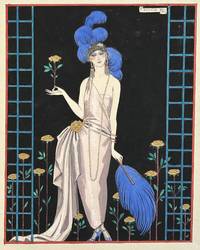
19279184<p>Limited to 150 copies this being number 141 but with an additional original 14 x 17 cm Barbier watercolor bound in before the half title. This original work had served as the model for Charles Frederick Worth's "Robe du Soir" as plate 21 in La Gazette du Bon Ton 1922 no. 3. Sumptous full Morocco by Georges Crette with gilt particulars to spine. All edges heavily gilt. Polished calf doublures and decorated endpapers with the original wraps bound in. Decorative slipcase with Morocco fore edges. Minor wear to corners of case see image. Pochoir frontispiece by Barbier as well as pochoir initials headpieces tail pieces.</p><p>8.25 x 10.25 in or 21 x 26 cm</p> A. Blaizot hardcover
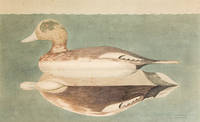
1928214599New York: The Derrydale Press 1928. Watercolor signed "Joel D. Barber / New York 1928" lower right. 1 vols. 11-1/2 x 18-3/4 in. framed to 16 x 22-1/2 in. overall. Fine condition. Watercolor signed "Joel D. Barber / New York 1928" lower right. 1 vols. 11-1/2 x 18-3/4 in. framed to 16 x 22-1/2 in. overall. Fine 1928 Original Duck Decoy Watercolor by Joel Barber. A fine large rendering very much reduced in the Derrydale Press and Windward House editions of Barber's classic book. It shows "a Stevens Widgeon . In this decoy the painting is original and still shows the work of a 'graining comb' on the back." The watercolor execution is meticulous.<br/><br/>Inscribed verso: "Amer. Widgeon Baldpate / No detailed history - just used in Currituck Sound North Carolina / the Currituck Club. / Reproduced through the Courtesy of H.F. Stone Esq. of New York 1928. / Note-- Undoubtedly a machine made decoy of the Eighties - a product of some early northern factory possibly a Stevens - Weedsport / Joel."<br/><br/>A UNIQUE AND HIGHLY DESIRABLE DERRYDALE DUCK RENDERING. Siegel 85. Provenance: From the private collection of Eugene V. Connett III. Literature: Barber's Wild Fowl Decoys plate 60 [The Derrydale Press] unknown books
19121091912. 1st Edition. Soft cover. Fine. FIRST EDITION OF ALL 79 ISSUES WITH 186 HAND-COLORED PLATES by some of the most famous artists of the era. Number 884 each issue from the same set of only 1250 sets on Holland paper out of a total edition of 1279. IN ORIGINAL WRAPPERS IN FINE CONDITION. "The Journal des Dames et des Modes lasted only two years the first issue appeared on 1 June 1912 and the last on 1 August 1914. This stylish periodical was issued regularly three times a month and ceased publication upon the outbreak of the First World War. With its expensive layout its society columns its poetic texts its colourful annotations and its fashion reports it represented the last brilliant refined impartial and aestheticizing impulse of a happy and optimistic society occupying the centre of the stage in the period that has aptly been called the 'belle époque'. It was essentially the testimony the history--illustrated or rather 'clothed' and narrated--of the customs ideas and ideals of a society and a period.<br /> <br /> "Every issue carefully reviewed all the current novelties of fashion and every issue carried coloured stencil prints reproducing the latest conceptions of the fashion designers." For the text "the magazine could count on the collaboration of the best known writers and littérateurs of the time" including Henri Duvernois Marcel Boulenger Paul Margueritte Jean Cocteau and many others. The artistic contributions "included the works of some outstanding artists and many promising young ones. Most frequent in his appearance and outstanding for the quality of his illustrations was Georges Barbier." Other artists included Léon Bakst Bernard Boutet de Monvel Umberto Brunelleschi H. Robert Dammy Paul Iribe Charles Martin and Fernand Siméon. Christina Nuzzi Parisian Fashion from the "Journal des Dames et des Modes". Note: all 186 plates are present numbered 1-184 with two unnumbered plates.<br /> <br /> Paris: 1912-1914. Octavo each issue loose as issued in original wrappers inserted loosely into four half-yearly plus one supplemental original large wrappers. A few plates with spots but generally exceptionally clean dampstaining to edges of five issue wrappers. A nearly immaculate set exceedingly scarce in original wrappers. unknown
191489054A la belle édition | Paris 1914 | 22.50 x 23.50 cm | broché
192247635Paris.: Meynial éditeur. 1922 - 1926. Loose as issued in original publisher's printed wrappers with pochoir colour designs by Barbier. 5 vols. 8vo. c.260 x 175 mm. Each issue with title with colour vignette and 12 colour plates by George Barbier each with pochoir colour; monochrome head-piece to each essay and calendar for each year ruled in a different colour. A fine and complete set of Barbier's Art Deco gem 'Falbalas et Fanfreluches' in the original wrappers.The issue for 1923 features the essay 'Modes' by Colette; the remaining essays are by the Comtesse de Noailles Cécile Sorel Gérard d'Houville and the Baronne de Brimont. Meynial éditeur. unknown
192248789Paris.: Chez Meynial. 1922. Loose as issued in original publisher's printed wrappers with a colour design by Barbier heightened with gilt gilt black and purple marbled board chemise and matching slipcase. Folio. 380 x 294 mm. Illustrated half-title with colour wood-engraved design by Barbier title with colour wood-engraved Harlequin vignette 12 full- and 2 half-page wood-engraved colour plates 22 wood-engraved colour four-line initials as well as decorative devices in the text many heightened in silver and gold final wood-engraved colour vignette list of plates and colophon. Each leaf of text surrounded by decorative frame. The cover illustration is repeated on the half-title. A very fine copy of this delightful collaboration between two Art Deco masters: Georges Barbier and François-Louis Schmied.From the edition limited to 150 numbered copies signed by Barbier in pencil. The plates were engraved by Schmied after Barbier's magnificent original designs. Chez Meynial. unknown
19223930Collection Pierre Corrard, Paris 1922. Un volume in-4 en feuilles sous coffret décoré imitant la peau de serpent dorée, incrustée au premier plat, la médaille de Bilitis réalisée pour l'occasion par le sculpteur art-déco, Albert POMMIER. Première édition illustrée par GEORGE BARBIER et gravée sur bois par F.L. SCHMIED. 44 superbes illustrations couleurs dont la couverture, 13 en hors-texte et 8 à pleine page, 21 dans le texte ainsi que de nombreux ornements. L'un des 125 ex. numérotés sur Arches, seul tirage, signé par G.Barbier. Il est joint à cet exemplaire trois maquettes originales d'essai de la couverture avec ajouts et découpes par Barbier. - ENGLISH DESCRIPTION: P. Loüys. LES CHANSONS DE BILITIS. Taduit du grec. Illustrations de G. Barbier gravées sur bois par F.L. Schmied (1922) .Collection Pierre Corrard, Paris 1922. A quarto volume (33 x 26 cm) issued in loose sheets within a shellcase featuring a gold snakeskin-effect finish; the front cover is inset with the "Bilitis" medallion created for the occasion by Art Deco sculptor Albert Pommier. First edition, illustrated by George Barbier and featuring wood engravings by F.L. Schmied.- 44 superb illustrations, including the cover, 13 plates and 8 full-page images, 21 in-texte, as well as numerous decorative elements. One of 125 copies numbered on Arches paper, signed by G. Barbier. Included with this copy are three original cover mock-ups featuring additions and cut-outs by Barbier. A perfectly preserved copy housed in a highly elegant custom-made presentation box. Additional photographs available upon request.
195448028Paris.: Les Bibliophiles de l'Amerique Latine. 1954. Original publisher's cream illustrated wrappers with printed titles in gold chemises with titles to spine and later red morocco-backed slipcases. 2 vols. 4to. 284 x 222 mm. Illustrated with 52 colour wood-engraved illustrations by Pierre Bouchet after George Barbier and Georges Lepape: full-page frontispiece to each vol. printed title to vol. I with vignette 6 vignette head-pieces vignette tail-piece 6 further full-page plates and 34 text vignettes as well as the two illustrations for the wrapper of each vol.; 33 decorative gilt initials numerous gilt text ornaments vignettes and head- and tail-pieces throughout; each vol. with two additional suites colour and black and white; additional portfolio consisting of 13 prints marked 'Décomposition de la gravure' for page 297; also included is a signed gouache by Barbier. An excellent example of Barbier's 'Aphrodite' with a signed gouache two pairs of suites and further unique material.From the edition limited to 150 copies with this one of 125 on Arches reserved for 'Membres de la Compagnie aux Archives et aux Collaborateurs'. The last book illustrated by George Barbier who died during its production. Barbier's contemporary Georges Lepape completed the project. The 52 colour wood engravings were cut and printed by Pierre Bouchet on his own press at Boulogne-sur-Seine. The seventh book published by 'Les Bibliophiles de l'Amerique Latine' 'Aphrodite' was produced during the presidency of the Comte de la Rochefoucauld-Montbel.The original gouache shows Aphrodite surrounded by birds. The image which uses a striking variety of purple / blue tones is reproduced on pg. 45 Chapter IV 'La Passante' Volume 1.This copy also contains a Menu from 'Les Bibliophiles de l'Amerique Latine - Assemblée Générale du 28 Mai 1952' with a gold cover design after Barbier printed in gold and numbered '5 / 60' with Bouchet's signature. Also included inserted loose is a typed press announcement for the publication with annotations dated '17 Juin 1954'. Les Bibliophiles de l'Amerique Latine. unknown
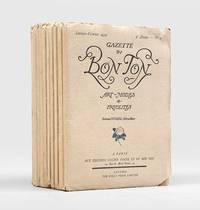
1920118958London: the Field Press Limited 1920. An attractive run of the hugely influential French fashion magazine. Founded by Lucien Vogel the first issue was released in November 1912. Publication was suspended in 1915 due to the First World War resuming in 1920 with the present volume and continuing until 1925. Extensive runs such as this especially in such bright condition are uncommon. "After the last issue of this excellent magazine in 1925 nothing else quite like it was ever produced. It has the prestige of having pioneered the idea of using the very best artists to illustrate the very best haute couture designs of having maintained a superb standard of printing on hand-made paper and for most of its life it was guided by one director Lucien Vogel" Robinson p. 28. Although short-lived Gazette du Bon Ton was a key publication and reported on the latest developments in fashion and lifestyle at the beginning of the twentieth century at a time when styles were changing dramatically in the space of a few years. The magazine was only available to subscribers at a price which equals $425 per year in today's money thereby creating a very exclusive image. Lucien Vogel the editor aimed to establish fashion as an art form and to create "good taste" for the Parisian elite. Contributing artists included all the greatest names of the day such as Dufy Bakst Barbier and Brunelleschi all of whom depicted the haute couture in a narrative and dramatic style using vivid colours and the pochoir technique on special handmade paper. Many of the designs were idealistic leisure scenes of the well-to-do illustrating the latest creations of Paris vintage fashion houses such as Worth Lanvin Doucet Poiret Callot Soeurs Paquin and Beers often without explanatory text. The literary content was also of the highest quality with essays by well-known art historians playwrights and novelists of the day. 10 vols quarto: 79 hand-coloured lithograph plates en pochoir 48 coloured croquis. Loose as issued in original printed paper wrappers. Housed in a custom orange cloth solander box. Trivial wear to edges corners very slightly defective to front wrapper of part I; a very good remarkably well-preserved set. Julian Robinson The Golden Age of Style 1976. hardcover
192887423Sous étui et chemise cartonnés. Couverture illustrée en rempliée.Belle édition publiée d'après une maquette typographique de François-Louis Schmied, illustrée de 33 compositions en couleurs de George BARBIER gravées sur bois par Pierre Bouchet.
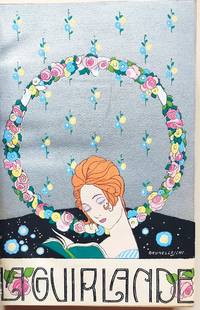
1917002990Paris: La Guirlande 1917. Book. Near Fine. Hardcover. 1st Edition. Complete set of this rare and highly decorative art deco periodical. Eleven issues all published bound in two volumes. 59 pochoir colored plates by renowned illustration artists Georges Barbier Umberto Brunelleschi Taquoy Vallee Bonotte Domergue Wegener Stab and others. Most pages with in-text color illustrations including head- and tail-pieces. All eleven original printed wrappers with colored and silver design by Brunelleschi are included. Brunelleschi was the artistic director of the short lived but significant La Guirlande. Jean Hermanovits was the literary director. Jean Saude one of the foremost artists to explore and promote pochoir techniques was responsible for the brilliant pochoir coloring. Texts by Lucie Delarue-Mardrus Rene Boylesve Jean Hermanovits Abel Hermant and others. Each issue numbered 79 of a total edition of 800 copies. Both Barbier and Brunelleschi at that time were at the top of their artistic prowess and their beautiful illustrations in La Guirlande reflect their talents. Includes duplicate of 'L'Heure du Bain' as stated in Colas. Each issue complete with mostly illustrated advertisements of 'Maisons de luxe'. Bound in two volumes half calf with raised bands and patterned boards matching patterned endpapers and gilt titles on spine. Top edges gilt. Besides the inevitable offsetting from the pochoirs this is a very fine complete set of all issues published. No marks or inscriptions no foxing. 28 x 20 cm. . La Guirlande Hardcover
19141477Imprimé pour Charles Meunier, La Maison du Livre, Paris 1914. 1 volume in-folio (370 x 280 mm) entièrement monté sur onglets, couverture muette de papier marbré gaufré, portefeuille à rabats, dos et coins de percaline bleue, pièce de titre (de l'éditeur). 10 EAUX-FORTES ORIGINALES EN COULEURS HORS-TEXTE DE LOBEL-RICHE dont un frontispice, une vignette gravée sur le titre, 10 illustrations dans le texte et nombreux ornements. Édition de luxe tirée à 30 exemplaires seulement. EXEMPLAIRE SUR JAPON IMPÉRIAL contenant 5 ÉTATS DES EAUX-FORTES dont un état sur parchemin signé à la mine de plomb (1e, 2e, 3e épreuves en états d'eau-forte, 4e état terminé sur parchemin, signé pour chacune au crayon par l'artiste, 5e état en couleurs à la poupée sur vélin blanc), une suite sur Japon de 12 petites eaux-fortes reprenant les vignettes in-texte, la gravure de titre avant la lettre et 2 très jolis DESSINS ORIGINAUX signés au crayon en noir et bistre sur le faux-titre. English description: LES BARS. Size plate or paper : 37 x 28 cm, 10 original etchings in 5 states : 1rst state (eau-forte pure), second state in black, state in black signed and printed on parchemin, in black with aquatint, and final state in color (à la poupée). cumulatively 50 plates. Also 20 pages of text with small drawings printed in red. All these drawings are reinterpreted in original etching (pointe-sèche) : 12 (tltle + 11), and printed on Japan paper. 2 ORIGINAL DRAWINGS signed on the half-title page.
1934260057New York: The Derrydale Press 1934. First Edition ONE OF 55 LARGE-PAPER COPIES signed by Barber this being No. 22. 5 color plates one of them handcolored and 121 other illustrations. TOGETHER WITH BARBER'S ORIGINAL INK DRAWING FOR THE TITLE PAGE laid in. 1 vols. 4to. Original full red morocco gilt t.e.g. others uncut; very slight chipping to top of spine else a fine copy of a book seldom found approaching this condition. Half red morocco slipcase with Derrydale logo on spine and on upper cover leather label with chemise. First Edition ONE OF 55 LARGE-PAPER COPIES signed by Barber this being No. 22. 5 color plates one of them handcolored and 121 other illustrations. TOGETHER WITH BARBER'S ORIGINAL INK DRAWING FOR THE TITLE PAGE laid in. 1 vols. 4to. "One of the most important books published by Connett." -- Siegel This is the large paper edition of this work. The regular trade edition was published at the same time by Windward House a sporting press started by Connett in 1933. Both editions used Barber's vignette on the the title page. From this drawing it appears that Connett liked the artist's Windward design and used in it the Derrydale edition: in the margin of the drawing Connett has pencilled "reduce 1/4 inch" and the drawing was photographically reduced to the smaller dimension for the large paper copies. A simplified version of the design was used on the Derrydale edition spine. One of the rarest and most desirable productions of the Derrydale Press and by virtue of the drawing a unique copy. Siegel 85; Frazier B-5-a The Derrydale Press unknown
1912119004Paris: aux bureaux du Journal des dames 1912-13. First editions number 807 of 1250 copies. This journal which borrowed both the title and format of La Mésangère's periodical of a hundred years before was founded by Tom Antonginigini the secretary friend and biographer of the poet and collector Gabriele D'Annunzio 1863 - 1938 whom Antonginigini followed to Paris from Italy in 1910. It features colour pochoirs by Barbier Bakst Brunelleschi Dammy and Martin and was meant as a record of contemporary Parisian culture and fashion. Perhaps less deliberately it also documents the transition from the end of the Belle Époque to a radically different period in world history. The journal ceased publication in August 1914 due to the outbreak of the First World War. 2 vols octavo. With 1 facsimile plate 93 etched pochoir plates without advertisements. Contemporary red straight-grain boards smooth spines lettered and decorated in gilt. Original wrappers bound in. Spines slightly sunned and worn still excellent copies. hardcover