Salt HenryABAA
30 résultats
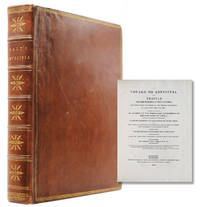
1814314823London: F.C. and J. Rivington 1814. First edition. With 28 engraved plates on 27 leaves 7 engraved maps and charts on 6 sheets including 4 folding and 1 hand-colored and 2 vignettes. xi 5 506 lxxv pp. 4to. Contemporary brown russia neatly rebacked. Fine copy. First edition. With 28 engraved plates on 27 leaves 7 engraved maps and charts on 6 sheets including 4 folding and 1 hand-colored and 2 vignettes. xi 5 506 lxxv pp. 4to. A fine copy of this important work by Salt on his two years journey to Abyssinia. "On 2 March 1809 Salt sailed on a mission from the British government to Abyssinia to carry presents to the king and report on the state of the country. Owing to factious unrest he was prevented from going to the king at Gondar and was obliged to deliver the presents instead to the ras of Tigré. While in Abyssinia he made many observations on the geography the customs of the people and the flora and fauna. He brought back many specimens including a previously unknown dik-dik . In 1812 he was elected one of the very few honorary members of the African Association in acknowledgement of information he had procured in its interest. In 1814 he published A Voyage to Abyssinia which was received with some acclaim" ODNB. Salt was subsequently appointed consul-general in Egypt and played an important role in fostering Egyptology financing the excavations of Belzonia Caviglia and d'Athanasi. Blackmer 1479; Czech African p. 141; Fumagalli 139; Gay 2683 F.C. and J. Rivington unknown books
18099205London: William Miller 1809. Hand-coloured aquatint engraving by J. Bluck after Henry Salt on wove paper. A lyrical South African view from the 'Roode Zand' Red Sand Pass inland from the Cape of Good Hope.<br/> <br/>Henry Salt artist traveller diplomat and collector of antiquities was born at Lichfield Staffordshire England 14 June 1780. He was destined to be a portrait-painter and on leaving school was taught drawing by Glover the watercolour-painter of Lichfield. In 1797 he went to London and became a pupil of Joseph Farington R.A. and in 1800 of John Hoppner R.A. The turning point in his career was 3 June 1802 when Salt left London for an eastern tour with George viscount Valentia afterwards Lord Mountnorris whom he accompanied as secretary and draughtsman. He visited the Cape India Sri Lanka and in 1805 Abyssinia returning to England on 26 Oct. 1806. He made many drawings some of which served to illustrate Lord Valentia's Voyages and Travels to India published in 1809. The present image is from a work titled Twenty-four Views in St. Helena the Cape India Ceylon the Red Sea Abyssinia and Egypt published by William Miller with hand-coloured aquatints by D. Havell and J. Bluck from Salt's own drawings. The originals of all these drawings were retained by Lord Valentia who also retained the ownership of the copper plates after Salt's death. The format and style of presentation of the plates is similar to Thomas and William Daniell's great work Oriental Scenery 1795-1808 and displays great artistry by both Salt and his engravers.<br/> <br/>Abbey Travel II 515 no.3. William Miller unknown books
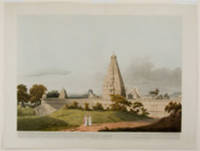
180923839London: William Miller 1809. Hand-coloured aquatint engraving by J. Bluck after Henry Salt on wove paper. Image size: 16 3/4 x 23 1/4 inches. A splendid aquatint portrait of the Great Pagoda of Thanjavur.<br/> <br/>Henry Salt artist traveller diplomat and collector of antiquities was born at Lichfield Staffordshire England 14 June 1780. He was destined to be a portrait-painter and on leaving school was taught drawing by Glover the watercolour-painter of Lichfield. In 1797 he went to London and became a pupil of Joseph Farington R.A. and in 1800 of John Hoppner R.A. The turning point in his career was 3 June 1802 when Salt left London for an eastern tour with George viscount Valentia afterwards Lord Mountnorris whom he accompanied as secretary and draughtsman. He visited the Cape India Sri Lanka and in 1805 Abyssinia returning to England on 26 Oct. 1806. He made many drawings some of which served to illustrate Lord Valentia's Voyages and Travels to India published in 1809. The present image is from a work titled Twenty-four Views in St. Helena the Cape India Ceylon the Red Sea Abyssinia and Egypt published by William Miller with hand-coloured aquatints by D. Havell and J. Bluck from Salt's own drawings. The originals of all these drawings were retained by Lord Valentia who also retained the ownership of the copper plates after Salt's death. The format and style of presentation of the plates is similar to Thomas and William Daniell's great work Oriental Scenery 1795-1808 and displays great artistry by both Salt and his engravers. Brihadishvara Temple at Thanjavur is an 11th century pyramidal temple in southern India.<br/> <br/>Abbey Travel II 515 no.3. William Miller unknown books
180934489London: William Miller 1809. Hand-colored aquatint by Daniel Havell. Sheet: 21 1/4 x 29 inches. Mild bubbling in places. This view of Cairo from a hilltop near the Citadel shows Old Cairo with its walls domed buildings and minarets. Across the Nile in the hazy distance are the pyramids of Giza. Heny Salt later returned to Cairo as consul-general for the British. Henry Salt artist traveller diplomat and collector of antiquities was born at Lichfield Staffordshire England 14 June 1780. He was destined to be a portrait-painter and on leaving school was taught drawing by Glover the watercolour-painter of Lichfield. In 1797 he went to London and became a pupil of Joseph Farington R.A. and in 1800 of John Hoppner R.A. The turning point in his career was 3 June 1802 when Salt left London for an eastern tour with George viscount Valentia afterwards Lord Mountnorris whom he accompanied as secretary and draughtsman. He visited the Cape India Sri Lanka and in 1805 Abyssinia returning to England on 26 Oct. 1806. He made many drawings some of which served to illustrate Lord Valentia's Voyages and Travels to India published in 1809. The present image is from a work titled Twenty-four Views in St. Helena the Cape India Ceylon the Red Sea Abyssinia and Egypt published by William Miller with hand-coloured aquatints by D. Havell and J. Bluck from Salt's own drawings. The originals of all these drawings were retained by Lord Valentia who also retained the ownership of the copper plates after Salt's death. The format and style of presentation of the plates is similar to Thomas and William Daniell's great work Oriental Scenery 1795-1808 and displays great artistry by both Salt and his engravers.<br/> <br/>Abbey 515. William Miller unknown books
180929143London: William Miller 1809. Hand-colored aquatint by D. Havell. Sheet size: 21 1/2 x 29 3/4 inches. In this large panoramic view Salt demonstrates the appropriateness of the sobriquet "City of a Thousand Minarets". In the foreground is the great Sultan Hussan Mosque one of the largest mosques in Cairo. As we look through the streets towards the distant Nile we see many neighborhood mosques and holy places. Henry Salt artist traveller diplomat and collector of antiquities was born at Lichfield Staffordshire England 14 June 1780. He was destined to be a portrait-painter and on leaving school was taught drawing by Glover the watercolour-painter of Lichfield. In 1797 he went to London and became a pupil of Joseph Farington R.A. and in 1800 of John Hoppner R.A. The turning point in his career was 3 June 1802 when Salt left London for an eastern tour with George viscount Valentia afterwards Lord Mountnorris whom he accompanied as secretary and draughtsman. He visited the Cape India Sri Lanka and in 1805 Abyssinia returning to England on 26 Oct. 1806. He made many drawings some of which served to illustrate Lord Valentia's Voyages and Travels to India published in 1809. The present image is from a work titled Twenty-four Views in St. Helena the Cape India Ceylon the Red Sea Abyssinia and Egypt published by William Miller with hand-coloured aquatints by D. Havell and J. Bluck from Salt's own drawings. The originals of all these drawings were retained by Lord Valentia who also retained the ownership of the copper plates after Salt's death. The format and style of presentation of the plates is similar to Thomas and William Daniell's great work Oriental Scenery 1795-1808 and displays great artistry by both Salt and his engravers. William Miller unknown books