157 résultats
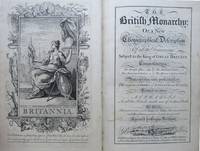
17483799Frontispiece of Britannia enthroned engraved Title list of Subscribers Contents Title of 1743 and 190 engraved plates many illustrated with head & tail pieces: Folding map of the King's Dominions in Europe Africa and America follows plate 7; A folding Table of Several Particulars. as plate 163. Tastefully rebound in eighteenth century style full lozenge blind ruled calf; five raised bands; ruled green morocco label. A handsome supple copy.; All shipments through USPS insured Priority Mail. George Bickham hardcover books
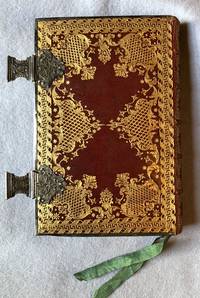
17562896Rome: Gioacchino & Giovanni Giuseppe Salvioni 1756. 8vo 208 x 133 mm. 24 407 1 pp. 2 parts the Office of the Dead separately titled. Printed in red and black. Engraved frontispiece and 12 full-page engravings by Arnold Van Weserhout and Jacob Frey after Joseph Passarus Giuseppe Passaro two engraved title vignettes 12 engraved tailpiece vignettes a few unsigned others by Frey after Passaro or by M. Schedi engraver 3 engraved capital initials numerous red-printed woodcut initials. Foxing occasionally severe short marginal tear to fol. Z7.Slightly later eighteenth-century Roman gold-tooled red goatskin covers with large dentelle border composed of a triple neo-classical roll-tooled outer frame enclosing six large ornaments each with a basketweave design of diagonally crossing gilt fillets framed in volutes and leafy sprigs a few tiny petal or star tools board edges protected with a probably later frame of silver or silver-plated metal discreetly nailed to the binding two elaborately chased silver fore-edge clasps and catches spine in six uniformly gold-tooled compartments gilt edges with gauffred border design pair of green ribbon page markers marbled endpapers; 20th-century black morocco felt-lined case. Provenance: with Gumuchian Catalogue XII/1930/225; Maurice Burrus bookplate purchased from Gumuchian in 1934 purchase notes at end. A striking rococo binding in fine condition on a luxuriously printed and illustrated Office of the Virgin from the official Vatican press.From the mid- to late eighteenth century the Salvioni press used one or more bookbinding workshops that produced finely gold-tooled bindings for their Vatican publications. Although often referred to as the "Salvioni bindery" this appellation is circumstantial: "the Salvioni firm was responsible for promoting the bindings but it is not known which workshop produced them" British Library Database of Bookbindings. Some of these "Vatican" bindings incorporated variously colored or mottled leather. This example with its basketweave cartouches relies purely on tooling for its effect. An example evidently from the same workshop on a book printed at Rome in 1791 by Salomini using analogous cartouches as corner-pieces as well as a similar "spiraling" border design and some of the same leafy spray and star tools is reproduced in Legature papali no. 264."Whereas the . more flamboyant bindings produced by the Salvioni Bindery rely frequently on polychrome enamel heightening these Vatican bindings strike a somewhat more sober note with their very fine dark-red morocco and rich gold-tooling of high quality" Martin Breslauer Catalogue 107/428.Gumuchian Catalogue de Reliures du XVe au XIXe siecle no. 225 plate 68. Cf. British Library Database of Bookbindings Shelfmark c27e18; For other "Salvioni" bindings see Miner / Walters Art Gallery The History of Bookbinding no. 523; Biblioteca Apostolica Vaticana Legature papali da Eugenio IV a Paolo VI no. 264 plate CXCIII. Gioacchino & Giovanni Giuseppe Salvioni hardcover books
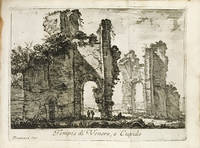
17501656031750. PIRANESI Giovanni Battista. Il Mercurio Errante delle Grandezze di Roma. Text by Giovanni Pietro Rossini the Elder. Two volumes in one. 10 192; 2 146 8 pp. Illustrated with 19 folding engraved plates by Piranesi Jean-Laurent Legeay and Philothée-François Duflos. 16mo. 160 x 86 mm bound in contemporary Italian vellum. Rome: A spese di Fausto Amidei 1750. First Edition of the Mercurio Errante guidebook to Rome to be illustrated with Piranesi's etchings; the seventh edition chronologically. This copy contains seven original Piranesi etchings of Roman vedute; they are considered to be "some of his earliest known works; they must have been executed between 1740 the year of his arrival in Rome and 1741 the date of the first edition of Barbiellini's publication Roma antica and Roma moderna" Exploring Rome: Piranesi and His Contemporaries p. 73. "They are of particular importance in plotting the development of Piranesi's graphic skills as they range from his first tentative efforts to some highly sophisticated compositions" Wilton-Ely. Piranesi's etchings were subsequently reissued in the Varie Vedute in 1745 and 1748 and following their appearance in the 1750 edition of Rossini's Mercurio Errante they reappear in the 1760 1771 and 1789 editions. "Scott has suggested that all these views were designed like modern-day postcards and were probably kept loose and then added to the volumes at the request of the buyer. No two editions of the work exhibited here have the same number of plates by the different artists" Exploring Rome idem. Rossini calls for 18 plates; the present volume contains 19. Overall a very appealing copy. Rossetti Rome G-1210. Borroni 8066/8. Schudt 294. Kissner Collection 992. Schlosser Magnino p. 601. Wilton-Ely 1994 p. 90 et seq. hardcover books
1794277980Philadelphia: John Fenno 1794. Second. paperback. very good-. Published for the House of Representatives. 4 folding tables. 65pp. 12pp. appendix. Folio original blue wrappers margins uncut backstrip of spine lacking front and back wrapper with some light dampstaining internally very good. Philadelphia: Printed by John Fenno 1794. Very Scarce.<br/><br/> Enlarged second edition printed the same year as the first edition. Folding tables show the exact expenditures and receipts of the United States government for the year 1793. The rest of the text are figures of receipts from custom duties duties on alcohol and other revenue sources and payments by the Federal government are delineated item by item and dated. Payments to individuals have each person's name listed. The appendix is titled: Appendix containing statements shewing the operation of the funds for reducing the domestic debt to the close of the year 1793. Also statements of the foreign and domestic debts of the United States and of the expenditure of the proceeds of foreign loans to the same period. In 1793 the revenue for the Federal budget was 4.8 million dollars and the public debt was 80.4 million dollars. John Fenno the printer of this work printed many works for the administration of George Washington and the Congress. He was an ardent Federalist and a protege of Secretary of the Treasury Alexander Hamilton. Fenno also was the publisher of the Federalist newspaper Gazette of the United States. Evans 27931<br/><br/> John Fenno unknown books
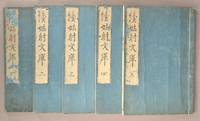
179890506a<p>ChÅ Gessho 張月樵 and Kazaore YÅ«jo 風折有丈 artists.<b> Zoku Koya Bunko 続姑射文庫 5 vols.</b> Nagoya Kansei 寛政 10 1798. 5 volumes 27 X 18cm string-bound Japanese-style fukuro-toji. Original format with original covers and title labels housed in a modern striped chitsu with clasps 27.3 x 19cm. Original monochrome woodblock prints many double page with Japanese text. Edited by BÅkŠ暮雨巷. A sequel to Koya Bunko 姑射文庫 done in 1768.</p><p>The "Sequel to the Koya Library" done by principal artist ChÅ Gessho 張月樵 1765-1832 and Kazaore YÅ«jo 風折有丈 is a remarkable rarity that captures the vibrant world of art and poetry centered on haikai and haiga in Nagoya. It is justly celebrated by critics from Brown to Hillier and was featured in the Library of Congress' major Japanese art exhibition "The Floating World of Ukiyo-e: Shadows Dreams and Substance." With hundreds of full-page black and white woodblock images it is probably the most extensive original example of the Haiga aesthetic in existence. Vol 1 has 52 cho Vol 2 has 50 cho Vol 3 has 53 cho Vol 4 has 53 cho and Vol 5 has 56 cho including colophon. Identical to Volumes held in ARC Koten Seki portal database online Ritsumeikan University ç«‹å‘½é¤¨å¤§å¦ with the exception of an added modern page to their introduction in Vol 1.</p><p>In very good condition throughout worn original covers and title labels worming on rear wrapper of vol 5 very good impressions. Mitchell 564</p><p><br /></p> books
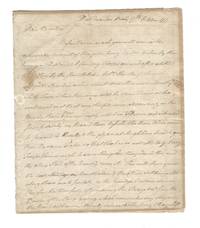
1777BB002<p>CLINTON George First Governor of New York State 1777-1795 1801-1804; also 4th Vice-President of the United States 1805-1812 under Thomas Jefferson and James Madison.<br /></p><p>"Kingston laid in ashes by the Enemy" . <br /></p><p>8vo 7-3/4 x 6-1/2 inches 1-1/2 pages on laid paper with integral address leaf remnants of wax seal some fading to text and signature scattered minor<br /></p><p>It should be noted that Clinton was sworn in as New York's first governor on 9th July 1777 shortly after Kingston was established as its first capitol 20th April 1777. Thus the burning of Kingston and change of capitol to eventually Albany was a consequence of the War for Independence. <br /></p><p>Remarkable handwritten manuscript explaining that the British troops arrived at Kingston before his own re-enforcements whereupon 1000 men burned the town and immediately returned to their ships warning that a similar fate awaits the settlements along the shore and that forage and property should be moved from the path of the enemy reminding him to take the sleigh from the barn as it is all the personal property that remains to him after the destruction in Kingston noting that the enemy is advancing up the river to Saugerties with Tryon commanding on the east side and Vaughn on the west.<br /></p><p>Transcript</p><p><i>Head Quarters Hurley 17th October 1777</i></p><p><i>Dear Brother</i></p><p><i>"Before this can reach you you will receive the – disagreeable account of Kingston being laid in ashes by the Enemy. They landed before my troops arrived after a little opposition by the few militia Cols Pawling & Snyder could collect and marched about 1000 Men immediately up to Town - where they were told by some Tories who continued in it that my People were advancing on the Hurley Road & they immediately set it in Flames and extracted precipitately on Board their Vessels tho their Orders were to proceed to Hurley & the adjacent Neighborhoods to give them the same Fate so that tho I was not able to get my Troops Time enough to save Kingston they saved this and the other Parts of the Country near it. This will show you the Fate New Windsor & the other settlements along shore are to partake on the Enemy's Return down. Therefore the Necessity of removing the Forage &c from the Banks of the River among which remember my Slay in the Barn as it is now the only moveable Property I have left the Best being removed to Kingston shared its Fate tho indeed a great share of Property has been saved out of Town. The enemy sailed up the River this Morning as high as Saghertyes burning along Shore as they go. When they go a little higher I will follow them. They have Parties on both Sides of the River. Tryon commands those on the East & Vaughan on the West Side of the River.</i></p><p><i>Yours Sincerely</i></p><p><i>Geo Clinton</i></p><p>On Friday evening 16 October 1777 a British fleet commandeered by James Wallace and John Vaughn the latter on board the 'Friendship' which had anchored near Easopus Island the day before came into the mouth of Rondout Creek and engaged the gallery "Lady Washington". Shortly after noon the British landed on Rondout Creek and the Cove above Columbus Point. Vaughn personally led the march capturing and forcing a negro to lead them into town without meeting resistance. The troops went through the streets in parties led by Tories setting the whole place on fire in response to the occasional resistance lodged by residents from within their houses. There was looting and vandalism. Meanwhile part of the fleet went a bit up the River and creek to destroy landings and sloops. By the time George Clinton arrived into Kingston the whole town was ablaze and the British party had set out to return to their ships.</p><p>In a letter on 18 October penned at Little Britain NY in response to this letter his brother B. Genl. James Clinton writes:</p><p><i>D'r Brother</i></p><p><i>Yours of yesterday's Date I have just received. I am sorry for the Loss of Kingston &c. </i><i>Five of the Enemy's Shipping Returned Down the River last night without Doing any Damage Except fireing Some Cannon and small arms at our men and wounding one of ours on Board of a Ferry Boat…"</i></p><p>The war became personal for the governor specially after what had happened to Kingston. In a letter to William Smith @ 31 October 1777 his sentiments and commitment are laid bare:</p><p><i>"The Cruelties as well Cowardice with which this Warr has been conducted ag't us must I think be sufficient at this late Hour to convince every Man that all connection with Great Britain is at an End…"</i></p><p>Reference: <b><i>Public Paper of George Clinton</i></b> First Governor of New York War of the Revolution Series. New York: Wynkoop Hallenbeck Crawford Co. 1900. Volume II pp. 457-459. Our letter of 17 October 1777 appears to be unknown to the editors of the Clinton papers although they do list and transcribe the 18th October response by his brother James. Consequently our letter appears to be the only firsthand account by the governor of New York on the actual burning of Kingston an event historically reenacted locally each year within Ulster County.</p> Autograph Letter Signed, “Geo Clintonâ€, written to his brother Gen. James Clinton in New Windsor (“Dear Brotherâ€), from books
178063128Head Quarters Bergen County NJ 1780. Folio one page approximately 125 words in part: "I perceive . that you had collected about two hundred Cattle more and that a further number might be obtained . I cannot of right command the services of the militia . let the commanding officers know how distressed the Army has been and is likely to be for provisions and that it will be rendering splendid service to us and distressing the enemy to remove the Cattle from those parts of the Coast which furnish the New York Markets." Very good. Browned one small piece detached one word of text easily repaired. After Washington's victory at Monmouth June 1778 during which battle Forman had served as an advisor to Charles Lee the war settled into stalemate with Washington's army in New Jersey and the British forces content to remain in New York both sides keeping an eye on each other while trying to provide for their soldiers the American forces suffering deprivation similar to that of Valley Forge. Meanwhile on the day this letter was written word reached Washington of the complete rout of Horatio Gates and his troops at Camden South Carolina opening Virginia to British invasion from the South. Bolstered by American victories at Kings Mountain Oct. 1780 and Cowpens Jan. 1781 and the depletion of Cornwallis's army at its victory over Nathaniel Green at Guilford Court House Washington in conjunction with his French allies moved south to envelop Yorktown earning the British surrender in October 1781 effectively ending the war. General David Forman 1745-1797 born and raised in Monmouth County New Jersey was appointed colonel of a New Jersey regiment that reinforced Washington at New York in June 1776. After suppressing a loyalist uprising later that year during which time he earned the nickname "Devil David" he was chosen to lead a regiment in the Continental army and in 1777 was commissioned brigadier general to lead the New Jersey militia commanding that force in the battle of Germantown Oct. 1777. Disagreements with the New Jersey legislature led to his resignation from that command and he spent the rest of the war running listening posts especially along the coast of New Jersey providing Washington with intelligence on the movements of the British fleet and army a service he was providing at the time of this letter. see DAB Tench Tilghman 1744-1786 born and raised in Talbot County Maryland graduated from the precursor to the University of Pennsylvania in 1761 taking up a mercantile business until the outbreak of the revolution. After serving briefly as a captain in the army he joined Washington as a volunteer and served continuously as an aide-de-camp to the general for the balance of the war. "The amount of secretarial work in addition to military duties that he performed for Washington was prodigious" DAB and he was granted a regular commission of lieutenant-colonel in 1781. After the victory at Yorktown Tilghman was chosen by Washington to carry the announcement of the surrender of Cornwallis to the Continental Congress. Provenance: When recently purchased the letter was in an old frame and removal revealed an autograph note inside the backing included here as follows: "This letter was bought by me about 1860 of Miss Brown residing at 92 Columbus Street Albany New York. She was a sister of an old minister of St. Peters Church. This Miss Brown was a client of Orlando Meads and myself and found this letter in a barrel in the garret of the home occupied by her sister at Manalapan New Jersey formerly owned by General David Forman. signed Dexter Reynolds / Albany Sept. 7 1902. Presented to my son Marcus T. Reynolds." A newly discovered Washington letter shedding light on the general's relationship to state militias and his concerns for providing for his troops while disrupting the supply lines of the British. Not in Fitzgerald or the Founders Online from the National Archives which lists 57 other Washington letters to Forman 1777-1782 showing a gap from 24 July 1780 to 17 May 1781 and two others post-war. 9836. <br/><br/> unknown books