Gogue, A [Antoine]Biblio.com
39 résultats
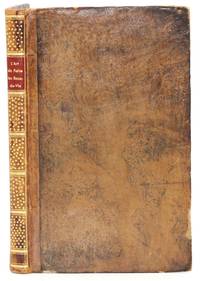
1865026426Paris: Librairie L. Hachette 1865. Third Edition Revised . Full Morocco. Fine. 7 1/4" Tall. 45 Wood Engravings. Title Advertissment 3 Pp. Division De L'ouvrage 536 Pp Including Indices At End. Newly Rebound To Style In Full Brown Morocco Black Spine Label Tooled And Gilt Spine And Covers Marbled Endpapers. Pages Edges With Original Red Color And Still Showing Original Polished Sheen. Third Edition Revised And Quite Scarce No Institutional Holding Located In Worldcat. Short Table Of Equivalent Measures French And English In Ancient Ink On Page Opposite Title And Similar Small Name "Sophie May" At Top Of Title Page No Other Names Or Marks Contents Clean A Little Aging To Pages. <br/> <br/> Librairie L. Hachette unknown
1889234982Vevey: Loertscher & Fils Jacot Guillarmod; F. Payot a Lausanne 1889. 24 colored folding accordion plates each plate is 250 x 150 mm with legend below. Dessins de Ernest John Alexis Vullermin d'après les costumes de Paul Aimé Vallouy. 1 vols. 12mo. Pictorial wrappers. Prix: Fr.3. and also with stamp 50 cts. Some staining else Very Good. 24 colored folding accordion plates each plate is 250 x 150 mm with legend below. Dessins de Ernest John Alexis Vullermin d'après les costumes de Paul Aimé Vallouy. 1 vols. 12mo. Souvenir of wine harvesting in the Swiss town of Vevey. Loertscher & Fils, Jacot Guillarmod; F. Payot a Lausanne unknown
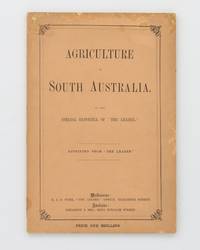
1874124156Melbourne: E. & D. Syme 'The Leader' Office and Adelaide Frearson & Bro 1874. First Edition. Paperback. Very Good. Melbourne E. & D. Syme 'The Leader' Office and Adelaide Frearson & Bro. 1874. Octavo iv second and last blank 59 pages. Original flush-cut printed stiffened wrappers with slight loss to silverfish; light tidemark to the top margin of the front cover and the top inside corner tip of the first ten leaves; front joint split a little top and bottom with minor loss to the ends of the spine; minimal signs of use and age; a very good copy internally excellent. 'The following Papers are reprinted from "The Farm" section of the Melbourne "Leader". The writer left Melbourne on 1st September 1874 and returned on the 30th November. The early Papers were written during September in which month the country round Adelaide is seen at its very best. The areas of Gawler Kapunda Kooringa Hill River Estate Clare and surroundings were visited during October and the return journey between Adelaide and Mount Gambier including Strathalbyn Willunga Goolwa Hindmarsh Island Narracoorte and the Drainage Country took place during November' preface. The critical comments on contemporary vine cultivation and wine production make interesting reading. Visits were made to properties and individuals well-known to this day: Davenport Boothby Crompton Auld Mrs Penfold Thomas Elder and Birksgate Thomas Hardie sic and Bankside and 'Clare - Seven Hills and St. Aloysius' College' with numerous 'Notable Wine Growers' in the region mentioned. Many areas significant in the modern vine and wine industry are conspicuously absent in this survey at least in this regard. This item is rare in our experience. Ferguson 9210. E. & D. Syme, 'The Leader' Office, and Adelaide, Frearson & Bro paperback
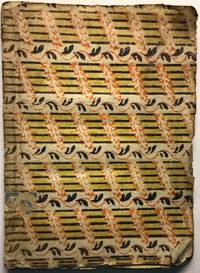
1822101885<p>Segunda Ediçio. Porto na Typografia a' Praça de S. Thereza N. 13 1822. 4to. 136 pp. Uncut wide-margined copy in a lovely contemporary decorated paper binding. Some browning and staining and edges a bit dustsoiled and a bit damaged.<br /><br />Quite scarce edition of this in itself quite scarce satire on wine making in Portugal in the form of the minutes for the 1st-15th sessions of this assembly. Another first edition was published the same year in Lisbon Typografia Maigrense.<br /><br />OCLC 1 copy BL Porto; 1 copy Bayerische Staats bibl. Lisbon; In USA: Harvard Kress collection Lisbon Newberry Lisbon and Univ. California Davis Shields Library but cannot locate and one of three in USA incomplete</p>
180510430Paris: Chez Delalain 1805. Second-hand hardcover. <p>Parmentier. L'Art de Faire les Eaux-de-Vie d'après la Doctrine de Chaptal. suivi De L'Art de Faire les Vinaigres Simples et Composés. Chez Delalain: Paris 1805. 8vo 210x130mm tree calf bds rebacked gilt dec spine a.e marbled 4214pp 5 plates</p> <p><br /> PARMENTIER A.A Antoine-Augustin 1737-1813<br /> <br /> L'Art de Faire les Eaux-de-Vie d'après la Doctrine de Chaptal: ou l'ou trouve les procédés de Rozier pour économiser la dépense de leur distillation et augmenter la spirituosité des Eaux-de-vie de vin de lie de marc de cidre de grains etc; suivi De L'Art de Faire les Vinaigres Simples et Composés avec la méthode en usage à Orléans pour leur fabrication; les recettes des Vinaigres aromatiques et les procédés par lesquels on obtient le Vinaigre de biere de cidre de lait de malt etc. <br /> <br /> Paris : Chez Delalain fils libraire quai des Augustins n°. 38 1805. Second Edition first published 1801.<br /> <br /> Octavo 210x130mm professionally and sympathetically rebacked quarter bound calf gilt decorated spine red morocco gilt lettered spine label original tree calf boards all edges marbled marbled end-papers original orange silk marker 4214pp: π²A-Nâ¸Oâ´-O4; 5 plates two folding engraved by Hulk; letterpress folding table of tariffs facing p.145. Owner name to half-title in blue pencil; gutter head and tail A-E lightly wormed not affecting the text; occasional light foxing; pp.196 mistrimmed; edges lightly rubbed and worn.<br /> <br /> <br /> An important work on the processes of distillation and the production of vinegars from many types of fruits and grains and their alcoholic beverages. The five plates show distilling equipment in some detail. The letterpress table shows the tariffs applied to eau-de-vie in Holland.<br /> <br /> <br /> Scarce in any edition. A lovely copy.<br /> <br /> § OCLC records only 5 holdings in Europe and North America; this edition apparently not in the BnF.<br /> § Bitting 357; cf Vicairie 657 Oberlé Fritsch 410 Cagle 371 first edition; cf Simon BV 155 1819 edition.</p> Chez Delalain unknown
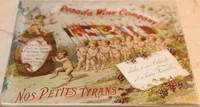
1890007068Paris: Lemercier 1890. First Edition. Stab binding. String ties. Very Good. N.d. circa 1890. Oblong 13 by 17 cm. Unpaginated 16 leaves of card stock each featuring a chromolithographed color plate of children playing sports and games including hoops bouncing a ball a raquet game called "Le Volant" trotting jump rope swings or alternatively imitating adults such as pretending to perform a baptism or a wedding play-acting as a doctor or merchant and as a photographer back when photographic equipment was far more daunting than that of the 20th century we are more familiar with or simulation a carriage ride in the park. The promotion of the company's product in these illustrations was occasional and subtle with a sign in the background or a bottle of wine here or there. The coloring is very rich and bright. Cover is illustrated with cherubs carrying the flags of ten European nations and marching in a procession. At the head of the parade is a cherub satyr playing a flute while to the side is a cherub atop a barrel holding a scepter and laurel of grape leaves. Posada was an Iberian wine house based in Paris with branches in Lille Nice and Trouville. Scarce with no institutional holdings evidenced on OCLC First Search. Condition: Leaves or plates loose at bottom with the binding holding almost entirely by the top ribbon hole. Scattered light soiling never disconcerting. Plates as already indicated are bright and vivid. Lemercier unknown
186348186Paris Mallet-Bachelier 1863 a. 1864. 4to. No wrappers. In: "Comptes Rendus Hebdomadaires des Séances de L'Academie des Sciences" Tome 57 No 23 a. Tome 58 No 3. Pp. 925- 964 a. pp. 141- 180. 2 entire issues offered. Pasteur's paper: pp. 936-942 a. 142-150 and 1 engraved plate Maladies des Vins - leurs Fermets. <br/><br/><em>First appearance of these famous papers initiating Pasteur's renowned studies on wine and its "diseases" being his most importent papers on wine."In December 1863 Pasteur published the first of the papers that culminated in his Études sur le vin 1866; 2nd ed. 1873. In that first paper dealing with the role of atmospheric oxygen in vinification he sought to establish that the aging of wine resulted from the slow penetration of atmospheric oxygen through the porous wook casks into which new wine was decanted. By virtue of this slow oxidation he claimed new wine grows less harsh and acid to the taste as it becomes clearer and lighter from the to the taste as it becomes clearer and lighter from the precipation of dark coloring matters. In his second paper January 1864 Pasteur examined the "alterations" or "diseases of wine especially wine from the Jura his native department. Reviewing the familiar disease of "turned" "acid" "ropy" or "oily " wine he associated each with a microscopic organism. He summarized the results of his first two papers by nothing that "wine which is proudced by a cellular vegetation acting as a ferment namely yeast is altered only by the influence of other vegetations of the same order; and once removed from the effects of their parasitism it is made or matured principally by the action of atmospheric oxygen penetrating slowly through the staves of the casks."DSB. </em> unknown
18609034New York: Lith. of W. Faust 105 Nassau St 1860. Broadside wine list 25.5 x 15.5 cm. 1 page. Porcelain card decorated in chromolithograph with text in blue and red. A very early wine list from an important New York hotel and dining establishment. The hotel was at the corner of Broadway and Eleventh Street across from Grace Church and Rectory. Both the hotel and the church were designed by the architect James Renwick Jr. Named for its original owner Denis Julien the St. Denis Hotel opened in 1853 just in time for the Crystal Palace Exhibition. The building was leased to William Taylor in 1875 who incorporated the Taylor Saloon into the facility. The list features Clarets from Finke Merman of Bordeaux mostly from 1847 and 1848. And French whites including 1847 Latour Blanche and 1847 d'Yquem. Champagne Sherries and Madeiras are also included. A solid piece of printing from a firm more known for fruit labels. Verso contains an unattributed primitive pencil drawing of a horse. Some darkening to the top edge of the recto. Lith. of W. Faust, 105 Nassau St unknown
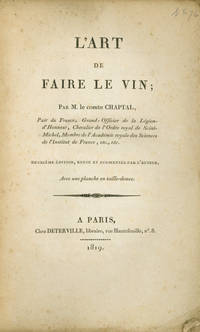
1819259502Paris: Deterville 1819. Deuxième édition" i.e. third edition. Folding plate by J.E. Thierry at rear showing distillation process. xvi 381 1 pp. 8vo. Unopened in original publisher's rose wrappers with yellow paper spine and paper spine label with manuscript title. Some wear and creasing to wrappers and spine soiling and light foxing to front and back matter. Deuxième édition" i.e. third edition. Folding plate by J.E. Thierry at rear showing distillation process. xvi 381 1 pp. 8vo. The third edition of this French manual on wine production first published in 1801 followed by a second edition in 1807. Here in its original rose paper wrappers uncut and unopened. Chaptal 1756-1832 was an important figure in the application of chemistry to modern industry. He invented the process of chaptalization by which sugar is added to unfermented grape must in order to increase the alcohol content after fermentation. Cagle 131a first ed.; Simon p. 18 1807 edition; Vicaire p. 164 noting this is in fact the third edition Deterville unknown
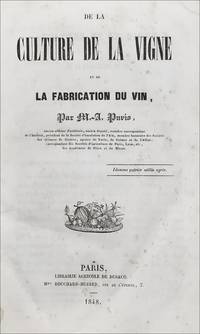
184827<p>Rare collection of treatises on wine making and vine cultivation</p><p>Puvis Marc-Antoine. <em>De la culture de la vigne et de la fabrication du vin / par M.A. Puvis</em>. Paris : Librairie agricole Dusacq Mme Bouchard-Huzard 1848.</p><p>bound with: Puvis Marc-Antoine. <em>Des différens moyens d'amender le sol</em>. Paris : Madame Huzard 1837</p><p>bound with: Thackeray Thomas James<strong>. </strong> <em>Observations sur le fumier de basse-cour les engrais artificiels la construction des granges et le labourage profond<strong>. </strong></em>Paris : A LA LIBRAIRIE AGRICOLE DE Ve BOUCHARD-HUZARD 7 RUE DE L'ÉPRON-ST-ANDRÉ. 1847.</p><p>Extremely rare collection of treatises on wine making and vine cultivation agricultural technique on different ways of fertilizing the soil and on different kinds of natural and artificial fertilizers.</p><p><em>De la culture de la vigne et de la fabrication du vin</em> is the most important opera written by the renowned agronomist and member of parliament Marc-Antoine Puvis 1776-1851 member of the Ain Agricultural Society discussing the importance of wine making and vine cultivation in France the influence of climate and soil different vineyards Côte-d'Or Hermitage influence of the grapes quality on the quality of the wines search for new varieties of vines by the seedlings plantation of the vine size and disbudding proving and uprooting fertilizers and amendments synonymy and variety of grapes.</p><p>The second part pp. 167 to 308 is entirely dedicated to oenology harvesting de-stemming and crushing hydrometer oenometer production of red wines and white wines conservation and clarification of the wines conditioning and improvement bouquet and flavor; comparative analysis of Burgundy wines etc.</p><p>Marc-Antoine Puvis is also the author of the second treatise dealing with different kind of techniques of fertilizing the soil. Among the different techniques an material used to amend the soil he describes liming or treating the soil with lime to reduce acidity and improve fertility or oxygen levels. marling using a friable earthy deposit consisting of clay and calcium carbonate used especially as a fertilizer for soils deficient in lime faluner to amend poor limestone soil with falun a sedimentary rock made up of shells debris the use of ash peat ash kelp sea fertilizer land mix burnt clay or burning the soil</p><p>The third treatise written by Thomas James Thackeray renowned British playwright army officer and agriculturist can be considered a manual on benefits and way of use of different fertilizers as: cattle droppings horse urine cow dung guano peat bran marl salpetre and nitrate of potash sulphate of ammonia etc.</p><p>All the treatise included in the present collection are very rare. In detail:</p><p>Vol 1: Only one copy in Italian Libraries. WoldCat records only 6 other copies; 5 in France and 1 in UK. the copy in Cornell University belongs to a different editio with no date or printing place</p><p>Vol 2: 4 copies worldwide 2 each in France and Switzerland</p><p>Vol 3: 6 copies worldwide 4 in France 1 each in UK and Canada.</p><p>Bibliography: Bourquelot VI. 94. Unkwnown to Vicaire Bitting. Oberlé</p> Bouchard-Huzard
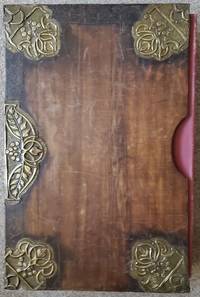
188074379Marseille: N.p. ca. 1880. A large gathering of plant specimens from the wine growing regions of southwest France. Each specimen is mounted via paper holders to bifoliums measuring 12 1/2 x 20 inches and each specimen within a genus folder containing differing amounts of specimens. Each specimen is named in French on the front of the bifolium and and in much more detail in a small square on the bottom right of the page bearing the specimen .E.g.: Scrofularinees for Scrophulariaceae; In this folder are 3 specimens of species of this genus—— Linaria Cymbalaria; Linaria arvensis; scrofularinee aqua. All data is in French and in manuscript and gives the French translated from the Latin name of the plant the flowering season and the type of habitat and flower color if applicable. There are 15 genus folder bearing 76 actual species specimens. The specimens are on the main very large. All housed in a custom wooden slipcase with extensive brass fittings. Box measures 24 1/2 x 15 1/2 x 6 inches. No specimens broken or missing. Stock paper and chemise by Moullot Fils Ainé Marseilles. A wonderful assemblage.South West France or in French Sud-Ouest is a wine region in France covering several wine-producing areas situated respectively inland from and south of the wine region of Bordeaux. These areas which have a total of 16000 hectares 40000 acres of vineyards consist of several discontinuous wine "islands" throughout the Aquitaine region where Bordeaux region itself is situated and more or less to the west of the Midi-Pyrénées region. Thus South West France covers both the upstream areas around the rivers Dordogne and Garonne which also flow through Bordeaux where they combine to form the Gironde estuary and their tributaries as well as the wine-producing areas of Gascony including Bearn and the Northern Basque Country. However only areas closer to the Atlantic than to the Mediterranean are included in the region with the city of Toulouse being situated roughly halfway between the South West wine region and the Languedoc-Roussillon wine region on the Mediterranean. The brandy-producing region Armagnac is situated within Gascony and the wine region of South West France and some of its grapes are used to make Vin de Pays under the designation Vin de Pays de Côtes de Gascogne or mixed with Armagnac to produce the Mistelle Floc de Gascogne.South West France is a rather heterogeneous region in terms of its wines and how they are marketed. It is rare to see wines being sold as Vins du Sud-Ouest. Rather the smaller areas and individual appellations market their wines under their own smaller umbrella in contrast with common practice in e.g. the Bordeaux region. N.p. unknown
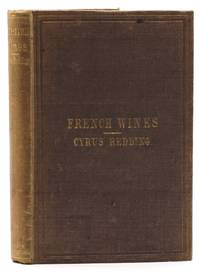
18609560London: Houlston and Wright 1860. Second-hand hardcover. <p>Redding Cyrus. French Wines & Vineyards</p> <p><br /> REDDING Cyrus 1785-1870<br /> <br /> French Wines and Vineyards; and the way to find them.<br /> <br /> London : Houlston and Wright MDCCCLX 1860. First Edition. Printed by H Tuck Aldersgate-Street London.<br /> <br /> Octavo 195x130mm publisher's original claret brown ribbon cloth boards blind ruled border title and spine in gilt pale yellow endpapers xv1240pp : A⸠B-Qâ¸. Board edges and spine lightly sunned corners gently bruised; owner initials to title-page in ink; a few marginal pencil and ink markings not affecting the text; pps 209-232 unopened; bottom edge pps 129-136 mistrimmed not affecting the text; a few folded corners.<br /> <br /> <br /> Redding was a British journalist and writer. Whilst working in Paris he broke the news of Napoleon's defeat at Waterloo. He worked tirelessly for a number of newspapers and magazines including the Monthly and the Metropolitan. His most influential work was his History and Description of Modern Wines 1833 with later editions in 1836 1851 and 1860; the text was based on careful personal observation and gleanings from many sources including Jullien and Chaptal.<br /> <br /> Here Redding provides a more detailed examination solely of the wine trade in France due to the importance and size of the trade with Great Britain which had been recently encouraged by a liberalisation of trade laws and the taxation applied to French wines.  In addition to the expected description of the major producing areas and celebrated vineyards there is a detailed discussion of wine making practices viticulture soils the technical analysis of wine and distillation; comparative measurements taxation and consumer trends.  The major part of the work is devoted to the wines of the Gironde and the greater Bordeaux area. There are also sizeable chapters on Burgundy Champagne and the Loire. There is also a significant amount of statistical information about French wine production alcohol levels pricing and taxation together with a very useful Alphabetical Table of the important French vineyards and their departments as of 1860.<br /> <br /> <br /> Scarce. An excellent copy and a cornerstone of any serious collection on the wines of France. Significant as a detailed record of French wine production and trade before the devastation of phylloxera.<br /> <br /> <br /> § Gabler G35830; Simon BV p.109; Simon BG p.121; Noling p.342; Bitting 391.</p> Houlston and Wright unknown
1812AQ30893St. Albans: Shaw Printer 1812. 8pp. Two bilfolia disbound. Priced in manuscript. Together with: Inventory of the Effects of Mr. Charles Williams of St. Albans not included in the printed catalogue of sale. 10th December 1812. Manuscript on paper. Single bifolium An apparently unrecorded auction catalogue annotated by the auctioneer with the prices achieved of the property of a deceased wine merchant including his 'stock in trade' lotted by bin of sherry port rum gin and 'coniac brandy'. The sale realised a total of £268. 4s. 5d. and included 51 lots of his wine stock along with a sequence of empoty casks. The manuscript addendum written on the day after the public auction adds several household as well as '21 Bottles of Currant Wine in 2 Tea Canisters'. Interestingly St. Albans possessed a novel wine licensing system established under the terms of the 1570 wine charter a model not repeated elsewhere. The borough corporation had the power to grant two licences to local vintners in return for an annual endowment of £20 remarkably to be provided to the master of St. Albans grammar school for the maintenance of the institution. We have been unable to trace Charles Williams nor locate any record of his business. However it does not seem unreasonable to assume that he held one of these much sought after licenses; certainly the auction catalogue reveals an extensive stock surely necessitated by the possession of a trade monopoly. . 8vo. Shaw, Printer unknown
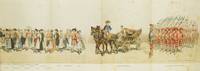
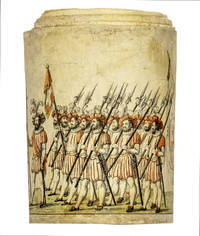
1833171428<p>1833. VEVEY. Fête des Vignerons 1833. Continuous panorama scroll containing 30 consecutive lithographs numbered 1-30 from the 1833 Festival of the Vignerons at Vevey hand-coloured at the time of publication backed with linen and conjoined to form a continuous scroll of 14.4 meters long. Plate size: oblong folio 170 x 470 mm. in a new cloth folding box. Lausanne: Lithographie de Spengler & Cie 1833. An extremely rare complete copy in contemporary hand-colouring of this remarkable series of plates in scroll format depicting the 1833 Festival of the Vingerons at Vevey Switzerland -- since 1791 this ancient festival has been celebrated five times per century. The scroll shows the entire procession in panorama format; the procession moved in three groups: Herds and Flocks plates 1-8 the Harvest plates 9-18 and Winemakers plates 19-30. The festival celebrates the vineyards and wine production in the Vevey area. The artist of the work was Christian Gottlieb Steinlen 1779-1847 a resident of Vevey who acted as the official artist for the 1833 Festival see Thieme-Becker. Sources for the Festival of the Winegrowers are unusually diverse: besides Greco-Roman gods such as Bacchus Plates 20 & 22 there were representations of Judeo-Christian myths such as the story of Noah first winegrower in the Bible -- see Plate 27. OCLC records only the copy at Getty Center in the U.S. Vicaire 270. Brunet I 616. Lipperheide 2870. Ruggieri 1142. Vinet 787. Brun Schweizerisches Künstler-Lexikon IV p. 415. Thieme-Becker XXXI pp. 574-5.</p> hardcover