(Horse, Candles, Coffee, Tea, & Duties)Biblio.com

2 résultats
178420089London: Printed for J. Walker 1784. 92 pp. 8vo. Stitched as issued. Stitching lacking loosening gatherings some light spotting or soiling of front and back leaves and general edgewear else a very good copy. A contemporary owner has annotated and underlined several sections in the Tea Act. 92 pp. 8vo. These acts passed that years were seen by the author as being the most pertinent and so included in this work the rest of the acts of Parliament were to be released shortly thereafter in a second part.<br /> <br /> The acts abstracted were the 1 Tea and Window repealing the several Duties and for granting other duties in lieu and duties on coffee and cocoa nuts Act 2 The Game Act hunting license 3 The Horse Act granting duties on riding and carriage horses 4 The Postage Act increasing postage rates 5 The Pawn Broker's Act trying to reduce the handling of stolen goods 6 The Soap and Starch Act requiring the licensing of makers of starch and instilling new laws on soapmakers 7 The Cotton and Linen Act placing duties 8 The Hatter's Act requiring licenses laying additional duties on imported hats 9 The Excise Goods Act laying duties upon licences to be taken out by the makers and delers in exciseable commodities 10 The Candle Act cancelling the duty on wax candles made in Britain 11 The Distillery Act trying to discourage home distillation by discontinuing the duties uon low wines and spirits for home consumption. 12 The Hackney Coach Act increasing the charge for Hackey license 13 The Smuggling Act trying to prevent 14 Brick and Tile Act placing duties on brick and tile made in Great Britain and additional duties on those imported 15 Wax Candle Act placing additional duties on all candles except wax and spermaceti candles. Printed for J. Walker unknown
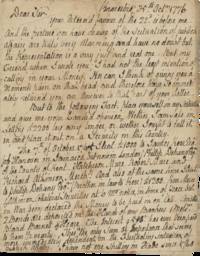
1776List3149Knaresborough England 1776. Single three page letter measuring 6 ¼ x 7 ¾ inches. Normal wear; Near Fine. A letter from Nathaniel Sharpe in Knaresborough to Edmund Green a merchant in London addressed to Green at the Jamaica Coffee House. This café the first of its kind in London was established in the mid-17th century; in 17th and 18th century Britain coffee houses were popular meeting places particularly for conducting business. Sharpe writes to Green:<br /> <br /> “Your Esteem’d favour of the 22d is before me and the picture you have drawn of the situation of publick affairs are truly very alarming and have no doubt but the Representation is a very just and real one. . But to the following Fact place yourself in my situation and give me your Candid opinion Wether I am safe in letting £2200 lay any longer or whether I ought to call it in and place it out on a Security in this Country.â€<br /> <br /> He describes his investments and states that:<br /> <br /> “I have not one shilling in Trade since 1760 and in Decemr. 1762 Retir’d to this place and found myself in possession of a Happiness that I could ill brook to part with. And which I would wish to preserve. Should this sum be in no danger I can live as usual.â€<br /> <br /> The American Revolutionary War had a significant impact on the British economy; at the time Sharpe was writing although the conflict had been ongoing for some time the war itself was in its early days and uncertainty was high.<br /> <br /> Other than asking for financial advice Sharpe tells Green that Green’s “Brother Tommy had . taken a Cup of Liquor rather too freely and had been drawn into Cards†alarming their mother who had requested that Sharpe inform Green about the event; asks Green to visit her; and sends his good wishes to a mutual friend. unknown