WW - Klimt - Strobl, AliceBiblio.com
73 résultats
196420499AB1964. Graz Akademische Druck- und Verlagsanstalt 1964. 60 : 44 cm. With 25 reproductions after drawings by Gustav Klimt partly in colour loose as issued. Original cloth portfolio. Wonderful reproductions of 25 of the most famous drawings by Gustav Klimt. All drawings under passepartout and loose in original portfolio. A masterpiece of reproduction art. The portfolio of highlights his drawings. The scope and representative character of the collection offers works from all creative periods and studies on all of the artist's main works the numerous portraits of women from Viennese society and his major life themes such as love eros and Death as well as his erotic drawings with which he revolutionized the representation of the female naked body and paved the way for the expressionists Egon Schiele and Oskar Kokoschka. hardcover
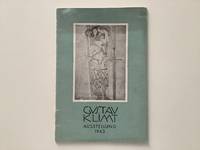
194319066AB1943. Vienna Der Reichsstatthalter in Wien 1943. 23 : 155 cm. 8 leaves 16 plates. Illustrated original boards. Rare exhibition catalogue for Klimt's 80ties birthday held in the Secession building during the occupation of Austria through the Nazies. Shown were 100 items from oil-paintings water-colours and drawing. Introduction by Fritz Novotny. hardcover
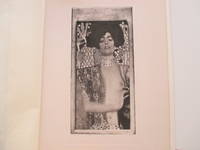
190115840AB1901. Vienna Herzig 1901. 45 : 34 cm. Original photoengraving in an gilt frame designed by Josef Hoffmann especially for Gustav Klimt. Contemporary beautiful photoengraving of Klimt's famous Judith. Published in the book 'Ars Nova' in 1901 shortly after Klimt finished the painting. In perfect condition and in a special frame designed by Josef Hoffmann especially for Gustav Klimt. Judith and the Head of Holofernes also known as Judith I German: Judith und Holofernesis an oil painting by Gustav Klimt painted in 1901. It depicts the biblical figure Judith holding the head of Holofernes after beheading him. The beheading and its aftermath have been commonly portrayed in art since the Renaissance. Judith was the biblical heroine who seduced and then decapitated General Holofernes in order to save her home city of Bethulia from destruction by the Assyrian army. When Klimt addressed the biblical theme of Judith the historical course of art had already codified its main interpretation and preferred representation. Many paintings exist describing the episode in a heroic manner especially expressing Judith's courage and virtuous nature. Judith appears as God's instrument of salvation but the violence of her action cannot be denied and is dramatically shown in Caravaggio's rendering as well as those of Gentileschi and Bigot. Other representations have depicted the subsequent moment when a dazed Judith holds Holofernes' severed head as Moreau and Allori anticipate in their suggestive mythological paintings. Klimt deliberately ignores any narrative reference whatsoever and concentrates his pictorial rendering solely on to Judith so much so that he cuts off Holofernes' head at the right margin. And there is no trace of a bloodied sword as if the heroine would have used a different weapon: an omission that legitimates association with Salome. The moment preceding the killing the seduction of Nebuchadnezzar's general seems to coalesce with the conclusive part of the story. unknown
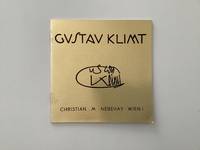
196820199AB1968. Vienna Nebehay 1968. 17 : 17 cm. 10 leaves with 19 illustrations. Golden original boards. Besides 17 drawings by Gustav Klimt in shows self-prtraits of Koloman Moser and Carl Moll co-founders of the Viennese Secession. hardcover
1995BN252673338 Abb. davon 208 farb.Hatje Cantz Verlag 1995. 1995. Sehnsucht nach Glück. Wiens Aufbruch in die Moderne: Klimt Kokoschka Schiele Marian Bisanz-Prakken Gottfried Friedl Gerbert Frodl <br/><br/>Sehnsucht nach Glück. Wiens Aufbruch in die Moderne: Klimt Kokoschka Schiele Marian Bisanz-Prakken Gottfried Friedl Gerbert Frodl Schulze Sabine Gustav Klimt und Egon Schiele 338 Abb., davon 208 farb.Hatje Cantz Verlag unknown
1981100107Museum. New. 1981. Paperback. FREE UPGRADE to Courier/Priority Shipping Upon Request - IN STOCK AND IMMEDIATELY AVAILABLE FOR SHIPMENT - flawless copy brand new pristine never opened -- Text in Japanese and English. Many illustrations including a number in color. -- with a bonus offer-- . Museum paperback
1990BN255912Wiesbaden. Fourier Verlag 1990. 1990. Hetärengespräche. Mit 15 Zeichnungen von Gustav Klimt. <br/><br/>Hetärengespräche. Mit 15 Zeichnungen von Gustav Klimt. Lukian von Samosata Lucianus Samosatensis und Gustav Klimt Wiesbaden. Fourier Verlag unknown
1985DYTWW10415SMA 1985. Soft Cover. Fine. Number of books£º1 SMA paperback
1922KLIMTGUS000943Thyrsos Verlag Leipzig & Wien. 1922. First edition. Fifty 28 x 21 cm card sheets reproducing Klimt's drawings of women some erotic in nature. Hermann Bahr's Vorwort is printed as an eight-page quarto pamphlet. The plates and the pamphlet are loose within the publisher's vellum-backed card portfolio stamped in gilt and red.Number 279 of 375 copies. Inside the upper cover of the portfolio is the pictorial bookplate of Eva and Otto Freund. The latter was a Director of the National Bank in Prague where he sat at the artist's request for portraits by Egon Schiele. Freund's wife Eva was an opera singer of some repute and also the subject of a portrait by Schiele.The portfolio is a bit rubbed at the corners. The plates are all in fine state. Thyrsos Verlag, Leipzig & Wien. hardcover
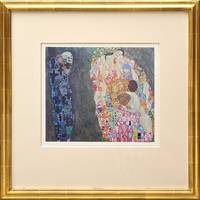
1931182248Vienna: Osterreichischen Staatsdruckerei 1931. One of 30 prints from the Eine Nachlese/Dernière gerbe/An Aftermath portfolio. Max Eisler 1881-1937 the publisher of this print was an art historian at Vienna University who published the first Klimt monograph in 1914. He intended Eine Nachlese to complement Das Werk the only folio set produced in Klimt's lifetime which was overseen by Klimt up to 1913. The collotype produces fine tonal gradations sharp detail and a continuous-tone effect unmatched by most other photomechanical processes. However the surface of the gelatin-coated plate is extremely delicate and can break down under friction or over-inking. Plates wear out quickly giving a short print-run and maintaining consistent humidity during printing is crucial - even small fluctuations can ruin the plate. As a result collotype printing is slow exacting and vulnerable to failure but when successful it yields some of the finest printed images ever produced. Edition of 500. Collotype in colours on chine colle paper laid down on heavy cream wove paper with untrimmed deckled edges. Image size: 31.6 x 11.2 cm. Sheet size: 48 x 45.5 cm. Framed size: 59 x 56.3 cm. Presented in a handmade gold leaf frame with conservation acrylic glazing. Small public library stamp lower left minor spotting to margins otherwise in excellent condition. unknown
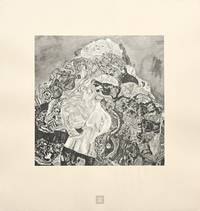
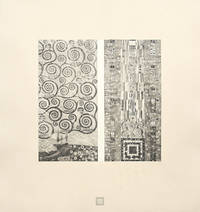
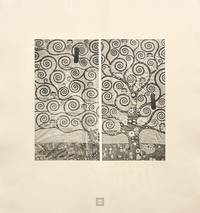
1931142902Vienna: Österreichische Staatsdruckerei 1931. Edition of 500. One of 30 prints from the Eine Nachlese portfolio. Max Eisler 1881-1937 the publisher of this print was an art historian at Vienna University who published the first Klimt monograph in 1914. He intended Eine Nachlese to complement Das Werk the only folio set produced in Klimt's lifetime which was overseen by Klimt up to 1913. Fragile hand-printed collotype plates cannot be reused so the run must be completed on the first go and in only a limited number. The complicated lengthy process involves gelatin colloids mixed with dichromates. Thin 16-colour separation glass filters achieve the light-sensitive internegative images which capture the original tonal gradations. These are exposed to actinic light. Finally the delicate chine colle paper allows for greater colour saturation. Dark grey monochrome collotype on chine colle paper laid down on heavy cream wove paper with untrimmed deckled edges. Image size: 29.3 x 29.5 cm. Sheet size: 48 x 45.5 cm. Excellent condition. unknown
1931187325Vienna: Osterreichischen Staatsdruckerei 1931. One of 30 prints from the Eine Nachlese/Dernière gerbe/An Aftermath portfolio. The first reproduction of Klimt's original painting created in 1914-16. The painting sold on 18 November 2025 at Sotheby's for $236.4m. The first reproduction of Klimt's original painting created in 1914-16. The painting sold on 18 November 2025 at Sotheby's for $236.4m this is the second most expensive painting ever. Max Eisler 1881-1937 the publisher of this print was an art historian at Vienna University who published the first Klimt monograph in 1914. He intended Eine Nachlese to complement Das Werk the only folio set produced in Klimt's lifetime which was overseen by Klimt up to 1913. The collotype produces fine tonal gradations sharp detail and a continuous-tone effect unmatched by most other photomechanical processes. However the surface of the gelatin-coated plate is extremely delicate and can break down under friction or over-inking. Plates wear out quickly giving a short print-run and maintaining consistent humidity during printing is crucial - even small fluctuations can ruin the plate. As a result collotype printing is slow exacting and vulnerable to failure but when successful it yields some of the finest printed images ever produced. Edition of 500. Collotype in colours on chine colle paper laid down on heavy cream wove paper with untrimmed deckled edges. Image size: 31.6 x 24.4 cm. Sheet size: 48 x 45.5 cm. Framed size: 59 x 56.3 cm. Presented in a handmade gold leaf frame with conservation acrylic glazing. Support paper cleaned otherwise in excellent condition. unknown
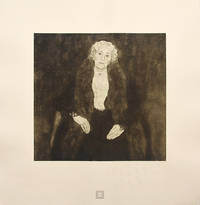
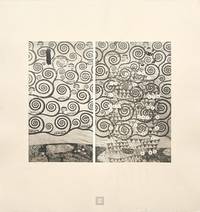
1931142900Vienna: Österreichische Staatsdruckerei 1931. Edition of 500. One of 30 prints from the Eine Nachlese portfolio. Max Eisler 1881-1937 the publisher of this print was an art historian at Vienna University who published the first Klimt monograph in 1914. He intended Eine Nachlese to complement Das Werk the only folio set produced in Klimt's lifetime which was overseen by Klimt up to 1913. Fragile hand-printed collotype plates cannot be reused so the run must be completed on the first go and in only a limited number. The complicated lengthy process involves gelatin colloids mixed with dichromates. Thin 16-colour separation glass filters achieve the light-sensitive internegative images which capture the original tonal gradations. These are exposed to actinic light. Finally the delicate chine colle paper allows for greater colour saturation. Dark sepia monochrome collotype on chine colle paper laid down on heavy cream wove paper with untrimmed deckled edges. Image size: 29.5 x 29.9 cm. Sheet size: 48 x 45.5 cm. Excellent condition. unknown
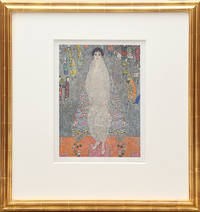
1931170055Vienna: Österreichische Staatsdruckerei 1931. One of 30 prints from the Eine Nachlese portfolio. Max Eisler 1881-1937 the publisher of this print was an art historian at Vienna University who published the first Klimt monograph in 1914. He intended Eine Nachlese to complement Das Werk the only folio set produced in Klimt's lifetime which was overseen by Klimt up to 1913. The collotype produces fine tonal gradations sharp detail and a continuous-tone effect unmatched by most other photomechanical processes. However the surface of the gelatin-coated plate is extremely delicate and can break down under friction or over-inking. Plates wear out quickly giving a short print-run and maintaining consistent humidity during printing is crucial - even small fluctuations can ruin the plate. As a result collotype printing is slow exacting and vulnerable to failure but when successful it yields some of the finest printed images ever produced. Edition of 500. Collotype in colours on chine colle paper laid down on heavy cream wove paper with untrimmed deckled edges. Image size: 26.7 x 30.8 cm. Sheet size: 48 x 45.5 cm. Framed size: 59 x 56.3 cm. Presented in a handmade gold leaf frame with conservation acrylic glazing. Excellent condition. unknown
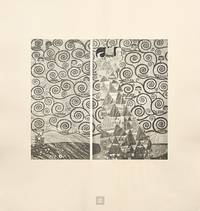
1931142899Vienna: Österreichische Staatsdruckerei 1931. Edition of 500. One of 30 prints from the Eine Nachlese portfolio. Max Eisler 1881-1937 the publisher of this print was an art historian at Vienna University who published the first Klimt monograph in 1914. He intended Eine Nachlese to complement Das Werk the only folio set produced in Klimt's lifetime which was overseen by Klimt up to 1913. Fragile hand-printed collotype plates cannot be reused so the run must be completed on the first go and in only a limited number. The complicated lengthy process involves gelatin colloids mixed with dichromates. Thin 16-colour separation glass filters achieve the light-sensitive internegative images which capture the original tonal gradations. These are exposed to actinic light. Finally the delicate chine colle paper allows for greater colour saturation. Dark grey monochrome collotype on chine colle paper laid down on heavy cream wove paper with untrimmed deckled edges. Image size: 27.3 x 27.7 cm. Sheet size: 48 x 45.5 cm. Excellent condition. unknown
1931142898Vienna: Österreichische Staatsdruckerei 1931. Edition of 500. One of 30 prints from the Eine Nachlese portfolio. Max Eisler 1881-1937 the publisher of this print was an art historian at Vienna University who published the first Klimt monograph in 1914. He intended Eine Nachlese to complement Das Werk the only folio set produced in Klimt's lifetime which was overseen by Klimt up to 1913. Fragile hand-printed collotype plates cannot be reused so the run must be completed on the first go and in only a limited number. The complicated lengthy process involves gelatin colloids mixed with dichromates. Thin 16-colour separation glass filters achieve the light-sensitive internegative images which capture the original tonal gradations. These are exposed to actinic light. Finally the delicate chine colle paper allows for greater colour saturation. Dark grey monochrome collotype on chine colle paper laid down on heavy cream wove paper with untrimmed deckled edges. Image size: 27.2 x 32 cm. Sheet size: 48 x 45.5 cm. Excellent condition. unknown
1931142896Vienna: Österreichische Staatsdruckerei 1931. Edition of 500. One of 30 prints from the Eine Nachlese portfolio. Max Eisler 1881-1937 the publisher of this print was an art historian at Vienna University who published the first Klimt monograph in 1914. He intended Eine Nachlese to complement Das Werk the only folio set produced in Klimt's lifetime which was overseen by Klimt up to 1913. Fragile hand-printed collotype plates cannot be reused so the run must be completed on the first go and in only a limited number. The complicated lengthy process involves gelatin colloids mixed with dichromates. Thin 16-colour separation glass filters achieve the light-sensitive internegative images which capture the original tonal gradations. These are exposed to actinic light. Finally the delicate chine colle paper allows for greater colour saturation. Dark grey monochrome collotype on chine colle paper laid down on heavy cream wove paper with untrimmed deckled edges. Image size: 27 x 30.7 cm. Sheet size: 48 x 45.5 cm. Excellent condition. unknown
1931142897Vienna: Österreichische Staatsdruckerei 1931. Edition of 500. One of 30 prints from the Eine Nachlese portfolio. Max Eisler 1881-1937 the publisher of this print was an art historian at Vienna University who published the first Klimt monograph in 1914. He intended Eine Nachlese to complement Das Werk the only folio set produced in Klimt's lifetime which was overseen by Klimt up to 1913. Fragile hand-printed collotype plates cannot be reused so the run must be completed on the first go and in only a limited number. The complicated lengthy process involves gelatin colloids mixed with dichromates. Thin 16-colour separation glass filters achieve the light-sensitive internegative images which capture the original tonal gradations. These are exposed to actinic light. Finally the delicate chine colle paper allows for greater colour saturation. Dark grey monochrome collotype on chine colle paper laid down on heavy cream wove paper with untrimmed deckled edges. Image size: 27.2 x 29.4 cm. Sheet size: 48 x 45.5 cm. Excellent condition. unknown
1931182262Vienna: Österreichische Staatsdruckerei 1931. One of 30 prints from the Eine Nachlese/Dernière gerbe/An Aftermath portfolio. Max Eisler 1881-1937 the publisher of this print was an art historian at Vienna University who published the first Klimt monograph in 1914. He intended Eine Nachlese to complement Das Werk the only folio set produced in Klimt's lifetime which was overseen by Klimt up to 1913. The collotype produces fine tonal gradations sharp detail and a continuous-tone effect unmatched by most other photomechanical processes. However the surface of the gelatin-coated plate is extremely delicate and can break down under friction or over-inking. Plates wear out quickly giving a short print-run and maintaining consistent humidity during printing is crucial - even small fluctuations can ruin the plate. As a result collotype printing is slow exacting and vulnerable to failure but when successful it yields some of the finest printed images ever produced. Edition of 500. Collotype in colours on chine colle paper laid down on heavy cream wove paper with untrimmed deckled edges. Image size: 28 x 30.7 cm. Sheet size: 48 x 45.5 cm. Framed size: 59 x 56.3 cm. Presented in a handmade gold leaf frame with conservation acrylic glazing. Small public library stamp lower left minor spotting to margins otherwise in excellent condition. unknown
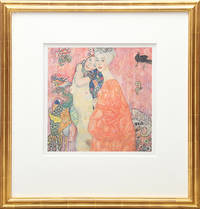
1931187329Vienna: Osterreichischen Staatsdruckerei 1931. One of 30 prints from the Eine Nachlese/Dernière gerbe/An Aftermath portfolio. The first reproduction of Klimt's original painting. Die Freundennen was one of 16 original paintings by Klimt which were destroyed on 8 May 1945. The paintings were in storage in the Schloss Immendorf a 16th century castle in Lower Austria which was set on fire by a retreating tank division of the German army. Max Eisler 1881-1937 the publisher of this print was an art historian at Vienna University who published the first Klimt monograph in 1914. He intended Eine Nachlese to complement Das Werk the only folio set produced in Klimt's lifetime which was overseen by Klimt up to 1913. The collotype produces fine tonal gradations sharp detail and a continuous-tone effect unmatched by most other photomechanical processes. However the surface of the gelatin-coated plate is extremely delicate and can break down under friction or over-inking. Plates wear out quickly giving a short print-run and maintaining consistent humidity during printing is crucial - even small fluctuations can ruin the plate. As a result collotype printing is slow exacting and vulnerable to failure but when successful it yields some of the finest printed images ever produced. Edition of 500. Collotype in colours on chine colle paper laid down on heavy cream wove paper with untrimmed deckled edges. Image size: 29.5 x 30 cm. Sheet size: 48 x 45.5 cm. Framed size: 59 x 56.3 cm. Presented in a handmade gold leaf frame with conservation acrylic glazing. Excellent condition. unknown
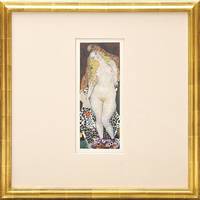
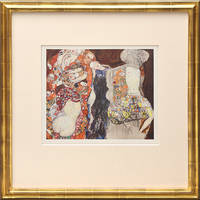
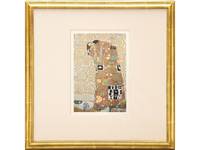
1931182247Vienna: Osterreichischen Staatsdruckerei 1931. One of 30 prints from the Eine Nachlese/Dernière gerbe/An Aftermath portfolio. Max Eisler 1881-1937 the publisher of this print was an art historian at Vienna University who published the first Klimt monograph in 1914. He intended Eine Nachlese to complement Das Werk the only folio set produced in Klimt's lifetime which was overseen by Klimt up to 1913. Fragile hand-printed collotype plates cannot be reused so the run must be completed on the first go and in only a limited number. The complicated lengthy process involves gelatin colloids mixed with dichromates. Thin 16-colour separation glass filters achieve the light-sensitive internegative images which capture the original tonal gradations. These are exposed to actinic light. Finally the delicate chine colle paper allows for greater colour saturation. Edition of 500. Collotype in colours with metallic gold and silver on chine colle paper laid down on heavy cream wove paper with untrimmed deckled edges. Image size: 31.2 x 19.4 cm. Sheet size: 48 x 45.5 cm. Framed size: 59 x 56.3 cm. Presented in a handmade gold leaf frame with conservation acrylic glazing. Small public library stamp lower left minor spotting to margins otherwise in excellent condition. unknown
1931190931Vienna: Osterreichischen Staatsdruckerei 1931. A spectacular portfolio First edition number 124 of 200 copies printed in German. This spectacular portfolio reproduces six of Klimt's paintings that were destroyed at the end of the Second World War. The total edition comprised 500 numbered copies issued in French German and English. Of these 200 copies were printed in German of which 30 copies were bound as a book in a deluxe binding; 150 copies in French under the title "Dernière gerbe" of which 20 were bound as a book in a deluxe binding; and 150 copies in English under the title "An Aftermath" of which 20 were bound as a book in a deluxe binding. The six works destroyed in the war perished on 8 May 1945. Sixteen of Klimt's paintings were in storage in the Schloss Immendorf a 16th-century castle in Lower Austria which was set on fire by a retreating tank division of the German army. The six include two from Klimt's Faculty Paintings originally created for the ceiling of the Great Hall of the University of Vienna "Medizin" printed here in colour and heightened in gold and "Jurisprudenz" and four from the famous Lederer collection: "Die Freundinnen" "Malcesine am Gardasee" "Bauerngarten mit Hühnern" each printed here in colour and "Gastein". The publisher of this portfolio Max Eisler 1881-1937 was an art historian at Vienna University who published the first Klimt monograph in 1920. He intended this portfolio to compliment the only folio set produced in Klimt's lifetime Das Werk which had featured Klimt's works and was overseen by him up to 1913. Fragile collotype plates cannot be reused. As such this necessitates the completion of a run on the first go and also dictates a limited production number. Printed by hand the collotypes required deft handling by the printer Osterreichische Staatsdruckerei. A complicated and lengthy process involving gelatin colloids mixed with dichromates the creation of 16 colour separation thin glass filters to achieve the light-sensitive internegative images that could faithfully capture all of the painting's tonal gradations and colours exposure to actinic light and delicate chine colle papers that allow for greater colour saturation. Folio. With 30 full-page collotype plates after Klimt printed on chine colle paper laid down on heavy cream wove paper with untrimmed deckled edges of which 15 are in colour 2 heightened in metallic gold and silver ink and 1 heightened in gold ink and 15 in monochrome. Sheet sizes: 48 x 45.5 cm. Together with 18 pages. Collotypes and pages loose in original green silk clamshell box artist's name in gilt to front cover. Box lid split to corners four prints with pin holes to extreme corners not affecting the images a couple with light marks to the margins not affecting the images otherwise all bright impressions. unknown
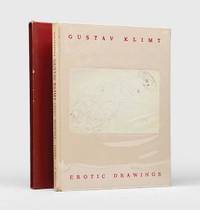
1980190316London: Thames and Hudson 1980. The nudes of Klimt First edition in English first impression number 52 of 1000 copies. Originally published in German by DuMont Buchverlag Cologne in 1979 this handsome volume reproduces Klimt's superb pencil and crayon erotic drawings. Folio. Original beige cloth lettering to spine and front cover in red pictorial inlay to front cover beige endpapers. With glassine dust jacket. Housed in the original red card slipcase. Frontispiece and 35 full-page colour reproductions. Slip case rubbed to corners and fore edge; a fine copy. hardcover
1984TK242267Kestner-Gesellschaft Hannover 1984. 1st Edition. SOFTCOVER. Thick Square 4to in colour printed stiff glossy card covers 159pp on thick paper plates in colour duotone and b/w etc. Introductory texts in German __CONDITION : An extremely well preserved almost AS NEW unread and unmarked copy merest hint of tanning to leaves. . To see more of our Art Monographs etc type DbbARTIST in the Keywords search box __We always ship in PROTECTIVE CARD PARCELS Kestner-Gesellschaft, Hannover paperback
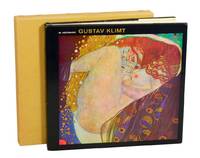
1971210888Greenwich CT: New York Graphic Society 1971. First U.S. edition and first printing. Oblong hardcover. Features text by Werner Hofmann. Includes 42 color and 55 black and white plates. A clean and tight near fine copy in black cloth boards with some slight bumping to the corners and in a near fine dust jacket with some very minor wear and in a near fine cardboard slipcase that has some light wear. A pleasing copy. New York Graphic Society unknown