91 résultats
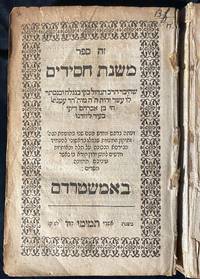
174042573Amsterdam: No Publisher Listed 1740. Hardback. 2nd edition. Period Vellum binding 12mo 132 leaves; 17 cm. In Hebrew. Mayer Sulzberger's copy with his bookplate. Like the Mishnah Mishnat Hasidim is arranged in "Sedarim" which are divided into "massechtot" and subdivided into "perakim." With an introduction entitled: Olam Katan. Includes index. Title-page has ornamental border. <br> Raphael Immanuel ben Abraham Hai Ricchi 1688-1743 was an "Italian rabbi cabalist and poet.After having studied Talmud under Nathan Pinkerle rabbi of Alessandria della Paglia Ricchi became tutor in the houses of several wealthy Jews. He was thus successively employed at Göritz Fiorenzuola Finale in Modena and Venice; in the last-named place he opened a school. He then went to Triest where he was ordained rabbi in 1717 by Hillel Ashkenazi rabbi of Canea after which he was invited to the rabbinate of Görz.<br> Owing to his great love for cabalistic studies and to his ascetic tendencies Ricchi resolved to settle in Palestine. He arrived at Safed in 1718 and during his stay there of two years he occupied himself with the study of the works of Isaac Luria and Hayyim Vital. He was also reordained rabbi by Hayim Abulafia. In 1720 an epidemic broke out in Palestine and Ricchi was compelled to return to Europe. <br> On the voyage he and all his fellow passengers were captured by pirates and brought to Tripolitza whence through the efforts of Abraham Halfon Ricchi and his family were allowed to return to Italy. He then occupied the rabbinate of Florence till 1723 in which year he removed to Leghorn where for twelve years he engaged in business as a merchant. He spent twenty months in travel visiting Smyrna Salonica Constantinople Amsterdam and London and in 1735 set out for Palestine spending two years at Aleppo and three at Jerusalem. In 1741 he returned to Leghorn and in 1743 while traveling in Italy for the purpose of selling his works he was killed by robbers who buried his body by the shore of the Reno. Six days later some Modena Jews discovered the remains and brought them to Cento for burial.<br> Ricchi's most important work is the above-cited 'Mishnat Hasidim' a cabalistic work begun in 1726 at Leghorn. <br> Like the Mishnah it is arranged in orders 'sedarim' which are divided into treatises 'massektot' and subdivided into chapters 'peraim' the names of the six Mishnah orders being taken in a cabalistic sense. But the chief divisions of the work are three termed 'mafteot' besides the introduction entitled ''Olam Kaon' = 'microcosmos' in which Ricchi endeavors to popularize the Cabala. <br> The first main division is the 'Maftea ha-'Olamot' in which the worlds are treated. It contains: 1 the order of Zera'im treating of the cabalistic cosmology and of metaphysics and divided into seven massektot and eighteen chapters; 2 the order Kodashim treating of the realm of emanation 'olam ha-azilut' which is styled 'the holy of holies' and containing twenty massektot and seventy-eight chapters; 3 the order ohorot treating of the three other realms namely those of creative ideas 'beri'ah' creative formations 'yezirah' and creative matter 'asiyah' and divided into nine massektot and twenty-seven chapters; and 4 the order Nezikin treating of the demons and 'kelifot' and divided into six massektot and seventeen chapters. <br> The second main division entitled 'Maftea ha-Neshamot' contains the order Nashim treating of souls in twelve massektot and forty-eight chapters. The third main division entitled 'Mafteah ha-Kawwanot' contains the order Mo'ed divided into fifty-eight massektot and 371 chapters and treating of the Kawwanah. It will be seen that the number of massektot in this work is 112 corresponding to the numerical value of the sacred name ; and the number of chapters 547 equal to the numerical value of Ricchi's name plus twelve the number of its letters. <br> The sources for this work besides the Zohar are mostly Isaac Luria's and Hayyim Vital's writings of which the 'Sefer ha-Gilgulim' 'Kanfe Yonah' and 'Shulhan 'Aruk' may be particularly mentioned. Ricchi drew also from other cabalists" M. Seligsohn in JE 1905.<br> NYU houses their copy in the Mitchell M. Kaplan Collection of Rare Judaica and Hebraica. Aviva Ben-Ur's Ladino catalog list #14. Judge Mayer Sulzberger "was closely associated with Isaac Leeser and assisted that scholar in editing The Occident contributing to it a partial translation of Maimonides' "Moreh Nebukim." After Leeser's death Sulzberger edited vol. xxvi. of The Occident. He was one of the founders of the Young Men's Hebrew Association which he served as president; and he has taken great interest in the Jewish Hospital of Philadelphia of which he has been vice-president since 1880. He was from the beginning in 1888 chairman of the publication committee of the Jewish Publication Society of America; was one of the original trustees of the Baron de Hirsch fund; and interested himself in the establishment of agricultural colonies at Woodbine N. J. and in Connecticut.Sulzberger had one of the best private libraries in America; it contained a very large number of Hebraica and Judaica" WIkipedia. SUBJECTS: Cabala -- Early works to 1800. Siddurim -- Texts. Judaism -- Ari rite -- Liturgy -- Kabbale -- Ouvrages avant 1800. Siddour -- Textes. Cabala. OCLC: 904949349. OCLC lists only 2 copies of this 1740 2nd edition worldwide NYU & Cambridge and only 3 copies of the first edition of 1727.<br> Boards slightly bowed with front hinge starting. Remains of 19th Century paper label on spine. Lacks front blank pastedown. Jewish institutional bookplate in addition to that of Sulzberger. Paper toning but strong. About Very Good- Condition. Attractive copy of early edition of an important cabalistic text. RAB-67-7. Amsterdam: [No Publisher Listed] unknown
17035770Rome: Gaetano Zenobi 1703. First edition. Octavo 23 cm; 114 2 pages. Vignette with arms of Pope Clement XI flanked by putti on title page. LACKS FRONTISPIECE PORTRAIT. Decorated letters and ornaments in text. Bound in mottled calf weak at joints and worn at extremities. Early inscription abraded at base of title page. Pages lightly toned with occasional stains. References: Cicognara 2404; Anthony Blunt "Don Vincenzo Vittoria" in The Burlington Magazine 109:766 1967 31-32. <br /><br />The author was a Spanish engraver and printer who lived and worked in Rome for part of his life. The text is a defense of Raphael and others from some dismissive remarks made by Carlo Cesare Malvasia in his promotion of the Carracci and of the Bolognese school "La Felsina Pittrice" 1678. Vittoria wrote the material probably in Spanish while still living in Valencia. In the preface he apologizes for his Italian which "lacks purity." The significance of the book according to the art historian Anthony Blunt lies in the author's descriptions of several drawings by Raphael and his contemporaries which are either lost or known only in engraved copies. Condition noted. Gaetano Zenobi unknown
1782189785Bologna: In the Institute os Science 1782. Hardcover. Very Good Cover has general wear Leather peeling corner/edge damage. Spine has damage to top/bottom. Bookblock has age toning. Interior pages have age toning and foxing. Brown cloth boards with gilt highlights Black leather corners and spine. Gilt lettering and design elements on 5 raised band spine. xiii 3 341 pages 69 leaves of plates some folded : illustrations plans. Title vignette tail-pieces and plates engraved by Pio Panfili. In the Institute os Science hardcover
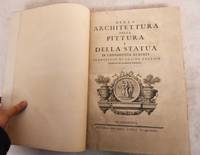
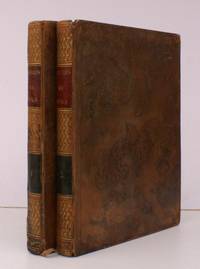
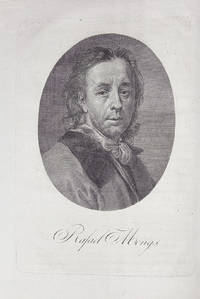
17867634à Paris: A l'hôtel de Thou 1786. Fine. A l'hôtel de Thou à Paris 1786 25.50 x 20 cm deux volumes reliés First French edition translated from Italian by M. Jansen the work was indeed first published in Italian by Bodoni. Near-contemporary full sheep bindings with smooth spines bronze title and volume labels. Handsome copy. The work begins with memoirs on the life and works of Mengs 1728-1779 by Chevalier d'Azara and a notice on Mengs's paintings followed by the painter's treatises on painting covering beauty taste technical aspects of painting as well as various celebrated painters Raphael Correggio Titian. The preface contains a paragraph by Klopstock the German editor and Fuessli. Court painter to the King of Poland he joined the Spanish court at the behest of Charles III King of Spain; his paintings quite early in the neoclassical taste see his Cleopatra secured him fame and wealth and the writings he left on painting and the arts are marked by research and subtlety. A l'hôtel de Thou unknown
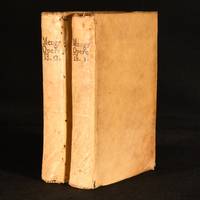
1787935P23Roma: Stamperia Pagliarini 1787. Vellum. Good Only. 8" by 5". Various. A scarce two volume edition collecting together the artistic writings of Neoclassical painter Anton Raphael Mengs. Complete in two volumes the scacer edition by Pagliarini who also published an edition in one volume.Illustrated with a frontispiece to each volume. In Italian.The collected writings by the noted eighteenth century Neoclassical painter Anton Raphael Mengs.Mengs' writings were all on the theory of art and on the lives of eminent painters throughout history. This includes his 1762 'Reflections on Beauty and Taste in Painting' an influential treatise which inspired the artistic society of his day. His other writings includes 'Reflections on the Three Great Painters Raphael Correggio and Titian and on the Ancients' 'Practical Painting Lessons' 'Reflection on the Academy of Fine Arts in Madrid' a selection of letters written to Antonio Ponz 'Dreams on Beauty' and more. As an artist Mengs painted many of the important figures of his day such as Charles IV of Spain Maria Luisa of Spain and Johann Joachim Winckelmann as well as striking religious and mythological scenes of figures such as Helios and St. John the Baptist. Including a life of Mengs by Jose Nicolas d'Azara edited by Carlo Fea.Collated complete. In the original vellum binding. Externally generally smart. Vellum is discoloured as is usual to see heavier to the spines. Minor marks to the boards and spine. Light bumping to the head and tail of the spines and to the extremities. Chip and lifting to the fore edge of the rear board of Volume I. Heavier patch of discolouration to the rear board of Volume II. A few small chips to the vellum mostly to the spines and joints. Hinges are tender. Front endpapers are detached and edge worn. Lacking the paper to the rear paste downs. Internally generally firmly bound. Pages are lightly age-toned and generally clean with scattered spots. Dampstain to the first few pages of Volume I with amateur repairs from the half-tile to page xvi. Frontispiece and page xxix of Volume I are detached but present as if the half-title frontispiece and title of Volume II. Mark to the bottom edge of the first half of the text and final few pages of Volume II. Good Only Stamperia Pagliarini hardcover
17976966Madrid: Imprenta de Sancha 1797. First Edition — Primera edición. Hardcover — Tapa dura. 204x135mm. 8x5¼". Madrid Imprenta de Sancha 1797. En 4º menor 204 x 135mm. 4-xv-1 330 2-cv pp. Encuadernación de la época en piel. Primera edición de este libro apreciado y poco común tocante a la historia del comercio entre España y América; ya Palau decÃa en su época que el libro escaseaba. A partir de la p. 330 un Apéndice con copias de algunos documentos citados en estas memorias históricas. Antúnez y Acevedo 1736-1800 cultivó el estudio de la jurisprudencia mercantil en todos sus ramos siendo un profundo conocedor de las leyes y costumbres del comercio hispano-indiano. Portada con ligeras manchas papel tostado. Libro raro en comercio. Imprenta de Sancha hardcover
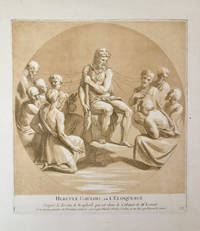
17296061729. Chiaroscuro woodcut printed from two blocks in beige and olive with etching and aquatint on cream laid paper 11 1/8 x 10 inches 281 x 252 mm plate full margins with the text printing clearly below in olive ink. In very good condition with no visible defects other than one pinpoint sized spot of foxing on the verso left sheet center. Charles Nicolas Cochin père did the etching Vincent Le Sueur did the chiaroscuro woodcut. After a Drawing by Raffaello Sanzio. The supposed Raphael drawing on which the print is based is now identified as "school of" but the print remains as beautiful despite the re-attribution. The Cabinet Crozat was a collection of prints after drawings in the collection of Pierre Crozat then known as one of the finest collections in the world. Many of the prints which were by various hands were made in the unusual combination of etching with chiaroscuro woodcut superimposed upon it. In this case Cochin did the etching and Le Sueur the chiaroscuro woodcut. Registration must have been a problem but here at least the plate and the blocks are almost perfectly aligned. unknown
1780404758Rome: Ludwig Sommerau 1780. Hardcover. both boards separated disbound and first two blanks lacking. some stains and foxing throughout. some plates have pencil notes at the bottom. despite flaws plates are very sharp and bright. see scans all plates are shown. folio 19" x 15-1/2". Sommerau's engravings depict tapestries designed by Raphael and made between 1517 and 1521 in the workshop of Pieter van Aelst in Brussels. Originally made for the Sistine Chapel the tapestries are now housed in the Vatican Library.per Bonhams. Ludwig Sommerau hardcover
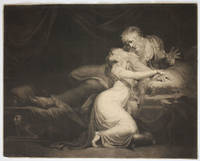
178421751784. Mezzotint. 435mm by 550mm. Scene from Shakespeare's 'King Lear'; Lear reclining on bed beneath curtain awakened to find the spirit of Cordelia kneeling beside his bed holding his hand and looking into his eyes.<br /> Trimmed with loss of margins and title area. Faint creasing at top of the image. A couple of small marginal breaks. unknown
179731882Salzburg 1797. Eingebunden in: Kleinsorg R.; Abriss der Geographie Zweyter Band Dritte Aufl. Neu gebunden neue Vorsatzbl. Duyle 8°. Hldr. Oesterreich unknown
178629839A l'Hotel de Thou Rue des Poitevins Paris 1786. 2 vols. 4to. First Edition thus with engraved portrait frontispiece; handsomely bound in contemporary tree calf backs with four flat bands ruled in gilt second and fourth compartments with leather labels red/green respectively lettered and numbered in gilt all other compartments richly tooled in glt gilt dentelles blue speckled edges marbled endpapers red silk markers joints cracked but binding entirely sound boards lightly age-marked else a remarkably bright crisp copy in wholly unrestored period binding. FIRST EDITION IN FRENCH following publication in Italian by Bodoni. VERY SCARCE. Palau 164521. A l'Hotel de Thou, Rue des Poitevins, Paris, hardcover
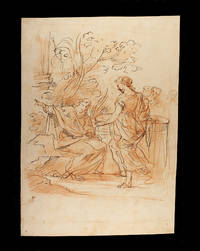
175298901752. 343x244mm. 13½x9½". España c.1752-1761. Sanguina y pluma con tinta marrón oscura anverso; lápiz y carboncillo reverso sobre papel verjurado ocre amarillento. 343 x 244mm. El dibujo de "Cristo y la Samaritana" puede encuadrarse en la etapa romana o durante la primera estancia madrileña 1761 a 1769. La "Sagrada Familia con San Juanito" fue realizado por Mengs para su yerno Manuel Salvador Carmona entre septiembre y octubre de 1778. Será la primera obra de Mengs que Carmona convertirÃa en grabado. Referencias: "Dibujo español del Renacimiento a Goya. La colección de la reina MarÃa Cristina de Borbón" Zaragoza 2008 nº 66 pp. 240 y 243 unknown
179713068Madrid: Imprenta Real 1797. 243x190mm. 9½x7½". Madrid Imprenta Real 1797. En 4º 243 x 190mm. 6 h. 1 retrato lii-402 pp. Encuadernación de la época en plena piel lomera con ruedas doradas formando nervios y hierro dorado en las calles tejuelo en marroquén. MagnÃfico ejemplar de esta obra estimada muy bien impresa en la Imprenta Real a expensas de Julián Pereyra. Segunda edición copia exacta de la primera. Contiene además de las obras completas de Mengs un "Comentario al Tratado de la Belleza" de Mengs por Joseph Azara y varias cartas. Al fin un tratado con lecciones prácticas de pintura. Obra importante. Antonio Rafael Mengs gozó de un buen prestigio y sus obras eran consultadas por todos los artistas de la época. El libro contiene además de las obras completas de Mengs un "Comentario a su Tratado de la Belleza" por Joseph Azara quien además se encargó de recoger los textos del pintor. Al fin un tratado con lecciones prácticas de pintura. Perfecto ejemplar. Imprenta Real unknown
178646036Paris:: A ;'Hotel de Thou 1786. contemporary full mottled sheep. . One joint in each volume just starting to split; cords sound; corners rubbed; shallow chipping at the extremities of the spine. Small 4to. This copy lacks and apparently never had the frontispiece portrait. Traduit de l'Italien. Half-title present in each volume. A ;'Hotel de Thou, unknown
1780374868Roma: Volpato et Morghen Sculp. et Vend 1780. Unbound. Good. Copperplate engraving. Measures approximately 12.5" x 11.25" to the plate mark. Engraved by the famous Italian printmakers Raphael Morghen and Giovanni Volpato after a painting by Pier Francesco Mola. This scene of an infant satyr raising a glass of wine filled to the brim illustrates a passage in the 6th elegy of Tibullus Book 3. Morghen a child prodigy and student of Volpato established himself as one of Europe's most famous engravers by the age of twenty. Old dampstain on the upper left corner that pervades only about an inch into the image a few small tears to the edges else good or better. Halsey 19. Volpato et Morghen Sculp. et Vend unknown
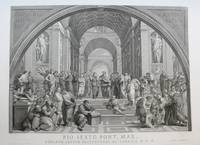
1768P4456Rome c.1768. Very Good. Notes: A fine engraving of the Raphael fresco of the various great minds that made up the "School of Athens" during the mid 18th century. The interior scene shows Greek philosophers Plato left and Aristotle right in the center surrounded by groups of other philosophers and mathematicians. In the lower left foreground Pythagoras writes in a book; at right Euclid demonstrates a compass to four young men. The scene is framed by an arch with the inscription: "Raphael in aedibus santius vatica pinx nis". <br>Other figures that are believed to be represented are: <br>Zeno of Citium Epicurus Heraclitus the "weeping" philosopher Democritus the "laughing" philosopher Boethius Averroes Alcibiades Antisthenes Raphael Aeschines Socrates Michelangelo Diogenes of Sinope Plotinus Zoroaster Ptolemy and Protogenes. Image Size : 515x733 mm 20.28x28.86 Inches Platemark Size : 565x741 mm 22.24x29.17 Inches Paper Size : 618x860 mm 24.33x33.86 Inches Coloring: Hand Colored Medium: Copper Engraving Categories: Views Europe Italy; Architectural General; unknown
1782287287London: Boydell 1782. Second. hardcover. very good. Raphael. Illustrated with 106 engraved plates 45 in outline some foxing throughout. Tall folio recently rebound in 1/2 crimson morocco marbled boards. London: Printed for John Boydell 1782. Second edition. A very good copy in a fine binding.<br/> <br/> An elaborate artist's manual first published in 1759. It celebrates Raphael's cartoons purchased by William and Mary and then housed in their own gallery within Hampton Court. Ralph's book begins with 12 plates "of the Study of Geometrical Figures." These are followed by 4 plates of human bodies engraved as academic designs by B. Picart. The bulk of the book shows heads of figures from Raphael's cartoons. The plates each depict two heads which are shown in simple line drawings followed with a finished engraving of the same heads. This second edition contains one hundred and six plates as opposed to 75 plates in the first edition of 1759.<br/> <br/> Boydell unknown
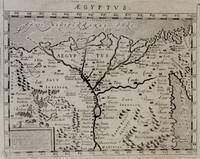
1713M8141Italy c.1713. Very Good. Notes: Savonarola used the pseudonym Alphonsus Lasor a Varea. Monk of Theatine order who worked in the monastery library in Padua. He was also Professor of Holy Scripture. Universes Terrarum Orbis Scriptorum. Size : 135x175 mm 5.31x6.89 Inches Coloring: Black & White Reference: Mickwitz A.M. Miekkavaara L. and Rantenen T. The A.E. Nordenskiold Collection in the Helsinki University Library Volume 2 1981 pp. 269- 276 Category: Maps Africa North Egypt; unknown
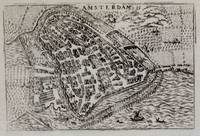
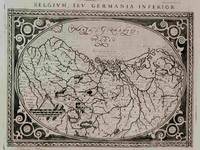
1713M8175Italy c.1713. Very Good. Notes: Amsterdam<br>Savonarola used the pseudonym Alphonsus Lasor a Varea. Monk of Theatine order who worked in the monastery library in Padua. He was also Professor of Holy Scripture. Universes Terrarum Orbis Scriptorum. Size : 85x125 mm 3.35x4.92 Inches Coloring: Black & White Reference: Mickwitz A.M. Miekkavaara L. and Rantenen T. The A.E. Nordenskiold Collection in the Helsinki University Library Volume 2 1981 pp. 269- 276 Category: Maps Europe Benelux; unknown
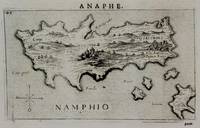
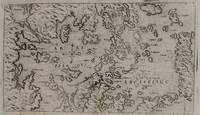
1713M8197Italy c.1713. Very Good. Notes: Savonarola used the pseudonym Alphonsus Lasor a Varea. Monk of Theatine order who worked in the monastery library in Padua. He was also Professor of Holy Scripture. Universes Terrarum Orbis Scriptorum. Size : 105x170 mm 4.13x6.69 Inches Coloring: Black & White Reference: Mickwitz A.M. Miekkavaara L. and Rantenen T. The A.E. Nordenskiold Collection in the Helsinki University Library Volume 2 1981 pp. 269- 276 Category: Maps Europe Greece Macedonia; unknown
1713M8140Italy c.1713. Very Good. Notes: Eastern Greece.<br>Savonarola used the pseudonym Alphonsus Lasor a Varea. Monk of Theatine order who worked in the monastery library in Padua. He was also Professor of Holy Scripture. Universes Terrarum Orbis Scriptorum. Size : 99x171 mm 3.90x6.73 Inches Coloring: Black & White Reference: Mickwitz A.M. Miekkavaara L. and Rantenen T. The A.E. Nordenskiold Collection in the Helsinki University Library Volume 2 1981 pp. 269- 276 Category: Maps Europe Greece Macedonia; unknown
1713M8159Italy c.1713. Very Good. Notes: Savonarola used the pseudonym Alphonsus Lasor a Varea. Monk of Theatine order who worked in the monastery library in Padua. He was also Professor of Holy Scripture. Universes Terrarum Orbis Scriptorum. Size : 137x180 mm 5.39x7.09 Inches Coloring: Black & White Reference: Mickwitz A.M. Miekkavaara L. and Rantenen T. The A.E. Nordenskiold Collection in the Helsinki University Library Volume 2 1981 pp. 269- 276 Category: Maps Europe Benelux; unknown
1713M8172Italy c.1713. Very Good. Notes: Savonarola used the pseudonym Alphonsus Lasor a Varea. Monk of Theatine order who worked in the monastery library in Padua. He was also Professor of Holy Scripture. Universes Terrarum Orbis Scriptorum. Size : 90x130 mm 3.54x5.12 Inches Coloring: Black & White Reference: Mickwitz A.M. Miekkavaara L. and Rantenen T. The A.E. Nordenskiold Collection in the Helsinki University Library Volume 2 1981 pp. 269- 276 Category: Maps Europe Germany; unknown