5 résultats
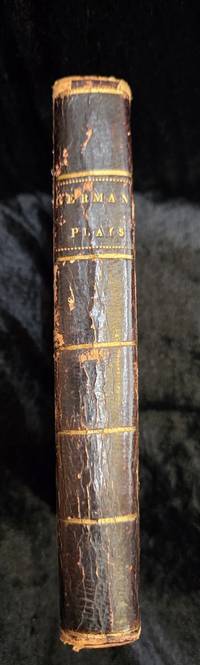
1800LCB64873London: Vernor & Hood. 1800 - 1801. 1st Edition english; First Impression. Original half leather boards. Good in No Dust Jacket dust jacket. Visible cracking to spine & corners. Marbled boards are rubbed & scuffed. Corners are scuffed. Some staining & foxing. Tear on page 81-82 >3 cm. Previous owner signature in ink on end paper. ; Ex-libris William Gibton of Mack Williams & Gibton a notable figure in Irish arts & commerce of the 19th century as evidenced by personal bookplate. Original half-leather with marbled boards with gilt lettering & bands on spine & corners. Frontispiece chapter headings & vignettes collaboration between T. Thurston Well-regarded artist & exhibitor at the Royal Academy & C. Warren renowned engraver. A handsome early 19th century compilation volume of three German plays bound together & translated by Benjamin Thompson a key figure in the cultural exchange between Germany & Britain at the turn of the 19th Century. ; 16.8 cm x 10 cm x 2 cm ; 82 pages . Vernor & Hood hardcover
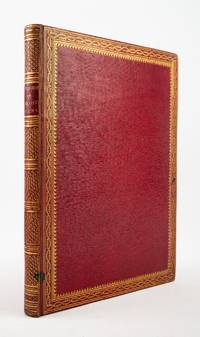
1795ST20880London: W. Bulmer and Co. Shakspeare Printing Office 1795. 305 x 238 mm. 12 x 9 5/8". xx 76 pp. <br/> HANDSOME CONTEMPORARY SCARLET STRAIGHT-GRAIN MOROCCO ELABORATELY GILT covers framed by gilt fillets and decorative rolls smooth spine panels diapered into compartments containing annular dots gilt lettering turn-ins with gilt bead roll marbled endpapers all edges gilt. Housed in a velveteen-lined brown cloth chemise in an excellent matching morocco-backed slipcase. Engraved title page vignette five plates and seven vignettes in the text by Thomas and John Bewick. A Large Paper Copy. Front pastedown with bookseller's ticket of E. Lloyd. Hugo 87; Ray "England" 50. See also Glaister p. 75. Four small black ink spots to boards a hint of wear to corners title and dedication leaf a bit foxed occasional mild foxing elsewhere but an excellent copy--the text clean and fresh with capacious margins and the beautiful contemporary binding lustrous and virtually unworn.<br/> <br/> This extremely attractive poetic production is called by Hugo "a magnificent result of the efforts of the wood-engraver type-founder papermaker and printer" and it is offered here in a richly decorative contemporary binding. The text is composed of two poems by Oliver Goldsmith "The Traveller" and "The Deserted Village" and one poem by Thomas Parnell "The Hermit" accompanied by biographical sketches of each writer that of Parnell written by Goldsmith. The charming illustrations are the work of the Bewick brothers. More than any contemporaneous artist or printer Thomas Bewick 1753-1828 was responsible for a renewed interest in wood engraving his virtuosity and prolific output in the medium raising its reputation in book production. And here his artworks are accompanied by those of his brother John 1760-95. The large scenes which gracefully depict the figures from the poems are accompanied by the small head- and tailpiece vignettes for which Thomas Bewick is best remembered the gently sentimental scenes of rural vistas and picturesque ruins perfectly offsetting the text. Our volume was beautifully printed on heavy Whatman paper by Bewick's friend the celebrated William Bulmer who in Glaister's words was "one of the best printers of the time striving to raise the standard of English typography. To this end he perfected his own ink used good paper and specially cut types." Ray praises the printing as well as the illustrations writing that "thanks to Bulmer this is by far the handsomest of contemporary volumes containing Bewick's work." Our copy in pleasing contemporary morocco is a particularly appealing example. W. Bulmer and Co. Shakspeare Printing Office unknown
178039396Berne Bern: Chez la Nouvelle Société Typographique 1780-1781. Freudeberg. Three volumes complete. A PRISTINE LARGE-PAPER SET OF FREUDEBERG'S MASTERPIECE THE FIRST EDITION OF ONE OF THE GREAT 18TH-CENTURY FRENCH LANGUAGE ILLUSTRATED BOOKS FAR AND AWAY THE GREATEST WORK OF ITS KIND PRODUCED IN SWITZERLAND AND ILLUSTRATED BY SWISS ARTISTS. Volume I includes the cancellans engraved title the frontispiece by Eichler after Dunker and 21 finely-engraved hors-texte plates after Freudeberg. Volume II includes the frontispiece and 25 plates after Freudeberg. Volume III includes the frontispiece and 27 plates after Freudeberg. THIS SET IS ABSOLUTELY COMPLETE with the identical frontispiece in each volume as issued and 73 hors-texte plates after Freudeberg. Additionally there are 72 etched vignettes and 72 elaborate tailpieces by or after Dunker. SO 220 ETCHINGS IN ALL. This is furthermore a LARGE-PAPER SET ON FINE DUTCH LAID PAPER "HOLLANDE" AN ISSUE UNKNOWN TO COHEN-DE RICCI. Cohen-De Ricci cols. 681-2 describes numerous outstanding sets of this work owned by leading 18th and 19th-century bibliophiles and concludes that "Le papier du troisième volume est toujours inférieur a celui des deux premiers"--which is certainly not the case with this set: the paper is excellent and consistent throughout. Cohen-De Ricci also mentions that the plates in volume III are numbered so close to the bottom of the sheets that the numbers are present only when the sheets are entirely uncut as is the case here. 8vos. ENTIRELY UNCUT 21 x 15.5 cm with large margins. IN THE ORIGINAL WRAPS WITH PAPER SPINE LABELS. Tiny traces of wear to extremities else FINE AND BRIGHT. THIS SET IS AS IT WAS WHEN IT LEFT THE PRINTER'S OFFICE ALMOST 250 YEARS AGO DURING THE REVOLUTIONARY WAR. <br/><br/> Chez la Nouvelle Société Typographique paperback
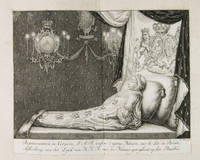
175918779The Hague 1759. Large folio ca. 50 x 36 cm. Pierre Gosse junior 19th-century half green morocco a red morocco label on the spine with the title in French lettered in gold marbled endpapers. With 20 engravings each mounted on a double-leaf of heavy paper the text is printed in Dutch and French with a separate title page for each language the engraved coat of arms of Princess Anna on each and 4 decorated woodcut initials. 2 parts in 1 volume. 4 4; 4 27 pp. First edition of two works with illustrations and descriptions of the funeral ceremonies for Princess Anna of Hannover 1709-1759 who was then regent for her son William V Stadtholder of the Dutch Republic. The first work shows the ceremonial mourning chamber with Princess Anna on her death bed. The plates were drawn by Pieter de Swart 1709-1772 one of the most important Dutch architects of the 18th century and engraved by Simon Fokke 1712-1784. The second work shows the funeral procession which took place in Delft on the 23rd of February in 1759 with detailed illustrations of all the heralds riflemen guards etc. that took part in the ceremony. The plates for this work were drawn by artist Paulus Constantijn la Fargue 1729-1782 and also engraved by Fokke. The creators apparently suspected that counterfeit editions of the work might appear as the text at the end of the first work states that only copies signed by the bookseller would be considered real. The present copy is signed.Princess Anna of Hannover duchess of Brunswick-Luneburg was the eldest daughter of George II August later King of England as George II and Wilhelmina Charlotte of Brandenburg-Ansbach. In 1734 she married the Dutch Willem Karel Hendrik Friso 1711-1751 Prince of Orange and Stadtholder of Friesland. When in 1747 her husband became Stadtholder of the Dutch Republic as Willem IV the couple moved from Leeuwarden to The Hague and Anna became highly involved in politics. After the death of Willem IV in 1751 she became regent for her three-year old son the later Stadtholder Willem V. In this position she played a prominent part in the political life of the Republic defending the position of the House of Orange against the republicans.The edges and corners of the boards are somewhat scuffed the boards are slightly rubbed the spine is somewhat discoloured. Otherwise a beautiful copy on heavy large paper with the plates in their original fresh impressions.l Ad 1: Landwehr Splendid ceremonies 233; Lipperheide 2675; Muller 4095; STCN 23024453X 7 copies; Vinet 756; Ad 2: Landwehr Splendid ceremonies 234; Lipperheide 2676; Muller 4097; STCN 230244394 7 copies; Vinet 756bis. ABE CAT Costumes & Uniforms hardcover
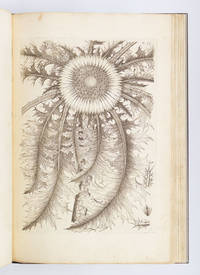
1785ST18172Turin: Michael Briolus 1785. FIRST EDITION. 410 x 270 mm. 16 1/8 x 10 5/8". Volume II with pp. 3-4 bound before pp. 1-2 but complete. Three volumes. <br/> INVENTIVE AND ELEGANT BROWN CRUSHED MOROCCO BY ANNIE BOIGE stamp-signed "A. Boige" on front pastedown and dated 1996 on rear pastedown upper covers cleverly encrusted with botanical specimens leaves or branches smooth spines with silver titling leather hinges watermarked light gray endpapers. Housed together in the original suede-lined brown cloth drop-back box suede-covered separators preventing contact between volumes. WITH engraved frontispiece portrait of the king of Sardinia in volume I engraved allegorical vignette on title pages and 92 FINE ENGRAVED PLATES ILLUSTRATING 237 BOTANICAL SPECIES. A Large Paper Copy. Cleveland Collections 557; Dunthorne 6; Sitwell "Great Flower Books" p. 67 69; Nissen BBI 18. ◆One plate with minor repair to fore-edge margin another with tiny rust hole not touching image half a dozen plates with insignificant smudges made during the printing process other trivial imperfections but A VERY FINE COPY clean fresh and wide-margined in a flawless binding.<br/> <br/> This is a major work of 18th century botany describing more than 2800 species of plants found in Italy's Piedmont region illustrating 237 previously unknown specimens and--crucially--classifying them all according to the new Linnean system becoming one of the first regional botanicals to use that taxonomy; as a bonus our copy comes in a particularly appropriate and charming binding with prominent botanical design elements. "Flora Pedemontana" was the chief work of Italian physician Carlo Allioni 1728-1804 professor of botany at the University of Turin and director of its natural history cabinet and botanical garden. The illustrations were drawn and engraved by the botanical garden's resident artist Francesco Peyroleri and his son Pietro. Our flora is also an important source of information on Alpine flowers. The modern binding is by an artisan who was proclaimed the "Grande Dame of French bookbinding" by the journal "Art & Métiers du Livre." Annie Boige trained at the Estienne School and at the Vésinet Applied Art Workshop before establishing her atelier in 1985. An art bookbinder she is noted for her monochrome color schemes and her use of beautiful leathers and vegetal materials a felicitous choice here. Michael Briolus unknown