Simeon L GutermanBiblio.com

172 résultats
19901011<p>Original hardcover from the publisher in perfect condition. No scratches or tears. Clear pages.</p> Peter Lang hardcover
1996DADAX0801090164Brand: Baker Pub Group 1996-01-01. paperback. New. 6.25x1.25x9.00. Buy with confidence. Excellent Customer Service & Return policy. Brand: Baker Pub Group paperback
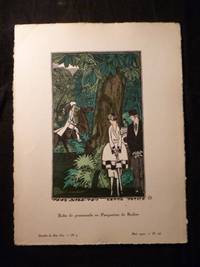
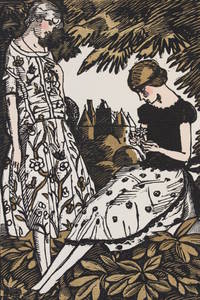
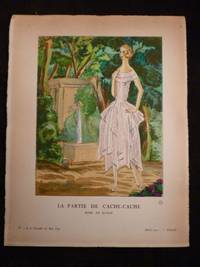
192039027Paris: Lucien Vogel éditeur 1920. Fine. Lucien Vogel éditeur Paris 1920 19.50 x 25 cm une feuille Original color print printed on vergé paper the signature does not let identify the artist. An original print used to illustrate the Gazette du bon ton one of the most attractive and influential 20th century fashion magazines featuring the talents of French artists and other contributors from the burgeoning Art Deco movement. A celebrated fashion magazine established in 1912 by Lucien Vogel La Gazette du bon ton appeared until 1925 with a hiatus from 1915 to 1920 due to the war the editor-in-chief having been called up for service. It consisted of 69 issues printed in only 2000 copies each and notably illustrated with 573 color plates and 148 sketches of the models of the great designers. Right from the start this sumptuous publication was aimed at bibliophiles and fashionable society Françoise Tétart-Vittu La Gazette du bon ton in Dictionnaire de la mode 2016 and was printed on fine vergé paper using a type cut specially for the magazine by Georges Peignot known as Cochin later used in 1946 by Christian Dior. The prints were made using stencils heightened in colors some highlighted in gold or palladium. The story began in 1912 when Lucien Vogel a man of the world involved in fashion he had already been part of the fashion magazine Femina decided with his wife Cosette de Brunhoff the sister of Jean creator of Babar to set up the Gazette du bon ton subtitled at the time: Art fashion frivolities. Georges Charensol noted the reasoning of the editor-in-chief: In 1910 he observed there was no really artistic fashion magazine nothing representative of the spirit of the time. My dream was therefore to make a luxury magazine with truly modern artists I was assured of success because when it comes to fashion no country on earth can compete with France. Un grand éditeur dart. Lucien Vogel in Les Nouvelles littéraires no. 133 May 1925. The magazine was immediately successful not only in France but also in the United States and Latin America. At first Vogel put together a team of seven artists: André-Édouard Marty and Pierre Brissaud followed by Georges Lepape and Dammicourt as well as eventually his friends from school and the School of Fine Arts like George Barbier Bernard Boutet de Monvel and Charles Martin. Other talented people soon came flocking to join the team: Guy Arnoux Léon Bakst Benito Boutet de Monvel Umberto Brunelleschi Chas Laborde Jean-Gabriel Domergue Raoul Dufy Édouard Halouze Alexandre Iacovleff Jean Émile Laboureur Charles Loupot Chalres Martin Maggie Salcedo. These artist mostly unknown when Lucien Vogel sought them out later became emblematic and sought-after artistic figures. It was also they who worked on the advertising drawings for the Gazette. The plates put the spotlight on and celebrate dresses by seven designers of the age: Lanvin Doeuillet Paquin Poiret Worth Vionnet and Doucet. The designers provided exclusive models for each issue. Nonetheless some of the illustrations are not based on real models but simply on the illustrators conception of the fashion of the day. The Gazette du bon ton was an important step in the history of fashion. Combining aesthetic demands with the physical whole it brought together for the first time the great talents of the artistic literary and fashion worlds; and imposed through this alchemy a completely new image of women: slender independent and daring which was shared by the new generation of designers including Coco Chanel Jean Patou Marcel Rochas and so on Taken over in 1920 by Condé Montrose Nast the Gazette du bon ton was an important influence on the new layout and aesthetics of that little dying paper that Nast had bought a few years earlier: Vogue. Lucien Vogel éditeur unknown
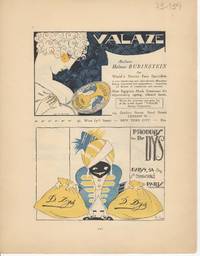
192073139Paris: Lucien Vogel éditeur 1920. Fine. Lucien Vogel éditeur Paris 1920 18 x 24 cm une feuille Original color print advertising the Verlaine shop printed on laid paper. Two advertising vignettes on the reverse about Valaze and Dr Dys products. Original engraving created for the illustration of La Gazette du bon ton one of the most beautiful and influential fashion magazines of the 20th century celebrating the talent of French creators and artists in the full bloom of art deco. Famous fashion magazine founded in 1912 by Lucien Vogel La Gazette du bon ton appeared until 1925 with an interruption during the War from 1915 to 1920 due to the mobilization of its editor-in-chief. It consists of 69 issues printed in only 2000 copies and is illustrated notably with 573 color plates and 148 sketches representing models by great couturiers. From their publication these luxurious publications ""address bibliophiles and worldly aesthetes"" Françoise Tétart-Vittu ""La Gazette du bon ton"" in Dictionnaire de la mode 2016. Printed on fine laid paper they use a typeface specially created for the magazine by Georges Peignot the Cochin character adopted in 1946 by Christian Dior. The prints are created using the metallic stencil technique heightened in colors and some outlined in gold or palladium. The adventure begins in 1912 when Lucien Vogel man of the world and fashion - he had already participated in the magazine Femina - decides to found with his wife Cosette de Brunhoff sister of Jean father of Babar the Gazette du bon ton whose subtitle was then ""Art modes et frivolités"". Georges Charensol reports the words of the editor-in-chief: ""In 1910 he observes there existed no fashion journal truly artistic and representative of the spirit of its time. I was therefore thinking of making a luxury magazine with truly modern artists . I was certain of success because for fashion no country can rival France."" ""Un grand éditeur d'art. Lucien Vogel"" in Les Nouvelles littéraires n°133 May 1925. The success of the magazine is immediate not only in France but also in the United States and South America. Originally Vogel thus brings together a group of seven artists: André-Édouard Marty and Pierre Brissaud followed by Georges Lepape and Dammicourt; and finally his friends from the École des beaux-arts who are George Barbier Bernard Boutet de Monvel or Charles Martin. Other talents quickly come to join the team: Guy Arnoux Léon Bakst Benito Boutet de Monvel Umberto Brunelleschi Chas Laborde Jean-Gabriel Domergue Raoul Dufy Édouard Halouze Alexandre Iacovleff Jean Émile Laboureur Charles Loupot Charles Martin Maggie Salcedo. These artists unknown for the most part when Lucien Vogel calls upon them will subsequently become emblematic and sought-after artistic figures. These are the same illustrators who create the drawings for the advertisements of the Gazette. The plates highlight and sublimate the dresses of seven creators of the time: Lanvin Doeuillet Paquin Poiret Worth Vionnet and Doucet. The couturiers provide exclusive models for each issue. Nevertheless some of the illustrations feature no real model but only the idea that the illustrator has of the fashion of the day. La Gazette du bon ton is a decisive step in the history of fashion. Combining aesthetic requirements and plastic unity it brings together for the first time the great talents of the world of arts letters and fashion and imposes through this alchemy a completely new image of woman slender independent and audacious also carried by the new generation of couturiers Coco Chanel Jean Patou Marcel Rochas. Taken over in 1920 by Condé Montrose Nast the Gazette du bon ton will largely inspire the new composition and aesthetic choices of the ""small dying journal"" that Nast had bought a few years earlier: Vogue magazine. Lucien Vogel éditeur unknown
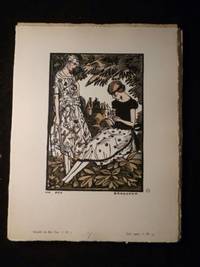
192039039Paris: Lucien Vogel éditeur 1920. Fine. Lucien Vogel éditeur Paris 1920 19.50 x 25 cm une feuille Original color print printed on vergé paper signed in the plate. An original print used to illustrate the Gazette du bon ton one of the most attractive and influential 20th century fashion magazines featuring the talents of French artists and other contributors from the burgeoning Art Deco movement. A celebrated fashion magazine established in 1912 by Lucien Vogel La Gazette du bon ton appeared until 1925 with a hiatus from 1915 to 1920 due to the war the editor-in-chief having been called up for service. It consisted of 69 issues printed in only 2000 copies each and notably illustrated with 573 color plates and 148 sketches of the models of the great designers. Right from the start this sumptuous publication was aimed at bibliophiles and fashionable society Françoise Tétart-Vittu La Gazette du bon ton in Dictionnaire de la mode 2016 and was printed on fine vergé paper using a type cut specially for the magazine by Georges Peignot known as Cochin later used in 1946 by Christian Dior. The prints were made using stencils heightened in colors some highlighted in gold or palladium. The story began in 1912 when Lucien Vogel a man of the world involved in fashion he had already been part of the fashion magazine Femina decided with his wife Cosette de Brunhoff the sister of Jean creator of Babar to set up the Gazette du bon ton subtitled at the time: Art fashion frivolities. Georges Charensol noted the reasoning of the editor-in-chief: In 1910 he observed there was no really artistic fashion magazine nothing representative of the spirit of the time. My dream was therefore to make a luxury magazine with truly modern artists I was assured of success because when it comes to fashion no country on earth can compete with France. Un grand éditeur dart. Lucien Vogel in Les Nouvelles littéraires no. 133 May 1925. The magazine was immediately successful not only in France but also in the United States and Latin America. At first Vogel put together a team of seven artists: André-Édouard Marty and Pierre Brissaud followed by Georges Lepape and Dammicourt as well as eventually his friends from school and the School of Fine Arts like George Barbier Bernard Boutet de Monvel and Charles Martin. Other talented people soon came flocking to join the team: Guy Arnoux Léon Bakst Benito Boutet de Monvel Umberto Brunelleschi Chas Laborde Jean-Gabriel Domergue Raoul Dufy Édouard Halouze Alexandre Iacovleff Jean Émile Laboureur Charles Loupot Chalres Martin Maggie Salcedo. These artist mostly unknown when Lucien Vogel sought them out later became emblematic and sought-after artistic figures. It was also they who worked on the advertising drawings for the Gazette. The plates put the spotlight on and celebrate dresses by seven designers of the age: Lanvin Doeuillet Paquin Poiret Worth Vionnet and Doucet. The designers provided exclusive models for each issue. Nonetheless some of the illustrations are not based on real models but simply on the illustrators conception of the fashion of the day. The Gazette du bon ton was an important step in the history of fashion. Combining aesthetic demands with the physical whole it brought together for the first time the great talents of the artistic literary and fashion worlds; and imposed through this alchemy a completely new image of women: slender independent and daring which was shared by the new generation of designers including Coco Chanel Jean Patou Marcel Rochas and so on Taken over in 1920 by Condé Montrose Nast the Gazette du bon ton was an important influence on the new layout and aesthetics of that little dying paper that Nast had bought a few years earlier: Vogue. Lucien Vogel éditeur unknown
1977G968230573XI5N00Siglo Veintiuno 1977. Hardcover. Acceptable. Readable copy. Pages may have considerable notes/highlighting. ~ ThriftBooks: Read More Spend Less.Dust jacket quality is not guaranteed. Siglo Veintiuno hardcover
1986Q-0916694534CCAR Press 1986-09-25. Paperback. New. New. In shrink wrap. Looks like an interesting title! CCAR Press paperback
2000mon0004050215Oxford University Press 7/30/2020 12:00:01 A. hardcover. Very Good. 0.8268 9.4882 6.3386. Oxford University Press hardcover
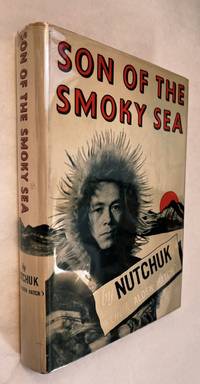
1941100668New York: J. Messner Inc 1941. Presumed First Ed. No prior dates printed. Hardcover. Fine in a very crisp fine- jacket housed in archival mylar. Tiny personal owner signature to front free endpaper 'hidden' in map. viii 243 pages 2 unnumbered pages: illustrations plates 2 portrait including frontispiece; 24 cm. Map on lining papers. A lovely copy. Uncommon thus. Author is half Inupiaq Inuit and half Norwegian. "Autobiography till 1925 of a Norwegian-Eskimo boy Simeon Oliver Nutchuk and his life as he grew up in a mission home on Unalaska. Shows 20th century life of natives along the Bering Sea particularly the Aleuts. / Contents: The treasure in the snow -- I find my home -- The gift from the sea -- Dr. Newhall father teacher friend -- The Jesse Lee home Christian outpost -- Cod-lines in the smoky sea -- Apprentice to Hippocrates -- Whaling -- The mine in the volcano -- I go outside -- American home -- Eskimo in college -- The girl at the piano -- My dear son -- I go back -- Little Man of the Tundra -- My own people -- Between two worlds. / "Simeon Oliver also known as Nutchuk was an Inupiaq Eskimo from Alaska who gained fame in the 1960s and 1970s as a spokesperson for his people and their way of life. He was known for his efforts to preserve Inupiaq culture and traditions and he traveled widely to give talks and presentations about his people's customs and beliefs. One of Nutchuk's most notable achievements was his work on the book "Nutchuk: Lord of the Ice" which was published in 1972. The book which was written with the help of author James Houston tells the story of Nutchuk's life and provides a detailed account of traditional Inupiaq ways of life. Nutchuk was also known for his skills as a carver and his works are considered fine examples of Inupiaq art. He often used traditional materials like ivory and bone in his carvings and his works often depicted animals and scenes from Inupiaq mythology. Nutchuk's efforts to preserve and promote Inupiaq culture made him a respected figure both within his own community and among those interested in the cultures of the Arctic. His work continues to be a valuable resource for those studying the Inupiaq people and their traditions." / Eskimos -- Alaska -- Aleutian Islands. Inuit. Eskimos. Inuits. Inuits -- Alaska -- Aléoutiennes. Inuit. Eskimos. Miscegenation Mixed Race. J. Messner, Inc hardcover
19851821635Published by Steimatzky 1985. 1st edition. Hardback. Nearly Fine. Nearly fine condition with no wrapper. A Hebrew manuscript of the mid-15th century from the collections of the British Library. Written and illuminated by Joel Ben Simeon called Feibusch Ashkenazi with a commentary attributed to Eleazar Ben Judah of Worms. Introduction notes on the illuminations transcription and English translation by Goldstein. Very large format. Colour illustrations. Blue cloth boards gilt titles English title to front board Hebrew to rear board. Some text in Hebrew. Small mark to lower edge of front board. Gilt title to spine a little rubbed. Contained in matching publisher's slipcase which has some very light fading. Published by Steimatzky hardcover
1987Q-0814318169Wayne State University Press 1987-04-01. Paperback. New. New. In shrink wrap. Looks like an interesting title! Wayne State University Press paperback
1995Q-0803962436Corwin 1995-10-17. Paperback. New. New. In shrink wrap. Looks like an interesting title! Corwin paperback
1995Q-0929661192Random House Inc 1995-04-18. Hardcover. New. In shrink wrap. Looks like an interesting title! Random House, Inc hardcover
1979Q-0916694372Central Conference of American Rabbis 1979-06-01. Hardcover. New. In shrink wrap. Looks like an interesting title! Central Conference of American Rabbis hardcover
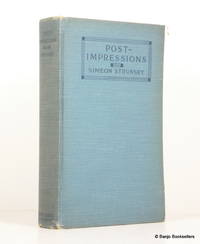
1914009614New York: Dodd Mead 1914. First printing. Light blue cloth with dark blue lettering. 262 pp. Light shelfwear. Previous owner's name is written on the front pastedown. The leaves are lightly toned. Otherwise fine in a tight square binding. First Edition. Hard Cover. Very Good/No Jacket. 12mo - over 6¾" - 7¾" tall. Dodd, Mead Hardcover
1999Q-0929661516Rebus Inc 1999-01-01. Hardcover. New. In shrink wrap. Looks like an interesting title! Rebus, Inc hardcover
1981039077Hauppague New York U.S.A.: J. Marr Pub Co 1981. Slight bow to book otherwise in very nice condition. 2nd. Hard Cover. Near Fine/Near Fine. Illus. by b/w Photos. J. Marr Pub Co Hardcover
2000Q-0929661583Rebus Inc 2000-01-01. Hardcover. New. In shrink wrap. Looks like an interesting title! Rebus, Inc hardcover
1995Q-092966132XRandom House Inc 1995-01-01. Hardcover. New. In shrink wrap. Looks like an interesting title! Random House, Inc hardcover
1992005525Wadsworth 1992 my copy is NEW MINT xc for owner's name BookPlate; 300 new pages; I ship anywhere you wish; Wadsworth hardcover
1928342923longmans 1928 first edition . near fine book very good jacket chipped at spine ends longmans unknown
191257636Paris: S. n. 1912. Fine. S. n. Paris 1912 14 x 22.50 cm une feuille original print in color printed on laid paper signed lower left of the board. One of the first French fashion magazines published a few days before the famous Gazette fashionable and bringing together the greatest French artists of the Art Deco movement. The Journal ladies and modes is a trimensuelle illustrated French fashion magazine created in 1797. Its publication was stopped in 1839 before being taken in June 1912 under the leadership of Tommaso Antongini secretary friend and biographer of Gabriele 'Annunzio. It will disappear in August 1914 on the eve of the First World War. The review was drawn to 1279 copies making it for the time a relatively confidential publication. The 186 plates with great finesse are engraved on strong paper and colored stencil. They represent the majority of the time women but also men and children. The models are not unlike those of the Gazette fashionable whose publication will be launched a few months later those renowned couturiers but are the fruit of the imagination of the illustrators themselves. The stencils are mostly executed by George Barbier but other artists collaborating on the magazine: Léon Bakst B. Berty Bernard Boutet de Monvel Roger Broders Jan van Brock Umberto Brunelleschi H. Robert Dammy Etienne Drian Abel Faivre Marie-Madeleine Franc-Nohain Xavier Gosé Paul Iribe Kriegck Victor Lhuer Pierre Legrain Charles Martin Fernand Simeon Ismael Smith Armand Vallee and Gerda Wegener. Many of these illustrators will also be involved in The Gazette fashionable. Their work emblematic of the Art Deco movement emphasize the influence of Orientalism and costumes of the Ballets Russes while registering in the daily activities of affluent French of the time. From the preface of the first issue of 1912 Anatole France said: ""After seventy-five years he is reborn. He is reborn through the efforts of a few ingenious minds and artists. He is reborn for the curious if there is that do not simply modes newspaper fired several thousand and illustrated by photography. And if publishers make us very exactly in its format with its paper printing its processes of etching and coloring the old classic patterns of the past is that they intend to continue the pleasantly and become charming classic fashion of today and tomorrow. "" S. n. unknown
192054773Paris: Lucien Vogel éditeur 1920. Fine. Lucien Vogel éditeur Paris Juin 1920 18 x 24 cm une feuille Original color print printed on vergé paper non signed. An original print used to illustrate the Gazette du bon ton one of the most attractive and influential 20th century fashion magazines featuring the talents of French artists and other contributors from the burgeoning Art Deco movement. A celebrated fashion magazine established in 1912 by Lucien Vogel La Gazette du bon ton appeared until 1925 with a hiatus from 1915 to 1920 due to the war the editor-in-chief having been called up for service. It consisted of 69 issues printed in only 2000 copies each and notably illustrated with 573 color plates and 148 sketches of the models of the great designers. Right from the start this sumptuous publication was aimed at bibliophiles and fashionable society Françoise Tétart-Vittu La Gazette du bon ton in Dictionnaire de la mode 2016 and was printed on fine vergé paper using a type cut specially for the magazine by Georges Peignot known as Cochin later used in 1946 by Christian Dior. The prints were made using stencils heightened in colors some highlighted in gold or palladium. The story began in 1912 when Lucien Vogel a man of the world involved in fashion he had already been part of the fashion magazine Femina decided with his wife Cosette de Brunhoff the sister of Jean creator of Babar to set up the Gazette du bon ton subtitled at the time: Art fashion frivolities. Georges Charensol noted the reasoning of the editor-in-chief: In 1910 he observed there was no really artistic fashion magazine nothing representative of the spirit of the time. My dream was therefore to make a luxury magazine with truly modern artists I was assured of success because when it comes to fashion no country on earth can compete with France. Un grand éditeur dart. Lucien Vogel in Les Nouvelles littéraires no. 133 May 1925. The magazine was immediately successful not only in France but also in the United States and Latin America. At first Vogel put together a team of seven artists: André-Édouard Marty and Pierre Brissaud followed by Georges Lepape and Dammicourt as well as eventually his friends from school and the School of Fine Arts like George Barbier Bernard Boutet de Monvel and Charles Martin. Other talented people soon came flocking to join the team: Guy Arnoux Léon Bakst Benito Boutet de Monvel Umberto Brunelleschi Chas Laborde Jean-Gabriel Domergue Raoul Dufy Édouard Halouze Alexandre Iacovleff Jean Émile Laboureur Charles Loupot Chalres Martin Maggie Salcedo. These artist mostly unknown when Lucien Vogel sought them out later became emblematic and sought-after artistic figures. It was also they who worked on the advertising drawings for the Gazette. The plates put the spotlight on and celebrate dresses by seven designers of the age: Lanvin Doeuillet Paquin Poiret Worth Vionnet and Doucet. The designers provided exclusive models for each issue. Nonetheless some of the illustrations are not based on real models but simply on the illustrators conception of the fashion of the day. The Gazette du bon ton was an important step in the history of fashion. Combining aesthetic demands with the physical whole it brought together for the first time the great talents of the artistic literary and fashion worlds; and imposed through this alchemy a completely new image of women: slender independent and daring which was shared by the new generation of designers including Coco Chanel Jean Patou Marcel Rochas and so on Taken over in 1920 by Condé Montrose Nast the Gazette du bon ton was an important influence on the new layout and aesthetics of that little dying paper that Nast had bought a few years earlier: Vogue. Lucien Vogel éditeur unknown
192138999Paris: Lucien Vogel éditeur 1921. Fine. Lucien Vogel éditeur Paris 1921 19.50 x 25 cm une feuille Original color print printed on vergé paper signed in the plate. An original print used to illustrate the Gazette du bon ton one of the most attractive and influential 20th century fashion magazines featuring the talents of French artists and other contributors from the burgeoning Art Deco movement. A celebrated fashion magazine established in 1912 by Lucien Vogel La Gazette du bon ton appeared until 1925 with a hiatus from 1915 to 1920 due to the war the editor-in-chief having been called up for service. It consisted of 69 issues printed in only 2000 copies each and notably illustrated with 573 color plates and 148 sketches of the models of the great designers. Right from the start this sumptuous publication was aimed at bibliophiles and fashionable society Françoise Tétart-Vittu La Gazette du bon ton in Dictionnaire de la mode 2016 and was printed on fine vergé paper using a type cut specially for the magazine by Georges Peignot known as Cochin later used in 1946 by Christian Dior. The prints were made using stencils heightened in colors some highlighted in gold or palladium. The story began in 1912 when Lucien Vogel a man of the world involved in fashion he had already been part of the fashion magazine Femina decided with his wife Cosette de Brunhoff the sister of Jean creator of Babar to set up the Gazette du bon ton subtitled at the time: Art fashion frivolities. Georges Charensol noted the reasoning of the editor-in-chief: In 1910 he observed there was no really artistic fashion magazine nothing representative of the spirit of the time. My dream was therefore to make a luxury magazine with truly modern artists I was assured of success because when it comes to fashion no country on earth can compete with France. Un grand éditeur dart. Lucien Vogel in Les Nouvelles littéraires no. 133 May 1925. The magazine was immediately successful not only in France but also in the United States and Latin America. At first Vogel put together a team of seven artists: André-Édouard Marty and Pierre Brissaud followed by Georges Lepape and Dammicourt as well as eventually his friends from school and the School of Fine Arts like George Barbier Bernard Boutet de Monvel and Charles Martin. Other talented people soon came flocking to join the team: Guy Arnoux Léon Bakst Benito Boutet de Monvel Umberto Brunelleschi Chas Laborde Jean-Gabriel Domergue Raoul Dufy Édouard Halouze Alexandre Iacovleff Jean Émile Laboureur Charles Loupot Chalres Martin Maggie Salcedo. These artist mostly unknown when Lucien Vogel sought them out later became emblematic and sought-after artistic figures. It was also they who worked on the advertising drawings for the Gazette. The plates put the spotlight on and celebrate dresses by seven designers of the age: Lanvin Doeuillet Paquin Poiret Worth Vionnet and Doucet. The designers provided exclusive models for each issue. Nonetheless some of the illustrations are not based on real models but simply on the illustrators conception of the fashion of the day. The Gazette du bon ton was an important step in the history of fashion. Combining aesthetic demands with the physical whole it brought together for the first time the great talents of the artistic literary and fashion worlds; and imposed through this alchemy a completely new image of women: slender independent and daring which was shared by the new generation of designers including Coco Chanel Jean Patou Marcel Rochas and so on Taken over in 1920 by Condé Montrose Nast the Gazette du bon ton was an important influence on the new layout and aesthetics of that little dying paper that Nast had bought a few years earlier: Vogue. Lucien Vogel éditeur unknown
1997048704Biplane Productions. very nice copy; larger-format; oblong . Fine. Hardcover. 1st Edition. 1997. Biplane Productions hardcover