Simeon Margolis [Editor]Biblio.com

172 résultats
1995Q-092966132XRandom House Inc 1995-01-01. Hardcover. New. In shrink wrap. Looks like an interesting title! Random House, Inc hardcover
1995DADAX092966132XBrand: Random House Inc 1995-01-01. Updated. hardcover. New. 8.27x2.16x10.25. Buy with confidence. Excellent Customer Service & Return policy. Brand: Random House, Inc hardcover
199714249Tustin CA: North Cape Publications. Very Good. 1997. Second Edition. Paperback. 188239108X . B&W Illustrations; 8.4 X 5.5 X 0.7 inches; viii 223 pages; Soft cover has brown spine with black lettering. Covers have some rubbing scuffing bumping; crease on spine from book being opened. A few leaves 113-126 are loose. Pages are clean. Illustrated with b/w pictures. This is a 2d edition. 'The M1 Garand was the battle rifle issued to American forces during World War II and the Korean War. It was the first semiautomatic rifle design to be used by combat forces in any army of the world. It was standardized in 1936 and saw its first combat in the Philippines in December 1941. Few other rifles have developed such a distinguished record as both a battle rifle and a match target rifle. General George Patton called the M1 Garand the greatest battle implement ever devised. The semiautomatic M1 Garand gave the American soldier a distinct firepower advantage over enemy soldiers armed with bolt action rifles that had to be cocked before each shot. During World War II nearly four million M1 Garands were built at the Springfield National Armory and Winchester Repeating Firearms factories. They were issued in every theater of the war. And hundreds of thousands were issued to French Belgian Greek Italian and Philippine allies as well. During the Cold War years until the early 1960s the M1 Garand was the mainstay of our small arms support programs to allied and friendly nations. In the last days of World War II special variations of the M1 Garand designated the M1C were developed and produced as sniper rifles. More were built during and after the Korean War as the M1D. Also during the Korean War the M1 Garand was put back into production at Springfield and in the factories of two private concerns bringing the total production to almost 6000000. Hundreds of thousands of M1 Garands were issued to soldiers of the Army of the Republic of South Vietnam. Thousands of M1 Garands were manufactured in the 1950s as Match Target rifles and these are also eagerly sought by collectors.' 10 appendices; 20 tables. . North Cape Publications paperback
1911004912New York: Dodd Mead 1911. Three small dents in rear outer edge. First Book-form Edition. Original Cloth. Very Good. Dodd, Mead Hardcover
1995__8173040362South Asia Books 1995. Hardcover. New. 398 pages. 9.25x6.00x1.25 inches. South Asia Books hardcover
1995BIBRR1118810771995. Hardcover. New. THIS RARE/ANTIQUE BOOK PUBLISHED IN THE YEAR 1995 BY K.B.Publications HAVING 418 PGS AND SIZE 8.755.75 WRITTEN IN English. THE BOOK IS IN READABLE CONDITION Originally in Hardcover with some issues like loose binding and some Pin Holes. The book is having B/W Maps. THE IMAGE OF THIS BOOK IS GIVEN FOR YOUR REFERENCE. WE CAN REBIND THE SAME IN LEATHER BINDING FOR EXTRA $ 25. hardcover
1985x-0333362055Palgrave Macmillan 1985. Hardcover. New. 269 pages. 8.50x5.43x8.50 inches. Palgrave Macmillan hardcover
19901011<p>Original hardcover from the publisher in perfect condition. No scratches or tears. Clear pages.</p> Peter Lang hardcover
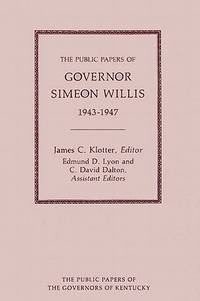
1988Q-0813106079University Press of Kentucky 1988-05-19. Hardcover. New. In shrink wrap. Looks like an interesting title! University Press of Kentucky hardcover
1926C48799London 1926. First Edition. Hardback. No Dust Jacket. Very good. 8vo. pp xxi 247. Original publisher's green cloth lettered black on spine and front cover. Introduction by Joseph S. Bridges. With the small attractive bookplate showing a bookish owl of ÔOzÕ publisher later media tycoon Felix Dennis 1947-2014. He was also a distinguished poet philanthropist book collector and lover of trees the Forest of Dennis. hardcover
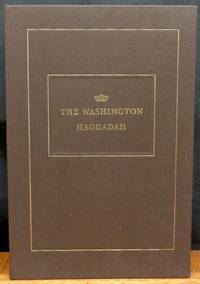
199152807Washington: Library of Congress 1991. Limited edition. Hardcover. Fine condition. 92/500. The Library's most important Hebrew illuminated manuscript is known as the "Washington Haggadah" because of its location in Washington D.C. A Haggadah the plural is haggadot is a liturgical work that is recited in the home at the festive evening meal of Passover in order to fulfill the biblical injunction Exodus 13:8 to recount the story of the Exodus to each generation. Haggadot are often illustrated the theory being that this will keep the children interested and awake during the reciting of the text. <br /> <br /> Completed on January 29 1478 the Washington Haggadah was signed by Joel ben Simeon a well-known scribe and artist responsible for more than a dozen other Hebrew illuminated manuscripts found in collections around the world. In addition to the full text of the Passover night liturgy the Washington Haggadah features stunningly intricate illuminated panels and a series of Passover illustrations that include depictions of "The Four Sons" "The Search for Leaven" and "The Messiah Heralded." The enduring popularity of Joel ben Simeon's miniatures is reflected in the many reproductions of his work that have appeared over the years in anthologies of Jewish art and manuscript painting. <br /> <br /> In 1991 the Library of Congress published this facsimile edition of the Washington Haggadah accompanied by a companion volume with a detailed scholarly description analysis and assessment of the manuscript. This edition faithfully preserves the original text with the Hebrew facsimile appearing in the original right-to-left orientation. It will be read and treasured by anyone interested in Jewish history medieval illuminated manuscripts and the history of the Haggadah. The Haggadah itself is bound in leather. The commentary by Myron Weinstein is a separate volume bound in cloth with both volumes encased in a cloth covered clamshell box. Library of Congress hardcover
1991046823Library Of Congress. Very Good with no dust jacket. 1991. Limited Edition. Hardcover. 0844406694 . Hardcover; Two volume hardcover set in a clamshell box. Limited edition of 500 copies this is #225. Haggadah volume is bound in brown leather with title in gold on front board and spine. Commentary volume is done in brown cloth with title and gold ruling on front board and spine. Small spot to front board. Previous owner's name on third free endpaper. Text pages are crisp and clean. Brown cloth clamshell case with gold ruling and titling in gold is in very nice condition with minor wear. Always carefully wrapped and shipped in cardboard boxes to protect your purchase.; Color Illus; 8VO . Library Of Congress hardcover
1905mon0000006065R.L. Allan 1905. Unknown Binding. Good. in x in x in. First edition without jacket on red cloth will send out 1 st class post - rare and collectable R.L. Allan unknown
1987Q-0814318169Wayne State University Press 1987-04-01. Paperback. New. New. In shrink wrap. Looks like an interesting title! Wayne State University Press paperback
1987x-0814318169Wayne State Univ Pr 1987. Paperback. New. 408 pages. 10.00x7.00x0.75 inches. Wayne State Univ Pr paperback
1906ZB367429Barcelona: J. Sabate ca. 1906. 12mo 156 pp library markings text age toned with light margin flaking lacks paper wrappers and spine strengthened with cloth tape complete but good only. - If you are reading this this item is actually physically in our stock and ready for shipment once ordered. We are not bookjackers. Buyer is responsible for any additional duties taxes or fees required by recipient's country. Barcelona: J. Sabate, hardcover
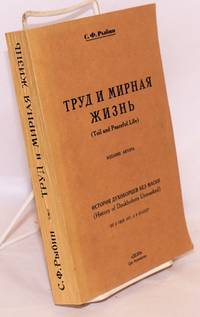
1952221864San Francisco: Delo 1952. Paperback. 338p. very good paperback text in Russian. On the Doukobhors in Canada and in California; 72 small black and white illustrations including photos of life at various settlements. Delo paperback
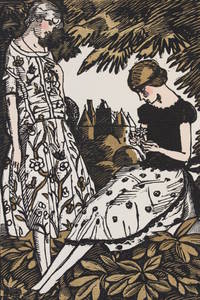
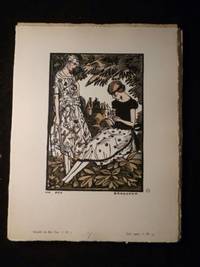
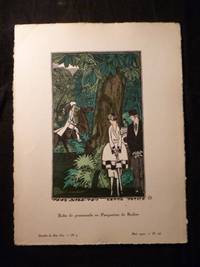
192054773Paris: Lucien Vogel éditeur 1920. Fine. Lucien Vogel éditeur Paris Juin 1920 18 x 24 cm une feuille Original color print printed on vergé paper non signed. An original print used to illustrate the Gazette du bon ton one of the most attractive and influential 20th century fashion magazines featuring the talents of French artists and other contributors from the burgeoning Art Deco movement. A celebrated fashion magazine established in 1912 by Lucien Vogel La Gazette du bon ton appeared until 1925 with a hiatus from 1915 to 1920 due to the war the editor-in-chief having been called up for service. It consisted of 69 issues printed in only 2000 copies each and notably illustrated with 573 color plates and 148 sketches of the models of the great designers. Right from the start this sumptuous publication was aimed at bibliophiles and fashionable society Françoise Tétart-Vittu La Gazette du bon ton in Dictionnaire de la mode 2016 and was printed on fine vergé paper using a type cut specially for the magazine by Georges Peignot known as Cochin later used in 1946 by Christian Dior. The prints were made using stencils heightened in colors some highlighted in gold or palladium. The story began in 1912 when Lucien Vogel a man of the world involved in fashion he had already been part of the fashion magazine Femina decided with his wife Cosette de Brunhoff the sister of Jean creator of Babar to set up the Gazette du bon ton subtitled at the time: Art fashion frivolities. Georges Charensol noted the reasoning of the editor-in-chief: In 1910 he observed there was no really artistic fashion magazine nothing representative of the spirit of the time. My dream was therefore to make a luxury magazine with truly modern artists I was assured of success because when it comes to fashion no country on earth can compete with France. Un grand éditeur dart. Lucien Vogel in Les Nouvelles littéraires no. 133 May 1925. The magazine was immediately successful not only in France but also in the United States and Latin America. At first Vogel put together a team of seven artists: André-Édouard Marty and Pierre Brissaud followed by Georges Lepape and Dammicourt as well as eventually his friends from school and the School of Fine Arts like George Barbier Bernard Boutet de Monvel and Charles Martin. Other talented people soon came flocking to join the team: Guy Arnoux Léon Bakst Benito Boutet de Monvel Umberto Brunelleschi Chas Laborde Jean-Gabriel Domergue Raoul Dufy Édouard Halouze Alexandre Iacovleff Jean Émile Laboureur Charles Loupot Chalres Martin Maggie Salcedo. These artist mostly unknown when Lucien Vogel sought them out later became emblematic and sought-after artistic figures. It was also they who worked on the advertising drawings for the Gazette. The plates put the spotlight on and celebrate dresses by seven designers of the age: Lanvin Doeuillet Paquin Poiret Worth Vionnet and Doucet. The designers provided exclusive models for each issue. Nonetheless some of the illustrations are not based on real models but simply on the illustrators conception of the fashion of the day. The Gazette du bon ton was an important step in the history of fashion. Combining aesthetic demands with the physical whole it brought together for the first time the great talents of the artistic literary and fashion worlds; and imposed through this alchemy a completely new image of women: slender independent and daring which was shared by the new generation of designers including Coco Chanel Jean Patou Marcel Rochas and so on Taken over in 1920 by Condé Montrose Nast the Gazette du bon ton was an important influence on the new layout and aesthetics of that little dying paper that Nast had bought a few years earlier: Vogue. Lucien Vogel éditeur unknown
192039039Paris: Lucien Vogel éditeur 1920. Fine. Lucien Vogel éditeur Paris 1920 19.50 x 25 cm une feuille Original color print printed on vergé paper signed in the plate. An original print used to illustrate the Gazette du bon ton one of the most attractive and influential 20th century fashion magazines featuring the talents of French artists and other contributors from the burgeoning Art Deco movement. A celebrated fashion magazine established in 1912 by Lucien Vogel La Gazette du bon ton appeared until 1925 with a hiatus from 1915 to 1920 due to the war the editor-in-chief having been called up for service. It consisted of 69 issues printed in only 2000 copies each and notably illustrated with 573 color plates and 148 sketches of the models of the great designers. Right from the start this sumptuous publication was aimed at bibliophiles and fashionable society Françoise Tétart-Vittu La Gazette du bon ton in Dictionnaire de la mode 2016 and was printed on fine vergé paper using a type cut specially for the magazine by Georges Peignot known as Cochin later used in 1946 by Christian Dior. The prints were made using stencils heightened in colors some highlighted in gold or palladium. The story began in 1912 when Lucien Vogel a man of the world involved in fashion he had already been part of the fashion magazine Femina decided with his wife Cosette de Brunhoff the sister of Jean creator of Babar to set up the Gazette du bon ton subtitled at the time: Art fashion frivolities. Georges Charensol noted the reasoning of the editor-in-chief: In 1910 he observed there was no really artistic fashion magazine nothing representative of the spirit of the time. My dream was therefore to make a luxury magazine with truly modern artists I was assured of success because when it comes to fashion no country on earth can compete with France. Un grand éditeur dart. Lucien Vogel in Les Nouvelles littéraires no. 133 May 1925. The magazine was immediately successful not only in France but also in the United States and Latin America. At first Vogel put together a team of seven artists: André-Édouard Marty and Pierre Brissaud followed by Georges Lepape and Dammicourt as well as eventually his friends from school and the School of Fine Arts like George Barbier Bernard Boutet de Monvel and Charles Martin. Other talented people soon came flocking to join the team: Guy Arnoux Léon Bakst Benito Boutet de Monvel Umberto Brunelleschi Chas Laborde Jean-Gabriel Domergue Raoul Dufy Édouard Halouze Alexandre Iacovleff Jean Émile Laboureur Charles Loupot Chalres Martin Maggie Salcedo. These artist mostly unknown when Lucien Vogel sought them out later became emblematic and sought-after artistic figures. It was also they who worked on the advertising drawings for the Gazette. The plates put the spotlight on and celebrate dresses by seven designers of the age: Lanvin Doeuillet Paquin Poiret Worth Vionnet and Doucet. The designers provided exclusive models for each issue. Nonetheless some of the illustrations are not based on real models but simply on the illustrators conception of the fashion of the day. The Gazette du bon ton was an important step in the history of fashion. Combining aesthetic demands with the physical whole it brought together for the first time the great talents of the artistic literary and fashion worlds; and imposed through this alchemy a completely new image of women: slender independent and daring which was shared by the new generation of designers including Coco Chanel Jean Patou Marcel Rochas and so on Taken over in 1920 by Condé Montrose Nast the Gazette du bon ton was an important influence on the new layout and aesthetics of that little dying paper that Nast had bought a few years earlier: Vogue. Lucien Vogel éditeur unknown
192039027Paris: Lucien Vogel éditeur 1920. Fine. Lucien Vogel éditeur Paris 1920 19.50 x 25 cm une feuille Original color print printed on vergé paper the signature does not let identify the artist. An original print used to illustrate the Gazette du bon ton one of the most attractive and influential 20th century fashion magazines featuring the talents of French artists and other contributors from the burgeoning Art Deco movement. A celebrated fashion magazine established in 1912 by Lucien Vogel La Gazette du bon ton appeared until 1925 with a hiatus from 1915 to 1920 due to the war the editor-in-chief having been called up for service. It consisted of 69 issues printed in only 2000 copies each and notably illustrated with 573 color plates and 148 sketches of the models of the great designers. Right from the start this sumptuous publication was aimed at bibliophiles and fashionable society Françoise Tétart-Vittu La Gazette du bon ton in Dictionnaire de la mode 2016 and was printed on fine vergé paper using a type cut specially for the magazine by Georges Peignot known as Cochin later used in 1946 by Christian Dior. The prints were made using stencils heightened in colors some highlighted in gold or palladium. The story began in 1912 when Lucien Vogel a man of the world involved in fashion he had already been part of the fashion magazine Femina decided with his wife Cosette de Brunhoff the sister of Jean creator of Babar to set up the Gazette du bon ton subtitled at the time: Art fashion frivolities. Georges Charensol noted the reasoning of the editor-in-chief: In 1910 he observed there was no really artistic fashion magazine nothing representative of the spirit of the time. My dream was therefore to make a luxury magazine with truly modern artists I was assured of success because when it comes to fashion no country on earth can compete with France. Un grand éditeur dart. Lucien Vogel in Les Nouvelles littéraires no. 133 May 1925. The magazine was immediately successful not only in France but also in the United States and Latin America. At first Vogel put together a team of seven artists: André-Édouard Marty and Pierre Brissaud followed by Georges Lepape and Dammicourt as well as eventually his friends from school and the School of Fine Arts like George Barbier Bernard Boutet de Monvel and Charles Martin. Other talented people soon came flocking to join the team: Guy Arnoux Léon Bakst Benito Boutet de Monvel Umberto Brunelleschi Chas Laborde Jean-Gabriel Domergue Raoul Dufy Édouard Halouze Alexandre Iacovleff Jean Émile Laboureur Charles Loupot Chalres Martin Maggie Salcedo. These artist mostly unknown when Lucien Vogel sought them out later became emblematic and sought-after artistic figures. It was also they who worked on the advertising drawings for the Gazette. The plates put the spotlight on and celebrate dresses by seven designers of the age: Lanvin Doeuillet Paquin Poiret Worth Vionnet and Doucet. The designers provided exclusive models for each issue. Nonetheless some of the illustrations are not based on real models but simply on the illustrators conception of the fashion of the day. The Gazette du bon ton was an important step in the history of fashion. Combining aesthetic demands with the physical whole it brought together for the first time the great talents of the artistic literary and fashion worlds; and imposed through this alchemy a completely new image of women: slender independent and daring which was shared by the new generation of designers including Coco Chanel Jean Patou Marcel Rochas and so on Taken over in 1920 by Condé Montrose Nast the Gazette du bon ton was an important influence on the new layout and aesthetics of that little dying paper that Nast had bought a few years earlier: Vogue. Lucien Vogel éditeur unknown
1967MASTER333471IGLORIETA NM.: RIO GRANDE PRESS INC. VG IN BLACK CLOTH WITH GILT LETTERING. NO DJ. Pages: 376. . 1967. HARDCOVER. 2 FACSIMILE REPRINTS IN 1 VOLUME. BOARDS LIGHTLY EDGEWORN & SCUFFED. PREV. OWNER BOOKPLATE INSIDE. PAGES CLEAN & TIGHT. . RIO GRANDE PRESS INC. hardcover
1967044202The Rio Grande Press 1967. Hardcover. Very Good. Minimal wear to hardcover. The titles on the spine are fading. Titles are front cover and bright and clear. No marks inside except owner name. <br/> <br/> The Rio Grande Press hardcover