Toulouse-Lautrec und SteinlenBiblio.com
33 résultats
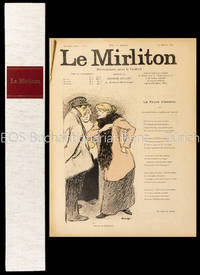
188531053AB1885. Jahrgänge 121. Paris. Directeur Aristide Bruant. 18851905. Quarto 275 x 14 und 375 x 275 cm. 190 von 194 Heften. Nummern 1142 ohne die Hefte 69 und 103m Serie 2: Nummern 130 Serie 3: Nummern 121 ohne die die Hefte 6 und 22. Lose Hefte mit meist farbigen Titeln in Lithographie von Toulouse-Lautrec und Steinlen. Fast vollständige Serie dieser seltenen Zeitschrift herausgegeben vom Pariser Chansonniert Aristide Bruat der zu dieser Zeit auf dem Montmartre ein Cabaret mit dem Namen "Le Mirliton" führte. - Die ersten 100 Nummern und alle der 3. Serie sind im Format 275 x 14 cm von Nummer 101 bis zum Schluss der 2. Serie im Format 375 x 275 cm. Ab dem Jahr 1895 erschien die Zeitschrift nur noch sporadisch. Zwischen Juni 1896 und Mai 1903 erschienen keine Ausgaben. Sehr seltene bis auf 4 Nummern komplette Folge dieser Jugendstil-Zeitschrift. unknown
189874859Paris: Imprimerie Champenoispour CH. MassonH. Piazza 1898. Fine. Imprimerie Champenois pour CH. Masson H. Piazza Paris Juin 1898 34.50 x 21 cm une feuille Rare original lithograph executed by Théophile Alexandre Steinlen for L'Estampe Moderne series number 14 published in June 1898. One of 50 deluxe proofs printed on China paper with wide margins artist's signature and date in the plate publisher's dry stamp depicting a child's profile in the lower margin mounted on a sheet of laid paper with the numbered stamp of the deluxe printing on the verso some foxing. Lithograph inspired by an excerpt from Germinie Lacerteux by the Goncourts. Magnificent French monthly publication edited between May 1897 and April 1899 L'Estampe moderne consists of unpublished chromolithographs which unlike other magazines such as Les Maîtres de l'Affiche and as stipulated on the tissue guards were created specially by each artist for the magazine. Thus 100 prints appear in total covering the major artistic movements of the late nineteenth century: Symbolism Art Nouveau Pre-Raphaelites Orientalists and Belle Epoque. Each delivery of four prints is published in 2000 copies sold for 3.50F and 100 on Japan paper offered at 10F. Henri Piazza also provides a confidential printing of very high luxury: 50 copies on Japan paper with wide margins and 50 in black on China paper at the considerable price of 30F. This print of handsome format is superbly printed on one of the most prestigious papers: China paper. ""Despite all its qualities China paper too inconsistent owes its reputation not to its own beauty but indeed to its particular affinities with printing ink. Its texture smooth and soft together is more apt than any other to receive a fine printing. This property makes China paper sought after for printing engravings."" Anatole France. The interest of French collectors in artistic posters amplifies at the beginning of the 1890s. Octave Uzanne to qualify this fever invents the term ""affichomanie"". The poster originally popular and posted in the streets of the capital then becomes an art object and its ephemeral support becomes precious and devoted to conservation. Piazza decides to remove the poster from its advertising vocation and to elevate it to the rank of a complete work of art on the same level as the luxury illustrated book. He thus composes a prestigious collection of entirely original works by the most prominent European artists of the moment: Georges de Feure Eugène Grasset Henri Detouche Emile Berchmans Louis Rhead Gaston de Latenay Lucien Lévy-Dhurmer Gustave-Max Stevens Charles Doudelet Hans Christiansen Henri Fantin-Latour Steinlen Ibels Engels Willette Henri Meunier Evenepoël Bellery-Desfontaines Charles Léandre etc. Handsome copy. Imprimerie Champenoispour CH. MassonH. Piazza unknown
189875859Paris: Imprimerie Champenoispour CH. MassonH. Piazza 1898. Fine. Imprimerie Champenois pour CH. Masson H. Piazza Paris Juin 1898 19.50 x 36 cm une feuille Rare original lithograph executed by Théophile Alexandre Steinlen for L'Estampe Moderne series number 14 published in June 1898. One of 50 deluxe copies printed on Japan paper with wide margins artist's signature and date in the plate publisher's dry stamp depicting a child's profile in the lower margin with the numbered stamp of the deluxe issue on verso some foxing. Lithograph inspired by an extract from Germinie Lacerteux by the Goncourts. A magnificent French monthly publication edited between May 1897 and April 1899 L'Estampe moderne consists of previously unpublished chromolithographs which unlike other magazines such as Les Maîtres de l'Affiche and as stipulated on the tissue guards were created specially by each artist for the magazine. Thus 100 prints appeared in total covering the major artistic movements of the late 19th century: Symbolism Art Nouveau Pre-Raphaelites Orientalists and Belle Epoque. Each delivery of four prints was issued in 2000 copies sold at 3.50F and 100 on Japan paper offered at 10F. Henri Piazza also planned a confidential deluxe issue: 50 copies on Japan paper with wide margins and 50 in black on China paper at the considerable price of 30F. This print of handsome format is superbly printed on one of the most prestigious papers: China paper. ""Despite all its qualities China paper too inconsistent owes its reputation not to its own beauty but to its particular affinities with printing ink. Its texture smooth and soft together is more apt than any other to receive a beautiful impression. This property makes China paper sought after for printing engravings."" Anatole France. French collectors' interest in artistic posters intensified at the beginning of the 1890s. Octave Uzanne to describe this fever invented the term ""affichomania."" The poster originally popular and posted in the streets of the capital then became an art object and its ephemeral medium became precious and devoted to preservation. Piazza decided to remove the poster from its advertising purpose and elevate it to the rank of a work of art in its own right on the same level as the luxury illustrated book. He thus composed a prestigious collection of entirely original works by the most prominent European artists of the moment: Georges de Feure Eugène Grasset Henri Detouche Emile Berchmans Louis Rhead Gaston de Latenay Lucien Lévy-Dhurmer Gustave-Max Stevens Charles Doudelet Hans Christiansen Henri Fantin-Latour Steinlen Ibels Engels Willette Henri Meunier Evenepoël Bellery-Desfontaines Charles Léandre etc. A handsome copy. Imprimerie Champenoispour CH. MassonH. Piazza unknown
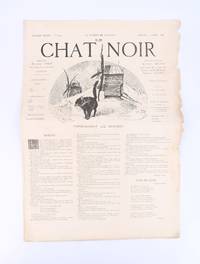
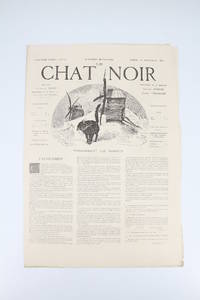
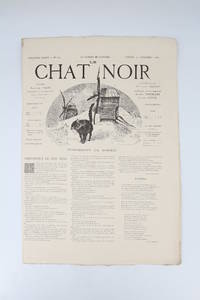
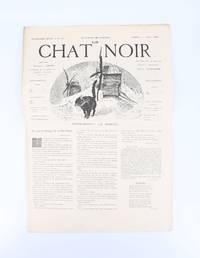
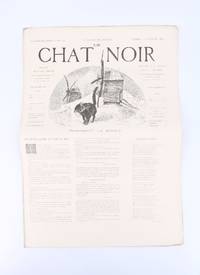
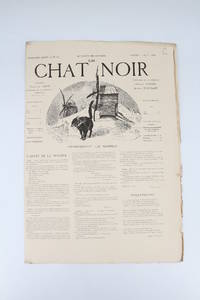
188788808Paris: Au cabaret Le Chat noir 1887. Fine. Au cabaret Le Chat noir Paris 9 avril 1887 31 x 45 cm en feuillets First edition one of the rare copies printed on laid paper. This four-page issue features a large double-page illustration by Steinlen. Literary contributions by Alphonse Allais Bébert Pimpinelli Pose de lapin dedicated to Albert Tinchant and Narcisse Lebeau Paravent. Some marginal tears and stains. Le Chat noir was a weekly magazine founded by Rodolphe Salis and Emile Goudeau published from 1882 to 1897 intended to promote the famous cabaret of the same name which it sought to commemorate. It published the texts recited during the performances and stands as a major literary and artistic document of late 19th-century bohemian life and the distinctive Parisian vitality of the era. Au cabaret Le Chat noir unknown
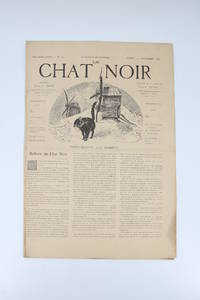
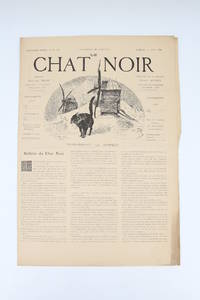
188481915Paris: Au cabaret Le Chat noir 1884. Fine. Au cabaret Le Chat noir Paris 1884 31 x 45 cm en feuillets First edition. This issue consists of 4 pages and is illustrated with a full-page comic strip by Théophile Alexandre Steinlen ""Le chat et la grenouille"" ""The cat and the frog"". Literary contributions by Georges Auriol ""Fleur d'orange"" ""Orange blossom"" Rodolphe Salis Léo Niversac ""Bulletin du Chat Noir"" ""Chat Noir bulletin"" Jules Jouy. A few minor marginal tears of no consequence. Le Chat noir was a weekly magazine created by Rodolphe Salis and Emile Goudeau published from 1882 to 1897 with the aim of promoting the famous cabaret of the same name of which it served as the memory. It published texts recited during the shows. It is moreover an important literary and artistic testimony of the end of the 19th century centered around the bohemian lifestyle and the Parisian effervescence that characterized it. Au cabaret Le Chat noir unknown
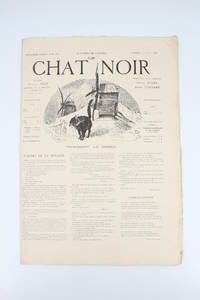
188681973Paris: Au cabaret Le Chat noir 1886. Fine. Au cabaret Le Chat noir Paris 1886 31 x 45 cm en feuillets First edition one of the rare copies printed on laid paper. The issue consists of 4 pages and is illustrated with a comic strip by Théophile Alexandre Steinlen: ""Les mésaventures d'Auguste"". Literary contributions by Alphonse Allais ""L'avancement"" Maurice Mac Nab ""La vue de Naples"" Eugène Godin ""Ronds de cuir"". Fine copy. Le Chat noir is a weekly magazine created by Rodolphe Salis and Emile Goudeau published from 1882 to 1897 with the aim of promoting the famous cabaret of the same name of which it intended to be the record. It published texts declaimed during the performances. It is moreover an important literary and artistic testimony of the late nineteenth century around the bohemia and the Parisian effervescence that was its own. Au cabaret Le Chat noir unknown
188481999Paris: Au cabaret Le Chat noir 1884. Fine. Au cabaret Le Chat noir Paris 1884 31 x 45 cm en feuillets First edition. The issue is illustrated with a drawing by Théophile Alexandre Steinlen ""Au clair de la lune drame sombre"". Other contributions by Jules Jouy J. Chevalier Léopold Stapleaux ""Hugo ne mourra pas"". One fold to right margin of the third and final pages. Le Chat noir is a weekly magazine created by Rodolphe Salis and Emile Goudeau published from 1882 to 1897 with the aim of promoting the famous cabaret of the same name serving as its memory. It published texts recited during performances. It constitutes moreover an important literary and artistic testimony of the late nineteenth century centered around bohemian life and the Parisian effervescence that characterized it. Au cabaret Le Chat noir unknown
188681940Paris: Au cabaret Le Chat noir 1886. Fine. Au cabaret Le Chat noir Paris 1886 31 x 45 cm en feuillets First edition one of the rare copies printed on laid paper. The issue consists of 4 pages and is illustrated with a comic strip by Théophile Alexandre Steinlen ""La rose"". Literary contributions by Charles Cros ""Un drame interastral"" Caran d'Ache ""Carnet de la semaine"" Albert Tinchant ""Philanthropie"". Handsome copy. Le Chat noir is a weekly magazine created by Rodolphe Salis and Emile Goudeau published from 1882 to 1897 with the aim of promoting the famous cabaret of the same name of which it considered itself the memory. It published texts recited during the shows. It is moreover an important literary and artistic testimony of the late nineteenth century around the bohemia and the Parisian effervescence that was characteristic of it. Au cabaret Le Chat noir unknown
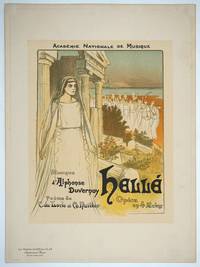
189628558Paris: Imprimerie Chaix 1896. First edition. Print. Very good condition. Steinlen 1859-1923 the famed Swiss born printmaker who settled and worked in Montmartre Paris is noted for his impressive posters of cafes and night life. He was a socialist whose images display his lifelong support and focus on the working class.<br /> <br /> Art nouveau style poster for this opera set in Greece. Color lithograph image size varies on paper 11 1/4 x 15 1/2" with the blind stamp in the lower right corner. <br /> <br /> Maitres de l'Affiche Masters of the Poster was an outstanding publication publishing in a small format the best of poster art from the Belle Epoque. They are lithographs printed by Imprimerie Chaix in Paris between 1895-1900. Imprimerie Chaix unknown
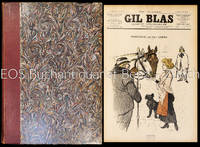
189131052AB1891. 11 Bände. Paris. 18911891 Klein-Folio 395 x 28 cm. Mit über 800 meist farbigen Lithographien von Steinlen Bulluriau Guillaume und anderen Künstlern. Halbleinenbände. Vicaire III 978. - Jahrgänge 111 dieser schönen Zeitschrift der Jahrhundertwende mit Texten von Baudelaire S. Bernardt Bruant Colette Daudet France Maupassant Schwob Mallarmé Verlaine Zola und anderen Autoren. Die meisten Illustrationen stammen von Steinlen. Ohne die Nr. 44 aus Jahrgang 10. Vorgebunden sind 2 Vorläufernummern des Gil Blas. unknown
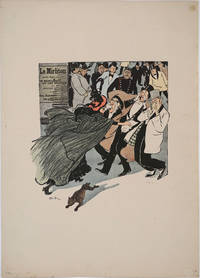
189924502Paris 1899. First edition. Fine. Printed color lithographic cover art with block color for the Parisian journal 'Le Mirliton' by the noted Paris Art Nouveau printmaker. <br /> <br /> Dramatic poster depicting a Parisian dancer armed with bottle of wine accosting a group of upper class men in top hats as they recoil in shock. With the price of the journal Le Mirliton incorporated into the scene at the left.<br /> <br /> Aristide Bruant 1851-1925 established his cabaret Le Mirliton in Paris in 1885; Steinlen was commissioned by Bruant to create poster art for the cabaret as well as advertisement for its journal. <br /> <br /> With period pencil notation on the verso "Tirage a part du Mirliton". Image size varies on paper 13 x 18" unknown
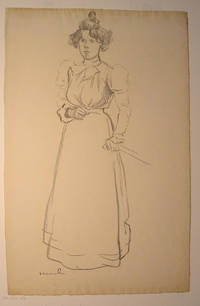
1900422<p>Drawing in pencil. c. 1900. With the Steinlen estate stamp. 19 x 12½. On paper with a CF watermark. Deckled edges on 3 sides. Margins: 48 ½ x 31.</p>
1900264<p>n.d. Pencil and crayon. With the Steinlen estate stamp and estate code number. Deckled edges on 3 sides Margins: 48½ x 31.</p>
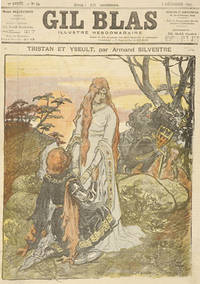
189723234Paris: Gil Blas 1897. Stiff Wraps. Illustrated stiff wrappers. Very good. Steinlen Theophile. Steinlen's illustrations 25.5 x 22.5 cm. All are covers for "Gil Blas" the popular French journal for which Steinlen produced a host of illustrations. All the issues were cut to remove the top portion noting the publisher and the lead title the latter cut and pasted below the illustration. One cover presents Steinlen's noted love and enthusiastic illustrations of cats. The issue title by Alphonse Allais journalist and humorist translates "Against Dogs." All the magazine covers matted to stiff dark green stock. Some of the covers have a hook at rear for hanging. Slight creasing to a few covers. A unique archive of Steinlen's efforts for Gil Blas. Gil Blas unknown
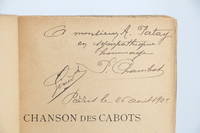
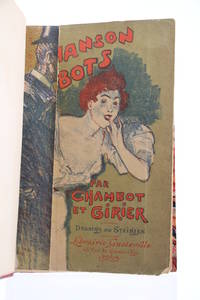
189584795Paris: Librairie Gueteville 1895. Fine. Librairie Gueteville Paris 1895 12.50 x 19.50 cm broché First edition illustrated with a cover and drawings by Théophile Alexandre Steinlen. Spine cracked at head and foot. Autograph inscription dated and signed by Paul Chambot with the additional signature of Ambroise Girier to A. Patay. Librairie Gueteville unknown
189577940Paris: Librairie Gueteville 1895. Fine. Librairie Gueteville Paris 1895 12.50 x 19.50 cm relié First edition illustrated with a cover and drawings by Théophile Alexandre Steinlen. Bradel binding in half red shagreen smooth spine date in gilt at foot pebbled paper boards covers illustrated by Théophile Alexandre Steinlen and spine preserved in one piece. Handsome copy despite a small restoration to the upper corner of page 93 a slight lack at foot of the second cover of the illustrated wrapper. Librairie Gueteville hardcover
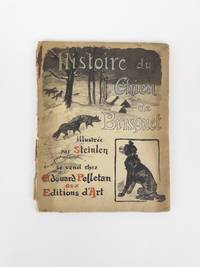
19001381584Paris: Édouard Pelletan 1900. Limited Edition #79/127. Softcover. Quarto xv 28 pages. In Good minus condition. Bound in publisher's tan illustrated covers. Heavy tearing and chipping to spine. Rubbing to edges and corners of covers. Heavy age toning and moderate staining to covers. Textblock completely detached from covers. Rear two gatherings detached from textblock. Previous owner's signature and penciling to front free endpaper. Light penciling to rear free endpaper. Mild age toning with scattered foxing and staining throughout textblock. DH Consignment. Shelved Case 11. 1381584. Shelved Dupont Bookstore. Édouard Pelletan unknown
18945215<p>Five small folio volumes. Contemporary half cloth over marbled paper-covered boards; three volumes disbound with covers still present. <i>Le Rire</i> was a successful French humor magazine published from October 1894 through the 1950s. Black and white and color illustrations copiously throughout. Artists who contributed to Le Rire include: Henri de Toulouse-Lautrec Théophile Steinlen Georges Goursat Hermann-Paul Juan Gris Georges Meunier Lucien Metivet Jean-Louis Forain Adolphe Willette Albert Guillaume Jules Grandjouan Abel Faivre and many others. Boards rubbed and scuffed board edges heavily abraded spine ends and corners bumped. Text blocks shaken with some sporadic gatherings and leaves loose leaves toned multiple places over-opened. Hinges in two volumes cracked. Large tear on page 7-8 of No. 49 in the first volume. Fifth volume with front cover detached. Backstrips separating on second and fifth volumes. </p><p>First volume: Nos. 1-50 1894-1895. Second volume: No. 51-100 1895-1896. Third volume: Nos. 209-260 1898-1899. Fourth volume: Nos. 261-312 with <i>Numero Special hors Serie </i>1899-1900. Fifth volume: Nos. 313-364 1900-1901. 2 vol: 9 1/2 x 12 inches // 3 vol: 9 1/2 x 13 inches</p> hardcover
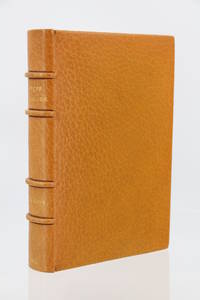
189486064Paris: Flammarion 1894. Fine. Flammarion Paris s. d. 1894 12 x 19 cm relié First edition one of 10 numbered copies on Japan paper the only deluxe copies. Bound in full mustard yellow morocco spine very slightly faded with four raised bands underlined with black fillets green morocco doublure yellow moiré silk endpapers following endpapers of marbled paper original wrappers and spine preserved bookplate pasted on one pastedown all edges gilt elegant contemporary binding signed Cretté. Small glue stains on the page opposite the bookplate. Cover illustrated with a drawing by Théophile Alexandre Steinlen. Handsome copy perfectly bound in morocco doublure by Georges Cretté. Flammarion hardcover
188683276Paris: Au cabaret Le Chat noir 1886. Fine. Au cabaret Le Chat noir Paris 1886 31 x 45 cm en feuillets First edition one of the rare copies printed on laid paper. This issue consists of 4 pages and is illustrated with a comic strip by Théophile Alexandre Steinlen ""Actualité brûlante"". Literary contributions by Francisque Sarcey ""Chronique du bon sens"" Jean Richepin ""Le chat noir"" Abel Hamel ""Qui a bu ne peut plus boire"" Georges Courteline ""Madame Dieu-nous-voit"". Le Chat noir is a weekly review created by Rodolphe Salis and Emile Goudeau published from 1882 to 1897 with the aim of promoting the famous cabaret of the same name serving as its memory. It published texts recited during the performances. It constitutes moreover an important literary and artistic testimony of the end of the 19th century centered around bohemian life and the Parisian effervescence that characterized it. Au cabaret Le Chat noir unknown
189030948Paris: Marpon & Flammarion 1890. Fine. Marpon & Flammarion Paris s. d. 1890 11.50 x 18 cm relié First edition on ordinary paper with only 10 deluxe copies printed on Holland paper. Contemporary half-green shagreen binding spine with 5 raised bands covers and spine preserved at front of volume front cover illustrated in colors by Steinlen. Our copy is enhanced with an autograph visiting card by the author mounted on stub on the half-title page. Minor surface wear to headcaps otherwise handsome copy. Marpon & Flammarion hardcover
188588583Paris: Au cabaret Le Chat noir 1885. Fine. Au cabaret Le Chat noir Paris 1er août 1885 31 x 45 cm en feuillets First edition one of the rare copies printed on laid paper. This issue comprises 4 pages and features an illustration by Steinlen: ""Coqs et poule"". Literary contributions by Alphonse Allais with ""Le pauvre bougre et le bon génie"" dedicated to Henry Somm François Villon with the poem ""Rondel"" George Auriol with ""Au diable vert"" dedicated to Steinlen Rodolphe Salis. A handsome copy. Le Chat noir was a weekly review founded by Rodolphe Salis and Emile Goudeau published from 1882 to 1897 created to promote the famous cabaret of the same name and to serve as its memory. It published the texts performed during the shows. More broadly it constitutes a major literary and artistic record of the late 19th century centered on bohemian life and the unique creative fervor of Paris at the time. Au cabaret Le Chat noir unknown
188588817Paris: Au cabaret Le Chat noir 1885. Fine. Au cabaret Le Chat noir Paris 14 février 1885 31 x 45 cm en feuillets First edition one of the rare copies printed on laid paper. This 4-page issue features a comic strip by Steinlen: ""La mauvaise aventure de Maigriou."" Includes literary contributions by Charles Cros Pour en avoir le coeur net Charles Chincholle Les jours dabsinthe George Auriol La saint Charlemagne François Coppée Lesclave ivre . A well-preserved copy. Le Chat Noir was a weekly magazine founded by Rodolphe Salis and Emile Goudeau published from 1882 to 1897 with the aim of promoting the famed cabaret of the same name of which it served as a living memory. It featured the texts performed during the shows. The publication also stands as a significant literary and artistic testimony of the late 19th century centered on the bohemian world and the vibrant cultural scene of Paris at the time. Au cabaret Le Chat noir unknown
188683164Paris: Au cabaret Le Chat noir 1886. Fine. Au cabaret Le Chat noir Paris 1886 31 x 45 cm en feuillets First edition one of the rare copies printed on laid paper. The issue consists of 4 pages and is illustrated with a comic strip by Théophile Alexandre Steinlen: ""La rose"". Literary contributions by Charles Cros ""Un drame interastral"" Caran d'Ache ""Carnet de la semaine"" Albert Tinchant Rodolphe Salis ""Comment fut parachevée l'église saint-Pierre de Poictiers"" dedicated to Guy de Maupassant. Handsome copy despite minor worming. Le Chat noir is a weekly magazine created by Rodolphe Salis and Emile Goudeau published from 1882 to 1897 with the aim of promoting the famous cabaret of the same name of which it serves as the memory. It publishes the texts recited during the performances. It is furthermore an important literary and artistic testimony of the late 19th century around bohemian life and the Parisian effervescence that characterizes it. Au cabaret Le Chat noir unknown
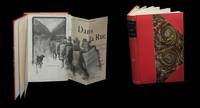
1889314591889. Paris Aristide Bruant s.d. 1889. Un vol. au format in-12 188 x 118 mm de 207 pp. Reliure signÂŽe de l'ÂŽpoque de demi-percaline satinÂŽe cerise ˆ coins dos lisse ornÂŽ de doubles filets dorÂŽs fleuron central dorÂŽ piÂce de titre de maroquin ÂŽbÂne titre dorÂŽ couvertures et dos conservÂŽs faÂon ''leporello''. Carayon. ''PremiÂre ÂŽdition illustrÂŽe recherchÂŽe et cotÂŽe''. in Carteret. Elle est ici dÂŽpourvue de toute mention de ''mille''. Elle s'agrÂŽmente de nombreuses compositions in et hors-texte d'Alexandre Steinlen. L'exemplaire - revÂtu d'une reliure signÂŽe de Carayon - a conservÂŽ son dos et ses couvertures agrÂŽablement illustrÂŽs ; se dÂŽployant ici faÂon ''leporello''. ''Sorti des Beaux-Arts ˆ Lausanne Steinlen dÂŽbuta dans le dessin industriel pour le textile ˆ Mulhouse. ArrivÂŽ ˆ Paris en 1882 il frÂŽquenta aussit™t le cabaret du Chat noir et commenÂa alors ˆ dessiner pour de nombreuses revues ainsi que plusieurs ÂŽditeurs. A partir de 1898 il grava ˆ l'eau-forte et produisit des affiches qui le rendirent cÂŽlÂbre. Anatole France ÂŽcrivit de lui : ''DouÂŽ d'une sensibilitÂŽ subtile vive attentive d'une infaillible mÂŽmoire de l'oeil et de moyens rapides d'expression en somme tout destinait Steinlen ˆ devenir le dessinateur et le peintre de la vie qui passe le ma”tre de la rue. Le flot clair et matinal et le flot sombre et nocturne des ouvriers et ouvriÂres les groupes attablÂŽs sur le trottoir les r™deurs des noirs boulevards la rue enfin la place publique les lointains faubourgs aux arbres maigres les terrains vagues tout cela est ˆ lui. De ces choses il sait tout. Leur vie est sa vie leur joie est sa joie leur tristesse sa tristesse. Il a ri et souffert avec les passants. L'‰me des foules irritÂŽs ou joyeuses a passÂŽ en lui. Il en a senti la simplicitÂŽ terrible et la grandeur. C'est pourquoi l'oeuvre de Steinlen est ÂŽpique''. in Osterwalder. Premier ouvrage de l'auteur il ne manqua - dÂs parution - de faire sensation les critiques sont enthousiastes. Chacun salue le ÇÊpoÂte sincÂre et vibrant d'une rare originalitŽÊÈ louant ''sa verve ˆ exprimer le pathÂŽtique de la crapule''. FranÂois CoppÂŽe le fait recevoir ˆ la SociÂŽtÂŽ des gens de lettres en 1891 et il ne mÂŽnage pas ses ÂŽloges au comitÂŽ des gens de lettresÊ: ÇÊJe fais grand cas de Dans la rue et je le tiens pour un descendant en ligne directe lÂŽgitime de notre Villon.ÊÈ. Immense rÂŽussiteÊpour Bruant : ses chansons sont mises aux rÂŽpertoires d'artistes cÂŽlÂbresÊ: EugÂŽnie Buffet dÂŽguisÂŽe en fille de barriÂre fait applaudir Ë la Cigale Ë la Villette et Ë la GlaciÂre et lance Ë Saint-Lazare ; Yvette Guilbert vedette du caf'conc' interprÂte Ë Belleville et Au Bois de Boulogne. Bruant connait alors une gloire internationale et en 1895 abandonne son cabaret et part en tournÂŽe ˆ l'ÂŽtranger.Bruant se revendique comme un travailleur sÂŽrieux. Dans sa poÂŽsie apparemment simple la puissance du raccourci et la prÂŽcision du terme dissimulent de longues recherchesÊ: ÇÊsept mois pour une chansonÊ!ÊÈ a-t-il dÂŽclarÂŽ ˆ propos de Ë Biribi. FlÂŽty Dictionnaire des relieurs fran!ais p. 38 - Carteret IV Le TrÂŽsor du bibliophile / Livres illustrÂŽs modernes p. 83 - Vicaire I Manuel de l'amateur de livres du XIXÂme siÂcle col. 938. Quelques lacunes en marge de la page de titre. Dos de la couverture papier originelle doublÂŽ prÂŽsentant en outre un manque en tÂte. Du reste trÂs belle condition. b42961 unknown