9 résultats
1998AME_9780138885533PrenticHall 1998. 2nd. Hardcover. New/New. PrenticHall hardcover
1999SKU1020230Moses Brown School 1999. Hardcover. Very Good. Moses Brown School; Providence 1999. Hardcover. Near Fine tight binding interior and extremities tidy minimal use/handling marks without Dust wrapper. A nice clean and unmarked copy. 4toquarto or approx. 9.5 x 12 inches 160pp. color and b&w illustrations. We pack securely and ship daily with delivery confirmation on every book. The picture on the listing page is of the actual book for sale. Additional Scans are available for any item please inquire. Moses Brown School hardcover

1998DBS-9780138885533Prentice Hall 1998. 2nd. Hardcover. New. Prentice Hall hardcover
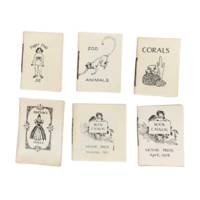
19836681Cincinnati: Mosaic Press 1983. First editions. 6 Vols miniatures generally 2.5x2cm various paginations. Illustrations in each. Bound with a single staple in illustrated wraps. Fine condition. <br /> <br /> Nice set of early titles from the Mosaic Press of Cincinnati publishers of fine miniatures which was founded in 1977 by Miriam Owen Irwin. Each is charmingly illustrated and with text legible by magnifying glass. Mosaic Press unknown
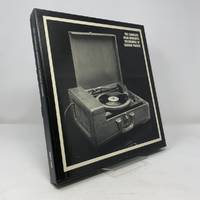
1990360366Mosaic Records 1990. FIRST EDITION. Paperback. Very Good/No Jacket. First Edition First Printing. Published by Mosaic Records 1990. Folio. Three CDs in box. Book is very good with brochure catalog #18 and booklet left inside. Great copy of this CD and catalog set on music. 100% positive feedback. 30 day money back guarantee. NEXT DAY SHIPPING! Excellent customer service. Please email with any questions. All books packed carefully and ship with free delivery confirmation/tracking. All books come with free bookmarks. Ships from Sag Harbor New York. Mosaic Records paperback
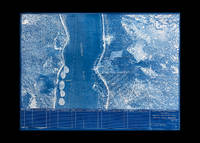
19603729British Columbia: B.C. Hydro 1960. Sheet Map. At Least Very Good. Sheet No. 7 - with "Hunting Survey Corporation Limited / West Coast Division" printed at lower left margin - in B.C. Hydro's Columbia River Developments : Arrow Lakes series having "Date of Photography June-July 1960" stated at bottom right hand corner. Large photo map has a scale of 1 inch to 200 feet so offers an excellent view of the properties about to be flooded near Robson B.C. Note that the "Columbia River" is now designated as Lower Arrow Lake on most maps. A circa 1960 Aerial Photo-Map of Robson B.C. measuring overall 26 inches tall x 35-3/8 inches wide the printed area within the single border/neat line measures 25 inches tall x 24-1/4 inches wide. Map with light edge wear and a few short closed tears else clean and unmarked. Previously rolled. This aerial photo was produced by BC Hydro prior to the construction of the Hugh Keenleyside Dam originally named the High Arrow Dam the photos were then made into maps showing predicted flood elevations propertry lines and where the flood levels would rise to after closing the gates. A large historic aerial photo that allows many family properties to be seen prior to being submerged. "Originally two lakes 14 miles apart the Arrow Lakes became one 230 km long lake due to the reservoir created by the 1960s construction of the Keenleyside Dam; at low water the two lakes remain distinct connected by a fast-moving section known as the Narrows. Damming the Lower Arrow Lake resulted in water rising 12 metres above natural levels. As a result of higher water the valley lost 2/3 of its arable land. Thousands of people relocated." wiki accessed 04/21. B.C. Hydro unknown
1901101718London: Printed by Edward Arnold for the Essex House Press under the care of C. R. Ashbee 1901. No. 229 of 250 copies. 12mo 6 x 4-1/2 inches. Title-page woodblock by T. Sturge Moore engraved initials. xiv 257 1 pp. text in black and red. Fine mosaic binding covers and four spine panels filled by a complex pattern of curved morocco inlays in four colors t.e.g. doublures with gilt-ruled inlaid borders silk endleaves by Curtis Walters signed on rear turn-in; fine in a custom half morocco chemise and morocco-tipped slipcase some old tape-strengthening to slipcase. A stunning perfectly preserved mosaic binding by the American binder Curtis Walters who specialized in such intricate and colorful mosaic bindings executed with an astonishing level of precision. This is one of a group of such bindings consigned by Walters to Parke Bernet and sold there 10 December 1957 lots 13-35 this lot 27.From the Park Bernet catalogue: "Mr. Walters was influenced to take up bookbinding around 1900 by the late George D. Smith eminent bookseller. Later he studied with Matthews the Club Bindery and Stikeman. He conceived his ideas about mosaic bindings as early as 1904 but between 1907 and 1928 he remained inactive. He has invented and brought to perfection a new technique whereby the most intricate inlaid designs can be achieved by a few simple tools without the use of dies or punches; gilt dots circlets and fillets are generally applied with restraint. Mr. Walters work has received wide recognition. Some of his early bindings are included in the Henry W. Poor collection and almost all of those offered for sale here have been exhibited in Paris 1930 New York Columbia University 1935 Hamburg Kunstgewerbeschule 1933-36 and Berlin 1936." Lawrence Thompson heaps further praise on Walters from "Hand Bookbinding in the United States Since the Civil War": "The infinite variety of design permitted by mosaic work is combined with Walters' marvelous delicacy in color schemes finely conceived geometric patterns and tasteful use of gold leaf to produce books that no Americans save perhaps the artists of the Club Bindery could have matched. The utter simplicity of Walters' methods he used but four tools belies his perseverance and devotion to his art. Only infinite patience and consummate skill could have produced Walters' bindings."Walter's bindings appear infrequently on the market this is a choice example of his artistry. Printed by Edward Arnold for the Essex House Press, under the care of C. R. Ashbee unknown
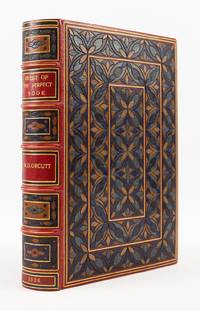
1926ST20086Boston: Little Brown & Co 1926. First Trade Edition. 228 x 160 mm. 9 x 6 1/4". 8 p.l. 316 pp. 1 leaf. <br/> SPECTACULAR MOSAIC MOROCCO BY CURTIS WALTERS signed in gilt on rear turn-in covers with animated repeating ogival pattern inlaid in several hues of morocco black navy blue light blue light brown and orange separated into three panels by thin strips of red morocco and gilt rules THE COVERS WITH APPROXIMATELY 662 INLAYS IN TOTAL raised bands spines compartments ruled in gilt and inlaid with a similar design gilt titling NAVY BLUE MOROCCO DOUBLURES bordered with strips of eggplant and red morocco and four gilt rules navy blue watered silk endleaves top edge gilt others trimmed on the rough. Housed in a marbled paper chemise with red morocco back and matching slightly worn slipcase.<br /> With color frontispiece and printed tissue guard 48 black & white plates one double-page specimen reproduction and numerous in-text illustrations and specimen page reproductions. With tipped-in "Compliments of the Author" leaf SIGNED by Orcutt. Clizbee "Curtis Walters American Binder" in "The American Book Collector" August September 1932 pp. 124-34 this binding pictured in the second plate. Copy included with this item. Very slight offsetting from plates and the odd trivial imperfection internally otherwise a fine copy IN AN IMMACULATE BINDING.<br/> <br/> This splendid mosaic binding is a tour-de-force of design and craftsmanship from an underappreciated American binder who specialized in this technique. The foreword to the 10 December 1957 sale catalogue of his bindings at Parke Bernet says that they "constitute a splendid group of American mosaic bindings such as have never been offered for sale before. . . . The description of bindings is always a difficult matter; it becomes practically impossible when one is faced by the stunning variety of complex patterns of colored mosaic inlays which Mr. Walters has assembled with infinite patience extraordinary skill and sophisticated taste . . . He has invented and brought to perfection a new technique whereby the most intricate inlaid designs can be achieved by a few simple tools without the use of dies or punches; gilt dots circlets and fillets are generally applied with restraint. . . . It need hardly be added that all of Mr. Walters' bindings are made of the very finest leathers available and that their workmanship reveals consummate craftsmanship down to the smallest detail." The present item was lot #25 in that sale. Walters became interested in bookbinding around 1900 and studied with such prestigious workshops as William Matthews the Club Bindery and Henry Stikeman. In "Hand Bookbinding in the United States Since the Civil War" Thompson tell us of Walters' work: "The infinite variety of design permitted by mosaic work is combined with Walters' marvelous delicacy in color schemes finely conceived geometric patterns and tasteful use of gold leaf to produce books that no Americans save perhaps the artists of the Club Bindery could have matched. The utter simplicity of Walters' methods he used but four tools belies his perseverance and devotion to his art. Only infinite patience and consummate skill could have produced Walters' bindings." The article by Azalea Clizbee in the accompanying copy of "The American Book Collector" describes Walters' technique for creating his mosaic bindings using only the simplest tools with plates depicting eight of his bindings including this one. Although very secondary here the text is appropriately a celebration of book arts--printing binding and illustration--by William Dana Orcutt 1870-1953 typographer printer and book designer. After graduating from Harvard in 1892 he went to work for the University Press there. He created several typefaces most notably "Humanistic" based on the humanist hand of 15th century scribe Antonio Sinibaldi. With Daniel Updike and Bruce Rogers he established the Boston Society of Printers in 1905. He was the author of several works on printing typography and the making of beautiful books. Little, Brown & Co unknown