2 résultats
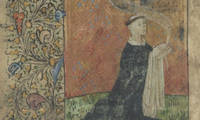
1420254921420. <blockquote><p>It is unusual to find an English example particularly one which so well demonstrates the unique factors at play in such pieces at the time</p></blockquote><p>Throughout the Middle Ages true visionaries put into place systems of intellectual and social organisation. Saint Dominic’s foundation of the Dominican Order responded to a need for a new kind of monasticism as Medieval Europe shifted towards an increased urbanisation which would give rise to the great cities that we now know. In the city of Toulouse France Dominic based his Order on the Rule of Saint Augustine— a system of tenets to organize the lives of the monks which focused heavily on salvation through preaching. Dominic’s order valued education as the vehicle for effective preaching and therefore effective saving of souls. Dominic’s vision saw his followers establishing schools alongside newly burgeoning universities in Paris and Bologna and later in Palencia Montpellier and even Oxford within his lifetime. Members of the Dominican Order took their message of educated understanding of God from the continent to the British Isles settling in Oxford by 1221.</p><p>Thomas Aquinas and Albertus Magnus were also of the Dominican Order.</p><p>Given the wealth of expressions of interiority that arise in later Medieval arts . scholars philosophers and ideologues have often turned to this era when seeking the putative origins of modern selfhood"" Sands 1; the inclusion of patron portraits acts as a reflection of the self reflecting on the divine personalizes the book. After book productions shifted towards catering to the wealthy rather than the monastic lay-patrons were able to emulate ""monastic patterns of reading prayer and meditation"" Sands 15. Rather than allowing a wealthy lay patron to emulate the monastic way of life the patron portrait of this Dominican monk is a glimpse into the monastic way of life and an individual's development of his sense of self.</p><p>This leaf from a Dominican’s personal prayer book features a portrait of the owner himself. This little peak into a 15th century private sphere shows the book’s owner depicted in his traditional black cloak— which gave rise to the appellation of the Dominicans as “the Black Friarsâ€â€” over top his white habit and his tonsure to better allow God to see his thoughts and to demonstrate his renunciation of worldly aesthetics. From his outstretched hands a banderole twirls upwards around a now faded woman’s face framed in the blue associated with the Virgin. The leaf is blank on the back. These two features— the heavy fading in a specific area and the blank verso— make suggestions about the production and the reception of the book.</p><p>This portrait leaf was likely a bespoke product that was tipped into an on-spec ready-to-buy book. That is to say at this point books were no longer being made entirely to the patron’s demand; books had become commodities that more people could afford so a stationer would have books ready made with minor customization available such as the addition of a patron portrait. This addition without text on the back would not interrupt the flow of the set selection of prayers in the Book of Hours. With this customization the owner literally sees himself in his daily worship of the Virgin Mary. Here is where the importance of the fading comes into play.</p><p>This is likely not just the wear and tear of history but the toll of the owner’s ritual touching of the Virgin’s face in conjunction with his portrait. This action is called ‘affective piety’ and though chiefly associated with women’s rituals it was not uncommon for men particularly those aligned with mysticism to engage in this method of worship. In the same way that Saint Dominic’s Order responded to the rise of cities in the thirteenth century affective piety provides a new way of interacting with Christianity. As people moved towards understanding Christ as a man and through his bodily identity they also moved towards an “emotional understanding of Christ as accessible through his humanity and imitable through affective piety and the new ways of thinking feeling and imitating Christ that it fostered resulted in innovative modes of individual and communal devotion through prayer reading and liturgy†Zimbalist. We notice on this leaf that the border the background the grass even the Friar’s own body and face are not as faded as the banderole of holy words and the image of the holy face now nearly imperceivable. This suggests that the wear was focused on these significant areas and were likely touched rubbed even cried upon frequently during his reverent worship. The size of the folio also underscores its use as a personal devotional item indicating a book small enough to fit in the hand and be carried discreetly.</p><p>London was the capital of fashion for manuscripts in England in the 1300 and 1400s. Trends from the Continent would arrive in London and be incorporated into newly made manuscripts and these trends would radiate outwards to other centers of manuscript production. The border around the Dominican friar demonstrates the transition of preference for curving rather than straight borders occurring from 1405 to the end of the century; the incorporation of several specific styles of foliage indicate that this manuscript was on the cutting edge of fashion fairly early on and therefore likely made in London.</p><p>This book owner whose name is now lost to us but whose face remains in this miniature tells the story of an Order who rode the tide of urbanisation through a devotion to God and education and who saw the destruction of Europe and its own numbers during the Black Death. The owner living circa 1420 likely in London based on the style of background and border of this leaf would be heartened to know that his Order endured further European upheavals from the Early Modern to the Modern Period just like this piece of his book.</p><p>While patron portraits have made their way to the market particularly in bound books it is unusual to have an English example particularly one which so well demonstrates the production process of creating a bespoke product from an on-spec liturgical book.</p><p>Further details:</p><p><strong>Leaf from an English Book of Hours</strong> Use of Sarum with a miniature of a Dominican friar in prayer in Latin illuminated manuscript on parchment England probably London c. 1420 104 by 69mm. Single leaf with a large rectangular miniature of a tonsured friar in Dominican robes kneeling in a grassy area as a banderole emerges from his hands and curves upwards to enclose a woman's face most probably the Virgin the whole before a tessellated background decorated with red and blue dots within a full border of rinceaux foliage terminating in gold ivy leaves and coloured seed pods and acanthus leaves reverse blank signs of water damage to top of reverse slight scuffing and fading.</p><p>See also:</p><p>Hamburger Jeffrey. The Visual and the Visionary: Art and Female Spirituality in Late Medieval Germany New York N.Y.: Zone Books 1998</p><p>Zimbalist Barbara. ""Chapter 10: Medieval Affective Piety and Christological Devotion: Juliana of Mont Cornillon and the Feast of Corpus Christi"". Illuminating Jesus in the Middle Ages. Leiden The Netherlands: Brill 2019.</p><p>Sands Alex Vision Devotion and Self-Reprsentation in Late Medieval Art Cambridge University Press 2014</p><p><img class=""alignnone wp-image-25018 size-post-window"" src=""https://cdn.raabcollection.com/wp-content/uploads/20231204144051/Folder-site-11-1600x1327.jpg"" alt="""" width=""1600"" height=""1327"" /></p> unknown
14502626101/01/1450. <blockquote><p>Records show only a small number of such mathematical devices having reached the public market</p><p> </p><p>The manuscript bears markings of subsequent owners including a poem from the 16th century to Saint Basil normally associated with the East</p></blockquote><p>video width=""1920"" height=""1080"" mp4=""https://cdn.raabcollection.com/wp-content/uploads/20231204130536/Computus-Youtube-Template-1.mp4""/video</p><p> </p><p>Prior to 1420 devotional books such as Books of Hours or Breviaries were made to order and reflected the particular interests of the patron. A breviary usually formatted in a writing block of two columns as opposed to its single column relative the Book of Hours contains excerpts of psalm gospel hymns and prayers to guide the reader in his or her daily prayer at the fixed Canonical Hours. Because these books were created at this time for a specific use they could be catered to that use including the use of alternate texts. This would also be the case for clergymen.</p><p>One of the most important branches of medieval learning was computus the science of calculating times and dates using a combination of mathematics and astronomy. The use of poetry to transmit scientific material would have made it easier for students to memorize. These calculations were often applied to the tricky and at times controversial calculation of the date of Easter a highly variable and occasionally contentious date relying on lunar calendars the date of the Jewish celebration of Passover and whether or not the observer is on the Julian or Gregorian calendar. Easter remains celebrated on different days in the West than the East.</p><p><img class=""alignnone wp-image-26267 size-post-window"" src=""https://cdn.raabcollection.com/wp-content/uploads/20231204133327/Medieval-cipher-4-1600x1105.jpg"" alt="""" width=""1600"" height=""1105"" /></p><p>In 1408 a Yorkshire man named John de Foxton ca. 1369-1450 wrote an encyclopaedic work called Liber Cosmographiae now housed at Cambridge Trinity College MS. R.15.21. John’s extensive work includes a poem on fol. 19v. The poem includes the line “Quaerit amor Christi multos dum regnat iniqus†The love of Christ seeks many while the unjust reign. It appears in a very limited number of other manuscripts. It is a cipher. The poem also includes seemingly unrelated letters written in red above each of the words. These letters would accompany the poetic text making the poem into a memory-based mnemonic device to figure out the date of Easter John de Foxton’s Liber Cosmographiae: An Edition and Codicological Study 1988 p. xxiii-xxiv.</p><p>Such computational texts which can combine a description of the calculation process along with the paired poetic text / letters are occasionally found in texts of this period but finding them on the market would be very uncommon.</p><p>Within the first decade of the fifteenth century an ecclesiastical man a member of the clergy had a breviary commissioned for him.</p><p>Breviary in Latin ca. 1410 Flanders or Luxembourg 2- 3- and 4- line initials in blue and pink with white penwork shellgold illumination; 23 partial borders consisting of a pink and blue bar extending the length of the text illuminated with gold and often terminating in penwork floral sprays.</p><p>Within this book which he would use for his daily prayers he had an unusual selection incorporated — a paraphrase of a computus text along with the Foxton poetic mnemonic computistical text to further solidify his study and understanding of the dating of Easter. The letters of the Foxton text were added though in a slightly different structure.</p><p><img class=""alignnone wp-image-26269 size-post-window"" src=""https://cdn.raabcollection.com/wp-content/uploads/20231204133315/Medieval-cipher-3-1-1-1600x746.jpg"" alt="""" width=""1600"" height=""746"" /></p><p>Combined these instructions describe the dating of easter and include an alphabet written out to help the ciphering. The text also mentions a Charles Karolus who says or teaches on the matter in “m cccc lvxxiiiâ€. The year 1478 is a scribal error inserting an extra century for what should have been m ccc lvxxiii. On November 29 1378 Charles of Luxembourg better known as the Holy Roman Emperor died. This portion of text of the ecclesiastic’s breviary is a paraphrase and therefore not published as is in any source we could determine.</p><p>A curious manuscript likely refering to the computistical ideas of Charles IV the Holy Roman Emperor influenced by the English cultural diffusion of John de Foxton’s mnemonic and cipher a bespoke production for a clergy man interested in this complex medieval science of dating Easter. A later 16th century prayer to Saint Basil has been added in space left after the text on fol. 399v by a reader.</p><p><img class=""alignnone wp-image-26333 size-post-window"" src=""https://cdn.raabcollection.com/wp-content/uploads/20231204132843/Medieval-cipher-1-2-1600x224.jpg"" alt="""" width=""1600"" height=""224"" /></p><p>A note on location and paleography</p><p>Several of the saints’ names in the liturgy have been copied with the French spelling conventions. While the illumination in the later liturgical portion of the text appear at first glance to be French— for example the pale yellow touches to capitals to draw the readers eyes— the hand lacks some of the sophistication of French manuscript production one would expect. In a Book of Hours the blue tipped three-petalled flowers would certainly indicate Bruges but this gets diffused further away from the city in other liturgical books. The spiky seed pods that flourish the borders are indicative of Flanders and were often emulated by English artists. During this time books were commonly being produced in the Low Countries for English audiences creating a fusion of paleographic and illustration styles. The paleography and orthography reveal the mystery. The hook-like descenders on the letter h go far beyond the baseline which is a distinctly Flemish feature. The spelling of “ewangelia†on the verso of the folio numbered in modern pencil as 367 proves the Germanophone claim moving the manuscript firmly into the liminal sphere of BeNeLux Belgium Netherlands Luxembourg region with its changing boarders and political statuses.</p><p><img class=""alignnone wp-image-26270 size-post-window"" src=""https://cdn.raabcollection.com/wp-content/uploads/20231204133310/Medieval-cipher-2-1-1600x600.jpg"" alt="""" width=""1600"" height=""600"" /></p><p>See also:</p><p>Neues Archiv der Gesellchaft für ältere deutsche Geshichtskunde: zur Beförderung einer Gesammtausgabe der Quellenschriften deutscher Geschichten des Mittelalters Sechster Band Vol. 6 Hannover: Hahnsche Buchhandlung 1881.</p><p>J. Van den Gheyn Catalogue des manuscrits de la Bibliothèque Royale de Belgique: Tome Deuxieme Vol. 2 Bruxelles: Henri Lamertin 1902.</p><p>Friedman John “John Siferwas and the Mythological Illustrations in the Liber Cosmographiae of John de Foxton†Speculum 58:2 1983. Pp. 391-418.</p><p>Friedman John “The Cipher Alphabet of John de Foxton’s Liber Cosmographiae†Scriptorium 36:2 1982. Pp. 219-235.</p><p><img class=""alignnone wp-image-25018 size-post-window"" src=""https://cdn.raabcollection.com/wp-content/uploads/20231204144051/Folder-site-11-1600x1327.jpg"" alt="""" width=""1600"" height=""1327"" /></p> unknown