(Bible in English)Biblio.com
191 résultats
1791345231Worcester: Isaiah Thomas 1791. First Edition of Isaiah Thomas's Folio Bible. 50 engraved plates. Folio. Contemporary calf red morocco lettering piece. Expert repairs at top and bottom of spine. Housed in a morocco backed box. First Edition of Isaiah Thomas's Folio Bible. 50 engraved plates. Folio. "The two Thomas Bibles of 1791 were without doubt far in advance of any other publications of the same kind that had appeared in America in point of typography excellence of paper binding and general execution"--Wright Early American Bibles pages 74-88. Evans 23186; Hills 29; ESTC W4497 Isaiah Thomas unknown
1735ST18632Amsterdam: Petrus Shenk 1735-38. First Edition in Dutch. 415 x 264 mm. 16 3/8 x 10 3/8". Entirely complete with continuous pagination but with a jump in page numbering from the end of book XIII to the beginning of XIV as usual. 15 parts in eight volumes. Translated by Florentius H. J. van Halen. <br/> HANDSOME CONTEMPORARY VELLUM covers with large gilt entrelac centerpiece framed with gilt floral rule with bouquet-like cornerpieces gilt floral border raised bands compartments richly gilt titles and volume numbers handwritten in ink on spines all edges gilt. With head- and tailpieces 15 engraved titles printed in red and black with engraved vignettes and complete with frontispiece two engraved portraits of the author and the engraver the latter with shorter margins probably tipped-in and 760 OFTEN STRIKING COPPER ENGRAVINGS on 758 plates one with partial hand coloring a few double-page. Front pastedown of first volume with handwritten note in French on lined paper; with additional black & white title to first work erroneously dated 1728. Nissen ZBI 3661; see also: Faber du Faur "German Baroque Literature" p. 472. Trivial soiling to the vellum the seventh volume with a faint marginal dampstain affecting a few quires but not touching engravings the odd negligible blemish but AN OUTSTANDING SET the very attractive original bindings showing only insignificant wear and THE CONTENTS ESPECIALLY FRESH AND CLEAN THROUGHOUT WITH VERY FINE IMPRESSIONS OF THE PLATES.<br/> <br/> This is the first Dutch translation of Scheuchzer's "Sacred Nature" one of the most splendid German illustrated books of the 18th century presenting what surely is the most impressive combination of biblical exegesis and scientific illustration to be found in any printed book. First published in 1731-35 as the "Physica Sacra" in Latin and as the "Kupfer-Bibel" in German so-named for the amazing array of copperplate engravings this work is arranged according to the progression of books in the Bible citing passages from those chapters where phenomena from the natural world are mentioned. The typical pattern here includes a textual citation followed by the author's often lengthy remarks on the passage and in many cases a dramatic engraving to illustrate what is said. The plates are identical to the earlier editions retaining the inscriptions in Latin and German and are the work of Johann-Melchior Fuseli of the well-known Zurich family of 18th and 19th century artists. The engraved scenes are always executed with great skill are generally very animated and are often fascinating. Of the 760 images meant to illustrate the text many are strictly or primarily depictions of biblical scenes; several are simply illustrations of specimens of nature; and a large number perhaps half offer a kind of combination. An example of this last type includes a wonderful scene showing the birth of Man as related in Genesis 1:26-27 depicting not only a startled Adam in his fecund paradise but also 10 images of fetuses placentas and the skeletons of children attached like mounted specimens to the architectural frame of the illustration. According to Faber du Faur it is in this work that "the Baroque attains philosophically as well as artistically its high point and its conclusion. It is the last of those elegant works which do not really contain illustrations to a text but which are in effect composed of splendid plates with a text to accompany them." Scheuchzer 1672-1733 was a prolific naturalist who promoted at every opportunity the most modern scientific ideas though without wanting to risk the accusation of being irreverent. He says that the present work represents an attempt at finding a harmony between reason and revelation though it can also be seen as an effort to promulgate progressive theories under the venerable cloak of biblical commentary. The bibliographies disagree about the number of plates that ought to be present in this work and in other editions but ours corresponds to copies previously sold at auction as complete. Copies of the "Physica Sacra" and its translations show up regularly for sale but almost never does one see the work both complete and as here with a clean and fresh text in remarkably well-preserved and attractive contemporary bindings. Petrus Shenk unknown
1777182896London: Oxford University Press 1777. First Edition; First Printing. Fine Binding. Very Good in decorative leather boards. Many page edges mended with additional stationary by previous owner. Light foxing throughout text block edges. Light stain on bottom text block edge. Oxford University Press unknown
17485985Gorinchem 1748. Large folio. Nicolas Goetzee Contemporary calf over wooden boards spines ribbed and richly gilt in a fine light flower design with broad richly ornamental gilt borders and elegant gilt inner-panel with large gilt flowers at the four corners and large flowered gilt central ornaments. With engraved allegorical frontispiece by J. Punt after J. de Wit large engraved vignette by J. Punt on title 12 double-page folding engraved maps by W.A. Bachine including a plan of Jerusalem and 61 double-page engraved plates by Jan Luyken including 2 with four half-page illustrations to one plate and extra mounted on endpapers of both volumes 8 half-page engraved bible-illustrations by G. de Jode all richly coloured by hand. 2 volumes. 12 19 3 342 2 151; 4 12 172 4 77 ll. Edition by Nicolas Goetzee of the Dutch Staten Bijbel States Bible the authorized translation first published in 1637 newly illustrated with 12 folding double-page maps each map accompanied by a folding double-page leaf with explanatory text and extra illustrated with the large series of Bible scenes by Jan Luyken generally known as Icones Biblicae and originally published without a letterpress title or text by Pieter Mortier in 1708. The series consisted of 62 large folio prints including the title-print not included by Goetzee. The series is here in second state with the address of P. Mortier replaced by J. Covens & Mortier. The text is printed in Roman type and our copy is bound in a fine richly gold-tooled Dutch binding of the period.In good condition.l Bijbel en prent 21 idem with the Luyken-series; Cat. Bijbel-tentoonstelling Amst. 1914 1255; Poortman I p. 248; for Luyken's print-bible: Poortman II p. 131; Van Eeghen & Van der Kellen 429. ABE CAT Bibles Sermons & Psalmbooks hardcover
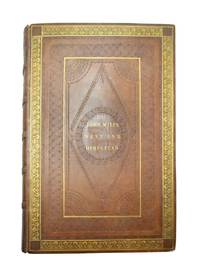
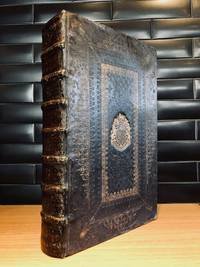
176369256Cambridge: Printed by John Baskerville 1763. BIBLE IN ENGLISH; BASKERVILLE John. BASKERVILLE John. The Holy Bible Containing the Old Testament and the New. Translated out of the Original Tongues and with the Former Translations Diligently Compared and Revised by His Majesty's Special Command. Appointed to be Read in Churches. Cambridge: Printed by John Baskerville 1763.<br> <br> Full Description:<br> <br> BIBLE IN ENGLISH. The Holy Bible Containing the Old Testament and the New: Translated out of the Original Tongues and with the Former Translations Diligently Compared and Revised by His Majesty's Special Command. Appointed to be Read in Churches. Cambridge: Printed by John Baskerville 1763.<br> <br> First edition with the list of subscribers in the third state ending with "The Hon. Charles York Esq; Attorney General." Two large folio volumes in one 19 1/8 x 12 1/4 inches; 480 x 311 mm. Complete with 573 leaves. Text ends on leaf 13E1 and is followed by an Index and Tables a-e f1. List of subscribers bound in after title-page and dedication. Text in double columns.<br> <br> Beautifully bound in early 19th-century full diced tan calf. Boards elaborately ruled and tooled in gilt and blind. Spine stamped and lettered in gilt. Front board lettered in gilt reading "John Miles/ West End/ Hampstead." Marbled endpapers. All edges marbled. Gilt dentelles. Back board with some very mild scuffing and a tiny bit of worming to head of board and at top and bottom of outer hinge. Some light foxing to first title-page and preliminary leaves but text is very clean. With the dates of births and deaths of the Miles family in old ink manuscript on the front free endpaper. Overall a very good clean copy.<br> <br> Originally priced four guineas in sheets for subscribers "the edition consisted of 1250 copies of which 556 were remaindered in 1768 and bought by the London bookseller R. Baldwin at 36s. each.Baldwin was offering copies at three guineas in sheets in 1771" Gaskell.<br> <br> "One of the most beautifully printed books in the world" Dibdin. This edition "has always been regarded as Baskerville's magnum opus and is his most magnificent as well as his most characteristic specimen" T.B. Reed A History of the Old English Letter Foundries p. 279. Gaskell declared that the title-page to the New Testament is "a perfect page of fine printing."<br> <br> Although the Baskerville Bible is now recognized as one of the greatest Bibles of all time it was initially a financial failure. Costing £2000 to print the remaining stock about half of the edition was remaindered five years after publication to a London bookseller. It was Baskerville's last great book.<br> <br> "Aesthetically the highest point in English Bible printing so far was John Baskerville's folio printed at Cambridge in 1763. To achieve his ambition to print a folio Bible Baskerville had to become University Printer on not very advantageous terms. The Bible uses his types paper and ink and shows his characteristic 'machine-made' finish: very smooth and even in colour and impression with glossy black ink on smooth paper. The design is traditional but the quality of material and workmanship is so high and the conventions are so delicately modified and consistently applied that the result is extremely impressive" The Cambridge History of the Bible: The West from the Reformation to the Present Day p. 464.<br> <br> Darlow & Moule 857. ESTC T93106. Gaskell Baskerville 26. Herbert 1146. Huntington Library Great Books in Great Editions 6.<br> <br> HBS 69256.<br> <br> $15000. Printed by John Baskerville unknown
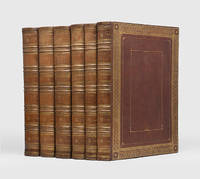
1800173564London: printed for Thomas Macklin by Thomas Bensley 1800. The grandest Bible ever printed in Britain First Macklin edition of the Bible handsomely bound. "The most ambitious edition produced in Britain often pirated but never rivalled" ODNB this Bible is a masterpiece of book art published at the apogee of British copperplate engraving and involving some of the best artists of its day. The Bible dedicated to the king was published serially between 1791 and 1800 in 70 parts each at £1. 1s. Thomas Macklin 1752-1800 began work on the project in the year following the opening of his famous Poets' Gallery in Pall Mall. The prospectus issued in 1789 explained that he was planning to add scripture pictures to his exhibition to be then reproduced in a "magnificent Bible". The paintings were realised by several artists including Hamilton Fuseli and Loutherbourg and exhibited at the Poets' Gallery between 1790 and 1796. Initially promising 60 plates the project eventually included 71 some of which never appeared in Macklin's exhibitions. Most of the headpiece and tailpiece vignettes were designed by Loutherbourg the type was cut by Joseph Jackson and his apprentice Vincent Figgins and the paper made by Whatman. The Bible took 11 years to complete and the publication costs exceeding £30000 almost bankrupted Macklin. Though the final engraving was finished five days before his death the last of the vignettes was not completed for another six weeks and he consequently never saw the finished work. Some copies of the Bible were bound in a fine neoclassical style by contemporary London binders particularly Staggemeier and Welcher. This set is unsigned but the treatment of the spine appears closer to the work of Kalthoeber see Maggs Cat. 1212 II no. 164. This set is bound in six volumes as recommended in the instructions to the binder vol. I. However sets are sometimes found bound in seven. 6 vols large folio 458 x 370 mm. With 71 copper engraved plates after Fuseli and others 113 wood engraved vignette head- and tailpieces. Contemporary diced russia spines with raised bands compartments lettered and tooled in gilt elaborate gilt frames to covers incorporating foliate and flower tools board edges and turn-ins tooled in gilt leather inner hinges marbled endpapers edges gilt silk bookmarkers. Bound with half-titles. A few trivial marks and light scuffs to covers small cosmetic repair to rear cover of vol. I superficial splits to a couple of joints subsequently retouched and now firm occasional foxing to contents and offsetting from plates else clean and bright. A very good set. ESTC T123175; Herbert 1441; Lowndes I p. 192. Maggs Bros Ltd Bookbinding in the British Isles Sixteenth to the Twentieth Century Cat. 1212 Part II 1996. hardcover
1789101717Philadelphia: William Young 1790 i.e. 1789. First edition thus. 12mo. 816 pp. with separate New Testament title-page. Collation: A-2L¹². Contemporary sheep; covers worn with some loss to leather exposing boards front joint split and holding by one cord rear joint with old sewed repair contents toned and dust-soiled a few gatherings worn at fore-edge touching text U1 "Song of Solomon" torn and damaged with loss to text and old paper repairs FIRST EDITION OF THE SECOND ENGLISH BIBLE PRINTED IN THE UNITED STATES and the first English Bible printed after the adoption of the Constitution. It follows Robert Aitken's Bible published in Philadelphia 1781-2. Printing of Young's 12mo Bible which Hills states was advertised for use in schools was already underway when Aitken's 1789 application to Congress for an exclusive right to publish Bibles in America was rejected. Evans notes that "this edition was published in 1789 although dated 1790" and quotes from the publisher's advertisement: "this edition has two strong recommendations to preference it is cheaper than any imported edition; and it is composed entirely of American manufacture." Young followed with a 24mo edition with metrical psalms in 1790.Rare: ESTC locates three copiestwo at AAS NYPL. Complete and in its original binding.PROVENANCE: contemporary birth records on verso of New Testament title-page for Vannosdoll family; Catherine Pellar early ownership inscription on title-page REFERENCE: ESTC W4491; Evans 22345; Herbert 1348; Hills 25 24mo issue; Rumball-Petre America's First Bibles Appendix no. 13 "Second Protestant Bible in English"; Sabin 5168; not in Darlow and Moule William Young hardcover
1794302622Boston: Printed at Boston by Alexander Young and Thomas Minns For J. Boyle B. Larkin J. White Thomas and Andrews D. West E. Larkin W.P. Blake and J. West. Sold by them at their respective book-Stores 1794. A-U6 W6 X-Z6 Z6 verso blank. Text printed in two columns. 1 vols. 12mo. Recent half calf. Small hole in top of title page margin not affecting text title leaf with tissue repair at gutter and fore edge margin 4 other leaves with small repairs to margins. Very good. A-U6 W6 X-Z6 Z6 verso blank. Text printed in two columns. 1 vols. 12mo. This rare edition of the New Testament printed in 1794 at Boston for a consortium of booksellers aimed to provide a distinctly American printed Bible as an alternative to the British printings being imported and thus included the Great Seal of the United States prominently displayed on the title page. Thus suggesting that even at the dawn of the American republic certain clauses of the Bill of Rights were subject to fluid interpretation. This is an early appearance of the Great Seal of the United States and is the only instance where it was used in conjunction with a patently religious work. Copies are recorded at AAS and Duke. Evans 26664; Hills English Bible in America 48; ESTC W4683 AAS Duke Printed at Boston, by Alexander Young and Thomas Minns, For J. Boyle, B. Larkin, J. White, Thomas and Andrews, D. West, E. Larki unknown
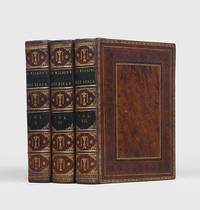
1785173867Bath: printed by R. Cruttwell; and sold by Rivingtons' Dilly Robson & Robinsons' 1785. With three Biblical fore edge paintings An imposing Bible handsomely bound by Edwards of Halifax in their celebrated "Etruscan" style. The set is unusual in featuring motifs relevant to the contents on all three fore-edges - scenes from the Old and New Testaments - as opposed to the more typical landscapes. Edwards famously almost never signed their bindings and their style was very frequently reproduced by others. This set is cited by Weber in his Annotated Dictionary of Fore-Edge Paintings as "a notable Bible from the Edwards bindery" Weber 2010 p. 118-9 and it is used as an example in a chapter devoted to distinguishing genuine Edwards bindings and paintings from imitations. The technique of concealing a painting under the gilt fore edge of books was revived in England by William Edwards about 1780. "The Edwards family not only carried on the art but enlarged it from the mainly floral and heraldic early efforts with occasional religious scenes and royal portraits to embrace views of well-known country houses set in landscapes" Marks p. 194. They were the originators of the bucolic English fore-edge painting which became standard in the 19th century. Scholars believe that the paintings were made in Halifax rather than in London by artists both within and outside the family and under the supervision of Thomas Edwards. Inspiration for the images was taken from various sources often engravings appearing in other books; for landscapes the favourite artist was William Gilpin a pioneer of the "picturesque". Volume I features a moment from Genesis: Abraham welcoming three angels into his home an act of hospitality which moved the Lord to bless Abraham and his wife with a son despite she was far beyond childbearing age. On Volume II is an episode from Exodus: an Egyptian princess and her attendants discover the infant Moses in the bulrushes of the Nile. Volume III displays an animated scene from the life of St. Paul as he preaches in Rome. The "Etruscan" style binding with a border of palmettes and other classical ornaments stencilled in black on brown calf was one of the firm's most popular designs. The origin of this style is debated: some 19th-century writers attributed the invention to John Whitaker while others ascribe it to the Edwards firm. It is known that Edwards employed it from at least 1775. Provenance: a Herman Frasch Whiton probably the American sailor and Olympic champion 1904-1967 with his elaborately designed bookplate featuring his arms and a ship on the verso of an initial blank in each volume. b Randall J. Moskovitz MD American collector from Memphis Tennessee with his bookplates loosely inserted. 3 vols large quarto 306 x 238 mm. Contemporary "Etruscan" calf by Edwards of Halifax spines with raised bands compartments tooled in gilt with flower and urn centerpieces and pediment cornerpieces black morocco labels covers with gilt pentaglyph and metope border stencilled frame of palmettes central panel of tree calf enclosed by gilt Greek key roll board edges and turn-ins tooled in gilt marbled endpapers each vol. with a contemporary fore-edge painting depicting a Scriptural scene edges gilt green silk bookmarkers. Spines uniformly darkened binding judiciously refurbished joints and spine ends repaired gilt retouched on spine light rubbing to palmettes design in places intermittent foxing and slight toning else clean the fore-edge paintings beautifully preserved. A handsome set. P. J. M. Marks "The Edwards of Halifax Bindery" British Library Journal vol. 24 no. 2 1998; Jeff Weber Annotated Dictionary of Fore-Edge Painting Artists & Binders 2010. See also: G. E. Bentley The Edwardses of Halifax 2015; Carl J. Weber Fore-Edge Painting 1966. hardcover
1763306680Birmingham: John Baskerville Printer to the University 1763. The third variant of the Subscriber's list with the most names ending with that of the Hon. Charles York Esq Attorney General. 1146 pp. 1 vols. Folio. Bound in full dark blue straight-grained morocco covers tooled in gilt with wide Greek key and drawer handle border with floral cornerpieces narrow gilt filet-bordered rectangles tooled all over with drawer handle and sunburst tools and semé off small dots with central gilt-stamped L with crown spine with six double raised bands titled in one compartment stamped with owner's name "Frederic Powys" in another and the rest richly gilt a.e.g. pink endsheets by Staggemeier and Welcher with their circular pink paper label on front pastedown. Front joint and headcap with conservation repairs of the highest quality light foxing to text. The third variant of the Subscriber's list with the most names ending with that of the Hon. Charles York Esq Attorney General. 1146 pp. 1 vols. Folio. The 1763 edition of Baskerville's Bible has always been recognised as his masterpiece and is one of the high-points in the history of printing in Britain. This beautiful and monumental binding can be closely dated because Thomas Powys formerly MP for Northamptonshire was created Baron Lilford in 1797 and Staggemeier & Welcher are recorded in partnership on Villiers Street as of 1799. By 1810 Welcher was in business alone at that address. The Hon and Rev. Frederic Powys whose name appears on the spine was the third son of the first Lord Lilford; he married in 1807. Whether the binding was commissioned for his taking holy orders or on the occasion of his marriage can only be conjectured. A landmark of printing in a splendid binding. Nixon p. 184; Gaskell Bibliography of John Baskerville 26; Ramsden p. 135. Provenance: Frederic Powys his name tooled in gilt to spine Lilford Library booklabel John Baskerville, Printer to the University unknown
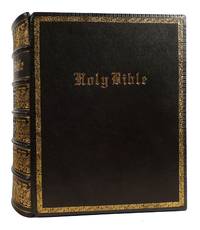
17631230541763. Cambridge: Printed by John Baskerville Printer to the University 1763. <br /> <br /> Royal folio 573 unnumbered leaves. A2 1 B-13D2 a-e2 f1. English binding of contemporary full blue-green morocco covers with elaborate gilt border backstrip richly gilt with red morocco lettering pieces stamped in gilt "HOLY BIBLE" and at the foot "BASKERVILLE" gilt edges marbled endpapers. Inevitable slight signs of wear on such a huge book but in all a very good unrestored copy internally flawless.<br /> <br /> § First edition of Baskerville's masterwork in a magnificent contemporary English binding. Third issue of the subscribers' list as usual. "John Baskerville was a monumental figure in the history of English bookbinding and printing with contemporary accounts of his work ethic revealing a man deeply engaged in virtually every aspect of book production. Yet for most of his life and indeed for many decades afterwards he was decried as a mere amateur. Still other sources show an individual with highly idiosyncratic and paradoxical habits -- he lived with Sarah Eaves for nearly two decades out of wedlock; a devout atheist who was buried in his own backyard without Christian ceremony; a man who 'had wit but always against religion and decency'" F.E. Pardoe in John Baskerville of Birmingham: Letter-Founder and Printer 1975. <br /> <br /> Paradoxically after taking the position of Printer to the University of Cambridge on 1 December 1758 Baskerville produced one of the few great Bibles. It is a true masterwork expertly printed with impeccable attention to ink type spacing paper quality and ease of use. Published on 4 July 1763 "the adjective that inevitably comes to mind is 'noble' and the volume warrants the word. It was conceived and executed on a grand scale. to show that he had now learnt his craft and was able to practice it in a masterly fashion. and the result shows again that Baskerville must be placed in the very top rank of book designers" Pardoe 87. Morison and Day The Typographic Book 1963 write that "Baskerville's folio English Bible printed for the University of Cambridge is the finest presentation of Holy Writ since Richelieu's Latin Vulgate printed at the Imprimerie Royal" 48. Gaskell 26. Herbert 1146. Morison & Day The Typographic Book 48. Huntington Library Great Books in Great Editions 7. Rothschild 2640. Rumball Petre 145. unknown
17177186Oxford: John Baskett 1717. First Edition Thus. Royal binding in full morocco. Very Good. John Sturt. Two volumes in one. Large stout folio. Double column with columns separated by double rule. Text ruled in red and title pages printed in red and black. Engraved vignette title pages for Old and New Testaments the latter dated 1716. With the engraved additional general title page by cartographer and renowned illustrator John Sturt 1658–1730. With striking copper-engraved vignette head- and tail-pieces and many engraved historiated initials. Complete with Apocrypha.<p>Marbled endpapers. All edges gilt. Bound in contemporary full black morocco rebacked with original elaborate gilt-tooled spine neatly laid-down gilt-tooled arms of King George II featuring the motto "Most Noble Order of the Garter" as centerpieces and his monogram in spine compartments raised bands and gilt-decorated borders. Only moderate wear to the splendidly complete royal binding. First edition of the monumental illustrated "Vinegar Bible" with additional title page engraved by John Sturt including the vignette of a church interior featuring the figures of Moses Aaron et al. per Darlow and Moule. According to the DNB Sturt "specialized in miniature work and it was said that he could engrave the creed on a silver penny but could also work on a large scale and in 1692 he produced a notable engraving of Britannia the royal first capital ship of England printed on four sheets". Presented in a handsome King George II armorial binding. Carter notes that " . Bibles with the royal arms may have come from one of the Royal Chapels - but they may equally have come from any loyal parish church" ABC p. 157. That said a limited print run coupled with the high cost of Baskett's elaborate opus would suggest the former.<p>In 1709 printer John Baskett secured the exclusive royal patent to print Bibles in England. Of those he and his family published this is the most magnificent being a triumph of legible elegant type that contributes to an easy readability accessible today. Alas a typographical error in the running head of Luke XX among other typos rendered the parable of the vineyard as the "parable of the vinegar" overshadowing Baskett's magnificent achievement.<p>A scarce and stately copy of a high spot in 18th-century printing. DARLOW & MOULE 736-B "the engravings differ considerably from those in A". John Baskett unknown
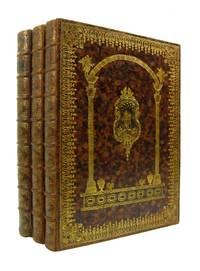
172812691s-Graavenhaage Pieter de Hondt 1728. Taferelen der Voornaamste Geschiedenissen van het Oude en Nieuwe Testament en andere boeken bij de Heilige Schrift gevoegt door de vermaarde Kunstenaars Hoet Houbraken en Picart Getekent en van de beste meesters in koper gesneden en met beschrijvingen uitgebreid. 3 delen titelprent 2 gegraveerde opdracht 148 72 2 2 149-280 14 71 titelprent 2 gegraveerde opdracht 160 70 p. Origineel Leer met ribben rijkelijk met goud bestempeld en goud op snede gebonden door de Van Damme Binderij in Amsterdam Folio H. 45 x L. 33 x B. 45-5 cm. Prentbijbel van Pieter de Hondt bestaande uit 212 gravures door Gerard Hoet Arnold Houbraken en Bernard Picart met bijgevoegde tekst van Jacques Saurin. 19 van de gravures zijn avant-la-lettre gedrukt dat wil zeggen dat het om de eerste proefdrukken gaat van de kopere platen op de rugschilden staat dan ook 'eerste drukken' boven de deelaanduiding. De randen om deze 19 prenten zijn op maat gemaakt voor het werk. Het geheel is gedrukt op super royaal papier en is ingebonden door de Van Damme Binderij in drie zeer fraaie stempelbanden. De Van Damme Binderij was werkzaam tussen 1750 en 1786 in de stad Amsterdam. De binderij heeft zijn naam te danken aan het feit dat zij werkzaam waren voor de bekende boekhandelaar Pieter van Damme. De banden die afkomstig zijn uit deze binderij behoren tot het beste dat in Amsterdam in de achttiende eeuw werd gemaakt. De stempels die gebruikt zijn voor deze banden zijn divers op het midden van de platten een zwart schild met een afbeelding van een engel gekroond met twee zegenende handen. Dit wordt omringd door een triomfboog met op de bovenste hoeken twee engelen die in spiegelbeeld van elkaar zijn gestempeld dit alles wordt omlijst door een brede decoratieve rand. De ruggen van de banden zijn bestempeld met op elk van de vlakken een engel omringd door een motief van ranken waarbij een vak is opengelaten voor de titel en de deelaanduiding. De Van Damme binderij stond er om bekend kleine en soms verborgen verwijzingen aan te brengen in de bestempeling die verwijzen naar de inhoud van het boek. De stempels die voor deze set zijn gebruikt zijn hier een voorbeeld van. Zo verwijzen de engelen en de zegenende handen naar de geestelijke inhoud van dit werk. De onder- en bovenkanten van de ruggen zijn plaatselijk wat ingescheurd. Zeer fraaie set van een zeldzame editie. 3 volumes frontispiece 2 engraved dedication 148 72 2 2 149-280 14 71 frontispiece 2 engraved dedication 160 70 p. Contemporary blind-stamped Leather with 8 raised bands richly decorated with gilt and gilt-edged text blocks bound by the Van Damme Bindery in Amsterdam Folio H. 45 x L. 33 x W. 45-5 cm. Print Bible of Pieter de Hondt containing 212 engravings by Gerard Hoet Arnold Houbraken and Bernard Picart with accompanying text by Jacques Saurin. 19 of the engravings are printed avant la lettre which means that they are the first test pressure of the copper plates; above the volume indication on the spine is gilded 'eerste drukken' which means first prints in English. The borders of these 19 engravings are custom-made to match the size of the other pages. The entire work is printed on extra-large paper and is bound by the Van Damme Bindery in three very beautiful blind-stamped bindings. The Van Damme Bindery was active from 1750 to 1786 in the city of Amsterdam. The bindery is so called because they worked for the well-known bookseller Pieter van Damme. The bindings made in this bindery belong to the best that was made in Amsterdam during the eighteenth century. The gilding used on the bindings is very diverse. In the middle of the covers a black central shield with the image of an angel crowned by blessing hands. Surrounded by a triumphal arch with a pair of angels stamped in each other's mirror image on top of it altogether framed by a broad ornamental border. The spines are decorated with an angel surrounded by tendrils between each raised band leaving some space for the title and volume indication. The Van Damme Bindery was known to place minor and sometimes almost hidden references in the gilding that point to the content of the book. The tooling used for this set is an example of this. The angels and the blessing hands refer to the religious content of this work. The spine ends are slightly split at some places. An excellent set of this rare edition. Literature: Poortman W.C. 1986. Bijbel en Prent. Deel II: Boekzaal van de Nederlandse Prentbijbels p. 137-145 / Storm van Leeuwen J. 1977. Enige ontwikkelingen in de stijl van platbestempeling bij Nederlandse boekbanden uit de achttiende eeuw. In Documentatieblad werkgroep Achttiende eeuw. Jaargang 1977 p. 16-19 / Storm van Leeuwen J. 2006. Dutch Decorated Bookbinding in the Eighteenth Century Volume I p. 460-496 s-Graavenhaage, Pieter de Hondt hardcover
1763184488Cambridge: printed by John Baskerville 1763. An outstanding synthesis of fine printing illustration and binding First Baskerville edition: a spectacular copy of one of the greatest English Bibles and a crowning achievement of English printing in a magnificent Staggemeier and Welcher binding and abundantly extra-illustrated with 287 Old Master engravings. The copy adorned two of the greatest book collections of the last two centuries: the library of the Dukes of Marlborough at Blenheim Palace and of Estelle Doheny in California. Friedrich Leberecht Staggemeier 1759-1827 was esteemed for his elaborately decorated neoclassical bindings. He partnered with Samuel Welcher from 1799 to 1810 and the pair catered to the highest echelons of the market. Extra-illustration was a distinguishing feature of this market: here 171 of the illustrations are from Bernard Picart and Gerard Hoet's Figures de la Bible The Hague 1728 and 58 are from Pierre Mortier's Bible Amsterdam and Antwerp 1700 while others are from Jan Luyken's Icones Biblica Veteris et N. Testamenti Amsterdam 1729 and other sources. The extravagant binding and extra-illustration were commissioned by the first owner the collector and scholar Jacob Bryant. In 1804 he bequeathed the Bible to his patron George Spencer 4th Duke of Marlborough. It remained in the duke's collection at Blenheim Palace until 1881 when it passed to Fanny Octavia Louisa daughter of the 7th duke. Her descendants sold the book and it passed via Dawson's Book Shop to Estelle Doheny one of the greatest collectors of the 20th century where it joined her Gutenberg Bible and other landmarks of printing history. She bequeathed it to St. John's Seminary which sold it and the rest of Doheny's collection in 1988 where it realized $11000. Bound in 2 vols large folio 518 x 343 mm pp. 1146. Extra-illustrated with 287 Old Master engravings of which 198 are single page and 84 double each mounted mostly within a black ink and pale yellow wash frame. Late 18th- or early 19th-century red straight-grain morocco by L. Staggemeier & Welcher of London binder's ticket green morocco labels richly gilt in compartments wide gilt borders to covers gilt Greek-key turn-ins green watered-silk linings with gilt grapevine borders all edges gilt. Joints and extremities restored scattered light offsetting from plates and foxing else contents fresh very minor worming to front endpapers of first volume: a beautiful copy. ESTC T93106; Gaskell 26; Herbert 1146. unknown
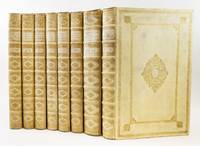
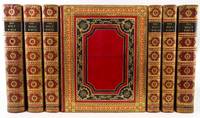
1800ST20221aLondon: T. Bensley for T. Macklin final volume Bensley for T. Cadell & W. Davies 1800 for the six volumes of the Bible 1816 for the Apocrypha. First Printing of this Edition. 480 x 385 mm. 19 x 15 1/8". One leaf in the Apocrypha 3P2 comprising two prologues of Ecclesiasticus invisibly inserted from another copy. Seven volumes comprising the regular Bible in six volumes and the Apocrypha usually not included as a seventh volume. <br/> ABSOLUTELY MAGNIFICENT CONTEMPORARY RED NEOCLASSICAL-STYLE STRAIGHT-GRAIN MOROCCO SUMPTUOUSLY GILT AND ONLAID WITH BLUE BY GEORG FRIEDRICH KRAUSS done for Prince Albert Casimir Duke of Saxe-Teschen with repeated "AST" monogram covers with very elaborate frames incorporating 11 plain and decorative gilt rules four onlaid borders of blue morocco and very elegant swirling foliate ornamentation around the central scalloped panel six pairs of raised bands each pair flanking a recessed gilt and blue metope and pentaglyph rule very handsome spine compartments with blue fan-shaped cornerpieces and central gilt-decorated blue medallions within sunburst gilt collars turn-ins with Greek key pattern in gilt striking endleaves of turquoise and green watered silk the Apochrypha endleaves slightly different. With more than 100 allegorical headpieces and tailpieces and some 70 SPLENDID LARGE-FOLIO-SIZE COPPER PLATES after Fuseli Reynolds West and others most plates printed before letters. Tissue guards perhaps later. Herbert 1442 and 1651. First volume with about 30 leaves noticeably foxed the majority of plates offset onto previous and following pages consistent inoffensive offsetting of text on facing pages other trivial imperfections but still a very impressive copy internally with the luxurious paper used for the text both fresh and clean and the engravings richly impressed and with very little foxing. Some unimportant scuffing and rubbing to the leather but all defects minor THE MAGNIFICENT BINDINGS REMARKABLY WELL PRESERVED the heavy volumes completely solid with only insignificant signs of use and THE MOROCCO AND LAVISHLY GILT DECORATION EXTREMELY BRIGHT. AN ALTOGETHER MEMORABLE COPY.<br/> <br/> The most prodigious form of Scripture in English ever published the Macklin Bible was often put into ornate bindings especially by London binders like Staggemeier and his contemporaries. But however much other sets may glisten the present magnificent example surely stands at or near the front of the line as one of the most lavishly decorated and arresting copies in existence. Its decorative extravagance also testifies to the fact that Macklin's publication was sufficiently admired outside of England to warrant the finest workmanship and the expenditure of great sums of money on artistic resources. The very large and bold type the fine Whatman paper and the series of engravings by some of the most celebrated artists of the period make this an item that is already very desirable. Like the Boydell "Shakespeare Gallery" also printed by Bensley our Macklin Bible is a vast picture book with illustrations that are grand both in size and emotional impact. But it is of course the bindings here that matter the most. Francesco Piranesi is generally given credit for inventing the Neoclassical style when he designed volumes presented to Gustavus III of Sweden during this monarch's visit to Rome in 1783-84. Quickly popular the Neoclassical style was imitated and developed by Staggemeier & Welcher in London by F. W. Standlander in Stockholm and by Georg Friedrich Krauss in Vienna. Krauss was the most prominent Continental binder working in this style of the day and Saxe-Teschen was perhaps his most important client. Products of the Krauss bindery have passed through some of the most distinguished collections over the years particularly those of Fürstenberg and Schäfer; and his bindings have consistently brought remarkable sums of money at auction. It is sufficient to say that the present group of bindings represents the most impressive collection of decorative volumes we have ever offered for sale. The collector for whom these bindings were originally executed Duke Albert of Saxe-Teschen 1738-1822 was the son of Friedrich August II of Saxony and the son-in-law of the empress Maria Theresa. After providing important military and civil service to the Habsburg empire he retired to Vienna in 1795 and afterward devoted himself to the fine arts. He founded the Albertina which now houses the greatest collection of prints in the world and he put together a great library distinguished by the highest taste and most exacting standards. The present copy has the additional distinction of containing what amounts to an extra volume: the Macklin Bible however it is bound most often appears in the marketplace without the Apocrypha appearing here as Volume VII which was not issued until 16 years after the others. It is also of some interest that the bindings of our seven volumes were decorated in an entirely uniform fashion as a close inspection shows something not typical of a set with volumes published so many years apart. The non-uniform endleaves in the final volume here may have resulted from the fact that given the physical size of the books the binder simply ran out of the cloth he had used for lining the first six volumes. The present set was offered though unsold at Sotheby's in 2003 with an estimate of £40-50000 approximately $64000-80000 and in 2005 for £30-40000 approximately $54000-72000. T. Bensley for T. Macklin [final volume Bensley for T. Cadell & W. Davies] unknown
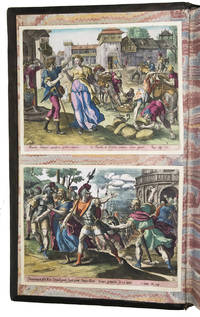
1790ST19326Amsterdam: H. Keyzer H. Gartman en W. Vermandel 1790. 555 x 345 mm. 21 7/8 x 13 3/4". 2 p.l. 62 folding plates. <br/> Attractive late 19th or early 20th century retrospective polished brown calf by L. Guétant stamp-signed in gilt on tail of spine double gilt-ruled border floral cornerpieces raised bands spine panels with scrolling floral borders and central flower ornament gilt titling. With title vignette and 62 ENGRAVED FOLDING PLATES ALL WITH BEAUTIFUL HAND COLORING AND HIGHLIGHTED WITH GOLD depicting Bible scenes from the Old and New Testament 61 of which are by Jan Luyken. A Large Paper Copy. For earlier editions: Graesse IV p. 308; Brunet III 1245-46; Klaversma & Hannema 159-164. Light rubbing to joints and edges boards just a little marked trivial foxing and faint spots here and there but A REMARKABLY FINE COPY the binding lustrous and showing little wear the paper extremely bright and fresh the margins immense and the paint and gold unusually vibrant.<br/> <br/> The marvelous illustrations of Dutch engraver and poet Jan Luyken comprise this collection of "remarkable stories" from the Bible each depicted with panoramic grandeur and enhanced with a wide range of finely applied colors and gold. Luyken 1649-1712 had written and illustrated erotic poetry as a young man but later became a devout Pietist after reading the works of German mystic Jakob Böhme. He became a member of the Baptist Church in 1673 and thereafter devoted his talents to producing religious works. The vast scenes here are notable in their scale detail and animation. There are a number of battle scenes from the Old Testament as well as dramatic depictions of the plagues and a fascinating episode from the histories of Josephus depicting Herod's soldiers being lowered down the side of a cliff in large boxes suspended from chains in order to attack the thieves hiding in caverns on the cliffside. There is a majestic portrayal of the Queen of Sheba arriving at the court of Solomon a peaceful scene of Adam naming the beasts in the Garden of Eden and a festive celebration of the Feast of Tabernacles. New Testament scenes include a terrifying final judgment a blinding conversion of St. Paul and scenes from that Apostle's travels. The engravings have one common trait: they are heavily populated whether by men or beasts and one of Luyken's special gifts is to render every person in the crowd as an individual with his own concerns and reactions to the events at hand. The engravings while already greatly pleasing in black and white are even more stirring and memorable when seen in the full color and gold used here. Expansive tableaus are given greater definition and clarity and events such as Noah’s flood and the destruction of Sodom and Gomorrah are rendered even more successful in expressing the awesome powers of the Almighty. The illustrations are quite definitely Protestant in point of view: there are no depictions of the Virgin Mary not even a Nativity scene. Except for engravings of the Annunciation to the Shepherds and the Massacre of the Holy Innocents the illustrations focus on Jesus as an adult and on the work of his Apostles spreading the gospel. There were earlier editions containing Luyken's 62 large plates which originally appeared without text as here in 1708 and they appeared again with a text in Dutch in 1729 and in French in 1732. Copies of these editions appear with some regularity in the marketplace but are usually not colored and are often found incomplete or with other major condition issues. We can trace no record in RBH or OCLC of a copy of our 1790 edition and we can find nothing that compares with the quality of coloring and grand height attained by the monumental margins seen here. H. Keyzer, H. Gartman en W. Vermandel unknown