(Bible English)Biblio.com
64 résultats
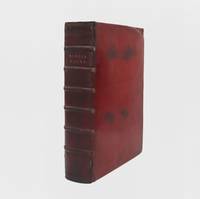
1585372230London: Deputies of Christopher Barker 1585. Text in black letter in two columns. General title and calendar printed in red and black titles within woodblock frames woodcut map on leaf following NT NT-O3 woodcut initials. 17 536 137pp. New Testament title page present. Lacks preliminary blank lacks the general title with a 1588 title supplied in its place lacks NT leaf V1 Titus 2:12 through Hebrews 1:10 preliminaries bound out of order. Folio 15-5/8x10-1/2 inches. Nineteenth century dark purple morocco covers blocked in blind marbled endpapers red edges. Repairs to voids in preliminaries and several leaves in the beginning of Genesis general title supplied and mounted restoration to the terminal five leaves with some losses else scattered minor staining and edge tears. Scattered early marginalia including an early female ownership signature on page 536. Bookseller's label on front endpaper J. Whereat Weston Super Mare. Text in black letter in two columns. General title and calendar printed in red and black titles within woodblock frames woodcut map on leaf following NT NT-O3 woodcut initials. 17 536 137pp. New Testament title page present. Lacks preliminary blank lacks the general title with a 1588 title supplied in its place lacks NT leaf V1 Titus 2:12 through Hebrews 1:10 preliminaries bound out of order. Folio 15-5/8x10-1/2 inches. The Bishops' version the translation overseen by Matthew Parker. ESTC S156; Herbert 188; STC 2143. Provenance: General Theological Seminary bookplates Deputies of Christopher Barker unknown
1587ST14247Venetiis Venice: Hieronymus Polus 1587. 213 x 146 mm. 8 3/8 x 5 5/8". 12 p.l. 1126 pp. <br/> ESPECIALLY PLEASING CONTEMPORARY CALF covers with gilt French fillet frame and oval wreath of olive branches the center of the wreath in the shape of a cross flat spine ruled in gilt red morocco label. Title page with elaborate wood-engraved frame text profusely illustrated WITH 600 WOOD ENGRAVINGS depicting scenes from scripture after Holbein Bernard Salomon le Petit Bernard and others a handful of these a bit indistinct. Front pastedown with ex-libris of Leonis S. Olschki. Adams B-1093; STC Italian 93. Not in Darlow & Moule. ◆A little wear to joints and extremities spine a bit crackled separation at hinges but no looseness occasional minor browning or foxing otherwise in remarkably fine condition the text clean and crisp and in a still-lustrous entirely solid unsophisticated original binding.<br/> <br/> This is a very well-preserved handsomely bound and lavishly illustrated edition with distinguished provenance of the Louvain Bible first printed in Venice in 1578. Our edition contains 600 wood engravings illustrating the text ranging from portraits of prophets saints and evangelists to dramatic scenes from the histories of the Old Testament and the life of Christ and ending with an imaginative Apocalypse cycle. Many of these are the work of Lyonnaise artist Bernard Salomon 1506-61 known by the sobriquet "Le Petit Bernard" for his small engravings rich with detail. Others are based on the biblical woodcuts of Hans Holbein. The binding here is likely French; the flat spine with just one large gilt-framed panel and the olive branch decoration on the covers is characteristic of late 16th century and early 17th century French work. The exceptional condition here is typical of books from the collection of Leo Samuel Olschki 1861-1940 scion of a family of Prussian Jewish printers whose interest in printing history led to his becoming a celebrated antiquarian bookseller author founder of the journal "The Bibliophile" and publisher of works in the humanities. Hieronymus Polus unknown
1510371469Leipzig: Wolfgang Stockel 1510. Title in red and black. A-DⶠEâ´ F-JⶠKâ´ L-Mâ¶. 68 leaves. Extensive annotations throughout in Latin in a contemporary Germanic cursive comprising both interlinear notes and marginal gloss. 1 vols. Folio 12x8-1/2 inches. Early pigskin and oaken boards a remboitage from a thicker volume worn front hinge split between A2 and A3. Housed in a blue cloth slipcase. Provenance: Duplum Bibliothecae Regiae Monacensis pencil annotation; John Pintard inscription presenting the book to; General Theological Seminary bookplate and inked stamps. Title in red and black. A-DⶠEâ´ F-JⶠKâ´ L-Mâ¶. 68 leaves. Extensive annotations throughout in Latin in a contemporary Germanic cursive comprising both interlinear notes and marginal gloss. 1 vols. Folio 12x8-1/2 inches. Edited by Johann Kusthuert this printing of the Epistles of Paul was intended for the student market with the introduction addressed to studiosis sacarum litterarum tyronibus. In addition the colophon reads: Impressum ad altissimi Dei laudem ac studiosorum Sacre Scripture tyronum perfectum in officina libraria prouidi viri Vuolffgangi Stockel ciuis Liptzensis anno Domini 1510 quarto kalendis Septembris.<br /> <br /> The annotations and marginal gloss are impressive and very similar though in a different hand to the copy described by Rosenthal now at the Beinecke suggesting they are by a student at the same institution: "The present copy comes with a vast manuscript apparatus in Latin covering the entire text from St. Jerome's general preface to the last sentence of the last epistle. The annotation . is uniformly intense throughout. The script is a very small at times microscopic Germanic cursive and there is evidence of careful layout especially in the marginal gloss." Estimating the annotations to be approximately 80000 words Rosenthal describes the interlinear notes as "frequently far more than simole reading aids." He continues: "The marginal gloss includes an argumentum for each chapter and its subdivisions . There are also occasional citations from authorities such as St. Thomas and Ambrose."<br /> <br /> It is a handsomely printed volume with the title in large red letters above an 11-line subtitle in black. The verso of the title comprises a table of contents of the Pauline epistles and is followed by an introduction by Kusthuert.<br /> <br /> On the duplicates sold by the Munich royal library including the present volume see: Wagner Bettina. "'Duplum Bibliothecae Regiae Monacensis': The Munich Court Library and Its Book Auctions in the Nineteenth Century." The Papers of the Bibliographical Society of America vol. 111 no. 3 2017 pp. 345-77. Pintard 1759-1844 was a prominent New Yorker of Huguenot origin patron of education and one of the earliest and staunchest advocates for the preservation and study of the history of New York and the United States. Pintard began to work towards the establishment of a historical society in the city in early 1804 and he was the leader in the organization of the New-York Historical Society in November 1804. He was also a patron of the old French Huguenot Church of St. Esprit and the General Theological Seminary to whom he donated this volume in 1826.<br /> <br /> Scarce. OCLC locates three copies in Germany the aforementioned copy at Yale described by Rosenthal and the present example. Rosenthal B.M. Printed books with manuscript annotations 105 for a similarly annotated copy of the same edition; Panzer vii p. 169; VD16 B 4980. Not in BM STC Germany Adams or Darlow & Moule [Wolfgang Stockel] unknown
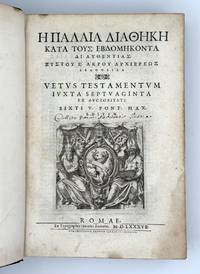
1587371783Rome: Franciscus Zanetti 1587. Text in Greek with short Latin notes at the end of each verse in two columns. Large engraved vignette on title with figures of Moses and Esdras on either side of the arms of Sixtus V. aâ´ A-3Sⶠ3Tâ¸. 8 783 1pp. Folio. Eighteenth century red morocco arms of the second Duke of Newcastle on the covers marbled endpapers gilt edges minor darkening to spine and wear to joints. Scattered minor dampstaining at lower outer corner of a few leaves. Provenance: Collegii Paris. Societas Jesu.early inscription on title; Douglass Maxwell Moffat booklabel with original invoice purchasing the volume from Davis & Orioli in 1940; General Theological Seminary bookplates. Text in Greek with short Latin notes at the end of each verse in two columns. Large engraved vignette on title with figures of Moses and Esdras on either side of the arms of Sixtus V. aâ´ A-3Sⶠ3Tâ¸. 8 783 1pp. Folio. Commissioned by Pope Sixtus V to assist the revisers who were preparing the Latin Vulgate edition ordered by the Council of Trent the "Sixtine" or "Roman" edition of the Septuagint was edited by Cardinal Antonio Carafa based on the Codex Vaticanus and became the standard for all the later editions of the Septuagint for three centuries after its publication. Darlow & Moule no. 4647; Adams B1246; BM STC Italian 1465-1600 p. 94 Franciscus Zanetti unknown
1593371924London: Excudebant G. Bishop R. Newbery & R. Barker 1593. Six parts in one. Text printed in verse form double column references and notes in margins. 81771 blankpp; 31041 blank leaves; 3 75 i.e. 73 leaves; 6 numbered 1-12pp 13-129 leaves 1 blank; 3 4-74 leaves; 3 198 leaves. With additional blanks bound in at the front and rear. 1 vols. Folio. Eighteenth century reverse calf covers blocked in blind red morocco lettering piece repairs to joints minor loss at head of spine. Repairs at hinges scattered minor paper repairs. Provenance: Peckham Williams armorial bookplate; General Theological Seminary bookplate. Six parts in one. Text printed in verse form double column references and notes in margins. 81771 blankpp; 31041 blank leaves; 3 75 i.e. 73 leaves; 6 numbered 1-12pp 13-129 leaves 1 blank; 3 4-74 leaves; 3 198 leaves. With additional blanks bound in at the front and rear. 1 vols. Folio. The third edition of the Latin Bible printed in England in this case printing Tremellius and Junius's version of the Old Testament with Beza's translation of the New Testament accompanied by Tremellius's version based on the edition printed in Geneva in 1590 see D&M 6182. Texts printed in double columns. The complete text was printed in six parts each with a divisional title and independent pagination or foliation. The fifth part Junius's translation of The Apocrypha was never bound into this copy. A variant of this edition with the imprint for "Guliel. N." i.e. William Norton appeared the same year. ESTC S106974; STC 2061.5; Darlow & Moule 6185; BM 1. b. 12; Copinger 534 Excudebant G. B[ishop] R. N[ewbery] & R. B[arker] unknown
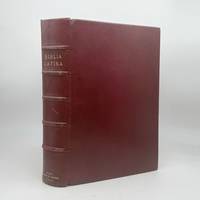
1592371810Rome: Ex Typographia Apostolica Vaticana 1592. First edition of the Clementine Bible. Edition of 500 copies. Engraved title page reading: Biblia sacra vulgatae editionis. Sixti Quinti Pont. Max. iussu recognita atque edita. Letterpress title page printed in red and black. Text in double columns. 12 1131 1 blank 23 1 blank pp. 1 vols. Folio 349 x 250 mm. Full reddish-orange levant morocco spine titled in gilt raised bands highlighted in black boards with single rule in black dated 1957 on turn-in. Fine. Leather-tipped slipcase. First edition of the Clementine Bible. Edition of 500 copies. Engraved title page reading: Biblia sacra vulgatae editionis. Sixti Quinti Pont. Max. iussu recognita atque edita. Letterpress title page printed in red and black. Text in double columns. 12 1131 1 blank 23 1 blank pp. 1 vols. Folio 349 x 250 mm. First edition of the official text of the Catholic Bible issued under sanction of Clement VIII and therefore known as the "Clementine Bible" and superseding the controversial and suppressed edition of Sixtus V of 1590. The text is preceded by Cardinal Bellarmino's preface the Decree of the Council of Trent on the canonical Scriptures and a brief by Clement VIII.<br /> <br /> "It is generally admitted that on the whole the Clementine text . is critically an improvement upon the Sixtine. . The Clementine Bible of 1592 remains to the present day the standard edition of the Roman Church" Darlow & Moule. <br /> <br /> Nice wide-margined copy of this notable edition. Brunet I 878; Darlow and Moule 6184; Adams B1101; P.M. Baumgarten Neue Kunde von alten Bibeln pp. 316-322. Provenance: W. A. Copinger bookplate; General Theological Seminary gift of Cornelius Vanderbilt and Dean Augustus Hoffman bookplates Ex Typographia Apostolica Vaticana unknown
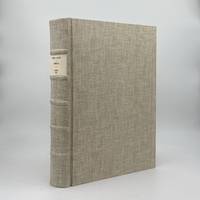
1512372103Paris: Philippe Pigouchet for Simon Vostre 1512. Title page printed in red and black with woodcut device of Simon Vostre; full page woodcuts of St. Jerome crucifixion old coloring. Text in gothic type in two columns ornamental initials some colored text ruled in red throughout. 15 340 28 leaves. Terminal black dd6 present. 1 vols. Folio. Modern linen conservation binding. First leaf toned ownership marks struck out early bibliopole's description in ink at bottom of title. Some minor worming at end. Very good. Title page printed in red and black with woodcut device of Simon Vostre; full page woodcuts of St. Jerome crucifixion old coloring. Text in gothic type in two columns ornamental initials some colored text ruled in red throughout. 15 340 28 leaves. Terminal black dd6 present. 1 vols. Folio. Large folio Bible printed for Simon Vostre by Philippe Pigouchet the famous printer of some of the most beautiful Books of Hours. Uncommon in institutions and in the trade. Renouard ICP II 248; Delaveau & Hillard 778 Philippe Pigouchet for Simon Vostre unknown
1509372247Basel: per Johannem Petri de Langdorff et Johannem Froben de Hammelburg 1509. Printer's device on title hand colored at an early date. Large manuscript initials in red and blue; rubricated throughout. 14 CCCXLVII 28 leaves. Manuscript references and extensive early marginalia in Hebrew in O.T.; citations in Table keyed to N.T. and underlined. Contemporary colored deerskin sectional fore-edge tabs. Folio 13 x 8-1/2 inches. Full burgundy morocco by Zaehnsdorf. Title leaf repaired at gutter and bottom corner; minor staining. Printer's device on title hand colored at an early date. Large manuscript initials in red and blue; rubricated throughout. 14 CCCXLVII 28 leaves. Manuscript references and extensive early marginalia in Hebrew in O.T.; citations in Table keyed to N.T. and underlined. Contemporary colored deerskin sectional fore-edge tabs. Folio 13 x 8-1/2 inches. A scarce Latin bible the first edition of the Vulgate with the printed marginal references to canon law. These 'Concordantiae iuris canonici' according to Masch were compiled by Johannes Niuicellensis an abbot and were printed separately in 1482. This is also the first edition to printed the commendatory hexastich by Matthias Sambucellus on the title page beginning: "Emendata magis scaturit nunc biblia tota."<br /> <br /> A tall copy with generous margins lovely stylish manuscript initials and full rubrication. VD16 B2584. Delaveau & Hillard 771; cf. Darlow & Moule note after 6092. Provenance: Dr. Charles Clay Manchester 19th century inscription on front endpaper sold Sotheby Wilkinson & Hodge May 18 1883; General Theological Seminary bookplate blindstamps; [per Johannem Petri de Langdorff et Johannem Froben de Hammelburg unknown
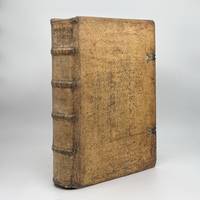
1527372109Coloniae: Petrus Quentel excudebat 1527. First Protestant Bible printed in Latin. Title-page with large woodcut vignette of arms of Cologne lion and gryphon rampant with and three crowns; numerous illustrations by Anton Woensam and ornamental initials throughout. Ff. 8 CCCXXV 1 LXXXVII i.e. 85 5. Manuscript marginal glosses in red chiefly calling out names names in Kings. 1 vols. Folio. Contemporary blindstamped pigskin over bevelled wooden boards clasps perished. Some soiling repairs to hinges painted fore-edge tabs. Very good. First Protestant Bible printed in Latin. Title-page with large woodcut vignette of arms of Cologne lion and gryphon rampant with and three crowns; numerous illustrations by Anton Woensam and ornamental initials throughout. Ff. 8 CCCXXV 1 LXXXVII i.e. 85 5. Manuscript marginal glosses in red chiefly calling out names names in Kings. 1 vols. Folio. The first Protestant Bible in Latin edited by Johan Rüdel Rudelius printed in Cologne by Peter Quentel or Quentell and notable for the wood engraved illustrations by Anton Woensam Anton von Worms particularly those at the head of each of the four gospels. Matthew faces an angle who is touching his stylus; a lion is seated beside Mark; a bull with Luke; and an eagle stands beside John.<br /> <br /> Quentel was the printer of Tyndale's quarto Cologne English New Testament known from a single surviving fragment in the Grenville Collection where this same illustration to Matthew appears. It is a reasonable inference that each of the four gospels would have carried an illustration. The project which had "'got as far as the letter K' the signature that would have taken the work well into Mark" ODNB was unfinished at the time of Tyndale's flight from Cologne in 1525. Quentel's print shop was raided but sheets of the first gospel translated from the original Greek and printed in English soon began to circulate in England. Tyndale settled in Worms where Schöffer completed an octavo printing of the first complete English New Testament in 1526 a facsimile of the Grenville fragment and its illustration were published in 1871.<br /> <br /> The blocks for the illustrations evidently survived the raid on the Quentel's shop and are used here at the head of each of the four gospels.<br /> <br /> A notable edition in the history of the printing of the Bible. Adams B1007; Darlow & Moule 6107 note; VD16 B2589; Copinger 210. Provenance: Cartusiae Buxiana Buxheim inscription on title; Thomas Raffle early signature on title; General Theological Seminary blindstamps bookplate Petrus Quentel excudebat unknown
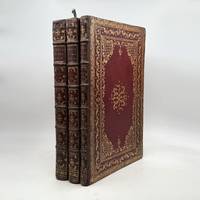
1590371036Rome: Ex Typographia Apostolica Vaticana 1590. First edition of the Sixtine Vulgate Bible large paper copy. Engraved illustrated title-page. Title in red and black text in double columns. 3 vols. Folio. Italian full red morocco binding of the seventeenth or early eighteenth century elaborately gilt with triple floral scrollwork borders stars in cornerpieces about a central motif stencilled paste paper endsheets a.e.g. Boxed. First edition of the Sixtine Vulgate Bible large paper copy. Engraved illustrated title-page. Title in red and black text in double columns. 3 vols. Folio. The engraved title reads: Biblia sacra vulgatae editionis ad concilii Tridentini praescriptum emendata et a Sixto V.P.M. recognata et approbata.<br /> With the preliminary document the Bull of Sixtus V beginning 'Aeternus ille caelestium terrestriumq. rerum omnium conditr ac moderator Deus .". This is often lacking.<br /> <br /> An extraordinary copy of the Sixtine Bible containing the Vulgate text as edited by Pope Sixtus V intended as the first ecclesiastically authorized text to be used throughout Christendom. "In its text it comes closer to R. Stephanus' Bible of 1538-40 than to the Louvain editions" Darlow & Moule who discuss the textual variations. This copy includes examples of the printed overslips required to correct hurried printing. The association with Aldus II suggested by Renouard and lasting long thereafter is spurious.<br /> Pope Sixtus V died soon after the book was printed and was followed by three short-lived popes. The Sixtine Bible had "aroused antagonism among both clergy and laity" and was swiftly condemned; the edition was withdrawn by Pope Clement VIII soon after his elevation to the papal throne in 1592 and many copies were destroyed. Preparations began in 1591 for a new edition of the Vulgate printed in 1592 and known as the Clementine Bible which long remained the standard Vulgate text.<br /> <br /> The ordinary issue of this printing measures 13-3/8 inches tall as in the Brooker copy sold 2024; the present copy measures 15-3/4.<br /> <br /> AN OUTSTANDING LARGE PAPER COPY OF A NOTABLE EDITION. Copinger 521; Darlow & Moule 6181; Adams B1098; BM STC Italian 1465-1600 p. 93; EDIT 16 CNCE 5805. Provenance: Vincenzo Maria Carafa 1739-1814 Prince of Roccella and Duke of Bruzzano engraved bookplates MS shelfmark :H 5; Douglas Maxwell Moffat bought of Quaritch in Dec. 1939; General Theological Seminary Ex Typographia Apostolica Vaticana unknown
1590372093Rome: Ex Typographia Apostolica Vaticana 1590. First edition of the Sixtine Vulgate Bible. Engraved illustrated title-page. Title in red and black text in double columns. 8 479 1; 5 482-899; 5 902-1141pp. Lacks the 4ff preface i.e. the papal bull of Sixtus V beginning "Aeternus ille caelestium terrestriumq. rerum omnium conditr ac moderator Deus ." as often. Folio 13-1/2 x 9-1/2 inches. Later red morocco spine darkened corners bumped some repairs at head and tail of spine marbled endpapers gilt edges. Engraved title and title page paper-backed. Red quarter morocco clamshell box. First edition of the Sixtine Vulgate Bible. Engraved illustrated title-page. Title in red and black text in double columns. 8 479 1; 5 482-899; 5 902-1141pp. Lacks the 4ff preface i.e. the papal bull of Sixtus V beginning "Aeternus ille caelestium terrestriumq. rerum omnium conditr ac moderator Deus ." as often. Folio 13-1/2 x 9-1/2 inches. The Sixtine Bible containing the Vulgate text as edited by Pope Sixtus V intended as the first ecclesiastically authorized text to be used throughout Christendom. "In its text it comes closer to R. Stephanus' Bible of 1538-40 than to the Louvain editions" Darlow & Moule who discuss the textual variations. <br /> <br /> The association with Aldus II suggested by Renouard and lasting long thereafter is spurious.<br /> Pope Sixtus V died soon after the book was printed and was followed by three short-lived popes. The Sixtine Bible had "aroused antagonism among both clergy and laity" and was swiftly condemned; the edition was withdrawn by Pope Clement VIII soon after his elevation to the papal throne in 1592 and many copies were destroyed. Preparations began in 1591 for a new edition of the Vulgate printed in 1592 and known as the Clementine Bible which long remained the standard Vulgate text.<br /> <br /> As often e.g. the Brooker copy this copy without the preface the Bull of Sixtus declaring the text to be immutable and forbidding any reprint without papal permission. Copinger 521; Darlow & Moule 6181; Adams B1098; BM STC Italian 1465-1600 p. 93; EDIT16 CNCE 5805. Provenance: Henry John Farmer Atkinson his sale Sotheby Wilkinson & Hodge March 1896 lot 2752 sold for £18.15s to; Bernard Quaritch; General Theological Seminary bookplate Ex Typographia Apostolica Vaticana unknown
1527318283Coloniae: Petrus Quentel excudebat 1527. First Protestant Bible printed in Latin. Title-page with large woodcut vignette of arms of Cologne lion and gryphon rampant with and three crowns; numerous illustrations by Anton Woensam and ornamental initials throughout. Ff. 8 CCCXXV 1 LXXXVII i.e. 85 5. 1 vols. Folio. Recent half calf and marbled boards. Title page soiled old remargining tissue repairs on verso; some marginal worming and soiling generally clean with generous margins. Stamps of Cambridge Public Library in ink or in blind on four leaves. First Protestant Bible printed in Latin. Title-page with large woodcut vignette of arms of Cologne lion and gryphon rampant with and three crowns; numerous illustrations by Anton Woensam and ornamental initials throughout. Ff. 8 CCCXXV 1 LXXXVII i.e. 85 5. 1 vols. Folio. The first Protestant Bible in Latin edited by Johan Rüdel Rudelius printed in Cologne by Peter Quentel or Quentell and notable for the wood engraved illustrations by Anton Woensam Anton von Worms particularly those at the head of each of the four gospels. Matthew faces an angle who is touching his stylus; a lion is seated beside Mark; a bull with Luke; and an eagle stands beside John.<br /> <br /> Quentel was the printer of Tyndale's quarto Cologne English New Testament known from a single surviving fragment in the Grenville Collection where this same illustration to Matthew appears. It is a reasonable inference that each of the four gospels would have carried an illustration. The project which had "'got as far as the letter K' the signature that would have taken the work well into Mark" ODNB was unfinished at the time of Tyndale's flight from Cologne in 1525. Quentel's print shop was raided but sheets of the first gospel translated from the original Greek and printed in English soon began to circulate in England. Tyndale settled in Worms where Schöffer completed an octavo printing of the first complete English New Testament in 1526 a facsimile of the Grenville fragment and its illustration were published in 1871.<br /> <br /> The blocks for the illustrations evidently survived the raid on the Quentel's shop and are used here at the head of each of the four gospels.<br /> <br /> A notable edition in the history of the printing of the Bible. Adams 1007; not in Darlow & Moule but see note to 6107; VD16 B2589.OCLC: 22847218 Petrus Quentel excudebat unknown
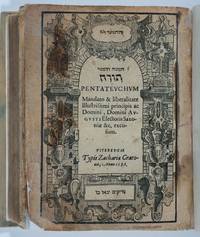
158653478Wittenberg: Zacharias Crato Krafft 1586. First edition. Hardcover. Very Good. Four parts quarto published between 1586 and 1587. Register continuous through parts 1 and 2; separate registers for parts 3 and 4. Collation in 4s: 1-65 blank 33.4; 1-30 lacks blank 30.4; 1-32 lacks 32.4 colophon. 506 leaves. Title within elaborate woodcut borders. Single-column text in vocalized Hebrew with cantillation; printed side-glosses. Separate Hebrew half-titles within woodcut borders for the latter three parts Former Prophets; Later Prophets; Hagiographa; names of the biblical books set in large font within woodcut cartouches. Later vellum. Title and following three leaves with marginal reinforcement slight text loss. Occasional mild embrowning else very good with bright half-titles. <br /> <br /> First Wittenberg edition of the complete Hebrew Scriptures with a concluding list of Haftaroth readings noting the Ashkenazi and Sefardi variations. Our copy is the variant with Hebrew and Latin title. A majority of the few surviving copies are bound with a Hebrew title and the publisher's information is taken from the colophon which provides a Jewish calendar date of 5347 = 1587. Vinograd notes that individual books and sections of the Hebrew Bible had been printed at Wittenberg since a quarto edition of the prophet Obadiah appeared in 1521. The title-page designs were re-used in the Hebrew bible published at Frankfurt am Oder in 1595. Each book closes with the Masora Finales printed in square type.<br /> <br /> Andreas Masch notes in his revised edition of Le Long's Bibliotheca Sacra 1778: "This edition of the Hebrew Bible is so rare and infrequent that it was omitted in the earlier edition of Le Long's work at Paris but it is known to Wolffius Bibliotheca Hebraea not in its entirety but only in respect of certain parts." One can speculate as to why the edition is rare but it may be worth noting that "when Hans and Friedrich Hartmann decided to start producing Hebraica in an effort to become the official printer for the univeristy of Frankfurt/Oder they were able to do so relatively quickly by hiring away five experienced workmen from Zacharias Croto's Wittenberg firm which was having financial difficulties" Burnett.<br /> <br /> Masch continues: "At the colophon is noted the year and the name of those at whose expense this Hebrew Bible was published: colophon info in Heb. and Latin The above example is therefore attributed to the liberality of the prince and to the expense of the two citizens of Wittenberg But the Rühilii brothers were not correctors of the work but citizens and senators of Witteberg whose name is quite famous in the history of the Germanic Bibles. The work came from the workshop of Zacharias Craton otherwise known as Kraft to whom we owe several editions of German Bibles. The title in both copies represents a gate in which above and below Ps. 118 com. 20. is printed. In accordance with the first Plantin edition the text was printed so as to match nearly page-for-page. It is composed of four parts with the five festival books added to the Pentateuch; but each part is decorated with a special title." Full title: חמשה חומשי תורה Pentateuchum mandato & liberalitate illustrissimi principis ac Domini Domini Augusti Electoris Saxoniae. Vitebergae: Typis Zacharia Cratonis Anno 1586. alternate Hebrew title: חמשה חומשי תורה × ×“×¤×¡ ×¢× ×¨×‘ העיון על ידי זכריה כר×טו.<br /> <br /> References: Benzing Buchdrucker 16/17 p. 471; Le Long/Masch I 1778 pp. 33-34; Steinschneider 277; VD16 ZV 29818 quarto; Vinograd 21. Not in: Adams; Darlow & Moule; Delaveau & Hillard. Cf. Burnett Christian Hebraism in the Reformation Era p. 204. Zacharias Crato [Krafft] hardcover
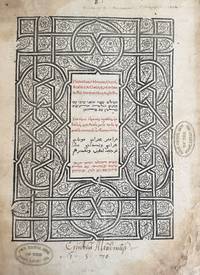
1516371021Genoa: Petrus Paulus Porrus 1516. Title printed in red and black within woodcut arabesque border printer's device on final leaf. Parallel text in Hebrew Latin Greek Arabic and Chaldaean Aramaic 4 columns to a page 41 lines. 13 woodcut floriated initials. A10 B-Z8 &8 con6; 200 leaves complete. Folio 13-1/8 x 9-3/8 inches. Contemporary blind tooled pigskin over bevelled wooden boards boards with repeated roll of hound hunter and stag spine with floral tools. Clasps perished early repairs with vellum at lower corners; spine darkened with chip at foot joint starting wormholes to the covers. Toning throughout worm holes throughout but heavier to the preliminary and terminal leaves paper loss not affecting text at the lower outer corners of the first 3 leaves minor dampstaining at the lower corners of most leaves and extending from the top inner margin. Scattered early marginalia. Title printed in red and black within woodcut arabesque border printer's device on final leaf. Parallel text in Hebrew Latin Greek Arabic and Chaldaean Aramaic 4 columns to a page 41 lines. 13 woodcut floriated initials. A10 B-Z8 &8 con6; 200 leaves complete. Folio 13-1/8 x 9-3/8 inches. The Genoa Psalter also known as the Octaplum or Quadruplex Psalter was the first polyglot psalter to be published and the first polyglot edition of any part of the Bible. Financed by the Oriental language scholar Bishop Agostino Giustiniani and printed in Genoa in 1516 it presents the psalms laid out in eight columns i.e. four per page on double-page spreads: in Hebrew a Latin paraphrase the Vulgate Latin the Septuagint Greek Arabic Chaldean Aramaic a Latin paraphrase and the editor's notes. "A monument of Renaissance typography this Psalter was linguistically the most ambitious work attempted to date and the first Polyglot work ever published. It provides the Psalms in five languages as well as a marginal scholarship based largely on rabbinic sources. The Arabic text is one of the first two texts and the first biblical text ever printed in this language. The Hebrew types used in this book were apparently never used again" B. Sabin Hill Hebraica from the Valmadonna Trust The Piermont Morgan Library 1989 no. 18.<br /> <br /> Notably within a lengthy editor's note to Psalm XIX is what is considered the first printed biography of Christopher Columbus along with a very early description of his voyage. A native son of Genoa Giustiniani presents the discovery of the new world as a fulfilment of Biblical prophecy appropriately glossing verse four of Psalm XIX to include his biography of Columbus: "Their sound is gone out through all the earth and their words to the end of the world." <br /> <br /> The text of the biography of Columbus written a decade after his death includes a brief account of his childhood and continues at length on his discovery of America. Translated from the Latin it begins: "And so their words have reached unto the ends of the earth at least in our own times in which by the marvelous daring of Christopher Columbus of Genoa almost another world was discovered and joined to the community of Christians. And since Columbus often declared that he was chosen by God so that through him this prophecy would be fulfilled I did not consider it unsuitable to include his life here. Therefore Christopher surnamed Columbus a Genoese by birth . lived in our age and through his own efforts explored more lands and seas in a few months than almost all other mortals had done throughout all previous ages . More swiftly than the Portuguese had done he approached new lands and new peoples and at last penetrated regions unknown before now. The news of this matter quickly reached the King who - both out of rivalry with the Portuguese kings and a desire for such new marvels and glory that might accrue to him and his descendants - after long discussions with Columbus finally ordered two ships to be outfitted. With these Columbus set sail from the Fortunate Islands directing his course slightly off the western line . After many days of sailing they had covered great distances. While the others having lost all hope urged a change in course Columbus persisted asserting by reason and conjecture that continuing but a little longer might lead them to discover continents or islands. Nor was he wrong. On the following dawn they sighted land. From this event immense confidence arose in human minds. Later it was learned that these were islands and observations were made of certain peoples there uncultivated and prone to raids on their neighbors even devouring human flesh like wolves. There were violent encounters yet eventually some of these islanders were brought safely to Spain astonishing and delighting all who saw them because they were at first timid unfamiliar with approach easy to persuade and marveling at everything as new."<br /> <br /> An important and desirable work from a liturgical linguistic and historical perspective. Adams B1370; BM STC Italian p. 97; Darlow & Moule 1411; Sabin 66468; European Americana 516/4; Harrisse BAV 88; JCB 3 I:64; Smitskamp 236; Roper Early Arabic Printing in Europe in Sprachen des Nahen Ostens und die Druckrevolution p. 132; Vinograd Genoa 1. Provenance: Cenobii Alois 1570 inscription below title; Bibliotheca Regia Monacensi pencil inscription on the inside front board identifying it as a duplicate; General Theological Seminary ink and blindstamps and other markings Petrus Paulus Porrus unknown
1557254216Basilaea Basel: Nicolaum Bryling Nicolaus Brylinger 1557. Woodcut border and printer's device on title. INCOMPLETE. 8 479 of 500 8 leaves. Lacking ff. 46-56 & 61-70. 1 vols. 8vo. Bound in contemporary blind panel-stamped pigskin over bevelled wooden boards clasps removed binding worn exposing boards on rear cover title page detached contemporary marginalia by Johannes Weneken throughout. Woodcut border and printer's device on title. INCOMPLETE. 8 479 of 500 8 leaves. Lacking ff. 46-56 & 61-70. 1 vols. 8vo. Brylinger published the only 16th century edition of Luther's Bible in Switzerland published one of the earliest Greek and Latin diglot Bibles and published a series of 8vo editions of the Bible with diglot and Greek-only text which was popular with students. Darlow & Moule makes no mention of this or any other Latin-only edition by Brylinger.<br /> Front paste-down endpaper and front free endpaper display extensive annotations in Greek and Latin presumably by Johannes Weneken. The marginal annotations provide a fascinating insight into how this book was used. Not in Darlow & Moule but cf. 4621; Adams 1056; OCLC: 46973017 6 copies only 3 of which in U.S. Nicolaum Bryling [Nicolaus Brylinger] unknown
154049324Paris: F. Gryphius 1540. Two parts in one volume 16mo in 8s. 199 1 blank; 136 16 indexff. "Novvm testamentum" in cartouche vignette at title-page along with Gryphius' griffin device Renouard 413; 90 three-quarter page including repeats and 15 smaller woodcut illustrations including repeats; 21 historiated initials and woodcut lettrines; cartouche vignettes with book titles; printed marginalia; half-title for the second part Epistles and the Book of Revelation. Text not divided into verses; occasional quotations in Greek. Later vellum over boards; manuscript title at the spine faded; speckled paper endleaves; edges stained red. Light dampstain at bottom margins extending up into text and gutter at the later leaves; small puncture at leaf 140 resulting in slight loss of text. A good complete copy of a very scarce illustrated New Testament with clean woodcut illustrations throughout.<br /> <br /> Collation: a-z8 &8 Aa8 A-T7 blank leaf 200; lacks final blank T8.<br /> <br /> Third Gryphius New Testament in 16mo format. Arranged in two parts with the Epistles and the Book of Revelation presented separately it reproduces the Vulgate text edited by Robert I Estienne for his Latin Bible edition of 1532. While some of the woodcuts appear in Gryphius' complete octavo Bible of 1541 this separate Testament is even more lavishly illustrated. Based upon Mortimer's description of the 1541 Bible we can ascertain that at least some of the Apocalypse woodcuts in the present volume are based on Holbein while most of the other illustrations whose blocks had been completed by 1539 "are relatively independent of earlier sets" Mortimer.<br /> <br /> An important shift in Bible illustration occured in the Netherlands in the late 1520s as printers began to focus on copiously illustrated small format editions of the New Testament to better explain the text and assist private devotion. The subtitle in our volume "cum ad ueritatem historiae tum ad uenustatem singulari artificio expressis" with the truth of history as well as beauty expressed by a singular artifice is clearly suggestive of this shift. Adopting this new format François Gryphius became the "first Paris printer to illustrate a Bible in the Renaissance style" Johnson quoted in Mortimer. These illustrations first appeared in the Acts of the Apostles and the Book of Revelation in Gryphius' pocket New Testament edition of 1537 Novum Testamentum additis picturis in Acta Apost. et Apocalipsin quibus miracula et visiones exprimuntur The New Testament with added illustrations in the Acts of the Apostles and the Book of Revelation depicting miracles and visions. Subsequent editions would include an expanding suite of woodcuts and were published at Paris by Gryphius under the present title in 1539 1540 1541 and 1542; Antwerp editions appeared in 1542 and 1545. The suite of illustrations in the present work is identical in placement and inventory with the data cited by Mortimer for the 1541 edition 90 cuts by repetition of 58 blocks from the larger set and 15 cuts by repetition of 6 small blocks and confirmed by inspection of the digitized version of the 1541 edition at the Bibliothèque de la Ville de Lyon. The only notable differences in graphic materials between the two editions appears occasionally in the selection of woodcut initials; the later edition also has several more unset initials indicated by guide letters than appear in our 1540 edition. <br /> <br /> All editions are quite scarce with only a handful of copies of each surviving.<br /> <br /> Provenance and annotations: Old entries at paste-down and front endleaf of George Woodhouse with his note about prior provenance dated May 1875; E. Holwell noting "This curious edition published in A.D. 1540" References: Cf. Deleveau & Hillard Bibles imprimées Paris 1539 and 1542; Antwerp 1542; Le Long/Masch 2.3 1783 p.279 Paris ed. 1542; R. Mortimer French 16th Century Books no.70 ed. 1541 illustrating woodcuts on a3 recto and P3 recto as per our copy and no. 69 8vo Bible 1541. For a discussion of the development of the woodcut series in these Gryphius pocket bibles see: A.F. Johnson "Some French Bible illustrations" Gutenberg Jahrbuch 1935 p.190.<br /> <br /> Full title and imprint: Novvm testamentum illvstratum insignium simulacris cum ad ueritatem historiae tum ad uenustatem singulari artificio expressis. Excudebat Fran. Gryphius An. M.D.XL. Cum priuelegio Regio.<br /> <br /> Typeface: Gryphius's own Brevier Roman or Petite-Text with scattered Greek. U. Aberdeen note via OCLC. F. Gryphius unknown
152253365Mainz: J. Schöffer 1522. First Mainz edition. Octavo. 562 2: colophon blankpp. Collation: A-Z8 Mm8 chi2 O4/O5 reversed complete. Title within historiated woodcut border. Woodcut initials throughout. Text in italics. Printed side-glosses. Errata at final text leaf. Contemporary beveled wooden boards backed in tooled pigskin; spine with raised bands. Brass catch and clasp with expert restoration of leather thong. Contemporary manuscript musical scores used as pastedowns at front and back. Seven leather stubbs affixed at front edge as indexes. Occasional faint smudging mostly at margins else text crisp and fresh. A very good copy in a well-preserved sixteenth-century binding with a notable provenance.<br /> <br /> Scarce very early collective edition of the Latin "Paraphrases" of the Pauline Epistles prepared by the celebrated humanist scholar theologian and educational writer Desiderius Erasmus of Rotterdam 1466-1536. Preceded by the Froben collective editions of 1520 and 1521 this first and only edition of the Pauline Epistle Paraphrases to be printed at Mainz was issued by Schöffer in two parts each with full title and separate register and pagination; our volume contains the first part only: the Epistles to the Romans; Corinthians 2; Galatians; Ephesians; Philippians; Colossians; and Thessalonians 2.<br /> <br /> "In the vast and sustained labour he devoted to the New Testament Erasmus saw the culmination of his commitment to scholarship. and nothing else he wrote not even the Moriae encomium was to have so great an influence on posterity. The first edition of the New Testament appeared in 1516 and was followed in his lifetime by four more 1518/10 1522 1527 1535 each newly revised. Each consisted of the Greek text Erasmus' translation thereof and a copious apparatus of notes Annotations published as a separate volume. Beginning in 1517 he also published a Paraphrase of all parts of the New Testament save Revelation. Written in smooth and comprehensible Latin it was usually fuller than the original text. If offered his own interpretatiton but often avoided the provocative statements found in the Annotations. From the outset the translation the Annotations and to a lesser degree the Paraphrases drew criticism originally from conservative theologians who found heresies in his humanist philology but soon also from Lutherans and Catholics who denounced him for departures from their respective doctrines" Bietenholz. The Paraphrases were composed between May 1517 and January 1524. "Erasmus began with the Pauline Epistles. The paraphrase of Romans was published in quarto by Dirk Martens in Louvain in November 1517 and reprinted by Erasmus's friend Johann Froben in January of the following year; it sold well and was soon reprinted in octavo. Corinthians was published by Martens in February 1519 and reprinted in Basel by Froben in March; Galatians appeared later that year with editions from both publishers. The remaining Epistles followed in 1520 and 1521 the last to appear being Hebrews. In the autumn of 1521 Erasmus moved from Louvain to Basel and from that time Froben published the first editions of the remaining Paraphrases" Mynors. <br /> <br /> Our edition was printed by Johann Schöffer the son of Peter Schöffer who was the principal workman of Johannes Gutenberg. Apart from those of the Pauline Epistles the only other complete Paraphrase of Erasmus to be published by Schöffer was that on the Gospel of Matthew also in 1522. He did in 1521 however issue a series of four brief excerpts from the Paraphrases in German translation which appear to highlight provocative exegesis by the great scholar of Rotterdam concerning for example the hypocracy of the Pharisees Matthew 23 or the exhortation to "Take My yoke upon you and learn from Me" Matthew 11.29.<br /> <br /> Provenance and annotations: Contemporary manuscript entry at the title-page of the Benedictine monastery library at Amorbach; contemporary 50-word manuscript note in Latin at the free endleaf facing the title which discusses the present work. Early manuscript note in German at the final blank endleaf. Early leaves with light rubrication in red ink; about twenty leaves with contemporary annotations throughout. Later stamps of the Leiningen Palace Library at the bottom margin of the title and very faintly at the pigskin covers. Bookplate of United Theological Seminary Dayton Ohio noting the gift of Dr. Walter N. Roberts with their vertical entry stamp Mar 28 1963 at the dedication leaf lightly over the left-hand edge of the text but not impairing legibility. Full title and imprint: Paraphrases Eras. Rot. In omnes epistolas Pauli apostoli germanas : et in eam quae est ad Hebraeos incerti autoris cum ijs quae Canonicae uocantur diligenter recognitae excusaeque & ita binos in tomos digestae ut cuique secare in formam enchiridij siuelit liberum sit.<br /> <br /> References: P.G. Bietenholz Encounters with a Radical Erasmus Univ. Toronto 2009 p.13; R.A.B. Mynors "The Publication of the Latin Paraphrases" in: R.D. Sider ed. New Testament Scholarship: Paraphrases on Romans and Galatians University of Toronto Press 1984 pp. xx-xxix; USTC 682534; Vander Haeghen p.145: Paraphrases in omnes epistolas Pauli. Moguntiae Io. Schoeffer m. augusto 1522 octavo; VD16 E-3379 Berlin; Halle; Leipzig; Wittenberg; Wolfenbüttel. This first part not in Adams but cf. E-795 the second part 378pp. J. Schöffer unknown
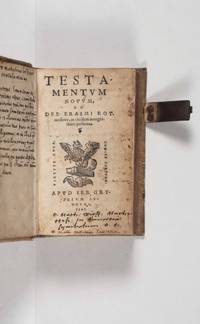
154749141Lyon: Sebastian Gryphius 1547. Hardcover. Very Good-. 16mo in 8s: a-z8 A-Z8 aa8 bb8 =384 leaves; blank bb7-8. 763 5 blankpp. Printer’s device at title woodcut lettrines. Text in italic headlines and chapter headings in roman; printed marginalia. Later pigskin over bevelled boards tooled in blind brass clasps one of two and catches manuscript title at spine. Extensive old manuscript notes at front endleaf and four blank leaves at the end including the two integral blanks; occasional marginalia and underlining. Title soiled with some slight erosion at margin from oxidation of the clasps else a very good copy with clean fresh text throughout. Complete with the two final blank leaves.<br /> <br /> Second Gryphius edition and a rather uncommon early sixteenth-century printing of Erasmus’ Latin translation of the New Testament first published at Basel in 1516. According to Baudrier Ly. V. 804101/Cat. de Lignerolles Paris Porquet 1894 no. 48 Gryphius first published this translation in 1542 and 1543 as a 16mo of 847 pages; neither of these issues appear in Deleveau & Hillard. Like the present edition these early Gryphius printings of the Erasmus New Testament survive in only a handful of copies. The text opens with Erasmus' dedication to pope Leo X followed by his preface to the reader a general index of the New Testament corpus a listing of the chapters of the four Gospels and a brief passage from Jerome's catalogue of ecclesiastical writings. The editor's introductions precede each book. The text concludes with Erasmus' translation of a brief discussion of apocryphal literature partly from Athanasius though Erasmus questions the attribution: "De libris utriusque testamenti partim reiectus aut non sine contradictione admissis partim apocryphis ex Athanasio tametsi mihi suspectus est titulus." <br /> <br /> Provenance and annotations: Extensive early annotations in more than one hand appear throughout the book; many marginal notes have been added throughout the Gospel of Matthew. At the front of the book beginning with the free endleaf: "Poeta de Pythogora" several stanzas in Latin and Greek; facing the title: A morning prayer "Oro matutina lecturis oracula divina" 11 lines; an accounting of biblical eras 10 lines since Abraham David and the Babylonian Exile appears at the verso of the title leaf. The final blank page the two intergral blank leaves and two additional blanks added by the binder are filled with notes in several different hands including: a passage from Augustine's De doctrina christianae 14 lines; noted as book 2 chapters 11 and 12 along with four lines about Tertullian; four pages of notes on the twelve disciples numbered; a Greek text discussing the divine names in which the tetragrammaton is written in Hebrew letters; a passage from a letter of Basilius Magnus in Greek with Latin translation.<br /> <br /> Printed label of Edward Davis Hoblyn 1809-1881 and his manuscript entry dated 1831 at the free endleaf. Edward was likely related to the renowned book collector Robert Hoblyn 1710-1756 of Cornwall. A catalogue of Robert’s collection was printed in 1768 as Bibliotheca Hobliniana and reissued by Murray in 1769 with a new titlepage. The library remained with Robert’s widow and was sold in 1778. The present work is not listed in the Bibliotheca though no fewer than nineteen 16th-century Latin Bibles and Testaments appear in the catalogue. Gift inscription of D. N. Goodman of San Francisco California to Father J. L. Damas at front pastedown dated 1935. References: Baudrier 8 217. Baumgarten Nach. v. merkw. Büchern 8 1755 206 noting that this and the later Gryphius edition which Le Long assigns to the master printer’s workshop are in fact identical and notable examples of elegant typography. Deleveau & Hillard 4407 BNF. Le Long Leipzig 1709 1:751 & 2:478 Bibl. Colbertina - the earlier Gryphius edition of 1542/43 is not cited in either part. Le Long-Masch 2.3 p. 599 noted as the first New Testament ex. Erasmi to appear at Lyon. Sebastian Gryphius hardcover
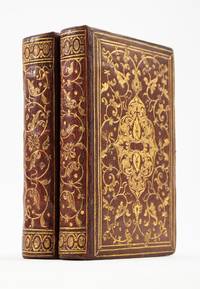
1568ST20921Lutetia Paris: Robert Estienne II 1568. 128 x 87 mm. 5 x 3 1/2". Two volumes. <br/> LOVELY CONTEMPORARY RED MOROCCO GILT covers with large central azured arabesque surrounded by curling vines with azured leaves smooth spines with similar vines head and foot of spines with egg-and-dart roll similar to one used by Claude de Picques second volume with faint blind lettering to spine all edges gilt perhaps with some minor early restorations but if so then done with such care as to preclude certainty. Housed in modern suede-lined calf-backed clamshell boxes with magnetic closures. Printer's device on titles and final page decorative initials and headpieces. Front pastedown of volume I with ex-libris of Georgios Arvanitidis. Renouard 171:1; Schreiber 239; Darlow & Moule 4633; Adams B-1670. See: Verron "Les Reliures de l'Entrée de Charles IX à Paris 1572 . . . réalisées par Claude Picques" in Bulletin du Bibliophile 2014 no. 2 pp. 282-98. Just a touch of rubbing to extremities front hinge of second volume open but everything quite tight text with occasional mild browning small spots trivial smudges or tiny worm trails but A BEAUTIFUL COPY clean and fresh internally and the bindings tight and lustrous with very bright gilt<br/> <br/> With exceptional visual appeal these two precious volumes shining with gilt and containing the Greek New Testament from the renowned Estienne family of printers are of special interest because of their typography their bindings and their provenance. With the expressed goal of printing Greek texts from manuscripts in the royal library at Fontainebleau François I established the post of royal printer in Greek in 1539 appointed Robert Estienne I 1503-59 to the position in 1542 and commissioned the renowned Claude Garamond to cut a new Greek font for this project. To design the type the King called on his own celebrated calligrapher Angelo Vergecio who produced in collaboration with Garamond three different sizes of what came to be called the Royal Types or "grecs du roi." According to Schreiber "These cursive Greek types are universally acknowledged as the finest ever cut." In 1548 and 1549 Robert Estienne issued the press' first Greek Testament known as the "O mirificam" edition for the opening of the dedication to the king in 16mo or "pocket" format using the smaller font of Garamond's "grecs du roi." In 1550 Robert a Protestant moved to Geneva while his son Robert II 1533-70 a Catholic remained in Paris and took over as the royal printer in Greek. Our 1568 Testament--the only one issued by the son--is a reprinting of the "O mirificam" edition but expanded with the critical apparatus from the 1550 folio edition issued by the father. Schreiber notes that our edition is interesting from a typographical point of view as it contains an even more minute version of the already small grecs du roi type for the Table of Chapters. The exceptionally pretty volumes are done in the style of royal binder Claude Picques fl. 1539-78 and employ a decorative roll very similar to one that appears on the spine of the vellum bindings Picques did for "L'Entrée de Charles IX à Paris" 1572. Our volumes once graced the library of Constantinople collector Georgios Arvanitidis 1876-1953 whose library included a number of Estienne Greek editions. They were later in the distinguished library of Frederick B. Adams 1910-2001 director of the Pierpont Morgan Library from 1948-69 and then president of the prestigious Association Internationale de Bibliophilie from 1974-83. And they were featured in the celebrated 1929 Gumuchian catalogue of 398 historically exceptional bindings as item #71. Robert Estienne II unknown
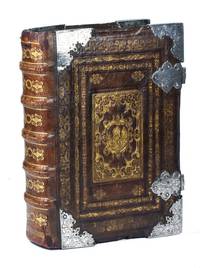
1590A27E2B01U79ODelft: Bruyn Harmansz. Schinckel colophon: printed by Aelbrecht Heyndricksz. 1590. Contemporary gold panel-stamped and gold-tooled calf over wooden boards sewn on 5 supports with spectacular finely engraved silver furnishings: 8 corner pieces 2 clasps 2 catch plates and 2 anchor plates the catch and anchor plates with four female virtues: Justice/Justitia with sword and scales Faith/Fides praying toward the light of the sun Charity or Love/Caritas with 2 children and Hope/Spes holding a cross and treading on a snake; the corner pieces engraved with winged heads that appear to represent the four compass winds Boreas Notus Euros Zephyrus each of the 8 different also with engraved decoration on their edges; and each clasp with an oval martyrdom scene flanked by birds with the feet toward the foot of the book: 2 men tied to a tree and being stoned in the upper clasp and a women being accosted by 2 men in the lower all 14 pieces of silverwork with floral and other decoration and with their edges cut to decorative shapes. Each board has the same central rectangular panel-stamp 98 x 61 mm with an oval scene of Charity or Love/Caritas with 3 children and with castle towers in the background on either side that on the viewers right on a mountain with strapwork decoration around the oval containing the makers initials B and H and inside the rectangle the two decorations linked at the sides; with 2 gold-tooled double fleurs-de-lis above the panel-stamp and 2 below the whole enclosed by three gold-tooled frames each made with a different decorated roll separated by blind-tooled multiple fillets; gilt and elaborately gauffered edges. Rebacked in gold-tooled calf each compartment with a decorated oval with a decoration on either side but with the original endpapers. 4to 23.5 x 17.5 cm. With a general title-page and three part-titles each with the same woodcut device oval Biblical emblem with a quotation from Matthew 13:44 a mirror image copy of that in the 1562 first edition in a separate elaborately decorated cartouche signed AvL the combination: Dutch printers devices 0671 p. 970; 3 engraved folding maps plate size 23.5 x 17 & 29.5 x 17 cm drawn by Petrus Plancius and executed by Baptista van Doetecum for the present Bible and the folio edition of the same year showing Eden the route of the Exodus and the Holy Land; ca. 20 woodcut illustrations in the text mostly about 4 x 5 cm but the largest 10 x 6 cm a woodcut arabesque tailpiece about 21 woodcut decorated initials 3 series plus more than 50 repeats. Printed mostly in 2 columns with shoulder notes set in textura gothic types with incidental roman and with diamond-head musical notes for the metrical Psalms and a small 3.2 mm vine-leaf ornament preceding many chapter headings not in Vervliet but similar to Vervliet 112 & 133. 4 parts in 1 volume. An unrecorded issue 1 of at least 7 of a rare and important 1590 Bible edition the corrected "deux aes" Bible based on the first edition of 1562 New Testament 1559 which remained the standard Dutch Reformed Bible until the official Dutch States translation published in 1637. It was translated from Luther's German by Godfried van Wingen the New Testament by Johannes Dyrkinus after comparison with several other versions and includes many notes some also taken from Luther and some by Augustin Marlorat as well as Petrus Danthenus's metric psalms with music notes. The Amsterdam bookseller Laurens Jacobsz. initiated the publication of the present corrected text of the "deus aes" Bible and the maps to accompany it publishing the folio edition with maps himself but sharing the quarto edition with four other publishers. Although Jacobsz.'s name does not appear in the present issue he was originally trained as a binder operated his shop at the sign of the gold-tooled Bible and Fontaine Verwey gives evidence to link him with the panel stamp on the present binding. He may therefore have bound copies or had them bound for the other publishers. Bibliasacra Typ. Batava and the STCN together record only 8 copies of all issues combined at least half of those lack leaves and some of the copies with all leaves have defective leaves or lack the maps so that they record at most 2 other complete copies with maps.With a few leaves slightly browned a water stain in the second half and the first preliminary quire of part 1 faint outside a few quires small tears in the maps and a few worm holes or other defects in the paper mostly in the margins of the last few leaves but still in good condition. The binding has been skilfully re-backed probably in the early 19th-century and is slightly rubbed with a crack along the edge of the panel-stamp on the front board and a few minor cuts and scrapes but also still in good condition and only slightly trimmed. A very rare complete copy of an important Dutch Reformed Bible in an unrecorded issue and in a stunning contemporary gold panel-stamped and gold-tooled binding with engraved silver furnishings.l Bibliasacra 1590.B.dut.BHS.c & AHa b & c; Le Long p. 748; Poortman Bijbel en prent I pp. 112-119 184-187 & 215; STCN 336510985 & 054873002 334453534; Typ. Batava 602; cf. Darlow & Moule 3293; for the panel-stamp: H. de la Fontaine Verwey "Amsterdamse uitgeversbanden van Cornelis Claes en Laurens Jacobsz" in: Uit de wereld van het boek II pp. 33-48 at pp. 41-43. Bruyn Harmansz. Schinckel (colophon: printed by Aelbrecht Heyndricksz.), hardcover
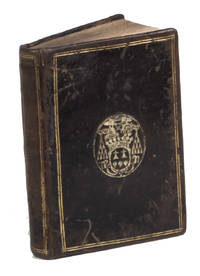
1584V6854Antwerp 1584. 16mo 118 x 8 cm. Christophe Plantin Late 17th-century dark brown calf with gold-stamped coat of arms of Pierre-Daniel Huet on both covers and gold-tooled dubbel-lined borders on covers and spine faded red speckled edges. With woodcut printer's device on the title page the text is partially printed in Greek. 267 13 pp. The text of this Book of Psalms is printed in Greek and Latin in parallel columns and on each page the inner column contains the text in Greek while the outer column contains the same in Latin. There are separate Greek and Latin indexes at the end of the work. This copy belonged to Pierre-Daniel Huet 1630-1721 a French clergyman and scholar. According to the title page this bilingual work was published by Plantin after the example of the Complutensian Polyglot Bible 1520. Plantin also issued a 24mo edition in the same year.The present copy is bound in dark brown leather with the coat of arms of Pierre-Daniel Huet stamped in gold on the front and back covers. Huet was the Bishop of Soissons and later Avranches. He was the cofounder of the Académie de Physique in Caen and in 1674 he became a member of the Académie française. He was one of the most learned men of his age; he studied Greek and Hebrew and he claimed to have read the Hebrew text of the Bible 24 times. The present volume also contains a few marginal corrections of the Greek text in a contemporary neat hand. Huet was known for his very fine and neat handwriting. As a linguist with an interest in Greek and Hebrew it is highly probable that Huet extensively used this copy and that he himself added the annotations. Despite his knowledge of Hebrew the partly obscure Hebrew annotations on the first endleaf "this book belongs to me Cardeliac" are probably not his. Although Huet was not a member of the Jesuit order he lived his final years in a Jesuit home in Paris. After his death he bequeathed his library to the Jesuits and upon the dissolution of the order in France in 1764 king Louis XV bought Huet's books and they are now part of the colleciton of the Bibliothèque Nationale de France. The bookplate on the front pastedown was made by the Jesuits to commemorate Huet's donation of his library.Covers show signs of wear spine has been expertly restored. With an ex libris-label of Pierre-Daniel Huet on the front pastedown: "Ex libris bibliothecae quam Illustrissimus Ecclesiae Princeps. D Petrus Daniel Huetius . 1692." an inscription in brown ink in Hebrew and several inscriptions in pencil all on the first fly leaf. With crossed out inscriptions except for "164" in the bottom left corner on the verso of the third fly leaf and at the head of the title-page with some annotations in dark brown ink in Greek throughout very slight foxing throughout a small water stain in the top margin of the second half of the book without affecting the text. On pp. 29-30 a small corrosion spot on p. 30 a marginal stain and a small hole in the text in p. 87 all very slightly affecting the text. This is a well preserved copy of a bilingual book of psalms with an interesting provenance.l BMC STC Dutch p. 26; Voet 671; Olivier 1684. cf. NBG XXV col. 381-385; Voet 672; Adams B-1390 "32mo". ABE CAT Bibles Sermons & Psalmbooks hardcover
15546212Lyon: Jean de Tournes 1554. First edition. Octavo 6 3/4 x 4 3/4 inches; 171 x 121 mm. . 16 1152 76 pp bound without the last two blank leaves as in most copiese.g. Mortimer OCLC. The penultimate leaf had only a fleuron at the foot of the page and the final leaf was blank. Arabesque title border and 198 with 1 repeat woodcuts in the text by Bernard Salomon. Title-page with faint early ink "ex-Libris petri ------ at top blank margin. Title-page expertly cleaned some occasional mainly marginal faint foxing otherwise a superb example of this wonderfully illustrated mid sixteenth-century Latin Bible. Bound ca. 1880 by Chambolle-Duru in full brown crushed levant morocco spine with five raised bands lettered in gilt gilt ruled board edges decorative gilt turn-ins marbled endpapers all edge gilt. Armorial bookplate "In Memori: Weiler Bibliotheca Trautner Falkiana" on verso of front free endpaper.<br /> <br /> First De Tournes Latin Bible based on Robert Estienne's text and beautifully illustrated with 198 woodcuts by Bernard Salomon. "Considerable work could be done on Salomon's sources for these cuts. The Expulsion from Paradise suggests Holbein's version; the New Testament shows some dependence on the set owned by Sébastien Gryphius. the Apocalypse blocks are enlarged copies of the fine Janot Apocalypse. But the cumulative effect of Salomon's carefully detailed scenes is that of an individual contribution to Bible illustration. Particularly interesting from the point of view of technique are the night scenes in Exodus and the storm over Noah's ark. In this 1554 Bible the New Testament blocks are printed with arabesque strip borders at the sides. Arabesque and type ornament headpieces." Mortimer Contents include: Old Testament; Psalms; New Testament Epistles Acts; Index Testimoniorum & Index Epistolarum.<br /> <br /> Robert I Estienne 1503-1559 was a French protestant printer and scholar born into a printmaking family. He would take over his family's Paris firm in 1526 where he printed significant works in Latin Greek Hebrew and other languages. His 1531 Thesaurus linguae latinae is considered a major milestone in lexicography. Despite his many commissions for the King religious tensions forced Estienne to flee to Geneva. <br /> <br /> This bible was illustrated by Bernard Salomon c.1508-1561 a French artist who is known for engravings and illustrations. Although little is known about his life his art reveals stylistic influences from Mannerism and the School of Fontainebleau executed in a detailed and small scale. Salomon is known to have collaborated with the printer Jean de Tournes and produced decoration for emblem books bibles and classic texts. Many of his engravings also appear as source material for art objects such as a Faience plate at the MET featuring the Sacrifice of Noah.<br /> <br /> Brunet I 876 & Supplement I 125; Darlow & Moule 6134 note; Mortimer French no. 81. Jean de Tournes unknown
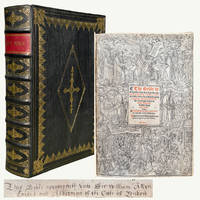
1540T75<p><strong>Summary</strong></p><p>Pulpit Folio 14.25" x 10.25". An early folio of the second edition of the Great Bible with all five title pages. A beautifully rebound copy with first ownership provenance of a famous knight merchant and mayor of the city of London.</p><p><strong>Description </strong></p><p>General title page 1541 printed in red and black featuring Henry VIII above distributing his <em>Verbum Dei</em> to Cromwell and Cranmer God barely squeezed in among the clouds at the top. Archbishop Cranmer on the left distributing the Bible to the clergy and the Cromwell on the right is distributing the Bible to the nobility. Below the people are without Bibles as the Great Bible was chained to pulpits and proclaim only <em>Vivat Rex</em> aside from the few who are imprisoned on the bottom right. Calendar also printed in red and black. Text in two column black letter with 62 lines to the full column. The beginning of each chapter features a floriated or historiated woodcut initial with occasional metal cast capitals. Title pages to the second third and fourth parts also printed in red and black bordered by the relevant woodcuts to that section. The New Testament title page n.d. in red and black like the general title except that Cromwell's arms are removed. Concludes with <em>The Table.</em></p><p><strong>Collation</strong></p><p>6 a-k8 l4 first part A-N8 O4 second part Aa-Pp8 Qq4 third part Aaa-Hhh8 Iii6 fourth part Aa-Nn8 -Nn6-8 New Testament. <strong><em>Lacks</em></strong> the final leaf of Revelation and two leaves of the Tables provided in expert facsimile. All titles are present.</p><p><strong>Binding</strong></p><p>Rebound in period appropriate back calf. Boards paneled in gilt with gilt rolls and corner fleurons around a central arabesque design. Spine with six blind-lined raised bands and elaborate gilt tooling to compartments. A red gilt-lined morocco label with the words "Holy Bible" and a date of 1540 lettered in gilt to the foot. Endpapers renewed.</p><p><strong>Condition</strong></p><p>Intermittent staining to lower gutter and head; trimmed at head with headlines cropped in Pentateuch and just touching a few sidenotes; 3 reinforced and remargined; 4 Kk1 lower corner repair without loss; h45 lower margin reinforced; l4 Rr6 laid down; Nn5 repair to lower gutter without loss; a well-preserved copy of an important early Bible.</p><p><strong>Provenance </strong></p><p>Early ownership inscription to foot of first Calendar leaf reading "This Bible apertayneth unto Sir William Allyn Knight and Alderman of the City of London." William Allyn 1515-1586 was a prominent London merchant and Lord Mayor 1555–56. The location where Cromwell's arms are removed on the NT title bears a merchant's device dated 1574.</p><p><strong>Note</strong></p><p>An impressive copy of the scarce Great Bible so called due to its imposing size. This copy like many from the first seven editions is issued in a mixed state. The general title is from April 1540 but Genesis 1 and Matthew 1 from May 1541. The New Testament title page is also from a 1541 copy as Cromwell's arms are removed. The few small flaws notwithstanding this is an attractive copy of an almost complete early Great Bible that is becoming increasingly scarce in commerce.</p><p><strong>References</strong></p><p>Herbert 53; STC 2070; Luborsky and Ingram 2070.</p> Edward Whytchurche hardcover
1599146373London: Deputies of Christopher Barker 1599; London: Robert Barker 1636. Rare "Breeches" Bible printed by Christopher Barker with the fictitious 1599 publication date. "There are many editions bearing this date which while agreeing closely are yet distinct . the phenomena of the various editions described under the year 1599 and the very similar edition of 1633 constitute one of the most curious problems in the bibliography of the English Bible." Genesis 3:7 with "Then the eyes of them both were opened and they knew that they were naked and they sewed figge tree leaves together and made themselves breeches." Octavo two volumes bound into one in full paneled calf hand-embossing to the front and rear panels original silk and cloth ribbons woodcut title pages and initials. Bound with The Booke of Common Prayer and the Administration of the Sacraments and Other Rites and Ceremonies of the Church of England printed by Robert Barker in 1636. In good condition rebacked contemporary names and inscriptions to several pages. A very rare and desirable example of the Breeches Bible. Upon Queen Mary’s accession in 1553 “publication of the English Bible ceased in England. Many Protestants who fled to the Continent were attracted to Calvin’s Geneva. Among these exiles were eminent English Bible scholars who began work on a new translation†The Bible: 100 Landmarks 62. First published in 1560 the Geneva Bible—often called the “Breeches Bible†for its unique rendering of Genesis 3:7—was “more scholarly than any previous translation… It achieved immediate popularity and exerted an extremely powerful influence… The Geneva Version included prefaces maps and tables; and for the first time in an English Bible the verses were divided and numbered… It has been more properly called the Elizabethan family Bible since it was this version which was the first to enter the English home†PMM 83. “It became the textus receptus for the Puritan element in England. It was read by Shakespeare Bunyan and the soldiers of the Civil War and is thus of cardinal importance for its influence on the English language literature and thought†Great Books and Book Collectors 105-8. Deputies of Christopher Barker hardcover
152566040Paris:: Simon de Colines 1525. old full calf; gilt spine. A few old ink notes to the title page; rubbed at corners and extremities. 16mo. Trad. S. Hieronymus. Renouard ICP III 770. Simon de Colines, unknown