172 résultats
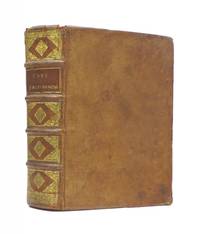
165832984-176Lutetia i.e. Ulm n.pr. 1658. Engr. title printed title. 2 unn. leaves 297 =295 pp. 1 blank p. 2 leaves "Clavis" name keys. 8vo. Contemporary half calf. sm. library stamp on title. Lutetia i.e. Ulm n.pr. 1658. Bound with: GRIMM Hans Rudolf. Kleine Schweitzer Cronica Oder Geschicht=Buch.Erstlich woher der Nahmen Schweitzer komme.Benebst auch ein Beschreibung der Natur=Wunder dess Schweitzer=lands. 4 unn. leaves 204 pp. 12 unn. pp. index. Burgdorf 1723. Ad I: First edition of this interesting work of baroque literature. "In the year 1658 a script was published with the purported place of publication Lutetia Paris that caused a most disagreeable sensation: Heutelia Anagram for Helvetia . It contains the following fiction: A Palatine nobleman and a jurist from Wurttemberg both Protestants flee from the Thirty Years War to Switzerland and making ironical comments as they travel from place to place . The tone is unrestrained satirical and sometimes cynical especially when the status of women is concerned. A lot of brutianism is involved. Behind that facade however there is a scientific seriousness that gets to the bottom of things . The intention was always to uncover the oddities of Switzerland." transl. from Feller/Bonjour. Politically the travellers represent the aristocracy and take a firm stand against democracy. Zurich comes away relatively lightly whereas Bale does not. Of Bern however an unsparing social picture is outlined that led to a storm of protest and the "Gnadigen Herren" tried to surpress the book by all means. "Heutelia" was already identified in the 18th c. as a "liber satyricus rarissimus". Haller talks of a rare work and names as authors Jakob Graviseth or Gravisset Herr zu Liebenegg and Landvogt von Oron. More recent research especially by Walter Weigum declares the "Heutelia" to have been written by Hans Franz Veiras 1577-1672 the secretary of the Palatine Elector and Bohemian King Friedrich V who had fled to Zurich. Graviseth maybe translated and reworked the "Heutelia" from Latin giving it a Swissgerman interpretation. At the end the key to the names is found for example: Guretum=Zurich Sebilacopolis=Bale Rusinopolis=Bern Bonzus Corvinus=Jesuit Druida=Pastor Muftus=Messpriest etc. Ad II: First edition of the historic work by the Burgdorf councilman H.R. Grimm 1665-1749 who participated in the 2nd Villmerger War in 1712. Although this popular writing has many misrepresentations and mistakes it is characterized by its lively descriptions. The work also contains popular descriptions of the mountains rivers and natural wonders of Switzerland. Nice copy of two rare works. _ - Ad I: Paisey H 1019; VD17 23:299560W; Weller Druckorte I p. 30; Hayn/Gotendorf VII 257; Haller V 1195; Barth 2193; Faber du Faur 448; Jantz 2571; Kosch II 969; Feller/Bonjour 405f.; cf. Baechtold 473f.; not in Bircher/Bürger. Ad II: Haller IV 470; HBLS III 747; not in Barth; cf. Simmen René. Vom grossen Misch-Masch 1965. LITERATURE: GERMAN ; HELVETICA: ALLGEMEIN ; yes ; Lutetia (i.e. Ulm), n.pr. unknown
165832984-310Lutetia i.e. Ulm n. pr. 1658. With engr. title. Printed title 2 unn. leaves 297 pp. =295 pp. 1 blank p. 4 unn. pp. last blank "Clavis Heutelia" keys for the numerous anagrams and acyrogolia. 8vo. 18th century half calf. Sm. monastic libr. stamp on title. Lutetia i.e. Ulm n. pr. 1658. Bound with: GRIMM Hans Rudolf. Kleine Schweitzer Cronica Oder Geschicht=Buch.Erstlich woher der Nahmen Schweitzer komme.Benebst auch ein Beschreibung der Natur=Wunder dess Schweitzer=lands. 4 unn. 204 12 unn. pp. index Burgdorf 1723. Ad I: First edition of a notable work of baroque literature Heutelia is one of the few literary products of Switzerland in this time and one of the wittiest. This is a journey description based on satire and utopia. Written by Veiras former advisor of the Winter King i.e. Frederick V Elector of the Palatine and King of Bohemia and by Gravisseth who was Bailiff of Oron it is a critical account on the social conditions in 17th century Switzerland. The title "Heutelia" is an anagram of "Helvetia" the Latin name of Switzerland. "Die Absicht war durchaus die Schäden und Verkehrtheiten der Schweiz aufzudecken" Feller/Bonjour. Politically the travelers represent the aristocracy and take a sharp stand against democratic Switzerland. Ad II: First edition. Although this popular writing contains numerous disortions and errors it is also characterized by lively and interesting descriptions of the mountains rivers and natural wonders of Switzerland.- Nice copy with two rare works bound together. _ - Ad I: Paisey H 1019; VD17 23:299560W; Weller Druckorte I p. 30; Hayn/Gotendorf VII 257; Haller V 1195 under Gravisset;; Barth 2193; Faber du Faur 448; Jantz 2571; Kosch II 969; Feller/Bonjour 405ff.; cf. Baechtold 473f.; not in Bircher/Bürger. Ad II: Haller IV 470; not in VD18 nor in Barth; HBLS III 747; cf. Simmen René. Vom grossen Misch-Masch 1965. LITERATURE: GERMAN ; HELVETICA: ALLGEMEIN ; yes ; Lutetia (i.e. Ulm), n. pr. unknown
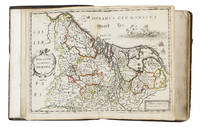
16525476Antwerp 1652. 4to 18 x 14.5 cm. Jan Huyssens Later 17th-century mottled calf sewn on 4 double cords gold-tooled spine and board edges. With a double-page letterpress title-page with a frame built up from typographic ornaments and 39 unnumbered double-page engraved maps of the northern and southern Low Countries by Jacob Aertsz. Colom each map coloured in outline. Interleaved with 38 blank leaves and with a manuscript table of contents 3 3 blank pp. at the end. Double-page title-page and 39 double-page maps. Second known copy of a pocket-atlas published at Antwerp but containing a selection of the maps of the Low Countries originally published by Jacob Aertsz. Colom at Amsterdam in 1635 with the title De Vyerighe Colom the title Colom had first used for his famous pilot guide in 1632 and the name he had given to his Amsterdam printing office where he worked from 1622 to his death in 1673 as a bookseller printer and mapmaker. The only other copy known is at the Royal Library in Brussels. The Vyerighe Colom with 47 maps and 3 plates and with extensive text in Dutch and French went through several editions in the 17th century but it was once thought that all editions before his death in 1673 had been published at Amsterdam by Colom himself. The Royal Library copy like the present one contains 39 maps but each contains one map not in the other so there are forty in total: the present copy includes Drentiae not in the Royal Library copy which includes Le terres entre la Meuse Vahal et Rhin not present here. The maps are also bound in a different order.The present edition is of great interest and gives cause to review Colom's activities. It is printed from Coloms plates so Colom may have licenced the Antwerp publisher to produce a variant edition of his Vyerighe Colom to broaden his market possibly reacting to the signing of the Peace of Münster in 1648 which finally ended the Eighty Years War and opened trade and communication between the northern and southern Low Countries. Jan Huyssens made an entirely new and practical atlas out of Colom's Vyerighe Colom. He omitted all text and the three plates that do not show maps and selected only maps of general interest leaving out the map of the ancient Low Countries and such typical Dutch maps as the separate maps of the polders De Zype Beemster Wormer Purmer Byllemermeer and Waterland also - at least in the present copy - completely rearranging the maps more in order of their geographical sequence. The title suggests that Huyssens originally planned to include a text so the present extremely rare edition may be the only surviving result of an abandoned project.l Koeman & Van der Krogt 365.23 IIIB pp. 644-645 2 copies: the present & Royal Library Brussels; UniCat 99095764 Royal Library Brussels only; cf. Koeman II Col 1 1635 Amsterdam ed.; not in KVK; STCV; WorldCat. unknown
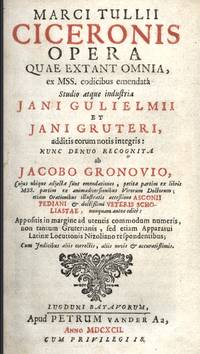
16923306804Lyon: Vander Aa 1692. One part moderately water-stained another with slight marginal worming three of the folding plates repaired. Eleven volumes duodecimo the first with four engraved folding plates and all eleven volumes embellished with charming ornamental title-pages; a handsome set in mid eighteenth-century dark panelled calf with original labels. <p><p>Attractively bound set of Cicero in eleven volumes noted as "respectable and correct" by Moss. The title-page boasts that the accuracy of the text arises from the editorial finesse of Dutch classical scholar Jacob Gronovius whose portrait appears as frontispiece to the first volume curiously the English literary lion Thomas Dibdin claimed the editorial attribution to Gronovius was spurious. Jacob Gronovius was the father of botanist Jan Frederik Gronovius correspondent and patron of Carl Linnaeus and the author of a treatise on the native plants and herbs of Virginia.</p> <p>A charming set in an appealing early binding this is a considerable publication continuously paginated for a total of 3611 pages. The folding engraved plates include the detail of an epigraphic tribute to Cicero and numismatic relics relating to the famed Roman orator.</p> </p> . Vander Aa unknown
164548771Paris: Nicolaum Redelichuysen 1645. First edition. Hardcover. Good condition. Octavo. 11 150 25 39 1 leaves. Rebound in modern brown cloth with gilt lettering on spine. Red edges. First title page printed in red and black with publisher's device. Historiated and decorative headpieces tailpieces and initials. Both titles second editions Alpini's title first published in 1591 Bondt's in 1642. Alpini was a physician and botanist Bondt a Dutch physician and pioneer of tropical medicine. Alpini's work is illustrated with four in-text and two full page woodcuts.<br /> <br /> Alpini traveled in Egypt and became the fourth prefect of the Botanical Garden in Padua. "One of the earliest European studies of nonwestern medicine. Alpini's work dealt primarily with contemporary i.e. Turkish practices observed during a three-year sojourn in Egypt. These included moxibustion - the production of counter-irritation by placing burning or heated material on the skin - which Alpini introduced into European medicine. Alpini also mentioned coffee for the first time in this work" Norman. With extensive index at rear. <br /> <br /> De Bondt was a pioneer of tropical medicine. His work on East Indian medicine included here is based on experiences during four years he spent in Djakarta. It was the first important treatise on diseases in East India and includes the first modern description of Cholera and other tropical diseases. First published posthumously in 1642. Index at rear. <br /> <br /> Text in Latin. Binding with light wear along edges and rubbed spine lightly sunned. Ex-Libris of German-born British professor of chemistry Franz Sondheimer on inside front cover. The first four leaves frayed with small chips at lower foredge no loss of text a few small inked entries and a small stamp of the Royal Medical Society Edinburgh on front cover. Title page with paper reinforcement on back. First in-text woodcut with stamp in center second woodcut with stamp grazing image third and fourth with stamp outside imagery. The two full page woodcuts with stamps grazing the border of image. Some light sporadic foxing of block and last page with chipping along edges some loss of the printed word Index and foxing and browning along edges. Small dealer sticker on inside back cover. Nicolaum Redelichuysen hardcover
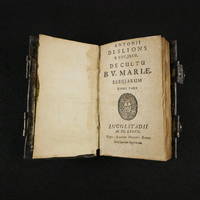
1678733Ingolstodt: Joannis Philippi Zink 1678. Hardcover. Fair. Three poetical works of early 17th century Jesuit poets bound into one binding with beautiful silver decorations covering the front and rear board. About the Literary Works - Three works are bound within: 1. 1672 De Cultu B. V. Mariae Elegiarum in three books not ""book three"" as it is often catalogued; all three ""libri"" are found within the printing by Antoine Deslions. 2. No title page bound in starts at A1 page 1 - Epigrammatum Selectrorum by Bernard Bauhuis 3. 1672 Silvulae Hendecasyllarborum by Jacob Bidermann About the Binding - No maker's mark is readily visible. The book was published in Ingolstadt where the silversmith family of Kienlin see book bindings attributed to Johann Adam Kienlin plied their trade. It was common for bindings of this time to have a silver spine but I see no hinges which indicate one might have been removed and the leather of the spine was decorated. Still a silver spine may have been removed and the board edges cut of their hinges. but removing the hinges seems unlikely. This book was sold in the 1924 Sotheby Sale of the Library of Dr. E Marion Cox. Bibliographic Details - All three works are printed by Joannis Philippi Zinck in Ingelstadt. The first and third work have a printing date of 1672; presumptively the middle work would also have been printed in 1672 the title page is not bound-in but Worldcat doesn't have record of a 1672 edition. The Deslions work is catalogued in Worldcat as OCLC 836616102 among others. The Bauhuis work is catalogued in Worldcat as OCLC 1088278417 with a printing date of 1678. The Bidermann work is catalogued in Worldcat as OCLC 78071635 among others. Physical Attributes - Measures approx. 13 x 8 x 3 cm. Leather binding with blind tooling. Over the front and rear board silver covers have been added; these are likely repousse hammered from the back side and are decorated in the French rococo style each with a proud central medallion. The front medallion is a woman holding a goblet and books the rear medallion is a woman holding her baby and guiding her child. The covers have been turned-in just like a leather binding. The silver clasps work and one clasp depicts a putti holding a spade and the other a lute. The endpapers are dutch-gilt the front one is missing the flyleaf and the rear endpaper shows a wonderful depiction of a lute player in gilt. Three works bound into one binding. The second work is missing its title page and any prefatory printed material it begins at page 1 signed A1. Pages - vi 106 128 title page vi 128 The third work seems like it might not have had a leaf bound-in; the first gathering is fifteen leaves instead of 16 but the catchwords match and nothing seems missing so it was likely a blank the binder chose not to include. Condition - See pictures. Silver tarnished with some bumps around the edges. Leather binding under is dried out. The spine is crazed and chipped from the head and tail; there is evidence of glue repair along the front and rear leather joint. There is a little rubbing noticeable on the leather under the silver covering the boards. Front flyleaf missing. Blank bookbinder endpaper mounted instead; some numbers written on it and the remnants of an auction ticket presumably. Text block has some toning throughout with occasional fox spots page edge bumps etc. A few pages seem slightly proud. The index at the back of the Deslions work insn't included. Also the title page and any intros are not bound in for the Bauhuis it starts on page 1. I see a very occasional annotation. Blank endpaper at rear has notes on which poems apply to different life situations. Rear flyleaf has a white mark at bottom and the fore-edge is a little rough; also several small holes which may be from binding. Joannis Philippi Zink
1645GB145Amsterdam 1645. 1st Edition . Hardback. Fine. 16mo. 15cms. 160pp. Bound with a second volume by Stephani Cyrcellaci Vivdiciae quibus suam & D. Arminii sententiani de uire Dei in creatures adversus Mosis Armyraldi criminationes de uire Dei in Creatureas adversus Mosis Armyraldi criminationes defendit. 149i pp index; i pp errata. PREFACE BY S.C. Salvtem dated 1645 Original full calf with ruled lines to the covers and spine. Lacking the front pastdown paper otherwise complete. EXCEEDLY RARE WITH ONLY ONE COPY TRACED. University of Birmingham Library Jacobus Arminius 1560-1659 and Moyse Amyrant 1596 -1664. The death of the second writer initiated the printing of the first volume presumably as no earlier version of the first volume can be traced. Jacobi Arminii was SS Theologiae in Academia Leiden quondam Profefforis. PLEASE EMAIL FOR PHOTOS. Jacobus Arminius 1560-1609 is the latinised name for Jakob Hermanszoon was a Dutch theologian during the Protestant Revolumtion whose ideas became the basis for Arminianism. <br/> <br/> hardcover
1643V75513Dordrecht Germany: Matthias Havius 1643. Hardcover. Good. charming text engravings 14 copperplates 1 mounted as frontispiece to Part I 3 signed S.V. Q. Crispin Van Queborn handsome woodcut large figural floral and foliated initals smaller decorated initials and tailpieces. Octavo 4 Parts in One Volume. laced through vellum binding with yapp fore-edge & with rubbed black stamped tree growing from a crown with initials CJH and motto on a plaque. This stamp to the cover is Very rubbed but there is a bookplate to endpapers with the same stamp in a bit better condition. Spine with ink title & date. Vellum somewhat marked and dusty/Lacks all but a stub of ribbon ties Titlepage with printer's mark pf woman holding a plume and with a lap full of books as the Dortrecht printer's mark 60pp of Dedications laudatory poems and privilege etc. 272pp 149pp 3p=blanks 32pp 198pp Matthias Havius hardcover
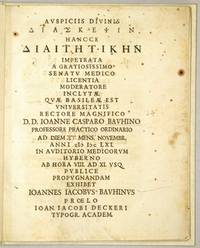
1661446231661. Basileae: Proelo Io. Iacobi Deckeri 1661 Kl.4° 15 pp. Pappband. Diaskepsin . diaitetiken / impetrata a . senatu medico licentia moderatore . Ioanne Casparo Bauhino ad diem . mens. Novembr. Anni M DC LXI . publice propugnandam exhibet Ioannes Iacobus Bauhinus. Bauhin Johann Caspar 1606-1685 Bauhin Johann Jacob 1641-1691 Husner: Verzeichnis bas. med. Univ.Schriften Nr. 1099 unknown
16836040EB1683. Wittenberg Wilck 1683. Unpaginiert 12 Bl. Geheftet. Mit Holzschnitt-Bordüre und -Initiale. Papier mäßig gebräunt sonst frei von Flecken. Ein sehr schön erhaltenes Exemplar. unknown
169555736Amsterdam: Be-veit ha-meshutafim Asher Anshil ben Eliezer ve-Yisakhar Ber ben Avraham Eliezer/ Moses Wiesel 1695. First edition. Hardcover. g to near fine. Small folio 30 by 18.8 cm. Collation: aleph-vav4 zayin2 = 26 numbered leaves. Full period brown paper boards re-backed with a brown leather spine with raised bands.<br /> <br /> Letterpress title-page with ornate floral woodcut device; additional engraved title-page mounted depicting Moses and Aaron along with six small biblical scenes within round borders all against an architectural background. Engraved folding map at rear mounted; main title with woodcut vignette; 14 half-page engraved illustrations in the text.<br /> <br /> This gorgeously illustrated work is the first edition of the famous and highly influential Passover Haggadah printed in Amsterdam in 1695. Simply known as the Amsterdam Haggadah this edition stands as among the most imitated and copied haggadahs in history and was the first to be illustrated with copperplate engravings. Previous illustrated haggadahs had used woodcuts. The popularity of these illustrations can be attested by the huge numbers of reprint editions over the centuries. There are 14 finely printed large in-text engravings plus the full page engraved title page showing Moses Aaron and Adam in the Garden of Eden. Some of these images illustrate the traditional content of the Passover seder and/or the exodus story while some are other biblical stories less directly related. Images include: the Rabbis of Bene Brak discussing the Passover story the four sons Abraham smashing the idols of his father Abraham welcoming the three angels Moses slaying the Egyptian overseer the rescuing Moses from the river Moses and Aaron coming to Pharaoh w/ staves turning to snakes the ten plagues the Egyptian army drowning in the Red Sea the Exodus the receiving of the Ten Commandments at Mt. Sinai the eating of the Pascal Lamb King David composing his psalms and finally an exterior view of the Holy Temple with the cityscape of Jerusalem in the background. All images are captioned underneath with relevant passages in Hebrew. The engravings were all created by Abraham ben Jacob a German convert to Judaism who had moved to Amsterdam although some sources over the years misattributed them to financier Moses Wiesel 6 of which were adaptations and/or modifications of previous images by Swiss artist Matthäus Merian 1593-1650 from his original work "Icones Biblicae" 1625-30.<br /> <br /> In addition to the in text engravings there is famously a phenomenal fold-out engraved biblical map of the holy land. Measuring a total of 19.5x11.5" the map shows the land of Israel the Sinai desert and Egypt in landscape orientation looking eastward towards the top of the map. It traces the journey of the Israelites starting with the Exodus from Egypt through the desert and into the Land of Israel. The map is detailed showing the areas of the twelve tribes important locations and cities as well as geographic features including the Red Sea Mount Sinai the Dead Sea the Sea of Galilee and many others. The map is decorated with additional illustrations near the bottom and includes a key. This beautiful work also by Abraham ben Jacob is considered among the earliest if not the first map of its kind to be printed within a Hebrew publication. It is now known to have been heavily based on the previously printed 1620 map in Hebrew by Jacob ben Abraham Zaddiq and Abraham Goos 1590 - ca. 1643 which itself was based on the map of 1590 by Christian Kruik van Adrichom Adrichem printed in Latin.<br /> <br /> Text throughout is printed in Hebrew with smaller text in Rashi script underneath containing famous commentary on the Passover Haggadah by acclaimed Portuguese Rabbi and scholar Isaac ben Judah Abarbanel 1437-1508. The verso of the title page contains the order of the Passover seder with brief instructions in both Ladino Judeo-Spanish and Yiddish Judeo-German a nod to the subtitle of Haggadah which references the both Ashkenazi and Sephardic traditions.<br /> <br /> This copy with binding in beautiful condition with being professionally restored includining spine re-backed to style. Book block tight. Interior with some staining to pages throughout from use. Binding in very good to near fine inteiror in good condition overall. Hebrew title: סדר הגדה של פסח ×›×ž× ×”×’ ××©×›× ×– וספרד <br /> Alternate transliterations: Seder Hagadah shel Pesah Seder Hagadah sel Pesah<br /> <br /> References: Friedberg 278 Fuks HTN II 521; Yudlov Haggadah 93; Vinograd Amsterdam 627; Ya'ari no. 59; Laor 876 Map; Nebenzahl pp.138-1389 Map; Yerushalmi plate 59-62; Rosenau "Vision of the Temple" p.135 146-7. Be-veit ha-meshutafim [Asher Anshil ben Eliezer ve-Yisakhar Ber ben Avraham Eliezer]/ Moses Wiesel hardcover
169555262Amsterdam: Be-veit ha-meshutafim Asher Anshil ben Eliezer ve-Yisakhar Ber ben Avraham Eliezer/ Moses Wiesel 1695. First edition. Hardcover. fair. Small folio 29 by 18.5 cm. Collation: aleph-vav4 zayin2 = 26 numbered leaves. Additional engraved title page engraved folding map at rear; main title with woodcut vignette; 14 half-page engraved illustrations in the text. Contemporary quarter calf over dark brown pastepaper boards skilfully rebacked. Images of Moses and Aaron at engraved title excised the seven small engraved vignettes along with letterpress text of engraved title and imprint mounted on old paper. Old marginal repairs at main title resulting in slight loss of initial letters along right margin and several leaves; slight strictly marginal worming and occasional tears. Stained throughout sometimes heavily though not impairing legibility. Map mounted to reinforce tears with virtually no loss of text or engraved imagery apart from printed border at right side. A fair copy at best; despite all defects the half-page engraved illustrations have survived intact with minimal staining. Housed in new maroon buckram slipcase.<br /> <br /> First edition of this gorgeously illustrated work now referred to simply as the Amsterdam Haggadah. The first such work to be illustrated with copperplate engravings it ranks among the most imitated of the Jewish manuals for the Passover seder. The popularity of these illustrations can be attested by the huge number of reprint editions over the centuries. Fourteen finely printed half-page engravings appear throughout the text. Some of these images illustrate the traditional content of the Passover seder or the Exodus story while others reference other biblical tales. Images include: the Rabbis of Bene Brak discussing the Passover story the four sons Abraham smashing the idols of his father Abraham welcoming the three angels Moses slaying the Egyptian overseer the rescuing Moses from the river Moses and Aaron coming to Pharaoh w/ staves turning to snakes the ten plagues the Egyptian army drowning in the Red Sea the Exodus the receiving of the Ten Commandments at Mt. Sinai the eating of the Pascal Lamb King David composing his psalms and finally an exterior view of the Jewish Temple with the cityscape of Jerusalem in the background. All images are captioned with relevant passages in Hebrew. The engravings were all created by Abraham ben Jacob a German convert to Judaism who had moved to Amsterdam although some sources over the years misattributed them to financier Moses Wiesel 6 of which were adaptations and/or modifications of previous images by Swiss artist Matthäus Merian 1593-1650 from his original work "Icones Biblicae" 1625-30.<br /> <br /> In addition to the in text engravings there is famously fold-out engraved biblical map of the Holy Land in a notable format. Measuring a total of 19.5 by 11.5" the map shows the land of Israel the Wilderness of Sinai and Egypt in landscape orientation looking eastward towards the top of the map. It traces the journey of the Israelites starting with the Exodus from Egypt through the Sinai and into the Land of Israel. The map is detailed showing the areas of the twelve tribes important locations and cities as well as geographic features including the Red Sea Mount Sinai the Dead Sea the Sea of Galilee and many others. Additional illustrations appear near the bottom along with a legend. This beautiful work also by Abraham ben Jacob is considered among the earliest if not the first map of its kind to be printed within a Hebrew publication. It is now known to have been heavily based on the previously printed 1620 map in Hebrew by Jacob ben Abraham Zaddiq and Abraham Goos 1590 - ca. 1643 which itself was based on the map of 1590 by Christian Kruik van Adrichom Adrichem printed in Latin.<br /> <br /> Text throughout is printed in Hebrew with smaller text in Rashi script underneath containing famous commentary on the Passover Haggadah by acclaimed Portuguese Rabbi and scholar Isaac ben Judah Abarbanel 1437-1508. The verso of the title page contains the order of the Passover seder with brief instructions in both Ladino Judeo-Spanish and Yiddish Judeo-German a nod to the subtitle which references both the Ashkenazi and Sephardi traditions.<br /> <br /> Provenance and annotations: Full page of text appx. 1500 words in neat Hebrew cursive at front endleaf which discusses aspects of the Haggadah text; inscription in German at front endleaf by Isidor Adler who mentions his friend Hermann Mechlenburg dated March 1906; old annotations throughout in at least two hands. In one notable instance the Hebrew phrase l'shana ha-ba'ah be-hamburg next year in Hamburg! has been added in fine block characters above the traditional phrase l'shana ha-ba'ah bi-yerushalayim next year in Jerusalem. Hebrew title: סדר הגדה של פסח ×›×ž× ×”×’ ××©×›× ×– וספרד <br /> Alternate transliterations: Seder Hagadah shel Pesah Seder Hagadah sel Pesah<br /> <br /> References: Friedberg 278 Fuks HTN II 521; Yudlov Haggadah 93; Vinograd Amsterdam 627; Ya'ari no. 59; Laor 876 Map; Nebenzahl pp.138-1389 Map; Yerushalmi plate 59-62; Rosenau "Vision of the Temple" p.135 146-7. Be-veit ha-meshutafim [Asher Anshil ben Eliezer ve-Yisakhar Ber ben Avraham Eliezer]/ Moses Wiesel hardcover
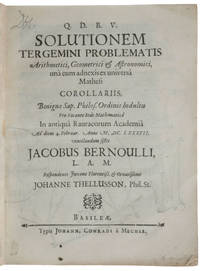
16875601Basel: Mechel 1687. First edition. First edition exceptionally rare of this dissertation which Bernoulli 1655-1705 submitted in order to secure the chair of mathematics at the University of Basel. This was the beginning of a remarkable career in mathematics in which he "greatly advanced algebra the infinitesimal calculus the calculus of variations mechanics the theory of series and the theory of probability and was one of the most significant promoters of the formal methods of higher analysis" DSB. EXCEPTIONALLY RARE DISSERTATION BY JACOB BERNOULLI. <p>First edition exceptionally rare of this dissertation which Bernoulli 1655-1705 submitted in order to secure the chair of mathematics at the University of Basel. This was the beginning of a remarkable career in mathematics in which he "greatly advanced algebra the infinitesimal calculus the calculus of variations mechanics the theory of series and the theory of probability and was one of the most significant promoters of the formal methods of higher analysis" DSB. The dissertation 'The solution of a triplet of problems arithmetical geometrical and astronomical together with corollaries from general mathematics' treats three elementary problems in number theory one arising from arithmetic one from geometry and one from astronomy/navigation. "Jacob Bernoulli's research on elementary mathematics taken as a whole constitutes a work of no mean importance very diverse in content lacking organic unity to be sure but also of exceptional historic interest. Indeed only from very few of the mathematicians who have left a lasting mark do we have the documentation which allows us to examine carefully the process of their scientific education . However in contrast from Jacob Bernoulli we actually possess some 'exercises' that he wrote beginning during the early years of his education. This is how we might characterize some of his Meditationes which he worked on with great diligence and singular ability. The interest of these exercises lies not only in their relationship to the general state of mathematics of the time but also and perhaps more in the way in which they represent an almost complete psychological picture of the formation of a great mathematician - which he certainly was - toward the end of the XVIIth century" Werke 2 p. 15. These Meditationes remained unpublished until the twentieth century except for the three published with much additional detail in the present pamphlet. On the last page of the dissertation is a list of 'Corollaries' one of which concerns the values of expectations in a lottery and is of particular interest in view of Bernoulli's posthumously-published Ars conjectandi 1713 the founding work of mathematical probability. "The academic dissertation Solutionem tergemini problematis arithmetici geometrici et astronomici which was presented at the University of Basel 4.2.1687 secured him the desired teaching post. Therefore this paper has particular biographical interest" ibid. p. 18. OCLC lists only 5 copies worldwide Yale only in US; not on COPAC.</p> <br /> <p>"Let us recall briefly what we know of Jacob Bernoulli's education before he obtained at the age of34 the chair in mathematics in his hometown Basel. Jacob was born in this city on December27th 1654 according to the old calendar in a protestant family of spice traders who had fled theSpanish low lands after the fall of the Duke of Alba. Complying with the wish of his father NicolasBernoulli a state adviser and magistrate Jacob studied philosophy and then theology until 1676. Aswas common at the time he chose a motto. His came from Phaeton who drew the solar carriageInvito patre sidera verso which may be translated by 'Despite my father I am among thestars'. Rather than exaggerated modesty this motto was a proud affirmation of superiority.</p> <br /> <p>"The young Jacob fully benefited from what Daniel Roche calls 'culture de la mobilité' promoted in the second half of the XVII century by new institutions which facilitated the movement of individuals and the spread of knowledge. Starting in August 1676 he traveled by horse to Geneva where he remained for twenty months preaching instructing a blind young girl Elisabeth von Waldkirch and serving as an opponent during the theological disputations. He relates his experience teaching mathematics to the blind in an article published in the Journal des Savants in 1685. This article is probably a reaction to an account by Spon published in the same journal in 1680 in which the author attributes to the father of the blind girl the writing system that was in fact developed by Jacob. It is here that Jacob meets Nicolas Fatio de Duillier a life long friend who recalled in a letter dating from July 22nd 1700 that he had seen Jacob play court tennis in Geneva a game on which Jacob later wrote a famous letter . </p> <br /> <p>"In June 1678 Jacob continues his extensive traveling in France residing in the Limousin in Nède with the marquis de Lostanges where he constructs two sundials in the castle courtyard then in Bordeaux and a few weeks in Paris. During this journey he begins in 1677 to write his mathematical journal Meditationes annotationes animadversiones theologicae et philosophicae which contains 236 articles . The journal is a precious testimony from this early phase of Jacob's scientific training which only really began when he encountered the Cartesian environment initially in France later mainly in the Netherlands Amsterdam and Leiden and in England during a second journey April 1681- October 1682. In August 1682 Jacob attended a meeting of the Royal Society in London. Jacob started out by acquainting himself with the Cartesian philosophy of nature after which he turned to geometry .</p> <br /> <p>"After his return to Basel in 1682 Jacob gave up the idea of a career in the clergy and decided to devote himself to mathematics. At the University of Basel he gave courses in experimental physics as can be gathered by a pamphlet printed in Basel in 1686. From 1682 on he also submitted short articles to the Journal des Savants - reactions to the works of others that he presented or criticized - initially in the area of natural philosophy machines for breathing under water to elevate water to weigh air oscillation center then from 1685 in mathematics .</p> <br /> <p>"Jacob slowly acquired a knowledge of mathematics at first through his readings of the second Latin edition of Descartes' Géométrie 1659-61 later that of Arnauld and his Logique Malebranche and Prestet . Jacob is confronted with precise problems often stemming from the area of applied mathematics. Solving these leads him to discover general methods. He begins by a thorough study of previous works which will serve him as a springboard to make further headway and produce new results. On several occasions Jacob voices the opinion that it is necessary to base one's own progress on the knowledge of what has been done in the past. Accordingly in the memoir entitled Solutionem tergemini problematis arithmetici geometrici et astronomici offered here presented on February 4th 1687 in order to obtain the mathematics chair in Basel he describes his own way of proceeding in the following way: 'In reality he who embraces a career as a mathematician is not the one who copies the inventions of others remembers them and recites them on occasion but the one who is truly innovative and is able to invent by using the divine algebra and thus to revolutionize what has been studied by others'" Peiffer.</p> <br /> <p>"Like other graduates of the University of Basel in the seventeenth century Bernoulli had a broad if not deep knowledge of all the disciplines of the liberal arts - an education he would draw on in writing Ars conjectandi 1713. The university at this time had a small faculty of philosophy including only nine chairs in logic rhetoric eloquence Greek mathematics physics history ethics and Hebrew. So although he had only an elementary education in mathematics as an undergraduate Bernoulli had a knowledge of Greek logic rhetoric and other subjects and was able to write polished Latin.</p> <br /> <p>"It was not uncommon at this time for a man to take a university post in a less desirable discipline if the chair he would have preferred was not available. He would then move if the opportunity arose to the preferred discipline without having to do everything required of a new applicant for a university position such as paying to print lists of theses to be defended in a disputation . The lists of theses that Jacob Bernoulli proposed to defend publicly in the years after his return to Basel in October 1682 reflect this list of open positions. Thus in January 1684 of the 100 theses that Bernoulli proposed to defend 34 were logical and 18 oratorical . Again in September 1685 and in February 1686 Bernoulli's theses were heavily logical. Finally after the death of the professor of mathematics in 1686 Bernoulli applied for disputed and won the chair" Sylla pp. 6-7.</p> <br /> <p>The first of the three problems treated by Bernoulli in his Solutionem tergemini problematis is: 'to find without the aid of algebra with the help of numerical arithmetic alone a number such that if we divide it into the numbers 12 and 36 and then add 8 to each of these numbers the resulting sums are in the ratio of 3 to 5.' The problem is generalized to arbitrary sets of given numbers.</p> <br /> <p>The second problem is more challenging. It "calls for the construction of a quadrilateral inscribed in a semi-circle with sides and diagonals of rational lengths in other words commensurable to the radius" Werke 2 p. 18.</p> <br /> <p>The third problem is one which could arise in navigation: 'It is observed somewhere at the sixth hour of the sun that it has an altitude of 12 degrees above the horizon and that one hour and 12 minutes after the moment of this observation the sun sets. The question is at what latitude and at what time of the year was the observation made'</p> <br /> <p>On the last page of text under 'Corollaria' Bernoulli lists some of his other Meditationes - problems dealing with logic physics meteorology geometry referring to Propositions 55-57 of Euclid Book X stereometry mechanics perpetual motion machines dioptrics perspective referring to Bosse and Desargues gnomonics referring to Münster and Sturm ballistics 'ars conjecturandi' probability and figurate numbers giving the very large example 1580972.</p> <br /> <p>The problem on probability "concerned the slowness with which the values of expectations in a lottery increase as more and more blank slips are drawn out of the urn. In an urn containing 16000 slips if it initially cost 7½ to participate 1000 blank slips in a row would have to be drawn out before the person could sell his expectation to someone else for 8" Sylla p. 27.</p> <br /> <p>Peiffer 'Jacob Bernoulli teacher and rival of his brother Johann' Electronic Journal for History of Probability and Statistics 2 2006. Sylla tr. Jacob Bernoulli. The Art of Conjecturing 2006.</p> <br/> <br/> Small 4to 198 x 156 mm pp. 16 including a full page of geometrical diagrams printed on title verso. Contemporary marbled wrappers. Mechel unknown
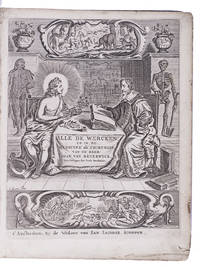
1672KBJA62HZUVCNAmsterdam 1672. 4to. widow of Jan Jacobsz. Schipper Contemporary vellum. With engraved frontispiece 28 engravings in volume one 29 engravings in volume two including one on the title-page and 20 engravings including one on the title-page plus 1 woodcut in volume three. 3 volumes bound as 1. 18 252; 8 127 1 328 48; 8 278=276 12 pp. Penultimate edition of the most influential medical work in the Low Countries during the 17th-century the collected works of Johannes Van Beverwijck 1594-1647. It was very popular partly through the inserted poems by Jacob Cats and its illustrations. The three main parts contain a general survey of the several elements of medicine varying from medical folklore and herbal knowledge to anatomy and chirurgy. At the end of the third part "Heel-konste" letters from and to Van Beverwijck as well as some other important letters are issued. Among these are letters of Descartes on the motion of the hart written ca. 1637-1643 to and from Anna Maria van Schurman ca. 1640 and William Harvey. Van Beverwijck was a very well-read man and all his writings include many references to ancient and contemporary authors on the subject. With owners' inscriptions on flyleaf and some modern underscoring and annotations in pencil. Front board and spine detached from bookblock a few tiny wormholes a couple tears in the foot margin otherwise in good condition.l BMN I p. 387; Krivatsy 1191; STCN 840960328; Wellcome II p. 159. hardcover
165140032London: John Macock for Giles Calvert 1651. 4to. 7 1/8 x 5 3/8 inches. 8 224 pp. Bound to style in half calf marble paper boards spine with raised bands in six compartments with ruled lines and center tool red lettering piece in second compartment.<br/> <br/> Rare first English edition of Jacob Böhme's a groundbreaking work of Christian mysticism translated by J. Ellistone which reveals the hidden connections between the material and spiritual worlds through its exploration of the signatures imprinted on all of creation.<br/> <br/> At once leatherworker mystic and founder of modern theosophy Böhme published little in his lifetime and what was published brought him endless trouble with the Church. Despite this Böhme had a profound influence on later philosophical movements such as German Idealism and German Romanticism with Hegel describing him as "the first German philosopher". Böhme was born in Alt Seidenberg now in present-day Poland. Deemed too weak for husbandry Böhme was sent to Seidenberg as an apprentice to become a shoemaker. While he lived with a family who was not Christian Böhme regularly prayed and read the Bible and consumed the works of visionaries such as Paracelsus Weigel and Schwenckfeld. After leaving his apprenticeship Böhme travelled as far as Görlitz before returning as a master craftsman to set up his own workshop and started a family. Böhme later joined the "Conventicle of God's Real Servants" - a parochial study group organized by poet and mystic Martin Moller. Since his youth Böhme often had spiritual experiences including one that occurred while he was travelling for business where as he later recalled was "surrounded with a divine light and stood in the highest contemplation and kingdom of joys." This title The Signature of All Things written in High Dutch in 1622 following a series of Böhme's mystic experiences appears here in the first English edition. In it Böhme explains systematically the cosmology that lies at the heart of his whole mystical approach and experience revealing his mystical pantheism and his dialectical conception of God in which good and evil are rooted in one and the same being. The book is a highly symbolic work that deals with the nature of God creation and the relationship between the spiritual and physical worlds. In brief Böhme's thesis can be summarised thus: everything in the material world bears the imprint or "signature" of its spiritual counterpart and that by understanding these signatures one can gain insight into the divine. The present work is the title for which Böhme is most famous and it is invoked by James Joyce in the Proteus episode in Ulysses "Ineluctable modality of the visible." Bohme's ideas had a significant influence on later mystics philosophers and theologians including Goethe Nietzsche and Jung. Signatura Rerum remains a classic work of Christian mysticism and esoteric philosophy and is still studied and debated by scholars and practitioners today.<br/> <br/> Wing B3419; Bach "Jacob Boehme" in Protestants and Mysticism in Reformation Europe; Hartman The Life and the Doctrines of Jacob Boehme the God-Taught Philosopher. John Macock for Giles Calvert unknown
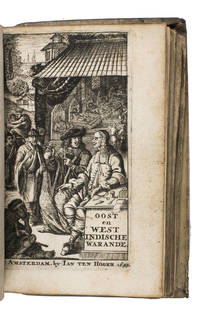
1694ABC_50174Amsterdam 1694. 8vo 14.4 x 9.1 cm. Jan ten Hoorn Contemporary blind-tooled vellum sewn on 3 supports laced through the joints with the title in brown ink on the head of the spine and sprinkled edges. Ad 1 with an engraved title page erroneously mentioning the year 1693 a small fleur-de-lis woodcut vignette on the title page a woodcut decorated initial and a woodcut tail-piece. Ad 2 with a large woodcut vignette on the title page and three woodcut decorated initials. 2 works in 1 volume. 8 304 7 1 blank 96 pp. Very rare work on medicine in the East and West Indies compiled for the use of naval and tropical surgeons including ships doctors on VOC and WIC ships. Dutch physicians Jacobus Bontius or Jacob de Bondt 1592-1631 and Willem Piso or Gulielmus Piso 1611-1678 are both considered to be the founders of the field of tropical medicine. Bontius worked in the East Indies. His chapters contain the first modern descriptions of cholera beriberi tropical dysentery and yaws. Piso worked in Brazil during the Dutch period 1630-1654. He is known for his research on local medicinal plants including the jaborandi and discovered that Brazilian lemons were particularly effective for treating scurvy. The work is very rare. According to WorldCat it is only present in a few libraries worldwide. We have also not been able to trace any other copies in sales records of the past 100 years.The present work is a Dutch translation of De medica Indorum 1642 by Bontius the first Dutch work on tropical medicine and Historia naturalis Brasiliae 1648 by Piso and Georg Markgraf also known as Georg Marcgrave or Marggraf 1610-1644 which is also considered to be a pioneering work in the field. As the present work was meant as a practical guide for surgeons only the most relevant chapters of the Latin editions have been included.This is the first Dutch edition of Piso's work but the second of Bontius'. Although most reference works do not mention this the Dutch translation of Bontius' work had already been published in 1673 as Oost-Indische warande. As a result the present work is the second edition but it is the first to combine these two pioneering works.The last work in this binding written by VOC physician Johannes Verbrugge 17th century is a catalogue of drugs that physicians should carry on their travels to the East and West Indies and includes a list of diseases that are common on those voyages and their cures. It is a logical addition to the other two works and is rarely found separately.With an ownership inscription on the first flyleaf 4 d Verwilghen Van den bussche and another on the second flyleaf Ch. Verwilghen 1829 probably referring to the Verwilghen family a notable and noble Belgian family originating from the Waasland region. Further with a small wormhole in the upper margin not affecting the text very slight browning and foxing throughout and the upper support is slightly loosened for the quires in the second half of the work. Otherwise in good condition.l Krivatsy 1500; Landwehr VOC 829; Sabin 6341; STCN 102642796 3 copies incl. 1 incomplete; USTC 1838762 4 copies; WorldCat 1154809136 9 copies; cf. Borba de Moraes II p. 676 different ed.; Garrison & Morrison 2263 and 2263.1 different eds. hardcover
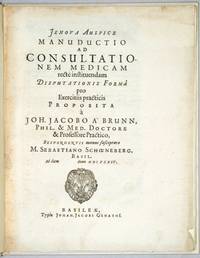
1634446981634. Basileae: Typis Iohan. Iacobi Genthii 1634 Kl.4° 27 pp. Pappband. Manuductio ad consultationem medicam recte instituendam / disputationis forma pro exercitiis practicis proposita a Ioh. Iacobo a Brunn respondentis munus suscepturo Sebastiano Schoeneberg Basil. Ad diem . Anno MDCXXIV. Johann Jakob Brunn "in Basel 1571 geboren wurde Dr. philos. 1611 und nach mehrjährigem Studienaufenthalt - besonders in Montpellier aber auch in Belgien England und Deutschland - 1615 Dr. med. Nach Basel zurückgekehrt wurde er 1625 daselbst zum Professor der Anatomie und der Botanik ernannt ein Lehramt welches er 1629 mit dem der praktischen Medicin vortauschte. Seine diesbezügliche Wirksamkeit dauerte bis 1660 seinem Sterbejahr. - Von seinen Schriften sind hervorzuheben: "Manuductio ad consultationeni medicam etc. " Basel 1616 - "De humoribus corporis humani" daselbst 1619 und "Systema materiae medicae" nebst Receptformeln daselbst 1630 1639; Leipzig 1645; Padua 1647; Rouen 1650; Leipzig 1654; Amsterdam 1659: daselbst und im!Haag 1680." Rd. Hirsch I p.598 siehe - Dict. hist. II. Husner: Verzeichnis bas. med. Univ.Schriften Nr. 989 unknown
1671D6213Amsterdam: Barent Otto Smient 1671. Hardcover. Very Good. 12mo 155 x 90mm. In two parts separately titled and paginated Lof-Sang op het geestelyk houwelyk van godes soone Laudatory Song on the Spiritual Marriage of the Son of God. 44 544pp. 120pp. 5. Added engraved title page Proef steen van den trou-ringh in addition to the letterpress title to the first work two engraved full-page portraits one of prolific artist and poet Anna Maria van Schurman and one of Jacob Cats and a full-page allegorical engraving Het Derde Deel facing p. 249 in addition to 51 half-page engravings in the text depicting scenes of domestic and married life. Engraved printers device depicting Adam and Eve in the Garden of Eden. Near contemporary vellum ms. title to spine somewhat effaced; some slight thumbsoiling lightly toned with age; corners bumped. <br/><br/>This 1671 edition based on the imprint of Trou-Ringh by Jacob Cats was first published in Dordrecht in 1637. Cats a Dutch Golden Age poet and politician wrote these rhymed dissertations on marriage and fidelity using very different marriage cases from literature in which conjugal ethics emerged. Cats method was to treat human behavior and society in all its aspects through the lens of marriage both human and spiritual ie. the marriage of Christ and His Church. He takes examples from the Bible Adam and Eve David and Abigail etc. and from classical and modern authors Cyrus and Aspasia Marc Anthony and Cleopatra etc. Cats tells of marriages to patriarchs ancient and modern; cases from Israel Persia Egypt from the life of Charles the Great and of the Great Mogul and Spanish gypsies. Also included are discussions of marriage after rape the breaking of marriage bonds adultery and the like. Because marriage dominated all periods and regions of the world all classes all ages with a variety of feelings and soul states this work resonated with the reader although Cats unusual storytelling intended moral and religious teachings. He propagated that marriage with its many possibilities and moral demands which it always must fulfill totally belong together: as do the ring and the stone. Cats was a distinguished Dutch writer but his Orangist and Calvinistic opinions set him apart from the liberal school of Amsterdam poets. Still for nearly two centuries he enjoyed enormous popularity. Wonderfully preserved important work on 17th century societal structures the many engravings are delightful and captivating. Barent Otto Smient hardcover
166573514-A-64093t'Amsterdam: I.I. Schipper 1665. Contemporaine band in vol perkament met blindstempeling op voor- en achterplat. Convoluut van 21 titels met aparte paginering. Tekst gedrukt over twee kolommen met gravures tussen de tekst. Platten op scharnieren bijna los. Onderaan rug mist een stukje perkament. Binnenwerk goed tot zeer goed enkele lichte beschadigingen de tekst niet rakend. Een tiental pagina's licht vochtvlekkig. Een redelijk goed exemplaar Namen der Boecken vervolgens in dit Werck begrepen: 1. Emblemata of Zinne-Beelden. 2. Emblemata Moralia. 3. Monita Amoris Virginei. 4. Zelf strijt. 5. Toneel der manlijke achtbaerheyt. 6. Houwelijck of gantsche gelegentheyt des Echten staets. 7. Herders Klachten. 8. Maegde-klachten. 9. Eer-dichten. 10. Spiegel van den Ouden en Nieuwen Tijt. 11. Proef-steen van den Trouring. 12. Het geestetelijck Houwelijck van Godes Sone. 13. Ouderdom en Buyten-leven. 14. Hof-gedachten. 15. Aspasia Bley-eyndentspel. 16. Afbeeldinge des Huwelijx onder de gedaente van een Fuyck. 17. Invallende gedachten op voorvallende gelegentheden. 18. Doot-kist voor de Levendige. 19. t'Samen-spraeck tusschen de Doot en een out Man. 20. t'Samen-spraeck tusschen de Ziel en 't Lichaem. 21. Tachtigh-jarigh Leven en Bedenckingen op Zorg-vliet I.I. Schipper unknown
170023508Amsterdam: Daniel van den Dalen and François Halma; Utrecht: Wilhelm vande Water 1700. Two volumes. Second edition. Folio. 28 666 10 pp. 183-184 repeated and page numbers 343-348 omitted as usual the text and signatures continual; 18 390 6 393-608 61 1 pp. Contemporary mottled full calf spine with raised bands gilt lettered red labels gilt decorated to the spines elaborate gilt borders to the boards which also feature a central gilt device. Two portraits of the author and Anna Maria Schurman and three double page plates plus hundreds of superb engravings a few full page but mostly set in the text. One of the double page plates and two text leaves with marginal tears without loss some wear to the extremities repairs to the joints of volume I a handsome set. The life and works of this Dutch writer was first published in 1655. Cats' literary work primarily consists of moral poetry and these editions of his writings are embellished with numerous fine copper engravings of varying sizes including engraved title pages head & tailpieces vignettes and most notably hundreds of emblematic illustrations to accompany the verses. A lovely example of an extraordinary work. Amsterdam: Daniel van den Dalen and François Halma; Utrecht: Wilhelm vande Water unknown
1700BB1034T'Amsterdam / T'Utrecht: Daniel van den Dalen. François Halma. De wed. van A. van Someren / J. en Wilhelm vande Water. Boekverkopers 1700. Early Reprint. Vellum. Fine. Profusely illustrated edition of Cats's complete collected works first published in 1655. Two folio volumes bound in one each separately paged and signed and each with additional engraved title page bearing a portrait of the author as well as sectional title pages with engraved vignettes. 28666 i.e. 662: 183-184 repeated and 343-348 omitted10; 183906393-608611 pp with full-page portraits of the author and of Anna Maria Schurman three double-page plates and more than 400 superb copper-engraved half- and quarter-page plates most from the original designs of Adrian van de Venne numerous tailpieces of bouquets and historiated initials. Recent period-style full vellum binding by Fitterer mustard lettering piece decorated and lettered in gilt end papers renewed. An exemplary example in a magnificent vellum binding occasional spotting and minor marginal browning else fresh and bright with rich impressions of type and plates. Cats was a Dutch statesman and writer of emblem books a type of popular seventeenth-century literature consisting of woodcuts or engravings accompanied by didactic verses pointing a moral or presenting an ethical concern often related to love and marriage. Dutch artists of the Golden Age including Vermeer used such books as inspiration for motifs in their paintings and prints. The sources upon which Cats draws for this combination of emblem literature and love poetry are chiefly the Bible and the classics and occasionally Boccaccio and Cervantes. His first book Sinne-en minnebeelden "Portraits of Morality and Love" contained 96 emblematic engravings with text in Dutch Latin and French each emblem with a threefold interpretation expressing what were for Cats the three elements of human life: love society and religion. Perhaps his most famous emblem book written in a more homely style than his earlier works is Spiegel van den ouden en nieuwen tyt "Mirror of Old and New Times" with 128 emblematical engravings accompanied by quotations many of which have become household sayings. Two other works—Houwelyk 'Marriage' and Trou-ringh 'Wedding Ring' with 59 plates—are rhymed dissertations on marriage and conjugal fidelity. Finally in one of his last books Ouderdom buyten-leven en hof-gedachten "Old Age Country Life and Garden Thoughts" with 27 plates Cats writes movingly about his declining years. Adapted from the Encyclopedia Britannica N. B. With few exceptions always identified we only stock books in exceptional condition. All orders are packaged with care and posted promptly. Satisfaction guaranteed. Fine Editions Ltd is a member of the Independent Online Booksellers Association and we subscribe to its codes of ethics. Daniel van den Dalen. François Halma. De wed. van A. van Someren / J. en Wilhelm vande Water. Boekverkopers unknown
1627EPL42Rotterdam: Pieter van Waesberge 1627. Paperback. Very Good. This edition also has French translations. Including "Et in Aequore Flamma est XV O prodga rerum luxuries! XXXIII" "Amor formae condimentum III" "Nemo dolens patet libidini L" and "Quod dolet intus habet VII "as the characteristic round engravings. One hole affecting Flamma some brittle edges or stains Size: 225 x 220mm. <br/><br/> Pieter van Waesberge paperback
1655E73970Amsterdam: Jan Jacobsz Schipper 1656 1655. Hardcover. Very Good-. Engraved titlepage 3 full-page plates 16 30 23 half-page copperplates by or after Adriaen van de Venne 1589-1662 showing customs family life agriculture trades and dances of death. Quarto vellum laced through with yapp fore-edges and faded manuscript title to spine slightly marked. Half-title and engraved Titlepage dated 1656 to OUDERDOM en BUYTEN-LEVEN xxiv261pp 3pp; HOF-GEDACHTEN with Titlepage dated 1655 and INVALLENDE GEDACHTEN with half-title 1253pp; KONINGKLYKE HERDERIN ASPASIA with Titlepage and extra frontis plate 484pp; HUWELIJCX FUYCK with half-title 32pp; and DOODT-KISTE voor de LEVENDIGE with half-title 224pp. A few tears to margins not affecting printed area some with marginal paper loss and light marginal damp-staining towards the end. Narrative poetry by the foremost writer of the 17th century Dutch Republic with many fine engravings of city and country life by or after van de Venne and a short series of Dances of Death. First editions here of most of the works written near the end of Cats's life at his country estate near The Hague Sorgh-vliet or "escape from care" which is illustrated in the centre of the fine frontis to the whole collection. Jan Jacobsz Schipper hardcover
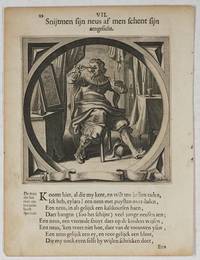
1632635801632. Spiegel van den Ouden ende Nieuwen Tijdt. - Gravenhage Isaac Burchoorn 1632 4° 225 x 170 mm. Emblem from "Spiegel van den ouden ende nieuven tijdt" Mirror of old and new times a book of emblems by Jacob Cats Amsterdam 1632 / Emblem aus "Spiegel van den ouden ende nieuven tijdt" Spiegel der neuen und der alten Zeit einem Emblembuch von Jacob Cats Amsterdam 1632. Snijtmen sijn neus af' men fchent sijn aengeficht. Koomt hier al die my ken en wilten besten raden Ick heb eylaes ! een neus met puysten over-laden Een neus in als gelijck een kalikoutsen haen Daer hangen soo het schijnt veel jonge neusen aen; Een neus een vreemde snuyt daer op de kinders wijsen Een neus 'ken weet niet hoe daer van de vrouwen ysen Een neus gelijck een ey en root gelijck een bloet Die my oock even selfs by wijlen schricken doet . Cut off his nose they say and you'll see his face. Come here all of you who know me and try to guess I have alas! a nose covered with pimples A nose like a cockatoo's beak On which it seems many young noses hang; A nose a strange snout that children point at A nose I don't know how that women ice A nose like an egg and red like blood Which sometimes frightens me as well . Jacob Cats 1577-1660 was a Dutch poet humorist jurist and politician. He is most famous for his emblem books. unknown
163711639Dordrecht Hendrick van Esch voor Matthias Havius 1637. 2 uitvouwbare titelprent 52 772 136 p. Origineel Leer met ribben goudbestempeld groot 4° met tekstgravures fraai exemplaar Dordrecht, Hendrick van Esch, voor Matthias Havius unknown