4 009 résultats
1974BOOKS049525INew York: KTAV Publishing House. Fine copies. 1974. reprint. hardcover. 8vo 387375430 pp . KTAV Publishing House hardcover
19347997Cincinnati:: Union Of American Hebrew Congregations 1934. First edition. Publisher's decorated black cloth. Very good; some areas of wear to edges. Tall 8vo. Union Of American Hebrew Congregations, hardcover
196111299London: Oxford University Press. Fine in Very Good dust jacket. 1961. First Edition. Hardcover. London: Oxford University Press 1961. First Edition. 8vo. xxii459pp Index. Blue cloth. Book in fine condition dj very good plus minor wear light soil to rear cover. Map 8 illustrations. Era of the Anglo-German naval rivalry here seen from the British side. ; The Royal Navy in the Fisher Era 1904-1919; Illustrated; 8vo 8" - 9" tall; 459 pages . Oxford University Press hardcover
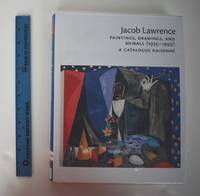
2000161356Seattle / London: University of Washington Press 2000. Hardcover. VG-. Ex-lib with typical markings including stamp on spine plate inside front cover and check out slip. Quarto. Hardcover. Red cloth blue and white and illus. dust jacket in mylar cover; illus. flyleaves 344 pp. many color and BW illus. 30 cm. Identifies authenticates and documents more than 900 pieces of artwork rendered by African American artist Jacob Lawrence 1917-2000. Includes an exhibition chronology and bibliography in addition to the substantial catalogue itself. A vital reference. University of Washington Press hardcover
197438262Leiden: E. J. Brill 1974. First edition. Hardcover. vg. Quarto. IX 3 338pp. Original red cloth with gold lettering on spine and front cover. Publisher's logo on front board and title page. Kelim literally "Vessels" is the first tractate in the Order of Tohorot in the Mishnah. It contains thirty chapters making it the longest tractate in the entire Mishnah. The tractate discusses the laws of ritual purity and impurity pertaining to all types of vessels. Chapter 1 clarifies the ranking of ritual impurities; Chapters 2-10 discuss earthenware vessels; Chapters 11-14 discuss metal vessels; Chapters 15-19 discuss vessels made of wood leather and bone; Chapters 20-25 discuss laws of purity and impurity pertaining to all vessels; Chapters 26-28 discuss laws pertaining to leather and clothing; Chapter 29 discusses the seams of clothing and vessels; and Chapter 30 discusses glass vessels. This second volume deals with the last 19 chapters of the Kelim chapters 12 through 30. Previous owner's stamp on front free endpaper Rabbi Martin A. Cohen. Binding and interior in overall very good condition. E. J. Brill hardcover
198038261Leiden: E. J. Brill 1980. First edition. Hardcover. vg. Quarto. XXXI 1 302pp. Original red cloth with gold lettering on spine and front cover. Publisher's logo on front board and title page. The problem of this book is to describe the history of the laws of the Mishnah-tractates surveyed in the first five parts of this series. The problematic is to locate those points at which the laws articulate conceptions expressive of Mishnah's main purpose distinctive to Mishnah and relevant to the period in which Mishnah takes shape the late first and second century. Previous owner's stamp on front free endpaper Rabbi Martin A. Cohen. Binding and interior in very good condition. E. J. Brill hardcover
197838260Leiden: E. J. Brill 1978. First edition. Hardcover. vg. Quarto. XVIII 2 262pp. Original red cloth with gold lettering on spine and front cover. Publisher's logo on front board and title page. This is the second of a five-part presentation of the Mishnaic law of Holy Things - that is matters pertaining to the Temple and its cult - containing a form-analytical translation and explanation of Mishna and more briefly Tosefta of the entire Order of Holy Things. This volume deals with the various grain-based offerings in the Temple. Ex-library copy with library stamp on front free endpaper and half-title Hebrew Union College. Binding and interior in very good condition. E. J. Brill hardcover
197838259Leiden: E. J. Brill 1978. First edition. Hardcover. vg. Quarto. XVIII 2 262pp. Original red cloth with gold lettering on spine and front cover. Publisher's logo on front board and title page. This is the first of a five-part presentation of the Mishnaic law of Holy Things - that is matters pertaining to the Temple and its cult - containing a form-analytical translation and explanation of Mishna and more briefly Tosefta of the entire Order of Holy Things. This volume deals with the procedure of animal and bird offerings at the Temple. Ex-library copy with library stamp on front free endpaper and title page Hebrew Union College. Binding and interior in very good condition. E. J. Brill hardcover
197032180Leiden: E. J. Brill 1970. First edition. Hardcover. vg. Quarto. XXVII 1 462pp. Original blue cloth with gold lettering on spine and front cover. Salo Baron's stamp on free front endpaper. Remarkable history of the Jews in Babylonia under the Arsacid and Sasanid. Binding and interior in overall very good condition. Salo Wittmayer Baron 1895 - 1989 was an American historian of Polish-Austrian Jewish ancestry and the most noted historian of the Jews of his generation. Baron taught at Columbia University from 1930 until his retirement in 1963. E. J. Brill hardcover
197032181Leiden: E. J. Brill 1970. First edition. Hardcover. g. Quarto. XXVII 1 462pp. Original blue cloth with gold lettering on spine and front cover. Remarkable history of the Jews in Babylonia under the Arsacid and Sasanid. Spine and edges slightly age-toned. Binding in overall good interior in very good condition. E. J. Brill hardcover
198427833Chico California: Scholars Press 1984. Third Printing. Softcover. vg. Octavo. xli249pp. Original red wrappers printed in white and black. Captivating study on the history of the Jews in the Parthian Empire. Also known as the Arsacid Empire after the eponymous founder Parthia was a major Iranian political and cultural power in the Ancient Near East. At its height the Parthian Empire stretched from the northern reaches of the Euphrates to eastern Iran. Illustrated with few full-page b/w maps. Minor scuffing on wraps slight rubbing on edges. Wrappers in good interior in near fine condition. Number 62 of "Program in Judaic Studies Brown University. Scholars Press unknown
198420835Chico CA: Scholar's Press 1984. Softcover. vg. 8vo. 139 pp. Original paper wrappers. Amazing book tracing the oral attributed sayings given in the Talmud in an attempt to link them with true historical characters. Minor age wear to wraps but book is in very good condition. Scholar's Press unknown
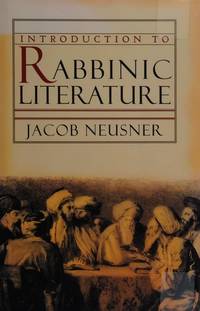
199483941New York: Doubleday 1994. First Edition Stated First Printing Stated. Hardcover. Good/Good. xxxi 1 720 pages. Footnotes. General Index. Index to Texts. DJ has some wear and soiling. Some soiling to page edges. This is one of the Anchor Bible Reference Library series. Jacob Neusner July 28 1932 - October 8 2016 was an American academic scholar of Judaism. He was named as one of the most published authors in history having written or edited more than 900 books. Neusner's research centered on rabbinic Judaism of the Mishnaic and Talmudic eras. His work focused on bringing the study of rabbinical text into nonreligious educational institutions and treating them as non-religious documents. He was a pioneer in the application of "form criticism" approach to Rabbinic texts. Much of Neusner's work focused on deconstructing the prevailing approach that viewed Rabbinic Judaism as a single religious movement within which the various Rabbinic texts were produced. In contrast Neusner viewed each rabbinic document as an individual piece of evidence that can only shed light on the more local Judaisms of such specific document's place of origin and the specific Judaism of the author. His 1981 book Judaism: The Evidence of the Mishnah is the classic statement of his work and the first of many comparable volumes on the other documents of the rabbinic canon. Neusner's five-volume History of the Jews in Babylonia published between 1965-1969 is said to be the first to consider the Babylonian Talmud in its Iranian context. Neusner studied Persian and Middle Persian to do so. Neusner with his contemporaries translated into English nearly the entire Rabbinic canon. The rabbis are as important today as they were two thousand years ago at the dawn of the literature that came to be named after them. The Mishnah the Tosefta the Talmuds the collections of Midrash and other writings ascribed to the ancient rabbis -- the oral Torah -- were gradually produced between the first and the seventh century of the Common Era. What began as comments and decisions on practical matters made by the rabbis were eventually written down and preserved. Over time the literature grew and constantly changed eventually evolving into a widely diverse collection of material. Regardless of what form it took rabbinic literature guided and shaped Jewish life. Opening the vast pages of rabbinic literature is like entering a conversation already in progress. To understand and appreciate what is going on some basic things about the content purpose and context of the speakers need to be known. `In "Introduction to Rabbinic Literature" legendary author and teacher Jacob Neusner distills a lifetime of scholarship on the essence of what has been received from the rabbis. This book gives readers everything they need to know to understand rabbinic literature. It explores the formative age and the forces that gave rise to rabbinic literature and tells in a simple straightforward way what these documents are where to find them how to read them and why their content matters. Best of all Neusner masterfully covers all this in one relatively compact volume that novice and expert both can appreciate. Doubleday hardcover
197338258Leiden: E. J. Brill 1973. First edition. Hardcover. g to vg. Quarto. XII 2 110pp. Original red cloth with gold lettering on spine and front cover. Publisher's logo on front board and title page. Devotion to the study of the Babylonian Talmud a document of law and theology completed in the seventh century A.D. and thereafter the primary and authoritative source of Judaic legal and moral teachings was one of the distinctive traits of Russian Jewry before 1917. The five papers contained in this volume show part of what was accomplished after that time by a Talmudist who was also trained in Soviet historical sciences and Marxist theory. The papers are important for three reasons. First they contain important insights and critical perspectives hitherto unavailbale to Western scholarship in the history of Judaism in late antiquity. Second they underline the importance of introducing into the study of Talmudic and other ancient legal literature a concern for the economic foundations of the laws. Third they provide a glimpse into the mind of a segment of the Soviet Jewish community during its long period of silence specifically the segment which evidently attempted to reach an accomodation between the classical Judaic heritage on the one hand and the new modes of thought and expression under Soviet Communism on the other. Solodukho made the effort both to preserve the traditions of Talmudic learning acquired in his youth and to master and make use of the Marxist hermeneutic which came to dominance in his mature years. The five papers contained in this volume are the following: 1 Slavery in the Hebrew society of Iraq and Syria in the second through fifth centuries A.D.; 2 On the question of the social structure of Iraq in the third to the fifth centuries A.D.; 3 The Mazdak movement and rebellion of the Hebrew population of Iraq in the first half of the sixth century A.D.; 4 The Persian administrative-legal socio-economic and everyday lexicon in the Jewish-Iraqi literary monuments of the Sasanian period; 5 Concerning certain Persian borrowings in the Babylonian Gemara. Ex-library copy with sticker remnants at tail of spine and library stamp on front free endpaper and half-title Hebrew Union College. Binding in overall good interior in very good condition. E. J. Brill hardcover
198920785Atlanta Georgia: Scholar's Press 1989. First edition. Hardcover. g. 8vo. xvi 150 pp. Off-white cloth with golden border and lettering on front cover gold lettering on spine. Work contains critical analysis of the text Esther Rabbah attempting to answer a number of historical and philosophical meta questions. Includes index. Age wear to boards. Ex library copy otherwise book is in good condition. Scholar's Press hardcover
198132791New York: KTAV Publishing House Inc 1981. First edition. Hardcover. g. Quarto. XV 1 194pp. Original light blue cloth with white lettering on spine and front cover. These introductions to the literary evidence of earlier Rabbinic Judaism deal with three important types of documents: The Mishnah the Midrashic compilations and the liturgy. The purpose is to explain the state of scholarship with special interest in methods used for framing and answering the principal questions of systematic critical learning in our own day: What do we know How do we know it Why is it important Slight discoloration on spine and front cover. Binding in overall good interior in very good condition. KTAV Publishing House, Inc hardcover
198717667London and New York: University Of Chicago Press 1987. Hardcover. vg. 8vo. x. 278 pp. In English translated from the Hebrew. Blue cloth with silver lettering on spine. Book condition: Fine. University Of Chicago Press hardcover
196225281962. School/Library. GOOD. 1962 HCw/no jacket. Picture bds have rubbing at corners & spine ends. Clean pages solid binding. Record 33 included. unknown
1992110465Books Publishers. Very Good in Good dust jacket. 1992. Hardcover. A book that is used but still very attractive with dustjacket . Books, Publishers hardcover
190731956Philadelphia: Julius H. Greenstone 1907. First edition. Hardcover. g. Octavo. XV 1 142pp. Original cloth with gold lettering on spine and front cover. Remarkable work on Customs Minhagim: Rabbinic law as derived from the Talmud is binding upon all Jews. In addition there have always been local customs and prohibitions which are binding only where practiced. Indeed the Talmud gives detailed rules for people who visit or move to a locale where the custom differs from their own. Custom can also determine halachic practice in cases of disagreement among rabbinic authorities. Spine heavily rubbed. Gold lettering faded on spine. Previous owner's stamp on free front endpaper. Previous owner's ex-libris on inside of back cover. Binding in overall fair to good- interior in very good condition. Julius H. Greenstone hardcover
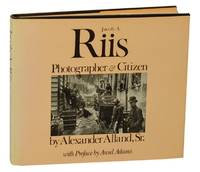
1993204410New York: Apeture 1993. First edition and first printing. Oblong hardcover. 220 pages. Features a preface by Ansel Adams and text by Alexander Alland Sr. A collection of black and white images from this important American photographer who often worked to document the ills of society. A tight near fine copy in black cloth boards with some offsetting to the front and rear endpapers from the flaps of the near fine price clipped dust jacket with some sunning to and along the spine and edges. Still a pleasing copy of this terrific book. Apeture unknown
190226150New York:The Macmillan Company 1902. First Edition. hard cover. Very Good/No jacket. New York:The Macmillan Company. 1902. 1st editiion. xi465pp. Illustrated. Hardcover. Decorated blue boards with gilt on front cover and spine strip still bright lightly soiled and shelfworn with edges spine ends and edge points gently worn. Top edges gilt. Internally a small strip of something rough is all that remains of something once attached to inside front board otherwise pages clean and bright free of previous owners marks or signatures. The binding is tight with hinges intact. A very good clean copy. New York:The Macmillan Company hardcover
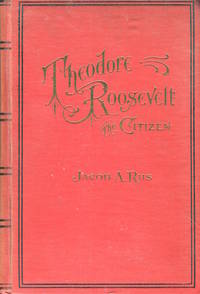
190417002Washington DC: Johnson Wynne Company 1904. Subscription edition. Hardcover. Very good. A very clean tight copy. Octavo; pp; xxxix i Plate ii 471 with index; frontispiece portrait of TR plus thirty-one black and white plates; red cloth lettered in gilt; Introduction by Merrill Edwards Gates;. Riis the reformer met TR when he was a young Assemblyman. They became friends and allies in social causes. Introduction by Merrill Edwards Gates. Miles' "Image Makers" #886. Johnson, Wynne Company hardcover
190129404Berlin: M. Zülzer & Co 1901. Hardcover. fair. 4to. xv 671pp. Original publisher's decorative blind- and gold-stamped maroon cloth. Marbled edges. Frontispiece portrait of author protected by tissue guard. Collections of sermons & writings by Dr. Benjamin Rippner who was a rabbi at the Synagogengemeinde Glogau Glogau synagogue. Includes prayers selected by the rabbi. Foreword by Rippner's wife Meta. Text in German gothic script. Heavy water staining on binding not affecting interior leaves. Small sticker taped across spine. Bookplate on inside of front board: "A gift by Mrs. Maxwell H. Dubin from the library of Rabbi Maxwell H. Dubin 1900 1979. May his memory be a blessing." Rabbi Maxwell H. Dubin Collection sticker on free front endpaper. Slight staining on rear endpaper. Binding in poor interior in very good condition. M. Zülzer & Co hardcover
1923291016Berlin: Ajanoth 1923. Paperback. Good . 172 pp. In Hebrew Important early work by Robinson covering subjects of socio economics of Jewry Health racial theory language antisemitism et. al. OCLC Number: 12283550has Ajanoth paperback