493 résultats
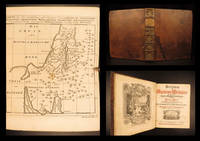
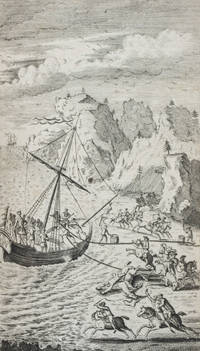
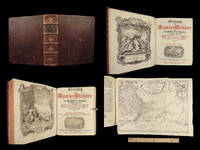
177126394<p><strong>1771 SWEDEN Scandinavia MAPS Edmund the Old Minniskiold Norse Vikings Nordic</strong></p><p>The "<em>Allgemeinen Welthistorie</em>" was an 18th-century historical journal collected to provide a complete and thorough history of the world. First edited by Siegmund Baumgarten and later by Johann Semler this recurring work was a collection of articles by English scholars then translated and edited by Semler and Baumgarten – who Voltaire called 'the crown of German scholars'. </p><p>This particular tome consists of volumes 31-32 and covers interesting histories including:</p><p><!-- if !supportLists-->· <!--endif-->11th-century Swedish history Edmund Gammal the Old King of Sweden</p><p><!-- if !supportLists-->· <!--endif-->Magnus Minniskiöld medieval Swedish magnate</p><p><!-- if !supportLists-->· <!--endif-->Ancient nomadic tribes Cimmerian people and the ancient city of Chersonesus; Scythians</p><p><!-- if !supportLists-->· <!--endif-->13th-century Holy Roman Empire Counts of Schauenburg and Holstein – Jutland history</p><p>Includes the oft lacking folding maps!</p><p>Item number: #26394</p><p>Price: $750</p><p>BAUMGARTEN Siegmund Jacob; SEMLER Johann</p><p><strong><em>Uebersetzung der Algemeinen Welthistorie die in Engeland durch eine Geselschaft von Gelehrten ausgefertiget worden</em></strong></p><p>Halle: Verlag Joh. Justinus Gebauers 1771. 1st edition</p><p><u>Details</u>: </p><p><!-- if !supportLists-->· <!--endif-->Collation: Complete with all pages; 2 volumes in 1 tome</p><p><!-- if !supportLists-->o <!--endif-->Vol. XXXI – 2 8 8 636</p><p><!-- if !supportLists-->o <!--endif-->Vol. XXXII – 42 708</p><p><!-- if !supportLists-->o <!--endif-->8 folding maps plus engraved frontispiece in each volume </p><p><!-- if !supportLists-->· <!--endif-->Language: German</p><p><!-- if !supportLists-->· <!--endif-->Binding: Leather; tight and secure</p><p><!-- if !supportLists-->· <!--endif-->Size: ~9.75in X 8.25in 25cm x 21cm</p><p>Our Guarantee:</p><p>Very Fast. Very Safe. Free Shipping Worldwide.</p><p>Customer satisfaction is our priority! Notify us with 7 days of receiving and we will offer a full refund without reservation!</p><p>26394</p><p>Photos available upon request. </p> Verlag Joh. Justinus Gebauers hardcover
174456102Halle Johann Justinus Gebauer. 1744-1793 4to. Bound in 65 Theil 48 in 3 volumes nice contemporary full calf with raised bands and richly gilt spines. A few volumes have some wear to upper spines. With 58 frontispices 124 engraved plates and 103 engraved folded maps. Internally nice and clean. <br/><br/><em>Brunet III: p. 233 - Graesse III: 309 Both bibliographies erroneously state that the first part was printed in 1746. </em> hardcover
17477898J. J. Gebauer Halle 1747-1748 1747. privater Einband. 4° 3 Bände I. 885s 7 Kupfer.davon 4 Karten II. .687s 5 Kupfer.davon 2 Karten III. 756s 4 Kupfer davon 2 Karten . in gutem Zustand AZB67. HC J. J. Gebauer, Halle 1747-1748, hardcover
17487899J.J.Gebauer Halle 1748. 1748. privater Einband 4°. 687s 1 Kupfer Seiten 1-5 Restauriert in gutem Zustand . AZB67. HC J.J.Gebauer, Halle 1748., unknown
174550153<p>First edition printed in Halle in 1745 of Uebersetzung der Algemeinen Welthistorie die in Engeland durch eine Geselschaft von Gelehrten ausgefertiget worden edited by Siegmund Jacob Baumgarten and Johann Salomo Semler. The publication formed part of an eighteenth century historical project translating studies written by English scholars for the German academic world. Baumgarten directed the early editorial work while Semler continued the project within the environment of German Enlightenment scholarship. The present volume focuses on Biblical antiquity and historical geography of the eastern Mediterranean. Subjects include the Exodus the distribution of the Canaanites Moabites and Ammonites discussion of the Temple of Baalbek examination of the ruins of Palmyra and Tadmor antiquities of Sidon the route of the Israelites toward the Holy Land commentary concerning manna and the leadership of Moses. Ten engraved plates accompany the text. Very Good; leather binding tight and secure with mild staining to the boards corners with little wear text block complete and engravings clean. Quarto 4to single volume. Collation: 700 pp. Illustrations: 10 engraved plates. Edition: First edition Halle Verlag Joh. Justinus Gebauers 1745. Item Number SKU: #50153. PHOTOS AVAILABLE UPON REQUEST.</p> Joh. Justinus Gebauers hardcover
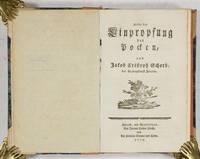
1779701151779. Zürich und Winterthur By Johann Caspar Füeßli und bei Heinrich Steiner und Comp. 1779 kl.8° 188 pp. 1 Blatt "Die wesentliche Druckfehler" Halblpergamenteinband d.Zt.; feines Expl. Sehr selten erste und einzige Ausgabe! "Scherb setzte sich vehement für die Impfung ein und gab eine umfangreiche Schrift heraus "Über die Einpfropfung der Pocken" Zürich und Winterthur 1779. Er beschreibt auch ausführlich die Herkunft des Impfverfahrens: "In Absicht auf die Art der Ansteckung sollen die Chinesen den schlafenden Kindern in Blatterneiter getränkte Meißalgen in die Nasenlöcher gesteckt htben. Bei den Türken pflegte man in einige Nadelstiche ganz frischen Eiter einzureiben. In Indostan wurde ein seidener Pfropffader vermittels einer Nadel zwischen Haut und Fleisch an dem Arm oder Fuß durchgezogen und einige Zeit lang dort gelassen . Die nach der neuern Methode einpfropfenden Ärzte pflegen nun allen Verband wegzulassen ganz frischen Pockeneiter wenn sie ihn haben können oder das Pulver von trockenem Pockenschorf in ein kleines Schnittchen einzureiben und wenn sie dasselbe etwas zugedrückt haben alles unbedeckt zu lassen . Ich habe bisher den Pfropffäden noch den Vorzug gegeben weil ich nicht die geringste Ungelegenheit bei denselben erfahren habe." Das Verfahren war etwa dreißig Jahre zuvor in Europa bekannt geworden und hatte großes Aufsehen erregt war aber bald in Vergessenheit geraten. Scherb impfte etwa tausend Kincer und ermutigte auch andere Ärzte dazu. Das an und für sich einfache Impfverfahren wurde dadurch etwas komplizierter wohl auch abschreckende weil man glaubte durch mehrfache Purgation und eine auf die Konstitution des Kindes abgestimmte Diät die Wirkung der Einpfropfung unterstützen zu müssen." Peter Kroha: Jakob Christoph Scherb - Pionier der Pockenimpfung. Thurgauer Jahrbuch 55 1980 pp.19-28 Jakob Christoph Scherb "geb. 1756 zu Bischofszell war Dr. med. und. Arzt daselbst bis zu seinem 1. März 1811 erfolgten Tode. Er beschäftigte sich viel mit der Pockenimpfung und veröffentlichte: "Ueber die Einpfropfung der Pocken" Zürich 1779 - "Kurze Anleitung zur Erhaltung und Wiederherstellung der Gesundheit" lb. 1784. Scherb bat sich besonders durch seine Propaganda für die Impfung und für die Lehre vom thierischen Magnetismus bekannt gemacht." Pagel / Hirsch-H. 5 1934 Siehe - Biogr. méd. VII pag. 138.-De chambre 3. Série VIT pag. 432. - Callisen XXIII pag. 418 unknown
17441307140027Chez J. Wetstein 1744-01-01. Hardcover. Very Good. 8vo. Bound in contemporary vellum. Nouvelle Edition corrigee augmentee. Title in red and black. 328 p. 16 fold out engraved plates. Clean unmarked pages. Fold out plates. "The book's six sections include an introduction to sensation touchtaste smell hearing and vision which constitutes the major portion of the text." Heirs of Hippocrates 851; Wellcome III 468; Blake 260. An important work in which Le Cat presents a theory of the propagation of light Chez J. Wetstein hardcover
1785307291785. Viennae Apud Rudolphum Graeffert 1785 8° 338 16 pp. Titerlkupfervignette Ledereinband d.Zt.; St. a.Tit. Rücken erneuert; feines Expl. Seltene Erstausgabe der frühen Schrift zu den Vergiftungen und deren Gegenmittel! Joseph Jacob von Plenck 1733-1807 Professor der Chirurgie Chemie und Botanik lehrte an der Wiener Josephs-Akademie. Er ist der Verfasser seiner Zeit sehr beliebter Kompendien über verschiedene medizinische Teilgebiete die sich durch übersichtliche und anregende Darstellung auszeichnen. "Plenck war eine hochbegabte Natur er vermochte sich rasch in jede Materie hineinzuarbeiten und dieselbe derartig zu beherrschen das sie klar übersichtlich und wohlgeordnet vortragen konnte." Puschmann Erst 30 Jahre nach der vorliegenden Abhandlung Plencks erschien 1815 in Paris das erste moderne Standartwerk der Toxikologie von M.J. Orfila. First Edition of Plenck's famous textbook on toxicology. Plenck was one of the last great medical writers to publish all of his principal works in Latin. Plenck provided the first classification of poisons based on origin: 1. Animal poisons. 2. Vegetable poisons. 3. Mineral poisons. 4. Poisonous vapors gases and dust. The popularity of his writings was such that they were soon translated into other modern languages. Wellcome IV p.402; Blake NLM 18th Century p.356 Selten. Nicht in der umfangreichen Plenck-Sammlung der Josephinischen Bibliothek zu Wien. unknown
172544238HB1725. Teil 2 von 4. Frankfurt a. M. J. F. Fleischer 1725. Kl.-8°. Doppelblattgr. Drucktitel 10 Bl. 1240 S. 24 Bl. Register. Späterer marmorierter Pappband mit goldgeprägtem Rückentitel auf farbigem Rückenschild leicht berieben. Titel verso mit blassem Namenszug von alter Hand. Gelegentlich schwach fleckig oder wasserrandig. Sonst in sehr schöner Erhaltung. Erste Ausgabe. - Blake 63 führt alle Teile einzeln; nicht bei Waller Wellcome und Hirsch/H. - Der zweite in sich abgeschlossene Teil des Thesaurus der erstmals von 1712 bis 1728 erschien. Jeder Band behandelt ein anderes Thema der vorliegende enthält die Chirurgie ferner Kapitel über Augenkrankheiten und über Zahnmedizin. - Johann Jacob Bräuner ging 1683 mit den Churfürstl. Sächs. Truppen nach Ungarn und hat im 'obgedachten Feld-Leben bey nahe 17. Jahr lang viel und mancherley Arten schwehrer und gefährlicher Blessuren und Operationen beygewohnet' Dedicatio. Seine von den 'Feldscheerern' erlernte Kunst vertiefte er 'durch Nachlesung guter Autoren.' Mit dem vorliegenden Werk legt er die Summe seiner Erfahrungen vor. unknown
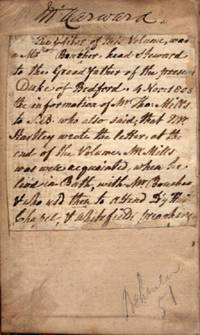
176926902London: Published by Gentleman retired from Business 1769. Good condition; Covers quite worn; Front board loose; Some marginal notes which appear to be from very early and some later pencil marginalia; Textblock rippling. pp. Four parts individually paginatted x blank title xii 134 92 120 50; Note on pastedown reads "The Editor of this Volume and Mr. Brother head of steward to the<br /> Grandfather of the present Duke of Bedford 4 Nov. 1805 the information of Mr. Sam Mills to H. S. who also said that Mr. Hartley wrote the latter part of the Volume. Mr. Mills was well acquainted when he lived in Bath with Mr. Cranham & who used then to attend by Mr. Chas. & Mr. Whitefield preachers." Names may not be exact; Oddly there appears to ba second pastedown with a cutout making this note visible; A similar thing has been done at the rear exposing a few notes from the text.; It does arrear to have been rebacked; Ownership signature on title page of Dr. Elmira Y. Howard a Nineteenth Century woman physician. Published by Gentleman retired from Business unknown
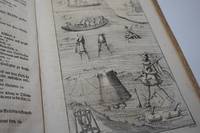
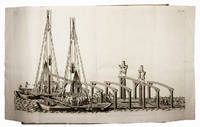
172645427Leipzig: Christoph Zunkel for the author 1726. Hardcover. Very Good. Theatrum Pontificiale Oder Schau-Platz der Brucken und Brucken-Baues : das ist: Eine deutliche Anweisung Wie man nicht nur auf mancherley Arth uber Graeben Baeche und Fluesse gelangen auch so gar in Wassers-Noth mit gewissen Machinen und besondern Habit sein Leben retten kan ferner nach aller Begebenheit und Zufaellen bequeme und bestaendige Bruecken so wohl hoeltzerne auf Jochen oder steinern Pfeilen als ohne dieselben mit Heng- und Spreng-Wercken ingleichen gantz steinerne nach der Kunst mit Vortheil und Bestand zu erbauen : dan nauch wie vielerlen Urthen von Fahren Fliegenden Sturm-Feld und vergleichen Bruden anqugeben; Alles mit vielen Srempeln und denen vornehmsten Bruchten in und ausser Deutschlandes absonderlich aber Mit einer vollkommenen Beschreibung derer Pontons vorgestellet und in 60. Kupffer-Platten erlautert. First edition of the 6th book in his Theatrum Machinarum Series. Folio 10" x 15.25". Published as an independent work however after his death became Vol. VI of his works 10 vols total. Paper backed boards unlettered spine. Speckled edges. Rubricated title. 16 153 pp. 5 60 numbered copper plates I-LVII with IIA XVIA XLA. Woodcut initials head- and tailpieces. Plate XXII depicts the London Bridge. First three plates are picturesque images of equipment needed for working in and on the river. Wear to extremities rubbing and foxing to boards. Small chip to fore edge of p. 76. Small perforations and some staining to gutter of plates LVI and LVII illustration not affected. Ink smudges to top margin of pp. 100-101 text not affected. Some offsetting from text throughout otherwise remarkably clean with little foxing. Bookplate of Mark Edward Andrews loosely inserted. Jacob Leupold 1674-1727 was a German physicist mathematician instrument maker and engineer who was credited as an early inventor of the air pump. Leupold started his work on the Theatrum Machinarum in 1720 which was the first systematic analysis of mechanical engineering. This volume deals with bridge construction and was the first book on bridge building published in Germany. The first major treatise on bridge building was by French engineer Hubert Gautier Traité des Ponts 1716 which was the standard book for bridge building for 70 years Britannica. Leupold builds on this work with a more comprehensive treatment including increased explanation of long-span timber bridges. Christoph Zunkel, for the author hardcover
1757A2DFNA01U79OAmsterdam: Petrus Schenk II & son vol. II: Petrus Schenk III 1757. Red half sheepskin blue-grey paper sides ca. 1800. Imperial folio 50 x 34 cm. With 2 title pages in red and black each with the same engraved allegorical device a double-page engraved dedication plate with 2 large cartouches showing the arms of the Beemster polder and of the 9 members of its water authority and 41 double-page and 7 larger folding engraved illustration plates the folding plates numbered as 2 to give plates I-XXV vol. I I-XXIV and I-VI vol. II. Further with 1 woodcut tailpiece and bands of cast fleurons. Second edition of both volumes of a remarkably detailed set of scale construction drawings plans sections elevations perspective views etc. including many detail drawings of individual parts of 18th-century Dutch waterworks with the accompanying letterpress descriptions and notes. It includes locks sluices bridges pumps pile drivers an ice-breaker an elaborate water-bailing mill and more. Most of the plates measure about 45 x 54 cm with the folding ones about 52 x 76 cm. At least most of the plates depict existing works and the text occasionally gives some historical information. The drawings are so detailed and give such a clear picture of how the mechanisms functioned that one could use them to reconstruct the works shown.A fine copy nearly untrimmed with only some false folds in the half-title and an occasional minor defect in the paper. Plate 23 in volume 1 has no number but it may have been trimmed off at the head. The inside front hinge has partly separated from the book-block but the binding is otherwise good. A fine copy of a magnificent display of Dutch hydraulic engineering.l Bierens de Haan 3818.5 & 4839.5 vol. II only with later ed. of vol. I; STCN 2 & 4 copies of the 2 volumes; not in Berlin Kat.; Roberts & Trent Bibl. Mechanica. Petrus Schenk [II] & son (vol. II: Petrus Schenk [III]), unknown
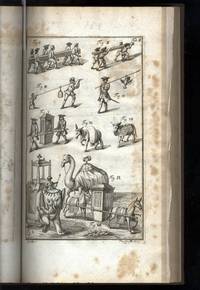
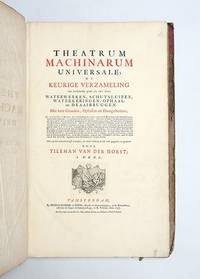
175751848Amsterdam Petrus Schenk 1757-74. Large folio. 55 x 345 cm. A large uncut copy in contemp. marbled boards spine gone and later backed with buckram original corners in leather a bit bumped. Stamps on foot of first title-page. Halftitel title-pages in red/black with engraved vignettes. 22 engraved leafs with dedications 14;28 pp. and 25 24 large double-page or triple-page folded engraved plates 6 additional plates only sometimes present. With a total of 55 plates. On thick heavy paper wide-margined and internally fine and clean. <br/><br/><em>Second edition. "Tileman van der Horst and Jan Schenk produced the Theatrum Machinarium Univesale one of the most celebrated works on the construction of all those elements so necessary to keeping life dry in Amsterdam the place of the book’s publication. It was perhaps the most important work then produced on dikes sluices dams weirs canals and swing-bridges the very elements of existence in Holland. Jan Schenck was the engraver of this work which may also be the most accurate and the most sumptuously illustrated book of its type in Holland in the 18th century - the technical aspects of the rendering was just superb." - Brunet V1082 - Graesse VII 258. </em> hardcover
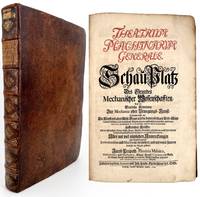
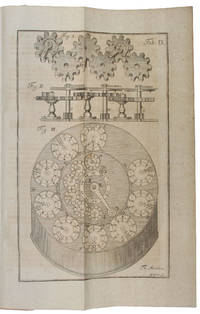
17241596Leipzig: Ch. Zunkel 1724 1724. First Edition. Very Good . Folio; 14 1/16 x 9 1/4 inches 360 x 234 mm; 11 240 pp. 2 II; title printed in back and red with 71 copperplate engraving by Krügner Böcklin Uhlich and others after Leupold. Most of the plates are folding and attached to a blank so that they may be consulted while reading the accompanying text. The plate at page 71 has a revolving volvelle. Contemporary speckled calf rebacked but retaining its original spine with gilt floral decorations in compartments and gilt title on tan calf label. Pages supple and evenly toned with scattered foxing some dampstain and occasional ink marks; first leaf with wormholes in the lower margin without loss of text or image plate LXVII with expertly supplemented corner tear; corners bumped and some scratches on boards; stamped on front endpaper illegible. All conditions consistent with the nature and age of the volume.<br /> Poggendorf I 1438; Ferguson p. 45-46. The Theatrum Machinarum Generale is the first volume of the 10-volume magnum opus of Jacob Leupold 1674 - 1727. It is extensively illustrated with copper plate engravings that fold out so that they can be viewed while consulting the text. What is particularly striking is the strong systematization that is lacking in most works of this period. The technical devices are always described in such a way that the isolated basic elements are first explained and then placed in their functional context. The illustrations show among other things draw wells water wheels pumping stations excavators pumps valves and fountains. Leupold was a German physicist mathematician instrument maker engineer and was director of mines to the Elector of Saxony. His seminal work Theatrum Machinarum Generale "The General Theory of Machines" was published in Leipzig between 1724 and 1739 with the last volumes issued after his death. The Theatrum was the first systematic analysis of mechanical engineering the most complete and the most extensively illustrated work on mechanical engineering hitherto published. It included ahead of its time a design for a high-pressure non-condensing steam engine the likes of which were not built until the early 19th century. Ch. Zunkel, 1724 unknown
177431672Leipzig: Breitkopf Und Härtel Lpz. . Very Good with no dust jacket. 1774. Hardcover. Machinery; German Language; Engravings; Folio 13" - 23" tal; 5 164 6 4 plts; 112 188 pages; Theatrum machinarium oder Schau-Platz der Heb-Zeuge : in welchem nicht nur angewiesen wird wie durch Menschen und Thiere gewaltige Lasten bequem fortzubringen sondern auch mancherley Arthen der vornehmsten gebrauchlichsten dauerhafftigsten und curieusesten wie auch simplesten Machinen Lasten von ungeheurer Grosse und Schwehre so wol von einem Orth zum andern nicht allein fuglich fortzuschaffen als zu erheben niederzulassen und mit Geschicklichkeit von einer Seite zur andern zu wenden vorgestellet werden. -------------16.5 x 10". Folio modern buckram. With 56 plates one foldout with lightly frayed edge. Light to moderate foxing. Complete with 1/2 title. BOUND WITH: Theatrum machinarum generale = Schau-Platz des Grundes mechanischer Wissenschafften das ist Deutliche Anleitung zur Mechanic oder Bewegungs-Kunst : darinnen nicht nur die funff einfachen Rust-Zeuge und die dabey nothigen Lehr-Satze deutlich erklaret . Sondern auch die so genannten ausserlichen Kraffte als der Menschen Thiere Lufft Feuer Wasser Gewichte und Federn nebst ihren hierzu dienlichen Eigenschafften und behorigen Machinen beschrieben werden_ _. Theatrum Machinarum Generale. Schau-Platz. Leipzig: Breitkopf 1774. Neu aufgelegt. Folio. With 71 plates. Light to moderate foxing. Markings on bottom edge. OCLC 258219387 - for 1st title locating 2 copies. 2nd title located no copies. A German study of hydraulics with pulleys levers and other such machines. 5 164 6 4 56 plts; 112 188 71plates. A total of 127 impressive and clear full page plates are in the two works combined. Firmly bound in cloth. . Breitkopf Und Härtel, Lpz. , hardcover
1737143528Amsterdam: Petrus Schenk 1757 part II dated 1737. Dutch waterways delineated in contemporary quarter sheep A handsome publication illustrating the technology behind the Dutch waterways their canals windmills bridges and boats. The first part was first issued in 1736 the second in 1737 here a secondary issue with a title page of 1757 the second part keeping a date of 1737 presented in the original trade binding of quarter sheep. 2 parts folio 555 x 347 mm. Titles printed in red and black with engraved printer's device double-page engraved dedication leaves in part I. Complete with all 47 double-page plates 20 in part I 27 in part II many folding with the consecutive numbering I-XXV in part I I-XXV and I-VI in part II but with some folding plates numbered as two. Contemporary red quarter sheep marbled paper sides. Rubbed worn around extremities but binding holding well and unrestored contents generally clean. A very good copy. Bierens de Haan 4836; Brunet IV 568 note; Graesse VII 258. unknown
17442401020031In Verlegung Hans Jacob Bischoffs Buchhaendlers Basel 1744 . Hardcover. Good. Thick folio. Rebound in handsome marbled paper boards. Red leatherette spine label. 8 1216 8 p. index 1200 illustrated woodcuts in text. First few pages conserved with japan paper margins worn some loss to bottom margins of allegorical engr. title. Hardcover. Good binding and cover. Clean unmarked pages. Refs: Nissen BBI 1311. Pritzel 10532. Heilmann Krauterbücher p. 343. <br> This is an oversized or heavy book which requires additional postage for international delivery outside the US. In Verlegung Hans Jacob Bischoffs, Buchhaendlers, Basel hardcover
172735955Leipzig: Christoph Zunkel and Bernhard Christoph Breitkopf 1727-1739. Folio. 372x239mm. Two parts in one volume. Contemporary vellum two cuts in spine modern slip case. Provenance: Book plates of Arnaud de Vitry and Andras Gedeon. Stamps to half-title and title-page from Stadtbibliothek Augsburg - sold as duplicate. First part: 14 200 4 pp. and 45 plates numbered I-XLIII plate III with volvelle. Second part: 12 100 94 pp. and 40 plates on 36 sheets numbered I-XL. All plates intact. An exceptionally fine copy. <br/><br/><em>The scarce first edition of the of the eighth and tenth volumes each volume being a complete work in itself of Leupold's magnificent ten-volume "Theatrum Machinarum" - one of the first encyclopedias of technology being the most complete and the most extensively illustrated work on mechanical engineering published hitherto. Complete sets of Leupold's Theatrum are virtually never found and Ferguson stated in his bibliography of technology that he had never seen a complete set. Each volume is complete in itself. The eighth volume is of particular interest in the history of computers as it deals mainly with calculating machines. This volume contains detailed descriptions of the calculating machines of Schott 1668 Grillet 1673 Leibniz 1674 Poleni 1709 and Leupold himself. The tenth volume is a supplement to the series published after Leupold's death by Ernst Scheffler. It deals with odometers gyrometers step counters and other devices for the measurement of distances. This volume is furthermore of importance because it contains the 90 page general index to the entire series. Hook & Norman: Origins of Cyberspace no. 6 volume 8 only.Honeyman Sale lot 1997 volume 7 and 8.Macclesfield Sale lot 1242 volume 8 only.Ferguson: Bibliography of the History of Technology pp.45-46.Wolf: A History of Science Technology & Philosophy in the 18th Century pp.657-8. </em> hardcover
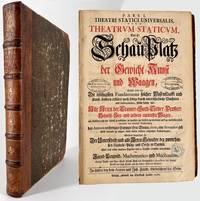
17261595Leipzig: Christoph Zunkel 1726. First Edition. Near fine. 4 parts in one volume; Folio13 1/3 x 8 7/8 inches 337 x 228 mm; half title title printed in back and red 57 copperplate engravings thus divided:<br /> Theatrum Staticum Universalis 1726 half title blank title blank dedication to Charles VI 3 Foreword 3 Contents 2 92 pp 19 plates; <br /> Theatrum Hydrostaticum pp. title blank 2 197 - 236 7 plates <br /> Theatrum Aërostaticum: title blank contents 2 241 - 308 23 plates<br /> Theatrum Horizontostaticum: title blank Contents 1 blank pp. 313 - 332 Index 3 Errata 8 plates. <br /> Contemporary half-binding in brown leather with speckled boards spine with gilt decorations in compartments and gilt title; contemporary leather binding with gilt decorations in compartments on spine and gilt title; edges red; corners bumped and some scratches on boards; binding tight and square with a surface split at title page. Pages clean and supple with very light and even toning. Stamps of the Royal Engineering Artillery Library of Hanover on half title and title pages.<br /> <br /> Poggendorf I 1438; Ferguson p. 45-46. The Theatrum Staticum Universalis is the 6th volume of the 10-volume magnum opus of Jacob Leupold 1674 - 1727. It is extensively illustrated with copper plate engravings that fold out so that they can be viewed while consulting the text. What is particularly striking is the strong systematization that is lacking in most works of this period. The technical devices are always described in such a way that the isolated basic elements are first explained and then placed in their functional context. The illustrations show among other things draw wells water wheels pumping stations excavators pumps valves and fountains.<br /> <br /> Leupold was a German physicist mathematician instrument maker engineer and was director of mines to the Elector of Saxony. His seminal work Theatrum Machinarum Generale "The General Theory of Machines" was published in Leipzig between 1724 and 1739 with the last volumes issued after his death. The Theatrum was the first systematic analysis of mechanical engineering the most complete and the most extensively illustrated work on mechanical engineering hitherto published. It included ahead of its time a design for a high-pressure non-condensing steam engine the likes of which were not built until the early 19th century. Christoph Zunkel unknown
1721Gen55191721. Addison Joseph Hardbacks the books are bound in library cloth there is some light wear the bindings are sound. The endpapers have a library plate. There is some light foxing throughout the texts are otherwise clean. hardcover
173565511London W. Lewis 1735. First Edition. Hardback. Full contemporary aniline calf professionally and sympathetically re-backed. Raised bands with a dark morocco gilt-blocked label. Board edges only very slightly rubbed. An exceptional copy - scans and additional bibliographic detail on request. ; 461 pages; Description: 8 p. L. 461 p. 1 l. 21 cm. Notes: Signatures: A-Z8; Aa-Gg8. Form/Genre: Tragedies. Subjects; Literature--English--18th Century. Literature--Early Works to 1800. London, W. Lewis hardcover
173744146London: Printed by J. Hughs for J. Brindley and C. Corbett 1737. First edition. Hardcover. g to vg. 12mo 6 1/2 x 4". Volume I: i-xxii iii-viii i-cxxxiv-135-384pp. The second pagination iii-viii is the table of contents of Volume II. Copper engraved frontispiece portrait of Rabelais and two fold-out copper engravings between pp. xvi-xvii and pp. 252-253; Volume II: 2 v-x 11-251pp. Fold-out copper engraved frontispiece full page engraving facing page 188 fold-out plate at page 217; Volume III: i-iv v-xx 21-22 3-367 5pp Index. Fold-out copper engravings facing pages 108 191 & 229 last plate missing its folded part; Volume IV: i-v vi-xc 1-281 1 blank 8 Contents 4pp Adverts. Fold-out engraved frontispiece fold-out plate facing page xxix and full copper plate facing page 49; Volume V: i-lxiv 1-267 5pp Contents. Fold-out plates facing pages 41 and154 and full-page plate facing page 149. On page 189 features the text of a poem titled "Bottle!" within the illustration of a bottle. Contemporary full spotted calf with gold lettering and ruling to spines. Title pages in red and black lettering. Decorative head- tailpieces and initials. Books housed in a later cloth covered slipcase.<br /> <br /> First English translation of Francis Rabelais' first critical edition by Jacob Le Duchat 1711 containing the followings works:<br /> <br /> - Volume 1: The First Book of Rabelais Treating of the Inestimable Life of the Great Gargantua<br /> - Volume 2: The Second Book of Rabelais Treating of the Heroic Deeds and Sayings Of the Good Pantagruel<br /> - Volume 3: The Third Book of Rabelais's Works<br /> - Volume 4: The Fourth Book of Pantagruel<br /> - Volume 5: The Fifth Book of Rabelais Treating of the Heroic Deeds and Sayings Of the Good Pantagruel<br /> <br /> This work is complete with its 15 copper plates including 11 fold-out with only one missing its folded part Vol. 3 page 229. A few plates are unsigned and the remaining bear the signatures of engravers Henry Roberts and Nathaniel Parr.<br /> <br /> Slipcase rubbed. Each spine partly reinforced by binder's tape not affecting gilt lettering. Armorial bookplate of contemporary previous owner on inside of each front cover George Manners with the armorial motto "Pour y Parvenir" So as to accomplish. Ex-Libris of last previous owner on inside of each back cover G. Eisenberg. Front hinge of first volume repaired. Sporadic age-toning and minor foxing throughout. Slipcase in overall good- to good bindings in good- interior in good to very good condition. Jacob Le Duchat 1658-1735 was a French literary scholar whose 1711 edition of the works of Rabelais was the first to include historical and critical commentary. "Le Duchat’s is the first of the critical editions. It takes account of differences in the texts and begins to point out the variations. His very numerous notes are remarkable and are still worthy of most serious consideration. He was the first to offer useful elucidations and these have been repeated after him and with good reason will continue to be so. Le Duchat’s commentary was translated into English by John Ozell for his 1737 edition of Gargantua and Pantagruel." For more information see: Rabelais François ca. 1483-1553 The Works of Francis Rabelais. Translated from the French by Sir Thomas Urquhart and Motteux; with explanatory notes by Duchat Ozell and Others. Volume I Books 1 2 and 3 to Chapter 13. Thomas Urquhart and Peter Motteux translators. London: H. G. Bohn 1851. Introduction. Printed by J. Hughs for J. Brindley and C. Corbett hardcover
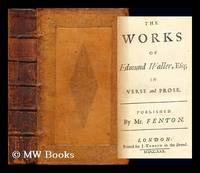
1730241452London : Printed for J. Tonson in the Strand 1730. First Edition. Hardcover. Bound in near fine aniline calf with decorated boards. Some wear and tear as with age. Remains well-preserved overall; tight bright clean and sharp-cornered. Physical description; 16 295 1 clxiii 1 p. 4 leaves of plates 1 folded : ill. port. ; 12 . Subjects; Waller Edmund 1606-1687. English poetry — Early modern 1500-1700. English drama — 17th century. English letters — Early modern 1500-1700. Speeches addresses etc. English. Great Britain — Court and courtiers — Early works to 1800. Genre; Illustrated. London : Printed for J. Tonson in the Strand hardcover
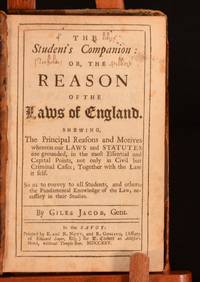
1725663P20Savoy: E. and R. Nutt 1725. First edition. Leather. Fair. 7.5" by 5". None. A very scarce first edition of Giles Jacob's first and his favourite of his law works laying out the basics of law practice for students. The first edition of this work. A very scarce work. This work is an octavo with the signatures running as A2 a4 B-P8 Q4. ESTC citation number T137466. With an index titled 'A Table of the Heads'. Collated from the ESTC complete. This work is a guide to studying law containing many practical tips reviews and indexes. The work is descriptive and practical and provides a very useful resource for students of law describing what the author believed to be the most fair and well constructed law system in the world. Written by Giles Jacob a British legal author. He considered this work to be his favourite. Though he was best known for his legal writings he also had a great interest in poetry and literature and published a farce called 'Love in a Wood or The Country Squire' and the satire 'The Rape of the Smock' and the more serious 'Tractatus de Hermaphroditus'. However his most famous work is 'A New Law Dictionary' published in 1729 which took Jacob nine years to write. Prior owner's ink inscription to the title page 'Ex Libris Nicholas Gibbard'. In the original calf binding. Externally sound. The front board and front endpaper are detached but present. A little loss to the head of the front and rear boards. Some rubbing to the boards. Discolouration to the spine. Lacking the spine label. Minor bumping to the head and tail of the spine and to the extremities. Rear hinge and joint are strained but remain firm. Front free endpaper is detached but present. Internally firmly bound. Pages are lighty age-toned and generally clean with the odd spot. Prior owner's ink inscription to the title page. The occasional ink annotation to the margins. Fair E. and R. Nutt hardcover
172531757AB1725. First Edition. London In the Savoy Printed by E. and R. Nutt and R. Gosling Assigns of Edward Sayer Esq. for T. Corbett at Addison's Head 1725. Small Octavo. 3 unnumbered 224 8 unnumbered pages. Original full leather. Binding in very porr condition but still in its original state. Needs repair. Interior very good with pre-owner's name in ink on titlepage: "RMA Mainish - 1825". Extremely scarce publication. Price reflects condition. Giles Jacob 1686 8 May 1744 was a British legal writer whose works include a well-received law dictionary that became the most popular and widespread law dictionary in the newly independent United States. Jacob was the leading legal writer of his era according to the Yale Law Library. The literary works of Giles Jacob did not fare as well as his legal ones and he feuded with the poet Alexander Pope both publicly and in literary form. Pope named Jacob as one of the dunces in his 1728 Dunciad referring to Jacob as "the blunderbuss of the law". Jacob is remembered well for his legal writing though not so much for his poetry and plays. Giles was born in Romsey Hampshire and was baptized on 22 November 1686. Among eight children Giles was the only son of Henry and Susannah Jacob. Henry Jacob was a maltster who lived until 1735. Giles Jacob's legal training included employment by Thomas Freke and then as a secretary to Sir William Blathwayt. Working for Blathwayt he engaged in litigation and dispensation probably in manorial courts. Jacob's first book The Compleat Court-Keeper 1713 gives detailed and practical instructions for how to administer estate matters. He combined this with a chronological summary of statute law and the combination was financially successful. Jacob always had an interest in contemporary poetry and the literary life and in 1714 he wrote a farce called Love in a Wood or The Country Squire. This play was never produced. He persisted however and in 1717 he wrote a satire of Alexander Pope's The Rape of the Lock in the form of The Rape of the Smock. The poem was low and bawdy and the next year he wrote a serious work titled Tractatus de hermaphroditis about the legal status of intersex people published by Edmund Curll in 1718 along with the first English-language publication of Ioannes Henricus Meibomius's A treatise of the use of flogging in venereal affairs. Title page from an 1811 edition of Jacob's The New Law Dictionary. In 1719 two works appeared by Jacob both very successful. The first was Lex constitutionis which was a thoroughly researched compendium of statute law common law and criminal law schematized according to which powers of the executive branch of the government were involved. While the work's fame and usefulness were surpassed in a few years Jacob's book was a well regarded analysis. The same year he produced the first volume of the Poetical Register with a second volume in 1720. This work provided biographies of contemporary authors as well as earlier ones. According to the literary editor Stephen Jones: He is generally accurate and faithful and affords much information to those who have occasion to consult him. It cannot be denied that he possessed very small abilities; but he was fully equal to a task where plodding industry and not genius must be deemed the essential qualification. In the Poetical Register Jacob criticized the play Three Hours After Marriage 1717 which had been written by John Gay with anonymous assistance from John Arbuthnot and Alexander Pope. Jacob wrote that its scenes "trespassed on Female Modesty". He subsequently criticized that play for "obscenity and false Pretence". Jacob had admired Pope had been on good terms with him and had submitted the biographical entry of Pope in the Poetical Register to Pope himself for correction. Jacob likely did not realize that Three Hours After Marriage had been anonymously co-authored by Pope. In The Dunciad of 1728 Pope pounced: Jacob the scourge of grammar mark with awe Nor less revere him blunderbuss of law. Pope explained Jacob's offense as follows: "he very grossly and unprovoked abused in that book the Poetical Register the authors friend Mr. Gay". The play Three Hours After Marriage was panned by most critics as obscene and literary historian Thomas Lounsbury has explained that no one criticized the play "without incurring from Pope an enmity that never died out". In 1725 Jacob wrote The Student's Companion and regarded it as his favorite of the books he had written. It was a guide to studying law with practical tips reviews and indexes. In 1729 his most famous work nine years in the making appeared: A New Law Dictionary. It combined a dictionary of legal practice with an abridgment of statute law and it reached its fifth edition by the time of Jacob's death. As late as 1807 "Jacob's Law Dictionary" was still a very profitable copyright. His last work was Every Man his Own Lawyer which outsold even the law dictionary. It was a self-help book for average citizens who might be involved in litigation. Jacob's legal writings were of a practical and descriptive sort often compared unfavorably to the analytic and theoretical treatises by authors like William Blackstone. But according to historian Julia Rudolph authors like Jacob had a different purpose in that they "were dealing with the problem of knowledge management or 'information overload' and in response to this problem the learning of the law was systematized alphabetized and organized." Jacob's most successful non-legal writing was of a similarly practical and descriptive sort. Jacob married Jane Dexter in 1733 and they had at least one daughter also named Jane.4 He and his family moved to Staines Middlesex where he died on 8 May 1744. Wikipedia hardcover