496 résultats
1863RLINLET00efH. H. Lloyd 1863. Fair. Lincoln Abraham. Letters of President Lincoln on Questions of National Policy. Pamphlet. New York: H. H. Lloyd 1863. 22pp. 12mo. Pink wraps. Book condition: Fair with detached rear cover faded and stained front one-inch loss from head and two-inch closed tear in front. Pages have a few faint stains not affecting text. Contains letters to General McClellan Horace Greeley Fernando Wood the Albany Committee Governor Seymour and the Springfield Meeting. Scarce. H. H. Lloyd paperback
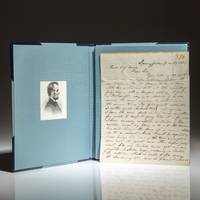
185316994Springfield Ill: Handwritten Letter 1853. ALS. Cloth. Very good. A two-page handwritten letter from Abraham Lincoln to fellow attorney Thomas J. Turner of Freeport Illinois addressing their future legal strategy since ".the Judge has already decided." The letter is dated June 27 1853 and is self-addressed. Octavo 4pp. Previously folded glue remnant along top edge. Several folds of the letter are weakened some partially separated. Small paper loss at intersecting fold with archival tissue repair. The letter is addressed in Lincoln's hand with "Springfield" and "Paid 3" stamped on cover. Housed in custom folding folio quarter blue morocco blue cloth title in gilt on the spine illustration of Lincoln on the front pastedown. This letter concerns the case of Kemper v. Adams & Bovey a land dispute in Freeport Illinois. Lincoln was retained by Adams and Bovey who after a series of losses and appeals prevailed in March 1858 by appealing to U.S. Circuit Court of Northern Illinois. Full letter reads: "Springfield June 27. 1853. / Hon. T. J. Turner: / Dear Sir: Your letter of the 20th. reached me day-before yesterday. I had the day before written to Adams to be on hand with his witnesses- but at the request of Judge Logan who is Kemper's attorney I put in a Post-script saying to Adams if he was agreed the cause should be continued over the summer term. On subsequent reflection I rather wish Adams may not agree. I have the case fresh in my mind and therefore wish to keep it going till it is finished. I have already drafted a Bill of Exceptions and my plan is to put the common lawsuit through the forms of a second trial up to a verdict which must be against us under Judge D's view of the law except & save all the points and then before judgment file our Bill and get an injunction. I shall begin preparing a Bill this afternoon which I which I wish to file during the evening term; and I believe I will do this Mr Adams must come down to swear to the Bill. In no event can we be ready for proof in the chancery suit at this time so that we will need no other witness than the one that was here last summer. I wrote Mr Adams about a Register's certificate & if he can find one or two missing tax receipts let him bring them. I should be glad to see you & shake you by the hand; but as there is no contested jury question I scarcely think you need be at the trouble & expense of coming. All the law questions which can arise at this term the Judge has already decided. Very truly yours A. Lincoln." Provenance: Originally the property of Claribel Mitchell of Freeport Illinois a principal at the Lincoln School until 1916. The letter was sold at auction by the American Art Association on January 30 1923 to Mr. George A. Ball of Muncie Indiana the namesake of the Ball Mason Jar Company. This letter was published in The Collected Works of Abraham Lincoln by Roy Basler New Brunswick NJ: Rutgers University Press 1953 2:199-200. Handwritten Letter unknown
18661007628vo original dark brown pebbled and blindstamped cloth front cover decoratively lettered in gilt steel engraved frontispiece portrait of Lincoln 69 pp. Binding with some edge wear and chipping to spine missing about two inches of lower spine hinges a little weak but still firm ends and corners bumped a little soiling pencil signature of previous owner; else very good. George Bancroft who at one time was Secretary of the Navy deliverd this memorial address to both houses of Congress on February 12 1866. This pamphlet was also published in New York but that issue lacked the portrait. Sabin 3132 Government Printing Office hardcover
186349929Washington: Government Printing Office 1863. 1863. First edition. First Edition. Disbound. 41pp. House of Representatives. 37th Congress 3rd Session. Ex. Doc. No. 68. "Indian Tribes In The Northwest." First detailed government report of the Sioux Uprising of 1862. First and last pages tanned else Fine. [Government Printing Office], 1863. unknown
18611391Washington: Government Printing Office 1861. 111 pp. Good condition and removed from a bound volume. Lincoln's speech of July 4 1861. Between the fall of Fort Sumter and July of 1861 President Lincoln Made decisions in response to secession of the southern states without seeking Congressional approval. Lincoln asks Congress to authorize his actions and explains why there is a need to fight the Civil War. This pamphlet is surprising scarce. Government Printing Office unknown
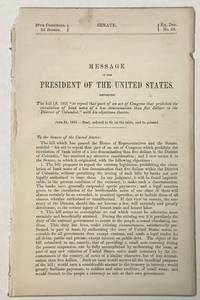
186236662Washington 1862. 37th Cong. 2d Sess. SED65. Broadsheet octavo. 2pp. Disbound else Very Good.<br /> <br /> Lincoln refuses to mess with the currency believing that the proposed legislation would result in "the serious injury of honest trade and honest labor."<br /> Not in Monaghan. unknown
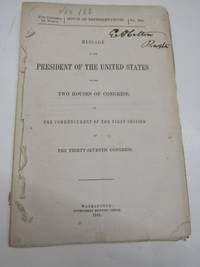
186120908Washington D. C.: Gpo. Good. 1861. First Edition. Hardcover. In the fragile original black cloth. Covers are worn and chipped at the edges with the bottom 1/3 of the spine missing. Contents are very good with some bumping to the lower back corner. ; 9"; 839 pages . Gpo hardcover
1865851311865. LINCOLN Abraham. ORDER OF SERVICES FOR THE MEETING OF THE PEOPLE OF CONCORD AT THE HOUR OF THE FUNERAL OF PRESIDENT LINCOLN APRIL 19 1865. n.p. n.p. ca. 1865. 8 3/8 x 10 3/4 inches pale paper printed in black folded to make a four panel program of services. Annotated in pencil with a quote by Judge Ebenezer Rockwood Hoar and some other notes. The program of services: I. Voluntary on the Organ. II. Chant. III. Prayer by the Rev. G. Reynolds. IV. Selections from Scriptures. V. Hymn. VI. Addresses by R. W. Emerson and others. VII. Concluding Prayer by Rev. Thomas Rattray. VIII. Hymn. IX. Benediction. unknown
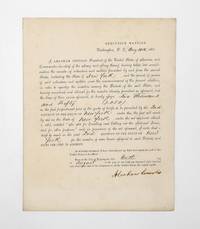
1863373004Washington D.C. 1863. 1p. plus integral blank. 4to 9-3/4x7-3/4 inches. Minor smudging to signature. Housed in a blue full morocco box. 1p. plus integral blank. 4to 9-3/4x7-3/4 inches. The first military draft in U.S. history was passed by Congress in early 1863 and signed into law by President Abraham Lincoln in March of that year. The Enrollment Act or Civil War Military Draft Act required the enrollment of every male citizen between twenty and forty-five years of age as well as those immigrants who had filed for citizenship unless exempted by the Act. It set enlistment quotas for each state and required states to draft men if they did not meet their enlistment quotas through volunteers. It also included the policies of substitution furnishing a suitable substitute to take the draftee's place and commutation paying $300 to avoid the draft which led to substantial resentment among working-class citizens not wealthy enough to pay their way out of service.<br /> <br /> Only July 13 during the draft lottery in New York City a riot broke out leading to three days of violence and destruction. Although initially focused on the draft the protests subsequently devolved into vicious race riots. The rioters were largely white and in the wake of the Emancipation Proclamation claimed to fear that freed enslaved men would migrate to the city and take their jobs. Since Blacks were exempted from the draft the Draft Act only heightened fears of Black migration to the city. The violence against the Black community in New York as well as against abolitionists was substantial: the death toll reached upwards of 120 and numerous homes and churches were burned. Since most of the New York State Militia was fighting with Union troops at Gettysburg the New York Police Department was the only force on hand to deal with the rioters initially and they were badly outnumbered and underequipped. By day four of the riots five New York Militia units had reached the city along with the 26th Michigan Volunteers and the 27th Indiana Volunteers and were able to start restoring order. Eventually there were several thousand troops in the city and they brutally put down the remaining rioters.<br /> <br /> Almost immediately calls came to suspend the draft in New York most notably by Horatio Seymour the Governor of New York who wrote to Lincoln several times in the weeks which followed arguing against the constitutionality of the draft and the inequity in its application. <br /> <br /> Lincoln replied on August 7 refusing to acquiesce to Seymour's demands writing: "I shall direct the draft to proceed in all the Districts drawing however at first from each of the four Districts towit: the second fourth sixth and eighth . I do not object to abide a decision of the United States Supreme Court or of the judges thereof on the constitutionality of the draft law. In fact I should be willing to facilitate the obtaining of it; but I can not consent to lose the time while it is being obtained. We are contending with an enemy who as I understand drives every able bodied man he can reach into his ranks very much as a butcher drives bullocks into a slaughter-pen. No time is wasted no argument is used. This produces an army which will soon turn upon our now victorious soldiers already in the field if they shall not be sustained by recruits as they should be. It produces an army with a rapidity not to be matched on our side if we first waste time to re-experiment with the volunteer system already deemed by congress and palpably in fact so far exhausted as to be inadequate; and then more time to obtain a court decision as to whether a law is constitutional which requires a part of those not now in the service to go to the aid of those who are already in it; and still more time to determine with absolute certainty that we get those who are to go in the precisely legal proportion to those who are not to go. My purpose is to be in my action just and constitutional; and yet practical in performing the important duty with which I am charged of maintaining the unity and the free principles of our common country" Collected Works of Abraham Lincoln Vol. 6.<br /> <br /> Three days later on August 10 Lincoln signed the present order to resume the draft in the Second Congressional district of New York the western portion of Long Island primarily Nassau County and part of Queens County. This is the first draft order following his refusal to Governor Seymour to suspend the draft in the New York City area.<br /> <br /> In full manuscript accomplishments in brackets: "I Abraham Lincoln President of the United States of America and Commander-in-chief of the Army and Navy thereof having taken into consideration the number of volunteers and militia furnished by and from the several States including the State New York and the period of service of said volunteers and militia since the commencement of the present rebellion in order to equalize the numbers among the Districts of the said States and having considered and allowed for the number already furnished as aforesaid and the time of their service aforesaid do hereby assign Two Thousand and Fifty 2050 as the first proportional part of the quota of troops to be furnished by the 2ndDistrict of the State of New York under this the first call made by me on the State of New York under the act approved March 3 1863 entitled 'An Act for Enrolling and Calling our the National Forces and for other purposes' and in pursuance of the act aforesaid I order that a draft be made in the said 2nd District of the State of New York for the number of men herein assigned to said District."<br /> <br /> On the same day as this order Lincoln would meet with Frederick Douglass at the White House to discuss his traveling through the south to recruit former slaves to fight for the Union. An extraordinary Lincoln document at a turning point moment in the Civil War. unknown
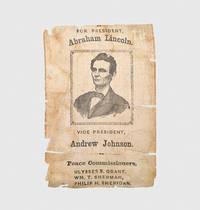
18641922921864. Peace through strength A rare ribbon from Lincoln's 1864 campaign to retain the Presidency during the Civil War where he faced down the Democrats who were campaigning to sue for peace - the ribbon satirically names the military generals Grant Sherman and Sheridan as Lincoln's own "Peace Commissioners" underneath a profile of a beardless Lincoln. Silk ribbon printed in black 142 x 96 mm. Trimmed at head losing the "Union forever" notice at the head found on other examples splits and wear nonetheless a sound example of a very fragile survival. unknown
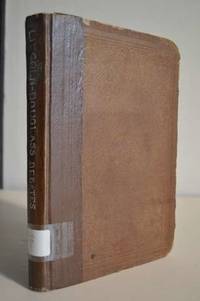
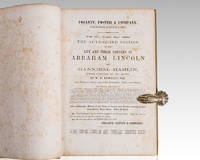
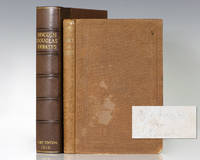
1860SKU1039674Follett Foster and Company 1860. First Edition. hardcover. Acceptable. 0x0x0. This Book is an Ex-Library Book with several library markings. Political debates between Hon. Abraham Lincoln and Hon. Stephen A. Douglas in the celebrated campaign of 1858 in Illinois; including the preceding speeches of each at Chicago Springfield etc.; also the two great speeches of Mr. Lincoln in Ohio in 1859 as carefully prepared by the reporter of each party and published at the times of their delivery. Follett Foster and Company; Columbus 1860. Hardcover. First Edition First Issue. First issue with no advertisements no rule above the publishers imprint on the copyright page and with numeral 2 at the bottom of page 17. An Acceptable brown cloth binding with blind stamped ornate design on boards re-enforced spine with handwritten white ink title and library locations sticker on spine binding shaky starting hinges with partially cracked rear hinge heavy wear to board corners with some loss some scuffing and discoloration to boards abrasions along board margins specifically to rear bit pulpy text block with age toning and scattered foxing throughout rubbing to board and spine edges previous owner handwritten ink info on front free endpaper few small dog-eared pages faint moisture stain on fore-edge and slightly on page margins several library markings include: library bookplate library due date card pocket embossed library stamp ink library stamps few ink and pencil notes barcode sticker without Dust wrapper. 8vooctavo or approx. 6 x 9 inches. 268pp. We pack securely and ship daily with delivery confirmation on every book. The picture on the listing page is of the actual book for sale. Additional Scans are available for any item please inquire. Follett, Foster and Company hardcover
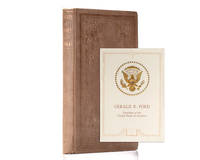
1860149362Columbus: Follett Foster and Company 1860. First edition early issue of the most famous debates in American history which cemented Lincoln as a national presidential candidate. Octavo original cloth stamped in blind. Ownership bookplate of President Gerald R. Ford to the front pastedown. President Gerald R. Ford and Abraham Lincoln occupy distinct yet symbolically linked places in American presidential history united by their encounters with political violence and national division. Abraham Lincoln the 16th president led the United States through the Civil War and became the first American president to be assassinated when he was shot by John Wilkes Booth at Ford’s Theatre in 1865—a moment that transformed him into a martyr for the Union and a symbol of democratic perseverance. Over a century later Gerald R. Ford the 38th president survived two assassination attempts within seventeen days in 1975 both carried out by women—Lynette “Squeaky†Fromme and Sara Jane Moore—amid the turbulence of the post-Watergate era. While Ford’s brush with assassination did not result in tragedy it echoed the lingering volatility of American political life that had claimed Lincoln’s. In near fine condition. An exceptional example with even better provenance. Running as a little-known candidate for the Illinois senatorship in 1858 Lincoln challenged incumbent and Democratic leader Stephen Douglas to a series of debates. The result was a memorable chain of lively arguments in front of cheering crowds. Though Lincoln lost the senatorial race “he began collecting a scrapbook of his best speeches particularly those from the just-concluded campaign against Douglas for possible inclusion in a book. Assiduously pasting newspaper accounts of the debates into the scrapbook Lincoln cast about for a publisher. Initial efforts failed mainly because Lincoln wanted the book printed in Springfield which had no local publishing or printing facilities. Eventually however the Columbus Ohio firm of Follett Foster & Company showed interest and he began preparing the first edition… Somewhat surprisingly for an attorney Lincoln did not seek Douglas’ permission to publish a book of their combined speeches although Douglas was later given the last-minute opportunity—he declined—to make corrections to his own remarks†Morris 121. Follett, Foster and Company hardcover
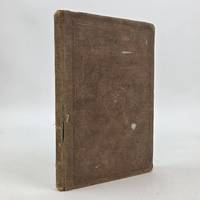
18601408600Columbus: Follett Foster and Company 1860. First Edition Second Impression. Hardcover. Octavo 2-5 4 268 pages. In Good condition. In publisher's full brown cloth binding with blind stamped decoration to covers. Sunning and heavy wear to spine with gilt titling mostly worn away. Boards show significant scuffing and soiling with rubbing and exposed board along all edges and at fore corners. Splitting to joints hinges in tact. Chipping at head and tail of spine lacking end bands. Text block is moderately worn and soiled along edges. Age toning light foxing and faint tidemarks throughout. Pencil inscriptions on front endpapers. Tear in front flyleaf near gutter is patched with tape. Shelved in Room F. 1408600. Special Collections. Follett, Foster and Company hardcover
1860147733Columbus: Follett Foster and Company 1860. First edition early issue of the most famous debates in American history which cemented Lincoln as a national presidential candidate. Octavo original cloth stamped in blind with rule above the publisher's imprint on the copyright page. In good condition darkening to the edges toning throughout some damp staining inscription to the rear pastedown. Running as a little-known candidate for the Illinois senatorship in 1858 Lincoln challenged incumbent and Democratic leader Stephen Douglas to a series of debates. The result was a memorable chain of lively arguments in front of cheering crowds. Though Lincoln lost the senatorial race “he began collecting a scrapbook of his best speeches particularly those from the just-concluded campaign against Douglas for possible inclusion in a book. Assiduously pasting newspaper accounts of the debates into the scrapbook Lincoln cast about for a publisher. Initial efforts failed mainly because Lincoln wanted the book printed in Springfield which had no local publishing or printing facilities. Eventually however the Columbus Ohio firm of Follett Foster & Company showed interest and he began preparing the first edition… Somewhat surprisingly for an attorney Lincoln did not seek Douglas’ permission to publish a book of their combined speeches although Douglas was later given the last-minute opportunity—he declined—to make corrections to his own remarks†Morris 121. Follett, Foster and Company hardcover
1860138634Columbus: Follett Foster and Company 1860. First edition first issue of the most famous debates in American history which cemented Lincoln as a national presidential candidate; inscribed by Lincoln in pencil to close friend Martin S. Morris and accompanied by the table from the Morris household that Lincoln signed the book on. Octavo original cloth stamped in blind. First issue with no advertisements no rule above the publisher’s imprint on the copyright page and with numeral 2 at the bottom of page 17. Association copy inscribed by Abraham Lincoln in pencil on the front free endpaper "M. S. Morris Esq A. Lincoln." The recipient Martin S. Morris was was a long-time political supporter and friend of Abraham Lincoln from Menard County Illinois. In March 1843 Lincoln wrote to Morris “It is truly gratifying to me to learn that while the people of Sangamon have cast me off my friends of Menard who have known me longest and best of any still retain their confidence in me.†Morris was selected as one of the delegates from Menard County to attend the Whig convention in Pekin in May 1843 but was detained by an illness and Francis Regnier attended in his place. The convention selected John J. Hardin rather than Lincoln as the Whig candidate for Congress from that district. In June 1852 Morris's close friend Whig Congressman and later Illinois governor Richard Yates wrote to him from Washington regarding the 1852 presidential election. The Democratic National Convention was then underway in Baltimore and after 32 ballots by the convention Yates believed the chances of receiving the nomination were against U.S. Senator Stephen A. Douglas of Illinois unless “his almost never failing good luck may avail him.†Ultimately on the 49th ballot the Convention nominated Franklin Pierce who had received no votes until the 35th ballot. Laid in is Yates' letter to Morris which reads in part “Washington June 4 1852 Dear Morris I thank you kindly. The Democratic Convention is now in session in Baltimore. The 32nd ballot has been had and no nomination. Douglass does not appear to have as much strength as anticipated and if we were to judge from present indications the chances are against him. How far his almost never failing good luck may avail him remains to be seen. The contest between Fillmore & Scott it is now believed will be very close. Some of the knowing ones who have not much to do but make calculations say that the vote of Illinois will decide the question. We do not know how the Illinois delegation stands but we suppose nearly equal for Scott and for Fillmore. Fillmore and his friends will if necessary to defeat Gen'l Scott cast their vote for Mr. Webster. My opinion and it is only an opinion is that Gen'l Scott will receive the nomination. Of one thing I feel pretty sure that either Scott or Fillmore will be supported most cheerfully by the Whigs and what is better the Whigs here and throughout the Union have an abiding confidence that they will again gloriously triumph in November. Such was not the case at the beginning of the session. There was more or less of despondency then but the skies are bright ahead now and be the result what it may the Whigs will march up to the work with unfaltering purpose and in the confident hope of victory. Your friend Richard Yates." The Whig National Convention met a few weeks later also in Baltimore and the contest remained close between Winfield Scott and incumbent president Millard Fillmore with Daniel Webster running a distant third until Scott finally received the nomination on the 53rd ballot. In his letter to Morris Yates was confident of a Whig victory in November but Pierce went on to defeat Scott with 51 percent of the vote to Scott’s 44 percent and an overwhelming 254-to-42 victory in the Electoral College. In May 1858 Morris wrote to Lincoln that he and other Republicans in Menard County “are up and doing†and “though we are in a minority we nevertheless intend to give them the Democrats the best fight we can.†Four months later he again wrote to “Friend Lincolnâ€: "If there is any reliance to be placed on the papers which I read you are certainly making a very successful electioneering tour through the state and whether you are elected to the senate or not you certainly have reason to congratulate yourself and feel proud of the manifestations of confidence every where shown you by the people I have said and believed ever since Douglass repealed the MO. Com. That you would be his successor the first chance the people had to vote in matter that was a most rascally thing and I believe would and know it ought to politically damn him and all who had anything to do with it at least in the north. But my object is not to write a dissertation on politicks knowing well that I could say nothing But which you already know But merely to inform you by way of adding to the encouragement which I believe you are every where receiving the good news that you may calculate with a very great degree of certainty on a vote from Menard & Cass. We are glad that you have made an appointment to speak here and will endeavor to get you a large crowd." Contrary to Morris’s assurances in the race for state representative from Cass and Menard Democrat William Engle defeated Republican James W. Judy for a seat in the legislature where he dutifully voted for Stephen A. Douglas for the U.S. Senate. In September 1859 Morris was a delegate from Menard County to the Republican Congressional Convention for the Sixth Congressional District in Springfield. At the Convention Morris was elected to the District Central Committee which consisted of one delegate from each county. Among the resolutions passed by the Convention were “Resolved That the Territories of the United States are the common property of all the free white citizens of the whole Union but that the institution of Slavery has no right or heritage therein.but at the same time we strenuously oppose every attempt to interfere with slavery in the States where it now exists.†and “Resolved That Freedom is universal and Slavery sectional and cannot exist where it is not authorized by virtue of special local legislation; and that the Government of the United States in the exercise of its powers whether executive legislative or judicial is bound to adhere in substance and in form to the generous and noble spirit of these important maxims.†6 Less than a month later John Brown did “interfere with slavery in the States where it now exists†by seizing the federal arsenal in Harpers Ferry Virginia. In 1862 Morris wrote to President Lincoln on behalf of his friend Henry Clay Denison who was serving as a commissary clerk in the 14th Illinois Infantry regiment. Denison wanted a position as assistant quartermaster or assistant commissary in the army. Morris stressed that Denison was “a descendant of a good Whig family of the good old Whig state of Vermont his native place being Woodstock. He is also as good a Republican as lives and if he didn’t do as much he tried as hard as any one else to bring about your nomination &election.†President Lincoln dutifully forwarded the letter to the War Department. With Yates' June 1852 letter to Morris laid in and with the ownership inscription of Morris' great granddaughter beneath Lincoln's inscription “Property of Pauline Madgett Welton Lincoln’s signature above." Provenance: kept in the Morris family for over six generations Martin S. Morris 1816-1884 husband of Elizabeth Waggoner Morris 1820-1901; Their daughter Jane Eliza Morris Nance 1857-1927 wife of Benjamin Franklin Nance 1853-1914; Their daughter Pauline E. Nance Madgett 1879-1971 wife of William P. Madgett 1875-1951; Their daughter Pauline Helen Madgett Welton 1908-1978 wife of Claude R. Welton 1908-1978; Their son William R. Welton 1939-2014; Welton family. Ownership inscription of Pauline Helen Madgett Welton. In very good condition. Housed in a custom half morocco clamshell box. Exceptionally rare signed by Lincoln with no other signed copies traced at auction. Accompanied by the original pedestal table from the Morris household that according to generations of family lore Lincoln sat at with Morris signed the book and ate apples as well as an oil portrait of Martin S. Morris which hung by the table. With a letter of provenance signed by a descendant of Pauline Helen Madgett Welton attesting to the provenance of the book table and a portrait. According to Rae Katherine Eighmey Abraham Lincoln in the Kitchen: A Culinary View 2014 fellow lawyer Charles S. Zane recalled Lincoln at a circuit town inn: "There was a 'large basket of apples in the sitting room and we were invited to help ourselves. Mr. Lincoln was a great eater of apples. He said to me once that a man should eat and drink only that which is conducive to his own health. "Apples" he said "agree with me."'" p. 131 citing Zane's article in the Journal of the Illinois State Historical Society in 1921. According to Eighmey Herndon wrote of Lincoln: "He loved best the vegetable world generally.and especially did he love apples. Running as a little-known candidate for the Illinois senatorship in 1858 Lincoln challenged incumbent and Democratic leader Stephen Douglas to a series of debates. The result was a memorable chain of lively arguments in front of cheering crowds. Though Lincoln lost the senatorial race “he began collecting a scrapbook of his best speeches particularly those from the just-concluded campaign against Douglas for possible inclusion in a book. Assiduously pasting newspaper accounts of the debates into the scrapbook Lincoln cast about for a publisher. Initial efforts failed mainly because Lincoln wanted the book printed in Springfield which had no local publishing or printing facilities. Eventually however the Columbus Ohio firm of Follett Foster & Company showed interest and he began preparing the first edition… Somewhat surprisingly for an attorney Lincoln did not seek Douglas’ permission to publish a book of their combined speeches although Douglas was later given the last-minute opportunity—he declined—to make corrections to his own remarks†Morris 121. Follett, Foster and Company hardcover
1860022564Columbus: Follett Foster. Original brown stamped cloth. First Edition Later Issue. Two leaves of Follett ads rule over publishers imprint on copyright page numeral 2 at bottom of page 13. Debates about whether slavery should be permitted in new states. The publicity from these debates made Lincoln a national figure. Previous owners names in pencil and ink foxing Good. . Good. Hardcover. 1st Edition. 1860. Follett, Foster hardcover
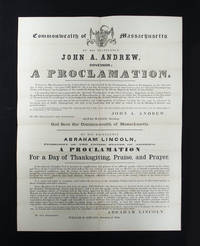
186368373Massachusetts 1863. LINCOLN Abraham. Massachusetts: 1863.<br> <br> Letterpress broadside 27 3/4 x 20 in.; 708 x 508 mm on paper incorporating several display and ornamental fonts as well as the seal of Massachusetts docketed on the verso "Post Office Hanover.' Some light offsetting. Nearly invisible professional repairs to the verso along the folds. A very nice example of this rare and important broadside<br> <br> This original broadside produced in Massachusetts is formatted in two halves with the top half being Governor John A. Andrew's announcement of Lincoln's Proclamation endorsing the observation of this day of Thanksgiving in his state dated July 27 1863 and the bottom half being Lincoln's actual proclamation dated July 15th 1863 and announcing that August 6th shall be set aside as a National Day of Thanksgiving. Though the exact printing date is unknown it can be assumed that it was printed within the week following July 27th.<br> <br> Thanksgiving was observed as a Holiday since colonial times and each state would set aside its own day for celebration. This proclamation was the first time that the Holiday would be celebrated on a set day nation wide making it the first observed Thanksgiving as a National Holiday.<br> <br> Though later the same year on October 3rd 1863 Lincoln made a second proclamation again announcing Thanksgiving as a Holiday but this time in November a date closer to the time most states had been celebrating it in the past. This earlier proclamation is actually the first time Thanksgiving was given national status but because the second proclamation was widely accepted the knowledge of this earlier one has been somewhat forgotten making this piece a rare and important document in the annals of American history.<br> <br> Though this broadside is for the State of Massachusetts no other broadsides from any other states that announce this date are known to exist and only three other copies of this rare document are located through OCLC.<br> <br> HBS 68373.<br> <br> $8500. Massachusetts unknown
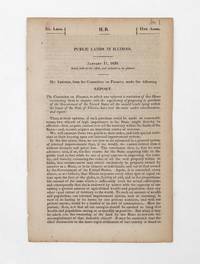
1839373003Vandalia Illinois 1839. First edition. 3 1pp. 8vo. Disbound. Housed in a morocco backed slipcase. First edition. 3 1pp. 8vo. Abraham Lincoln had yet to join the bar when he began his first stint in politics in the Illinois legislature in 1834 serving four consecutive terms in the Assembly through 1841. "This rare printing has the prestige of being the first occurrence of Lincoln's name as the sole author of a work. As a Whig lawmaker he was devoted to his party's program of public works through government financing. After the Panic of 18376 the spending he had advocated for had resulted in massive state debts. To relieve the budgetary burden Lincoln proposed that Illinois acquire land within its borders which the federal government still possessed and then sell the land at a fourfold profit to settlers and speculators resulting in both increased revenues and self-determined land ownership" Boroujerdi. Very rarethoma. Monaghan 1; Boroujerdi et. al. Abraham Lincoln: His Life in Print p. 29 unknown
1865mon0003023175J.E. Tilton and Company 1865-01-01. Hardcover. Very Good. . Brown cloth cover with decoration in gilt shows minor wear. Pages are tanned and clean. J.E. Tilton and Company hardcover
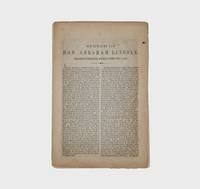
1858376861Springfield IL 1858. 8pp. printed in double columns. 8vo. Unbound. Minor toning. Housed in a cloth box. 8pp. printed in double columns. 8vo. The only separate printing of this address given by Lincoln at Springfield Illinois. Lincoln's speech which preceded his debates with Douglas puts forth the great themes that marked his political philosophy during the last ten years of his life. More importantly it firmly placed Lincoln as against the expansion of slavery and Douglas on the opposite side of the issue. By targeting Douglas a strategy that resurrected Lincoln's political career he made his fellow Illinoisan out to be the embodiment of the wicked forces safeguarding slavery's expansion . This speech is Lincoln's opening salvo against Douglas for the 1858 senate campaign: 'Free men of Illinois - free men of everywhere - judge ye between him and me'" Abraham Lincoln: His Life in Print p. 67<br /> <br /> Urging that slavery be placed on course for "ultimate extinction" he repeats his "House Divided" warning first given at the State Republican Convention a month earlier. He insists that the Kansas-Nebraska bill was "the beginning of a conspiracy" to nationalize slavery. Attacking Douglas and defending himself against the charge that he would "invite a war of sections" he stands on "the principles of our Declaration of Independence." Though African Americans are not the equal of whites "in all respects" the Declaration "does mean to declare that all men are equal in some respects; they are equal in the right to 'life liberty and the pursuit of happiness.'" Most significantly "In the right to put into his mouth the bread that his own hands have earned he is the equal of every other man white or black."<br /> <br /> A scarce Lincoln speech. Monaghan 12; Byrd 2960 unknown
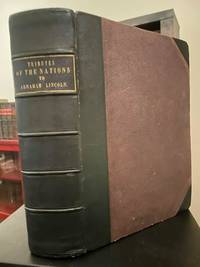
1867118<b>Large thick 4to. Pp 2 XXX 930 with a portrait of Lincoln as a frontis. Contemp. half black morocco raised bands black title label gilt lettered spine brown cloth bds. Marbled edges and eps text slightly toned. An excellent copy. A thick volume of tributes from around the world to the late Abraham Lincoln.</b> Government Printing Office hardcover
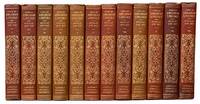
18942311448Harrogate Tennessee: Lincoln Memorial University 1894. Limited Edition. Half-Leather. Near Fine/No Jacket. 0x0x0. Limited edition #399 of an unspecified limitation this set 'especially prepared for Harry J. Williams.' Signed by John Wesley Hill opposite limitation page. Copyright page states 1894 but this is clearly reproduced from the plates of the original - this set is circa 1905. Volume 1 has very minor discoloration to edges of cloth on rear board minor wear to corners spine a bit faded. Complete in twelve hardcover volumes. Red half-leather gilt titles and decorations top edges gilt decorative endpapers. A complete collection of Abraham Lincoln's works including speeches letters biographical writings etc. with an introduction by John Wesley Hill and special articles by various other contributors. The editors were Lincoln's private secretary and assistant secretary and also served in various other governmental roles Hay going on to become Secretary of State under McKinley and Roosevelt. Nicolay and Hay are perhaps best known for their ten-volume biographical history of Lincoln's administration originally published serially in The Century Magazine beginning in 1886 -- it remains one of the more exhaustive and personal accounts of the life of the 16th President of the United States and is notable for the inclusion of facsimiles of original drafts of important documents most importantly the Emancipation Proclamation. This set includes facsimiles of original correspondence and documents reproductions of contemporary photographs and engravings etc. Lincoln Memorial University hardcover
1894112666Lincoln Memorial University 1894. Leather. Very Good. 1894 Lincoln Memorial University Sponsors edition #500 of unstated limitation. 12 volume gilt decorated full leather bindings top edge gilt. Fine condition with no issues. oversized and overweight. B67 Please email for photos. Lincoln Memorial University hardcover
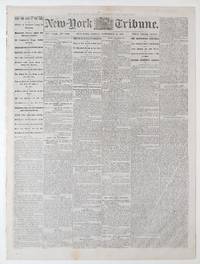
1863372898New York 1863. 8pp. printed in six columns on a single folded sheet. Large folio. Disbound. Natural paper flaw to first leaf not affecting text of the Gettysburg Address. Cloth portfolio. 8pp. printed in six columns on a single folded sheet. Large folio. The complete issue of the New-York Tribune printing the Gettysburg Address on the morning of Nov. 20 1863 the first possible date of the speech's printing. The previous day Lincoln delivered his great address at the dedication of a cemetery on the Gettysburg battlefield four months after the bloody and pivotal battle that turned the tide of the Civil War in favor of the Union. Lincoln's speech was preceded by an address from Edward Everett the most famous orator of his day. Everett's speech took between ninety minutes and two hours to deliver and today is largely forgotten. Lincoln's speech delivered in only a few minutes stands as a supreme distillation of American values and of the sacrifices necessary for the survival of liberty and freedom.<br /> <br /> Much controversy surrounds the circumstances and content of the address as it was actually delivered at Gettysburg. The words spoken in the speech differ in the versions appearing in newspapers and the text which appeared in Washington several days later published as The Gettysburg Solemnities and known in only four copies which is now taken as the closest version to Lincoln's final intent because of its correspondence to the known manuscript versions. Interestingly and according to Carbonell the text of the first appearance of the speech in book form published a few days later as An Oration Delivered on the Battlefield of Gettysburg is taken largely from this New York Tribune printing.<br /> <br /> As it appears here the address corresponds closely to the transcription printed in the same day's edition of the New York Times with slight variations in punctuation and capitalization "Four score and seven years ago our fathers brought forth on this continent a new Nation." in the Tribune versus "Fourscore and seven years ago our Fathers brought forth on this Continent a new nation." in the Times e.g. The address is printed on the first page at the bottom of the fifth column running to the top of the sixth. Significantly it notes the five places during Lincoln's speech where applause broke out thereby providing an important historical record of the reception of the speech as it was delivered by Lincoln. It is noted that the conclusion of the speech was met with "long continued applause" and that "three cheers were here given for the President and the Governors of the States." Lincoln's speech is preceded by the opening prayer of the Rev. Thomas H. Stockton and followed by Everett's speech which occupies the rest of the sixth column and the vast majority of space on page two. War news occupies the other column space on the front page.<br /> <br /> Together with examples from other newspapers of Nov. 20 1863 this issue of the New-York Tribune represents the first appearance of any version of the Gettysburg Address in print although at some variance with the version Lincoln eventually disseminated. The exact order in which the morning editions of November 20 were printed is practically impossible to determine at this point and as Carbonell states "will almost certainly never be known." Rightfully so Carbonell includes all November 20 morning newspaper printings of the Gettysburg Address as his first entry with no priority. Suffice to say this is as early a printing of one of the foundational documents of American life as one can ever encounter.<br /> <br /> "Lincoln's speech composed on the train on the way to Gettysburg and written down according to tradition on scratch-paper and the backs of envelopes comprised ten sentences and took only a few minutes to deliver. From the first words - 'Four score and seven years ago' - to the last - 'that government of the people by the people and for the people shall not perish from the earth' - it is immortal one of the supreme utterances of the principles of democratic freedom" PMM. Carbonell 1. Grolier American 100 72 ref. Streeter Sale 1748 ref. PMM 351 ref. Howes E233 ref. Monaghan 192 ref. Paul M. Angle "Four Lincoln Firsts" in Papers of the Bibliographical Society 36 Spring 1942 pp.13-17 unknown
18641403210Wright & Potter 1864. 5th or later Edition. Soft cover. Very Good. Boston. 1864. 88110pp. plus folding map. Original printed paper wrappers. Internally clean back cover not attached anymore water stain at top of spine and around it. Very good. Devoted almost entirely to the Massachusetts war effort published early in January 1864. The folding map shows the Soldier's National Cemetery at Gettysburg dedicated November 19 1863 with the long speech of Edward Everett of Massachusetts and the short "Dedicatory Speech by President Lincoln" better known as the Gettysburg Address. Also printed is the "Programme of Arrangements" of that day a list of Massachusetts soldiers killed at Gettysburg and buried there and details of the cemetery. Monaghan notes this as an early printing of the Gettysburg Address. MONAGHAN LINCOLN BIBLIOGRAPHY I:48. This historically significant and very early book publication of the Gettysburg Address which may be the most important and certainly best known speech in US history is extremely uncommon and almost only found rebound or with the covers missing. This version intact and in its original condition is a coveted artifact of Americana. Comes in a custom-made slipcase. Wright & Potter unknown