Chatelein, Henry AbrahamBiblio.com
254 résultats
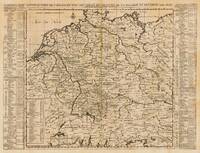
170928176Nürnberg: Henry Chatelein 1709. Other. Im unteren Mittelfalz kleiner hinterlegter Einriss ansonsten in sehr gutem Erhaltungszustand. Verso Spuren früherer Faltung vom Atlas. . 465 by 475mm 18 by 18 inches. Hand-Colored Original Copperplate Engraving by Henry Abraham Chatelein depicting Deutschland. Published Nürnberg Henry Chatelein 1709. Sheet: 465 by 475mm 18 by 18 inches. A fine and original hand-colored example of Chatelein's celebrated cartographic work documenting this region of Germany with the precision and decorative artistry characteristic of the 17000s. Henry Abraham Chatelein was a cartographer active in the 1700s working in the tradition of European copper-engraved cartography. Their maps are valued by collectors for their historical accuracy and decorative quality.This original copperplate engraving with original hand coloring depicts the region of Deutschland published in Nürnberg Henry Chatelein 1709. The map records the political and geographic boundaries of the region as understood in 1709 offering a fascinating window into the history of German territorial organization. Sheet measures 465 by 475mm 18 by 18 inches. In good condition overall with minor signs of age appropriate for a 18th-century engraving. Ready to frame. Henry Chatelein unknown
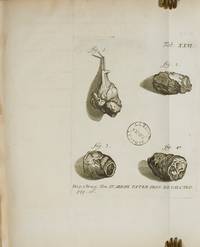
1726584691726. Disp. chir. 4/92. - Hrsg. v. Albrecht v. Haller. - Lausannae Sumptibus Marci-Michael Bousquet & Socior 1755 4° pp.1-16 1 Kupferstichtafel Rückenbroschur. Zweiter Abdruck der "Dissertatio Inavgvralis Medica Qva Observationes Rarissimae Calcvlorvm In Corpore Hvmano Generationem Illvstrantes / Praeside D. Abrahamo Vatero Prof. Pvbl. Anat. Et Botan. Svbstit. Vt Et Societ. Imper. Nat. Cvrios. Et Reg. Britann. Socio Pro Gradv Doctoris More Maiorvm Obtinendo In Alma Levcorea D. XIX. Ivl. MDCCXXVI. . Placidae Dissidententivm Disqvisitioni Exponvntvr Christoph. Antonio Ziegenhornio Mitav. Cvrono." Abraham Vater "Arzt und Naturforscher und besonders ausgezeichnet als Anatom wurde als Sohn von Christian Vater am 9. December 1684 in Wittenberg geboren. Er studirte seit 1702 die Heilkunde an der Universität seiner Vaterstadt wo er 1706 die philosophische Doctorwürde erlangte und später auch in Leipzig wo er 1710 den medicinischen Doctorgrad erwarb. Darauf machte er eine größere wissenschaftliche Reise durch Deutschland England und Holland mit längerem Aufenthalt in Amsterdam und Leyden wo er unter Ruysch eingehendere anatomische Studien trieb und besonders sich mit der von diesem Autor kunstvoll gepflegten Injectionstechnik vertraut machte. Nach seiner Rückkehr habilitirte er sich 1712 als Docent in Wittenberg wurde daselbst 1717 außerordentlicher 1719 ordentlicher Professor der Anatomie und Botanik und lehrte diese Fächer gemeinschaftlich von 1733 ab aber ausschließlich die Anatomie mit großem Erfolg den er dadurch steigerte daß er in verdienstlicher Weise ein reichhaltiges anatomisches Museum gründete. 1737 erhielt er auch die Professur der Pathologie doch überließ er die Vorträge über dieses Gebiet dem Dr. Stenzel während er selbst fortfuhr seine Kraft dem anatomischen Unterricht bezw. der Forschung anhaltend zu widmen. Nachdem er 1746 auch noch zum ersten Professor der Therapie an der Wittenberger Universität ernannt war verblieb er zuletzt als Senior der medicinischen Facultät in dieser Stellung bis zu seinem am 18. November 1751 eingetretenen Lebensende. - Vater der auch Mitglied der k. k. Leopold.-Carolinischen Akademie der Naturforscher war ist ein außerordentlich vielseitiger Forscher gewesen. Seine zahlreichen Arbeiten betreffen die Botanik Chemie Pharmakologie allgemeine und specielle Pathologie und Therapie die Chirurgie Gynäkologie und Staatsarzneikunde. Sie alle werden bei weitem überragt durch Vater's Leistungen in der Anatomie die er durch hervorragende Forschungen von bleibendem Werth bereichert hat. Erwähnenswerth sind besonders die Abhandlungen über den Mechanismus der Schließung des foramen ovale 1714 über ein Divertikel an der Mündung des ductus choledochus im Zwölffingerdarm 1720 über einen Speichelgang in der Zunge 1720 1723 über einen Ringmuskel am Gebärmuttergrunde 1723. In einer Dissertation von Lehmann "De consensu partium corporis humani" Wittenberg 1741 beschreibt er ferner die unter seinem Namen bekannten dann in Vergessenheit gerathenen und von Pacini im 3. Decennium dieses Jahrhunderts erst wieder entdeckten sogenannten Tastkörperchen als kleine ovale Anschwellungen papillae nerveae mit denen die Hautnerven der Handfläche und Fußsohlen beim Menschen nicht selten besetzt gefunden werden. Außer durch die bereits oben erwähnte Einrichtung eines anatomischen Museums hat sich Vater um die Hebung des bezüglichen Unterrichts in Wittenberg noch dadurch verdient gemacht daß er auch anatomische Demonstrationen für Frauen hielt und für die Ablieferung der Leichen von Selbstmördern an die Anatomie Sorge trug. Ein ziemlich vollständiges Schriftenverzeichniß Vater's findet sich in der schon genannten Biogr. méd. Bd. VII S. 400-403." Julius Pagel ADB XXXIX 1895 pp.502-503 Siehe - Poggendorff's Biogr.-litterat. Handwörterbuch II 1180 sowie Biogr. Lex. u. s. w. VI 74 und die daselbst genannten Quellen. Vater Abraham 1684-1751 Präses Ziegenhorn Christophorus Antonius 1704- Resp. Calculi and concretions unknown
1795M3955Jena:: Fiedlerianis 1795. 1795. 232 x 197 mm. Small 4to. iv iv 46 ix pp. Foxed. Self wraps; last few gatherings loose. Ex library rubber stamp on title. Very good. Albers' dissertation on dropsy of the belly. Johann Abraham Albers studied under J. C. von Loder and Chistoph Wilhelm Hufeland 1762-1836. Hirsch I pp. 80. Not in RLIN. Fiedlerianis, 1795. paperback
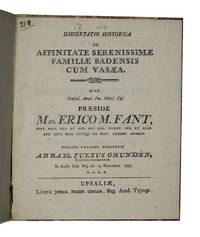
1797AQ32362Upsaliae i.e. Uppsala: Litteris Johan. Fredr. Edman 1797. 4 8pp. With two folding genealogical tables. Handsomely bound in later vellum-backed 'Dutch' floral paper boards. Lightly rubbed and marked. Paper label to upper board with title in manuscript and letterpress monogram of Swedish Count Gustaf Trolle Bonde 1773-1855. The sole edition of an academic thesis on the genealogy of the Swabian Zahringen dynasty rulers of Baden submitted by Abraham Julius Grundén 1779-1834 to professor of history at Uppsala University Eric Michael Fant 1754-1817. Grundén went on to serve as an advisor at the Swedish Administrative Court of Appeals and forge a career as a composer writing music primarily for the Aurora Order at Stockholm of which he was music director and later Grand Master. . First edition. Quarto. Litteris Johan. Fredr. Edman hardcover
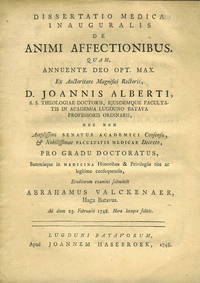
17485450Leyden Lugduni Batavorum Johann Joannem Hasebroek 1748. Soft cover. . ~ ~ NOTE: THE PRICE OF THIS BOOK IS CURRENTLY REDUCED! ~ ~ . Crown quarto. Pp. 83 1. Large woodcut initials. Unbound quires loose. In a very good condition. A wide margined copy in the original state. ~ First and only edition. Rare. The inauguration took place on February 23rd 1748. 006-5 <br/> <br/> Leyden (Lugduni Batavorum), Johann (Joannem) Hasebroek paperback
1741640591741. Disp. chir. 4/ 93. - Hrsg. v. Albrecht v. Haller. - Lausannae Sumptibus Marci-Michael Bousquet & Socior 1755 4° pp.17-32 Rückenbroschur. unknown
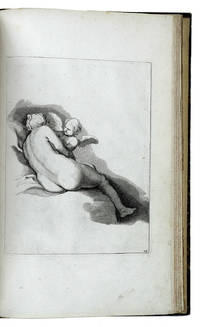
1730D8IBHTPY7SFPAmsterdam 1730. Folio. Reinier & Joachim II Ottens Half mottled sheepskin ca. 1840 sewn on 4 cords the spine has 5 gold-tooled raised bands but the middle one may be merely decorative papier coulé sides red spine-label red sprinkled edges. With a letterpress title page printed in red and black an engraved frontispiece self-portrait of Bloemaert engraved by Joachim Ottens here serving as no. 1 of 140 otherwise numbered engraved plates including illustrated part-titles for parts 2-6 with drawn models of parts of the human body and human figures and characters in various postures movements and scenes. 1 leaf plus plates. Famous drawing book of Abraham Bloemaert 1564-1651 a very influential Dutch painter and art teacher. It contains 140 numbered engraved plates with no text providing models for drawing parts of the human body including eyes ears noses faces hands feet arms legs busts heads hair styles and beards some for men women and children as well as human figures and character types in various postures kinds of movement also including men women and children. Four plates give models for drawing animals and animal's heads including horses cats a dog a fish a lion and cattle. In good condition and with generous margins with a small tear and minor smudges in the title-page the first and last leaves slightly browned and a few unobtrusive restorations. A classic Dutch drawing book providing a storehouse of human forms that influenced many artists for more than a century.l WorldCat 1 or 2 copies; cf. Bolten Method & Practice. Dutch & Flemish drawing books pp. 51-67; Hollstein II p. 86 nos. 36-155 ca. 1650-ca. 1657 F. Bloemaert ed. of parts 1-6. ABE CAT Art History hardcover
1710536431710. A beautiful map of the northern part of European Russia from 58 degrees Saint Petersburg northwards to the arctic coast. The map shows the different provinces rivers forests and towns. Copper engraving. Good margins closed tear at right margin expertly repaired. Very good condition. Later colour. Size: 45 x 35 cm. 17½ x 14 inches unknown
170133078Fulda 1701. Hardcover. fair. 4to. 185 leaves. Black cloth. Red edges. Illustrated title-page with Moses and Aaron on the sides and David killing Goliath at the bottom. Commentary on selections of the Zohar and other kabbalistic texts by Mordacai Ashkenazi published with the aid of his teacher Abraham Rovigo. These two kabbalists were both secret followers of the messianic claimant Sabbatai Sevi. Despite Sabbatai's conversion to Islam in 1666 and death in 1676 many of his followers continued to believe in him and worked to spread their particular heterodox brand of Judaism in defiance of the rabbinic establishment. As cover for his Sabbatian agenda Ashkenazi claimed that “Eshel Avraham†was simply a new interpretation of the Kabbalah based on his prophetic dreams. Ultimately this book is an important example of the success of the early eighteenth century Sabbatian underground to print books under the nose of the rabbinic authorities before it came out into the open with the printing of Nehemiah Hayon's “Migdal Oz.†Text in Hebrew. Backstrip missing but the book is still intact. Bottom corner chipped. Title-page torn and bottom strengthened. Slight worming to front leaves. Overall in fair condition. Steinschneider 4299:1. <br /> Samuel Wiener Bibliotheca Friedlandiana 991. hardcover
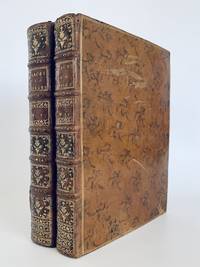
177876402à Neuchâtel: Chez Samuel Fauche 1778. Fine. Chez Samuel Fauche à Neuchâtel 1778 19 x 25 cm 2 volumes reliés First and only quarto edition the most sought-after issue due to its substantial enlargement. The original octavo edition of 1730 was thoroughly revised corrected and enriched with the latest discoveries by the scholarly editor responsible for this edition. Ruchats work was supplemented with Abraham Stanyans Account of Switzerland London 1714 together with additional texts relating to Switzerland. Illustrated with 81 engravings and maps after Merian including 2 allegorical frontispieces 68 plates depicting city views and notable sites and 11 maps. Binders instruction leaf present at the end of each volume. Contemporary full mottled tan calf. Spine with raised bands and gilt decoration. Beige morocco lettering and volume labels. Double fillet border on covers. Small loss of leather at the head of volume II. Lower joint of volume I split at the head with minor loss and split at the foot along the final compartment. Two corners rubbed. A few scratches to the upper cover of volume II. Marginal loss to plate 5 in volume I; on p. 428 plate numbered 33 loss measuring approximately 1.5 x 3 cm affecting the engraving. General rubbing. Ownership stamp of Bibliothèque Jules Barotte on the versos of certain plates and on the title-pages. Good clean and remarkably fresh copies. A celebrated and detailed geographical historical and political monograph on Switzerland. Chez Samuel Fauche hardcover
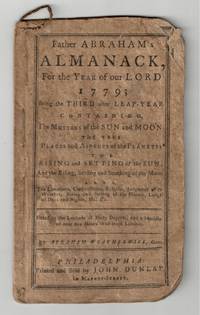
177927545Philadelphia: Printed and sold by John Dunlap 1779. A very early issue of a Weatherwise American Almanac. Illustrated with the well-known anatomical woodcut of a man “governed by the twelve constellations†and woodcut page frames. 12mo original printed self wrappers stitched. 15 leaves unnumbered including printed wrappers. A very well preserved little almanac the wrappers somewhat worn at the corners the rear with a little loss at the bottom outside corner some expected toning and mellowing to the paper and some spotting but complete and very usable and with the original stitching still strong and tight. AN EARLY WEATHERWISE ALMANAC and a competitor of Franklin's "Poor Richard". Abraham Weatherwise was of course a pseudonym and one which was likely used by multiple almanac printers. They “ushered in the healthiest and most interesting period of almanac making†Sagendorph 116.<br> Along with the typical astronomical data and weather forecasts this almanac also contains a table valuing the dollar humorous stories and historical tracts a collection of hints and home remedies for the care of horses court dates for Pennsylvania and New Jersey and a schedule for Quaker meetings. Printed and sold by John Dunlap unknown
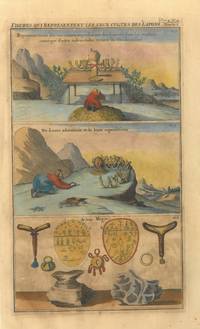
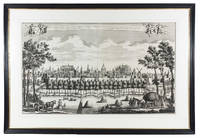
170578311Amsterdam 1705-39. Folio. Arkets størrelse : 265 cm X 45 cm. Med gammel kolorering. Folio. Size of sheet : 265 cm X 45 cm. Old colouring. . <br/><br/><em>Henri Abraham Châtelain 1684-1743. Fra hans verk “Atlas historique†som utkom i syv bind. Et av de største nederlandske oversiktsverker fra denne tiden. Fra bind 4 av dette verket. From his work “Atlas historique†published in seven volumes. One of the largest encyclopediac works published in the Netherlands in the 18th century. This print is from volume 4. </em> unknown
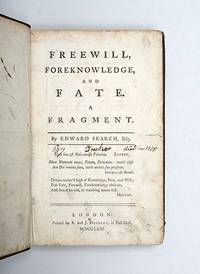
1763160235London: Printed for R. and J. Dodsley 1763. The prelude to his magnum opus First edition of the prelude to Tucker's nine-volume magnum opus The Light of Nature Pursued which outlined a vast and idiosyncratic philosophical system and which had a noted influence on his philosophical contemporaries. Tucker was an empiricist in the tradition of John Locke holding that the mind begins as a blank slate. In his moral philosophy he proposed that our own satisfaction is the motive of our actions and that the maximum satisfaction of this is the ultimate moral good. He can consequently be seen as an early precursor of utilitarianism. This work published pseudonymously was not well received by the critics. "The 1763 fragment was strongly criticized in the Monthly Review to which Tucker provided a humorous reply Man in Quest of Himself under the new pseudonym Cuthbert Comment" ODNB. The Light of Nature Pursued however enjoyed a high reputation from its first appearance and was a noted influence on William Paley Thomas Malthus and James MacIntosh. Octavo 198 x 124 mm. Contemporary calf double gilt fillet to bands and covers. Contemporary ownership inscription of James Drummond of Bridgend in ink to front free endpaper and in pencil to front pastedown; 18th-century note of author and their death date on title. Minor restoration at head of rear joint short closed tear at fore edge of title neatly taped on verso light finger soiling ink splash to p. 153. A good copy. ESTC T117455. unknown
17106155C1710. Zweiter von drei Bänden. Nürnberg: Weigel. 1710. 4° ca. 21 x 165 cm. 4 Bl. 714 Seiten 7 Bl. Register Fraktur mit 2 Kupfern 1 als Frontispiz 1 zwischen S. 670/671. Mit zahlreichen Vignetten im Text. Ganzpergament der Zeit. Pergament mit Gebrauchsspuren und Verfärbungen. Seiten mit Randläsuren vereinzelt stockfleckig. Frontispiz und Titelseite mit Fehlstellen restauriert und auf neue Seiten montiert. Insgesamt guter bis befriedigender Zustand. Brümmer 7; Wilpert/G. II.56. unknown
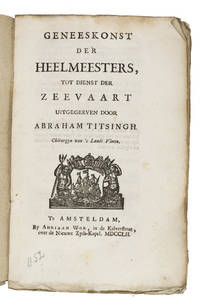
1752ABC_49307Amsterdam 1752. 8vo. Adriaan Wor Contemporary marbled wrappers with a 19th-century paper label on the spine with the author and title in manuscript. With a woodcut vignette on the title page and two decorated woodcut initials. 8 662 pp. First and only edition of a very scarce work on naval medicine. This practical handbook was written by doctors who served on Dutch war ships that sailed from the Netherlands to Curaçao. It includes numerous case studies of sick sailors on these ships during the 1740s along with commentary from Abraham Titsingh 1684-1776 who was a surgeon to the admirality. The work is very rare as it has only been recorded in four libraries and we have only been able to find one other copy in sales records.The numerous case studies presented in the work are incredibly detailed and describe cases on board the ships Middelburg Maarssen Tylingen De Beschermer and Hartekamp primarily in the years 1743 to 1750 but with references to earlier voyages. They give a fascinating picture of illnesses and their treatment during voyages to the Americas. The work covers not only the principal illnesses facing the sailors fevers scurvy diarrhoea dysentery and dropsy but also wounds surgery amputations etc. Each account of sicknesses and treatments during a voyage with names dates and details of the procedures and of the exact composition of medicines given is followed by a lengthy commentary apparently in part by Titsingh who compiled the work. The present copy comes from the library of Dutch physician and zoologist Jan van der Hoeven 1801-1868.With the bookplate of Jan van der Hoeven mounted on the front pastedown. The wrappers are damaged around the spine with some loss of material around the joints the edges of the wrappers are slightly frayed. The work is uncut with a water stain in the head margin throughout not affecting the text. Otherwise in good condition.l Cat. NHSM p. 1020; STCN 314896082 1 copy; WorldCat 907608682 4 copies. unknown
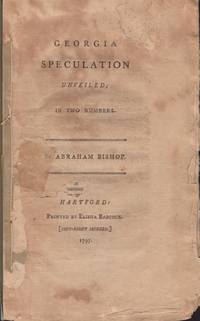
179730649Hartford: Printed by Elisha Babcock 1797. First Edition. Wraps. Fair. Wraps. 39 pages. Stitched wraps with title page 1. Untrimmed. Light to moderate scattered toning and brown spots. Old clear tape repair and small hole on title page no loss of text. Remnants of outer wrap on front joint. Dull green strip of linen tape on rear blank joint. <br /> <br /> The author's statement on the verso of the title page reads "This pamphlet is an actual though not a literal answer to the "State of Facts" published by the Georgia Companies see Howes G 126. It contains the outlines of the present state of Georgia business and a brief sketch of the arguments on both sides with such Commentaries as the compass of the work would allow. The general tenor of it especially that part which treats of the Chancery powers of our Courts will be found applicable to the cases of all who have suffered by any kind of Land Speculation."<br /> <br /> Howes B 471; Evans 31830; DeRenne 278; Sabin 5593. From Wikipedia; <br /> <br /> The Yazoo land scandal Yazoo fraud Yazoo land fraud or Yazoo land controversy was a massive real estate fraud perpetrated in the mid-1790's by Georgia governor George Mathews1 and the Georgia General Assembly. Georgia politicians sold large tracts of territory in the Yazoo lands in what are now portions of the present-day states of Alabama and Mississippi to political insiders at very low prices in 1794. Although the law enabling the sales was overturned by reformers the following year its ability to do so was challenged in the courts eventually reaching the US Supreme Court. In the landmark decision in Fletcher v. Peck 1810 the Court ruled that the contracts were binding and the state could not retroactively invalidate the earlier land sales. It was one of the first times the Supreme Court had overturned a state law and it justified many claims for those lands.<br /> <br /> Some of the lands sold by the state in 1794 had been shortly thereafter resold to innocent third parties greatly complicating the litigation. In 1802 because of the ongoing controversy Georgia ceded all of its claims2 to lands west of its modern border to the U.S. government in exchange for which the government paid cash and assumed the legal liabilities. Claims involving the land purchases were not fully resolved until legislation passed in 1814 established a claims-resolution fund.<br /> <br /> The Yazoo land fraud is often conflated with the Pine Barrens speculation another land scandal which took place in east Georgia at about the same time. In this case the state's high-ranking officials were making multiple gifts of land grants for the same parcels resulting in the issuance of grants totaling much more land than was available in the state of Georgia. Printed by Elisha Babcock unknown
176751218Nürnberg Georg Peter Monath 1767. 4to. Contemp. hcalf. Gilt spine. Titlelabel with gilt lettering. A paperlabel pasted on top of spine. Stamps on title-page. Engraved frontispiece bound after p. 64. 4178 pp. and 114 engraved plates. Internally clean and fine. unknown
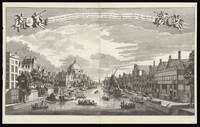
172014409Amsterdam: Leonard Schenk c1720. 558 by 950mm 22 by 37.5 inches. Engraving with etching on two sheets joined. The most prominent feature of the of this view is The Ronde Lutherse Kerk or Koepelkerk is a former Lutheran church. The church was built in neo-classical style and has a characteristic copper dome. It was built in 1671 by Dutch Golden Age architect Adriaan Dortsman who also built Museum Van Loon a magnificent private residence at the Keizersgracht. When the Lutherans left the building in 1935 it became a concert hall. In 1993 the interior and characteristic green-colored copper dome were destroyed by fire. After a renovation period of 16 months the church was fully restored. Further down the canal the imposing Roonports tower can be seen. Leonard Schenk fl.1720-1746 an Jan Schenk 1698-1752 were brothers working as engravers and publisher's in Amsterdam. Abraham Rademaker 1677 21 January 1735 was an 18th-century painter and printmaker from the Northern Netherlands. Rademaker was born in Lisse. According to the RKD he was a versatile artist who painted Italianate landscapes but is known mostly for his many cityscapes and drawings of buildings that were made into print. R.W.P. de Vries auction 1925: 284 Leonard Schenk, unknown
172891I90T01U79OAmsterdam 1728. Leonardus Schenk Framed 82.5 x 121 cm. Large engraved wall print on 2 sheets together 57.5 x 97 cm showing the Leiden city wall between the Koepoort and Zijlpoort with various windmills and prominent buildings in the background identified by name. The title appears in a banderole at the head with putti on either side holding the arms of Leiden and Holland. Leonardus Schenk's name appears as engraver and publisher at the right end of the banderole. Large view of the city of Leiden by the Amsterdam engraver and publisher Leonardus Schenk. The viewer observes the city from the south from between the city's Koe and Zijl gates. In the background several windmills and a few characteristic buildings are identified by name in the engraving including the university the library the Pieterskerk the Town Hall the Mare kerk the "Burcht" the fort and the Hooglandse kerk. On the quay outside the wall groups of people walk sporadically passed by small boats on the nearby city moat. In the foreground we see a typical Dutch landscape with grazing cattle farm workers a loaded hay cart and haystacks in the field. We know of several other wall prints by Schenk depicting local situations with almost photographic detail. Thanks to this detail important socio-historical aspects have been passed on to later generations giving these prints an important cultural meaning today. A few spots formerly folded otherwise in very good condition.l Overvoorde Catalogus van de prentverzameling der Gemeente Leiden 1906 no. 640; Waller Biogr. woordenb. Noord Ned. graveurs p. 287. unknown
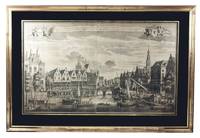
1728A2RGD4WT38YEAmsterdam: Leonardus Schenk 1728. In black passepartout and gilt frame 82 x 121 cm. Large engraved wall print on 2 sheets together 58 x 97 cm the sheets overlapping each other slightly showing the traditional business centre of the city of Leiden. The title both in Dutch and French is printed in a banderole at the head with putti on each side supporting the arms of Leiden and Holland. Leonardus Schenk's name appears as engraver and publisher at the right tip of the banderole. A large engraved wall print in two sheets showing the trading and commercial centre of the city of Leiden at the convergence of the Oude Rijn and Nieuwe Rijn canals. Unlike most other Dutch towns Leiden had no central market square so that the waterways formed the major access routes for merchandise. On the banks of the canals there is a lively market that converges on the bridge central in the print. Market traders and customers come and go. Women from the coastal fishing villages of Katwijk and Noortwijk display fresh fish for sale. Right in the print we see the monumental "Waag" the weigh-house built in 1658 following a plan by the Dutch architect and engraver Pieter Post. The splendid relief designed by Rombout Verhulst that crowns the entrance is reproduced with a sharp eye for detail. In front of the building commercial goods are hoisted up from carts and a number of ships for transport to the weigh-house. Several other ships had moored and now continue to their destination. A boat flying the Dutch flag brings in a prominent party while a herald standing precariously at the bow trumpets for right of way. We know of several other wall prints by Schenk depicting local situations with almost photographic detail. Thanks to this detail important socio-historical aspects have been passed on to later generations giving these prints an important cultural meaning today. With some faint foxing otherwise in very good condition.l Overvoorde Catalogus van de prentverzameling der Gemeente Leiden 1906 no. 964; Waller Biogr. woordenb. Noord Ned. graveurs p. 287. Leonardus Schenk, unknown
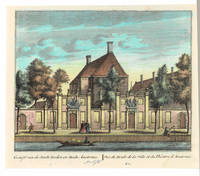
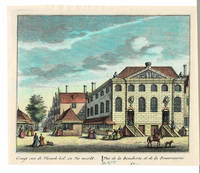
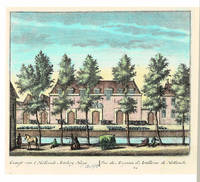
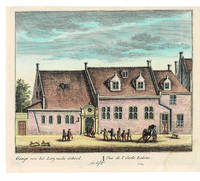
173698580Amsterdam: Leonardus Schenk 1736. 1736. Very good. - A 6 inch high by 7-1/2 inch wide handcolored engraving on a 7 inch high by 8-1/8 inch wide sheet of watermarked laid paper. The image was drawn by Abraham Rademaker and the copperplate engraving is by Leonardus Schenk. "Delft" and what appears to be an initial are penned in ink in an early hand along the bottom margin. There is some slight dampstaining to the bottom right corner. Very good. <p>The print originally appeared in the view book: "Alle de voornaamste gesigten Van de Wydberoemde Steeden Alkmaar Delft en Dordregt Geleegen in de Provintie van Holland Vertoont in Seeven-en-sestig afbeeldingen Naar het Leeven geteekent door Abraham Rademaker En in het Kooper gebragt door Leonardus Schenk". Published Amsterdam Leonardus Schenk 1736. Amsterdam: Leonardus Schenk, 1736. unknown
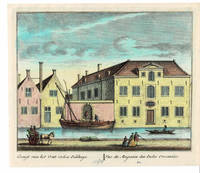
173698591Amsterdam: Leonardus Schenk 1736. 1736. Very good. - A 6 inch high by 7-1/2 inch wide handcolored engraving on a 7 inch high by 8-1/4 inch wide sheet of laid paper. The image was drawn by Abraham Rademaker and the copperplate engraving is by Leonardus Schenk. "Delft" and what appears to be an initial are penned in ink in an early hand along the bottom margin. Near fine. <p>The print originally appeared in the view book: "Alle de voornaamste gesigten Van de Wydberoemde Steeden Alkmaar Delft en Dordregt Geleegen in de Provintie van Holland Vertoont in Seeven-en-sestig afbeeldingen Naar het Leeven geteekent door Abraham Rademaker En in het Kooper gebragt door Leonardus Schenk". Published Amsterdam Leonardus Schenk 1736. Amsterdam: Leonardus Schenk, 1736. unknown
173698582Amsterdam: Leonardus Schenk 1736. 1736. Very good. - A 6 inch high by 7-1/2 inch wide handcolored engraving on a 7 inch high by 8-1/2 inch wide sheet of watermarked laid paper. The image was drawn by Abraham Rademaker and the copperplate engraving is by Leonardus Schenk. "Delft" and what appears to be an initial are penned in ink in an early hand along the bottom margin. Near fine. <p>The print originally appeared in the view book: "Alle de voornaamste gesigten Van de Wydberoemde Steeden Alkmaar Delft en Dordregt Geleegen in de Provintie van Holland Vertoont in Seeven-en-sestig afbeeldingen Naar het Leeven geteekent door Abraham Rademaker En in het Kooper gebragt door Leonardus Schenk". Published Amsterdam Leonardus Schenk 1736. Amsterdam: Leonardus Schenk, 1736. unknown
173698589Amsterdam: Leonardus Schenk 1736. 1736. Very good. - A 6 inch high by 7-1/2 inch wide handcolored engraving on a 6-14/16 inch high by 8 inch wide sheet of watermarked laid paper. The image was drawn by Abraham Rademaker and the copperplate engraving is by Leonardus Schenk. "Delft" and what appears to be an initial are penned in ink in an early hand along the bottom margin. There is some slight dampstaining to the bottom right corner. Very good. <p>The print originally appeared in the view book: "Alle de voornaamste gesigten Van de Wydberoemde Steeden Alkmaar Delft en Dordregt Geleegen in de Provintie van Holland Vertoont in Seeven-en-sestig afbeeldingen Naar het Leeven geteekent door Abraham Rademaker En in het Kooper gebragt door Leonardus Schenk". Published Amsterdam Leonardus Schenk 1736. Amsterdam: Leonardus Schenk, 1736. unknown
173698579Amsterdam: Leonardus Schenk 1736. 1736. Very good. - A 6 inch high by 7-1/2 inch wide handcolored engraving on a 7 inch high by 8-1/4 inch wide sheet of laid paper. The image was drawn by Abraham Rademaker and the copperplate engraving is by Leonardus Schenk. "Delft" and what appears to be an initial are penned in ink in an early hand along the bottom margin. There is some slight dampstaining to the bottom right corner. Very good. <p>The print originally appeared in the view book: "Alle de voornaamste gesigten Van de Wydberoemde Steeden Alkmaar Delft en Dordregt Geleegen in de Provintie van Holland Vertoont in Seeven-en-sestig afbeeldingen Naar het Leeven geteekent door Abraham Rademaker En in het Kooper gebragt door Leonardus Schenk". Published Amsterdam Leonardus Schenk 1736. Amsterdam: Leonardus Schenk, 1736. unknown