496 résultats
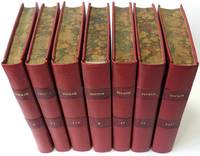
1805614705London: R. Faulder/T. Payne 1805. Volume I to VII complete. Hardcovers with red boards no dust jackets gilt lettered spines and complementary marbled page blocks in very good condition. Page block heads are slightly tanned. Within age related tanning and foxing on some of the pages which are otherwise clear. Boards are clean and bindings are sound. LW. Hardcover. Very Good/No Dust Jacket. Used. R. Faulder/T. Payne Hardcover
1842151295London: Henry G. Bohn. Good; Waterstain. 1842. Hardback. Vol. 2; 687 pages . Henry G. Bohn hardcover
186680753Springfield MAss.:: Gurdon Bill 1866. First edition. publisher's embossed leather. Spine a bit faded; leather scuffed at extremities; tight and sound. Contents fine. 8vo. Illustrated from engravings. Gurdon Bill, hardcover
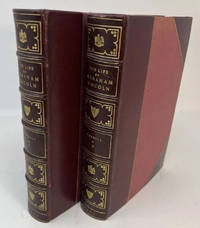
190024.08.Lincoln<p>THE LIFE OF ABRAHAM LINCOLN. </p><p>Complete in 2 volumes. </p><p>Drawn from original speeches and letters by Ida M. Tarbell New York: The Doubleday & McClure Co 1900. </p><p>First edition. </p><p>Leather. </p><p>Near Fine. </p><p>First edition. </p><p>Complete 2 volume set. </p><p>In the original bindings. </p><p>A Near Fine set. 8vos. Vol.1 xiv 426; Vol.2 459 pp. illustrated with a portrait frontispiece b&wphotographic plates facsimile handwriting and text drawings. </p><p>Bound in burgundy half calf and red cloth over boards; six compartment spine ruled and titled in gilt. Top edge gilt. End papers marbled. </p><p>The binding is original. </p><p>This will be well protected for shipping via Priority Mail. </p><p>Please see my other listings for similar books. </p><p>24.08</p>
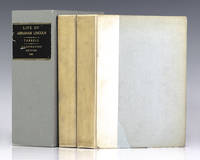
1900131290New York: The Doubleday & McClure Co. 1900. First Special Illustrator's edition of the work that earned Tarbell a national reputation as a major writer and the leading authority on Abraham Lincoln. Quarto two volumes half cloth over paper-covered boards illustrated tissue-guarded frontispiece portrait of Lincoln to each volume. One of only 75 numbered copies printed this is number 51. In near fine condition. Rebacked. Housed in a custom slipcase. Rare. Meant to compete against a Century Magazine series which had been written by Lincoln's private secretaries John Nicolay and John Hay Tarbell's 20-part series The Life of Abraham Lincoln was a massive success and earned Tarbell a national reputation as a major writer and the leading authority on Abraham Lincoln. The popular series based on Tarbell's own original research and interviews helped boost McClure's circulation to over 250000 which climbed to over 300000 by 1900 and allowed McClure to buy a printing plant and a bindery. Tarbell went on to publish five books about Lincoln and traveled on the lecture circuit recounting her discoveries to large audiences. The Doubleday & McClure Co. hardcover
186580642New York:: Derby and Miller 1865. First edition. later 20th c. attractive rebinding in quarter gilt-lettered morocco and cloth sides. Bookplate or pocket removal on rear pastedown; no other institutional indicia; clean tight and sound. 8vo. With a Steep Portrait and other Illustrations. To Which are Added Anecdotes and Personal Reminiscences of President Lincoln by Frank B. Carpenter. Derby and Miller, hardcover
186412446Philadelphia: T.B. Peterson 1864. FIRST EDITION. Original printed wrappers lacking rear wrapper; front wrapper lightly chipped and soiled some occasional scattered foxing. Still a very good uncut copy. First edition of this scarce wrapper issue. Monaghan 366. T.B. Peterson unknown
1825AQ26068London: Baldwin Cradock and Joy 1825. xiii 230pp. With an engraved frontispiece. Uncut in original publisher's two-tone blue paper boards printed paper lettering-piece to spine. Worn and marked with substantial loss to spine and lettering-piece boards detached.Ownership inscription of J. T. Coleridge to FFEP. Presentation copy inked inscription to recto of FFEP: 'J.T. Coleridge ESq. with the author's best regards'. A presentation copy of the first published work of English critic journalist poet and acquaintance of the Romantic circle John Abraham Heraud 1799-1887. The Chambers Cyclopedia of English Literature perhaps rather too flatteringly suggested that Heraud was to contemporary epic poetry what John Martin was to epic art: 'a worshipper of the vast the remote and the terrible'. . Second edition. With additions. 8vo. Baldwin, Cradock, and Joy hardcover
183919181Longman & Co. Paternoster Row and Butterworth Fleet Street 1839. 16mo. First Edition endpapers mildly age-stained; publisher's original brown cloth backstrip with printed paper label chipped but entirely legible uncut AND PARTIALLY UNOPENED covers moderately age-stained else a remarkably crisp clean copy in wholly unrestored publisher's binding. Sold from a sporting institution with its stamp on endpapers. EXTREMELY SCARCE. Longman & Co., Paternoster Row, and Butterworth, Fleet Street, hardcover
18396637London Longman & Co. 1839. 1839 xviii 400 p. Contemporary half calf rubbed but sound. Spine with a contrasting label. Armorial bookplate of Francis Jervoise Collas. A very good copy. London, Longman & Co., unknown
18964983London: Eyre and Spottiswoode 1896. First Edition. Hardback. Good/No Jacket. 587 8vo. The first edition of this important work. Part 1 by May Abraham: a practical guide to the law and its administration. Part 2 By Arthur Llewellyn Davies: The Acts with Notes Containing The Factory and Workshop Acts 1878 to 1895; The Shop Hours Acts 1892 to 1895; The Truck Acts 1831 and 1887; Parts of Other Acts Relating to Factories and Workshops; All Orders Made by the Secretary Of State under the Factory and Workshop Acts; with Explanatory Notes. 283 pages including an Appendix Special Rules for Dangerous Employments and Index. There is a one-page publisher's advertisement and two pages i.e. the verso of the rear free endpaper and the rear paste down advertising the St John Ambulance Association. Condition notes: The green cloth covered boards are somewhat rubbed and worn but the gilt titles to the front board and spine are bright. There is some foxing the first few pages and to the index and a little spotting to the fore-edges. Eyre and Spottiswoode hardcover
1821D19279New York: James Eastburn Literary Rooms 1821. First Edition. Hardcover. Good. 8vo Original plain boards stained printed paper spine label. Bookplate removed. Uncommon. <br /> <br/><br/> James Eastburn, Literary Rooms hardcover
1845163008New York: Daniel Fanshaw Printers 1845. Original Edition not a reprint. Paperback. Fair. Complete but with covers detaching soiling to covers and foxing to pages. Pages corners curled. No extraneous marks. Green wraps with black lettering. 40 pp.; no illustrations. Cover title reads "Dr. Messer's Discourse on Domestic Feeling." Important to New Brunswick NJ and the Reformed Church in America. Daniel Fanshaw (Printers) paperback
1883NF0107THE IMPERIAL HIGHWAY; OR THE ROAD TO FORTUNE AND HAPPINESS WITH BIOGRAPHIES OF SELF-MADE MEN Borland 1883 first edition some wear to the cloth of the front panel near the leather corners else a vg copy bound in half leather with raised spines and marbled end-papers and page edges. Illustrated with fine engravings of every day vignettes including some of the subjects mentioned herein: Dickens Longfellow Lee Lincoln Garfield et.al. Borland hardcover
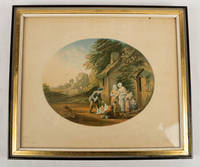
1870176927London. circa1870. Oval print after a technique pioneered by George Baxter 13.1 x 17 cm image size in the original embossed mount approx 20 x 23.5 cm titled and numbered lower right " The Image Boy 49" the image a trifle faded and the mount lighty spotted but overall in good condition preserved in a modern frame. Attractive composition the image adapted from James Collinson’s painting of 1849. LB No 49 CL No 86 "This picture features an Image Boy – a person who made a living selling unglazed plaster or parian-ware models often of classical or religiously significant figures. Such persons are motifs used by a number of other Victorian artists – including William Daniels.Collinson himself first used the subject-matter in a large painting entitled "Italian Image-Boys at a Roadside Alehouse" – his first ‘official’ Pre-Raphaelite Brotherhood painting exhibited at the Royal Academy in 1849." Paul Crowther Awakening Beauty: The Crowther-Oblak Collection of Victorian Art. Exhibition catalogue. . unknown
18851158993Veteran Association of the Regiment 1885. Handsomely rebound in blue cloth with bright gilt spine titles. Hardcover. Very Good/No Jacket. Octavo. Book. Veteran Association of the Regiment Hardcover
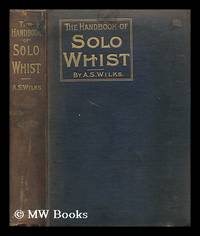
1898180421London : John Hogg 1898. First Edition. Hardback. Near fine copy in the original gilt-blocked cloth. Spine bands and panel edges very slightly dust-toned as with age. Corners sharp with an overall tight bright and clean impression. Previous owner's bookplate to inner front cover.; 8vo 8"" - 9"" tall; 204 pages; Physical desc.: 216 p. : ill. ; 18 cm. Subject: Whist --Cards --Solo whist. London : John Hogg hardcover
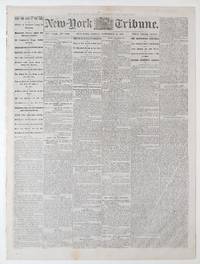
1863372898New York 1863. 8pp. printed in six columns on a single folded sheet. Large folio. Disbound. Natural paper flaw to first leaf not affecting text of the Gettysburg Address. Cloth portfolio. 8pp. printed in six columns on a single folded sheet. Large folio. The complete issue of the New-York Tribune printing the Gettysburg Address on the morning of Nov. 20 1863 the first possible date of the speech's printing. The previous day Lincoln delivered his great address at the dedication of a cemetery on the Gettysburg battlefield four months after the bloody and pivotal battle that turned the tide of the Civil War in favor of the Union. Lincoln's speech was preceded by an address from Edward Everett the most famous orator of his day. Everett's speech took between ninety minutes and two hours to deliver and today is largely forgotten. Lincoln's speech delivered in only a few minutes stands as a supreme distillation of American values and of the sacrifices necessary for the survival of liberty and freedom.<br /> <br /> Much controversy surrounds the circumstances and content of the address as it was actually delivered at Gettysburg. The words spoken in the speech differ in the versions appearing in newspapers and the text which appeared in Washington several days later published as The Gettysburg Solemnities and known in only four copies which is now taken as the closest version to Lincoln's final intent because of its correspondence to the known manuscript versions. Interestingly and according to Carbonell the text of the first appearance of the speech in book form published a few days later as An Oration Delivered on the Battlefield of Gettysburg is taken largely from this New York Tribune printing.<br /> <br /> As it appears here the address corresponds closely to the transcription printed in the same day's edition of the New York Times with slight variations in punctuation and capitalization "Four score and seven years ago our fathers brought forth on this continent a new Nation." in the Tribune versus "Fourscore and seven years ago our Fathers brought forth on this Continent a new nation." in the Times e.g. The address is printed on the first page at the bottom of the fifth column running to the top of the sixth. Significantly it notes the five places during Lincoln's speech where applause broke out thereby providing an important historical record of the reception of the speech as it was delivered by Lincoln. It is noted that the conclusion of the speech was met with "long continued applause" and that "three cheers were here given for the President and the Governors of the States." Lincoln's speech is preceded by the opening prayer of the Rev. Thomas H. Stockton and followed by Everett's speech which occupies the rest of the sixth column and the vast majority of space on page two. War news occupies the other column space on the front page.<br /> <br /> Together with examples from other newspapers of Nov. 20 1863 this issue of the New-York Tribune represents the first appearance of any version of the Gettysburg Address in print although at some variance with the version Lincoln eventually disseminated. The exact order in which the morning editions of November 20 were printed is practically impossible to determine at this point and as Carbonell states "will almost certainly never be known." Rightfully so Carbonell includes all November 20 morning newspaper printings of the Gettysburg Address as his first entry with no priority. Suffice to say this is as early a printing of one of the foundational documents of American life as one can ever encounter.<br /> <br /> "Lincoln's speech composed on the train on the way to Gettysburg and written down according to tradition on scratch-paper and the backs of envelopes comprised ten sentences and took only a few minutes to deliver. From the first words - 'Four score and seven years ago' - to the last - 'that government of the people by the people and for the people shall not perish from the earth' - it is immortal one of the supreme utterances of the principles of democratic freedom" PMM. Carbonell 1. Grolier American 100 72 ref. Streeter Sale 1748 ref. PMM 351 ref. Howes E233 ref. Monaghan 192 ref. Paul M. Angle "Four Lincoln Firsts" in Papers of the Bibliographical Society 36 Spring 1942 pp.13-17 unknown
18641403210Wright & Potter 1864. 5th or later Edition. Soft cover. Very Good. Boston. 1864. 88110pp. plus folding map. Original printed paper wrappers. Internally clean back cover not attached anymore water stain at top of spine and around it. Very good. Devoted almost entirely to the Massachusetts war effort published early in January 1864. The folding map shows the Soldier's National Cemetery at Gettysburg dedicated November 19 1863 with the long speech of Edward Everett of Massachusetts and the short "Dedicatory Speech by President Lincoln" better known as the Gettysburg Address. Also printed is the "Programme of Arrangements" of that day a list of Massachusetts soldiers killed at Gettysburg and buried there and details of the cemetery. Monaghan notes this as an early printing of the Gettysburg Address. MONAGHAN LINCOLN BIBLIOGRAPHY I:48. This historically significant and very early book publication of the Gettysburg Address which may be the most important and certainly best known speech in US history is extremely uncommon and almost only found rebound or with the covers missing. This version intact and in its original condition is a coveted artifact of Americana. Comes in a custom-made slipcase. Wright & Potter unknown
1841898851841. 1841 Messler Rev Abraham THE FRUITS OF EARLY PIETY; OR MEMORIALS OF A YOUNG DISCIPLE Philadelphia: American Sunday School Union c1841 54pp 12mo Leather spine with gold titles over marbled paper-covered boards Some foxing througout Contemporary pencil signatures of Mrs PH Sapp 308 CC Ave Columbia MO and Mrs LM Ashland MO Very good hardcover with light shelfwear and rubbing along the edges and corners of covers. unknown
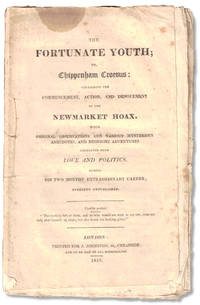
181857875London: J. Johnston 1818. Paperback. Good. Paperback. 42pp 4 ads. Side stitched signatures. Foxed throughout with some expected loss to the edges and a stain to the top of the front else a good complete example. Uncommon. An odd hoax perpetrated by a student at Shrewsbury School. Abraham Cawston aged about 16 claimed to have met in a coach a stranger who took a fancy to him and expressed the intention of making the boy heir to his own enormous fortune. Cawston then announced his patron's death and proceeded to convince his family and various bankers of the truth of his story. "He referred to a palace that he had in Spain full of works of art and instructed his solicitor to look out for a large country house for him and to acquire for him a few parliamentary boroughs. The Empress of Russia he said paid interest of six thousand pounds a year on a loan from his benefactor and he claims too on the King of Spain. the hoax lasted only a few months. The acceptance of his story is incapable of explanation but the facts are not in dispute. He subsequently became a clergyman."-Oldham A History of Shrewsbury School pages 88-9. OCLC locates only ten examples. J. Johnston paperback
1830192234London: Printed by A. J. Valpy 1830-1834. First editions from this noted series representing the Greek tragedians Latin satirists the prose of great statesmen and Roman history. Valpy 1786-1854 began to publish Classical literature as a schoolboy. The Family Classical Library followed his reissue of the Delphin Classics 1819-30 a series of annotated Latin texts. 21 vols small octavo 154 x 98 mm. Portrait frontispiece of each author. Contemporary speckled calf red labels compartments tooled in gilt double gilt fillet to boards gilt inner dentelles marbled endpapers top edges gilt. Bookplates of the collector Charles Waterman Armour 18571927. A few headcaps worn restoration to headcap and joints of Euripides vol. I spines flaking light foxing. A very good set. hardcover
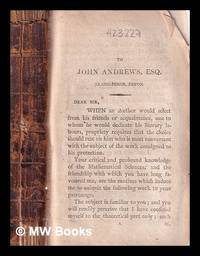
1806423227London : Printed for Richard Phillips 1806. 1st edition. Softcover. Poor copy with no boards cracked spine with loss no title page copyrights page. Creased and cracked pages with some browning. Physical description; 2 xii 279 9 pages 17 unnumbered leaves of plates 3 folded : illustrations 1 color engravings maps ; 18 cm 12mo. Subjects; Surveying Study and teaching. Surveying. ENGLAND. ; Literature 1806-1809. Geometry and surveying Children's non-fiction. London : Printed for Richard Phillips paperback
1806475689London : Printed for R. Phillips 1806. 1st edition. Hardcover. Poor copy in full leather binding. Spine bands and boards rubbed and worn. Spine leather cracked. Binding somewhat loose. Text clear and strong. Physical description: xii 279 pages 14 unnumbered leaves of plates : illustrations maps. Series: The Making of the Modern World Part I : The Goldsmiths'-Kress Collection 1450-1850. Series: The Making of the Modern World Part I : The Goldsmiths'-Kress Collection 1450-1850. Subject: Surveying. London : Printed for R. Phillips hardcover
186423032AB1864. Washington Printed for the Union Congressional Committee 1864. 8°. 14 pages. Softcover / Original Pamphlet. Original brochure. Some foxing. Unopened. Extremely RARE ! "To vote for Lincoln is to vote for Union and for Liberty". This is how this pamphlet ends in which Laboulaye urges the americans to vote for Lincoln instead for McClellan. But Laboulaye was even more important to the american people in his overall favour of this country as a leading role for freedom and future. He suggested the present by France which was later erected as the "Statue of Liberty" "In the summer of 1865 a group of Frenchmen were gathered together one evening at the home of the well-known author Edouard Rene de Laboulaye in the village of Glavingny a suburb of Paris. Among those present were Oscar and Edmond de Lafayette grandsons of the Marquis d' Lafayette Masonic brother of George Washington; Henri Martin the noted historian and French Mason; and a young artist from Colmar in French later German Alsace by the name of Frederic Auguste Bartholdi who at the time was engaged in making a bust of Laboulaye called by one biographer "America's most ardent admirer in France." Laboulaye told the group that it would be a splendid gesture on the part of all liberty-loving Frenchmen to acknowledge their friendship to America by presenting a fitting memorial. Some have speculated that he had a second motive in mind to call attention to the contrast between the American way of life with its freedoms and that of the French under the repressive Second Empire. The 31-year-old Bartholdi became imbued with the idea and also the challenge it presented to his artistic talent. But the proposal lay dormant during the autocratic rule of Napoleon III and throughout the destructive years of the Franco-Prussian War. In 1871 Laboulaye the Brother Lafayette with their cousin the Marquis de Noailles and the Marquis de Rochambeau along with Henri Martin revived the plan for the as yet unnamed memorial. They suggested that Bartholdi visit America and make arrangements for the presentation of the monument on July 4 1876 the Centenary of the Declaration of Independence. Armed with letters of introduction and full of high hopes Bartholdi sailed for America although it is said that he did not have even a rough drawing of the proposed monument. Two weeks later while standing on the deck of the ship Pereire steaming up Lower New York Bay he caught a vision of a magnificent goddess holding aloft a torch in one hand and welcoming all visitors to the land of freedom and opportunity. Quickly obtaining paper and brush Bartholdi sketched in water-color the idea of the Statue of Liberty substantially as it appears today. It was his thought to have this symbolic structure tower over the steeple of Trinity Church then the tallest building on the New York skyline. He wrote to Laboulaye "these outlines may well aim beyond the mere monument at a work of great moral value." MasonicWorld - By R. W. Robert C. Singer Édouard René Lefèbvre de Laboulaye French pronunciation: edwa ne lfv d labul 18 January 1811 25 May 1883 was a French jurist poet author and anti-slavery activist. In 1865 he originated the idea of a monument presented by the French people to the United States that resulted in the Statue of Liberty in New York Harbor. He got the idea thinking that this would help strengthen their relationship with the United States. Laboulaye was received at the bar in 1842 and was chosen professor of comparative law at the Collège de France in 1849. Following the Paris Commune of 1870 he was elected to the national assembly representing the departement of the Seine. As secretary of the committee of thirty on the constitution he was effective in combatting the Monarchists in establishing the Third Republic. In 1875 he was elected a life senator and in 1876 he was appointed administrator of the Collège de France resuming his lectures on comparative legislation in 1877. Laboulaye was also chairman of the French Anti-Slavery Society. Laboulaye was president of the Société d'économie politique. Always a careful observer of the politics of the United States and an admirer of its constitution he wrote a three-volume work on the political history of the United States and published it in Paris during the height of the politically repressed Second Empire. During the American Civil War he was a zealous advocate of the Union cause and the abolition of slavery publishing histories of the cultural connections of the two nations. At the war's conclusion in 1865 he became president of the French Emancipation Committee that aided newly freed slaves in the U.S. The same year he had the idea of presenting a statue representing liberty as a gift to the United States a symbol for ideas suppressed by Napoleon III. The sculptor Frédéric Auguste Bartholdi one of Laboulaye's friends turned the idea into reality. Wikipedia paperback