10 résultats
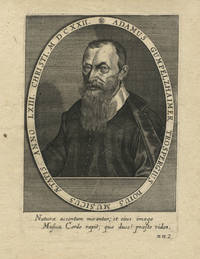
1622222961622. 143 x 97 mm. wide margins.<br/><br/>Slightly worn; edges browned. In very good condition overall. Possibly after the same painting on which the woodcut portrait in his Compendium Musicae of 1632 is based. <br/><br/>Gumpelzhaimer spent most of his active life in Augsburg where he was Kantor and Präzeptor at the school and church of St. Anna from 1581 until his death. "Gumpelzhaimer was probably best known to German musicians of and after his time through his Compendium musicae. The richness of musical activity of St Anna is indicated not only by Gumpelzhaimer's music but also by the extensive holdings of the church library during his 44 years there. A handwritten inventory was started by Gumpelzhaimer in 1620 and continued by Faust in 1625. This list includes in addition to many printed collections several large manuscript books of polyphonic music in score notation. Two of these books have survived one begun in 1599 and the other completed in 1624. They were copied out mostly by Gumpelzhaimer and contain compositions by many prominent musicians of the time." William E. Hettrick in Grove Music Online. unknown books
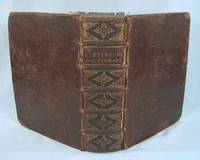
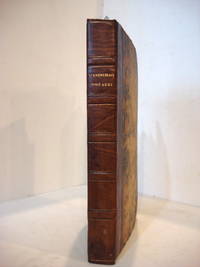
1678780961678. LITTLETON Adam. Linguae Latinae Liber Dictionarius Quadripartitus. A Latine Dictionary in Four Parts. I. An English-Latine. II. A Latine-Classical. III. A Latine-Proper. IV. A Latine-Barbarous. London T. Basset J. Wright and R. Chiswell 1677 and 1678. Folio. Unpaginated. Second edition the first was 1673 much enlarged. The English-Latin portion is as much thesaurus as dictionary. The "Latine-Classical" is a Latin-English dictionary with etymology including Hebrew; the "Latine-Proper" is a dictionary of personal and place names; the "Latine-Barbarous" dated 1677 contains erroneous and foreign words. A legal dictionary and tables of weights measures coinage chronology etc. crown the work. In 1670 Littleton was made chaplain to Charles II. His dedication to the King explains that he has rejected much of former dictionaries which would not be of use to students. His dictionary remained in print until 1735. An engraved frontispiece rebacked shows the Palatine Library established by Augustus. The engraved map of Ancient Italy and the engraved plan of Rome showing all its monuments and buildings are both present. In an unsophisticated calf binding of the period with plain boards and spine in six compartments with elaborate floral tooling. Hinges cracked externally. Bookplate of Watkin Williams of Penbedw Denbigh probably the Welsh schoolmaster-poet who won the Eisteddfod at the Chicago World's Fair in 1893 with a poem in Welsh on George Washington. Cordell 220. BL 612.1.13. unknown books
16991295121Amsterdam: Jean-Louis De Lorme 1699. First French Edition. Hardcover. 12mo. 4 249 pages; newlyre bound in 1/4 brown leather brown cloth boards paneled spine with green label and gilt lettering; title page has two stamps for a Cabinet De Lecture or reading room; title page also has a pen scribble line underneath the word 'voyage' not impacting any text; two sheets of contemporary blue paper bound in presumably publisher's wraps; lacking engraved frontispiece; large folding map present in excellent condition; CM consignment; shelved case 3. First French edition original published in German one year earlier in 1698. A journal of the Russian embassy headed by Everard Isbrand Ides which went over land from Moscow to Peking written by the secretary of the embassy Adam Brand. The aim of the expedition was to conclude commercial agreements with the Chinese but in fact this was not incorporated. Includes a table "des chiffres de la carte" pp. 183-92 with numbers of cities and other places passed along the route indicated on the map. The map only to be found in this edition. At end there is an anonymous letter about the present state of Moscow included;. 1295121. Shelved Dupont Bookstore. Jean-Louis De Lorme hardcover books
1640D17896Paris: Toussainct Quinet 1640. First Edition thus. Hardcover. Good. Folio a5 -a1 blank A-Y4 Z2; 8 179 1 pp. Illustrated with thirty-five double-paged engraved plates and eight double-paged typographical tables engraved title contemporary ownership inscription to title three parts bound as one; occasional staining but not a bad copy. Full contemporary speckled calfskin spine gilt. First edition published in France translated from the original German edition of 1631. <br/><br/> Toussainct Quinet hardcover books
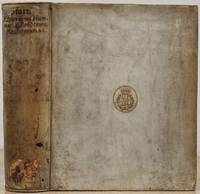
1692019576Amstelodami Amsterdam: Peter Le Clert 1692. Book. Very good condition. Hardcover. Early edition. Octavo 8vo. Book I: xxxiv 372 pages of text viii pages of index. Book II: xxiv 274 pages. Book III; 275-638 pages followed by vi pages of index. In book III pages 451-537 are mis-numbered 551-637. Original full vellum binding with minor shelfwear moderate soiling hand-lettered spine and a small paper label. Gilt heraldic device stamped on the front cover. Measures 196mm x 157mm. Illustrated with a frontisportrait of the author and complete with two 2-page tables and a large fold-out table. Title printed in red and black. Previous owner's bookplate affixed to the inside of the front cover over a remnant of another bookplate: Bruno Kisch Pragensis. Previous owner's markings on the front endpaper and stamped on the back of the title page. There is a small amount of minor damp-staining and rippling to the bottom corner of the final half of the text. The final two endpapers have a small crease. Numismatics. Early printing. Peter Le Clert Hardcover books
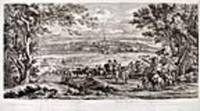
168515007Paris: distribuë par l'Auteur en l'Hostel des Manufactures des Gobelins et en la rue St.Jacques 1685. Copper engraving on two joined sheets by Van Huctenburg and A.F. Baudouinst after Van der Meulen. Titled in French and Latin. Painted from life by the artist who accompanied Louis XIV on his campaigns Adam Frans Van der Meulen depicted in this wonderful panorama a post-battle view of Dôle the capital of Franche-Comté and the handsome surrounding region. In it Louis XIV and his brother survey the city they've won from a hilltop. There is actually no unpleasant evidence of military activity except for some smoke billowing from the far side of Dôle. Adam Frans Van der Meulen was a landscape and genre painter who specialized in battle scenes and his early works i.e. those from the years before he left for Paris the earliest dated work is from 1653 are mainly cavalry skirmishes in the manner of his teacher Pieter Snayer. After he moved to Paris the character of his work changed and became more ceremonial. He now specialized in large topographical views and military scenes and in royal journeys processions and receptions. His most important task was to accompany the king on his many campaigns during the wars of conquest waged in the 1660s and 1670s against inter alia the Spanish Netherlands and as Peintre de conquêtes du roi officially to portray the memorable sieges battles and conquests of le Roi Soleil in large-scale canvases or cartoons which were later transformed into tapestries. Van der Meulen was born in Brussels in 1632. In 1646 he was apprenticed to the battle painter Pieter Snayers. In 1651 he became a master in the Guild of St Luke in Brussels but by 1663 he had moved to Paris where he joined a group of Netherlandish artists associated with the French painter Charles Le Brun 1619-90 who not only was Premier peintre du roi but also from 1663 director of the Parisian tapestry manufactory Manufacture royale des Gobelins. Van der Meulen quickly became a protégé of Le Brun and on his recommendation Van der Meulen was appointed court painter to Louis XIV on 1 April 1664 and at the same time became Le Brun's collaborator in the tapestry manufactory. In 1673 he was accepted as a member of the Académie royale de Peinture et de Sculpture without any obligation to submit a morceau de réception; in 1681 he became conseiller and in 1686 premier conseiller. He died as a highly esteemed artist in the Hôtel des Gobelins 15 October 1690. distribuë par l'Auteur, en l'Hostel des Manufactures des Gobelins, et en la rue St.Jacques unknown books
168516903Paris: distribuë par l'Auteur en l'Hostel des Manufactures des Gobelins et en la rue St.Jacques 1685. Copper engraving on two joined sheets after Van der Meulen. Titled in French and Latin. In excellent condition. Some infill work along the bottom margin. Image size: 18 1/2 x 38 5/8 inches. A striking contemporary view of Gray in Franche-Comte by the celebrated court painter Van der Meulen.<br/> <br/>This fine view shows the town of Gray in Franche-Comte built on the banks of the Saône River. One of the most important trading towns in Franche-Comte the region became a possession of the Spanish Hapsburgs in 1556. Although some of the region's fortified towns were occupied by France during the Wars of Religion peace and prosperity continued until the advent of the Thirty Years War when the region was ravaged by both Catholics and Protestants. Louis XIV conquered Franche-Comté in 1668 and again in 1674 and finally obtained its cession from Spain. Van der Meulen's striking image depicts the king and his armies entering the town after they successfully re-conquered the region. Adam Frans Van der Meulen was a landscape and genre painter who specialized in battle scenes and his early works i.e. those from the years before he left for Paris the earliest dated work is from 1653 are mainly cavalry skirmishes in the manner of his teacher Pieter Snayer. After he moved to Paris the character of his work changed and became more ceremonial. He now specialized in large topographical views and military scenes and in royal journeys processions and receptions. His most important task was to accompany the king on his many campaigns during the wars of conquest waged in the 1660s and 1670s against inter alia the Spanish Netherlands and as Peintre de conquêtes du roi officially to portray the memorable sieges battles and conquests of le Roi Soleil in large-scale canvases or cartoons which were later transformed into tapestries. Van der Meulen was born in Brussels where he was baptized in 1632. In 1646 he was apprenticed to the battle painter Pieter Snayers. In 1651 he became a master in the Guild of St. Luke in Brussels but by 1663 he had moved to Paris where he joined a group of Netherlandish artists associated with the French painter Charles Le Brun 1619-90 who not only was Premier peintre du roi but also from 1663 director of the Parisian tapestry manufactory Manufacture royale des Gobelins. Van der Meulen quickly became a protégé of Le Brun and on his recommendation Van der Meulen was appointed court painter to Louis XIV on 1 April 1664 and at the same time became Le Brun's collaborator in the tapestry manufactory. In 1673 he was accepted as a member of the Académie royale de Peinture et de Sculpture without any obligation to submit a morceau de réception; in 1681 he became conseiller and in 1686 premier conseiller. He died as a highly esteemed artist in the Hôtel des Gobelins 15 October 1690. distribuë par l'Auteur, en l'Hostel des Manufactures des Gobelins, et en la rue St.Jacques unknown books
16853659Paris: distribuë par l'Auteur en l'Hostel des Manufactures des Gobelins et en la rue St.Jacques 1685. Copper engraving on two joined sheets by A.F. Baudouin with the figures by R. Bonnart after Van der Meulen. Titled in French and Latin. A fine view of the fortified town of Calais and its environs recalling king Louis XIV's gradual acquisition of territory on the Channel coast from 1667 onwards.<br/> <br/>This excellent panorama shows Calais as seen from the landward side looking across to the ramparts of the fortifications surrounding the town to the roofs of the town itself and then beyond to the sea. In the fore and mid-ground the French army of King Louis XIV moves forward towards the town this scene enlivened by Van der Meulen's portrayal of the stormy conditions: hats blow off cloaks are wrapped around peoples' heads foot soldiers lean into the wind. This sort of detail supports the statement in the imprint that the present scene was painted from life by Van der Meulen. Adam Frans Van der Meulen was a landscape and genre painter who specialized in battle scenes and his early works i.e. those from the years before he left for Paris the earliest dated work is from 1653 are mainly cavalry skirmishes in the manner of his teacher Pieter Snayer. After he moved to Paris the character of his work changed and became more ceremonial. He now specialized in large topographical views and military scenes and in royal journeys processions and receptions. His most important task was to accompany the king on his many campaigns during the wars of conquest waged in the 1660s and 1670s against inter alia the Spanish Netherlands and as Peintre de conquêtes du roi officially to portray the memorable sieges battles and conquests of le Roi Soleil in large-scale canvases or cartoons which were later transformed into tapestries. Van der Meulen was born in Brussels where he was baptised in 1632. In 1646 he was apprenticed to the battle painter Pieter Snayers. In 1651 he became a master in the Guild of St Luke in Brussels but by 1663 he had moved to Paris where he joined a group of Netherlandish artists associated with the French painter Charles Le Brun 1619-90 who not only was Premier peintre du roi but also from 1663 director of the Parisian tapestry manufactory Manufacture royale des Gobelins. Van der Meulen quickly became a protégé of Le Brun and on his recommendation Van der Meulen was appointed court painter to Louis XIV on 1 April 1664 and at the same time became Le Brun's collaborator in the tapestry manufactory. In 1673 he was accepted as a member of the Académie royale de Peinture et de Sculpture without any obligation to submit a morceau de réception; in 1681 he became conseiller and in 1686 premier conseiller. He died as a highly esteemed artist in the Hôtel des Gobelins 15 October 1690. distribuë par l'Auteur, en l'Hostel des Manufactures des Gobelins, et en la rue St.Jacques unknown books
16699791London: John Starkey and Thomas Basset 1669. 2nd revised English. Half morocco. Very good. Folio. 2 parts in 1 each separately paginated with separate title-pages. Note: in this copy the title page for Mandelslo appears first in error. 6316;2223210pp. Complete with an added engraved title with 5 portraits 2 separate engraved portraits and a total of 6 folding or double-page maps. In this copy the very large folding map of the Volga River found at p. 112 has been divided in two the second half bound at p. 126 with a slight loss at the fold where they were divided. Engraved table of the Ruthenian alphabet in text. 19th century brown morocco spine over old marbled boards rubbed. Small chip at the top of spine otherwise an attractive copy. This is an odd copy quite complete but with certain preliminaries for the first part bound at front of the second part. The second edition revised of the English translation first published in 1662 made from a 1659 version in French. It contains material not found in the original German edition of 1656 and 1658. An important account of Central Asia including Persia and Russia and the East Indies. The Duke of Holstein's embassies were to negotiate trade. See Cox's THE LITERATURE OF TRAVEL Vol. 1 pp. 249 and 271 for more details. Wing O270. John Starkey and Thomas Basset unknown books
16881669671688. PERELLE Gabriel Adam and Nicholas. Recueil de Veues des Plus Beaux Lieux de France. Comprised of seven parts in one volume each part with individual title. Illustrated with a total 281 etched and/or engraved plates on 253 leaves comprising 267 views and 14 plans and/or maps 3 being large folding. Oblong folio 295 x 382 mm bound in contemporary French mottled calf with intricate gilt-stamped floral ornaments in spine compartments red leather title label. Paris: Chez Nicolas Langlois ca. 1688. Early impressions of the finest most complete series of etched views to document French gardens and châteaux. A comparable or more authentic portrayal of seventeenth-century French architecture and garden design does not exist. Of the total 267 etched and/or engraved views over 150 concentrate specifically on seventeenth-century French landscapes and garden designs. These views represent the gardens in their original splendour the landscape populated with elegant figures in contemporary costume. Regrettably several of the private châteaux and most of the accompanying gardens no longer exist. The contents of the volume begins with etched views of Parisian edifices city portals fountains gardens and monumental buildings such as the Louvre Palais Royal Palais du Luxembourg L'Hotel de Ville etc. Then a number of the surrounding châteaux and their estates are pictured including Versailles which we see literally rise before our eyes as the plates were executed over a period of several years while the palace and gardens were under construction Vincennes Chantilly St. Cloud and Fontainebleau plus sixteen views of Rome and its environs including the gardens of Pamphili and Tivoli. Most importantly this set is comprised of early Nicolas Langlois 1640-1703 impressions of these grand plates. Gabriel Perelle 1595-1677 studied drawing with Daniel Rabel official artist of the court of Henry III and then Perelle entered the atelier of the French painter Simon Vouet. Perelle had two sons Nicolas Perelle born 1631 and Adam Perelle 1640-1695. The engraved work by the three Perelles is so similar in style that their work is often signed: "Fait par Perelle" as it frequently is in the present album. The majority of impressions are sharp and dark. A few tears repaired a three inch crack to bupper hinge however still strong and perfectly intact. Overall an exceptional copy. Fowler 245. Brunet IV 494. Berlin Katalog 2483. See: Millard I 136 & 137. hardcover books